Latest News and Comment from Education

Showing posts with label DISCIPLINE. Show all posts

Sunday, April 25, 2021

Lee High teacher reassigned to paid, non-teaching post amid controversy over BLM flag, her organization says #BLM #BLACKLIVESMATTER #SPLC

Lee High teacher reassigned to paid, non-teaching post amid controversy over BLM flag, her organization says
Students planned demonstration but it was shut down by school staff


JACKSONVILLE, Fla. – The Robert E. Lee High School teacher who was told to remove a “Black Lives Matter” flag from outside her classroom, has been administratively reassigned, according to the Duval County Public Schools district.

A spokesperson for DCPS told News4Jax Thursday morning that a claim by The Evac Movement organization on its social media page -- that its cofounder, Amy Donofrio, was suspended from Robert E. Lee High School is false.

Laureen Ricks of DCPS said Donofrio has been “administratively reassigned to paid, non-teaching duties” effective Thursday.

“The district has opened a human resources matter to review allegations of potential misconduct under school board policy and the Principles of Professional Conduct for the Education Profession in Florida,” Ricks said in response to a Public Records request by News4Jax. “The presumption of innocence applies, However, Ms. Donofrio has been removed from school and classroom duties while the matter is reviewed.”

Donofrio was embroiled in controversy after Lee High School administrators ordered her to remove a Black Lives Matter banner from her classroom doorway by the end of the day Tuesday. Donofrio did not comply with the directive and said administrators removed the banner Tuesday night.

Students at the school told News4Jax they had planned to stage a “peaceful assembly” Wednesday morning in response to a school administrator’s removal of a the flag.

A Lee High School senior said the school’s staff prevented the demonstration from happening.

“Security stood outside, like at every block way,” the senior said. “During the time that we were supposed to walk out, they stood and blocked everything.”

Duval County Public Schools spokesperson Tracy Pierce told News4Jax there’s a big difference between the student-led demonstrations that occurred in February and what was planned Wednesday.

“Students aren’t allowed to organize an assembly without the involvement of the school’s administration,” Pierce said. “You can’t have an unplanned, impromptu demonstration.”

The 12th-grader told News4Jax that many students created and posted make-shift “BLM” signs on the CONTINUE READING: Lee High teacher reassigned to paid, non-teaching post amid controversy over BLM flag, her organization says


“Ms. Donofrio, you’re making ME a cake too, right?”Facebook - https://www.facebook.com/amy.donofrio.3/posts/10109661181401944

I am bringing this to your attention as a concerned citizen and public school parent in Florida. This conduct from Duval County Public Schools is egregious. To silence any teacher's speech in support of Black Lives Matter in schools is to fail to protect and support black and brown students in the current climate, which has proven oppressive to these youth.


Is DCPS saying that Black Lives DO NOT Matter?


AT ISSUE:

On March 24, 13-year teacher, Amy Donofrio was “administratively reassigned” after refusing to remove a “Black Lives Matter” flag that had been hanging outside of her classroom since October 2020.


Amy is a teacher at (Robert E) Lee High School in Duval County Public Schools (DCPS), Jacksonville, FL. She is the founder

of #EVAC a transformative leadership program that saw Black high school students flown to Harvard, winning debates, and some even met President Obama.


The escalation of community events:

Mar 20 - Video clip from Lee High School renaming meeting goes viral

Mar 24 - https://www.news4jax.com/news/local/2021/03/24/removal-of-lee-high-teachers-blm-flag-sparks-student-response/ “Donofrio criticized (Stevens’) racist comments and said that it demonstrates a need for DCPS to take a firm stance on racism. Hours later, Stevens took to social media, sharing screenshots from Donofrio’s Facebook page, including the Nov. 7 post showing the BLM flag, and called on his followers to contact school administrators. The following morning, Donofrio said, is when she received the ultimatum.”

"Donofrio said the BLM flag that was removed from in front of her classroom is the same one that is seen at the head of a student- led demonstration in February, in which Principal Feagins participated.”


April 16 - The Southern Poverty Law Center filed suit against DCPS and Scott Schneider.

SPLC sues Duval Schools on behalf of teacher removed for refusing to take down Black Lives Matter flag SPLC: So We’re Suing

SPLC: Teacher Disciplined For BLM Flag Sues Duval County Public Schools For Retaliation

SPLC: Donofrio V. Duval County Public Schools and Scott Schneider

JACKSONVILLE, Fla. - EVAC Founder and teacher files lawsuit with SPLC against DCPS


Apr 21 - (Click for photos): Ms. Donofrio, you’re making ME a cake too, right?

"In 13 yrs of teaching, I’ve learned there’s SO MUCH of my kids’ lives I CAN’T fix…but what i CAN do is use opportunities to create moments of belonging, love & joy. To make our classes a family. Today is exactly 4 weeks since I’ve (been) in our classroom home. It’s the 1st bdays I’m missing. And it’s so painful. But tho I can’t bring it to them, I’m keeping my word to celebrate their LIVES. I’m making their cake.”


BACKGROUND:

Powerful Ted Talk about EVAC: At-Risk or At-Hope? How We Label Youth Matters | Amy Donofrio | TEDxJacksonville


https://kidsimprisoned.news21.com/blog/2020/06/model-high-school-social-justice-program-cut-short/


https://www.jacksonville.com/news/education/2017-07-28/award-winning-evac-movement-not-returning-jacksonville-s-lee-high- school


The 2016 NYT article about EVAC students that garnered national attention and the attention of President Obama: Court Costs Entrap Nonwhite, Poor Juvenile Offenders


DCPS actions punish Amy Donofrio for creating a safe space for black and brown students in her classroom; AND deny those students access to their trusted teacher at the end of this most challenging year – seniors, who will be robbed of celebrating their last high school milestones with their teacher, who has supported them fully. I call on DCPS to reinstate Amy Donofrio’s teaching status in her previous capacity and to remove any disciplinary actions regarding this event from her permanent record.

Monday, February 8, 2021

Shanker Blog: Re-Imagining School Discipline: A Plea To Education Leaders | National Education Policy Center

Shanker Blog: Re-Imagining School Discipline: A Plea To Education Leaders | National Education Policy Center
Shanker Blog: Re-Imagining School Discipline: A Plea To Education Leaders


In many large urban school districts, there are more security employees than counselors. In the District of Columbia Public Schools (DCPS) system, for example there is one security guard for every 147 students, while the counselor-to-student ratio is 1:217. In addition, based on 2015-16 data, Groeger et al. (2018) found that Black students in DCPS were 15 times more likely to be suspended than their white peers (nationally, Black students were four times more likely to be suspended). In short, many students are not getting the emotional and mental support they need as they go through our schools. Instead, as exemplified by these staffing ratios, too many students are affected by punitive, militaristic methods of discipline, which may not only have negative consequences for the students who are disciplined, but for their peers as well (Perry and Morris 2014).  

A commonly used discipline approach, which used to be known as “zero tolerance,” was to discipline all students who didn’t follow the expected “rules.” Zero tolerance policies proliferated in public schools as a reform to help manage student behavior, using a “quick fix” method. Weaver and Swank (2020) define zero tolerance as “policies…[that] include exclusionary practices (i.e., office referral, suspension, expulsion) that involve the removal of the offender from the context of the incident and isolating the student from others involved and their school community.”

Unfortunately, as Skiba et al. (2011) show, these policies have created negative experiences for students and have disproportionately affected Black and brown students. Because they are CONTINUE READING: Shanker Blog: Re-Imagining School Discipline: A Plea To Education Leaders | National Education Policy Center

Monday, February 1, 2021

If Schools Don’t Overhaul Discipline, ‘Teachers Will Still Be Calling The Police On Our Black Students’ | HuffPost #BLM #BLACKLIVESMATTER #BLACKHISTORYMONTH

If Schools Don’t Overhaul Discipline, ‘Teachers Will Still Be Calling The Police On Our Black Students’ | HuffPost
If Schools Don’t Overhaul Discipline, ‘Teachers Will Still Be Calling The Police On Our Black Students’
As districts across the country cut their school resource officers, advocates warn it won’t be enough to end overly harsh discipline of Black students.


Shyra Adams vividly remembers the days after the death of Tony Robinson, an unarmed Black teenager killed in 2015 by police in her hometown of Madison, Wisconsin. 

Angry and distraught over the injustice, Adams, then a high school sophomore, staged a walkout with hundreds of other students, who filled the state Capitol to protest Robinson’s death. She joined weekly protests and helped organize sit-ins at her school. Then, she cried quietly in class as she watched the Dane County district attorney announce on TV that no charges would be filed against the officer who shot and killed Robinson.

“It felt kind of hopeless at that point,” Adams, now 21, said. 

But this summer, after five years of testifying at nearly every Madison school board meeting about the importance of removing police from schools, Adams found herself crying for a different reason. This time, she said, the tears came from her renewed hope that fighting for young people of color could lead to change. In June, she and other members of the Freedom Youth Squad, a group of Black and Southeast Asian activists, gathered to watch the Madison school board’s unanimous vote to cancel its contract with municipal police and remove all officers stationed at its high schools.

“A lot of people in different states were winning, but I thought, ‘In Madison? No way. They’ve been ignoring us for years,’” Adams said. “But that’s changing now. We finally got CONTINUE READING: If Schools Don’t Overhaul Discipline, ‘Teachers Will Still Be Calling The Police On Our Black Students’ | HuffPost

Monday, January 18, 2021

Student: “I Appreciate You Disciplining Me.” | deutsch29: Mercedes Schneider's Blog

Student: “I Appreciate You Disciplining Me.” | deutsch29: Mercedes Schneider's Blog
Student: “I Appreciate You Disciplining Me.”


I expect my students to wear a school uniform shirt and an ID. It is my habit to check for these, and my students know so.

Of course, that doesn’t mean they always comply.

Last week, in one of my classes, I hit on a noncompliance bonanza of sorts. One had no school shirt. A second had no ID. A third had neither school shirt nor ID.

So, out come the detentions.

During the course of handling these incidents, I had an unusual response from one of these unfortunate three:

He thanked me for disciplining him:

His exact words: “Ms. Schneider, I appreciate you taking the time to discipline me.”

Now, my first thought was that he was being sarcastic, but he was not. He was serious.

As I was writing his detention, I congratulated him on his maturity and told him that the willingness to subject oneself to authority and to own one’s self-induced negative consequences are indispensable for living a peaceful, private life and for becoming a productive member of our greater society.

Then, I told him this story:

In my second year of teaching, 1992-93, I had a student (I named him in my telling but will CONTINUE READING: Student: “I Appreciate You Disciplining Me.” | deutsch29: Mercedes Schneider's Blog

Tuesday, December 15, 2020

Students accused of truancy when they didn’t turn in their work

Students accused of truancy when they didn’t turn in their work
They didn’t turn in their work for remote school. Their parents were threatened with courts and fines
After their kids experienced tech glitches or turned off cameras during online learning, these families were accused of truancy and received legal threats


Hayden, 12, had been having panic attacks about school even before a letter arrived at his home last month, threatening legal action for his alleged absences from distance learning. 

The sixth grader has been attending online class from his home outside Austin, Texas, since August, and having difficulties adjusting. When his grades dropped, he started having intense bouts of anxiety, working himself up until he cried so hard he could barely catch his breath. He wailed that he hated himself and wished he could do better in school.

When the letter arrived from Round Rock School District in November, saying that legal charges punishable by fines or court action could be brought against his mother for his absences, Hayden spiraled into a dayslong episode, says his mother Holly Barentine. He started crying even before they finished reading the letter, disclosing fears about worst-case scenarios that he would fail his classes. When he went to stay the night at his dad’s house, the crying continued. His father emailed Barentine, expressing concern for their son’s well-being.

Hayden, a sixth-grader, hadn’t actually been missing online school. However, his school district only counts kids present in some classes if they both show up and submit their homework for the day. Some of Hayden’s homework hadn’t been reaching his teachers due to apparent technological glitches on the school’s online platform, or in some cases because he hadn’t handed it in ― an oversight he didn’t expect to be met with potential legal action. 

Around the country, school districts are subject to state truancy laws and regulations. However, as the coronavirus pandemic has turned schools upside down and put most learning online, some of these rules are CONTINUE READING: Students accused of truancy when they didn’t turn in their work

Friday, October 9, 2020

Teachers, Stop Spanking Your Students! - Philly's 7th Ward

Teachers, Stop Spanking Your Students! - Philly's 7th Ward

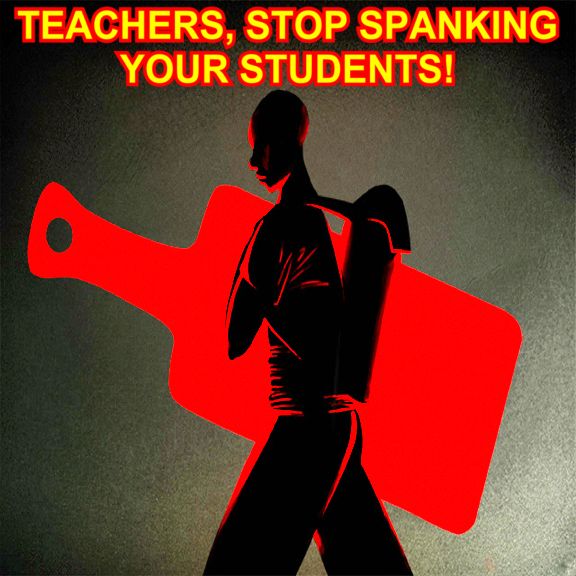
TEACHERS, STOP SPANKING YOUR STUDENTS!


Black Lives Matter, but Black Bodies Get Beaten
I attended a Catholic pre-school; the teachers and the director were nuns. It was the 1980s, meaning that certain attitudes were very much normalized, like corporal punishment, albeit mildly.
One of our collective pastimes in pre-school was flickering the boys’ bathroom light. The light was located outside the bathroom, so there was a chance that you’d get in trouble for being seen near the light, let alone actually flickering it. But we did it anyway and had fun. Of course, on the occasion that I actually got the courage to flicker the light, I got caught and was promptly smacked on the hand with a ruler, followed by a hug.
As soon as my grandmother came to pick me up, I told her what happened. I never flickered those lights again. But, I can tell you, the school ceased from hitting children with rulers.
UNICEF defines corporal punishment as “any punishment in which physical force is used and intended to cause some degree of pain or discomfort, however light.” The Civil Rights Data Collection defines it as “paddling, spanking, or other forms of physical punishment imposed on a child.”
It typically involves hitting (“smacking”, “slapping”, “spanking”) children, with the hand or with an implement. Thankfully, I don’t live in a state where CONTINUE READING: Teachers, Stop Spanking Your Students! - Philly's 7th Ward

How US schools punish Black kids - Vox

How US schools punish Black kids - Vox

How US schools punish Black kids
Black students get punished more harshly than white students. The president actually has a ton of power to do something about it.


For the 50 million kids who attend public schools in the US, the 2020 election is personal. That’s because whoever wins the presidency also decides how American schools handle things like testing, class size, and discipline.
When it comes to who gets punished — and removed — from the classroom, the US doesn’t treat all students equally. Black students are suspended and expelled far more frequently than their white classmates, often for the same or similar offenses. As a result, Black kids are missing weeks of school each year because of unfair discipline policies.
During the Obama administration, the Department of Education started to take this problem seriously. They investigated schools and districts with significant racial gaps in punishment rates and gave them guidance on how to replace outdated policies with more effective ones. But Betsy DeVos, President Trump’s secretary of education, has abandoned those efforts. And since the administration hasn’t released any new discipline data since the 2015-16 school year, we have no idea how many Black students are currently affected by school punishment policies.
In the video above, we explain the origins of this crisis and how the 2020 election could change things.
If you want to learn more about racial disparities in school discipline, check out the UCLA Civil Rights Project, which has been studying this crisis for years. Our colleagues at ProPublica, particularly Annie Waldman, have done extensive investigative work chronicling how the Trump administration has neglected to enforce students’ civil rights. The Texas study we mention in the video is publicly available through the Center for State Governments.
This video is the fourth in our series on the 2020 election. We aren’t covering the horse race; instead, we want to explain the stakes of the election through the issues that matter the most CONTINUE READING: How US schools punish Black kids - Vox

Monday, September 14, 2020

No Way To Treat A Scholar | Gary Rubinstein's Blog

 No Way To Treat A Scholar | Gary Rubinstein's Blog

No Way To Treat A Scholar


Success Academy is the largest and most controversial charter network in New York City. With over 15,000 students, Success Academy is known for their high state test scores.

Though Success Academy has been in existence for about 14 years already, it has only been the last few years that people have begun to question whether the strategies that Success Academy uses to achieve these test results are immoral if not illegal.

Public data shows that very few students who begin at Success Academy actually graduate from Success Academy. The class of 2018 started with 72 students and only 16 graduated. The class of 2019 started with 80 students and only 27 graduated. The class of 2020 started with 350 students and only 98 graduated. Success Academy argues that this is normal attrition over 12 years, but one of the most jarring statistics I have ever seen about Success Academy is the attrition rate from students who are in the school at the beginning of their senior year but who do not graduate with their class 10 months later.

For the recent class of 2020 there were 114 seniors in the school in November 2019. But by graduation time in June there were only 98 graduating seniors.

In June I blogged about an interview I saw with Eva Moskowitz where she explained that some students need five years to graduate high school for various reasons. Success CONTINUE READING:  No Way To Treat A Scholar | Gary Rubinstein's Blog

Sunday, September 6, 2020

Remote learning is turning classrooms into police states | Salon.com

Remote learning is turning classrooms into police states | Salon.com

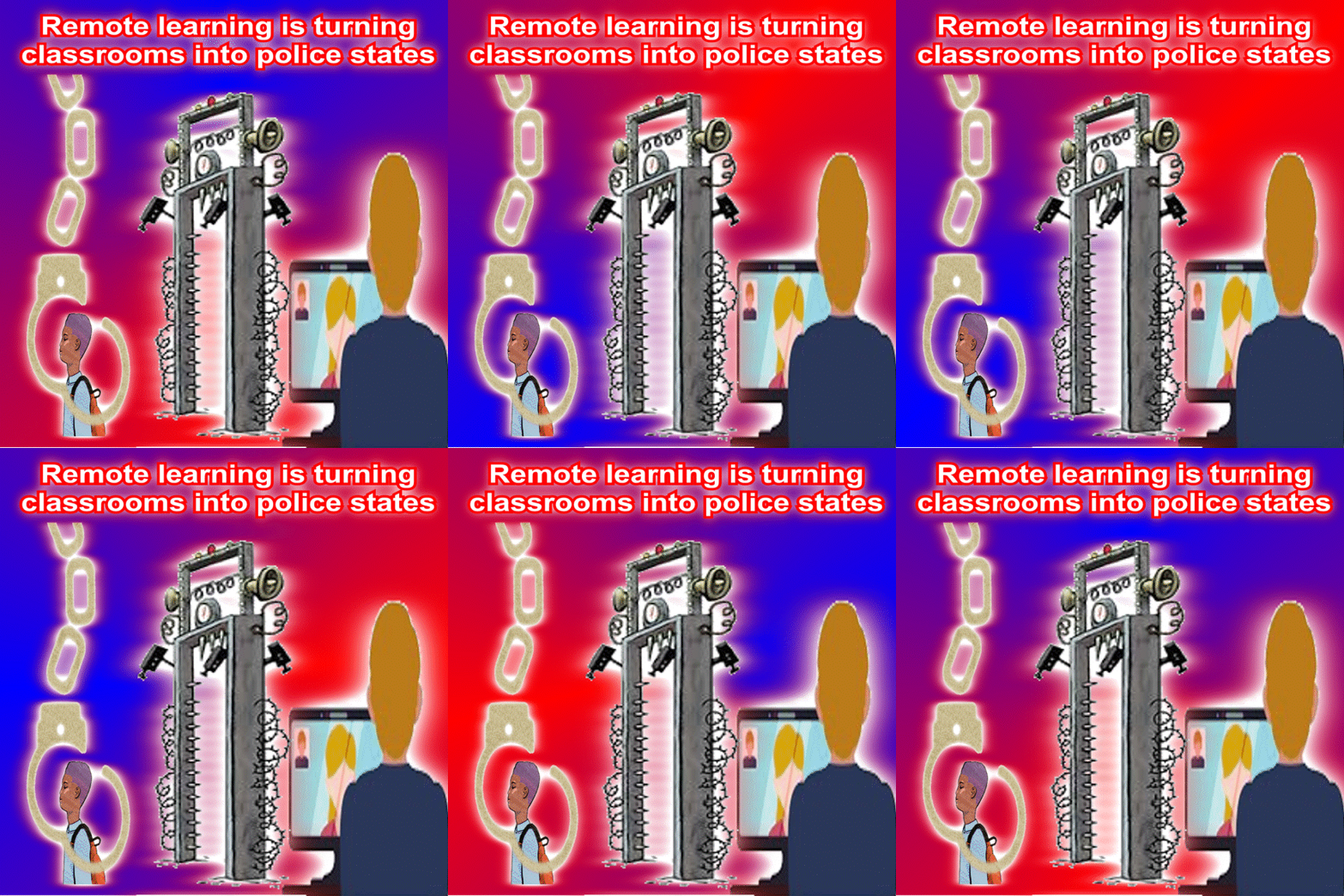
Remote learning is turning classrooms into police states
Virtual classrooms make punishment easier to dole out than connection. It doesn’t have to be this way


Think of your favorite teacher. Whenever I ask people to do this, they usually tell me about a teacher who saw them: the one who took them aside and encouraged them to pursue art or computer science, who helped counsel them through a personal issue, who attended their Quinceañera — who, ultimately, just cared. By connecting with us in meaningful ways, these teachers not only earned a permanent place in our memories, they also engaged, challenged, and inspired us. Today, our nation's 56.6 million elementary and secondary students could all use teachers like this, to help shepherd them through the pandemic and into a better future. But even in the best of times, school structures are more conducive to punitive discipline than meaningful teacher-student relationships, especially in our least-resourced schools. Today, with the challenges of virtual learning and the urgent messaging around "COVID slide" – the learning loss students may have suffered while they were out of school – relationships in schools are under further threat, just when students need them most.

Across the U.S., the pandemic has put a strain on families and children, many of whom continue to suffer from food insecurity, job loss, or the death of loved ones to COVID-19. So as kids begin school this year, they require connection, understanding, and nurturance from their teachers. While positive relationships with significant adult figures like teachers help children cope with trauma, such relationships also facilitate better learning. When students have meaningful relationships with their teachers, they are more likely to engage in class, more likely to feel like they can complete their school work, more likely to grow and CONTINUE READING: Remote learning is turning classrooms into police states | Salon.com

Saturday, September 5, 2020

ACLU warns 500 Texas school districts to revise discriminatory dress codes | The Texas Tribune

ACLU warns 500 Texas school districts to revise discriminatory dress codes | The Texas Tribune

ACLU warns 500 Texas school districts to revise discriminatory dress codes
The letter comes two weeks after a federal judge blocked the Barbers Hill Independent School District from keeping a dress code policy that advocates have called racist.


The Texas arm of the American Civil Liberties Union sent a letter Wednesday to nearly 500 school districts across the state asking them to revise dress code policies that it says are “unconstitutional and discriminatory.”
The letter calls policies like requiring different hair lengths for male and female students “outdated” and “harmful” and claims such rules could leave districts open to lawsuits.
The action from the civil rights organization comes two weeks after a federal judge blocked a Houston-area school from enforcing a dress code policy that states male students, but not female students, must keep their hair ear-length or shorter. This same policy sparked national debate when it was used to punish two Texas students earlier this year for wearing their natural hair in dreadlocks.
“While school districts throughout the country have removed policies that were based on antiquated sex stereotypes, many school districts in Texas still have policies that treat students differently on the basis of their gender,” Brian Klosterboer, an attorney for the ACLU of Texas, said in a written statement.
“School districts need to conform to federal law and fix outdated policies that cause serious harm to students in Texas,” Klosterboer added.
In January, Kaden Bradford and De’Andre Arnold, two Black students in Barbers Hill ISD, were told that if they refused to cut their hair, Arnold wouldn’t be allowed to walk the stage at his May graduation ceremony and Bradford, his cousin, would be placed on indefinite in-school suspension.
Both students transferred out of the district earlier this year. Bradford can return to his former high school for his junior year without the threat of suspension.
The ACLU’s letter to the districts includes a copy of Arnold’s court case and dress code guidance from the Texas Association of School Boards. If districts want to restrict hairstyles and hats, the association suggests they be mindful of how their CONTINUE READING: ACLU warns 500 Texas school districts to revise discriminatory dress codes | The Texas Tribune

Thursday, August 27, 2020

‘Broken Windows’ Approach To Teaching Is Breaking Our Schools - PopularResistance.Org

‘Broken Windows’ Approach To Teaching Is Breaking Our Schools - PopularResistance.Org

‘BROKEN WINDOWS’ APPROACH TO TEACHING IS BREAKING OUR SCHOOLS


Students Of Color Are Harmed The Most.

Students of color received instrumental interactions geared at conditioning them to become obedient at all times, to navigate white supremacy without challenging it.
In the fight for racial justice, teachers have a heavy job, for schools are both microcosms of, and preparation for, society. Because teachers serve as significant adult figures in children’s lives, their interactions with students can shape students’ sense of self and the world around them, as well as their engagement in school, personal efficacy, and academic achievement. Complex and difficult racial dynamics impact these relationships, and as calls for justice grow, it’s time to recognize this.
Systemic racism is sometimes blatant in our schools. For example, it is hard to deny that segregation persists, and that schools serving students of color receive less funding than mostly white schools. In my home state of Arizona, for example, schools serving mostly white students receive an average of $7,600 more per pupil than schools serving students of color, a discrepancy that increases to nearly $11,000 when controlling for neighborhood income. Research also repeatedly reveals that Black students in particular are more likely to be subjected to disciplinary action, much of which removes them from classrooms and schools. Sometimes this even leads students directly into interactions with law enforcement, hence the moniker school-to-prison pipeline. But there is a subtler form of racism at play in many classrooms, one CONTINUE READING: ‘Broken Windows’ Approach To Teaching Is Breaking Our Schools - PopularResistance.Org