Latest News and Comment from Education

Friday, May 26, 2017

June 2017 ACCS Meeting Agenda - Advisory Commission on Charter Schools (CA Dept of Education)

June 2017 ACCS Meeting Agenda - Advisory Commission on Charter Schools (CA Dept of Education):

June 2017 ACCS Meeting Agenda
Advisory Commission on Charter Schools June 7, 2017 notice of items and attachments.

Image result for Advisory Commission on Charter Schools

MEETING NOTICE

Advisory Commission on Charter Schools
An Advisory Body to the State Board of Education

Wednesday, June 7, 2017
9:30 a.m. – 4:00 p.m. ±
California Department of Education
1430 N Street, Room 1101
Sacramento, CA 95814-5901
916-322-6029
Commission Members
  • Brian Bauer
  • Cindy S. Chan*
  • Ari Engelberg
  • Jon R. Gundry
  • Atyani Howard
  • Caitlin O’Halloran
  • Dr. Mark Ryan
  • Dr. Wesley Sever
  • Curtis L. Washington
*Represents the State Superintendent of Public Instruction
Liaisons from the State Board of Education
  • Bruce Holaday
  • Trish B. Williams

AGENDA

  • Call to Order
  • Salute to the Flag
  • Welcome and Introductions
  • Review and Adoption of Meeting Notes
  • Charter Schools Division Update
  • Review/Reordering of the Meeting Agenda
  • Public Comment 1

ITEM 1 (DOC)
Type of Action: Action/Information
Subject: Consideration of Requests for Determination of Funding as Required for Nonclassroom-based Charter Schools Pursuant to California Education Code Sections 47612.5 and 47634.2, and Associated California Code of Regulations, Title 5.

ITEM 2 (DOC)
Type of Action: Action/Information
Subject: Consideration of Requests for Determination of Funding with “Reasonable Basis”/Mitigating Circumstances as Required for Nonclassroom-based Charter Schools Pursuant to California Education Code Sections 47612.5 and 47634.2, and Associated California Code of Regulations, Title 5.

ITEM 3
Type of Action: Action/Information
Subject: Reconsideration of Requests for Determination of Funding as Required for Nonclassroom-based Charter Schools Pursuant to California Education Code Sections 47612.5 and 47634.2, and Associated California Code of Regulations, Title 5.
  • Item 3 Attachment 2 - Funding Determination Request for Academy of Arts & Sciences - Fresno #1613
  • Item 3 Attachment 3 - Funding Determination Request for Academy of Arts & Sciences - Los Angeles #1615
  • Item 3 Attachment 4 - Funding Determination Request for Academy of Arts & Sciences - Del Mar #1454
  • Item 3 Attachment 5 - Funding Determination Request for Academy of Arts & Sciences - Sonoma #1457
  • Item 3 Attachment 6 - Funding Determination Request for Academy of Arts & Sciences - Thousand Oaks #1455

ITEM 4 (DOC)
Type of Action: Action/Information
Subject: Petition for the Establishment of a Charter School Under the Oversight of the State Board of Education: Consideration of Sweetwater Secondary School, which was denied by the Sweetwater Union High School District and the San Diego County Board of Education.

In addition to the above, the Advisory Commission on Charter Schools (ACCS) hereby provides notice that it reserves the right to consider and make recommendations at this meeting concerning other areas of the State Board of Education’s authority with respect to charter schools, which include but are not limited to:
  • Taking appropriate action, including, but not limited to, revocation with respect to State Board-granted and locally-granted charters under specific circumstances set forth in statute.
  • Jointly with the State Superintendent of Public Instruction, approving district-wide charter petitions when those petitions are determined to be satisfactory.
  • Developing and adopting regulations to implement various provisions of the Charter Schools Act of 1992 (Part 26.8 of the California Education Code, commencing with Section 47600). Approving or denying requests to waive otherwise applicable provisions of law based upon requests submitted by charter schools and other local educational agencies.
  • Assigning numbers to charter school petitions to ensure that the statutory cap on the number of charter schools is not exceeded.

THE ORDER OF BUSINESS MAY BE CHANGED WITHOUT NOTICE
Notice is hereby given that the order of consideration of matters on this agenda may be changed without prior notice.
REASONABLE LIMITATIONS MAY BE PLACED ON PUBLIC TESTIMONY
The presiding officer of the Advisory Commission on Charter Schools (ACCS) reserves the right to impose reasonable time limits on public testimony to ensure that the agenda is completed.
SPECIAL PRESENTATIONS MAY BE MADE
Consistent with the requirements of the Bagley-Keene Open Meeting Act, notice is hereby given that special presentations not mentioned in the agenda may be made at this meeting. However, any such presentation will be for information only.
REASONABLE ACCOMMODATION WILL BE PROVIDED FOR ANY INDIVIDUAL WITH A DISABILITY
Pursuant to the Rehabilitation Act of 1973 and the Americans with Disabilities Act of 1990, any individual with a disability who requires reasonable accommodation to attend or participate in this meeting of the ACCS may request assistance by contacting the Charter Schools Division at:
Charter Schools Division
California Department of Education
1430 N Street, Suite 5401
Sacramento, CA 95814-5901
Phone: 916-322-6029
Fax: 916-322-1465
FOR MORE INFORMATION
For more information concerning this agenda or to join the ACCS specialized e-mail distribution list, please contact:
Makenna Huey
Charter Schools Division
California Department of Education
1430 N Street, Suite 5401
Sacramento, CA 95814-5901
Phone: 916-322-6029
Fax: 916-322-1465
charters@cde.ca.gov

This notice appears on the California Department of Education ACCS Web page.
1 Time(s) will be set aside for public comment at this meeting. Depending on the situation, and at the direction of the presiding officer, public comment may be entertained as appropriate at the beginning of, during, and/or at the end of the meeting. Reasonable limits will be placed on the amount of time allowed for individual comments.
June 2017 ACCS Meeting Agenda - Advisory Commission on Charter Schools (CA Dept of Education):
 Image result for Advisory Commission on Charter Schools

Choosing Democracy: Why Do Billionaires Want Charter Schools ?

Choosing Democracy: Why Do Billionaires Want Charter Schools ?:

Why Do Billionaires Want Charter Schools ?

Image result for big education ape Billionaires

Harold Meyerson:

The billionaires, apparently, we shall always have with us — even when we decide how to run the state-funded schools where they rarely send their own kids.

In the Los Angeles school board elections earlier this month, a number of billionaires, including Eli BroadNetflix founder Reed Hastings and two Walton family siblings, poured millions into the campaigns of two charter-school advocates. These billionaire-sponsored candidates defeated two badly outspent opponents who took a more cautionary stance on expanding charters, lest they decimate the school district’s budget. In total, pro-charter groups outspent teacher unions, $9.7 million to $5.2 million. (In the 2016 state legislative campaigns, the charterizers outspent the unions by a far larger margin, $20.5 million to $1.2 million.)
ADVERTISING


Though a number of the billionaires who’ve involved themselves in the charter cause are conservatives and Republicans, the actual election battles they join almost always pit Democrat against Democrat — in part because nearly all big cities are now overwhelmingly Democratic. In California, where Republicans’ numbers have ebbed past the point of power, the lion’s share of billionaires’ legislative campaign contributions have gone to more centrist Democrats, who not only are reliable votes on charter issues but also often oppose environmental and other measures advanced by their more progressive colleagues.
Charter billionaires have settled on a diagnosis, and a cure, that focuses on the deficiencies of the system’s victims, not the system itself.


Of all the issues billionaires could choose, why charters, and why now? One reason commonly adduced is that they’ve noticed something troubling: Public school graduates lack the skills necessary for employment. Many of those needed skills, however, are the kind that students acquire in vocational educational programs, not at charter schools.


That there are huge problems in the education of low-income students is beyond dispute — but this is hardly a recent development. The real recent development is the rising share of such students as the middle class has waned.

If the Waltons, say, decided to redirect more of their fortune to raising Wal-Mart workers’ wages, that in turn might enable hundreds of thousands of families to have 
Choosing Democracy: Why Do Billionaires Want Charter Schools ?:

Image result for big education ape billionaires


Hitting Left with the Klonsky Brothers. #17 | Fred Klonsky

Hitting Left with the Klonsky Brothers. #17 | Fred Klonsky:

Hitting Left with the Klonsky Brothers. #17

HITTING LEFT (1)


We were so pleased about having our old friend Prexy Nesbitt on our show. Prexy has been to South Africa over 40 times and has much to share.
IMG_1728
Hitting Left with the Klonsky Brothers. Jamie Trecker, Mike and me.
Following up on last week’s show with Jerry Harris, head of the Global Studies Association, we wanted to get into what is happening in the third world, particularly Africa in the age of Trump and globalization.
But weather in New York and at La Guardia had a different plan and Prexy couldn’t get a flight out.
Which we found about, through no fault of Prexy’s, a few hours before our live show.
But my bro and I are nothing if not light on our feet, even if a few steps slower these days.
Did I mention Mike had a birthday yesterday.
Alderman John Arena called in to talk about the fight for affordable housing in the 45th ward, where opponents think too much density is an acceptable euphemism for racism and segregation.
It’s not.
And we spent the rest of the hour talking about our favorite topics: Schools, funding, choice, vouchers and Betsy DeVos.
Some live listeners (not all – so that’s weird) reported they couldn’t hear the De Vos sound bite. But it is all here on our podcast.

CURMUDGUCATION: Slate Series Unmasks Cyber School

CURMUDGUCATION: Slate Series Unmasks Cyber School:

Slate Series Unmasks Cyber School


Slate, for whatever reason, teamed up this week with Columbia Journalism School's Teacher Project, to take a look at on line education. Much of their work is focused on on line courses as a means of credit recovery-- the quick-and-easy method of letting students replace credits for courses they failed. But the series tells us a great deal about what on line "education" is really like-- and it is not pretty. This is just how bad cyber schooling is.


As always, I will include the preface that A) cyber school doesn't have to be as awful as it is and B) it is a real boon to certain students.

The series ran through eight articles, and you should not miss any of them, but here are links and blurbs for each article in the series so you can make your choices (and so that they don't disappear entirely once Slate moves on to other things). Read these:

The New Diploma Mills

Zoe Kirsch digs deep for this opening article. While focusing on how Florida has used on line courses to boost graduation rates "many school districts, including several of the nation's largest, have seen graduation rates soar"), Kirsch also looks at the policies boosted cyber-schooling and just how bad it looks on the ground to actual cyber students. This piece gives a good overview-- with well-sourced 
CURMUDGUCATION: Slate Series Unmasks Cyber School:


Fox: These cuts to education are devastating - Lily's Blackboard

Fox: These cuts to education are devastating - Lily's Blackboard:

Fox: These cuts to education are devastating

Wherever you live in this country you will be impacted by these devastating cuts.These are billions and billions of dollars.


Fox: These cuts to education are devastating - Lily's Blackboard:


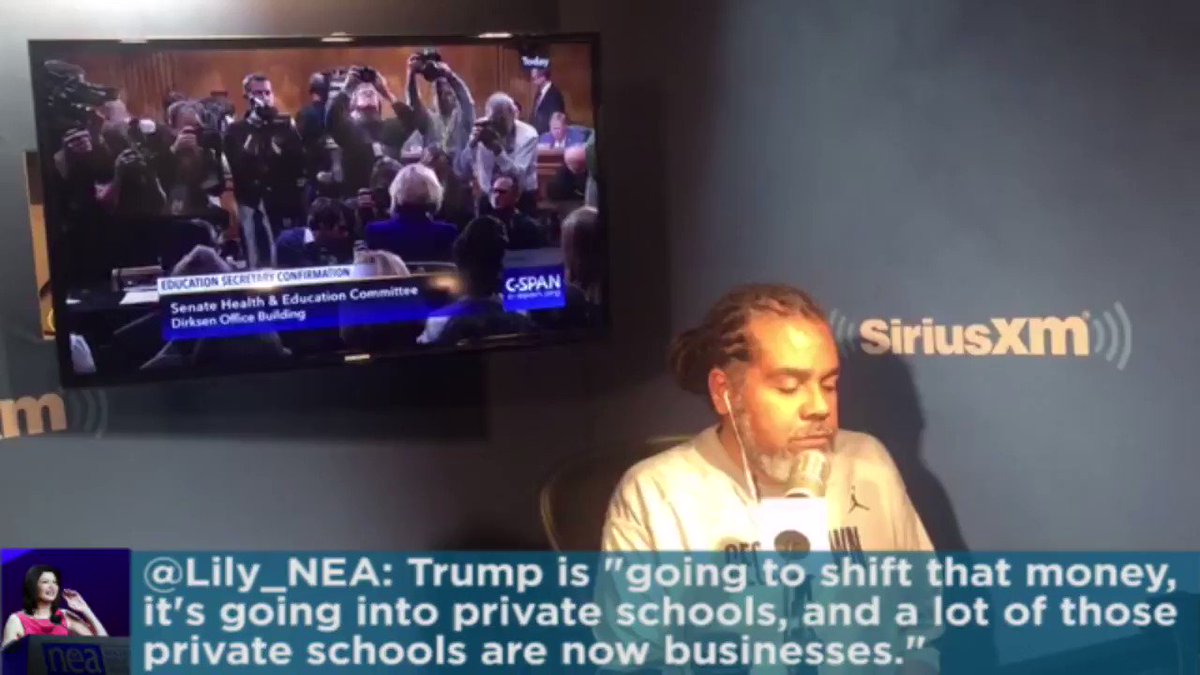
Sirius-XM Make It Plain: Taking public school dollars from our neediest students

Sirius-XM Make It Plain: Taking public school dollars from our neediest students

 A lot of these charter schools are business who want public money, and they are taking it right out of the schools that serve the most vulnerable.

Schools Matter: The New Gold Rush by TFA in Camden

Schools Matter: The New Gold Rush by TFA in Camden:

The New Gold Rush by TFA in Camden


Most critics of Teach of America focus on the criminally-miseducative practice of using white inexperienced Ivy League missionaries, most of whom remain blind to their own racism, to impose a form of corporate counter-insurgency in the poorest urban areas of America, where children need the most professional and experienced teachers.  

The paternalist mission in these communities is to enforce "broken windows" schooling, which uses psychological manipulations to achieve a kind of brutal corporate culture based on TFA's troops patrolling classrooms during their two year commitments to continuously intervene and assess, assess and intervene.  

Most people don't focus on what happens to TFA corp members after their enlistments are up.  Many of these converts of their own propaganda return to grad school or to careers, with the self-satisfaction that comes to those who believe in the indispensability of their own corrective powers to fix the poor through repeated injections of corporate positive psychology.  

Other TFA veterans, however, move on to fulfill the other big piece of the TFA mission: educational misleadership.  

Camden, NJ represents a case study waiting to be studied, and it could lay bare TFA's lucrative, inhumane, and self-serving business model, now masquerading as education.  

A former TFA Corp member is now superintendent in Camden, and others from the paternal cult of TFA are
Schools Matter: The New Gold Rush by TFA in Camden:


 Image result for big education ape tfa
Image result for big education ape tfa

Torlakson Speaks at High School Where He Graduated - Year 2017 (CA Dept of Education)

Torlakson Speaks at High School Where He Graduated - Year 2017 (CA Dept of Education):

State Schools Chief Torlakson Speaks at Daly City High School That He Graduated From 50 Years Ago
Image result for big education ape tomTorlakson  memo

SACRAMENTO—State Superintendent of Public Instruction Tom Torlakson on Thursday (May 25, 2017) returned to his roots at Westmoor High School, where he graduated 50 years ago, and addressed the Class of 2017.
“With your creativity and passion and determination, you will have many opportunities to change the world,” he said. “Think about how you can advance yourself successfully and, at the same time, find ways to improve your neighborhood, your community, your state, and the world.”
Torlakson, who leads the nation’s largest kindergarten through grade twelve public education system, told students and their families that they can achieve great things and follow their dreams.
Torlakson said that in the year he graduated—1967—the nation faced uncertain times, unrest, and political division. Today, many students worry about the same things.
“Yet our nation emerged from the 1960s and began an era of unprecedented progress. Together, we created a more diverse society, enacted groundbreaking legislation for civil rights, for women, for minorities,” Torlakson said. “Today, in California, our diversity is our strength.”
Torlakson also encouraged students to become teachers and return to their own communities to inspire students. In summer 2016, when he served briefly as Acting Governor, Torlakson issued a “Change Lives—Be a Teacher” proclamation, and he continues to promote the profession as California faces a looming teacher shortage.
Torlakson graduated from Westmoor in the Jefferson Union High School District and went on to a public service career in California that included serving in the U.S. Merchant Marine; teaching high school science and coaching cross country; and serving on the Antioch City Council, Contra Costa County Board of Supervisors, and as a state legislator from the San Francisco East Bay. He is serving his second term as State Superintendent of Public Instruction.
“My high school teachers and my professors in college opened my eyes and mind to so many wonderful learning opportunities,” Torlakson said. “I was able to become an educator in California—the team of which I am most proud.”
Torlakson also honored Bob Lualhati, a teacher and coach who inspired him and countless others when he was a student. Lualhati, who was elected to the San Mateo County Sports Hall of Fame, won numerous championships at Skyline Community College and trained two athletes who participated in the Olympics.
“He taught me to believe in myself, set high goals, and work hard,” Torlakson said.


# # # #
Tom Torlakson — State Superintendent of Public Instruction
Communications Division, Room 5602, 916-319-0818, Fax 916-319-0100
Torlakson Speaks at High School Where He Graduated - Year 2017 (CA Dept of Education):

Power, Responsibility, and the White Men of Academia | radical eyes for equity

Power, Responsibility, and the White Men of Academia | radical eyes for equity:

Power, Responsibility, and the White Men of Academia

Image result for White Men

With many things of pop culture, what becomes popular, recognizable and echoed, is something slightly or even significantly different than the original.
Hollywood has finally caught up with iconic superhero comic books—and is poised to ruin if not destroy its version of the medium as the comic book industry did to itself in the 1990s.
In 1962, Marvel introduced Spider-Man in issue 15 of Amazing Fantasy, and birthed as well a truism that has avoided being cliche since it continues to resonate. While repeated as “With great power comes great responsibility,” the original is a bit longer:
AND A LEAN, SILENT FIGURE SLOWLY FADES INTO THE GATHERING DARKNESS, AWARE AT LAST THAT IN THIS WORLD, WITH GREAT POWER THERE MUST ALSO COME —  GREAT RESPONSIBILITY!
Two aspects of the original are worth highlighting. First, the sentiment itself is powerful and True, but, second, the subtle distinction of the original must be acknowledged: Power is the default and then responsibility is qualified with “must,” suggesting that it remains optional.
In short, there will always be those afforded power—and no guarantee that power is earned, deserved, or in any way just—but we must seek ways to demand the responsibility, tinted as it is with the implication of moral responsibility.
As as offspring of Europe and the Western world, the U.S. has always been and remains a culture in which white men embody the vast majority of power, through both economic and political might as well as the accumulated advantages of privilege simply from being white and male.
Academia, scholars and professors in colleges and universities, are significantly skewed toward white males, especially when rank (thus power) is included:
SOURCE: U.S. Department of Education, National Center for Education Statistics. (2016). The Condition of Education 2016 (NCES 2016-144), Characteristics of Postsecondary Faculty.
While in mainstream public discourse, the face and voice of tradition remain white and male, and the face and voice of calling for equity tends to be a so-called minority, it seems fair to expect academia to be different, even though it tends to reflect the race and gender imbalances of the broader society in terms of power and representation.
And here we come to another truism that defies being merely cliche: power corrupts. The original in full, again, asserts a more effective point, as John Dalberg-Acton wrote in a letter:
Power tends to corrupt, and absolute power corrupts absolutely. Great men are almost always bad men, even when they exercise influence and not 
Power, Responsibility, and the White Men of Academia | radical eyes for equity:

One Simple Way to Steal Time for Grading - Teacher Habits

One Simple Way to Steal Time for Grading - Teacher Habits:

One Simple Way to Steal Time for Grading

steal time

My next book is about how teachers can take home less student work to grade. Part of accomplishing this worthy goal is finding ways to grade papers during the school day. There are obvious times like planning periods, recess, or, if you’re really dedicated and/or desperate, lunch. But I like to use those times for other responsibilities (and in the case of lunch, to eat). That leaves grading while students are in the room.
A lot of teachers never grade papers when students are in the room. They feel like when students are in their presence they need to be actively engaged with them. They must be instructing, or working with small groups, monitoring, or assessing. After all, they reason, so many kids need so much, how can they ever justify grading papers?
They also worry about what others will think. What if the principal walks in and finds them at their desks checking math tests? What if the reading specialist comes in to work with at-risk readers? Would she look down her nose or think the teacher is lazy or lacking in dedication?
And there’s the guilt many teachers seem to carry around like a free tote bag at a reading conference. Guilt comes from violating our own beliefs. Since most teachers believe they should do everything they can to help students, taking time out of the day to score student work doesn’t feel right.
But if you want to reclaim your personal life and stop taking so much work home, you’ll need to carve out time while students are in the room to grade papers. There are many ways to do this that are educationally sound and good for kids. One simple way is to give your students breaks.
I started giving five-minute breaks because I hate managing transitions. Conventional classroom management wisdom says that One Simple Way to Steal Time for Grading - Teacher Habits:

School Choice? Some Kids Don’t Really Have One | NewBlackMan (in Exile)

School Choice? Some Kids Don’t Really Have One | NewBlackMan (in Exile):

School Choice? Some Kids Don’t Really Have One


School Choice? Some Kids Don’t Really Have One
by Jamila Thomas | special to NewBlackMan (in Exile) | The OpEd Project

When it comes to school choice, I am not convinced all children have one. Parents living on the margins don’t have much of a choice, either. As I walk the halls of schools, and talk with teachers, students and parents, it becomes obvious for certain students, “choice” is a popular phrase signaling quality and high-impact results — but doesn’t at all mean what it says.

If anything, poor and racially marginalized black and brown students make a choice to come to school in the first place. Based on funding formulas and limited resources and services many students showing up bedecked in white shirts and khakis, expect to gain a fair and equitable education they won’t actually get. While “choice” is being pushed from the federal level down to the closest city block, what’s being offered is more of a stripped-down facsimile of public education that does not serve all students. And if the Trump administration budget is any indication, the expansion of so-called “choice” can’t help students because of more than $9 billion (13.5 percent) in Education Dept. cuts that accompany this move.

This is happening while investors leverage money-making opportunities to make “education” a product by siphoning public dollars into charters and vouchers that don’t deliver the results they promise. In fact, many of the children who are angry or ill prepared are the mercy of their parents’ plight or bad decisions. Their demeanor is not reflective of their desire to be a good student but of a more complex situation. Yet, for many this noble idea of choice seems like the answer. Meanwhile, most schools still aren’t prepared to cope with the totality of a child’s experience.

Budgets impact everything from school resources to hiring the best teachers. When children from racially and economically marginalized communities are siphoned from neighborhood schools into charter schools run on slim budgets, they are forced to battle for more than the right to learn. The real choice being made may well be safety, as parents from marginalized communities smartly prioritize sending children to safe environments but ones that don’t happen to deliver solid learning results. A recently released study of D.C.-based school charter school School Choice? Some Kids Don’t Really Have One | NewBlackMan (in Exile):


Parent Toolkit For Student Privacy Is A MUST READ For Any Parent, Educator, or Legislator!!!! – Exceptional Delaware 2017

Parent Toolkit For Student Privacy Is A MUST READ For Any Parent, Educator, or Legislator!!!! – Exceptional Delaware 2017:

Parent Toolkit For Student Privacy Is A MUST READ For Any Parent, Educator, or Legislator!!!!


The Parent Coalition for Student Privacy and the Coalition for a Commercial-Free Childhood released their Parent Toolkit for Student Privacy on May 16th.  Full disclaimer, I actively participate and sometimes contribute to discussion surround student data privacy with the Parent Coalition for Student Privacy.
As our schools dive into more and more digital technology in classrooms, many parents have seen things that disturb them.  Is our children’s data protected?  Not as much as you think it might be.  The laws surrounding student data privacy are filled with loopholes and confusing wording.  It is more imperative than ever that parents wake up to this new reality facing their children.
To that end, I highly praise this report and believe every single school, state agency involving education, and any organization around education should give this to every single parent.  Opting out is NOT just about standardized tests, it is also about unwelcome intrusions into things about our children that, frankly, are nobody’s business.


 Parent Toolkit For Student Privacy Is A MUST READ For Any Parent, Educator, or Legislator!!!! – Exceptional Delaware 2017:

CURMUDGUCATION: PA: Report Shows Charter Financial Impact

CURMUDGUCATION: PA: Report Shows Charter Financial Impact:

PA: Report Shows Charter Financial Impact


Pennsylvania's Legislative Budget and Finance Committee has released a report looking at "Public [sic] Charter Schools Fiscal Impact on School Districts." The findings of the joint committee underscore what many have already been saying-- charter schools, particularly in a badly regulated state like Pennsylvania, are hurting public schools.


The report is 105 pages long, so I'm going to be focusing on just some of the highlights here.

How PA Stacks up Against US

The committee looked to compare PA to its chartery brethren and sistern, so it looked across all forty-three states that allow charter schools. In particular, they noted some differences in charter laws.

* Twenty-two states (including PA) have no caps on schools on enrollment.

* Eleven states (including PA) require public schools to provide transportation for charter students.

* Thirteen states include "access" to local funding in charter revenue. PA is up in front of the pack on this, which makes a certain kind of sense since PA also leads the pack in requiring local revenue to fund public schools.

* PA is one of two states that has a special ed supplemental formula. That means every charter gets some funding based on nothing more than the assumption that around 16% of its student body is special needs. According to PDE data, in the 20145-2015 school year, the state gave $466.8 million in special ed tuition payments to charter schools, and roughly $294.8 million of that was special ed supplement. Actual charter expenditures on special ed-- $193.1 million. In other words, in PA and Massachusetts, it's extra-profitable for a charter NOT to take students with special needs, because they will get paid to educate those students even if those students are not enrolled at the school.

* PA is one of the the only three states that let charters appeal to the courts when they don't like 
CURMUDGUCATION: PA: Report Shows Charter Financial Impact:


Beware of School Voucher Doublespeak

Beware of School Voucher Doublespeak:

Beware of School Voucher Doublespeak

school voucher euphemisms


Last week, Education Secretary Betsy DeVos delivered a much-anticipated speech about her plan to shift massive amounts of valuable taxpayer money away from public schools to pay for private school vouchers. That’s not exactly how she framed her ideas as she addressed the American Federation for Children (a pro-school privatization group chaired by DeVos until she was tapped to be Education Secretary). Instead, DeVos said the plan—details still to come—would amount to the “most ambitious expansion of school choice in our nation’s history.”
“School choice” is of course the go-to euphemism school voucher advocates use to sugarcoat a failed and unpopular idea. The general public has long been opposed to vouchers, and their academic track record is pretty grim.
Voucher devotees like DeVos know this, which is why the term “school voucher” has been ditched in favor of less offensive, appealing terms.
Take for example this line from DeVos’ speech to the AFC. Praising Indiana’s large-scale voucher program, she promised to “empower states and give leaders like Eric Holcomb the flexibility and opportunity to enhance choices Indiana provides its students.”
In that one sentence alone, DeVos offers up four favorite euphemisms used to rebrand voucher legislation: “empower,” “flexibility,” “opportunity” and, of course, 
 Beware of School Voucher Doublespeak:


Image result for big education ape vouchers
Image result for big education ape vouchers whatever you call them