Latest News and Comment from Education

Tuesday, March 26, 2013

FCMAT » Cali Education Headlines Tuesday, March 26, 2013

FCMAT » Fiscal Crisis & Management Assistance Team:


California voters split on Jerry Brown school plans


Education Headlines

Tuesday, March 26, 2013

Former Santa Ana principal, parents, seek new charter school

A former Santa Ana charter school principal is seeking approval to open a new K-8 school in the city. The Santa Ana Unified School District board is scheduled to hold a public hearing on Odyssey Charter Academy's petition on Tuesday. It will vote on the proposal by May.

Somis School could move because of gas pipelines on campus

The Somis Union School District may move its elementary school because gas pipelines have been found on campus.

School crisis teams ready to respond

Most schools have counselors or psychologists ready to help students cope with personal trauma. But when a large number of students is affected by a violent act or natural disaster, schools may seek reinforcements with counselors from other districts, local agencies and the county office.

San Joaquin education office names assistant superintendent

The San Joaquin County Office of Education has promoted administrator Jane Steinkamp to assistant superintendent of educational services.

Sylvan school district names new superintendent

Debra Hendricks is the choice to lead Sylvan Union School District, stepping into the shoes of John Halverson, who retires June 30. The district announced her selection Monday morning, pending final contract negotiations and ratification of her appointment at the April 16 board meeting.

California voters split on Jerry Brown school plans

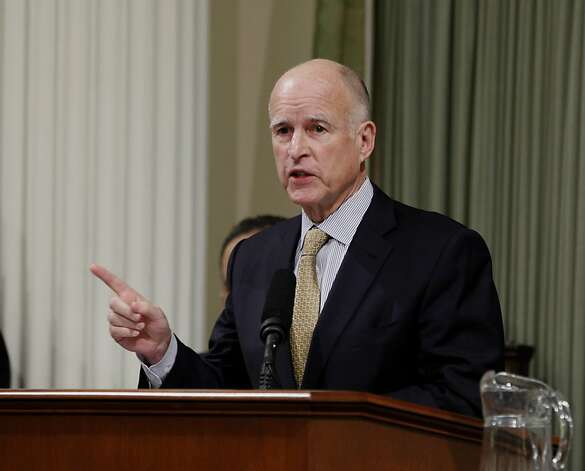
Fifty percent agree with the governor's proposal to give more funds to school districts that serve low-income children. A separate Brown plan to give local districts more funding control is favored by 59%.

LAUSD salvages summer school, but classes will be limited

Despite fears that Los Angeles Unified would have to cancel summer school this year, officials say they'll be able to hold a limited number of credit-recovery classes at 16 high school campuses across the sprawling district.

Mt. Diablo school board approves contract extensions for top administrators

Despite statements by two Mt. Diablo school district trustees earlier this month that they wanted to seek new administrative leadership, the school board voted Monday to approve amended contract extensions for the superintendent, general counsel, chief financial officer and two assistant superintendents.

California Education Department clarifies ban on school fees and on required supplies

Spelling out a state law that prohibits public schools from charging fees for supplies and activities, the California Department of Education has issued a memo detailing what students and families can and can't be required to pay or provide for school.

Sacramento-area schools face cuts from federal sequester

Across the region, school districts are considering how to trim programs because federal cuts known as the sequester took effect March 1 when federal leaders could not agree on a spending plan.

Parents: Chino High desperately needs repair

Parents have voiced concerns about theChino High School facility. They did so initially in a meeting with school officials and then later by filing a complaint.

Hesperia Unified to ACLU: We need more time to investigate alleged campus homophobia

Officials at the High Desert's largest school district take complaints of homophobia seriously, they say, but need more time to address allegations made last week by the American Civil Liberties Union.

Fensterwald: Poll finds the less you make, the more you like Brown’s school finance reform

More California voters favor than oppose Gov. Jerry Brown’s sweeping plan to reform school finance, and most are against the idea of lowering the threshold for approving local school parcel taxes from two-thirds to a 55 percent majority, according to a new statewide poll.
Monday, March 25, 2013

Teacher layoff notices see notable slowdown

Several recent years of March sadness came to a quiet end this month for Stockton Unified and numerous other school districts in California. With the state regaining fiscal health, what had been a deluge of teacher layoffs slowed to a trickle.

Rosenblat: Proposed restrictions on school bonds would harm districts

Often the cure is worse than the disease. Such may be the case regarding the recent legislative proposals on Capital Appreciation Bonds (CABs). The lack of critical thinking and thoughtful dialog on this issue has been scary, and we are in serious danger of doing more harm than good to both taxpayers and responsible school districts across the state.

Coachella Valley High School assistant principal Jose Ramirez faces removal

Management shakeups continue at Coachella Valley Unified School District, where one assistant principal has quit in protest of leadership decisions and another may lose his position next week.

Jersey Jazzman: Major Newspapers: Wrong On Iraq; Wrong On Education

Jersey Jazzman: Major Newspapers: Wrong On Iraq; Wrong On Education:


Major Newspapers: Wrong On Iraq; Wrong On Education

The tenth anniversary of the start of the Iraq War came this week, with some, such as David Corn, taking the opportunity to reflect on the failure of the press. At the time, it was clear to any that cared to listen that the evidence in support of the invasion was weak at best and downright deceptive at worst.

And yet most of the major newspapers wrote editorials in support of George W. Bush's war that credulously swallowed the lies his White House sold.

The Chicago Tribune, 2/6/03:
In a dramatic appearance before a rapt United Nations, Secretary of State Colin Powell laid out powerful evidence, replete with satellite photos and tapes of intercepted telephone conversations, that Saddam Hussein has evaded and deceived 

Shuttered: How America is Selling Out its Schools | Dissident Voice

Shuttered: How America is Selling Out its Schools | Dissident Voice:


Shuttered: How America is Selling Out its Schools


Boos and hisses fill the auditorium of Brooklyn Technical High as the governing board for New York City’s public schools, the Panel on Education Policy, takes the stage. It’s March 11 and the PEP is meeting to consider a proposal from Schools Chancellor Dennis Walcott to close nearly two dozen schools.
Parent after parent, teacher after teacher, student after student takes the microphone and pleads for their school to remain open.
Similar scenarios are consistently playing out in many parts of the country. Officials in Chicago last week announced plans to eliminate fifty-four schools next year in one swoop. The city’s mayor, former Obama White House Chief of Staff, Rahm Emanuel, was on vacation at the time of the announcement and could not be reached for comment.
Earlier this month twenty-three schools got the axe in Philadelphia, about ten percent of the city’s total. 


Florida School Board Association Reaffirms Opposition to Parent Trigger | Scathing Purple Musings

Florida School Board Association Reaffirms Opposition to Parent Trigger | Scathing Purple Musings:


Florida School Board Association Reaffirms Opposition to Parent Trigger

Last summer, the Florida School Board Association (FSBA) took the unprecedented step of signing onto a Resolution on High Stakes Testing. More than anything other development, the action established as one which is clearly opposing the Jeb Bush dominated legislative agenda. The FSBA released their platform at the end of last year and on Friday, the FSBA reemphasized their opposition to Parent Trigger:
Whereas, The Florida School Boards Association believes that Florida’s students are entitled to the highest quality educational opportunities; and
Whereas, Parent Trigger (sometimes referred to “Parent Empowerment”) initiatives seek to allow parents to select a turnaround option intended to improve a low performing school; and
Whereas, Florida law already provides a process for addressing low performing schools which includes significant input and participation from parents through each school’s School Advisory 

Schooling in the Ownership Society: Editorial: 'Stop the giveaway to charter schools'

Schooling in the Ownership Society: Editorial: 'Stop the giveaway to charter schools':


Editorial: 'Stop the giveaway to charter schools'

I'm reposting this editorial from today's Tampa Bay Times in full because it's spot on.

Once again legislators are looking for ways to undermine Florida's public school system by giving more taxpayer dollars and freebies to charter schools, including those run by for-profit management companies. At a time when school district budgets remain squeezed for cash, two House bills would give charter schools more opportunities while undercutting traditional public schools where most Florida students attend. Public schools are bought with public money, and they should not be given away to schools operated by private interests.

The bills would turn on its head the notion of charters as alternative schools with considerable autonomy in exchange for less district support. Instead of being outside the system, charter schools would gain favored status yet still lack taxpayer accountability. One bill, HB 7009, would require districts to give unused school space to charters for free, or only for maintenance costs. And HB 1267 would guarantee that charters receive about $1,200 per elementary student — and more for high school students — for construction and maintenance from general revenue dollars when the Legislature has now failed for two years to invest construction and renovation dollars for public schools.

The Legislature should end its fixation with charter schools as the answer to all that ails Florida's school 

Why we can’t threaten our way to better schools | Hechinger Report

Why we can’t threaten our way to better schools | Hechinger Report:


Why we can’t threaten our way to better schools

Why we can’t threaten our way to better schools
Last month, New York Gov. Andrew Cuomo pushed back, for the third time, his deadline for New York City to devise a new teacher evaluation system. On the surface, it seemed a benevolent move that recognized the enormity of this undertaking—one in which many school districts across the nation are similarly taking part. The truth of the matter, however, is that Cuomo—along with U.S. Secretary of Education Arne Duncan and New York City Mayor Michael Bloomberg—has misunderstood entirely what it means to build capacity for thoughtful education reform. Imagine, for a moment, that everything Cuomo, Duncan and Bloomberg have promised will happen if New York City fails to deliver an evaluation system actually happens. In January, when the first deadline was moved from January 17th to February 22nd, Cuomo threatened a total loss of over $500 million to the city, a loss of control over Title I and Title II funds, and an evaluation system imposed by the state. Dutifully, Mayor Bloomberg interpreted for parents and teachers that this would inevitably mean teacher layoffs (beyond 

The Evolution of School Health — Whole Child Education

The Evolution of School Health — Whole Child Education:


Sean Slade

The Evolution of School Health

The first tenet of a whole child approach to education is healthy. Each student, in each school and in each community, should enter school healthy and learn about and practice a healthy lifestyle. We know that if students aren't healthy, they can't learn; therefore, health is the most basic of the tenets of education.
For the past decade, ASCD has been working on strengthening the links between health and education. These two essential sectors must align and work collaboratively if we are to truly support students and their growth and learning. If we are serving the same students in the same location and for the same needs, it makes sense to work together.
In 1987, noted school health experts Diane Allensworth and Lloyd Kolbe introduced the Coordinated School Health Model, in which school health is illustrated as a necessary foundation for not only healthy students, but also healthy and effective schools. And although this has been a well-established, easily understood model for the past two decades, it hasn't had the effect inside education circles as its potential held.
In 2011, ASCD published The Healthy School Communities Model: Aligning Health and Education in the School Setting (PDF) and asked for a paradigm shift in how education and health view each other. ASCD is 

Student Voice

Student Voice:


Jake Frackson – The Art of the Lecture

 
Through the manipulation of a material, an artist can make ordinary material into something extraordinary. This material can be physical or otherwise. Examples of the latter include literature, music, poetry, and, I would argue, lectures.
The lecture is an art form. It requires a skilled individual along with the right circumstances. Just like a great artist, a professor cannot create a truly great and effective lecture if the conditions are not exact.
A major element of this is the ideas; without the content the piece cannot begin to take shape. While writing a great novel, an authour must first develop his characters. These characters require refinement. The authour must take the time to tailor each individual in order to construct an artful piece of literature. The ideas of a lecture also need fine-tuning. The lecturer must give her ideas sophistication, maturity, and elegance.
From this foundation the ideas can then be tied together. The composer must now combine his music together 

Tom Izzo, the World's Greatest French Teacher and Cutting Costs in Education - Teacher in a Strange Land - Education Week Teacher

Tom Izzo, the World's Greatest French Teacher and Cutting Costs in Education - Teacher in a Strange Land - Education Week Teacher:


Tom Izzo, the World's Greatest French Teacher and Cutting Costs in Education


Regular readers of Teacher in a Strange Land know that I loathe sports/education analogies. Equating theCommon Core to "having the same goalposts," for example, or the desirability of "box scores" for teachers--it's all Grade A ball-park baloney. Hot-ticket sports are entertainment and education is something else entirely. Both fine in their own right, but really--apples and watermelons.
So it was discouraging to see this headline: Right to work explains why Tom Izzo makes more than a French teacher. And even more discouraging to read the piece, by political strategist Ken Braun, which suggests that Michigan State's Tom Izzo is worth every penny of his $3.5 million dollar salary and Michigan's new RTW legislation opens the way for teachers to start raking in six figures. His example is the "best French teacher in the country"--call her Ms. LePew--who could start her own online video-lecture franchise, hiring cheap and replaceable face-to-face underlings, providing schools what they need, French-wise, just as Izzo gives Spartan 

NYC Educator: AFT Puts a Smiley Face on Junk Science

NYC Educator: AFT Puts a Smiley Face on Junk Science:


AFT Puts a Smiley Face on Junk Science

It's quite disappointing to contemplate the inevitable institution of an evaluation system that will judge teachers based on student test scores. For one thing, there's absolutely no research to suggest this is a reflection on teacher quality. For another, the system has never actually worked anywhere.

There are examples of teachers regarded as excellentlosing jobs as a result. There are great teachers whodon't get tenure because of junk science, and who likely as not will leave the profession as a result. And then, of course, there are the teachers who get their names splashed all over the NY Post as a result of junk science scores.

But in yet another lunge at the proverbial seat at the table, AFT has once again partnered with Bill Gates to explain how junk science can be used effectively. It's disappointing to see our parent union accept the false notion that there is a teacher evaluation crisis, and almost 

How Effective is Head Start? |

How Effective is Head Start? |:


How Effective is Head Start?

I still cannot get an answer to this question… #commoncore #teachervoice – @ the chalk face

I still cannot get an answer to this question… #commoncore #teachervoice – @ the chalk face:


@educationweek gives us, via Walt Gardner, a “reality check”

I’ve seen this post on “protecting” children from failure tweeted a few times.
I get it, but for some reason, these kinds of arguments feel icky to me. I can’t quite put my finger on it. The tone of some of them, or the assumptions buried within the arguments, seem to me like they are paternalistic or tailored for students from privileged backgrounds.
I always thought it takes a lot of sand for authors like Paul Tough and others to tell a bunch of inner city kids that they just don’t have enough “grit.” It almost sounds like those that blame the poor for not working hard enough. That’s the basis for their lot in life.
I could see this post working for over involved helicopter type parents from more affluent backgrounds. That 


I still cannot get an answer to this question… #commoncore #teachervoice

Really simple post.
I hear teacher input, or teacher voice, is important.
So, if individual or groups or schools of teachers are dissatisfied with the CCSS, will they have the right of refusal?
In other words, if this is indeed a grassroots groundswell, and after implemented in the classroom, teachers are underwhelmed with the curriculum, then they should have the professional autonomy to choose or implement a different program.
Right? Let the market decide.


The rich get cake, the rest get crumbs in #LAUSD


A free breakfast program in Los Angeles is apparently a dumping ground for expired food products.
Stay classy, Wal Mart.
And this from a commenter on Facebook:
This article could also serve as proof that Walmart participates in school reform Raptor Philanthropy in order to get contracts.
I love that idea, Raptor Philanthropy.


Dream of America: Great Public Schools (Kurt Vonnegut)

Kurt Vonnegut: “We can’t fix the schools. My dream of America…great public schools. I thought we should be the envy of the world with our public schools. And I went to such a public school so I knew that such a school was possible…”
Watch and listen here, starting at about 4:10:
Popout

Modern School: The New Network for Public Education

Modern School: The New Network for Public Education:


The New Network for Public Education


Huck/Konopacki Labor Cartoons

 A new anti-reform education reform movement is taking shape: The Network for Public Education
Led by Diane Ravitch, Anthony Cody, Leonie Haimson and other lefty ed reformers, the NPE is calling for an end to privatization schemes; increased funding; assessments that are used to inform instruction, not to penalize schools, students and teachers, among other reforms; community control; teacher autonomy; and a host of other reforms..

As far as reformist movements go, the NPE’s initial platform seems like a reasonable start. However, when examined more closely, it’s hard to tell what the NPE is actually demanding or how it intends to achieve its goals. For example, what do they mean by “democratic control?” One parent, one vote? One teacher, one vote? School Site Councils, (which are essentially 

Shanker Blog » How Many Schools Don't Have Nurses?

Shanker Blog » How Many Schools Don't Have Nurses?:


How Many Schools Don’t Have Nurses?

In 2006, the National Association of School Nurses (NASN) commissioned the largest and, to my knowledge, most recent national survey on the availability of nursing services in U.S. public schools. It was administered to a sample of over 1,000 schools in all 50 states and D.C.
The primary purpose was to gather basic information on the health staff in these schools, as well as a few core characteristics, such as school size and student demographics.
I must confess that I was a little surprised by the results. Here is the distribution of schools by nursing availability, summarized very briefly (these proportions vary by school size, type and other characteristics):
  • 41 percent of schools had at least one full-time registered nurse (RN) on site. In two of every five schools, there was a full-time RN on site (in some cases, more than one). The rates varied enormously by state – from about five percent in Colorado to 100 percent in several northeastern states, including Connecticut, Delaware, Massachusetts, New Hampshire, and New Jersey (though one must use ca

Bruce Lesley: Renewing Our Vision for America's Children

Bruce Lesley: Renewing Our Vision for America's Children:


Renewing Our Vision for America's Children

Bruce Lesley

President, First Focus

BruceL[at]firstfocus.net
Mr. Lesley has more than 20 years of public policy experience at all levels of government and a demonstrated commitment to making children’s lives better. Lesley directs all aspects of policy development and internal operations at First Focus.

The promise of this nation is that our young people will be provided an equal opportunity to fulfill their full potential. Unfortunately, over 16 million or more than 1 in 5 of our nation's children live in poverty, nearly 8 million children lack health insurance coverage, the U.S. has the 2nd worst infant mortality rate among industrialized nations, over 1 million students are homeless, over 750,000 children are abused and neglected annually, and over 1 in 5 students drop out before graduating from high school.
We can and must do better.
What is needed is a new and fresh vision for change from our nation's leaders -- at all levels. And child advocates across this country must redouble their efforts to demand change and progress at the local, state, and national levels.
The last major accomplishment for children in this country was passage of the Children's Health Insurance Program (CHIP) in 1997, which successfully cut the uninsured rate for children to less than 10 percent. But, that was 16 years ago and nearly a generation of children have grown up since then without significant progress. In fact, during the last decade, a number of indicators for children, including KIDS COUNT and the Child Well-Being Index, have taken a downward trajectory that must be reversed. After careful analysis and review of such data, Save the Children and First Focus gave the United States a woeful grade of C- when it comes to children.
What is clear is that responses in policy silos no longer work. As John Gomperts at America's 


The School Library Situation. | Sarah Kennedy

The School Library Situation. | Sarah Kennedy:


The School Library Situation.


Today’s topic is something I’ve had a bee in my bonnet about for a very long time. This is something that I have been concerned about even before I decided to pursue a career in librarianship because it’s an issue that has affected me in my journey through the Irish education system. I want to talk about the lack of libraries in schools and, with it, the lack of digital literacy training.
The School Library Association has pointed out that the situation in Ireland is “highly unsatisfactory.” As it stands there is no statutory recognition for school libraries and no specific budgetary focus to maintain libraries on a national level. SLARI points out that in many cases libraries are provided by, “boards of management, school principals, teachers, librarians and parents who through dedication, fund-raising, hard work and sheer determination have managed to provide a high quality library service in a relatively small number of schools throughout the country.” Unfortunately not every school in Ireland has such dedicated members of staff and parents. Actually, more to the point, not every school has staff or parents with the time or money in the present climate to 

Westside Parents, Teachers Facing ‘Deasy’s Revenge’ CityWatch

CityWatch:


Westside Parents, Teachers Facing ‘Deasy’s Revenge’

EDUCATION POLITICS - It seems that while Superintendent John Deasy gets famously mad, when crossed he gets pretty darned even as well. 
Evidently there was an enormous rift in the political structure of the LAUSD board at their meeting of last Tuesday, 3/19/13. Signaled by the de-throning of long-time board chair Mónica García, Steve Zimmer’s surprising reelection early this month has realigned power behind-the-scenes. Reflective of this is the citing of a pilot school in his community with absolutely zero respect for the due process that governs these propositions. 

Slated for approval as an agenda item ingeniously annealed to two non-controversial, exemplary projects each in separate districts, was a pilot school championed by Steve Barr, the provocative founder and former chairman of Green Dot Public Schools. His new venture, Future Is Now (FIN) Schools, shepherded a pilot school proposed for co-location on Venice High School’s campus (VHS), without ever informing a single stakeholder of this impending, irreparable change. 
Apart from two individuals — the schools’ principal and UTLA chair — the entire VHS community of teachers, students, alumni, staff, at-large community members, families and administrators, was deliberately and systematically excluded from any awareness of, or involvement in, the planning of this pilot school. 
Dr Deasy, the Executive Director of his Division of “Intensive Support and Intervention”, and Boardmember Zimmer all acknowledge publically that “mistakes were made” in 

Boston Review — Diane Ravitch Responds to Rob Reich

Boston Review — Diane Ravitch Responds to Rob Reich:


Response:
Funding Conventional Wisdom

This article is part of What Are Foundations For?, a forum on philanthropic institutions and their role in democracy.
Diane Ravitch
For many decades foundations played the role that Rob Reich describes. Twenty years ago I would have agreed about their unique capacity to take chances with new ideas, tolerate the risk of failure while promoting innovation, and create pilot projects that spur the government to take action. In the area of education, where I work, they served as incubators, trying diverse new ways to improve schools.
But something happened about a dozen years ago that changed the situation. The traditional sources of funding for education innovation—the Ford, Carnegie, and Rockefeller Foundations, and a few others—receded into the background, dwarfed by three new behemoths: the Gates, Eli and Edythe Broad, and Walton Family Foundations.
Each of these “venture philanthropists” has billions of dollars. All of them fund similar projects. There is no diversity, merely a consensus position. They don’t respond to someone’s good idea. They have their own ideas, and they either find someone to 

Tavis Smiley: Education Under Arrest: Taking America Out of Its Comfort Zone

Tavis Smiley: Education Under Arrest: Taking America Out of Its Comfort Zone:


Education Under Arrest: Taking America Out of Its Comfort Zone


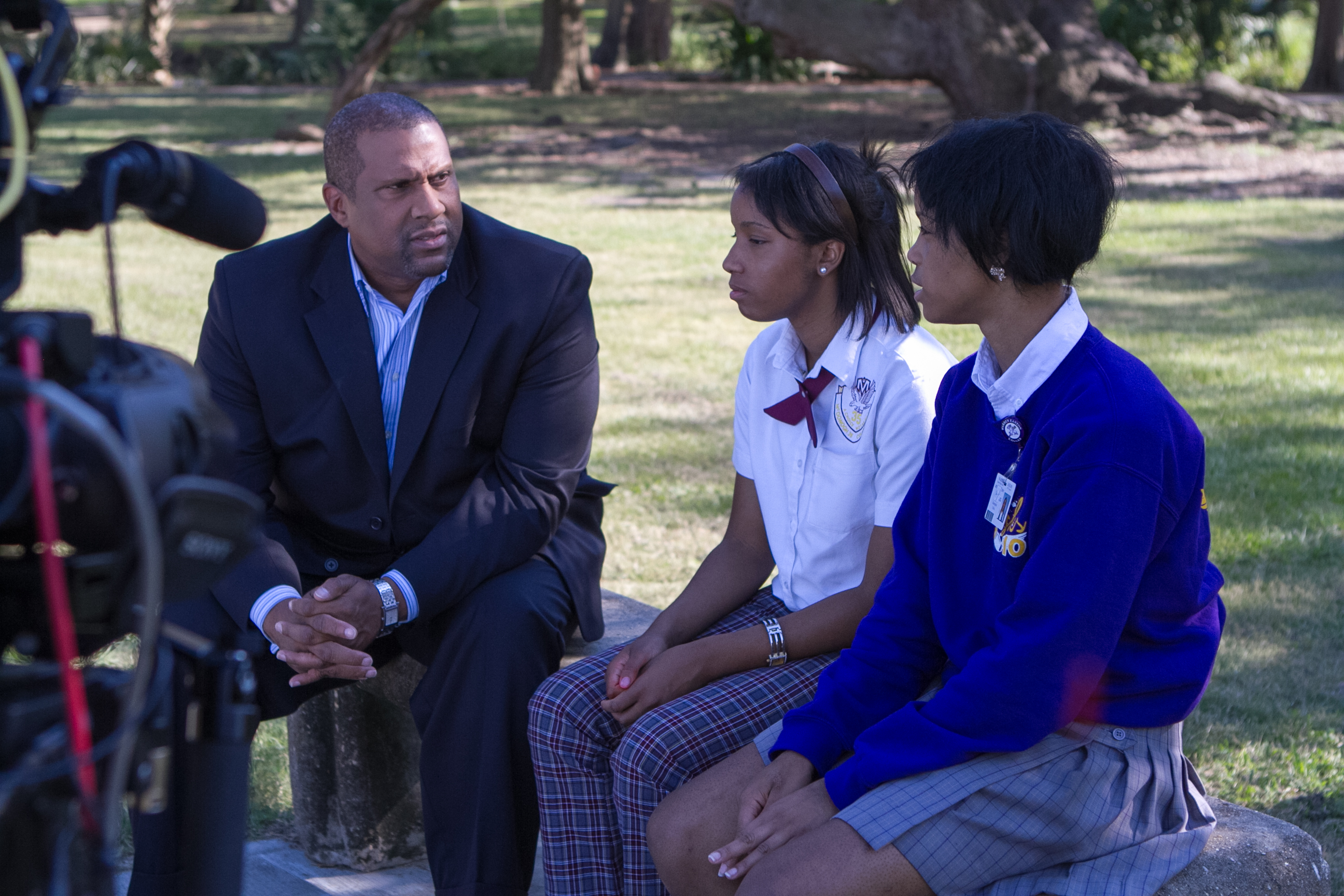
We had to shut the cameras down for a moment. The testimony of the two New Orleans sisters, Kenyatta, 15, and Kennisha, 17, was too surreal, too emotional and too raw.
Kenyatta was involved in a fight at school that she didn't start. Because of "zero tolerance" policies adopted at their high school and many others in America, Kenyatta was handcuffed, arrested and expelled. Kennisha, who tried to break up the fight, was also expelled. Both girls are stellar students with high grade point averages.
Kenyatta and Kennisha are two of the faces and stories you'll see and hear in "Education Under Arrest," which premieres tomorrow, Tuesday, March 26, on your local PBS station.
2013-03-25-12.JPG
One of every three teens arrested is arrested in school. It's a punitive system based, in large part, on "zero tolerance" policies adopted in the late 1990s after the shocking school shootings in Columbine; a system that's built a highway into prison, but barely a sidewalk out.
We took our cameras to Washington State, Louisiana, California and Missouri to meet and speak 

Mike Klonsky's SmallTalk Blog: Rahm finds his strongest support coming from the right

Mike Klonsky's SmallTalk Blog: Rahm finds his strongest support coming from the right:


Rahm finds his strongest support coming from the right

The Chicago Students Organizing to Save Our Schools group marches to Mayor Rahm Emanuel's office at City Hall on Monday to present a letter from Chicago Public Schools students asking him not to close their schools. | Al Podgorski~Sun-Times
Once again, the mayor is finding his strongest support coming from right-wing, anti-tax, anti-union conservatives. The far-right National Review dotes on Rahm and his school closings and blasts CTU prez Karen Lewis for her "overheated rhetoric." Oh the horror -- she called him the "murder mayor" since the city's murder rate jumped 40% in his first year and his policies include the mass murder of city health and mental clinics as well as schools.

But while the squeamish gentlemen at NR may take offense at Lewis' hard-hitting metaphors, her rhetoric seems mild compared to what I am hearing from her base in the schools and in the neighborhoods. If anyone (NR