Latest News and Comment from Education

Monday, January 2, 2017

CURMUDGUCATION: Test Prep Abroad

CURMUDGUCATION: Test Prep Abroad:

Test Prep Abroad

Related image

Because I search for a wide assortment of education-related stuff on line, the cookie-bot dance often brings me strange, new advertisements. Like a link to Scoregetter.com, an test prep outfit in Nungambakka, Chennai, which is on the southwest side of India. Just up the street from Pizza Hut.

Right there in the world.

Just up the street from Pizza Hut

I wish I had saved their ad, but some copy from their website gives you a taste of Scoregetter's almost-but-not-quite-there appeal:

A student, for us, is not a client, but a chance to showcase our proven ability all over again. We have, over the years, understood what it takes for students to achieve a good score.

Scoregetters will help you prep for any of the major standardized tests in Australia, Singapore, New Zealand, Germany, Canada, and the USA. Germany's appeal is "zero tuition fees" while New Zealand "has a global recognition as a contributor of excellent education. It has a progressive education 
CURMUDGUCATION: Test Prep Abroad:

NYC Public School Parents: Two new research summaries on the multiple benefits of class size reduction

NYC Public School Parents: Two new research summaries on the multiple benefits of class size reduction:

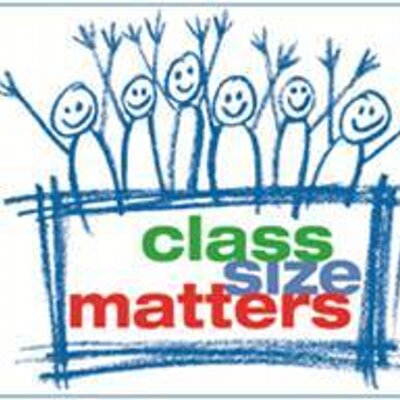
Two new research summaries on the multiple benefits of class size reduction

Image result for class size reduction

Here are two research summaries on the evidence for the wide-ranging benefits of class size reduction; the first is for use by any teacher, parent or advocate nationally; the second is meant primarily for residents of New York state.

These research briefs are especially useful in advocating for your state or district to use its Title IIA funds for class size reduction, as the new federal law known as ESSA, or Every Student Succeeds Act, requires evidence if these funds will be used to hire teachers to lower class size.


Related image

A Teacher on Teaching: Forced to Betray My Mission: What a Real Teacher Fears

A Teacher on Teaching: Forced to Betray My Mission: What a Real Teacher Fears:

Forced to Betray My Mission: What a Real Teacher Fears


If you think high-stakes testing is doing severe damage to U. S. education you are not alone.

I know, when I retired in 2008, after thirty-three years in the classroom, it seemed I might be crazy. High-stakes testing was not improving education. In fact, it appeared to be doing harm.

Eight years later, it seems I wasn’t crazy.

To wrap up 2016 Badass Teachers Association (if you haven’t joined you should) posted the following picture on its Facebook page. It came by way of Ken Previti, an education blogger, himself:

 There were a number of quick comments in support. Cedie Ache, another education blogger, added #6: “The tests make both curricula investors and test-makers RICH, RICH, RICH.”


Then Bobby Lee Reuss weighed in, speaking from the heart—speaking, probably, for millions of educators who work with or have with children every day. He captures, I fear, many of the deepest concerns of front line teachers, principals, psychologists, and counselors, as they try to avoid the yawning pitfalls of “school reform.” Like so many who work with children, Reuss wonders if reforms have been driven by fools at the top. Now he fears the new administration in Washington, D. C. could be even worse. Here’s his (lightly edited) response:
The majority of experienced teachers who actually earned our post-graduate degrees and teaching credentials after having been educated and trained by the Education Departments of real and respected colleges and universities have a justifiably immense trepidation about the nomination of Betsey DeVos and the incoming Trump administration’s orientation and A Teacher on Teaching: Forced to Betray My Mission: What a Real Teacher Fears:

E. D. Hirsch: “American Teachers Are Being Blamed for Intellectual Failings That Permeate the System Within Which They Must Work.” | Ed In The Apple

E. D. Hirsch: “American Teachers Are Being Blamed for Intellectual Failings That Permeate the System Within Which They Must Work.” | Ed In The Apple:

E. D. Hirsch: “American Teachers Are Being Blamed for Intellectual Failings That Permeate the System Within Which They Must Work.”

Image result for E. D. Hirsch Cultural Literacy: What Every American Needs to Know

Its hard to believe that its been thirty years since the publication of E. D. Hirsch’s Cultural Literacy: What Every American Needs to Know. The book proposes,
…that all public schoolchildren should be provided with instruction aimed at familiarizing them with a wide variety of topics, including literature, geography, history, math, science, art and music, in order to have the background knowledge that would make them successful readers and learners.
The book became famous, or, depending your place on the ed reform spectrum, infamous, for the 63-page index of 5,000 essential subjects and concepts that Hirsch believed teachers should impart to students.
Hirsch, a self-described, “almost Socialist” was painted as a neo-conservative and few school districts adopted his ideas.
The current apostasy are Common Core standards.
In many schools an unintended consequence of the emphasis on Common Core-based testing has been purging classrooms of all but what is tested.
Since the 1987 publication innumerable “innovations” or “reforms” have come and gone: from Ebonics to the Common Core; the Core Knowledge Foundation (Explore Core Knowledge Sequences here), continues to support parents and schools that advocate the cultural literacy philosophy.  The foundation, a not-for-profit provides a K – 8 curriculum; a grade-by-grade sequence of lessons, of E. D. Hirsch: “American Teachers Are Being Blamed for Intellectual Failings That Permeate the System Within Which They Must Work.” | Ed In The Apple:


BATs Support Journey for Justice and Network for Public Education Campaigns to Stop Devos - Badass Teachers Association

Badass Teachers Association:

BATs Support Journey for Justice and Network for Public Education Campaigns to Stop Devos


BATs a few weeks ago BATs held a successful social media campaign, call in, petition, and emails to our Senators to tell them to stop Betsy Devos.  NPE circulated a successful email campaign that got over 90,000 letters sent to Senators to tell them stop the Devos nomination.  We must keep up the pressure because the Devos hearing is slated for January 11th. 


WE MUST KEEP UP THE PRESSURE.  

Please join Journey for Justice #DumpDevos campaign on social media as well as their call in campaign to the HELP committee members.  J4J has a goal of 10,000 calls beginning Jan 4th.  How can you support this campaign?

1.  Join the twitter storm on Jan. 4th.  from 7-8 CST  https://www.thunderclap.it/projects/51580-dumpdevos - tell members of the HELP committee on twitter to say NO to Devos.  Here are some tweets that you can send to the twitter account of all the HELP members.  Please do so from 7-8 PM CST during the J4J twitter storm.   https://docs.google.com/document/d/1EOzysckZypLdeyRbjEBLQH-rENBvZKOrUwLkZ83y2VI/edit

2.  Please call members of the HELP committee beginning on  Jan. 5th.  Here are the numbers and script attached.  https://drive.google.com/file/d/0BwABMxjvCadzU3dvVDVhWE5TWlk/view
Please also check in with Journey for Justice for their full event package here http://www.j4jalliance.com/

Network for Public Education has gathered the numbers for every Senator.  Please use the attached to once again call your State Senator to tell them to STOP the nomination of DeVos

Thank you to Carol Burris, Executive Director of NPE, for compiling all these numbers and contact info.  Please use it to place your calls this week https://docs.google.com/document/d/1tRWFq5g0o0FI3ifql60h0_LCtrhTImWPEfK26kncFBo/edit?usp=sharing


Here are some talking points you can use as to why Betsy Devos is BAD for public education.


 Badass Teachers Association:

Betsy DeVos: Jeb Bush’s consolation prize - POLITICO

Jeb Bush’s consolation prize - POLITICO:

Jeb Bush’s consolation prize
There may be a silver lining for Jeb Bush — the elevation of his longtime friend, patron and political ally, Betsy DeVos, as education secretary.


There may be a silver lining to the 2016 presidential election for Jeb Bush — the elevation of his longtime friend, patron and political ally, Betsy DeVos, as education secretary.

If DeVos is confirmed by the Senate as most expect, Bush could see his views on education — repeatedly ridiculed on the campaign trail by Donald Trump — given new life as she turns their shared vision into national policy.

For years, the former Florida governor and DeVos worked side-by-side to push “school choice” policies that steer taxpayer funding to charter and private schools — and which critics blame for undermining traditional public schools. They served together on the board of Bush’s Foundation for Excellence in Education, to which DeVos and her husband gave large contributions. The DeVoses also contributed to Bush’s presidential campaign.

One of Trump’s biggest education promises — a proposed $20 billion block grant promoting charter and private schools — was developed with input from DeVos’ D.C.-based advocacy group, the American Federation for Children. Not surprisingly, it aligns closely with Bush’s education philosophy.

Now, the programs the two crafted together in Florida and other states are likely to serve as models for federal policymaking — indeed, they have already influenced Trump’s statements on the campaign trail.

 Little wonder that Bush was effusive about DeVos’ selection last month by the man who had derided him all year as “low energy.”

“I cannot think of a more effective and passionate change agent to press for a new education vision, one in which students, rather than adults and bureaucracies, become the priority in our nation’s classrooms,” Bush said.

The ties between Bush and DeVos are seen not just through their ideas and state legislative crusades but also through their shared reliance on the same network of policy staffers and experts — some of whom are likely to assume key Education Department posts.

A member of Bush’s inner circle, Josh Venable, who has worked as national director for advocacy and legislation at his foundation, is helping DeVos prepare for her confirmation hearing, sources told POLITICO.

Bush’s former deputy commissioner of education in Florida, Hanna Skandera, is also being considered for a top position beneath DeVos, sources told POLITICO. Skandera is a core member of the advocacy group Chiefs for Change, created by Bush in 2008 to highlight leaders of the so-called education reform movement.

Those ties have already proved politically ticklish for DeVos. Bush’s critics on the Jeb Bush’s consolation prize - POLITICO:

Teachers Are Stressed, And That Should Stress Us All : NPR Ed : NPR

Teachers Are Stressed, And That Should Stress Us All : NPR Ed : NPR:

Teachers Are Stressed, And That Should Stress Us All

Teacher meditates on top of her desk as chaos ensues around her.

We all experience stress at work, no matter the job. But for teachers, the work seems to be getting harder and the stress harder to shake.
new report out this month pulls together some stark numbers on this:
Forty-six percent of teachers say they feel high daily stress. That's on par with nurses and physicians. And roughly half of teachers agree with this statement: "The stress and disappointments involved in teaching at this school aren't really worth it."
It's a problem for all of us — not just these unhappy teachers.
Here's why: "Between 30 and 40 percent of teachers leave the profession in their first five years," says Mark Greenberg, a professor of human development and psychology at Penn State.
And that turnover, he says, costs schools — and taxpayers — billions of dollars a year, while research (like this and this) suggests teacher burnout hurts student achievement, too.
Greenberg has studied America's schools for more than 40 years, and, with support from the Robert Wood Johnson Foundation (also an NPR funder), he helped author the new brief exploring teacher stress.
He says teachers feel frazzled for many reasons, including high-stakes testing and the fact that many students are themselves coming to school stressed. As for the fixes, Greenberg recommends a few.
New teachers who receive steady mentoring are less likely to quit. Workplace wellness programs can also help. But both require schoolwide, even districtwide buy-in. If that's not realistic, Greenberg suggests a fix that is well within every teacher's control, one that just might surprise you ...
Mindfulness
That's right, mindfulness. For teachers. Patricia Jennings wrote the book on it Teachers Are Stressed, And That Should Stress Us All : NPR Ed : NPR:


State lawmaker calls for ‘timeout’ on approving new charter schools - The Santa Fe New Mexican: Northern New Mexico Education

State lawmaker calls for ‘timeout’ on approving new charter schools - The Santa Fe New Mexican: Northern New Mexico Education:

State lawmaker calls for ‘timeout’ on approving new charter schools

Image result for timeout

A New Mexico lawmaker wants the state to stop allowing new charter schools to open for at least two and a half years so officials can evaluate such schools now in operation and find ways to ensure they are delivering high-quality education.
“Maybe we need to call a ‘timeout’ for new charter schools to open and let some of the people who are enforcing the rules catch up and untangle what we have,” said state Rep. Christine Trujillo, D-Albuquerque, in a recent interview. “Let’s make sure that what we are doing is a good thing. Let’s make sure that our charter schools are accountable and successful.”
She has introduced a bill that would halt approval of new charter applications between June 1, 2017, and Jan. 1, 2020.
Charter schools — which are public schools but generally operate with more autonomy under a governing board rather than a school superintendent — in New Mexico and around the nation have faced criticism over their academic standards and the amount of public funds they use. Some studies have said student achievement at such schools is no higher than that at traditional schools. Many charter schools in New Mexico also have been under scrutiny in the past year for their financial management practices.
In August, the Chicago-based National Association of Charter School Authorizers said the state commission that oversees charter schools in New Mexico sets loose standards for approval and hasn’t clearly defined academic requirements.
One legislative report issued earlier this year said charter schools receive about 15 percent more in state funding per student than traditional public schools, and another found that while charter schools serve only 7 percent of students in the state, they have received 46 percent of new public school funding in the past seven years.
In January, an audit of 55 state-chartered schools found many of them lacking in internal financial controls and out of compliance with state law.
Trujillo serves on the Legislative Education Study Committee, which has created a Charter School Subcommittee to examine how the state’s 97 charter schools are performing. “I don’t have anything against charter schools,” she said. “But we are moving so fast that we don’t have time to really oversee how they are functioning.”
Charter school advocates oppose her bill.

Thoughts on Junk Indicators, School Rating Systems & Accountability | School Finance 101

Thoughts on Junk Indicators, School Rating Systems & Accountability | School Finance 101:

Thoughts on Junk Indicators, School Rating Systems & Accountability

Image result for School Rating Systems & Accountability


Over the past few years, co-authors Preston Green and Joseph Oluwole and I have written a few articles on the use, misuse and abuse of student growth metrics for evaluating teachers and for imposing employment consequences based on those metrics. Neither of our previous articles addressed the use of even more nonsensical status and status change measures for deciding which schools to close or reconstitute (with significant implications for employment consequences, racial disparities, and reshaping the racial makeup of the teacher workforce).
I have written a few posts on this blog in the past regarding school rating systems.
I’ve also tried to explain what might be appropriate and relevant uses of testing/assessment data for informing decision/policymaking:
It blows my mind, however, that states and local school districts continue to use the most absurdly inappropriate measures to determine which schools stay open, or close, and as a result which school Thoughts on Junk Indicators, School Rating Systems & Accountability | School Finance 101:

Schools Matter: Understanding KIPP Model Charter Schools: Part 16

Schools Matter: Understanding KIPP Model Charter Schools: Part 16:

Understanding KIPP Model Charter Schools: Part 16

Get 20% Off w/code: RLEGEN16

Probably the most graphic display of the unchecked KIPP Model in action was played out in a KIPP school in Fresno, CA, where organizational zeal, moral blindness, and an absence of public oversight and accountability combined to create an abusive, inhumane school environment that remains a testament to the evils inherent in "no excuses" schooling.

The KIPP Foundation pretends that the steroidal application of the kind of "no excuses" schooling implemented by Mr. Tschang at KIPP Fresno is something only in KIPP's past, but the searing narratives by former teachers provided as late as 2016 offer clear evidence that dehumanization, humiliation, total compliance, and unsustainable stress levels remain the coin of the KIPP realm.  

A copy of the Fresno Unified School District's investigation of KIPP Fresno can be downloaded here.

-->

Chapter 16
The KIPP Fresno Story
In the KIPP schools and the schools that emulate the KIPP Model, whether they are regular public or charter, we find the arbitrary separation of cultural factors from socioeconomic class continues to draw attention away from the effects of poverty and discrimination on school performance.  This, in turn, encourages the kinds of depersonalized crustiness among KIPP staff who are focused only on behaviors and attitudes that improve measurable test results. The No Excuses ideology, then, not only ignores the documented effects of poverty on the poor, but it becomes, ironically, an inadequate excuse for justifying morally hazardous acts.
Young, privileged beginning teachers like the ones recruited by Teach for America and other Schools Matter: Understanding KIPP Model Charter Schools: Part 16:


Call Your Senators: List of local phone numbers and addresses - Network For Public Education

List of local phone numbers and addresses - Network For Public Education:

Call Your Senators: List of local phone numbers and addresses

Here is a list of Washington and local phone numbers and addresses for US Senators. It is pre-election.  We will update as soon we get the new numbers. Click Here to Find Yours

State Board of Education Ignores Governor, Parents And Own Policy | Arizona Daily Independent

State Board of Education Ignores Governor, Parents And Own Policy | Arizona Daily Independent:


Please Continue Reading: State Board of Education Ignores Governor, Parents And Own Policy | Arizona Daily Independent:


Christian fundamentalist schools put kids ‘at risk’ with exorcisms and marriage grooming: inspectors

Christian fundamentalist schools put kids ‘at risk’ with exorcisms and marriage grooming: inspectors:

Christian fundamentalist schools put kids ‘at risk’ with exorcisms and marriage grooming: inspectors


Several Christian fundamentalist schools have been downgraded in the UK after a government watchdog group followed up on an exclusive report done by The Independent.
As the site reported this summer, LGBT students were being taught that homosexuality was unnatural and girls were being told that they had to obey men. Other students reported other forms of “serious mistreatment,” including “corporal punishment, exorcisms being performed on children and schoolgirls being ‘groomed’ for marriage to much older men.”
These Accelerated Christian Education (ACE) schools were designed to create a Bible-based education for homeschool students, pastors and private religious schools, according to their site. The schools teach thousands of students at over 26 institutions, but now those schools are coming under fire by the institutions responsible rating them. As a result, their score has been downgraded, The Independent‘s exclusive reports.
The Office for Standards in Education, Children’s Services and Skills (Ofsted) is the group responsible for regulating such schools. After the initial report, Ofsted investigated 10 schools, deciding those once rated “good” or “outstanding” must be downgraded to “inadequate” or “requires improvement.” One Ofsted report even concluded that children at one school “are at risk.”
Those students who once attended the schools said that the Ofsted reports don’t go far enough. They also want the government to be held accountable for not regulating, investigating and watching the schools they’re assigned to audit. They are demanding to know how the government fell short so “generations of children were failed.”
The ACE program actually comes from one in the United States. While the Department of Education publishes a state-by-state breakdown of the rules outlined for private schools, each state is responsible for regulating the schools in their district and determining if there is abuse. This summer, it took an expose from The Boston Globe to spark an investigation into 67 New England private schools.
Many of these religious schools have a strict interpretation of Christianity and require students to teach themselves using only the textbook. Students in some schools were put into desks facing the wall that prevented them from seeing any other students near them. It’s to inspire discipline. They look like a desk in a voting booth. This kind of Christian fundamentalist schools put kids ‘at risk’ with exorcisms and marriage grooming: inspectors:


What I Learned During My Break | Diane Ravitch's blog

What I Learned During My Break | Diane Ravitch's blog:

What I Learned During My Break


I announced that I was taking a break from Christmas to New Year’s. I think my break lasted a few hours.
I learned that I need to connect with my friends.  I learned that my need to communicate was greater than my need for a break.
I learned that I need to adjust my schedule so it is not as constrained as it was before. I was posting five times a day, sometimes more, but never less that five times a day. 9, 10, 11, 12, 1 pm.
I no longer feel it necessary to stick to that schedule. I will post when I have something to say. It might be five times or more or less or not at all.
I used to watch the number of hits. I am now over 29 million hits. I won’t watch anymore. If I reach 30 million, I will say so, but I no longer have a numerical goal. I don’t care.
I will be as honest as I can be. I won’t bite my tongue. I have only contempt for Trump, and I will not hesitate to say so. I think he is a danger to the future of the world. His arrogance and ignorance threaten civilization. We can only hope that the Republic will survive. I don’t remember a president who filled the top jobs with people even more unqualified than he is.
To those who come to the blog to argue, you are welcome as long as you are civil.
Just don’t forget that it is my living room and you are here on my sufferance. If you are rude or if you insult me or teachers as a group, I will not hesitate to throw you out.
Meanwhile, those of us who want a better education for all are in for a rough ride these next four years. I want the blog to be a source of hope, succor, information, comfort, humor, and possibly inspiration for those who do the hard work of educating our children. I will look for the good and praise it. I will call out the phonies. I will look to you for news about what’s happening in your state and district.
We face threats to knowledge, science, education, academic freedom, even the very existence of facts. The threats are real.
Together, we will outlast and overcome the darkness that looms before us. There have been worse times. We will survive this one too and get our beloved nation back on track, moving towards its ideals and values.
What I Learned During My Break | Diane Ravitch's blog:


CURMUDGUCATION: The Conservative Argument Against DeVos

CURMUDGUCATION: The Conservative Argument Against DeVos:

The Conservative Argument Against DeVos


It's not just progressives who have been up in arms about the nomination of Betsy DeVos to the post of Secretary of Education. The same network of conservative parent activists that raised an effective fuss over Common Core are exceedingly unpleased about the big-money donor and lobbyist being given the reins for education. The pressure to reject DeVos won't be coming just from the left and it won't be landing on Democratic senators.

The calls started with petitions like this one, calling for Bill Evers or Larry Arnn or Sandra Stotsky as Secretary of Education. And demanding that the new USED Secretary be a warrior against Common Core.


That promised warrior is not, of course, what folks got.

Here's Joy Pullman (The Federalist) at Conservative Review hitting the ground running with the reasons that DeVos is a bad pick.

First and repeatedly foremost in conservative circles is DeVos' deep love of the Common Core. Plenty of people remain unfooled by DeVos' attempted backtrack. DeVos would have been a perfect Secretary of Education pick for Jeb Bush, with whom she has a long history of partnering and contributing to his favorite policies. And as Pullman indicates, the anti-Common-Core parent network could react to DeVos quickly because they already knew her name, having come up against her money and her astro-turfed groups and her political connections in many of the states where the standards battle raged.

Christian conservative mom Jenni White (Reclaim Oklahoma Parent Empowerment) parses this quote form the DeVos website:

I do support high standards, strong accountability, and local control. When Governors such as John 
CURMUDGUCATION: The Conservative Argument Against DeVos:

Education Lessons From A Sparkly District: Who Is Voting On New Jersey's New Charter Regulations?

Education Lessons From A Sparkly District: Who Is Voting On New Jersey's New Charter Regulations?:

Who Is Voting On New Jersey's New Charter Regulations?


The issue of conflict of interest has been coming up a lot lately. Just before the holiday weekend, a friend pointed out one of the choices for Ambassador to the Vatican, William E. Simon, Jr., is the brother of one of the members, J. Peter Simon, of the NJ State Board of Education (NJSBOE). The New York Times wrote about the possibilities of ambassadorshiphere

Curious, I decided to take a closer look at Peter Simon. He is, after all, helping to steer public education in New Jersey. Are there affiliations that make his seat on the SBOE problematic? 

It turns out, yes, maybe there are. You decide.

Peter's late father, William E. Simon, former US Treasury Secretary, served under President Nixon, beginning in 1974, through President Ford's administration, resigning in 1977. He is also the founder, along with his sons, of William E. Simon and Sons, LLC, a private equity firm which specializes in technology, information technology, education, and manufacturing. Peter is currently Co-Chairman of the Firm along with his brother, Bill. 

Bill, Sr. and his wife, Carol, created The William E. Simon Foundation in 1967. Their seven children all serve on the Board of Directors. Peter and Bill, Jr. are Co-Chairmen. According to 
Education Lessons From A Sparkly District: Who Is Voting On New Jersey's New Charter Regulations?:


Mississippi children aren’t the only ones struggling to learn to read | SunHerald

Mississippi children aren’t the only ones struggling to learn to read | SunHerald:

Mississippi children aren’t the only ones struggling to learn to read

Image result for Literacy Project Foundation


When Victoria Norman was growing up in Laurel, she didn’t have anyone to help her with her homework. She and her brother were raised by her grandparents, who didn’t do much reading and couldn’t assist with her English lessons.
“I wasn’t that good in my English class,” she said. “When we had to read the stories and take the test, I would get low grades.
“I understood most of the words, but as they got bigger, it was a problem — and putting the punctuation in and the spelling.”
Norman, 28, dropped out of high school near the beginning of 12th grade when she had a child. Her literacy problems plagued her until she recently enrolled in adult education classes at Jones County Junior College. There, she got the reading and vocabulary help she needed.
“When I first came, my score was low, but when I tested on a harder book, I improved a lot and it just kept going on and on,” she said. “The stuff I know now I never even learned in high school.”
Many Mississippians never get the help Norman has received. According to the most recent figures available — from the 2003 National Assessment of Adult Literacy — 16 percent of adults in this state are illiterate. The national rate, according to a study conducted in late April by the U.S. Department of Education and the National Institute of Literacy, is 14 percent.
In Mississippi, there are few places for adults who can’t read to turn.
“There are only about 23 entities in the state who do (reading instruction),” said Caleb Smith, director of adult education at JCJC. “That includes 15 community colleges. There are a few school districts that do this around the state.”
Smith said a lack of literacy skills puts an adult at severe disadvantage.
“Without reading skills, they can’t read the fine print of contracts, get a loan, order food,” he said. “You can’t participate in social media, you can’t read a newspaper or a past-due bill (that you get) in the mail. You have to go to someone else and say, ‘Can you read this to me?’”

National problem

According to the Literacy Project Foundation, 50 percent of adults in this country cannot read a book written at an eighth-grade level. Three out of four people on welfare can’t read, and 50 percent of unemployed people between the ages of 16 and 21 cannot read well enough to be considered functionally literate.
Smith said most of the students who come to JCJC with reading problems are seeking a high school equivalency degree or GED.
“The first thing we do is we give them an assessment and determine what subjects they need to focus on and what skills in those subjects we need to focus on,” he said. “Then we place them in a class and using the diagnostics the test gives us, we teach them the skills.”
The students typically need both math and reading instruction. They come to class Monday through Thursday for three hours each day.
“Most everyone who comes in has some reading skills,” Smith said. “Most of our folks are at least a third- or fourth-grade level.”
48 million
number of words a child with college-educated, professional parents hears by age 4, compared with 13 million for a child from a low-language, low socioeconomic family
JCJC typically has about 800 students at a time seeking Mississippi children aren’t the only ones struggling to learn to read | SunHerald:


Read more here: http://www.sunherald.com/news/local/education/article124065799.html#storylink=cpy


School district still recovering from 'reform' - Loveland Reporter-Herald

School district still recovering from 'reform' - Loveland Reporter-Herald:

School district still recovering from 'reform'

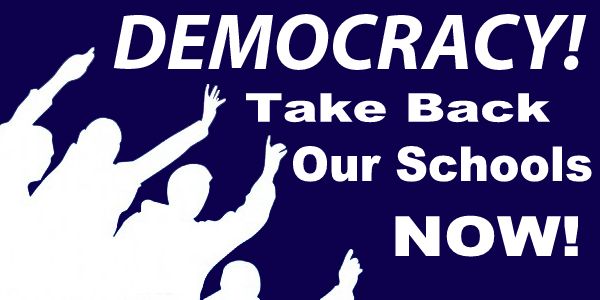
Image result for take back our schools

The letter, "Extensive reform needed in school district," (Dec. 18) could not be further from the truth.
The community, Thompson Board of Education and school district survived the two-year efforts of the conservative reform majority of four and their leader and Board President Bob Kerrigan. The vote for two years was four to three. We suffered through the agenda of Kerrigan's meetings, bullying of public speakers and minority board members, rudeness and complete lack of respect as if they were his personal meetings not board meetings, with rule by consensus and no voting.
Public comments were eliminated, time reduced arbitrarily, speeches canceled entirely, such as when parents from High Plains School were rudely sent home the night the conservative reform board majority voting block voted to delay High Plains School's design phase six more months. What a disgrace!
Remember when the Larimer County Republican Party announced they had worked hard to get the Reform candidates elected? One board member was actually on the party's board of directors. Many questioned this as a conflict of interest. Two are still on the board and voting "reform."
Community members questioned existence of a secret political agenda to get rid of the executive secretary for preference not performance, getting rid of the TEA/union, ending tenure, ending pay for teachers with advanced degrees, ending the PERA retirement system, ending teacher certification, lack of fair and open negotiations with TEA/union and court cases involving not bargaining in good faith.
We can still find the political agenda hidden in Balsiger's letter. You can even find a political reference to the "deplorables."
We need a nonpolitical solution and BOE that can work together for the common good of the students, schools, teachers, parents and community members.
William J. McBride Sr.
Loveland

Image result for take back our schools