Latest News and Comment from Education

Sunday, June 7, 2020

CATCH UP WITH CURMUDGUCATION + ICYMI: Just One Thing After Another Edition (6/7)

CURMUDGUCATION: ICYMI: Just One Thing After Another Edition (6/7)


Just One Thing After Another Edition 

So things have been a little quieter than usual on this page (and I'm late today) in part because what the current conversation about Black Lives Matter needs is not more input from middle aged white guys, and partly because things have been a bit upheaved here at the Institute (not all bad-- the twins turned 3 since last Sunday's edition). But I still have a few things for you to read:

Weathering The Storm: School Funding in the Covid-19 Er
The Kappan offers some useful economic ideas for the post-pandemic era, courtesy of Bruce Baker, Mark Weber, and Dean Acheson-- all folks who really know this stuff. Four specific proposals (including the squawk-inducing recommendation to cancel aid programs that favor affluent districts).

Dept of Ed Discloses Illegal Seizure of $2.2 Billion
Man, I would hate to have this news lost in the shuffle this week. Remember how USED was supposed grabbing money from folks during the pandemic pause-- yeah, they didn't stop. To the tune of billions of dollars. Billion, with a B.

The Broken Promise That Broke Jacksonville 
Florida, that is. The Florida Times-Union has the historical perspective on how the city cemented racist structures and kept its poor poor.

Gay HS Senior Barred from Walking At Graduation Because Pants 
From the "News That Sucks" file, this reminder that some public school administrators need to remove their heads from their rectums.

Betsy DeVos Is Looting Public Schools 
There's no news here, except that this opinion piece is not from some cranky blogger, but from Newsweek. Specifically, we're talking about her attempt to grab CARES money for private schools.

Changing What We Teach
Nancy Flanagan takes a look at what schools need to do better.

Amy Coopers Are Everywhere   
Rann Miller at The Progressive reminds us that schools have an Amy Cooper problem, too.

PA Charter Leader Blasts George Floyd Protestors, Then Backpedals Like Crazy.
Ana Meyers got a little heated about the protests and became one more person who was not well-served by how quick and easy it is to fire off a stupid and inadvertently revealing Tweet.

It's Time To Fix Standardized Testing 
Akil Bello takes a look at the wonky nuts and bolts of standardized testing and how it needs to be rebuilt, and he's just the guy for the job.

Public Funds Public Schools Website Provides Compendium of Research on School Vouchers
Jan Resseger looks at a trove of useful info, particularly if you are looking at the charter onslaught in Ohio, where the recent shift in law has really gutted public school finance.


CATCH UP WITH CURMUDGUCATION


CATCH UP WITH CURMUDGUCATION


Big Education Ape: Peter Greene: A Call For The College Board To Oust David Coleman -
http://bigeducationape.blogspot.com/2020/06/peter-greene-call-for-college-board-to.html


Do Exit Exams Reduce Crime
Of all the claims made about high school exit exams, this has to be one of the most unlikely, but here comes Matthew Larsen in the ever reformy Education Next to argue that exit exams--tests that are required to get a diploma--reduce crime . Larsen is an assistant professo r at Lafayette College in Pennsylvania. He's in the economics department, because of course he is. He set out to look at wheth
Graduation in the Age of Covid-19
There are three bridges that run in and out of my small town. Currently, each bridge is flying a batch of banners that collectively list the entire 2020 graduating class at our high school. When the banners went up, a photo of some seniors looking for their names on the banners ran on the front page of the local paper. High school graduation is a big deal in small town USA. My old high school (the
Successful School Reopening Plans Will Have One Thing In Common
Plenty of folks have thoughts about the conditions under which schools should be opened. The CDC thinks desks should be six feet apart. The American Enterprise Institute suggests that districts might want to get all staff members over fifty-five to take early retirement. Senator Bill Cassidy has called for aggressive testing and contact tracing. Over the next few months, we’ll see many plans floa
Toxic Ideas
Here are two views of the word that are loose in this country: The way the world works is (or is supposed to be) that you get what you deserve. Make bad choices? You get bad consequences. Your success or failure is completely up to you-- it's the result of the choices that you make. And this: It's not about high ideals or honor or empathy or care for your fellow human. It's about power, and the pe
FL: Philanthropy Backs Testing
Has there ever been a time when it was more obvious that the Big Standardized Test is waste of time and money? Do you hear anybody out on the street over the last week declaring, "What we need is some standardized testing to show systemic racism, because otherwise, how will we know?" But education amateurs still believe in testing's magic power, and nowhere is the Cult of Testing more firmly entre
ICYMI: Hellacious Week Edition (5/31)
Well, this has been a bunch of big ugly crap, on top of the One Damn Thing After Another sundae that is 2020. Let's read. All About the Mask Nancy Flanagan looks at the politics and symbolism of the ongoing mask wars. Chalkbeat Discovers Teachers on Front Lines Chalkbeat lets a brand new charter leader lay out some obvious obviousness about teachers and pandemic response. NYC Educator breaks it do
Teaching And The Social Contract (TL;DR)
I didn't write anything yesterday, which is an unusual day for me, but I've just been trying to take it all in. I have family in Seattle, friends in Pittsburgh. There's a lot of mess out there tonight. It's nothing new for our country, but it's never been laid out so starkly. The woman in Central Park deliberately 

NANCY BAILEY: Technology Fails Students. Will It Matter? What’s Next? Private, Parochial, Charters, and Online Programs?

Technology Fails Students. Will It Matter? What’s Next? Private, Parochial, Charters, and Online Programs?

Technology Fails Students. Will It Matter? What’s Next? Private, Parochial, Charters, and Online Programs?


How are schools going to look in the fall? Local school district educators and parents are meeting to draft plans. Weighing heavily on the minds of many is this question, will public schools survive? Will teachers still have a role to play in the education of students?
Technology has failed and schools are reopening on shaky ground. Will America throw up its hands and end public schooling for good? Will we be left with private and parochial schools, most which run on their own rules with little accountability to the public? Will substandard online programs and charters we know don’t work become the name of the game?
Parents are frantic there will be no childcare. Teachers worry they will lose their jobs.
There’s reason to fear. The nation’s leaders  have permitted the firing of hundreds of thousands of teachers and staff who work in brick-and-mortar schools, yet they find money to bail out the cruise industry, a business that pays virtually no federal taxes. There’s concern for the post office (which I share), but public schools seem an afterthought.
There’s Governor Andrew Cuomo, who abruptly announced that the Bill and Melinda Gates Foundation will design a blueprint for New York’s schools.
Education Secretary Betsy DeVos seeks to end public schooling. The Covid-19 crisis has CONTINUE READING: Technology Fails Students. Will It Matter? What’s Next? Private, Parochial, Charters, and Online Programs?

Peter Greene: A Call For The College Board To Oust David Coleman

A Call For The College Board To Oust David Coleman

A Call For The College Board To Oust David Coleman

When David Coleman joined the College Board as CEO and president in 2012, it must have seemed like a natural step forward; he had overseen the redesign of K-12 education via the Common Core standards, and now he could use the leverage of College Board’s flagship programs—AP courses and the SAT—to extend his vision to college.
It has not worked out well.
Coleman’s tenure has been marked by a number of unforced errors, from a clunky too-fast-to-market SAT redesign right up through the recent fiasco of take-it-from-home AP tests, which has led to a lawsuit. In 2018, Coleman issued a response in the wake of the Marjorie Stoneman Douglas High shootings that seemed to treat the tragedy as a marketing opportunity; more recently, the College Board issued some information on SAT sign-ups that included a perfunctory response to the current headlines about racial unrest. In 2018, the tone-deaf statement was followed by calls for Coleman’s ouster, and early in 2019 Coleman handed the President position off to Jeremy Singer, staying on as CEO. Now, calls for his removal are once again surfacing.
Some calls have been in the quiet back country of social media, but in a May 29 open letter to College Board trustees, Jon Boeckenstedt, Vice Provost of Enrollment Management at Oregon State University, called for “a change at the top” for the company. Boeckenstedt includes a “partial list of the embarrassing or educationally unsound things that have happened on his watch.”CONTINUE READING: A Call For The College Board To Oust David Coleman

Defund the Police to Fund Public Schools | gadflyonthewallblog

Defund the Police to Fund Public Schools | gadflyonthewallblog

Defund the Police to Fund Public Schools


Back in the pre-Coronavirus days when we still had in-person classes I used to come to school in a suit.
I didn’t have to – the dress code allowed me to wear pretty much whatever I wanted and most teachers dressed much more casually.
Now let me be clear – I’m not saying my way was the only wayEach teacher has his or her own way of doing things that work in their particular cases. But as for me, I’ve always agreed with the old adage that you should come dressed for the job you want, not necessarily the job you have.
I think educators are professionals. They should be respected and taken seriously.
And on the first day of school that’s what I want to tell my students without even opening my mouth: Hey! We’re doing important work here today.
However, as time goes on I often wear whimsical ties. A saxophone, multicolored fish, Space Invaders on test days.
In fact, this year some of the kids nicknamed me “tie man” and even if they didn’t have me as their teacher they’d pop their heads into the room to see what was CONTINUE READING: Defund the Police to Fund Public Schools | gadflyonthewallblog


John Thompson: Save My Former Student | Diane Ravitch's blog

John Thompson: Save My Former Student | Diane Ravitch's blog

John Thompson: Save My Former Student


John Thompson writes about his former student, who is scheduled to die:
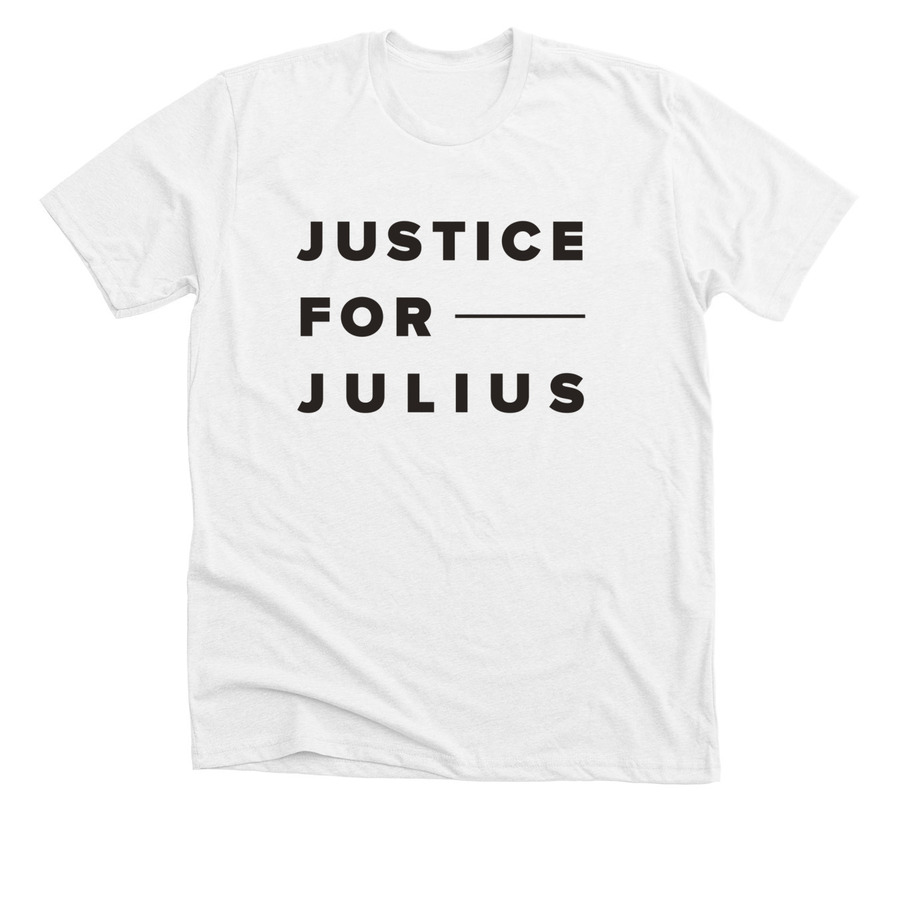
As the nation wrestles with the latest police killings and Black Lives Matter protests, the Oklahoma Pardon and Parole Board must decide whether to allow the execution of my former student, Julius Jones. Julius’ request for commutation has gained the support of the Congressional Black Caucus; criminal justice expert, Bryan Stevenson; numerous elected officials, pastors, bishops and archbishops; the Executive Director of Oklahomans for Criminal Justice Reform; the President of the NAACP State Conference; and public figures ranging from Kim Kardashian to a former Attorney General of Canada; and the Executive Director of the George Kaiser Foundation.
Now, three NBA basketball players, Blake Griffin, Russell Westbrook, and Trae Young, have joined in support of Julius.
Griffin, Westbrook, Young: Commute the sentence of Julius Jones https://nondoc.com/2020/06/03/westbrook-griffin-young-commute-sentence-julius-jones/ via @nondocmedia
Julius Jones
I was struck by the personal part of letter written by Griffin, who often was in our gym when I played basketball with Julius, his brother and his sister, as well as the person who we believe committed the murder. He wrote:
My father, Tommy Griffin, coached Julius when he played basketball at John Marshall High School, and often I CONTINUE READING: John Thompson: Save My Former Student | Diane Ravitch's blog
White Premium Unisex Tee

That Open Letter about School Safety | JD2718

That Open Letter about School Safety | JD2718

That Open Letter about School Safety


Turns out, it’s about much more than school safety.  For purposes of full discussion, we should have the text, not just the New York Daily News headline.
It looks like it was started by a Brooklyn principal, and signed by teachers, principals, APs, counselors, coaches, Chapter Leaders, and some central staff. But mostly by teachers. Looks like about 950 signatures so far.
For the record, I just got the text. I’m looking it over. I have not signed. I have not decided if I will.
Here’s the full text:
As school leaders, the months that have passed since the COVID-19 crisis gripped New York City have been some of the most challenging of our careers. Our staff, our students, and many of our own families have suffered unspeakable loss, and yet we have not been able to come together as communities to mourn and support one another.
Not surprisingly, the virus has disproportionately ravaged New York’s most vulnerable communities, home to so many of our black, brown, and immigrant students.
As if a once-in-a-generation health crisis weren’t enough, the murder of George Floyd at the hands of Minneapolis police reminds our students of the NYPD’s own sordid history of murdering and terrorizing black and brown New Yorkers; evidenced by the similar fates of Eric Garner, Kalief Browder, and Akai Gurley, and the dark era of stop-and-frisk.
Our students are civically engaged. They participate in and follow the protests that demand accountability and justice. They watch as the police–who they are asked to trust as their protectors–indiscriminately deploy tear gas, ram protestors with squad cars, pepper spray peaceful demonstrators and compliant journalists, and flash white power symbols to approving colleagues. The NYPD’s human rights abuses are on full display as they assert once again their indifference toward black and brown citizens’ immeasurable grief, and their intolerance for expressions of justified rage.
When our children finally return to the classroom, these crises will have left them in need of unprecedented levels of support from us, both academic and emotional. Instead, they will return to schools with budgets that have been gutted by over $827 million dollars. They will return to schools without adequate access to social workers, mental health and counseling services, restorative justice programs, arts programs, sports teams, and after school programming.
At the same time, the NYPD will see its budget substantially increased. When our students emerge from the collective trauma of COVID-19 and rampant police brutality, they’ll be met by faces wearing an NYPD uniform; on the corner, at the bus stop, in the subway, and at the doors of their schools. This will trigger feelings of fear, anger, and anxiety – not safety. After all, what evidence do black and brown students have that they can trust law enforcement officers?
The priorities of our city and state in this budget are clear. Children last, NYPD first. 
We would be remiss in our duties to our students if we did not use what power we have to join their efforts to convince those who remain indifferent that  “Black Lives Matter.” In light of that responsibility, we demand that the governor, mayor, and city council pass a budget that puts children first during this crucial time. That means drastic increases to public school and social service budgets, and sharp cuts to the NYPD’s budget. Increased school budgets should include funding for: CONTINUE READING: That Open Letter about School Safety | JD2718

EdAction in Congress June 7, 2020 - Education Votes

EdAction in Congress June 7, 2020 - Education Votes

EdAction in Congress June 7, 2020


Demand social justice and an end to police brutality

George Floyd struggled for his life for 8 minutes and 46 seconds as a police officer thrust a knee against his neck, maintaining the pressure even as he repeatedly said, “I can’t breathe” and bled on the ground. Americans saw what happened with their own eyes—bystanders recorded it on their cell phones—and responded with an outpouring of anger and grief. Now, those emotions are fueling a renewed, long overdue push for racial justice and an end to the police brutality that disproportionately kills African Americans, especially African American men like George Floyd.
“[This issue] is a cancer on our nation, and we must stand together to find the cure,” said NEA President Lily Eskelsen GarcíaTo realize that goal, NEA has joined hundreds of organizations in calling on Congress to take swift and decisive legislative action. As a first step, we are urging legislators to support H. Res. 988, introduced by Rep. Ayanna Pressley (D-MA), which condemns police brutality, racial profiling, and the use of excessive and militarized force while preserving civil rights, liberties, and protecting all people from police abuses. TAKE ACTION

Road to reopening runs through schools, yet McConnell refuses to act

Everyone agrees the road to reopening runs through America’s schools. But we can’t reopen them safely without taking costly steps to protect students and educators alike—steps that are unaffordable with massive budget cuts on the ways. We need to provide personal protective equipment (PPE); modify classrooms, cafeterias, and school buses to make social distancing possible; intensify instruction and support for students traumatized by the impact of the coronavirus on their families and communities; and more.
Senate Majority Leader Mitch McConnell (R-KY) says there’s no immediate need to act. The truth is the longer the Senate delays, the greater the likelihood we’ll see a repeat of the Great Recession a decade ago, during which financially strapped states and localities cut essential student services and laid off tens of thousands of educators. This time, the damage could be even worse. NEA supports the HEROES Act passed by the House, which would provide $915 billion in direct relief for state and local governments and $90 billion to stabilize education funding. TAKE ACTION

Cheers and Jeers

Sen. Kamala Harris (D-CA)cited NEA’s opposition in oral remarks urging rejection of Justin Walker’s nomination to the U.S. Court of Appeals for the District of Columbia.

Sen. Brian Schatz (D-HI) tweeted that he will introduce an amendment to the must-pass National Defense Authorization Act to end the 1033 program that has transferred military weaponry to local police departments in at least at least eight states: California, Florida, Georgia, Kansas, Michigan, Nevada, Texas, and Utah.
Sen. Warren Elizabeth Warren (D-MA) supported having faculty and staff at the table when making decisions about reopening colleges and universities during a June 4 HELP Committee hearing, “COVID-19: Going Back to College Safely.”
Rep. Pramila Jayapal (D-WA) posted a video on Twitter to mark the first year anniversary of the House passing the American Dream and Promise Act.
Senate Minority Leader Chuck Schumer (D-NY) proposed a resolution condemning the violation of peaceful demonstrators’ First Amendment rights by using gas and rubber bullets to disperse them on June 1 in Washington, DC.
Senator Majority Mitch McConnell (R-KY) killed Sen. Schumer’s request for a resolution condemning the use of gas and rubber bullets to disperse peaceful demonstrators exercising their First Amendment rights.
EdAction in Congress June 7, 2020 - Education Votes

Schools Turn to Surveillance Tech to Prevent Covid-19 Spread | WIRED

Schools Turn to Surveillance Tech to Prevent Covid-19 Spread | WIRED

Schools Turn to Surveillance Tech to Prevent Covid-19 Spread
Administrators hope tracking beacons will identify where students congregate and who should be isolated if someone contracts the coronavirus.


WHEN STUDENTS RETURN to school in New Albany, Ohio, in August, they’ll be carefully watched as they wander through red-brick buildings and across well-kept lawns—and not only by teachers.
The school district, with five schools and 4,800 students, plans to test a system that would require each student to wear an electronic beacon to track their location to within a few feet throughout the day. It will record where students sit in each classroom, show who they meet and talk to, and reveal how they gather in groups. The hope is such technology could prevent or minimize an outbreak of Covid-19, the deadly respiratory disease at the center of a global pandemic.

Read all of our coronavirus coverage here.

Schools and colleges face an incredible challenge come the fall. Across the world, teachers, administrators, and parents are wrestling with how to welcome pupils back into normally bustling classrooms, dining rooms, and dorms, while the threat of the coronavirus remains ever-present.
Many plan to proceed gradually and carefully, while keeping kids spread out as much as possible. The Centers for Disease Control and Prevention’s guidelines for reopening schools recommend staggered schedules that allow for smaller classes, opening windows to provide more air circulation, avoiding sharing books and computers, regular cleaning of buses and classes, and requiring masks and handwashing. Many see some form of distance learning continuing through next year.
A handful also are considering deploying technology to help. “We are very much interested in the automated tracking of students,” says Michael Sawyers, superintendent for New Albany-Plain Schools. He believes that the technology could help the school determine whether social distancing is being observed and help quickly identify students who may have been exposed if someone tests positive for the coronavirus.


Randi Weingarten, president of the American Federation of Teachers says she isn’t aware of other schools looking to adopt detailed surveillance measures. But the AFT has issued guidelines on reopening schools and colleges that warns about vendors potentially using the crisis to expand data-mining practices.

A small but growing surveillance industry has sprung up around Covid already, with firms pitching everything from temperature-tracking infrared cameras and contact tracing apps to wireless beacons and smart cameras to help enforce social distancing at work. “It's been one of the most disturbing parts of this,” says Albert Fox Cahn, founder of the Surveillance Technology Oversight Project.
Now, Cahn says, this cottage industry is keen to find a way into classrooms. “One of the things that will be a huge profit driver, potentially, is that younger children would need specially designed devices if they don’t have smartphones,” he says.
Like countless other schools, those in the New Albany-Plain district are considering regular CONTINUE READINGSchools Turn to Surveillance Tech to Prevent Covid-19 Spread | WIRED

Government job losses are piling up, and it could get worse | WHP

Government job losses are piling up, and it could get worse | WHP

Government job losses are piling up, and it could get worse


WASHINGTON (AP) - Jobs with state and city governments are usually a source of stability in the U.S. economy, but the financial devastation wrought by the coronavirus pandemic has forced cuts that will reduce public services — from schools to trash pickup.
Even as the U.S. added some jobs in May, the number of people employed by federal, state and local governments dropped by 585,000. The overall job losses among public workers have reached more than 1.5 million since March, according to seasonally adjusted federal jobs data released Friday. The number of government employees is now the lowest it's been since 2001, and most of the cuts are at the local level.
"With that comes a decline in essential public services," Lee Saunders, president of the American Federation of State, County and Municipal Employees, said on a conference call with reporters this week. For instance, "911 calls are taking a long time to be answered."
Clean drinking water and trash pickups also are being affected in some places, he said.
Tax revenue from businesses walloped by coronavirus restrictions has plummeted, forcing cuts by cities and states that rely on that money. It's likely to get worse in the coming months unless Congress delivers additional aid to states and cities.
Several states are projecting tax revenue will be down 20% or more for the fiscal year starting next month, and governments are facing rising costs resulting from the virus and the police and National Guard response to protests over racial injustice and police brutality.
The layoffs and furloughs are coming amid calls for governments and school districts to do more to respond to the outbreak — from hiring workers to find those who had contact with people infected with the coronavirus to additional janitors needed to sanitize schools and make them safe for students and teachers to return.
"It's going to make it very, very difficult to reopen schools in the fall because you need more money, not less money to reopen," said Randi Weingarten, president of the American Federation of Teachers.
In the Chicago suburbs, Lyons School District No. 103 laid off health aides at its six schools. One of them, Maureen Jacobsen, said she was told the workers, who give students medicine and first aid for minor injuries, were being laid off in anticipation of a new requirement that each school has a nurse. A district official did not return a call Friday.
So at 58, Jacobsen is working on her resume for the first time in 21 years. She said the students at Robinson Elementary will be affected by not having her there to help them when school resumes next fall.
"When they go back, they're looking for the familiar," Jacobsen said. "I could tell you that I CONTINUE READING: Government job losses are piling up, and it could get worse | WHP

NYC Educator: Hybrid Learning

NYC Educator: Hybrid Learning

Hybrid Learning


I'm wary of hybrids. About a year ago, I bought the car you see here, a Rav4 hybrid. It's supposed to get over 500 miles to a tank of gas, but for some reason, it registers full at 10 rather than 14.5 gallons. Toyota tells me they're working on the problem, but they've been saying that since September. I'm growing to doubt their good intentions.

Speaking of September, it's rapidly approaching. What the hell are we going to do with 1.1 million kids who need an education? In our school, we're now discussing having a third of the students come in, while the other two-thirds watch us remotely. That way, we'd have no more than 12 students in a classroom at a time, and perhaps we could meet CVC guidelines. In a moderately imperfect world, that would work, I suppose.

So remote learning will go on, one way or another. My feeling is remote learning is better than nothing. The TV commercials pushing cyber-charters make it out as a panacea, but that's only because they're watching their bottom line and ignoring reality. Human interaction is a huge factor in education, and I'd never have been in it this long otherwise. But better than nothing, so far, is the best thing I can say about it.

Here's the thing, though. If we, say, group our students into A, B, and C, let's say alphabetically, that would indeed mean only a third of the population was in the building at any given time. However, that does not indicate that there would only be 12 students in my classroom, or yours. Maybe, because of the way the alphabet falls, there would only be eight. Or maybe there would be eight in your class and fifteen in mine.

Actually, as an ESL teacher, I have a lot of Chinese students, and a lot of their names favor the end of the alphabet. I'd probably have more students on the third day than the first or second. Of course we could redistribute the names, but your class may not have the same alphabetical idiosyncrasies. In fact, no matter how we fix this, I can't envision a way in which class sizes will be uniform.

So what do we do when the class sizes get too high for safety? Send the kids to the auditorium to watch the classes remotely? That might work, if we trusted the students to do so. Maybe they could wear earphones, so they don't have to listen to 99 other classes. Certainly a lot of students have them, and wired earphone, at least, are fairly inexpensive.

Are we going to continue to allow students to show avatars rather than faces? While the students are in their homes, and while their homes are none of our business, I'm certain CONTINUE READING: 
NYC Educator: Hybrid Learning

State Of California Releases School ReOpening Guidelines – It’s Going To Be A Hell Of A Fall | Larry Ferlazzo's Websites of the Day...

State Of California Releases School ReOpening Guidelines – It’s Going To Be A Hell Of A Fall | Larry Ferlazzo's Websites of the Day...

STATE OF CALIFORNIA RELEASES SCHOOL REOPENING GUIDELINES – IT’S GOING TO BE A HELL OF A FALL


The State of California just released school re-opening guidelines.
I don’t think there is anything surprising in their recommendations (you can read a summary at The San Francisco Chronicle’s article Temperature checks, masks for teachers: California releases stringent school reopening rules).
There was, however, one pleasant surprise about the state providing a lot of supplies to schools at no charge, including:
• No-touch thermometers for every school and childcare facility; more than 47,000 total
• Face shields for every teacher and childcare provider; about 2.4 million total
• Over 14 million cloth face coverings for staff and students
• Over 16 million disposable masks
• 123,000 N95 respirators for school-based health professionals, including those who interact with students showing symptoms
• 143,000 gallons of hand sanitizer
Of course, the state is also cutting the education budget by 10-13%.  Who’s going to pay for the additional custodians, school nurses and bus route drivers needed to follow the guidelines?  Not to mention the additional laptops and Internet service needed by students? And for the costs involved in improving ventilation systems?  And for the additional sick time and subs needed when teachers have to quarantine for fourteen days if they are found to have the virus?
Addendum: The New York Times has just published “How to Reopen America’s Schools,” which talks a lot about Los Angeles’ schools.

State Of California Releases School ReOpening Guidelines – It’s Going To Be A Hell Of A Fall | Larry Ferlazzo's Websites of the Day...

Worried About Those “Big” Losses on School Tests Because Of Extended Stays At Home? They May Not Even Happen, And If They Do, They May Not Matter Much At All! (David Berliner) | Larry Cuban on School Reform and Classroom Practice

Worried About Those “Big” Losses on School Tests Because Of Extended Stays At Home? They May Not Even Happen, And If They Do, They May Not Matter Much At All! (David Berliner) | Larry Cuban on School Reform and Classroom Practice

Worried About Those “Big” Losses on School Tests Because Of Extended Stays At Home? They May Not Even Happen, And If They Do, They May Not Matter Much At All! (David Berliner)


David Berliner is Regents Professor Emeritus at the Mary Fulton Teachers College, Arizona State University. This appeared on Diane Ravitch’s blog May 28, 2020
Although my mother passed away many years ago, I need now to make a public confession about a crime she committed year in and year out. When I was young, she prevented me from obtaining one year of public schooling. Surely that must be a crime!
Let me explain. Every year my mother took me out of school for three full weeks following the Memorial Day weekend. Thus, every single year, from K through 9th grade, I was absent from school for 3 weeks. Over time I lost about 30 weeks of schooling. With tonsil removal, recurring Mastoiditis, broken bones, and more than the average ordinary childhood illnesses, I missed a good deal of elementary schooling.
How did missing that much schooling hurt me? Not at all! 
First, I must explain why my mother would break the law. In part it was to get me out of New York City as the polio epidemic hit U.S. cities from June through the summer months. For each of those summers, my family rented one room for the whole family in a rooming house filled with working class families at a beach called Rockaway. It was outside the urban area, but actually still within NYC limits.
I spent the time swimming every day, playing ball and pinochle with friends, and reading. And then, I read some more. Believe it or not, for kids like me, leaving school probably enhanced my growth! I was loved, I had great adventures, I conversed with adults in the rooming house, I saw many movies, CONTINUE READING: About Those “Big” Losses on School Tests Because Of Extended Stays At Home? They May Not Even Happen, And If They Do, They May Not Matter Much At All! (David Berliner) | Larry Cuban on School Reform and Classroom Practice