Latest News and Comment from Education

Tuesday, October 15, 2019

It's Larry Ferlazzo's Websites of the Day... A VERY BUSY DAY | The latest news and resources in education since 2007

Larry Ferlazzo's Websites of the Day... | The latest news and resources in education since 2007

It's Larry Ferlazzo's Websites of the Day... A VERY BUSY DAY | The latest news and resources in education since 2007


The Best Social Emotional Learning Resources Of 2019 – Part Two
Time for another end-of-year “Best” list! I’ll be adding this list to I’m adding this post to All My 2019 “Best” Lists In One Place! I publish a regular series called SEL Weekly Update , and I thought it would useful to readers and to me to review them and highlight the ones I think are the best of the year. You might also be interested in “Best” Lists Of The Week: Social Emotional Learning Resou

YESTERDAY

Video: “FireStorm: How Wildfires Are Spread”
skeeze / Pixabay I’m adding this new video from The Weather Channel to The Best Sites For Learning About Forest Fires:
“Students Feel More Motivated When Writing for ‘Authentic Audiences'”
Students Feel More Motivated When Writing for ‘Authentic Audiences’ is the headline of my latest Education Week Teacher column. Shanna Peeples, Mary K. Tedrow, Amy Sandvold, and Laverne Bowers “wrap up” this five-part series on students writing for “authentic audiences.” Here are some excerpts: I’m adding it to The Best Places Where Students Can Write For An “Authentic Audience”
Video: “What if We Nuke a City?”
TGrand / Pixabay Here’s a new and terrifying video from Kurzgesagt – In a Nutshell. I’m adding it to The Best Sites For Learning About Nuclear Weapons .
We’re Taping A Four Video Series On Student Motivation This Week – Here Are A Ton Of Related Resources In The Meantime
geralt / Pixabay Katie Hull and I will be videotaping a four-part (short) video series on student motivation for Ed Week, and it’s happening this week! As regular readers know, I’ve written three books on the topic and have a fourth one in the works, too. The videos will be out later this year but, in the meantime, you might want to check out A Collection Of My Best Resources On Student Motivatio
New Law In California Says Schools Will Start Later In Morning – What Opportunities Might It Offer
California’s governor just signed a law requiring schools to start later in the morning. For our school, that will mean beginning twenty minutes later (from 8:10 to 8:30 AM). Interestingly, I seldom have had students initiate a conversation about a current event as much as they did today after reading about the law online. And it was all positive. Like our state union, I wasn’t a big fan of the b
New Resources On Indigenous Peoples’ Day & Columbus Day
Alexas_Fotos / Pixabay Here are new additions to an already massive list, The Best Online Resources About Christopher Columbus & Indigenous Peoples’ Day: Columbus Day Or Indigenous Peoples’ Day? is from NPR. Illuminative is a new resource site created by Native American youth. “This isn’t a day about protesting Columbus, it’s about celebrating indigenous people,” the founder of Indigenous Peoples
My Latest BAM! Radio Show Offers Suggestions On When To Use – & Not To Use – Tech In The Classroom
Knowing When to Say Yes and When to Say No to Education Technology is the topic of my latest ten-minute BAM! Radio show. I’m joined in the discussion by Anne Jenks, Irina McGrath, and Michelle Shory, who have also all contributed written commentaries to my Education Week Teacher column. I’m adding this show to All My BAM Radio Shows – Linked With Descriptions .
Big New Study Finds That Inquiry & Problem-Based Instruction In Math/Science Is Effective
Students Learn More From Inquiry-Based Teaching, International Study Finds is an article in Education Week that does a good job summarizing a new study finding that inquiry and problem-based teaching can be effective in math and 
Larry Ferlazzo's Websites of the Day... | The latest news and resources in education since 2007

Pension thieves and union busters. – Fred Klonsky

Pension thieves and union busters. – Fred Klonsky

PENSION THIEVES AND UNION BUSTERS

Mark Glennon was one of Governor Rauner’s point men on pension thievery.
Glennon publishes an online site called Wirepoints.
What is helpful about Glennon is that he and his web site embody the right wing’s key anti-worker agenda items in a single one-stop shop: Pension thievery and union busting.
It also demonstrates how out of touch they are with the public.
Polling on the issue of public pensions shows that most people in Illinois believe that pension promises should be kept.
Today’s Sun-Times released a poll showing that half of those asked support the Chicago Teacher Union in their current negotiations, even if they strike.
The poll also provides evidence that Chicagoans are not interested in demonizing either Mayor Lightfoot or CTU President Jesse Sharkey.
Both are committed to the process.
To me this  demonstrates that the public supports quality public schools AND CONTINUE READING: Pension thieves and union busters. – Fred Klonsky

Teaching with Technology in Public Schools | Larry Cuban on School Reform and Classroom Practice

Teaching with Technology in Public Schools | Larry Cuban on School Reform and Classroom Practice

Teaching with Technology in Public Schools

Since the early 1980s with the appearance of desktop computers in schools, questions about their presence in classrooms have been debated. Access to, use of, and results from new technologies have been central issues for a motley coalition of  high-tech vendors, technophile educators, and policymakers eager to satisfy parents and voters who want schools to be technologically up-to-date with other institutions. And this coalition has surely been successful in increasing teacher and student access to desktop computers, then laptops, and now tablets and smartphones.
First, a quick run through the initial goals and current ones in putting new technologies into the hands of teachers and students. Then a crisp look at access, use, and results of the cornucopia of devices in schools.
By the  mid-1980s, there were clear goals and a strong rationale for investing in buying loads of hardware and software and wiring buildings . Those goals were straightforward in both ads and explicit promises vendors and entrepreneurs made to school boards and administrators.
*students would learn more, faster, and better;
*classroom teaching would be more student-friendly and individualized;
*graduates would be prepared to enter the high-tech workplace.
By the early 2000s, evidence that any of these goals were achieved was either scant or missing. It became increasingly clear that promised software in math and English fell far short of raising students’ test scores or lifting CONTINUE READING: Teaching with Technology in Public Schools | Larry Cuban on School Reform and Classroom Practice

NYC Educator: The Lost Boys (and Girls)

NYC Educator: The Lost Boys (and Girls)

The Lost Boys (and Girls)

For some reason, not many of my colleagues ask to teach beginners, ever. It used to be different. People used to think, it seemed, it was easy to teach beginning English Language Learners. Maybe people thought, because the level was low, that the material was easy. That's true, for me at least. Basic English is not a large challenge for me. I've been using it since I was a baby, and I understand it pretty well. (Of course, you can't brag about that the way you could if you were discussing advanced physics or something. On the other hand, there's a lot more need for basic English than advanced physics.) I love to teach beginners not because the materials are easy, but because I love seeing the amazing progress they make.

There are challenges, though, that most people wouldn't anticipate. Who's in beginner classes? Well, beginners are there, of course, unless they ace one or more of the idiotic state tests that supposedly measure language levels. You never know what those tests are going to do. My tests are different. My first is to ask what your name is, where you're from, and how long you've been here. Responses to those questions can say a lot. Sometimes I have students write about whatever they want to see what they can do. Of course the geniuses in Albany know better than I do, so they don't bother with things like that.

Sometimes you'll get students classified as SIFE, which means they're missing formal education somehow. This seems to be a frequent occurrence in El Salvador, where there's a whole lot of uncertainty. The first time I encountered a student like this his Spanish teacher knew exactly what to ask. The student said he hadn't been in school since fourth grade. I called his father, who told me you had to bring the kid in by a certain date or he wouldn't get admitted to school. I found that hard to believe. I mean, if I made a mistake like that once, I wouldn't make it twice. According to Dad, he made it six times in a row. I'm sure there was more of a story there, but I was never going to hear it.

Some students don't want to learn English. It's odd, especially in teenagers. Social life was a prime directive for me as a teenager, and it seems important to most I know. This CONTINUE READING: 
NYC Educator: The Lost Boys (and Girls)


How Do You Rank The Value Of A School?

How Do You Rank The Value Of A School?

How Do You Rank The Value Of A School?

Pay no attention to that man behind the curtain!”– The Wizard of Oz
Despite the fact that the California Charter School Association’s (CCSA) confidential plan to steal facilities from public school students was uncovered months ago, their lackeys continue to insist that Nick Melvoin’s School Performance Framework (SPF) is the only way for parents to understand how to evaluate schools. Instead of demanding transparency with access to the raw data and information about the services that schools provide, they want bureaucrats to decide what information is important and present a ranking system that eliminates the ability of parents to make their own decisions. While they plan to use this system to decide which schools should have to give up space to charter schools beyond what is already lost under Prop 39, they oppose using it as part of the charter renewal process.
While the SPF was supposed to have already been publicly released, its implementation has been delayed. Board Member Jackie Goldberg’s pending resolution would make this delay permanent by suspending “implementation of the SPF and any launching or utilization of the SPF—including any use of stars, scores, or any other CONTINUE READING: How Do You Rank The Value Of A School?

Shanker Blog: The False Choice of Growth Versus Proficiency | National Education Policy Center

Shanker Blog: The False Choice of Growth Versus Proficiency | National Education Policy Center

Shanker Blog: The False Choice of Growth Versus Proficiency

Tennessee is considering changing its school accountability system such that schools have the choice of having their test-based performance judged by either status (how highly students score) or growth (how much progress students make over the course of the year). In other words, if schools do poorly on one measure, they are judged by the other (apparently, Texas already has a similar system in place).
As we’ve discussed here many times in the past, status measures, such as proficiency rates, are poor measures of school performance, since some students, particularly those living in poverty, enter their schools far behind their more affluent peers. As a result, schools serving larger proportions of poor students will exhibit lower scores and proficiency rates, even if they are very effective in compelling progress from their students. That is why growth models, which focus on individual student gains on over time, are a superior measure of school performance per se.
This so-called “growth versus proficiency” debate has resurfaced several times over the years, and it was particularly prevalent during the time when states were submitting proposals for their accountability systems during reauthorization of the Elementary and Secondary Education Act. The policy that came out of these discussions was generally promising, as many states moved at least somewhat toward weighting growth model estimates more heavily. 
At the same time, however, it is important to mention that the “growth versus proficiency” debate sometimes implies that states must choose between these two types of indicators. This is misleading. And the Tennessee proposal is a very interesting context for discussing this, since they are essentially using these two types of measures interchangeably. The reality, of course, is that both types of measures transmit valuable but different information, and both have a potentially useful role to play in accountability systems.
Remember that the primary purposes of accountability systems are: 1) to compel productive behavioral changes (e.g., motivating schools to improve); and 2) to direct assistance/action where it is needed. Both CONTINUE READING: Shanker Blog: The False Choice of Growth Versus Proficiency | National Education Policy Center

NYC Public School Parents: Early voting sites in 33 NYC public schools. But why?

NYC Public School Parents: Early voting sites in 33 NYC public schools. But why?

Early voting sites in 33 NYC public schools. But why?

Early voting will begin statewide on Saturday, October 26th and continue for 11 days.  Meanwhile, 33 NYC public schools have been chosen as early voting sites out of 61 across the city, though their principals were only informed of this fact on October 5, according to the reporting of Brigid Bergin of  Gothamist/WNYC. Here and above is the list of the NYC sites by borough.

The highlighting above reveals that six of the eleven early voting sites in the Bronx, twelve of  eighteen sites in Brooklyn, eight of nine sites in Manhattan and seven of nine sites in Staten Island are public schools.  [Why there are an equal number of voting sites in Manhattan and Staten Island is another question, given that there are more than three times as many residents of Manhattan as on Staten Island.  Shouldn't the number of sites or at least the number of the voting machines be proportional to the population of each borough?]

In the 33 public schools where early voting will occur, this will deprive many thousands of students of  their ability to have their scheduled phys ed classes in their gyms and/or eat lunch in their cafeterias.   It will also poses real security risks to students, with hundreds of voters gaining access to school buildings and possibly roaming school hallways during the school day. 

One principal was quoted in the Gothamist article as saying, I can’t not have kids [in the gym] for a week in October. That’s crazy."   

At the same time, there is not a single public school that will be used as an early voting site in the borough of Queens, as the city instead wisely located them instead in Board of Election headquarters, YMCAs, community centers, churches, colleges, museums, and even the Resort World Casino in Ozone Park.
 
I also checked the early voting sites of the 62 other New York counties on the League of Women Voters website. I could find only one other New York county that had any public schools listed: Suffolk County has one public school, Nesconset Elementary School among ten early voting sites.

The other hundreds of early voting sites located throughout the state include town halls and other government offices, public libraries, fire departments, YMCAs, local Board of CONTINUE READING: 
NYC Public School Parents: Early voting sites in 33 NYC public schools. But why?


Monday, October 14, 2019

CURMUDGUCATION: Fake Slaughter And The Liberal Arts

CURMUDGUCATION: Fake Slaughter And The Liberal Arts

Fake Slaughter And The Liberal Arts

The interwebs are abuzz with a video shown in some side room by some assortment of Trumpists at the American Priority gathering held at Trump's Mar-a-Lago resort. There are questions about who brought it, who showed it, and how it had already been kicking around the internet, but there's no question that the whole thing is pretty brutal.

In the clip, a bunch of faces and logos have been cyber-pasted, Job-Jab style, onto a fight scene from the movie The Kingsman. As altered, it shows Trump kicking, stabbing, choking, shooting, and blowing the brains out of various enemies, from press organizations like CNN and even the BBC News, to individuals such as Barack Obama and John McCain. It is brutal and ugly (yes, even more brutal and ugly than Kathy Grffin's beheaded Trump), but at this point it's not entirely clear whether this was sanctioned and arranged by anyone with official standing, or whether some pair of sixteen-year-olds got all worked up by their copies of Atlas Shrugged and went rogue.

Either way, it's ugly, and its ugliness is about to be parsed at great length. So that's not where I'm headed.

Where I'm headed starts here-- the clip that all the faces and logos were pasted on is a clip from a mainstream film, a film often billed as an action-comedy. The movie is five years old, and was a middling success at the time. Nobody called it awesome, nobody called it terrible. But that scene of graphic, relentless and brutal slaughter was always there. The context doesn't really help-- both our hero (Colin Firth-- don't look, Pride and Prejudice fans) and the other  people in the church are CONTINUE READING: 
CURMUDGUCATION: Fake Slaughter And The Liberal Arts


Seattle Schools Community Forum: Brave New World for Kids

Seattle Schools Community Forum: Brave New World for Kids

Brave New World for Kids

I have often said, "I sure would not want to be raising a child right now."  It is a very different world than even 10 years ago and so much to watch out for without being a helicopter parent.  Kids absolutely need to know how to monitor their world and take hard (for their age) hits and get back up.  Meaning, you are there to always have that blanket of love and acceptance but your child needs to know how to put on their own coat of resilience AND zip it up.

The New York Times had two important parenting articles and both are issues I have raised before.

First up, your child and their (future) privacy.


Privacy nihilism” is an increasingly familiar term for giving up on trying to control data about oneself in the digital era.  

“We have become accustomed to trading convenience for privacy, so that has dulled our senses as to what is happening with all the data gathered about us,” said Ms. Jones, the law professor. “But people are starting to wake up.”
Only you and your family can determine how much information you send out into the world. But here's one family's story about long-ago sharing of photos CONTINUE READING: Seattle Schools Community Forum: Brave New World for Kids


21 REASONS WHY BLACK MEN SHOULD CONSIDER TEACHING - Philly's 7th Ward

21 REASONS WHY BLACK MEN SHOULD CONSIDER TEACHING - Philly's 7th Ward

21 REASONS WHY BLACK MEN SHOULD CONSIDER TEACHING

Over the years, I have written ten books and about fifty articles and blog posts for educators. This is by far the shortest, but probably the most important piece that I have ever written.
Black men comprise between 1.2 to 1.3% of the total teaching force across North America! I will consider this to be a national emergency for Black children in general; Black boys in particular.
With almost 70% of Black children growing up without their fathers in their homes (and frequently out of their lives) and then going to school and in most cases having never been exposed to a Black male teacher or administrator, the question becomes, where is the Black man who is “holding his hand” and walking him through the process (and maze) of becoming a man?
The unfortunate reality is that far too many Black boys are deprived of the experience of a strong, positive Black man in their lives to help them navigate their journey and the consequences to this reality are all around us.
Resultantly, these 21 REASONS WHY BLACK MEN SHOULD CONSIDER TEACHING AS A CAREER OPTION serve as my clarion call to Black men that there are a plethora of Black children in general and Black boys in CONTINUE READING: 21 REASONS WHY BLACK MEN SHOULD CONSIDER TEACHING - Philly's 7th Ward

How the US stole thousands of Native American children - Vox

How the US stole thousands of Native American children - Vox

How the US stole thousands of Native American children
The long and brutal history of the US trying to “kill the Indian and save the man.”

Related image


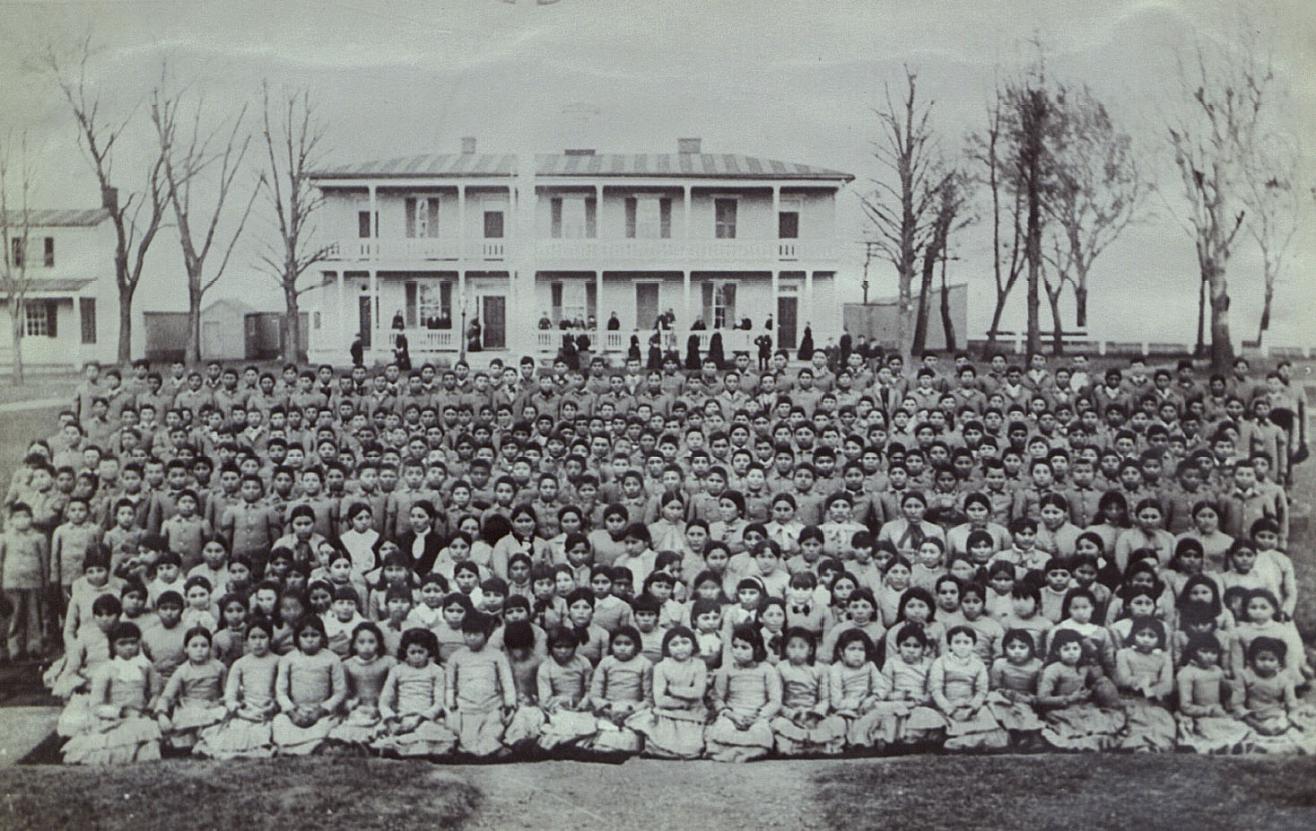
For decades, the US took thousands of Native American children and enrolled them in off-reservation boarding schools. Students were systematically stripped of their languages, customs, and culture. And even though there were accounts of neglect, abuse, and death at these schools, they became a blueprint for how the US government could forcibly assimilate native people into white America.
At the peak of this era, there were more than 350 government-funded, and often church-run, Native American boarding schools across the US.

A rough map of 357 Native American boarding schools.
 Alvin Chang/Ranjani Chakraborty

The schools weren’t just a tool for cultural genocide. They were also a way to separate native children from their land. During the same era in which thousands of children were sent away, the US encroached on tribal lands through war, broken treaties, and new policies.

Native land loss from 1776 to 1930.
 Ranjani Chakraborty

As years of indigenous activism led the US to begin phasing out the schools, the government found a new way to assimilate Native American children: adoption. Native children were CONTINUE READING: How the US stole thousands of Native American children - Vox

Hall Pass | radical eyes for equity

Hall Pass | radical eyes for equity

Hall Pass


I noticed I had been tagged by a former high school student on Facebook a few days ago. “While looking for pictures of my Daddy in some old memory and picture boxes that I forgot existed,” she began, “I came across this WHS [Woodruff High School] artifact that became the deciding factor on whether or not I was punished with demerits for a week out of every month.”*
She posted these pictures of the artifacts, hall passes from my class:
No photo description available.
Image may contain: drink and indoor
The high school where I taught English for 18 years was the same high school I had attended. By the time I was reaching the end of my time there, the school had morphed into an extremely authoritarian environment—demerits issued to students for being late to class, simply going to the restroom during class (for any reason), eating in class or chewing gum, and the usual assortment of what most people would deem disciplinary issues such as fighting or causing a disturbance during class (“holding court” and talking back being the major offenses).
These strict rules meant some students found themselves issued in-school suspension (ISS) for nothing more than very minor infractions, such as CONTINUE READING: Hall Pass | radical eyes for equity

Let the Children Play | Live Long and Prosper

Let the Children Play | Live Long and Prosper

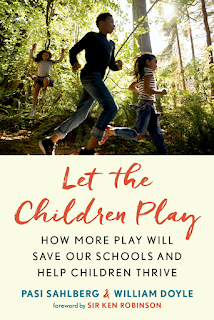
Let the Children Play

Pasi Sahlberg came to the U.S. as a visiting professor at Harvard to help American educators learn how the Finnish school system became the world’s best. William Doyle won a Fulbright scholarship to move to Finland to study the Finnish system. Let the Children Play: How more play will save our schools and help children thrive is the result of the collaboration they formed.
THE IMPORTANCE OF PLAY
Let the Children Play begins with a discussion of the research into play and its benefit for children. Groups such as the American Academy of Pediatrics, the National Academy of Sciences, and the Centers for Disease Control agree that play and physical activity are of critical importance to growing children, and are beneficial to their academics, and future skills.
Despite the science, however, play is disappearing from school due to so-called “education reform.”
Despite this strong medical and scientific consensus that play is a foundation of children’s lives and education, play is an increasingly endangered experience for many of the world’s children.

Why is play dying in our schools? There are many social and cultural factors, and one major political reason is “GERM,” or the “Global Education Reform Movement,” a term that co-author Pasi Sahlberg has coined to describe an intellectual school reform paradigm that places academic performance as measured by standardized tests before children’s engagement, well-being, and play in schools.

The authors discuss and analyze Finnish schools. What makes them so successful? How can we learn from them? How have they used play to help their CONTINUE READING: Let the Children Play | Live Long and Prosper

Indigenous peoples day and how the Italians became white. – Fred Klonsky

Indigenous peoples day and how the Italians became white. – Fred Klonsky

INDIGENOUS PEOPLES DAY AND HOW THE ITALIANS BECAME WHITE

columbus


The good news is that Columbus Day will not be celebrated this year in at least six states and 130 cities and towns in the U.S.
It is now being replaced with the recognition of the history of indigenous people and, to a lesser degree, the horrors and brutality of the European invasion of the Americas.
There will be an old fashion Columbus Day parade down Chicago’s State Street this morning.
Too bad.

columbus-day
The first Indigenous People’s Day parade was in Berkeley, California almost 30 years ago.

Chicago and Illinois should follow the lead of the other states and cities and dump Columbus Day.
If Alabama can celebrate today as Native American Day, Illinois should be able to manage it.
Although Alabama splits it in two and also celebrates today as Columbus Day.
Two Alabamas.
Did you know that the Confederacy had three capital cities at varying points: Montgomery, Alabama; Richmond, Virginia; and Danville, Virginia. But thanks to the CONTINUE READING: Indigenous peoples day and how the Italians became white. – Fred Klonsky


State Punches Youngstown with New HB 70 Assault on Local Control of Public Schools | janresseger

State Punches Youngstown with New HB 70 Assault on Local Control of Public Schools | janresseger

State Punches Youngstown with New HB 70 Assault on Local Control of Public Schools

Officials from the Ohio Department of Education have begun replacing the locally elected school board in Youngstown with a mayoral appointed school board.
This week we learned about one more extension of autocratic state power backloaded in 2015 into the HB 70’s school district takeover of Youngstown. Because at the end of four years of state takeover, the Youngstown school district earned another “F” on the state report card, the state is now imposing a previously unknown provision of the 2015, HB 70, which established state takeover in the first place.
The replacement of the elected school board in Youngstown with a state-approved, mayoral-appointed school board is designed to punish Youngstown for not raising its grade to “C” during four years of state takeover. What is particularly shocking about the new development is that the locally elected school board has had no role to play in the operation of Youngstown’s schools since the time of the state takeover in 2015. The state has been running the district through a state appointed Academic Distress Commission which appointed a CEO to lead the school district.
Krish Mohip, the state-appointed CEO whose term ended on July 31, was never happy in his position, and last spring, several months prior to the end of his term, Mohip took family medical leave. At the time The Youngstown Vindicator‘s Amanda Tonoli reported that Mohip explained: “I’m going to take care of some issues that have accumulated at home, and I’m going to focus my attention there… I don’t see my absence as being a hindrance to all the great work that’s happened and will continue to happen over the next few years.” Mohip left, but he did not resign.  Instead he collected the rest of his $170,000 salary.  Tonoli added: “A longevity provision in Mohip’s contract allows him a $10,000 payout if he completes his full contract.”
Nobody was sorry to see Mohip go. The chair of the Academic Distress Commission explained: “We have to uphold what the contract says… We are following the law and following the CONTINUE READING: State Punches Youngstown with New HB 70 Assault on Local Control of Public Schools | janresseger