Latest News and Comment from Education

Monday, February 25, 2019

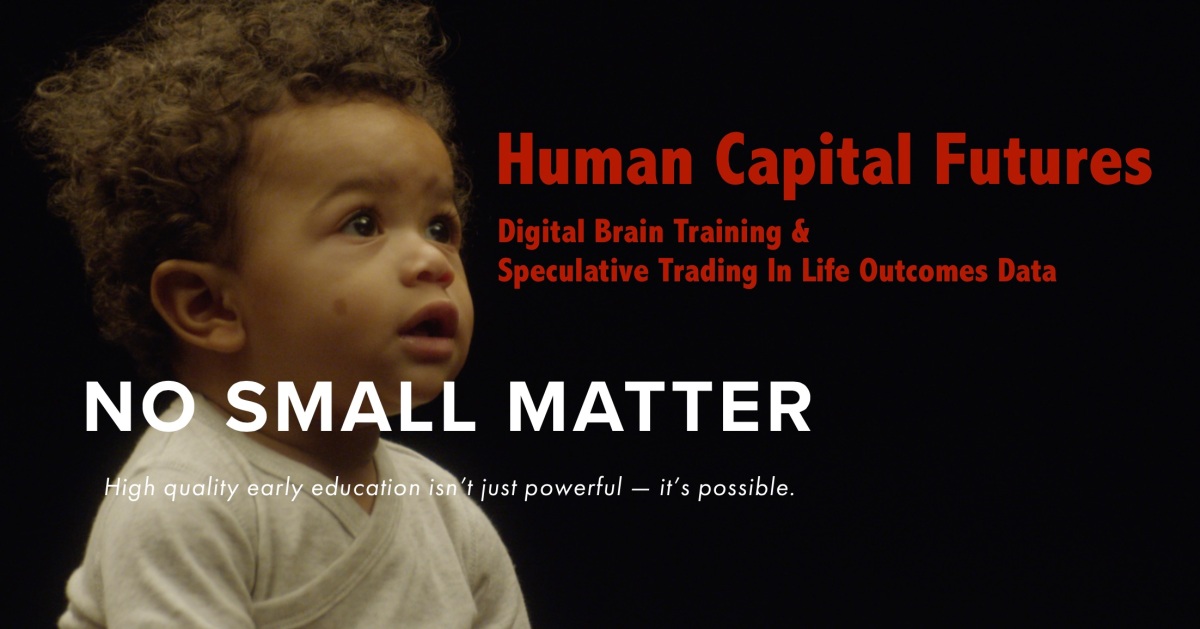
Shorting The Lives of Children: No Small Matter – Wrench in the Gears
Shorting The Lives of Children: No Small Matter – Wrench in the Gears

Shorting The Lives of Children: No Small Matter

As I wrote in a previous post, “Don’t Let Impact Investors Capture the Non-Profit, Activist Media,” documentary film has been hijacked to advance the social impact investment agenda. I touched on it in a piece about Ted Dintersmith’s, Most Likely to Succeed. Dintersmith launched a Sundance-affiliated program, the Catalyst Fund, matching social justice minded filmmakers with venture capitalist backers. Other “impact” films making the rounds are Invisible Heart, raising awareness around social impact bonds and No Small Matter, a film the Pritzker-backed Choose Children campaign screened widely in advance of California’s elections last fall.
This post unpacks the financial interests behind the latter documentary, which at first glance seems like an innocuous vehicle promoting the importance of early childhood education. That “cradle to career” human capital pipeline Strive has planned? The one intended to move hundreds of millions of “social benefit” venture capital? Well, someone has to rough in plumbing to the nursery, and that’s the job No Small Matter is meant to do. Investors hope strategic screenings for audiences primed to receive their carefully crafted messages will put voters in the proper mindset to act with a sense of urgency when intended legislation surfaces. When targeted bills come up, these influencers will be eager to press their elected officials to pass them.
The transactional nature of the financial arrangements between documentary filmmakers and social entrepreneurs is made clear in a panelpresentation from the 2012 Social Enterprise Conference, which was held at Columbia Business School. During the panel, “Media as Catalyst: Story Telling and Social Action,” Diana Barrett, former Harvard Business School professor and founder of the film production venture The Fledgling Fund, articulated her strategy. The Fledgling Fund backed the Invisible Heart SIB  CONTINUE READING: Shorting The Lives of Children: No Small Matter – Wrench in the Gears

The Year of the Public School: 2019! | Diane Ravitch's blog

The Year of the Public School: 2019! | Diane Ravitch's blog

The Year of the Public School: 2019!

This is  a message from theNetwork for Public Education.
2019 will be the year of the public school, with your help and support.
“From West Virginia to California teachers are boldly standing up for themselves, their students and their schools. Teachers are walking out due to a lack of sufficient funding, which has resulted in the deterioration of salaries, fewer services for children and increased class size.
“They are also making it clear that they understand why public school funding has been drained. Privatization schemes like charters and vouchers have made school funding a competition, not a public obligation.
“As Oakland Education Association President, Keith Brown, told the Washington Post:
More than $50 million is diverted every year to charter schools while our students have a 1,750 to 1 ratio for students to school nurses and 600 to 1 for guidance counselors. The charter schools that capture our dollars lack financial transparency and accountability standards…
“In West Virginia, teachers and school service workers had a two-day walk out to show their opposition to provisions in proposed legislation that would have created the state’s first charter schools and allowed vouchers in the form of education savings accounts (ESAs).”
Open the link to find the NPE toolkit, which shows how YOU can make 2019 the year of the public school.
CHECK IT OUT

Big Education Ape: Help NPE-Action Keep Score on the 2020 Presidential Candidates | Diane Ravitch's blog - http://bigeducationape.blogspot.com/2019/02/help-npe-action-keep-score-on-2020.html


New study casts doubts on effectiveness of personalized learning program in New Jersey - The Hechinger Report

New study casts doubts on effectiveness of personalized learning program in New Jersey - The Hechinger Report

New study casts doubts on effectiveness of personalized learning program in New Jersey
Results highlight debate over how to measure what's working in the classroom when kids are learning different things


In the fall of 2015, five schools in the industrial port city of Elizabeth, New Jersey, dumped their usual math curriculum and started teaching their middle school students through a computerized system called “Teach to One.” It was an experiment in so-called “personalized learning,” where algorithms churned out customized lessons for each student. Many of the kids were behind their grade level and spent hours reviewing third-grade arithmetic while others could jump ahead to eighth-grade algebra.


But after three years of learning this way, the Teach to One students in grades six through eight scored no better on New Jersey’s annual math tests than other Elizabeth students who had learned math the usual way with the whole class on the same topic at the same time. “I can’t rule out that Teach to One had no effects” on student’s math achievement, said Doug Ready, a professor at Teachers College, Columbia University and lead author of a January 2019 study of the program.
The study highlights an ongoing conflict between personalized learning and the required annual tests that schools to give students.  Joel Rose, the chief executive of the nonprofit organization that sells Teach to One to schools, is convinced that students who take the time to go back and master foundational concepts in math will be better off in the long run. “Math is cumulative,” he said. “You just can’t learn linear equations if you don’t know how to multiply.”
But the annual state tests that were used in this study don’t measure how much a student has caught up on things he or she should have learned years ago. For example, an 11-year-old student who jumped from third to fifth grade math in one year might still bomb the sixth-grade test and do no better than an equally weak student who was CONTINUE READING: New study casts doubts on effectiveness of personalized learning program in New Jersey - The Hechinger Report


Whatever Happened to Media Literacy in Schools? | Larry Cuban on School Reform and Classroom Practice

Whatever Happened to Media Literacy in Schools? | Larry Cuban on School Reform and Classroom Practice

Whatever Happened to Media Literacy in Schools?


Far more policy talk than classroom action is the short answer. The long answer is below in the questions I ask.
Where and When Did the Idea Originate?
Having students become media literate across school subjects has been talked about since the early 1960s in Europe and the U.S. but has hardly made a dent in lessons that most teachers teach. In Britain, Canada, and other nations there has been far more policy talk and even some action (media literacy Europe/Canada ). For example, in the United Kingdom, the 2003 Communications Act required the government to promote media literacy in British schools. David Buckingham and colleagues tells the story of what happened since then (see here and here).
Much less has happened in the U.S. with its decentralized system of public schools in 50 states, over 13,000 districts, and nearly 100,000 schools. A timeline for media literacy, broadly defined, begins in the 1960s.
The earliest U.S. classroom materials that I have found were created in 1972 as a Media Now kit of lessons and activities that teachers could use in their classrooms. Based on the work of media analyst Marshall McLuhan and psychologists Jerome Bruner’s Process of Education and Benjamin Bloom’s Taxonomy of Educational Objectives , Ron Curtis and others developed a self-directed learning kit containing 50 individual packages divided into seven modules for teachers to use. The source I used claimed that it was used in over 600 schools.
There has been much state activity in promoting media literacy in schools  since (see above timeline) but no mandated courses as far as I can determine. For CONTINUE READING: Whatever Happened to Media Literacy in Schools? | Larry Cuban on School Reform and Classroom Practice


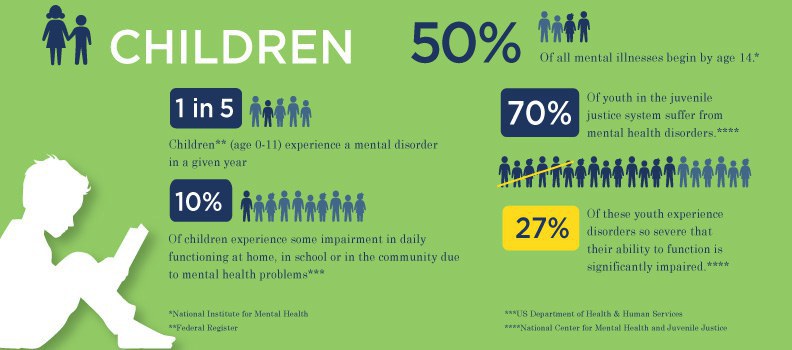
Badass Teachers Association Blog: Protect the Mental Health of Students and Teachers

Badass Teachers Association Blog: Protect the Mental Health of Students and Teachers

Protect the Mental Health of Students and Teachers

As February comes to an end, we’ve been reflecting on the important movements in education 

highlighted this month. The Black Lives Matter at School movement is fighting for racial 
justice in schools across the country. Teachers Against Child Detention highlights the 
educators’ role as mandated reporters and exposed the U.S. government’s awful policy of 
detaining immigrant children in detention centers. The one-year anniversary of the Parkland 
school shooting reminds us of the students and teachers who turned their trauma and grief 
into a crusade to end gun violence, calling out the despicable inaction of our politicians. 
When children in our country do not have culturally relevant curriculum or counselors, when 
children are imprisoned, when children fear for their lives in school, we are damaging them. 
Our children need our advocacy more than ever before. While teachers have always been 
passionate champions for their students, 2018 was a year when they demanded that our 
leaders listen to them. We have seen first-hand how NOT listening has had serious 
consequences for our nation’s children. The truth is that teachers are fighting daily against a 
system of education policies forced on schools by non-educators that does more to add trauma 
to children’s lives than to reduce it. Teachers are witnesses and first responders to the harm 
that is being caused. 
NBC news recently reported that the increase of children showing up in emergency rooms 
due to a mental health crisis is “staggering.” The American Academy of Pediatrics also 
reported that children’s admissions to hospitals for suicidal thoughts and self-harm more than 
doubled from 2008 to 2015. Additionally, serious behavioral issues in schools have CONTINUE READING:
Badass Teachers Association Blog: Protect the Mental Health of Students and Teachers

Image result for Mental Health of Students and Teachers

CURMUDGUCATION: OH: Lorain CEO's Purge Announcement Raises Fury

CURMUDGUCATION: OH: Lorain CEO's Purge Announcement Raises Fury

OH: Lorain CEO's Purge Announcement Raises Fury


Last Thursday night, David Hardy, the state-appointed takeover CEO for Lorain City Schools told the public that all teachers at the high school would have to reapply for their jobs.

If you want to read about how they arrived at this point, that story is here. This is just the next chapter in the story.


After telling the public, Hardy then sent a letter to staff (because when you want to drop this kind of bomb on your staff, you definitely want them NOT to be the first to know). It does not particularly clarify the action. Having created four categories for the schools of Lorain (because a good plan requires specialized new jargon) -- excellent, innovation, improvement and empowerment schools. No schools were ranked excellent, and only the high school was ranked "empowerment." Hardy has not made public the process by which these judgments are made, though they appear to be linked closely to state test results.

Why exactly do teachers need to re-apply? Per the letter:

"...because we know that transformations this large can only happen with a completely unified and committed team, we’re giving leaders at Empowerment Schools the autonomy to choose their staff. "

At the high school, that would be the team led by Executive Director Daniel Garvey.* Garvey is one of Hardy's hires; he graduated from Ohio State with a BA in International/Global studies then, spent two years Teach for America as an English teacher, then three years handling phone interviews for CONTINUE READING: 
CURMUDGUCATION: OH: Lorain CEO's Purge Announcement Raises Fury


Let's Make 2019 "The Year of the Public School." - Network For Public Education

Let's Make 2019 "The Year of the Public School." - Network For Public Education

Let’s Make 2019 “The Year of the Public School.”


From West Virginia to California teachers are boldly standing up for themselves, their students and their schools. Teachers are walking out due to a lack of sufficient funding, which has resulted in the deterioration of salaries, fewer services for children and increased class size.
They are also making it clear that they understand why public school funding has been drained. Privatization schemes like charters and vouchers have made school funding a competition, not a public obligation.
As Oakland Education Association President, Keith Brown, told the Washington Post:

More than $50 million is diverted every year to charter schools while our students have a 1,750 to 1 ratio for students to school nurses and 600 to 1 for guidance counselors. The charter schools that capture our dollars lack financial transparency and accountability standards…
In West Virginia, teachers and school service workers had a two-day walk out to show their opposition to provisions in proposed legislation that would have created the state’s first charter schools and allowed vouchers in the form of education savings accounts (ESAs).
The week of March 25-29 is Public Schools Week. Let’s make 2019 The Year of the Public School.

Here is how you can help: CONTINUE READING: Let's Make 2019 "The Year of the Public School." - Network For Public Education

CHECK IT OUT

Big Education Ape: Help NPE-Action Keep Score on the 2020 Presidential Candidates | Diane Ravitch's blog - http://bigeducationape.blogspot.com/2019/02/help-npe-action-keep-score-on-2020.html


Sunday, February 24, 2019

Fla GOP making schools separate and unequal again - YouTube

Fla GOP making schools separate and unequal again - YouTube

Fla GOP making schools separate and unequal again 


Florida Senate Republicans unveiled their education plan this week, and it’s looking very much like the governor’s.
Among the proposals, an expansion of the school voucher program, allowing general revenue taxes, which provide public school funding, to be spent on private school tuition.
The Florida Supreme Court already determined in 2006 that general funds could not be used on vouchers, because they create “an alternative system of private schools that are not subject to the ‘uniformity’ requirements for public schools.”
https://www.courtlistener.com/opinion...
Lawmakers have gotten around the ruling by issuing tax credits for companies that contribute to non-profits that, in turn, fund the scholarships.
The recent appointment of three conservative justices to the state supreme court almost guarantees a favorable ruling for vouchers this time around.
Public schools are graded based on how well students score on highly controversial, scientifically unfounded standardized tests. But private schools don’t have to do that.
No accountability means private schools can claim a 100% graduation rate and not have to prove students have learned anything.
“The Orlando Sentinel [has] published stories detailing how private schools that take state money used fraudulent fire and health reports and even hired untrained teachers, some with criminal records. These private schools also freely discriminate based on religion, disability, language skills, and even sexual orientation.”
https://communitynewspapers.com/pinec...
Of course, this whole plan reeks of Education Secretary Betsy DeVos and former Florida Governor Jeb Bush, who for decades have preached their school privatization gospel to Wall Street. Their network of education profiteers have spent $100s millions on political action committees and public disinformation campaigns. All so that a small group of wealthy investors can get even richer.


Article IX of the Florida constitution says that it is “a paramount duty of the state to make adequate provisions for the education of all children.”
But which children are we talking about here? Certainly not the ones who were denied an education from private schools last year for wearing a natural Black hairstyle, or for being gay, or for getting pregnant, or for no reason at all. At least not one they’ll admit to aloud.
And for once I’d like to see private schools take the disproportionate number of students with disabilities that public schools are required to service.
Oh! All of the sudden there’s a waiting list.
Funny how that works.


Fla GOP making schools separate and unequal again - YouTube


EPIC FAIL ANOTHER TYPE OF CHARTER SCHOOL: Arizona 'alternative' CHARTER Schools are failing at-risk students, Republic finds

Arizona 'alternative' schools are failing at-risk students, Republic finds

Arizona's at-risk students go to 'alternative' schools. Then the system fails them
The lowest-performing students end up in the Charter schools with the least accountability, according to an analysis by The Arizona Republic.


William Hollis enrolled his son at StarShine Academy because he hoped the school would offer Matthew more one-on-one attention.
The Phoenix K-12 school’s website advertised itself as a place where students would be prepared for “college, career, life.”
But the reality was different, Hollis said. Matthew got little attention during his middle school years there. He was sometimes handed a tablet as the teacher in the classroom "babysat." He fell behind.
Hollis had no idea that StarShine was one of the state’s more than 100 "alternative" schools, a separate system intended to serve Arizona's most vulnerable students but that instead has allowed poorly performing schools to avoid academic scrutiny.
For years, the state has exempted alternative schools from annual letter grades, the chief measure of academic performance in Arizona, meaning that parents and students are often unaware schools are failing. 
The result, according to an Arizona Republic analysis of state Department of Education records, is a system where the state's lowest-performing students end up in schools with the least public accountability and the lowest expectations for progress.
For failing schools, the alternative label can help them avoid closure for poor performance.
That label also allows the schools to misrepresent themselves as an innovative alternative for unconventional students when, in fact, the schools graduate only 28 percent of their students within four years, The Republicanalysis shows.
Matthew did not fit the state's definition of an at-risk student before he entered StarShine. But after StarShine, Matthew had fallen behind and become an at-risk student, Hollis said.
“It all started with StarShine,” he said. “That just threw him backwards.”

What is an alternative school? 

Alternative schools are both little-known and a significant area of Arizona public education.
Operated mostly by charter school owners, these schools are meant to serve students who struggle or are behind academically, according to the state's definition.
But they increasingly advertise themselves online, on TV, and even on highway billboards as a more flexible charter option for high-performing students.
And the schools are growing. Since 2010, the number of Arizona students enrolled in alternative charter schools has increased by nearly 40 percent, according to The Republic's analysis.
Matthew Hollis will be among at least 30,000 students attending alternative schools in Arizona next school year. Districts operate some of the schools, but charters enroll 86 percent of all alternative school students.
Despite this growth, oversight has remained lax.
The Arizona Department of Education, which regulates alternative schools, can’t accurately verify whether schools that apply for alternative status actually serve at-risk students, The Republic found.
And the agency has enabled failing schools like StarShine to use the alternative label to shield themselves from academic scrutiny, leaving parents in the dark as they decide where to send their children to school. CONTINUE READING: Arizona 'alternative' schools are failing at-risk students, Republic finds

Help NPE-Action Keep Score on the 2020 Presidential Candidates | Diane Ravitch's blog

Help NPE-Action Keep Score on the 2020 Presidential Candidates | Diane Ravitch's blog

Help NPE-Action Keep Score on the 2020 Presidential Candidates 


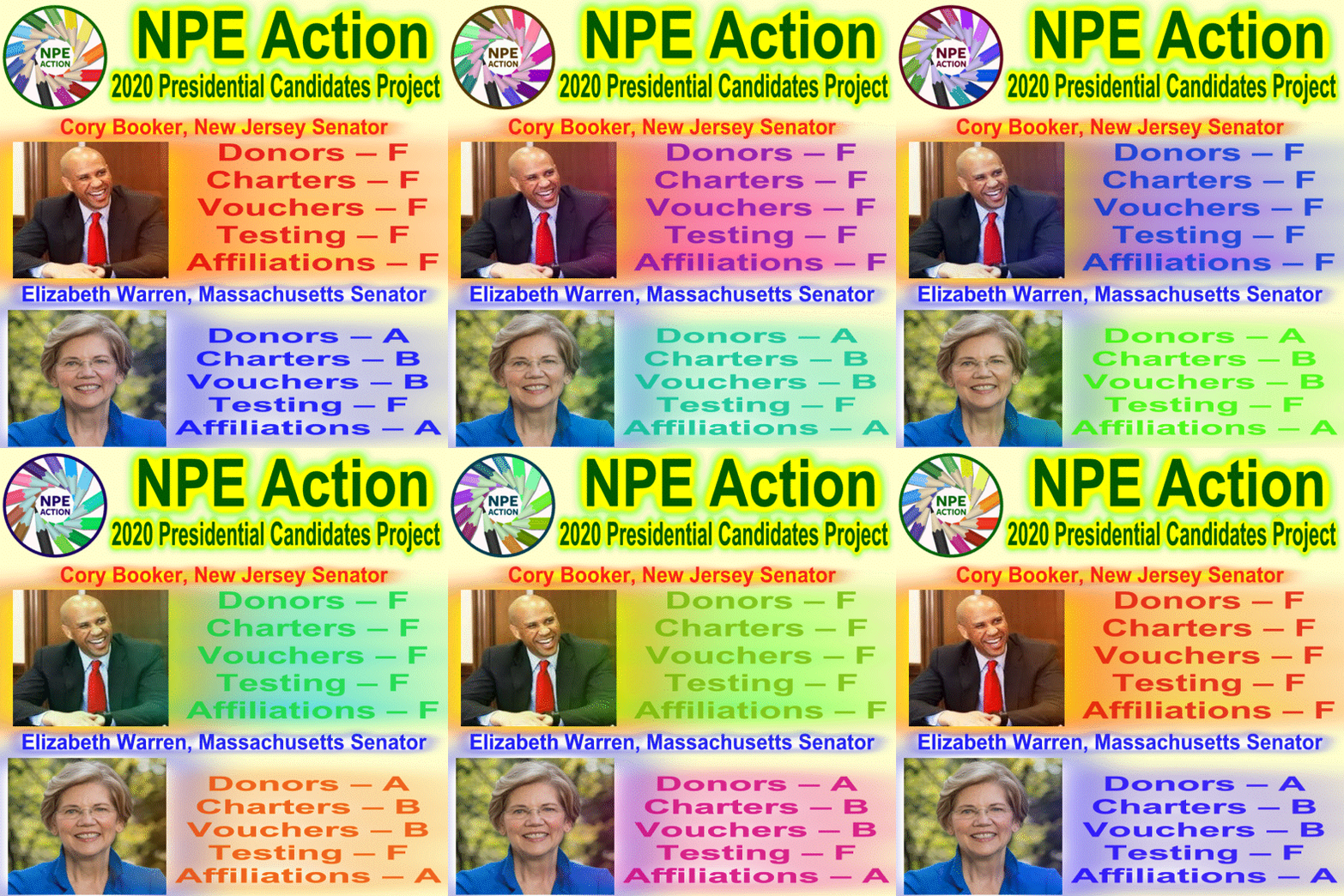
The Network for Public Education Action fund is developing a web-based score card for the 2020 presidential candidates.
We need YOUR help!
We want to keep score on where the candidates stand on issues that matter to students, teachers, parents, and public schools.
We want to know if they support public schools or if they support privatization.
We will keep the website updated based on the candidates’ public statements on television and at town halls.
We will check their funding reports to see if they are funded by the usual privatization-friendly billionaires and hedge-fund managers.
We urge you to attend their town halls and ask them questions about funding for public schools, about charters and vouchers, about testing, about federal policy requiring (unnecessary) annual testing, and about (unnecessary) federal funding for charter schools.
We need your help to keep our score care up to date once it is up and running.
We will not let education be forgotten in the 2020 race!
Climate change. Health care. Taxes. These are topics that 2020 Presidential hopefuls are happy to discuss.  But as important as these topics are, we cannot let our public schools be ignored.
In cities across this nation, public schools are disappearing. The city of New Orleans is now a system of privately run charter schools. Vouchers and voucher “workarounds” send taxpayer money from public schools to private and religious schools. Religious schools are flipping themselves into charter schools in order to get public funds. The Koch Brothers have promised to target five states in which they will work to make public education disappear.
Private “choice” is trumping public voice. Test scores are the rationale to shut and shutter community schools even though charter school test scores are not better than those of public schools, and studies show that students who leave public schools with vouchers often do worse.
The Network for Public Education Action’s 2020 Candidates Project will make sure that the issue of school privatization is not ignored. We will grade candidates on their positions regarding charter schools, vouchers, and high-stakes testing. We will grade them by how much they take from the billionaires who believe in the privatization of public schools and score each candidate on the company they keep. They can run for office but they can’t hide from the hard questions we will ask about school privatization.
Help NPE-Action Keep Score on the 2020 Presidential Candidates | Diane Ravitch's blog

At What Point Do We Stop Blaming Teachers? - Teacher Habits

At What Point Do We Stop Blaming Teachers? - Teacher Habits

At What Point Do We Stop Blaming Teachers?


At the beginning of this school year, TNTP released a report called, The Opportunity Myth, in which they repeated a golden oldie from the reform agenda’s playlist:  Public schools suck and it’s mostly because public school teachers suck. They didn’t come right out and say that, of course, but it’s hard to interpret the report’s introduction any other way. Judge for yourself:
Far too many students graduate from high school still unprepared for the lives they want to lead. They enroll in college and land in remedial courses, or start jobs and discover they’re missing skills they need. We wanted to understand why.
To do this, we followed nearly 4,000 students in five diverse school systems to learn more about their experiences. What we found was unnerving: classroom after classroom filled with A and B students whose big goals for their lives are slipping further away each day, unbeknownst to them and their families—not because they can’t master challenging material, but because they’re rarely given a real chance to try.
In fact, most students—and especially students of color, those from low-income families, those with mild to moderate CONTINUE READING: At What Point Do We Stop Blaming Teachers? - Teacher Habits

Teach for America Supplements Lost Money for Oakland TFAers on Strike | deutsch29

Teach for America Supplements Lost Money for Oakland TFAers on Strike | deutsch29

Teach for America Supplements Lost Money for Oakland TFAers on Strike


One of the complications of ed reform is that its enlistees might just try to assert themselves, even in the face of being told (subtly or otherwise) that their ed reform org involvement has some fine print to which they were not privy upon signing on.
Such is the case of Teach for America (TFA) in California’s bay area, where Oakland teachers are on strike as of Thursday, February 21, 2019. The fine print in this case is that TFAers signed on for TFA’s two-year teaching stint with the lure of thousands of dollars in support from AmeriCorps, an organization that is set to pull its funds from those TFAers should they decide to participate in the strike.
Now, TFA says it neither endorses nor opposes the rights of its recruits to strike, and it is not TFA taking away funds; it’s AmeriCorps doing so.
Hence the following letter dated February 12, 2019, to TFA from the recruits that could be affected:
See the list of signatories to our public letter to TFA:http://tinyurl.com/TFA-Letter-Full
2/12/19
TFA Bay Area:
Thank you for meeting with our group of concerned alumni yesterday. Our takeaway from the conversation was that because TFA is an AmeriCorps program, corps members can not participate in a strike and that TFA has left it up to corps members to determine individual responses to this context.
Whereas TFA invited young people into a profession based on an expectation of a supplemental education award via AmeriCorps membership without explicitly informing them of the limits this affiliation places on their ability to participate in labor actions, we demand that Teach For America cover the lost award amount for any corps member who temporarily unenrolls in AmeriCorps so as to stand on the picket line during the anticipated teacher strike in Oakland. This action taken by Teach For America would show seriously that it recognizes corps member obligation CONTINUE WORKING: Teach for America Supplements Lost Money for Oakland TFAers on Strike | deutsch29

The Myth of the Super TFA Teacher is Crushed by TFA’s Own Research | GFBrandenburg's Blog

The Myth of the Super TFA Teacher is Crushed by TFA’s Own Research | GFBrandenburg's Blog

The Myth of the Super TFA Teacher is Crushed by TFA’s Own Research


study conducted in Texas with the cooperation of Teach for America claims to pretend that TFA teachers are more effective than their peers. We’ve all heard this claim before, including from frauds like Michelle Rhee, who made up fables about her mythical and fantastic successes during her three years as a TFA newbie in Baltimore.
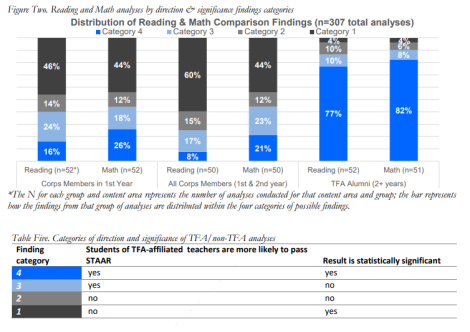
However, the facts and tables in the report itself shows exactly the opposite, at least for TFA members who are in their first two years (and for many of them, their only two years) in the classroom.
For example, look at the following tables, which I cut and pasted from the report:
how TFA teachers compare with their peers
Notice what the data is saying in the first four bar graphs above. Dark blue means that the students of that group of TFA teachers were significantly more likely to pass the STAAR test than the students of other, matched, non-TFA teachers. Black means that CONTINUE READING: The Myth of the Super TFA Teacher is Crushed by TFA’s Own Research | GFBrandenburg's Blog


Louisiana Educator: Louisiana Education's Myth of High Standards

Louisiana Educator: Louisiana Education's Myth of High Standards

Louisiana Education's Myth of High Standards
If there is one thing Louisiana State Superintendent John White stands for its higher standards!


In 2012 Governor Jindal and the Louisiana Association of Business and Industry (LABI) engineered the appointment of John White (An individual with basically zero education credentials) to the office of State Superintendent. The one thing they expected him to implement were higher standards. Accordingly, in numerous presentations White often emphatically makes the case for higher standards. It is an article of faith to reformers such as White that if standards are set high, then teachers and students will rise to meet them. This post examines the standards that White has established for Louisiana students and the real achievement levels accomplished.

At the same time that John White was in the process of being appointed, Louisiana was in the middle of adopting the new Common Core Standards. This was a set of academic standards primarily in math and Language Arts that were considered tougher and more appropriate to prepare our kids for life. It was believed that if our students were required to master these tougher standards that they would be better prepared for college and careers.

Much of the project for the adoption of the new standards was promoted by the Bill and Melinda Gates foundation, whose support was obtained by a brief  high level meeting between the Gates' and the creators of the standards. The Obama administration was sold on the project by his outspoken Secretary of Education, Arne Duncan. (Another person with no real experience in teaching) The Federal government then found ways around the law prohibiting the Department of Education from mandating curriculum by handing out a lot of money to states that "voluntarily" adopted the program. Louisiana adopted the standards, sight unseen, before they were even written.

Never mind that the Common Core standards had been hurriedly CONTINUE READING: 
Louisiana Educator: Louisiana Education's Myth of High Standards