Latest News and Comment from Education

Monday, May 29, 2017

Memorial Day 2017 Diane Ravitch's blog | A site to discuss better education for all

Diane Ravitch's blog | A site to discuss better education for all:

Memorial Day 2017 Diane Ravitch's blog 
A site to discuss better education for all


Edgar A. Guest: How the Race and the Battles Are Won

Retired teacher Frank Breslin shared with me this poem by Edgar A. Guest. It seems appropriate from this time, when the people at the top seem to be intent on obliterating all progress made in the past 60 years towards a more just 

Oklahoma: Budget Cuts Devastate Schools

The Republican legislators in Oklahoma have decided that cutting taxes is more important than education. They are sacrificing their children and the future of the state. https://www.washingtonpost.com/local/education/with-state-budget-

A Writer Checks Out Betsy DeVos’ Quack Brain Training Center

When Betsy DeVos became Secretary, she left the board of Neurocore but did not give up her multimillion dollar financial investment. Ulrich Boseris, a journalist, signed up for Neurocore services in Palm Beach, Florida. https://www.washingtonpost.com/posteverything/wp/2017/05/26/betsy-devos-neurocore/?wpisrc=nl_rainbow&wpmm=1 He describes what happened to him, then concludes: SO WHAT DOES IT SAY
Americans Pay $38 to Collect $1 of Student Debt

Bloomberg News reported the astronomical amount spent to collect student debt for higher education. This is nuts. https://www.bloomberg.com/news/articles/2017-05-19/americans-are-paying-

Nancy E. Bailey: How Florida Developed Its Voucher Plan for Students with Disabilities

Nancy E. Bailey was there at the beginning, when Florida first embarked on a voucher program for students with disabilities. Now that program is recognized as the Official Camel’s Nose Under the Tent, the entry program that in many other states is followed by vouchers for foster children, vouchers for military children, vouchers for low-income children, then vouchers for everyone. Florida has not
History Lesson: Public Education Was Created by a Unique Collaboration Among Federal, State, and Local Governments

I earned my Ph.D. in the history of American education from Columbia University in 1975. It is a fascinating field of study, because the early history continues to be relevant to contemporary debates. At present, the nation is led by people who disparage public schools. They know nothing of the struggles to establish public schools that are open to all, supported by taxes, and tuition-free. I was
Bruce Baker: The Charter School Company Store

Bruce Baker writes here about the ingenious ways that charter schools extract money from their staff. The Gulen schools do it directly; Baker discovered that certain “no excuses” schools do it by requiring their teachers to enroll in the Relay “Graduate School of Education.” https://schoolfinance101.wordpress.com/2016/12/12/the-charter-school-company-store/

YESTERDAY

Poet on “The Stories Data Never Tell”

Responding to a post of the same name by Larry Lee of Alabama, SomeDam Poet writes: “The stories that data never tell” The stories that data never tell Are known to the teachers very well The pride in art The joy of song A brand new start In something long The growth that’s gauged By smiles and laughs And not encaged By tests and graphs
California: Deal Struck in Legislature to Reform Charters’ Enrollment and Discipline Policies

Kyle Stokes of public radio station KPCC reports that a deal has been struck between the California Teachers Association and the California Charter Schools Association to allow rights for charter school students. http://www.scpr.org/news/2017/05/25/72181/kicked-out-of-a-charter-school-deal-struck-in-sacr/ “Parents who believe their child is being “counseled out” of a charter school in California
Tom Ultican’s Sharp Critique of What Went Wrong and How to Make Things Right

Tom Ultican became a teacher of math and physics in San Diego after a career in Silicon Valley. He is retiring. He loves teaching. He describes with precision the people who imposed bad ideas on the schools and messed them up. Maybe they meant well but their lack of knowledge or experience in the classroom led to naive and foolish and failed interventions, like Common Core and “turnaround,” with
How the Richest County in California Got Its New Charter School

Marin County in California is the wealthiest in the state. The seemingly idyllic Ross Vallley is now torn between two factions of parents: one supporting the traditional public schools (organized as STAND with Ross Valley schools), the other determined to break away and have their own charter school, RVC, or Ross Valley charter school. Bill Raden, writing at Capitol & Main, writes: “California’s
DeVos Hires Top Official at For-Profit University to Help “Right-Size” Department of Education

Jennifer Berkshire reports that Secretary Betsy DeVos has turned to a top official from the scandal-plagued for-profit higher education industry to “right-size” the Department of Education. As the New York Times said when his appointment was announced: “As chief compliance officer for a corporate owner of for-profit colleges, Robert S. Eitel spent the past 18 months as a top lawyer for a company
Paterson, New Jersey: A City of Forgotten Children and Abused Techers

Bruce Lowry, an editorial writer for The Record in New Jersey, writes here about the neglected public schools of Paterson, which have been under state control for more than 25 years. 
Diane Ravitch's blog | A site to discuss better education for all:


Illinois House Democrats threaten special education funding with HB 2808. | Fred Klonsky

Illinois House Democrats threaten special education funding with HB 2808. | Fred Klonsky:

Illinois House Democrats threaten special education funding with HB 2808.

1297903570663_ORIGINAL

The Illinois House plans to end its current session this week.
There is still no state budget and there is unlikely to be one.
The Senate has voted for an income tax increase, but the increase in new funding is unlikely to get House approval before Wednesday.
Meanwhile the House version of SB1, the education funding bill which in the House is called HB2808, still threatens special education.
As I have reported, HB2808 is sponsored by Rep. William Davis, Robert W. Pritchard , Linda Chapa LaVia, Al Riley, Emanuel Chris Welch, Sue Scherer, Camille Y. Lilly and Will Guzzardi.
The bill adopts what they call an Evidence Based Model.
One sponsor of the bill told me that it contemplates lots of new school funding.Illinois House Democrats threaten special education funding with HB 2808. | Fred Klonsky:
HB 2808 will do to the rest of the state’s special education what already happens in Chicago. | Fred Klonsky - http://wp.me/p4C3g-lb2 via @fklonsky

th.jpg

NYC Educator: Puerto Rican Teachers on Notice

NYC Educator: Puerto Rican Teachers on Notice:

Puerto Rican Teachers on Notice


This is a letter that teachers in Puerto Rico received. It says they're going to be reassigned, somewhere.Where? Who knows?


This is something that once happened to us. It was before I started teaching. I remember hearing about it at a borough meeting. We had a fiscal crisis in NYC and the contract was basically a quaint memory. Teachers were fired en masse. Those who remained were sent wherever to do whatever.

Of course, as big as NYC is, getting around there is just a matter of time. Maybe you spend too much time traveling, but Puerto Rico can be worse. There are more mountains, for example, in Puerto Rico than NYC. I don't think there's a subway and ferry system, or a lift to cross mountains with, but you can correct me if I'm wrong. There also aren't a whole lot of job opportunities these days. 

I often heard stories about purged teachers in NYC who went into business and were successful. Some of my former colleagues would tell me they were jealous. I'm sure that wasn't 100%, of course, and there weren't any studies about what happened to all the former teachers. Puerto Rican teachers face worse prospects, unless they can figure out how to skim off the vulture capitalists who are sucking the lifeblood from their island.

Of course there are people of conscience, and few forward-thinking people want to see their schools drained of resources. There are not many people who want to see pension promises reversed, although we see that here on the mainland as well. There are just not a whole lot of great prospects over there right now. 

This leaves one option for those with the means, and that's leaving the island. Maybe they can join the UFT. Who knows? That may solve the issue for a few, but what about those who remain? They're still stuck paying back predatory loans to people who have no regard whatsoever NYC Educator: Puerto Rican Teachers on Notice:


Big Education Ape: Inside the Billion-Dollar Battle for Puerto Rico’s Future - The New York Times - http://bigeducationape.blogspot.com/2015/12/inside-billion-dollar-battle-for-puerto.html

How many K-12 public schools are still named after JFK? - The Washington Post

How many K-12 public schools are still named after JFK? - The Washington Post:

How many K-12 public schools are still named after JFK?


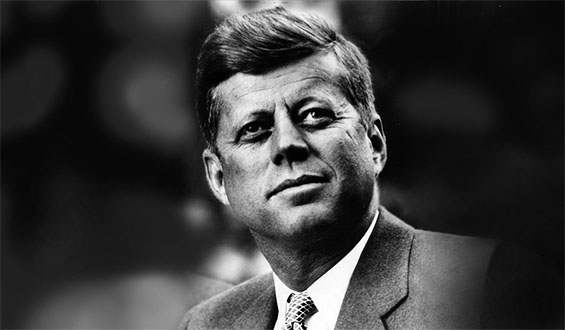
May 29 marks what would have been the 100th birthday of President John F. Kennedy. The day will include tributes and remembrances, but when those are over, this honor will remain: his name on schools.
There was a time when it was popular for K-12 public schools in the United States to be named after presidents, a reflection, perhaps, of a community’s civic vision. Today, schools are often named after things found in nature. There are, for example, 18 elementary, middle or secondary schools in Florida with the name “manatee” (and they aren’t all in Manatee County), and 11 have “cactus” in their names in Arizona.
There still are plenty of schools named after presidents, with the most popular probably being Abraham Lincoln, according to the National Center for Education Statistics search tool, which allows you to find information about individual public schools, including their names.
I say “probably” because the results of a name search depend on the terms you enter. For example, if you put in “Abraham Lincoln,” 46 public schools come up. If you put in “Lincoln,” 620 schools turn up.
There is, for example, East Lincoln High School in Denver in North Carolina’s Lincoln County. That county was not named for Abraham Lincoln but, rather, for Benjamin Lincoln, a major-general in the Revolutionary War who was in command of the Southern armies, according to this history of the county. But in Lincoln, Ill., there is a school called Chester-East Lincoln Elementary School that was indeed named in part after Abraham Lincoln but doesn’t appear in a search for “Abraham Lincoln.” Lincoln Elementary School in Lakewood, Ohio, is in a district with a number of schools named after presidents.
A search for “George Washington” turns up 77 schools, but some are named after George Washington Carver, a prominent African American scientist, and not the first president of How many K-12 public schools are still named after JFK? - The Washington Post:

Trump attacks ‘fake news’ following Kushner reports

Trump attacks ‘fake news’ following Kushner reports:

Trump attacks ‘fake news’ following Kushner reports


by Doina Chiacu and Toni Clarke
WASHINGTON (Reuters) – U.S. President Donald Trump attacked the news media and dismissed leaks from the White House as “fake news” on Sunday, following reports his son-in-law tried to set up a secret channel of communications with Moscow before Trump took office.
Shortly after Trump’s remarks on Twitter, Homeland Security Secretary John Kelly made the rounds of Sunday television news shows to praise any so-called back channel communications, especially with Russia, as “a good thing.”
The Republican president returned to the White House after a nine-day trip to the Middle East and Europe that ended on Saturday to face more questions about alleged communications between Jared Kushner and Russia’s ambassador to Washington.
“It is my opinion that many of the leaks coming out of the White House are fabricated lies made up by the #FakeNews media,” Trump wrote in a series of Twitter posts on Sunday.
The White House faces mounting questions about potential ties between Russia and Trump’s presidential campaign, which are also the subject of criminal and congressional investigations. Trump officials were preparing to establish a “war room” to address an issue that has begun to dominate his young presidency.
Aides said Trump was expected to meet with lawyers as early as Sunday, the New York Times reported.
Two Republican U.S. senators played down the Kushner reports on Sunday, while the former director of national intelligence, James Clapper, took a darker view of such contacts with representatives of Russian President Vladimir Putin.
“My dashboard warning light was clearly on and I think that was the case with all of us in the intelligence community – very concerned about the nature of these approaches to the Russians,” Clapper told NBC’s “Meet The Press.”
Kushner, who is married to Trump’s daughter Ivanka, had contacts with Moscow in December about opening a secret back channel of communications, according to news reports published while Trump was away on his trip.
The 36-year-old Kushner, a real estate developer with no previous government Trump attacks ‘fake news’ following Kushner reports:


UK Universities Rely Upon “BOGO” Degrees/Other Offers in Order to Survive Brexit | deutsch29

UK Universities Rely Upon “BOGO” Degrees/Other Offers in Order to Survive Brexit | deutsch29:

UK Universities Rely Upon “BOGO” Degrees/Other Offers in Order to Survive Brexit

Image result for BOGO


When the United Kingdom (UK) voted to exit the European Union on June 23, 2016, the decision (known as “Brexit,” an abbreviation of “British exit”) impacted the credit rating of its infrastructure, including its universities. On June 29, 2016, Moody’s Investors Service downgraded many entities in UK sectors from “stable” to “negative”:
London, 29 June 2016 — Moody’s Public Sector Europe (MPSE) has today taken rating actions on 55 UK sub-sovereign entities (and associated 30 SPVs) covering the following sectors: (1) Local Authorities; (2) Transport for London; (3) Universities; (4) Housing Associations; (5) PRS Finance plc. The actions follow a referendum vote in favour of the UK leaving the European Union (EU) and the recent change in the outlook on the UK’s Aa1 government bond rating to negative from stable. For more details on the sovereign outlook change, please refer to Moody’s press release: http://www.moodys.com/viewresearchdoc.aspx?docid=PR_350566. …
The outlook change on the ratings of 52 UK sub-sovereign issuers and associated SPVs reflects Moody’s assessment of the impact of the UK vote to leave the European Union along with the change in the outlook of the UK’s Aa1 sovereign rating to negative from stable, which has direct implications for sub-sovereign entities given the economic, financial and institutional linkages between the sovereign and sub-sovereign sectors.
ECONOMIC AND FINANCIAL: Moody’s believes that there will be a prolonged period of uncertainty following the “leave” vote, which will weigh on the UK’s economic and financial performance. A downturn in the economic outlook in the UK has direct implications for UK sub-sovereign budgets through (1) potential slowing or declining transfers received from the central government, which make up a significant share of their revenue; and (2) further potential austerity measures included in the government’s next Budget and next Spending Review.
As this July 04, 2016, Varsity article notes, Cambridge University retained its high credit rating despite Brexit; however, several other UK universities experienced Moody’s credit downgrade; still others were downgraded by Standard & Poor’s (S & P) Global ratings.
As concerns UK universities, a factor that complicated the credit-downgrading issue involved both the overall number of 18-year-olds being smaller in 2016 as well as the number of those 18-year-olds choosing to apply for university entrance also decreasing, especially as concerns males.
So, in August 2016, UK universities– under economic pressure to fill their seats– UK Universities Rely Upon “BOGO” Degrees/Other Offers in Order to Survive Brexit | deutsch29:


Florida Legislature’s miserly K-12 budget & corporate Charter welfare bill spark veto battle - Network For Public Education

Florida Legislature’s miserly K-12 budget & corporate Charter welfare bill spark veto battle - Network For Public Education:

Florida Legislature’s miserly K-12 budget & corporate Charter welfare bill spark veto battle

Image result for big education ape Florida

by Kathleen Oropeza, Fund Education Now
Every year Florida politicians reaffirm that Jeb Bush, Betsy DeVos/American Federation for Children and the Koch Bros./Americans for Prosperity with their promises of campaign cash and threats of well-funded primary opposition are really running the show. Given that members of the Florida legislature either profit from or own charter schools, what could possibly to wrong?
At the close of the 2017 session this May, legislators passed the worst package of public education policy in Florida history by a single vote. HB 7069 is blatantly designed to accelerate the privatization of Florida public education and its concepts have national implications. In addition, legislators passed another significant voucher expansion.
Making matters worse, legislators passed an austerity K-12 budget despite existing revenue surpluses. Florida’s K-12 per pupil funding has stood still since 2007 without an increase. House and Senate leaders promised transparency in 2017 and then proceeded to negotiate the entire budget shrouded in in secrecy. Budgets that are traded behind closed doors reflect the partisan process of picking winners and losers, which has become a sad Florida trademark.
As of this writing, Gov. Scott still has not received either the Budget or HB 7069 from the legislature. Once certified copies of these documents land on his desk, Gov. Scott has fifteen days to either sign them into law or issue a veto.
This is what nearly 20 years of single party rule looks like. Today the combined Florida House and Senate reflect a 3:1 ratio of GOP to Democrats. Florida public education advocates, teachers, districts and administrators are left with no other choice than to ask Governor Rick Scott for a veto on HB7069 and the K-12 education portion of the budget. Here’s an overview of the reasons why:
HB 7069
HB 7069 is a “train bill” representing at least 55 House and Senate bills plus language never discussed in committee. In the last 24 hours of session, legislators were handed this new 278 page bill filled with leadership priorities, many of them too controversial to pass on their own. This is the scheme Florida legislators use to pass horrific school reforms. To make it even harder to vote down, HB 7069 was tied to the budget and offered some good things such as K-5 recess to justify the damage this bad bill will cause.
One of the worst parts of HB 7069 is a $140 million dollar corporate charter welfare policy called “Schools of Hope” which assumes that out of state charter chains are more qualified than school districts to turn around struggling schools. This program grants charters a range of unfair advantages to aggressively tip the scales against district schools. This summer HB 7069 will trigger the immediate transfer of 115 “D and F” public schools to out of state charters, entrusting them with the education of Florida’s most vulnerable students with zero proof than these charter operators will produce turnaround success.
This quote from Sen. Gary Farmer captures the urgent reason for a veto:
What did [the House] leave us with? A piece of junk they’re forcing us to vote on now. It’s a monstrosity, we know its bad public policy but here we are in a take-it-or-leave-it situation. Schools of Hope are so utterly offensive and repugnant to teachers, principals and parents…
Image result for big education ape Florida

Education Lessons JFK Left Behind - The Crucial Voice of the PeopleThe Crucial Voice of the People

Education Lessons JFK Left Behind - The Crucial Voice of the PeopleThe Crucial Voice of the People:

Education Lessons JFK Left Behind

100 years after the birth of John Fitzgerald Kennedy and with his birthday falling on Memorial Day, it seems fitting to look back in tribute at the education lessons JFK left behind.
President Kennedy recognized that our country
“requires a citizenry that understands our principles and problems. It requires skilled manpower and brainpower to match the power of totalitarian discipline. It requires a scientific effort which demonstrates the superiority of freedom. And it requires an electorate in every state with sufficiently broad horizons and sufficient maturity of judgment to guide this nation safely through whatever lies ahead.”
— Final Special Message to the Congress on Education, January 29, 1963
Today, are this nation’s needs any different than when JFK made his proposals to congress?
In 1961, Kennedy’s first appeal to Congress on behalf of public schools was for support of his “twin goals”:
“a new standard of excellence in education and the availability of such excellence to all who are willing and able to pursue it.”
By April 11, 1965, over two years after JFK’s assassination, his “twin goals” became the aim of national education policy when President Johnson signed the Elementary and Secondary Education Act (ESEA),
An Act
“To strengthen and improve educational quality and educational opportunities in the Nation’s elementary and secondary schools.” 
Kennedy emphasized the need to address “depressed areas” and “slum neighborhoods” where children are known to have: poor diets, unaddressed speech, dental and visual disorders, and where older students are in need of job guidance and proper recreational activities.
The first titles of ESEA addressed Kennedy’s concerns for a spectrum of Education Lessons JFK Left Behind - The Crucial Voice of the PeopleThe Crucial Voice of the People:


Badass Teachers Association: The Break-Facts Club by Dr. Michael Flanagan

Badass Teachers Association: The Break-Facts Club by Dr. Michael Flanagan:

The Break-Facts Club 

by Dr. Michael Flanagan


Does our current government remind anyone of a dysfunctional classroom from the movies, complete with a stereotypical cast of characters? Sort of like the Breakfast Club, but with fear, hate and lies. More like:

The Break-facts Club.

We have classic archetypes that make up this Trumptopian class: the Bully, the Liar, the Thug, the Mean Girl, the Cowboy and the Lackeys. A room full of bullies and wannabe class clowns, who think they are above the rules and can get away with any bad behavior by saying they were only “joking”.

The Bully: Donald Trump

He is the leader of the the class, yet no one really likes or respects him. The prototypical loudmouth who makes fun of the weakest and most vulnerable kids, but his excuse is always that he is joking -- except when he is not joking. Ironically, the Bully can’t take a joke and whines that classmates and teachers (or comedians and news media)  have been “very unfair” to him. He thinks it is wrong when people boo him or his representatives at plays and rallies, or turn their backs at graduation ceremonies. In our Break-facts Club classroom, he may go on to be a used car salesman or a con man. In real life, he becomes the President.

The Liar: Jeff Sessions

This is the kid who, when you catch him talking, claims “no I wasn’t”, even though you were watching him the whole time. This is the guy that makes fun of people’s religions, ethnicities and sexual orientations, but swears he is not a racist even as he goes on to be an avowed white supremacist. He who commits perjury, and gets away with it while laughing it off. Similar to the Bully, the Liar is thin-skinned, and will use his power against those he perceives as making fun of him. Such as having a woman arrested and Badass Teachers Association: The Break-Facts Club by Dr. Michael Flanagan: