Latest News and Comment from Education

Thursday, June 22, 2017

CURMUDGUCATION: Rural Life vs. Free Market

CURMUDGUCATION: Rural Life vs. Free Market:

Rural Life vs. Free Market

Image result for Rural Life vs. Free Market


I live in a small town and rural county in northwest Pennsylvania. Our population is a little over 50,000. The median value of a home is a little over $80K. Per capita income is a little over $23K, and our official poverty rate is 13.5%. As of 2010, we had about 81 persons per square mile. Our biggest city contains maybe 7,000 people, though our towns are surrounded by stretches of villages, farmland, and boroughs.

My town. My house is an inch or two beyond the right edge

We are not gut-wrenchingly poor. We are not Montana-style sparse. We are not Kentucky hollow rural. We are just on the northern tip of Appalachia, and most residents would deny we live in that region. We have major cities (Pittsburgh, Cleveland) within a couple hours' drive. I'd call us a typical, if not extreme, example of a rural/small town area.

We have one mall. It has a Sears for an anchor store. We have a couple of McDonalds (first one arrived about forty-five years ago), a Wendy's, a Burger King. We have one Wal-Mart. We have no Chipotle, no Red Lobster, no higher-end retail chains. We have one movie theater. We have a couple of regional family restaurants, but no national chains like Perkins or Denny's, and if you want to go out to eat after 10 PM on any night of the week, well, you can't (well, you can get food at a bar or at Sheetz, a regional-- and far superiors-- version of 7-11). There are chunks of the county where FedEx and UPS do not deliver (they just hand the package off to USPS).

We are fortunate for regions of our sort because we do have a hospital. It's a branch of UPMC, and it's here because of a long convoluted story involving lawyers, angry doctors, mergers, and court 
CURMUDGUCATION: Rural Life vs. Free Market:


Rethinking Literacy (and All) Assessment | radical eyes for equity

Rethinking Literacy (and All) Assessment | radical eyes for equity:

Rethinking Literacy (and All) Assessment

Image result for Rethinking Literacy (and All) Assessment


To whatever degree I have been an effective teacher over a 33-year (and counting) career directly and indirectly connected to teaching literacy has been grounded in my inclination to assess constantly my practices against my instructional goals.
Teaching is some combination of curriculum (content, the what of teaching), instruction (pedagogy, the how of teaching), and assessment (testing, the monitoring of learning). When I was in teacher education as a candidate, the world of teaching was laser-focused on instruction—our learning objectives scrutinized and driving everything.
Over the three decades of accountability grounded in standards and high-stakes testing, however, and the rise of backward design, both how students are tested (test formats) and what tests address have become the primary focus of K-12 teaching.
Accountability’s state and national impact has increased the importance of standardized testing—the amount of tests students are required to take but also the format of in-class assessments teachers use to prepare students for those tests.
High-stakes and large-scale testing is governed in many ways by efficiency—formats such as multiple choice that can be marked by computer; and therefore, many K-12 teachers model their assessment content and formatson what students will face in these high-stakes environments.
Over my career, then, I have watched teaching to the test move from a practice shunned by best practice to the default norm of K-12 education.

Pay for Success: Main Streets’ Payout to Wall Street - The Crucial Voice of the PeopleThe Crucial Voice of the People

Pay for Success: Main Streets’ Payout to Wall Street - The Crucial Voice of the PeopleThe Crucial Voice of the People:

Pay for Success: Main Streets’ Payout to Wall Street

Image result for Pay for Success

“Pay for Success” sounds good. And the argument for Pay for Success is made more inviting because federal, state, and local governments are cash-strapped. The public will only have to pay for programs that are successful — as determined by metrics and independent reviewers. Pay for Success appears viable and inviting.
These financial transactions are basically “Social Impact Bonds.” Those with large sums of money invest in “social innovation.”
But with BIG MONEY betting on making money from “innovative” education reforms, with early childhood education being the flavor of the year, what impact can we anticipate?
What unintended negative consequences are foreseeable?
HERE’S THE PROBLEM INVESTORS INTEND TO SOLVE: Head Start programs can’t accommodate demand for their services. Funding was cut in 2013, restored (?) in 2015, but damage was done. (I know my state still has a waiting list — demand is high, good market.)
HERE’S THE PROBLEM TAXPAYERS SHOULD CONSIDER: The same “investors” both created the problem and plan to solve it. Instead of lawmakers expanding, strengthening, and improving Head Start as the economy improved, private investors are taking the lead on early childhood education —eventually using our money.
Click to enlarge and TAKE NOTE: The First Five Years Fund ( FFYF ) focuses on increasing FEDERAL investments in early childhood education through “messaging”(????) etc.
Image result for Pay for Success


New book from charter school advocates offers lots of bad advice | The Thomas B. Fordham Institute

New book from charter school advocates offers lots of bad advice | The Thomas B. Fordham Institute:

New book from charter school advocates offers lots of bad advice
Image result for elephants fighting animated gif

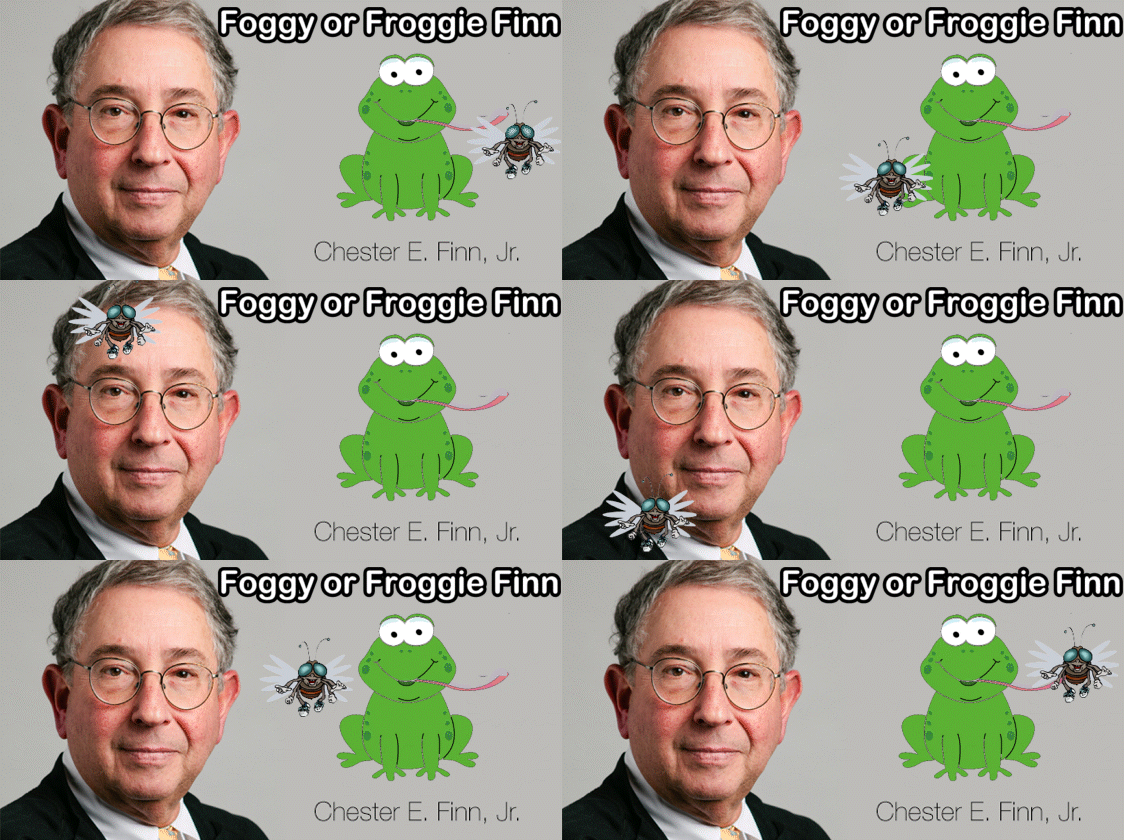
Image result for big education ape finn


Some smart education reformers just made two thirds of a very dumb mistake. In Charting a New Course: The Case for Freedom, Flexibility & Opportunity Through Charter Schools, Jeanne Allen, Max Eden and others (including Mike McShane, Ben Lindquist, Derrell Bradford and Jay Greene) offer several solid suggestions for state policy makers, such as encouraging more small one-off charters, having more than one authorizer in a given locale, systematically auditing the regulatory burden on charter schools, and giving them latitude to hire the teachers of their choice.
That’s the one third that’s smart and timely. But the main thrust of this new volume from the Center on Education Reform is to abolish results-based accountability for charter schools and scrap careful vetting of would-be charter operators. Instead, they would rely on a marketplace free-for-all in which pretty much anyone can start a school and authorizers don’t shut (or non-renew) a school just because nobody is learning anything in it. “Standardized testing” is damned over and over again in these pages as if it were the root of all evil in today’s charter sphere.
This is a version of the familiar libertarian stance on charters (and school choice more broadly): the market will provide all the quality control that’s necessary. Quality is in the eye of the beholder, i.e., the parent—and the school operator. The heck with school outcomes.
This is idiocy. It’s also entirely unrealistic in the ESSA era. It arises from the view—long since dismissed by every respectable economist—that education is a private good and the public has no interest in an educated citizenry. Once you conclude that education is also a public good—New book from charter school advocates offers lots of bad advice | The Thomas B. Fordham Institute:

NYC Public School Parents: Josh Karan: an opportunity to revise Mayoral control and what should happen next

NYC Public School Parents: Josh Karan: an opportunity to revise Mayoral control and what should happen next:

Josh Karan: an opportunity to revise Mayoral control and what should happen next


Guest blog by Josh Karan below.  Though I'm not as optimistic that parents will have any say in what happens if and when mayoral control lapses, the Parent Commission which was a part of in 2008 did have a rigorous analysis of what was wrong with mayoral control and how to improve upon it. We invited any parent or parent advocate to be part of our group, held panel discussions with experts on school governance and critical education issues, and deliberated for an entire year before coming up with our consensus recommendations. For those who would like to see what we proposed, you can check out our full report here. -- Leonie

___
We have an unexpected opportunity to influence how NYC schools are governed, which could make them more engaging of and accountable to communities. 

Since 2002 the granting of control of the schools to the Mayor by the NY State legislature has required periodic re-authorization.  Presently such granting of power expires July 1, and there has been a deadlock between various factions as to the terms for its reauthorization.

Therefore, according to staff of one NY State Senator, the NYS legislature will be convening a Special Session after July 4 to address the issue of NYC school governance. 

This has panicked proponents of Mayoral Control, including the di Blasio administration, and many others, who view Mayoral Control as responsible for great improvements in educational outcomes.  They are seeking a multi-year, re-authorization, while Republicans and some Democrats, want to link re-authorization to an expansion of Charter schools, and an audit of how the school system has been spending its money.  

Proponents of Mayoral Control have argued that the alternative would be a return to what they assert were corrupt, unrepresentative, local Community School Boards.  

This impasse allows some opportunity to affect the debate, perhaps resulting in the Special Session granting only a short-term re-authorization, while we work to re-invigorate the discussion about the role of parents and communities in the formulation of the structure of decision making for public education, as well as its goals. 

The context can be proposals that a group of us, calling ourselves The Parent Commission, compiled in 2008, when then Mayor Michael Bloomberg first desired renewal of his control over NYC schools. 

At that time, over many months, a group of 15-30 parent activists discussed various proposals for democratic governance of NYC schools, and NYC Public School Parents: Josh Karan: an opportunity to revise Mayoral control and what should happen next:


Florida: Death To Public Education | HuffPost

Florida: Death To Public Education | HuffPost:

Florida: Death To Public Education 


Florida has long struggled to take the lead in the State Most Hostile To Public Education contest, with North Carolina, Wisconsin and Nevada giving some real competition. But last week, Florida’s legislature and governor took a decisive leap forward.
Let there be no doubt ― no state is more hostile to the very idea of public education than Florida.
Can I give you a quick list of the many ways that Florida has spat on public education in the past? They tried to undermine the teaching of science. They have remained studiously devoted to the idea of the Big Standardized Test, even though they can’t seem to get one right (and even to the point of cancelling actual education and requiring students to pledge allegiance to the test). But their devotion to the BS Test is so great that they hounded the mother of a dying child and went to court to keep children out of fourth grade who had demonstrated mastery of reading― but not on the BS Test. They have committed to a merit pay plan (well, with every kind of commitment except funding) that is one of the dumbest and most insulting versions of the oft-disproven concept of merit pay ever seen. They have turned recess into a political football. They have stood in a courtroom and declared that teacher-given grades are meaningless.  They implementbad retail management practices in their education system. They serve as the home base for FEE, the astro-turf edu-group that was supposed to help propel Jeb! Bush to the White House (as well as other failed astro-turf for the Common Core failures). In the face of a teacher shortage, they got rid of tenure and have since used it make the shortage worse by purging teachers who speak up about abuses they see. They host some of the research in How To Replace Teachers (and Students) With CGI Avatars, as well as some disastrously failed Gates “research” about teaching. They are pioneers in the destructive and not-remotely-useful A-F school grading system. And while they have pursued these new horizons in the destruction of public schools and the teaching profession, they’ve also kept the door open so that good old-fashioned racist underfunding of public schoolscan continue unimpeded.
But then, letting terrible crap happen without standing in its way (well, unless it’s those Florida: Death To Public Education | HuffPost:
Image result for big education ape rick scott death public education

We’re talking gender issues on Friday’s Hitting Left with the Klonsky Brothers. | Fred Klonsky

We’re talking gender issues on Friday’s Hitting Left with the Klonsky Brothers. | Fred Klonsky:

We’re talking gender issues on Friday’s Hitting Left with the Klonsky Brothers

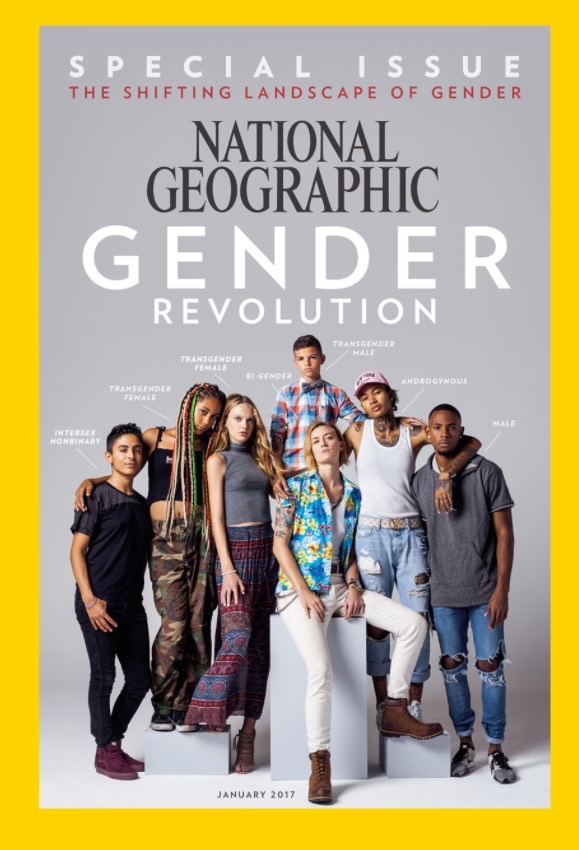
Screen Shot 2017-06-22 at 10.12.38 AM


Friday’s in-studio live guest is Pidgeon Pagonis, intersex activist, academic and artist.
11AM. 105.5FM in Chicago. Streaming live across the galaxies and podcast later in the day on hittingleft.libsyn.com
Coming up on future shows: former leader of the Illinois Bernie Sanders campaign, Clem Balanoff with Amalgamated Transit Union local presidents Keith Hill and Ken Franklin.
We are also talking with gubernatorial candidates Ameya Pawar on June 23rd.
 We’re talking gender issues on Friday’s Hitting Left with the Klonsky Brothers. | Fred Klonsky:

New study backs academic rigor for preschoolers. Oh, please. - The Washington Post

New study backs academic rigor for preschoolers. Oh, please. - The Washington Post:

New study backs academic rigor for preschoolers. Oh, please.
Image result for rigor for preschoolers
Or Try Rigor Ala DeVos   


Here we go again.
A new study finds that preschool classrooms — those in which teachers provide “high doses” of activities “emphasizing language, preliteracy and math concepts” — give “positive” academic benefits to children as measured by standardized tests, and that black students generally get a bigger boost than others. Think flashcards.
According to the study, kids who had attended a year of academic preschool were about 2 ½ months ahead at the end of kindergarten in math and literacy than children who hadn’t been at such a prekindergarten. You can read the study here, and a New York Times article about it here.
The issue of academic “rigor” in the early years of a child’s education has been a part of the education reform debate for years. Every now and then, there is a study that shows that kids do better on tests by some number of weeks or months if they go to an academic kindergarten, though tests are hardly the best indicator for how well children are developing, and the gains that are cited are short-lived.
Nancy Carlsson-Paige, an early-childhood-development expert, recently wrote:
We have decades of research in child development and neuroscience that tell us that young children learn actively — they have to move, use their senses, get their hands on things, interact with other kids and teachers, create, invent. But in this twisted time, young children starting public pre-K at the age of 4 are expected to learn through “rigorous instruction.”
And never in my wildest dreams could I have imagined that we would have to defend children’s right to play.
Play in this context doesn’t mean letting children do whatever they want. Below is a response to the new report and the Times article from Defending the Early Years, a nonprofit organization Carlsson-Paige co-founded that commissions research about early-childhood education andNew study backs academic rigor for preschoolers. Oh, please. - The Washington Post

Union-bashing charter operator wants equitable school funding? C’mon. | Fred Klonsky

Union-bashing charter operator wants equitable school funding? C’mon. | Fred Klonsky:

Union-bashing charter operator wants equitable school funding? C’mon.

19225022_10212742098365323_6692010660292025741_n


No sooner had I posted the testimony that Bev Johns’ will deliver later today before an Illinois House Committee on SB1 (scroll down) when I came upon Michael Milkie’s op-ed in the Sun-Times.
Some legislators – even progressive ones – are confused about SB1 since it has been sold as bringing equity to state school funding.
It does no such thing.
It simply redivides crumbs but fails to provide adequacy.
First a word about Milkie.
He heads Chicago’s largest network of charter schools. When Andrew Broy, president of the Illinois Network of Charter Schools tells the Tribune, “Chicago has become the epicenter of charter union organizing in the country,” he certainly has Milkie’s Noble Charters in mind.
Noble and Milkie are the epicenter of charter teacher union resistance.
Charter teacher union ChiACTS’ President Chris Baehrend, writing today in theUnion-bashing charter operator wants equitable school funding? C’mon. | Fred Klonsky: 
 Image result for big education ape charter school union

Reed Hastings backs school board candidates, but opposes elected school boards | EdSource

Reed Hastings backs school board candidates, but opposes elected school boards | EdSource:

Reed Hastings backs school board candidates, but opposes elected school boards

Image result for big education ape Reed Hastings


Despite contributing millions to pro-charter forces backing school board candidates in Los Angeles and elsewhere, Netflix CEO Reed Hastings says he doesn’t believe in elected school boards.
It is an argument that the billionaire philanthropist has been making in various forums for years. His latest salvo against school boards that many regard as a bedrock of American democracy came last week in a speech he made to the annual conference of The National Alliance for Public Charter Schools in Washington D.C., attended by about 4,500 enthusiastic charter school advocates, teachers and administrators.
His appearance came just weeks after all three candidates he backed in Los Angeles Unified won seats in school board races that were the most expensive in U.S. history. Some $17 million was spent in the election – with deep pocketed philanthropists easily outspending the California Teachers Association and other teachers unions in the race.
While Hastings directly donated $1,100 each to candidates Nick Melvoin, Kelly Gonez and Mónica García, he contributed nearly $5 million between September 2016 and May 2017 to the advocacy arm of the California Charter Schools Association. The charter group went on to spend nearly $8 million on behalf of the three candidates through its two main campaign finance arms. Garcia, an incumbent, was re-elected in March while Melvoin and Gonez won their runoff races in May.
As the races came to a head, Hastings contributed $1 million to the charter association just days before the runoff election on May 16. Other contributors included wealthy charter backers like billionaire Eli Broad, Gap co-founder Doris Fisher, and former Los Angeles mayor Richard Riordan.
Hastings, who as a former president of California’s State Board of Education brings Reed Hastings backs school board candidates, but opposes elected school boards | EdSource:
 Image result for big education ape Reed Hastings
Image result for big education ape Reed Hastings


Problems with charter schools that you won’t hear Betsy DeVos talk about - The Washington Post

Problems with charter schools that you won’t hear Betsy DeVos talk about - The Washington Post:

Problems with charter schools that you won’t hear Betsy DeVos talk about


President Trump has proposed spending hundreds of millions of dollars in new federal funding to expand charter schools, and his education secretary, Betsy DeVos, has made clear that her major priority is expanding school choice, including charters. But one thing missing from their agenda is anything that seeks to hold charter schools and for-profit charter operators accountable for how they spend money, educate children and be transparent to the public.
Asked at a hearing earlier this year whether she was “going to have accountability standards” in any new school choice program, DeVos responded that states should decide “what kind of flexibility they are going to allow.”
Charter schools are publicly funded but privately operated, sometimes by for-profit companies, and have been proliferating for more than 25 years, with thousands of them enrolling as much as 6 percent of America’s schoolchildren around the country.
Supporters of charter schools say they give parents an alternative to failing traditional public schools. Critics say they take vital resources away from traditional public schools and that while some charters are well-run and successful, many are poorly operated. In some cases, “poorly operated” is an understatement. Some states have scandal-ridden charter sectors, though the depths of the problems were hardly front and center at the annual charter conference in Washington D.C. earlier this month.
This post, written by Carol Burris, a former New York high school principal who is executive director of the nonprofit Network for Public Education, details issues on which many supporters don’t want to focus. Burris was named the 2010 Educator of the Year by the School Administrators Association of New York State, and in 2013, the organization named her the New York State High School Principal of the Year. She has chronicled problems with standardized-test based school reform and the school choice movement on this blog for years.
Image result for big education ape charter schools segregation

By Carol Burris
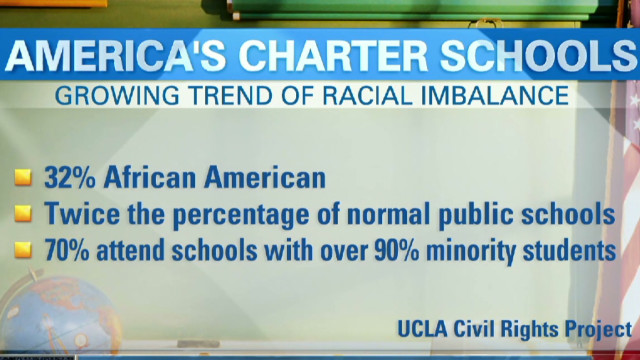
During the summer of 2016, the members of the NAACP — the oldest civil rights organization in the country — took a remarkable stand. At their annual convention in Cincinnati, they passed a resolution that called for a pause on new charter school funding.
This was not the first time the organization expressed its concern about charter schools. Calls for charter reforms were included in past resolutions of the NAACP as well. The new 2016 resolution, however, went further in that it called for a moratorium on the growth of charter schools until concerns were addressed.Problems with charter schools that you won’t hear Betsy DeVos talk about - The Washington Post:
Image result for big education ape charter schools segregation
 Image result for big education ape charter schools segregation

Sacramento City school district, teachers union reach impasse in contract negotiations | ABC10.com

Sacramento City school district, teachers union reach impasse in contract negotiations | ABC10.com:

Sacramento City school district, teachers union reach impasse in contract negotiations


With negotiations between the Sacramento City school district and its teachers union apparently at an impasse, the two parties are poised to go into fact finding – the final stage of contract negotiations before a strike can be called.
Image result for impasse,The two parties have been stalled for some months over the details of the districts union contract, and a mediator was unable to bridge the gap. The Public Employment Relations Board (PERB) has agreed that the two parties have indeed reached an impasse and the fact-finding stage might begin, said J. Felix De La Torre, counsel for PERB.
The two parties have until July 5 to agree to a fact finder who will hear each side’s evidence and testimony, consider it and prepare a report, a process that should take about two months. If they cannot agree on who should take the role of fact finder, PERB will appoint one. The outcome is non-binding.
Each side accused the other of foot dragging on resolution of the contract. Contract negotiations began last October, and by April, the parties went into mediation to try and bridge the gaps and reach common ground.
Sacramento City Unified School District maintains it has made a generous offer to district employees, offering up to six percent in pay raises over two years and continuing to provide free health coverage for employees and their families, the district said in a press release.
Over the past two years the district has granted eight percent salary increases to teachers, who also get automatic annual increases of about one percent. Sacramento city teachers earn on average $91,238 in salary and benefits, which is the highest among surrounding districts, according to SCUSD’s analysis.
However, the Sacramento City Teachers Association wants more than just higher pay for teachers; it aspires to make Sac. City the destination district in California, with smaller class sizes, more nurses and psychologists, more training for teachers and more art and music classes, said John Borsos, executive director for the teachers association.
“On that point, we have demonstrated to the district that they have the financial resources… to make Sac. City the destination district in the state,” Borsos said
The union claims the district is in the best financial shape of its history, with a massive cash reserve, partially by virtue of under spending on budgeted items like books and supplies, as well as salaries for 126 position currently not filled.
Alex Barrios, chief communications officer for SCUSD, disputed this characterizationSacramento City school district, teachers union reach impasse in contract negotiations | ABC10.com

Trump-DeVos Department of Education Cuts Back Civil Rights Enforcement | janresseger

Trump-DeVos Department of Education Cuts Back Civil Rights Enforcement | janresseger:

Trump-DeVos Department of Education Cuts Back Civil Rights Enforcement


The U.S. Department of Education’s Office for Civil Rights (OCR) appears to be retreating from aggressive civil rights enforcement when complaints are made. When such complaints were filed during the Obama administration, the OCR examined three years worth of data from the school district where the complaint had been filed to try to uncover any systemic pattern of the violation of students’ rights. The Office of Civil Rights under Betsy DeVos now says it will expedite the processing of complaints by responding only to the individual complaint itself.
ProPublica explains the shift in enforcement strategy in a report released last week: “Under the Obama administration, the department’s office for civil rights applied an expansive approach to investigations. Individual complaints related to complex issues such as school discipline, sexual violence and harassment, equal access to educational resources, or racism at a single school might have prompted broader probes to determine whether the allegations were part of a pattern of discrimination or harassment.”
ProPublica describes the new enforcement policy as described in a recent memo sent by Candice Jackson, DeVos’s acting secretary for civil rights, to regional OCR directors. No one has been nominated for full-time assistant secretary for civil rights, a position that would require confirmation by the Senate. ProPublica summarizes the new enforcement policy: “The office will apply the broader approach ‘only’ if the original allegations raise systemic concerns or the investigative team argues for it… As part of the new approach, the Education Department will no longer require civil rights investigators to obtain three years of complaint data from a specific school or district to assess compliance with civil rights law.”  ProPublica continues: Trump-DeVos Department of Education Cuts Back Civil Rights Enforcement | janresseger:

Teachers as Practical Politicians | Larry Cuban on School Reform and Classroom Practice

Teachers as Practical Politicians | Larry Cuban on School Reform and Classroom Practice:

Teachers as Practical Politicians

Image result for Teachers as classroom politicians


Besides managing a classroom of 20 to 30 or more students while teaching lessons every day, teachers also do politicking. Teachers using ClassDojo, a free software application (see previous two posts), is just another instance of teacher thinking and acting politically. More about teachers using ClassDojo as a political act later in the post.
I do need to explain that in 2017 for teachers to survive and thrive in their classrooms, they have to be practicing politicians.
Historical context for teachers acting politically
For decades, educators have winced at using the word “politics” linked in any way to their work with children and youth in schools. A few words about the history behind the aversion to the word.
At the beginning of the 20th century, progressive reformers divorced party politics from the conduct of schooling. Governance reforms led school boards to dump party hacks from their ranks and recruit business leaders and civic-minded professionals to serve. Civil service regulations ended the buying and selling of school jobs. Partisan politics was banned from schools and classrooms.
Not only because of the progressive movement a century ago but also because separating politics and schools became embedded in professional training of teachers, the power of that norm remains strong today. It should come as no Teachers as Practical Politicians | Larry Cuban on School Reform and Classroom Practice:

NYC Educator: At the Skinnies

NYC Educator: At the Skinnies:

At the Skinnies


The highlight of the educational season, of course, is the Class Size Matters Skinny Awards. Leonie Haimson organizes them and finds a whole lot of cool stuff happening in education. In fact, I won one year. People are always coming up to me and saying, "Hey, aren't you that guy who won the Skinny award?" I get all "Aw shucks," before coming around and saying, "Yeah, that's me."

The restaurant was okay, and we got a coupon for a free drink. However, they didn't have tap beer so Norm Scott and I ran down the block and found some. Norm picked up the tab, and I'm thankful, but three years ago we drank fourteen-dollar beers at the NY Hilton and I paid. I'm still waiting for someone to buy me a fourteen-dollar beer. But you can hardly find them anywhere.  

This year there were multiple people and things that bore celebrating. First, of course, were the lawyers who gave their time to Class Size Matters. There were up and down stories, but I was very happy to hear of a victory against one of my least favorite humans, Andrew Cuomo. Though Cuomo claims to be a "student lobbyist," he lobbies for less money for schools that most need it. Wendy Lecker and David Sciarra put an end to that plan. 

Another victory was rendering School Leadership Team meetings public, and that was led by Arthur Schwartz and Laura Barbieri. When this first happened, I wondered why it was so important. At my school, SLT meetings are not particularly eventful, and I always kind of thought if anyone wanted to NYC Educator: At the Skinnies:


Gender-Inclusive, Multicultural BadAss Teaching on the June BUS Ride – Education Town Hall Forum

Gender-Inclusive, Multicultural BadAss Teaching on the June BUS Ride – Education Town Hall Forum:

Gender-Inclusive, Multicultural BadAss Teaching on the June BUS Ride


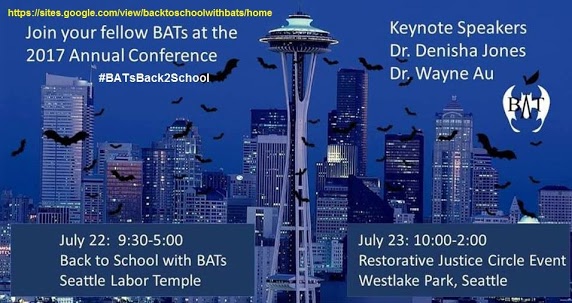
Coming up the Education Town Hall’s monthly BUS program — driven by BadAss Teachers, United Opt Out, and Save Our Schools — the 4th Annual Back to School with BATs Conference, scheduled for Seattle, WA, July 22-23. Listen live via TuneIn, June 22, 11 a.m. to noon Eastern.
First segment: BATs General Manager Marla Kilfoyle and Lisa Keating, founder of My Purple Umbrella, a community organization that advocates for LGBTQ youth.
Second segment, bottom of the hour: Dawn Bennet, co-founder of Multicultural Education Rights Alliance (McERA), and professor and organizer Denisha Jones, who will give a preview of her keynote.
BacktoSchoolBATS
The Education Town Hall with Thomas Byrd
broadcasts from Historic Anacostia
in Washington, DC, on We Act Radio,
Thursdays at 11:00 a.m. Eastern
Listen live via TuneIn.
Shows are archived for convenient listening shortly after broadcast.
After years of weekly broadcasts, the program now focuses one show each month on local issues and one on “the BUS,” organized by BadAss TeachersUnited Opt Out, and SOS March.

New Jersey's Insider Special Education Ombudsman - Education Lessons From A Sparkly District:

Education Lessons From A Sparkly District: New Jersey's Insider Special Education Ombudsman:

New Jersey's Insider Special Education Ombudsman


Yesterday, the New Jersey Department of Education (NJDOE) announced the appointment of an acting Special Education Ombudsman. You can read the press release here. It's taken an impressive ten months to fill this position which was officially announced in August 2016 with an Amended Notice of Vacancy (I wrote about that here), having been signed into law by Governor Christie in January 2016. 

When the bill was first introduced in November 2015 by Senator Ruiz to the NJ Senate Education Committee, she did so knowing the Governor would not support a Public Advocate. In other words, there was no support for a truly independent advocate for students with disabilities in the state of New Jersey. Understanding that many families face significant obstacles to identification, evaluation, classification, and placement/services, the Special Education Ombudsman position was created. 

At the time, I plead with the Committee to not create this position if it would only be another roadblock or hurdle for parents and students to navigate. We don't need another office tasked with providing "information" about services. We need someone to enforce the law.

Once the Ombudsman bill was signed into law, I asked to have the position report to somewhere else other than NJDOE. The NJ Department of Justice was floated and ultimately rejected. The position would be in and report to NJDOE. 

Sen. Ruiz said she expected the person chosen to be objective. Great. Glad to hear it. However, anyone who has spent time as a special ed parent or advocate can attest to the
Education Lessons From A Sparkly District: New Jersey's Insider Special Education Ombudsman: