Tuesday, January 21, 2020

Teachers Talk + 4 Tricks to Help Struggling Students - Teacher Habits

Teachers Talk - Teacher Habits

Teachers Talk


I’ve often heard teachers remark of their principals, “It’s like they forgot what it’s like to be in the classroom.” School leaders who spent years as a teacher seem to lose their classroom perspective in short order as they adjust to their new administrative roles. Some seem to forget that teachers have no time. As in literally no extra minutes anywhere in their day to do anything extra.
Some develop amnesia about just how vital planning time is and they ask their teachers to give it up, even though just a few short years ago they protected that time with everything they had.
And still others eschew their previously held beliefs about what it takes for students to be successful when they feel pressure from their bosses to raise test scores. They become the no-excuses,slave-to-the-data tyrants they used to abhor.
One of the most baffling cases of principals (and other school leaders) forgetting their roots is when they assume teachers won’t talk to other teachers. There is no logic behind such an assumption, especially since these leaders can regularly witness teachers talking to each other before and after school, before and after every meeting, during most meetings (including when they should be listening), at professional development days (often during the presentations), and literally every CONTINUE READING: 4 Tricks to Help Struggling Students - Teacher Habits

4 Tricks to Help Struggling Students

By Meghan Belnap
Whether you are a teacher, a parent, or a tutor, it is difficult to watch a student struggle to grasp the same concepts as other children. Each child learns differently depending on his or her personality. Reaching these kids means developing new tactics for learning. Here are four ways parents and educators can address learning complications. 

Use hands-on projects to supplement learning

Some children need to interact physically with new concepts. Taking time to work on a science project that teaches gravity, or using real-world objects during math lessons can help. History maps, graphs, videos, and other items can help these students connect the terminology in the brain. 
Provide a quiet space to learn where there are fewer distractions
Some children just need a quieter space to work. Providing a desk or table away from the main area can be helpful. The key is to make sure these students do not feel alienated from the rest of the class. Giving CONTINUE READING: 4 Tricks to Help Struggling Students - Teacher Habits

Invest in Public Schools for ALL Children. Watch Out for Partners or Stakeholders!

Invest in Public Schools for ALL Children. Watch Out for Partners or Stakeholders!

Invest in Public Schools for ALL Children. Watch Out for Partners or Stakeholders!


Public schools should be for all children. The country should get behind and invest in public education and be careful about partners or those that call themselves stakeholders.
These are business words that usually mean that public education must rely on outside companies to fund education. This means public schools are no longer under the authority of the local community. They are no longer public schools. They are like a charter school. This is a sly way to privatize public education.
Partners or stakeholders might positively invest in schools, with little or no strings attached. This is a good thing.
They could also take charge of the curriculum and the management of the school. The school is then similar to a charter school.
We learn about how this attempt to transform public schools to privatization started in the 1980s by an example in the book The Man Who Sold the World: Ronald Reagan and the Betrayal of Main Street America, by William Kleinknecht.
In 1985, Dixon High School in Dixon, Illinois, the school President Reagan had CONTINUE READING: 

A Student's Guide to Voting in Michigan | Eclectablog

A Student's Guide to Voting in Michigan | Eclectablog

A Student’s Guide to Voting in Michigan


Editor’s note: Since they took control of the state government in 2010, Republicans in our state legislature and executive branch have made voting for students unnecessarily difficult and complex. That’s a feature for them, not a bug. I asked Barb to explain the process so that students living in Michigan have all of the facts on how they can vote in Michigan elections.
A PDF version of this post is available for download by clicking HERE.

A Student’s Guide to Voting in Michigan
By Barb Byrum, Ingham County Clerk
January 2020
Step 1:

Registering to Vote
  1. Check your voter registration status here
  2. Register to vote by completing this form and signing it
  3. Submit the form to your local clerk. Follow this link to find your local or county clerk
    • Please note: if it is within two weeks of Election Day, you must register to vote in person with your local city or township clerk
  4. Online Voter Registration if you have a valid Michigan Driver’s License or State ID
Step 2:
Requesting an Absent Voter Ballot to Vote by Mail or Going to the Polls on Election Day
Requesting an Absent Voter Ballot:
The easiest way to vote is to vote by mail, which is commonly called absentee voting in Michigan. To do this:
  1. You must request an absentee ballot for each election, and you may do so by completing the following form.
    • To be proactive, you could request to be added to your local clerk’s Permanent Absent Voter Ballot List, so that you will be sent an application for an absent voter ballot for each election.
    • Absentee ballots are available 45 days before every election. If you are registered to vote, you can request a ballot be mailed to you until the Friday before the election at 5 p.m., or a ballot in-person at your city or township clerk’s office until 4 p.m. on the Monday before the election.
  2. Once you receive your ballot in the mail, make sure you fill it out and return it quickly, as it takes nearly a week for mail to arrive, and completed ballots must be in the possession of your local clerk by 8 p.m. on Election Day in order to be counted.
    • In most cases, you can also drop your ballot off at your local clerk’s office in person until Election Day.
  3. You can also check the status of your absent voter ballot here.
Voting In Person at the Polls on Election Day:
If you would prefer to go to the polls on Election Day, make a plan to be sure that you know where your voting precinct is and have enough time to exercise your right to vote. Keep in mind that, if you are not already registered to vote, you must register at your local clerk’s office, not at the voting CONTINUE READING: 
A Student's Guide to Voting in Michigan | Eclectablog

Announcing the Black Lives Matter at School 2020 Curriculum Resource Guide! – Black Lives Matter At School

Announcing the Black Lives Matter at School 2020 Curriculum Resource Guide! – Black Lives Matter At School

Announcing the Black Lives Matter at School 2020 Curriculum Resource Guide!

The education committee of the National Black Lives Matter At School Week of Action is excited to announce the release of the brand new 2020 Curriculum Resource Guide–free, downloadable activities, resources, and actions to challenge racism, oppression and build justice-centered classrooms. These teaching activities and lesson plans support students at every grade level and relate to the 13 principles of Black Lives Matter.
Black Lives Matter At School is a national movement organizing for racial justice in education.  We encourage all educators, students, parents, unions, and community organizations to join our annual week of action during the first week of February each year. To learn more about how to get involved, check out our BLM at School Starter Kit.
Enjoy these powerful lesson plans for liberation!

Announcing the Black Lives Matter at School 2020 Curriculum Resource Guide! – Black Lives Matter At School

‘Slaying Goliath’: Diane Ravitch argues in new book that public education advocates have beat back efforts to privatize schools - The Washington Post

‘Slaying Goliath’: Diane Ravitch argues in new book that public education advocates have beat back efforts to privatize schools - The Washington Post

Q&A: In ‘Slaying Goliath,’ Diane Ravitch argues public education advocates have beat back privatization efforts


Education historian and activist Diane Ravitch is publishing a new book Tuesday, the latest in her years-long chronicling of how the modern school “reform” movement has harmed students, teachers and schools.
A decade after her blockbuster book on the disastrous effects of the 2002 No Child Left Behind law, Ravitch’s new book, “Slaying Goliath: The Passionate Resistance to Privatization and the Fight to Save America’s Public Schools,” tells the continuing story of the reform push during the Obama and Trump presidencies.


Ravitch focuses on what she calls the “failures of Corporate Disruption” of public education ti changes aimed at operating schools as if they are businesses — and introduces readers to students, teachers, parents and others who have fought high-stakes tests and the privatization of public schools. She says that corporate-informed school reform efforts are actually dead, even if their supporters don’t quite realize it yet.
“Slaying Goliath” is a bookend of sorts to 2010’s “The Death and Life of the Great American School System,” which was a sensation in the education world. Before publishing that book, Ravitch had been assistant secretary of research and improvement in the Education Department under President George H.W. Bush and was an early supporter of No Child Left Behind, the chief education initiative of President George W. Bush, which ushered in the high-stakes standardized-testing movement.
But when she researched the effects of the measures, she saw that NCLB’s testing requirements had turned classrooms into test prep factories and driven schools to narrow the curriculum to focus on tested subjects. She wrote “Death and Life” to explain why she no longer believed in what she called “corporate school reform.”
The 2010 book helped start a movement among parents, educators, students, advocates and others, and she became the titular leader of it. Ravitch wrote or co-wrote a few other books over the next decade, including “Reign of Error: The Hoax of the Privatization Movement and the Danger to America’s Public Schools.” She also co-founded and leads the nonprofit Network for Public Education, which links people and groups that advocate to improve public schools. CONTINUE READING: ‘Slaying Goliath’: Diane Ravitch argues in new book that public education advocates have beat back efforts to privatize schools - The Washington Post

The Future of Public Education Hinges on This Supreme Court Case | Diane Ravitch's blog

The Future of Public Education Hinges on This Supreme Court Case | Diane Ravitch's blog

The Future of Public Education Hinges on This Supreme Court Case

Tomorrow, the United States Supreme Court will hear arguments in a crucial case called Espinoza v. Montana.
The goal of the Espinoza plaintiffs is to strike down state laws that prohibit public funding for religious schools.
This is a case that could not only erase the line between church and state but could actually compel states to fund religious schools. It would require states to fund religious schools of every kind, and no one knows who will determine what is a legitimate religious school. It would divert funding from public schools to support students enrolled in religious schools, now and in the future.
The plaintiffs are represented by the libertarian Institute for Justice. Its efforts on behalf of school choice have been funded over the years by anti-public school activists like the Walton Family Foundation (which has launched one of every four charter schools in the U.S.), the Bradley Foundation of Milwaukee (which fought in court to establish vouchers in that city), the DeVos family, and the Koch Foundation.
Twenty or thirty or forty years ago, the Supreme Court would have dismissed this case out of hand. In the past, the Court ruled that states should pay for ancillary CONTINUE READING: The Future of Public Education Hinges on This Supreme Court Case | Diane Ravitch's blog 

Diane Ravitch will be in Seattle on February 4th to discuss her latest book “Slaying Goliath” – Seattle Education

Diane Ravitch will be in Seattle on February 4th to discuss her latest book “Slaying Goliath” – Seattle Education

Diane Ravitch will be in Seattle on February 4th to discuss her latest book “Slaying Goliath”


Diane Ravitch
Slaying Goliath: The Passionate Resistance to Privatization and the Fight to Save America’s Public Schools
Tuesday, February 4th
7:30 p.m.
Town Hall Seattle
1119 8th Avenue
Seattle, WA 98101
Goliath
On February 4, 2020, Diane Ravitch will be speaking at Town Hall in Seattle about her new book Slaying Goliath: The Passionate Resistance to Privatization and the Fight to Save America’s Public Schools and talking about the Garfield teachers’ strike. The book is a celebration of the resistance by parents, teachers, students to the corporate takeover of public schools.
The verdict of the Library Journal in their review of Ravitch’s book, “This extensive analysis is required reading for anyone concerned about American education.”
You can listen to a sample of the book at the Penguin Random House website 
The book is available beginning today in stores and online.
For those who do not know Dr. Ravitch, she is a Research Professor of Education at New York University and a historian of education. Diane Ravitch is also the Founder and President of the Network for Public Education (NPE).
From 1991 to 1993, she was Assistant Secretary of Education and Counselor to Secretary of Education Lamar Alexander in the administration of President George H.W. Bush. She was responsible for the Office of Educational Research and Improvement in the U.S. Department of Education. As Assistant Secretary, she led the federal effort to promote the creation of voluntary state and national academic standards.
From 1997 to 2004, she was a member of the National Assessment Governing Board, which oversees the National Assessment of Educational Progress, the federal testing program. She was appointed by the Clinton administration’s Secretary of Education Richard Riley in 1997 and reappointed by him in 2001. Before entering government service, she was an Adjunct Professor of History and Education at Teachers College, Columbia University.
Dr. Ravitch has written several books including: 
Reign of Error: The Hoax of the Privatization Movement and the Danger to America’s Public Schools (2014)
The Death and Life of the Great American School System: How Testing and Choice Are Undermining Education (2010)
Edspeak: A Glossary of Education Terms, Phrases, Buzzwords, and Jargon (2007)
The Language Police: How Pressure Groups Restrict What Students Learn (2003)
I read Reign of Error and The Death and Life of the Great American School when I began becoming active in the world of public education. I wrote a review for The Reign of Error which can be found here. Her books are a must-read for anyone involved in or interested in what is happening in our CONTINUE READING: Diane Ravitch will be in Seattle on February 4th to discuss her latest book “Slaying Goliath” – Seattle Education

NYC Educator: What If New York Had Not Been Enough for Boss Tweed?

NYC Educator: What If New York Had Not Been Enough for Boss Tweed?

What If New York Had Not Been Enough for Boss Tweed?


I'm watching a Mike Bloomberg commercial. Bloomberg runs them all day, on all channels, in English and Spanish. Michael Bloomberg doesn't need any stinking debates. He doesn't qualify for them because no one contributes to his campaign. He is literally out there trying to buy the presidency of the United States.

Right now he doesn't seem to figure in many polls. He says he isn't running in the first few states. You may recall that strategy did not pan out for Rudy Giuliani as he capitalized on presiding over one of the worst disasters in the history of New York City. However, Rudy Giuliani did not have virtually unlimited personal capital at his disposal

You may also recall that Michael Bloomberg did get a lot of things done. He closed scores of schools. He turned a whole lot of teachers into ATRs, a problem that still lingers now. He achieved mayoral control, effectively shutting the public out of decision making over their own communities. I don't even remember how many meetings I went to in which parents, teachers, students, politicians and clergy went to plead for schools, only to see them closed anyway, even if data was entirely wrong.

Those were the good old days at the Panel for Educational Policy. Michael Bloomberg had the majority of appointees, and fired anyone who contemplated voting his or her conscience. Michael Bloomberg had to have absolute control and could not tolerate any dissension. Does this remind anyone of an orange-skinned, orange-haired figure we read about in the news every now and then?

As for getting it done, Bloomberg was adept at that. Loathsome and reptilian though he is, he was a lot smarter than Rudy Giuliani, who was always suing everyone over, oh, the right to have his mistress come to the home he was sharing with his wife and young children, or excrement-splattered paintings, or other things that did not much affect the CONTINUE READING: 
NYC Educator: What If New York Had Not Been Enough for Boss Tweed?


"We Are All Reformers" (Part 5) | Larry Cuban on School Reform and Classroom Practice

"We Are All Reformers" (Part 5) | Larry Cuban on School Reform and Classroom Practice

"We Are All Reformers" (Part 5)


This five part series ends with my leaving high school and going to a commuter college in Pittsburgh. These five parts are drafts of what may become my next book, part analysis of school reform and part memoir. The working title of that book is “Confessions of a School Reformer.”
In alternating chapters, the book will describe and analyze each of three reform movements during my lifetime and then trace my life in and out of school as a student, teacher, administrator and researcher who experienced directly continual reforms for over three-quarters of a century.
Since 1939 when I entered first grade until 2020, three major reform efforts have swept across American public schools: the Progressive movement (1890s-1940s); Civil Rights movement (1950s-1970s), and business-inspired standards, testing, and accountability movement (1970s-present).
As a student (1939-1951) I was the object of Progressive reforms. As a teacher and administrator (1950s-1980s) I designed and implemented classroom, school, and district reforms during the Civil Rights movement and then as a superintendent the first decades of the standards, testing, and accountability effort, and as a researcher since then I have described and analyzed U.S. school reforms.
The theme that runs through the five parts thus far is that my years as an elementary and secondary school student, while of great importance in awakening parts of me that I had not known, were CONTINUE READING: "We Are All Reformers" (Part 5) | Larry Cuban on School Reform and Classroom Practice

Kira Orange-Jones Is Chairing La. BESE’s Superintendent Search | deutsch29

Kira Orange-Jones Is Chairing La. BESE’s Superintendent Search | deutsch29

Kira Orange-Jones Is Chairing La. BESE’s Superintendent Search

On January 17, 2020, Louisiana Board of Elementary and Secondary Education (BESE) president, Sandy Holloway, appointed the four BESE members who will form the work group that is supposed to offer full BESE names of candidates for Louisiana’s next state superintendent. (Click here for the press release.)
This superintendent work group will both screen and nominate, and it will also devise a process for selection, which it is to present to BESE at the board’s meeting on January 28-29, 2020.
Teach for America (TFA) executive director, Kira Orange-Jones, is the work group chair.
Other members include James Garvey, Ronnie Morris, and Doris Voitier.
Garvey, a lawyer, is an avid White supporter. Morris, an operations manager for Exxon, was recently elected, and Voitier, St. Bernard Parish superintendent, is in her second term as one of Governor Edwards’ three BESE appointees.
So, basically, from the time of their formal appointment, these four individuals have ten days to screen and select candidates and to develop a process for selecting the next superintendent, which requires a supermajority vote from BESE (8 out of 11 members).
In BESE’s January 16, 2020, special meeting, Garvey appeared to favor retaining a search firm for locating candidates.
In his 2015 criticism of John White, Governor Edwards noted that White lack credentials “to even be a middle school principal” and said that Louisiana has qualified candidates for superintendent and that there was “no need to go CONTINUE READING: Kira Orange-Jones Is Chairing La. BESE’s Superintendent Search | deutsch29


Teacher Evaluation Recommendations Endorsed by the Educational Psychology Division of the American Psychological Association (APA) | VAMboozled!

Teacher Evaluation Recommendations Endorsed by the Educational Psychology Division of the American Psychological Association (APA) | VAMboozled!
Teacher Evaluation Recommendations Endorsed by the Educational Psychology Division of the American Psychological Association (APA)

Recently, the Educational Psychology Division of the American Psychological Association (APA) endorsed a set of recommendations, captured withing a research brief for policymakers, pertaining to best practices when evaluating teachers. The brief, that can be accessed here, was authored by Alyson Lavigne, Assistant Professor at Utah State, and Tom Good, Professor Emeritus at the University of Arizona.
In general, they recommend that states’/districts teacher evaluation efforts emphasize improving teaching in informed and formative ways verses categorizing and stratifying teachers in terms of their effectiveness in outcome-based and summative ways. As per recent evidence (see, for example, here), post the passage of the Every Student Succeeds Act (ESSA) in 2016, it seems states and districts are already heading in this direction.
Otherwise, they note that prior emphases on using teachers’ students’ test scores via, for example, the use of value-added models (VAMs) to hold teachers accountable for their effects on student achievement and simultaneously using observational systems (the two most common teacher evaluation measures of teacher evaluation’s recent past) is “problematic and [has] not improved student achievement” as a result of states’ and districts’ past efforts in these regards. Both teacher evaluation measures “fail to recognize the complexity of teaching or how to measure it.”
More specifically in terms of VAMs: (1) VAM scores do not adequately compare teachers given the varying contexts in which teachers teach and the varying factors that influence teaching and student learning; (2) Teacher effectiveness often varies over time making it difficult to achieve appropriate reliability (i.e., consistency) to justify VAM use, especially for high-stakes decision-making purposes; (3) VAMs can only attempt to CONTINUE READING: Teacher Evaluation Recommendations Endorsed by the Educational Psychology Division of the American Psychological Association (APA) | VAMboozled!

Monday, January 20, 2020

How fair is school funding in your state? - The Washington Post

How fair is school funding in your state? - The Washington Post

Report: Wide disparities in how states/localities fund public schools. Here’s a state-by-state comparison.


How much money do states and localities spend on public K-12 education nationwide?
A new report reveals wide disparities in the amounts schools receive from state and local governments, which together appropriate most of the funding that K-12 districts receive.
According to “Making the Grade 2019: How Fair Is School Funding in Your State?," published by the nonprofit Education Law Center, the highest combined state and local funding is in Vermont, at $27,588. The lowest is in Nevada, with $8,569. The national average is $14,046 per pupil. All of the figures are from 2017, the latest data available.

The report said:
  • Public school funding has still not recovered from the sharp and deep cuts enacted during the Great Recession more than a decade ago; nearly half of all states have yet to return to pre-2008 inflation-adjusted funding levels.
  • Widespread teacher protests and strikes have elevated the issue of school funding as a policy and budget priority in numerous states.
  • Frustration with elected officials’ refusal to revamp funding formulas and increase state investment in their public school systems has triggered lawsuits in at least 10 states challenging chronic underfunding, glaring resource deficits and low student outcomes.
The report evaluates education funding through three lenses:
  • Funding level — the cost-adjusted, per‐pupil revenue from state and local sources.
  • Funding distribution — the extent to which additional funding is distributed to school districts with high levels of student poverty.
  • Funding effort — the level of investment in K-12 public education as a percentage of state wealth (GDP) allocated to maintain and support the state school system.

Image without a caption
This isn’t a new phenomenon, of course; there have been a number of reports in years past, such as this CONTINUE READING: How fair is school funding in your state? - The Washington Post

MLK's Advice to a Student Activist | Schott Foundation for Public Education

MLK's Advice to a Student Activist | Schott Foundation for Public Education

MLK's Advice to a Student Activist

“Often you are accomplishing much more than you can see at the moment because you are in the heart of the situation...”
While the popular media narrative today — and at the time — posed the problem of segregation and racial inequality in the 1960s as a largely Southern problem, northern cities like Chicago, New York, and Boston were among the worst offenders.
For the civil rights movement in Chicago, public schools were front and center. The school board, under Superintendent Benjamin Willis, took the occasion of a massive increase of Black families moving to Chicago to further segregate Chicago’s public education system. As Erin Blakemore describes it:
Many schools were so crowded that students had to attend in shifts; by 1960, up to 33,000 black students only attended school for four hours a day so that their schools could accommodate all their enrolled students. Auditoriums, basements, cafeterias and even hallways became classrooms. Supplies were at a premium.
Schools that served majority-Black student populations were underfunded and overcrowded, with many in unsanitary conditions. Instead of sending Black students to neighboring white-majority schools, to alleviate overcrowding Willis hauled in CONTINUE READING: MLK's Advice to a Student Activist | Schott Foundation for Public Education

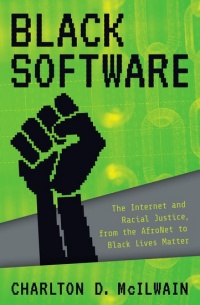
Before #BlackLivesMatter: The Roots of Black Digital Activism - Yes! Magazine

Before #BlackLivesMatter: The Roots of Black Digital Activism - Yes! Magazine

Before #BlackLivesMatter: The Roots of Black Digital Activism

n 2015, two colleagues—Deen Freelon and Meredith Clark—and I set out to better understand how Black Lives Matter emerged. Our report, Beyond the Hashtags, the Online Struggle for Offline Justice, crystalized then-NAACP president Cornell Brooks’ sentiment: “This isn’t your grandparents’ civil rights movement.” Our study showed us that Ferguson, Missouri birthed Black Lives Matter. It told us that Twitter named Michael Brown for the world. Traditional news media outlets were a day late, and when they did arrive, Twitter was their primary source for information. It afforded a 24-hour glimpse into a radical new way of making news, of telling stories—giving unfiltered voice to those whose voices are traditionally unheard, ignored, or silenced.

Digital media—social networking platforms, blogging platforms, the open web, user-generated and circulated images—all afforded Ferguson citizens, racial justice activists, organizers, young people, and others a powerful way to counter the Hollywood and newsmaker image machine—one that historically and continuously casts African Americans as criminal, intellectually deficient, and culturally deviant.
Trayvon Martin, Renisha McBride, Eric Garner, Mike Brown, Sandra Bland, and many more women and men like them did not become the usual footnotes in the thick annals of Black, violent, drug-ridden CONTINUE READING: Before #BlackLivesMatter: The Roots of Black Digital Activism - Yes! Magazine

Lead poisoning hits low-income children harder than their affluent neighbors | Salon.com

Lead poisoning hits low-income children harder than their affluent neighbors | Salon.com

Lead poisoning hits low-income children harder than their affluent neighbors
Children from low-income families may be more susceptible to toxic environmental hazards such as lead exposure


In 1904, John Lockhart Gibson, an Australian ophthalmologist, published a study blaming lead present in paint as the reason for impaired eye motion and sight in children. More than 100 years later, lead is now known as one of the most toxic and harmful environmental insults to humans, particularly to children. A new study published in Nature Medicine on Monday shows that two factors — lead exposure and poverty — may be interacting to further impair cognition and brain development in children.

Lead accumulation leads to lead poisoning, which can include symptoms like abdominal pain, headache, anemia, kidney dysfunction, and memory problems in adults. But, unfortunately, as Gibson saw a century ago, the highest risk of lead poisoning falls on children. Children's growing bodies absorb more lead and, due to their exploratory nature, they tend to come into contact more with their surroundings, which potentially exposes them more.
Lead poisoning in children sets off a cascade of negative behavioral outcomes, including learning problems, hearing loss, and intellectual impairment, all linked to impaired brain development. Adults who were exposed to lead during their childhood have decreased brain volume, specifically in areas that are in charge of executive functions and decision-making such as the prefrontal cortex.
However, other factors also affect brain development, among them socioeconomic status. For example, socioeconomic status plays an important role in determining cognitive performance in children.
The study, led by Elizabeth Sowell, Professor of Pediatrics at the University of Southern California, used data CONTINUE READING: Lead poisoning hits low-income children harder than their affluent neighbors | Salon.com

‘I Am Somebody’: Landmark Documentary on 1969 Hospital Workers Strike's Enduring Lesson that Labor Rights are Civil Rights

‘I Am Somebody’: Landmark Documentary on 1969 Hospital Workers Strike's Enduring Lesson that Labor Rights are Civil Rights

‘I Am Somebody’: A Landmark Documentary’s Enduring Lesson That Labor Rights Are Civil Rights

In the spring of 1969, Coretta Scott King stood in front of a packed church in Charleston, S.C., to address a group of striking hospital workers. She wore a simple white dress and layered strands of necklaces, her pressed, shoulder-length hair nestled under a blue cap with 1199 written in large, white lettering.
She called their strike against the Medical College Hospital (MCH) and Charleston County Hospital (CCH) a “crusade of freedom and dignity.” She lambasted the practice of “full-time jobs for part-time pay.” She told the audience, comprised of mostly black women fighting for recognition of their union, that she considered the black woman “perhaps the most discriminated against of all the working women.”
“If my husband were here today, he would be here with you tonight,” King said, receiving thunderous, approving applause in response.
The scene is part of Madeline Anderson’s pioneering civil rights documentary, I Am Somebody, which chronicles a massive strike in which a group of 400 hospital workers—all but 12 of whom were black women–took on the establishment of Charleston, S.C., to fight for fair, livable wages and worker dignity. Covering one of the final marches of the civil rights movement, I Am Somebody was recently selected to become part of the Library of Congress National Film Registry.
The film’s inclusion is reflective of its historic significance: not only is Anderson a trailblazing filmmaker (she was the first black woman to produce and direct a CONTINUE READING: ‘I Am Somebody’: Landmark Documentary on 1969 Hospital Workers Strike's Enduring Lesson that Labor Rights are Civil Rights