Latest News and Comment from Education

Tuesday, June 26, 2018

Public School System Charged with Fraud: Guilty or Not Guilty? | Cloaking Inequity

Public School System Charged with Fraud: Guilty or Not Guilty? | Cloaking Inequity

PUBLIC SCHOOL SYSTEM CHARGED WITH FRAUD: GUILTY OR NOT GUILTY?

Viva Las Vegas! I was asked by FreedomFest to participate in Las Vegas as an expert witness for the defense in their upcoming event “Public School System on Trial.” FreedomFest is a gathering of about 2,000 Libertarian-minded folk. The event is well-known for its annual “mock trial.” The “trial” takes on an important issue and looks at it from all sides, with a judge, star witnesses, defense and prosecuting attorneys. The jury is made up of FreedomFest attendees. Here is selection of issues on trial from past years:
Here is what FreedomFest says about the Education mock trial.

The concept of public schooling in the United States has been around for a long time. As early as the 1600s, communities created structures of required and free public education and schooling. It wasn’t until the 1800s that the public school system really took shape in the United States.
Since that time, public schools have had a mixed reputation. For some, the local public school is a symbol of civic pride, community, service and progress. But in other ways, the public school system has instituted segregation, inequality, even corruption.
What is the state of our public school system today? With the emergence of common core, national standards, increasing taxes, school shootings, depleting test scores, standardized tests, diminishing arts, recess and physical education, is the public school system HELPING or HURTING our efforts to educate our children and improve our society?
And even more important, is the public school system even doing what it claims is it’s purpose? Is it EDUCATING our children or actually DEFRAUDING the American public?
In our famous mock trial this year, we’ll bring together top-notch experts in the public school system to charge the system with its shortcomings and also defend it from its detractors.
Who is right? What’s the answer for the future of American public education? The school system as it is now? Or something VERY different?
You’ll be there for the historic discussion. And you’ll get to weigh in! We’ll take YOUR vote at the end to see who wins the case.
The graphic they gave me:


Continue Reading: Public School System Charged with Fraud: Guilty or Not Guilty? | Cloaking Inequity

We need to protect the Department of Education

We need to protect the Department of Education

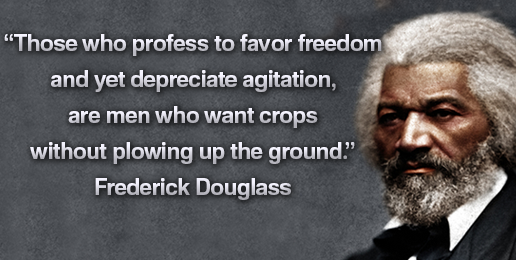
Education unfits us for slavery; we need to protect the Department of Education
The new White House proposal to merge the Departments of Education and Labor views students only as workers
Image result for Frederick Douglass


While the world was focused on the horrific Trump administration policy of family separation, they were pushing other awful proposals through. While we rubbernecked at the “zero tolerance” immigration policies that have undoubtedly caused trauma to children separated from their families, last week, the White House released a 132-page proposal to restructure the federal government. It calls into question “how well the current organizational constructs of Government are aligned to meet Americans’ needs in the digital age.” Headlining this proposal is a plan to merge the Departments of Education and Labor into a single federal agency, the Department of Education and the Workforce.
The notion of a governmental reboot seems fair enough. Government bureaucracies that grow over time can be anathema to innovation and efficiency. Technology has challenged the way we engage with all institutions, and the federal government could certainly improve its use of technology to better deliver services.
However, the chief problem in this country has been our nefarious desire to link education and labor — at times with chains. We don’t need a federal agency to concretize the connection.
Some parts of the plan seem reasonable enough. For instance, splitting the responsibilities of the U.S. Army Corps of Engineers — Civil Works, which does water resource and flood risk management, and moving it out of the Department of Defense and into the Departments of Transportation and the Interior But education deserves more attention than this plan would allow. In addition, there are many agencies that intersect and interact with education, such as Health and Human Services, which manages the federal Head Start pre-school program, part of the DOE’s push for quality early learning, and Housing and Urban Development, which coordinates with HHS and the DOE to help homeless children get those early learning services.
The reality is that the Departments of Education and Labor are big enough and important enough to be standalone agencies. Unschooled reductions in government and reflexive conservatism Continue reading: We need to protect the Department of Education


Monday, June 25, 2018

Deluxe Charter Schools Serve Up Opportunities For Taxpayer-Funded White Flight | Alternet

Deluxe Charter Schools Serve Up Opportunities For Taxpayer-Funded White Flight | Alternet

Deluxe Charter Schools Serve Up Opportunities For Taxpayer-Funded White Flight
Why charter schools do this is no mystery: racism pays.


Charter schools are often billed as benefiting disadvantaged urban kids—but in lots of places around the country, charters are segregating school systems by offering rich white families a way to get their kids away from students of color and poor students. In reality, 115 charter schools nationwide have student populations at least 20 percentage points whiter than public schools in their districts; more than 700 charter schools nationally are whiter than their district’s public schools. 
Why charter schools do this is no mystery: racism pays. As for how they they do it, Emmanuel Felton reports on common tactics like not offering school bus service so that parents have to have the flexibility and the reliable vehicle to get their kids to and from school. Or they require uniforms from Land’s End that low-income families can’t afford. Or they create “priority attendance zones” that ensure that kids from mostly white neighborhoods will get an admissions advantage.
Felton reports in depth on Lake Oconee Academy in Georgia, which is 73 percent white while public schools in the district are just 12 percent white. It was founded essentially at the behest of a company selling luxury lakeside properties, and when the school opened, 80 percent of its spots were reserved for people living in that company’s properties. Lake Oconee Academy has a “piano lab” with 25 pianos. It has 17 Advanced Placement courses. And just 10 percent of its students are black in a district where 68 percent of public school students are black.
As one mother, who ruled out trying to send her kids to Lake Oconee Academy because there was no school bus to get them there, said, “It’s like a black and white thing, who has money and who doesn’t have money.” It’s not just Lake Oconee Academy, and it’s the kind of education policy the Trump administration, with Betsy DeVos heading the Education Department, is pushing.

Stories by Laura Clawson | Alternet - https://www.alternet.org/authors/laura-clawson-0

Saturday, June 23, 2018

I am going to the border. Here's why. - Lily's Blackboard

I am going to the border. Here's why. - Lily's Blackboard

I am going to the border. Here’s why.


“If you are neutral in situations of injustice, you have chosen the side of the oppressor.”-Bishop Desmond Tutu
On Sunday, I am going to Tornillo, Texas on the Mexican border, where Donald Trump has jailed innocent children. As an elementary teacher, as president of a union of educators dedicated to nurturing every student, as a mother, and as a Latina, I must bear witness to Donald Trump’s unimaginable cruelty and inexplicable inhumanity to children.
Any parent knows the panic of momentarily losing a child in the store, and most of us can remember being children ourselves and feeling the terror sweep over us when we can’t find Mom or Dad. That is after only a few minutes of separation. This what these tender-aged children, separated from parents who are seeking asylum, are feeling for weeks or months.  The terror these parents and their little ones are experiencing must be unbearable. 
Even if the American Medical Association, the American Academy of Pediatrics, and other respected organizations had not issued statements about how damaging such family separations are, members of the NEA understand child development. We know that this is causing irreparable emotional and physical trauma to these boys and girls.
Our outrage is even more acute because all of this—every second of terror, fright, and worry in the lives of these children and parents—results from an intentional policy. A choice Donald Trump made.
We have heard this cruel administration and its enablers refer to child prisons like the one in Tornillo as ‘summer camps’ or ‘boarding schools.’  No one is fooled. Such ridiculous comparisons and asinine justifications simply increase our outrage at their callous, hateful treatment of desperate children. Summer camp is not a jail. This is a jail for children. 
Don’t let Trump pull the wool over your eyes with his executive order to “end family separation.” To actually do that, the administration must end the zero-tolerance policy. As long as the prosecution of parents continues, family separation continuesFurthermore, the administration has created no plan to reunite the thousands of children separated from their parents.
I think the Stoneman Douglas students said it best, when speaking about their own tragedy: We appreciate thoughts and prayers, but they are not going to be enough. Our thoughts and prayers are certainly with these separated, incarcerated children. However, it will take much more for us to repair the damage and end this Trump-made disaster. 
“If you are neutral in situations of injustice, you have chosen the side of the oppressor.”-Desmond Tutu
We must find every politician who’s running for office at any level and demand to know if they are going to protect families from Zero-Compassion policies. These children can’t vote, but we can. And we will!
This terrible tragedy is of Donald Trump’s making, but just as it takes a village to raise a child, it took a particular Trumpian village to imprison these children and then justify it. It took the complicity of people around him who were willing to do his bidding. They created the blueprint to enact his horrible policy and then blithely defended him and themselves.
History will judge and condemn those who separated families and incarcerated children. Toddlers. Babies. The names of their jailers will forever be recorded in the worst chapters of the American story—a story that belongs to each of us, a story that we write with the actions we take, as well as those we fail to take. The culprits will surely be remembered. And so, my friends, will we.
Yes, it took a twisted village to create this crisis. But we will be the village to save these children and families. We will not fail them and we will not lose. We will not abandon any of these blessed children.
If we do not act now, then when will we? The question is no longer, “Who is Donald Trump?” It is: “Who are we?”
I am going to the border. Here's why. - Lily's Blackboard


Friday, June 22, 2018

Diane Ravitch: Charter schools are making our public schools worse - The Washington Post

Charter schools are making our public schools worse - The Washington Post

Charter schools are making our public schools worse


Diane Ravitch is a historian of American education at New York University.

In 1988, teachers union leader Albert Shanker had an idea: What if teachers were allowed to create a school within a school, where they could develop innovative ways to teach dropouts and unmotivated students? The teachers would get the permission of their colleagues and the local school board to open their school, which would be an R&D lab for the regular public school. These experimental schools, he said, would be called “charter schools.”
Five years later, in 1993, Shanker publicly renounced his proposal. The idea had been adopted by businesses seeking profits, he said, and would be used, like vouchers, to privatize public schools and destroy teachers unions. He wrote that “vouchers, charter schools, for-profit management schemes are all quick fixes that won’t fix anything.”
Shanker died in 1997, too soon to see his dire prediction come true. Today, there are more than 7,000 charter schools with about 3 million students (total enrollment in public schools is 50 million). About90 percent  of charter schools are nonunion. Charters are more segregated than public schools, prompting the Civil Rights Project at UCLA in 2010 to call charter schools “a major political success” but “a civil rights failure.” They compete with public schools instead of collaborating. Charter proponents claim that the schools are progressive, but schools that are segregated and nonunion do not deserve that mantle.
The charter universe includes corporate chains that operate hundreds of schools in different states. The largest is KIPP, with 209 schools. The-second-largest has 167 schools and is affiliated with Turkish preacher Fethullah Gulen. About one of every six charters operates for profit; in Michigan, 80 percent  are run by for-profit corporations. Nationally, nearly 40 percent of charter schoolsare run by for-profit businesses known as Educational Management Organizations.
The largest online charter chain, K12 Inc., was founded with the help of former junk-bond king Michael Milken and is listed on the New York Stock Exchange. The biggest single virtual charter was the Ohio-based Electronic Classroom of Tomorrow, which collected $1 billionfrom Ohio taxpayers from 2000 until its bankruptcy earlier this year. The charter’s 20 percent graduation rate was the lowest in the nation.
Charter schools pave the way for vouchers. More than half of states now have some form of public subsidy for religious and private schools. Voucher schools are not bound by civil rights laws and may exclude students based on religion, disabilities and LGBT status.
Charters are publicly funded but privately managed. They call themselves public schools, but a federal court ruling in 2010 declared they are “not state actors.” The National Labor Relations Board ruled in 2016 that charters are private corporations, not public schools. As private corporations, they are not subject to the same laws as public schools.
The anti-union Walton Family Foundation  is the biggest private financier of Continue reading: Charter schools are making our public schools worse - The Washington Post

WATCH: Dem lawmaker plays audio of crying immigrant kids -- as Republican tries to shut him down

WATCH: Dem lawmaker plays audio of crying immigrant kids -- as Republican tries to shut him down

WATCH: Dem lawmaker plays audio of crying immigrant kids — as Republican tries to shut him down


ep. Ted Lieu (D-CA) on Friday took to the floor of the House of Representatives and tried to force his colleagues to listen to audio of wailing immigrant children who had been separated from their parents.
As Lieu took the floor, he brought up a large photo of immigrant children who had been taken from their parents and placed into a detention facility — and he proceeded to tear apart President Donald Trump’s immigration policies.
“If the Statue of Liberty could cry, she would be crying today,” he said. “As I stand here there are 2,300 kids that have been ripped away from their parents by our government.”
Lieu then asked his colleagues to imagine how they would feel if they had their children taken from them without even telling them where they were being held — and then he started to play leaked audio of a child immigrant detention facility obtained by Pro Publica earlier this week.
Rep. Karen Handel (R-GA) then tried to shut Lieu down by information that the rules prohibit “the use of an electronic device to make sounds in the chamber.”
Lieu, however, kept playing the recording, despite her objections, until its completion.
Watch the video below.

Thursday, June 21, 2018

As unions await a key Supreme Court decision, a simple plea: ‘Educators want their voices heard’ - The Washington Post

As unions await a key Supreme Court decision, a simple plea: ‘Educators want their voices heard’ - The Washington Post

As unions await a key Supreme Court decision, a simple plea: ‘Educators want their voices heard’


Across the country, frustrated and fed-up teachers have staged school walkouts to demand fair pay and adequate resources for public schools. One common denominator of these public actions: They occurred in states with laws that weaken unions and their ability to collectively bargain for better wages, benefits and working conditions — which, when it comes to public education, are teaching and learning conditions.
No student should attend schools with overcrowded classrooms that lack desks for every student, that function with textbooks as old as their parents and where the teachers’ salaries do not cover living expenses, forcing them to take second jobs.
Collective bargaining allows employers and employees to forge agreements on the basis of shared interests that address both parties’ priorities and concerns. Without bargaining rights, educators are left with few options to have their voices heard and are forced to take more public actions, such as protesting to lawmakers, to have their priorities addressed.
Any day now, the Supreme Court is expected to release its decision in Janus v. AFSCME Council 31. That ruling could eliminate requirements that workers represented by and benefiting from a union contribute to it financially through “fair-share fees,” depriving unions of funds they need to advocate on behalf of their members, thus weakening unions’ ability to advocate for better teaching and learning conditions.
Our organizations do not see eye-to-eye on all education issues, but we agree that teachers and students lose when teachers don’t have a collective voice to advocate for their profession and their students. Teacher unions give educators voice and ways to influence important issues and policies that directly benefit students, from protecting education funding to supporting teacher development and improving school climate. Education Week’s 2018 Quality Counts data showed that the top 10 states in educational performance have high union density, whereas the bottom 10 states have low density. Data clearly show that students perform better where teachers are more fairly compensated, because higher salaries attract more-qualified people to the profession and help keep them in the classroom.
And while some groups are dedicating millions of dollars to weakening public employee unions, these efforts are out of step with Americans, particularly teachers. A recent Associated Press poll of Americans found that nearly two-thirds approve of national teacher unions. Educators for Excellence recently released the initial findings of a survey of educators from across the country showing that a vast majority of teachers believe teacher unions are essential. The survey found that 85 percent of teachers regard unions as Continue reading: As unions await a key Supreme Court decision, a simple plea: ‘Educators want their voices heard’ - The Washington Post

NPE and Schott Issue a 50 State Report Card on School Privatization - Network For Public Education

NPE and Schott Issue a 50 State Report Card on School Privatization - Network For Public Education

NPE and Schott Issue a 50 State Report Card on School Privatization


This morning the Network for Public Education and the Schott Foundation released  Grading the States: A Report Card on Our Nation’s Commitment to Public Schools, a report that evaluates the extent to which the 50 states and the District of Columbia are funneling public money away from community public schools to privately run charter and voucher schools. The report also measures the consequences of school privatization on students’ civil rights and taxpayers’ rights to know how their dollars are spent.
You can find the report and see where your state stands here.
Grading the States is the first in-depth nonpartisan report card to measure each state’s commitment to democratically governed public schools. It also includes state by state measurement of whether each state’s charter schools and voucher-funded private schools protect student civil rights and guard taxpayers from fraud and the misuse of public funds.
If you scroll down the page you find here you will also see our interactive map.
We need you to help us get this important report out to the public.
Below are some “clickable” tweets that are easy to send.


And here are some memes you can download and use on Facebook or with your Tweets.

Please share this page on social media and let others know about this very important report.
NPE and Schott Issue a 50 State Report Card on School Privatization - Network For Public Education

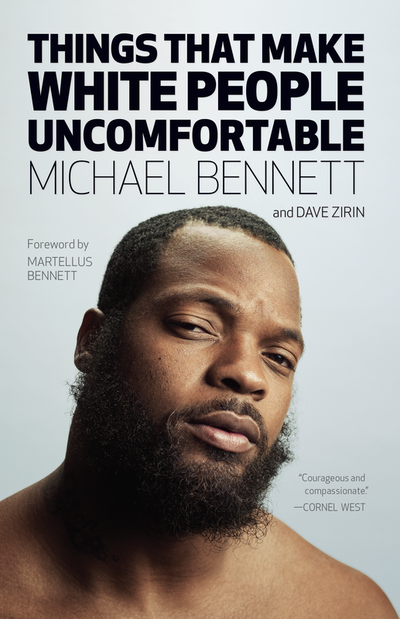
WATCH: “Things That Make White People Uncomfortable”–Super Bowl champion Michael Bennett in conversation with Jesse Hagopian – I AM AN EDUCATOR

WATCH: “Things That Make White People Uncomfortable”–Super Bowl champion Michael Bennett in conversation with Jesse Hagopian – I AM AN EDUCATOR

WATCH: “Things That Make White People Uncomfortable”–Super Bowl champion Michael Bennett in conversation with Jesse Hagopian

Image result for Super Bowl champion Michael Bennett


Of course we are supposed to score the touchdowns…but at the same time we also are supposed to speak for the people who don’t have a voice.
–Michael Bennett
Last night was one of the more meaningful and and enjoyable evenings of my life.
I had the great honor of joining Super Bowl champion, three time pro bowler, proud feminist, and my good friend Michael Bennett in conversation at a sold out Town Hall Seattle event. In this wide ranging conversation, we talked about the the outspoken players on the Seahawks, Michael reconnecting with his birth mother, his commitment to feminism and intersectionality, his decision to not go on a state sponsored trip to Israel to play in front of Trump and Netanyahu, the N-word, food justice, why he sits for the national anthem, the movement for Black lives, the Las Vegas Police threatening his life, his commitment to education and supporting youth programs, the spiritual awakening he had during his recent trip to Africa, and so much more.
What made this conversation so meaning for me, is that I got to tell him, in front of hundreds of people, how much I’ve learned about leadership, empathy, dedication, and friendship from him.  What made this experience so riveting for everyone there was how raw, vulnerable, wise, and uproariously funny Michael Bennett is.

I Voted for Jill Stein. Was I Wrong? | gadflyonthewallblog

I Voted for Jill Stein. Was I Wrong? | gadflyonthewallblog

I Voted for Jill Stein. Was I Wrong?


On November 8, 2016, I had a heart attack.
That’s not a metaphor.
I went to vote. I went to the doctor. I was sent to the hospital.
How much of that was a result of the Presidential election? I will never know.
But whenever I think back on that day, I am filled with a sense of bone-deep sadness.
After only a little more than a year in office, Donald Trump is already the worst President of my lifetime – and that’s saying something after the disaster that was George W. Bush.
I wish there is something I could do to go back in time and change the results of that day. I wish there was something I could do to stop Donald Trump from being elected President. And though I did not vote for her, I would do anything to have Hillary Clinton defeat him.
On that day, though, I voted for Jill Stein.
jill-stein-green-placard
There’s nothing I can do about that now.
I imagine going back in time and telling myself not to do it. “Go vote for Hillary,” I imagine Future Me telling Continue Reading: I Voted for Jill Stein. Was I Wrong? | gadflyonthewallblog