Latest News and Comment from Education

Wednesday, May 31, 2017

10 Best Teacher T-shirts - Teacher Habits

10 Best Teacher T-shirts - Teacher Habits:

10 Best Teacher T-shirts

Why go out in public wearing boring adult clothes when you can wear something that says you’re a proud teacher with an average sense of humor? Pair the shirts below with a reading conference tote bag, an ID badge on a lanyard, and these socks, and you’ll be the teacherest of all teachers.

Lets Eat Kids. Let’s Eat Kids. Punctuation Saves Lives.

A reminder that it’s the little things in life, like commas, that can make a big difference. Perfect for fans of Eats, Shoots & Leaves and English teachers everywhere.

I Got 99 Problems & You’re Going to Show Your Work on All of Them

It’s a joke. You should not be assigning 99 problems.

World’s Okayest Teacher

Most of us are in the fat part of the bell curve. That’s what makes it a bell curve. Might as well admit it.

Straight Outta Pencils


 10 Best Teacher T-shirts - Teacher Habits:

CURMUDGUCATION: Angry (tl;dr)

CURMUDGUCATION: Angry (tl;dr):

Angry (tl;dr)


It's important to remember that America has seen angry, agitated times before. The Civil War, when politicians became so angry they left the country and raised armies to kill each other-- that was a fairly angry time. We've had Presidential campaigns that were hugely vicious and libelous, Hell, as we've all been musically reminded, once upon a time the Vice President of the United States killed a prominent political leader in a duel.

And yet, something feels different now. My stock explanation is that while we've always had anger and viciousness as part of our public and political life, we've at least agreed that civility was the ideal, the norm to be pursued, and now we don't. I'm not sure that's true, but it feels true. We have become outrage junkies; we are sold policy and products based on the outrage it will cause. "The Secret That [fill in the blank] Doesn't Want You To Know" which translates roughly to "This will really piss those bastards off." The GOP policy position on the ground has been largely reduced to "Do things that will enrage liberals" and political coverage in the second-hand full-bias media is usually framed in terms of who will be outraged. And damn-- progressives and liberals and anti-Trump's really have to stop publishing versions of "Trump has now done something that will totally end his run!" Sorry, but 2,437th time is not a charm.

Telling truth to power is important, hugely important. But truth is not measured by how enraged you can imagine somebody being about what's been written. And when you start steering by imagined outrage rather than truth, understanding and accuracy, you are headed for the weeds. Sometimes I find Samantha Bee funny; sometimes I think maybe we've found a progressive Ann Coulter.

I was talking about this on twitter (to the extent that anybody can talk about anything on twitter) and was called out for my own contributions to incivility in the education debates. Well, sir, that's just...um... fair. But I like to think I've made a bit of a journey in this regard, and I think it tells us a little something about the shape of these debates.

When I started blogging, my defining characteristic was anger. It had been growing for a few years. Having stupid policies, anti-education and anti-student policies, inflicted on my classroom was nothing new, but I was noticing that I was increasingly losing my power to defend my students from them. The idea of national standards backed up by a national standardized test that would be enforced by making it part of student grades all seemed like self-evident educational malpractice, and yet policy makers were talking about it, taking steps to inflict it. So I went to learn more, and I fell through a door into a world where all sorts of people whose policy ideas struck me as wildly insane and rather abusive-- and who seemed absolutely uninterested in paying any attention to what actual teachers had to say.

My colleagues at school were, by and large, not interested. They complained when we were gored by the tip of the iceberg that passed by us, but they had no particular interest in finding out what the tip was attached to, or how big and wide the iceberg really was. And I was turning into the staff crank. So I turned to the outlet that has always served me in the past-- writing-- and for a number of reasons (mostly admiration of the bloggers already out there) I turned to blogging.

It did not occur to me that anybody would read my stuff. My goal was to vent, to rail about policies and articles that struck me as foolish, destructive, blind, ignorant. And so I regularly broke Rule #1. I called people names-- some of them kind of mean. I broke one of my big rules of online discourse-- I said things about people online that I never would have said to their faces.

I was angry. And the more I read, the angrier I became. Not just the anger of seeing 
CURMUDGUCATION: Angry (tl;dr):


Friday’s Hitting Left with the Klonsky Brothers. Music and a social justice moral movement. | Fred Klonsky

Friday’s Hitting Left with the Klonsky Brothers. Music and a social justice moral movement. | Fred Klonsky:

Friday’s Hitting Left with the Klonsky Brothers. Music and a social justice moral movement


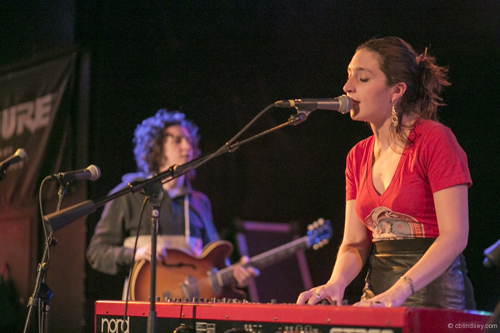
20131212_lindsey_sima_cunningham06
Chicago singer Sima Cunningham.

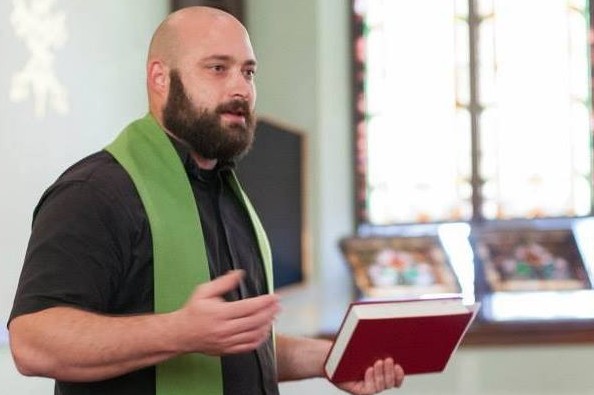
1344173_1399499869.6524
Pastor Tom Gaulke.

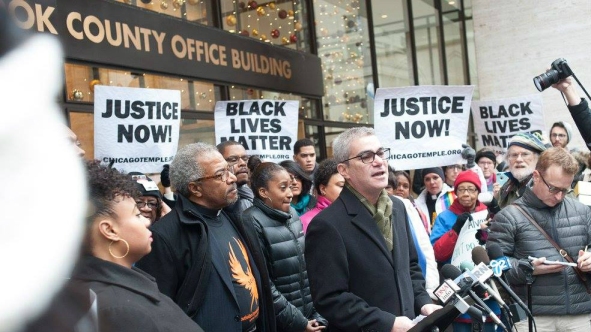
Black-lives-matter
Rabbi Brant Rosen.


oin us Friday at 11AM for this week’s Hitting Left with the Klonsky Brothers.
We will be joined in-studio by singer Sima Cunningham. 
Also coming by our studio in the always sunny neighborhood of Bridgeport on Chicago’s south side will be social justice activist and Pastor Tom Gaulke of Bridgeport’s own First Lutheran Church of the Trinity.
Joining  Pastor Tom will be Rabbi Brant Rosen of Chicago’s Tzedek congregation. Rabbi Rosen is also a social justice religious leader. In addition to his work with the non-Zionist Tzedek Congregation he is is Midwest Regional Director of the American Friends Service Committee.
We will be talking about the activities in Springfield where the legislative session is winding up and where the Capitol Rotunda was filled with protesters. We will be also discussing what the Rev. William Barber calls the revolution of values.
Friday, 11AM
105.5 FM in Chicago.
Live streaming at http://www.lumpenradio.com
Podcast as HittingLeft.libsyn.com
 Friday’s Hitting Left with the Klonsky Brothers. Music and a social justice moral movement. | Fred Klonsky:

OMG AFC Statement on Weingarten-Edelman Op-Ed: Who Should Get To Destroy Public ED

AFC Statement on Weingarten-Edelman Op-Ed - American Federation for Children:

AFC Statement on Weingarten-Edelman Op-Ed

Image result for big education ape spy vs spy


The American Federation for Children, the nation’s voice for educational choice, released the following statement in response to the Los Angeles Times op-ed from Randi Weingarten and Jonah Edelman.
Statement from Kevin P. Chavous, founding board member and executive counsel for the American Federation for Children:
Today’s op-ed by American Federation of Teachers President Randi Weingarten, and Stand for Children President Jonah Edelman is a disservice to millions of parents and children across the nation who want nothing more than equal access to a quality education.
The op-ed is full of hyberbole and outright inaccuracies.
First, the headline is rich with irony. It is school choice–directly empowering parents to choose the best educational environment for their child–that is the most democratic of ideas. Rather than undermining public schools, choice helps public schools by virtue of having to compete with other options. Only among the K-12 establishment would competition be considered undermining public schools.
Second, the Administration’s FY 2018 budget proposal does not “siphon billions of dollars from public schools to fund private and religious school vouchers.” It is not “diverting $1 billion into voucher programs.” These are completely false statements. The Administration’s budget proposes $1.4 billion for school choice–$1.15 billion of which is for public school choice. Moreover, all but $250 million of these proposed resources would remain in public schools.
Third, the op-ed states “facts show that where vouchers have been into practice on a meaningful scale, they hurt student learning.” The op-ed also cites a recently released study of first year data from the U.S. Department of Education’s Institute for Education Sciences saying it “adds to a growing body of education research that concludes vouchers may harm rather help student achievement.” These too are completely false statements.
Leaving aside the obvious fact that parents themselves have chosen to participate in private school choice programs, the body of research on these programs proves they work for children fortunate enough to participate.
Prior to the IES report, there have been 15 empirical studies examining academic outcomes for students participating in private school choice using random assignment, the “gold standard” of defensible social science:
  • 10 found improved test scores for school choice participants
  • 3 found no significant effect for school choice participants
  • 2 found negative impact in the early years of study for school choice participants
21 studies examined school choice and how it impacts academic outcomes in public schools:
  • 20 found that school choice improved public school academic outcomes
  • 1 found no significant effect on academic outcomes from school choice
Finally, the School Superintendents Association “research” into states with existing tax credit scholarship programs and how some “donors have been able to make a profit off the backs of taxpayers and ultimately kids.” Perhaps Weingarten and Edelman are unaware of how tax credit scholarship programs work. Corporate and individual donors pay state taxes. They make a contribution to a local non-profit that provides scholarships for eligible children to attend a private school of their parents choice. They get a tax credit, they don’t make a profit. Parents and children across the nation would be fortunate indeed if the Administration and Congress were to adopt a federal tax credit because it would facilitate access to a quality education for another 1 million students–most of whom will graduate and go on to college as the body of research into these programs clearly demonstrates.
Take away the hyperbole and inaccuracies, what Randi Weingarten and Jonah Edelman truly oppose is giving parents, especially low-income parents, the ability to choose something other than their neighborhood traditional public school. While some of these neighborhood schools may be terrific schools, many are clearly not, which is why millions seek other options.  The teachers’ unions oppose choice in education–period. The fact that organizations like Stand for Children and Democrats for Education Reform prefer to stand with the teachers’ unions rather than standing with the 3.5 million children in charter schools and private choice programs, and the millions more who desperately want access to better options, speaks volumes.
Image result for big education ape dfer devos
Image result for big education ape destroy public schools
Related image
Image result for big education ape dfer devos

Badass Teachers Association: How Do We Continue to Counteract Hate and Violence? by Liz Caravaca

Badass Teachers Association: How Do We Continue to Counteract Hate and Violence? by Liz Caravaca:

How Do We Continue to Counteract Hate and Violence? 

by Liz Caravaca


We are sad and outraged and ever more afraid for our children, youth, and families of color in light of the vicious murders of Ricky Best and Taliesin Myrddin Namkai-Meche and the brutal stabbing of survivor Micah Fletcher.

These three people risked their lives - and two of them died- defending youth from a person (a known white supremacist) threatening them with anti-Muslim hatred.
What would have happened to these youth if these three people didn't stand between them and this racist, violent hater?

How do we continue to counteract hate and violence?
How will we continue to (try and) protect children and youth of color? How will we actually and successfully protect them?
What do parents say to their children? What do teachers say to their students? How does our own race impact what we say and how we say it in these conversations?

What are we DOING about it?

When we say to stand up for what's right, to speak out against injustice - and - we tell our children and youth to be Badass Teachers Association: How Do We Continue to Counteract Hate and Violence? by Liz Caravaca:


Mike Klonsky's SmallTalk Blog: You say you want a revolution. Go to post-Rhee D.C.

Mike Klonsky's SmallTalk Blog: You say you want a revolution. Go to post-Rhee D.C.:

You say you want a revolution. Go to post-Rhee D.C.


Okay, now that I'm done FBing about #convfefe, I can get down to more serious business -- revolution. It seems a revolution had taken place in D.C. and I somehow missed it.

But Tom Toch didn't. Toch, a leading pro-reform, education policy expert and a highly regarded education writer, has published his study of the progress of school reform in the district, titled, "How D.C. Schools Are Revolutionizing Teaching." 

I'd say, it's about time somebody did it. But who?

Toch says, it all began with former D.C. schools chief Michelle Rhee, who,despite her various "mistakes," cheating scandals and unfortunate picture on the cover of Time Magazine, got the ball rolling. But Toch's study concludes that it was her successor chancellors who carried the rev forward, bringing radical changes to the teaching profession and miraculous gains in student achievement. DCPS has not merely revolutionized teaching, says Toch; it has created a "reform blueprint" for the rest of us to follow.

No credit given to teachers, of course. In fact, Toch clearly sees bad teachers and their over-protective unions as the problem, and different performance-based evaluations with high stakes attached as the revolutionary solution.

According to Toch:

Building on Rhee’s early work, and learning from her mistakes, her successors have effectively transformed it into a performance-based profession that provides recognition, responsibility, collegiality, support, and significant compensation—features that policy experts, including many of Rhee’s harshest critics, have long Mike Klonsky's SmallTalk Blog: You say you want a revolution. Go to post-Rhee D.C.:

Edelman and Randi: School vouchers don't just undermine public schools, they undermine our democracy - LA Times

School vouchers don't just undermine public schools, they undermine our democracy - LA Times:

School vouchers don't just undermine public schools, they undermine our democracy

Image result for pigs flying animated gif
President Trump wants to siphon billions of dollars from public schools to fund private and religious school vouchers. It’s an idea that’s bad for kids, public education and our democracy.
Today, vouchers are used by less than 1% of the nation’s students. Trump and his Education secretary, Betsy DeVos, want to change that. Trump’s new budget proposal would make historic cuts to federal education spending, while diverting $1 billion into voucher programs — a “down payment” on his oft-repeated $20-billion voucher pledge. We believe the president’s plan would deal a terrible blow to public schools and to the 90% of America’s children who attend them, while doing almost nothing to benefit children who receive vouchers.
Although our organizations have sparred and disagreed over the years, such is the danger to public schooling posed by Trump’s embrace of vouchers that we are speaking out together on this issue. The Trump-DeVos effort to push vouchers, or something equivalent through tax credits, threatens the promise and purpose of America’s great equalizer, public education.
At a time when low-income children make up the majority of public school students, we as a country must do more to support families, teachers, administrators and public schools. Trump’s plan would do the opposite.
Public schools have never fully recovered from the Great Recession. Research, common sense and our collective experiences working with children, families and schools tell us that we must invest in, not cut back, public education. That means providing high-quality preschool for kids, and the social, health and mental health services they need. It means making sure students are reading at grade level by the end of third grade; that they have powerful learning opportunities, including career and technical training that can prepare them for college and work; and that they are guided by well-supported teachers and other education specialists. It means addressing the federal government’s deep underfunding of special education and building a culture of collaboration among teachers, administrators, parents and communities.
The Trump-DeVos budget and voucher plans, while still lacking in details, would eliminate more than 20 education initiatives, including after-school and summer programs, career and technical education, teacher professional development and funding to lower class size. Public money would go instead to schools that lack the accountability and civil rights School vouchers don't just undermine public schools, they undermine our democracy - LA Times:
Image result for you can't win if you don't play

It’s hard to overstate how much critics hate Florida’s ‘scam’ education bill. Will the governor veto it? - The Washington Post

It’s hard to overstate how much critics hate Florida’s ‘scam’ education bill. Will the governor veto it? - The Washington Post:

It’s hard to overstate how much critics hate Florida’s ‘scam’ education bill. Will the governor veto it?

Image result for big education ape Florida

It’s being called legislation by “scam” — and that’s not the worst critique of the new education bill that the Republican-dominated Florida legislature has now approved. Will Republican Gov. Rick Scott veto it, as school superintendents, school boards, public school advocates and even some Republicans are advocating?
The legislation, known as House Bill 7069, was passed by both the Florida House and Senate at the end of their legislative sessions without time for serious consideration or debate, but rather this way, as a piece in the Orlando Sentinel explains:
Instead of carefully considering education proposals one at a time, Republican leaders went behind closed doors to cram 35 different proposals — rules on everything from sunscreen use to charter-schools incentives — into a single, 278-page, take-it-or-leave-it bill unveiled at the last minute. For me to simply reprint the bill, it would take 75 columns this size … and you still wouldn’t get to the part where legislators want to siphon money away from traditional schools until column No. 46.
Among other things, the legislation funds public education at levels that some superintendents say won’t support their public school districts, promotes public school privatization and expands a highly controversial multi-million-dollar program that rewards teachers who had high standardized test scores when they were in high school. (Really.) There are parts of the bill that a good deal of the public supports, such as mandatory recess for elementary school, but the bad parts as well as the legislative process, critics say, outweigh the good.
Scott has not said what he will do, but his office recently released information indicating that public response has been mostly negative. As the Miami Herald put it:
By a margin of at least 3-to-1 so far, Floridians are telling Gov. Rick Scott they want him to veto a controversial $419 million K-12 public schools bill House Republicans pushed through at the end of session, according to information requested from Scott’s office Thursday evening.
Legislative leaders still haven’t sent the bill over to Scott’s office, perhaps waiting to see what he will do with the state budget that just hit the governor’s desk. There is no love lost between Scott and Rep. Richard Corcoran, the speaker of the Florida House of It’s hard to overstate how much critics hate Florida’s ‘scam’ education bill. Will the governor veto it? - The Washington Post:

The Network for Public Education Issues its Position Statement on Charter Schools - Network For Public Education

The Network for Public Education Issues its Position Statement on Charter Schools - Network For Public Education:

The Network for Public Education Issues its Position Statement on Charter Schools

Image result for big education ape washington state common schools

NPE Statement on Charter Schools
The Network for Public Education believes that public education is the pillar of our democracy. We believe in the common school envisioned by Horace Mann. A common school is a public institution, which nurtures and teaches all who live within its boundaries, regardless of race, ethnicity, creed, sexual preference or learning ability. All may enroll–regardless of when they seek to enter the school or where they were educated before.
We believe that taxpayers bear the responsibility for funding those schools and that funding should be ample and equitable to address the needs of the served community. We also believe that taxpayers have the right to examine how schools use tax dollars to educate children.
Most importantly, we believe that such schools should be accountable to the community they serve, and that community residents have the right and responsibility to elect those who govern the school. Citizens also have the right to insist that schooling be done in a manner that best serves the needs of all children.
By definition, a charter school is not a public school. Charter schools are formed when a private organization contracts with a government authorizer to open and run a school. Charters are managed by private boards, often with no connection to the community they serve. The boards of many leading charter chains are populated by billionaires who often live far away from the schools they govern.
Through lotteries, recruitment and restrictive entrance policies, charters do not serve all children. The public cannot review income and expenditures in detail. Many are for profit entities or non-profits that farm out management to for-profit corporations that operate behind a wall of secrecy. This results in scandal, fraud, and abuse of taxpayer funds. The news is replete with stories of self-dealing, conflicts of interest, and theft occurring in charter schools [1].
We have learned during the 25 years in which charters have been in existence that the overall academic performance of students in charter schools is no better, and often worse, than the performance of students in public schools. And yet charter schools are seen as the remedy when public schools are closed based on unfair letter-based grading schemes.
By means of school closures and failed takeover practices like the Achievement School District, disadvantaged communities lose their public schools to charter schools. Not only do such communities lose the school, but they also lose their voice in school governance.
There is little that is innovative or new that charter schools offer. Because of their “freedom” from regulations, allegedly to promote innovation, scandals involving the finances and governance of charter schools occur on a weekly basis. Charter schools can and have closed at will, leaving families stranded. Profiteers with no educational expertise have seized the opportunity to open charter schools and use those schools for self-enrichment. States with weak charter laws encourage nepotism, profiteering by politicians, and worse.
For all of the reasons above and more, the Network for Public Education regard charter schools as a failed experiment that our organization cannot support. If the strength of charter schools is the freedom to innovate, then that same freedom can be offered to public schools by the district of the state.
At the same time, we recognize that many families have come to depend on charter schools and that many charter school teachers are dedicated professionals who serve their students well. It is also true that some charter schools are successful. We do not, therefore, call for the immediate closure of all charter schools, but rather we advocate for their eventual absorption into the public school system. We look forward to the day when charter schools are governed not by private boards, but by those elected by the community, at the district, city or county level.
Until that time, we support all legislation and regulation that will make charters better learning environments for students and more accountable to the taxpayers who fund them. Such legislation would include the following:
  • An immediate moratorium on the creation of new charter schools, including no replication or expansion of existing charter schools
  • The transformation of for-profit charters to non-profit charters
  • The transformation of for-profit management organizations to non-profit management organizations
  • All due process rights for charter students that are afforded public school students, in all matters of discipline
  • Required certification of all school teaching and administrative staff
  • Complete transparency in all expenditures and income
  • Requirements that student bodies reflect the demographics of the served community
  • Open meetings of the board of directors, posted at least 2 weeks prior on the charter’s website
  • Annual audits available to the public
  • Requirements to following bidding laws and regulations
  • Requirements that all properties owned by the charter school become the property of the local public school if the charter closes
  • Requirements that all charter facilities meet building codes
  • Requirements that charters offer free or reduced priced lunch programs for students
  • Full compensation from the state for all expenditures incurred when a student leaves the public school to attend a charter
  • Authorization, oversight and renewal of charters transferred to the local district in which they are located
  • A rejection of all ALEC legislation regarding charter schools that advocates for less transparency, less accountability, and the removal of requirements for teacher certification.
Until charter schools become true public schools, the Network for Public Education will continue to consider them to be private schools that take public funding.
The Network for Public Education Issues its Position Statement on Charter Schools - Network For Public Education:

 Image result for big education ape charter schools suck

The Supremes Diane Ravitch's blog | A site to discuss better education for all

Diane Ravitch's blog | A site to discuss better education for all:

The Supremes Diane Ravitch's blog
 A site to discuss better education for all

Image result for big education ape diane


DeVos’ Organization Attacks Randi and Jonah for Opposing Vouchers

Betsy DeVos founded and funded the American Federation for Children, which advocates for vouchers. AFC issued this statement today: AFC Statement on Weingarten-Edelman Op-Ed The American Federation for Children, the nation’s 

Randi Endorses Charter Schools in Op-Ed Piece with Jonah Edelman

Randi Weingarten and Jonah Edelman co-wrote an article in today’s Los Angeles Times, standing strong against vouchers. I still remember Jonah Edelman as the guy who bragged at the Aspen Ideas Festival that he had crushed the teachers’ 

How Millionaires Make Money by Paying into Voucher Fund

The currently popular means of establishing vouchers in the states where the state constitution forbids them is called an “education savings account.” The way it works is otherwise known as money laundering. Suppose Daddy Warbucks owes the state $200,000 in taxes. He gives the money to an independent organization that gives out money for private and religious schools. He gets a state tax credit a
Jeff Bryant: What Is the Point of School Choice?

Jeff Bryant is trying to figure out what the purpose of school choice is. “Another week, another round of evidence that providing parents with more “school choice,” especially the kind that lets them opt out of public schools, is not a very effective vehicle for ensuring students improve academically or that taxpayer dollars are spent more wisely. “The latest evidence comes from a study of the vo
Jersey Jazzman: The Facts About Charter Schools in Newark

Jersey Jazzman, aka Mark Weber, experienced teacher and doctoral student at Rutgers, follows the claims of charter promoters in New Jersey, especially Newark. His latest post is simply “ Facts About Newark Charter Schools .” Bottom line: the charters do not enroll the same students as public schools. Why is that so hard for the media to understand?
Politico Posts Puff Piece About Eva Markowitz

I wasn’t going to refer to this article by Kyle Specer in Politico magazine. It reads so much like promotional literature massaged by Eva’s public relations department that I thought it best to ignore its it. But several people sent it to me, so I couldn’t overlook it. It is called “ Paul Ryan’s Favorite Charter School.” It presents Eva Moskowhitz as a “liberal Democrat” whose no-excuses charters

YESTERDAY

New York: Is Rochester Academy Charter School a Gulen School?

Rochester Academy Charter School in New York boasts impressive test scores, as do most schools that select their students. But is it a Gulen School connected to Fethullah Gulen’s national network? One thing it is not is a neighborhood school or a community school. Although three of the board’s seven members are Turkish, that is not conclusive evidence that the school is funneling money to Gulen f
Some Reasons I Object to Vouchers for Religious and Private Schools

There are many reasons to object to diverting public dollars to religious and private schools. One reason is that every dollar that goes to a nonpublic school is subtracted from a public school. A vote for vouchers is a vote to defund public schools and impose budget cuts on them. One of our readers is an avid supporter of school choice. When he asked why anyone objects to school choice, this was
Jennifer Berkshire: How Betsy DeVos Segregated the Public Schools in Her Hometown, Holland, Michigan

A few years back, I went to Michigan to speak to a large group of superintendents, whose schools collectively enrolled half the students in the state. I learned from them about the pernicious effects of school choice. The state wiped out all district lines for purposes of enrollment. Students can enroll in any public school without regard to district lines, and schools are paid by the state based
Linda Lyons: DeVos is Intent on Reviving State-Sponsored Discrimination

Lina Lyons is president-elect of the Arizona School Boards Association. She writes here about the spurious claim that school choice is the answer to all problems. She says that the nevitable result of school choice will not be better education, but segregation by race, class, ethnicity, and socioeconomic. Yet DeVos continues to evade any federal responsibility for promoting desegregation and evad


William Mathis: Paradise Lost, Or, Trump’s Budget Cuts to Education

William Mathis explores the lies at the heart of Trump’s education budget. He writes: Trump’s Education Budget: A Paradise Lost? “But all was false and hollow; though his tongue Dropp’d manna and could make the worse appear the better reason.” ■ John Milton, Paradise Lost, II.I.112 We had a vision of a more 


Diane Ravitch's blog | A site to discuss better education for all: