Latest News and Comment from Education

Friday, March 3, 2017

Growth/Achievement vs Left/Right – Educate Louisiana

Growth/Achievement vs Left/Right – Educate Louisiana:

Growth/Achievement vs Left/Right


These days, it is hard to tell which political faction is pushing for the different components of education reform, but it is clear that the unified-bipartisan effort has fractured. The parting of ways is mostly due to the nomination, and subsequent confirmation, of Betsy DeVos as Secretary of Education. It has become increasingly more clear to me that the main objective of conservative reformers is to implement the free-market model in education, divert taxpayer dollars to private entities, including religious organizations and as a result, segregate school populations by race and/or socio-economic status; with no obligation to prevent it from happening. The liberal reformers, or Democrats for Education Reform (DFER) have their reasons for education reform rooted in civil rights and believe that by removing bureaucracy, eliminating unions and allowing charter schools to operate independently, they can somehow restore justice to children of color and/or child living in poverty and are under-served by failing schools because of where they live. Neither side of this education reform equation can achieve their goals without diminishing the public education system. We are talking about a finite set of students and a finite amount of financing. When a child leaves a public school for “choice,” the school loses money. The loss of money makes it even harder for that school to make progress. The choice movement is self-serving. By gradually reducing the resources of the public system, they will eventually eliminate the public system. In turn, this side of the equation will lead to segregation, as well.
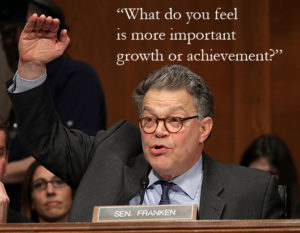
Lately, the big argument among reformers is how to use growth vs achievement in determining the success of a school. Obviously, both the conservatives and the liberals agreed  that both measures are important. If not, it wouldn’t have made it into the Every Student Succeeds Act (ESSA). The argument is over what the weight should be. On Thursday, February 23rd, The Advocate ran an opinion editorial by Michael Petrilli. Petrilli was singing the praises of Supt. John White for proposing a weight of 25% for growth under the new accountability system. Petrilli’s OpEd was promptly rebutted by Eva Kemp, Director of DFER-LA. Kemp opposes the 25% weight of growth stating that too much emphasis on growth Growth/Achievement vs Left/Right – Educate Louisiana:


Allowing Guns in Schools is a Bad Idea | gadflyonthewallblog

Allowing Guns in Schools is a Bad Idea | gadflyonthewallblog:

Allowing Guns in Schools is a Bad Idea

Image result for water gun war animated gif
Even Water Guns
With all the tweeting about crowd size, he didn’t get around to it. But he may – soon.
Before running for Chief Executive, Trump had been much more moderate on guns. Allowing Guns in Schools is a Bad Idea | gadflyonthewallblog:


Period 1 - Badass Teachers Association

Badass Teachers Association:

Period 1

By:  Marla Kilfoyle, Executive Director, The Badass Teachers Association

Marla Kilfoyle, Exec. Dir.
The Badass Teachers Association 

Here is what folks don’t get about teaching - it is not effective or ineffective; you are not a bad teacher or a good teacher.

The art of teaching cannot be confined to one definition for every school day.

The art of teaching is different on different days, with different classes of students, and is different with individual students.

The art of teaching does not exist in a silo of one word.

One of the administrators who worked in my district said it best, “Teaching is the only profession where you have to make 30 decisions in a 40 minute period that can impact a child’s life.”

Teaching is not one thing or the other.

Teaching is many things all at once.

Please enter Period 1 Global History.

The teacher has a lesson ready to go!  In this class, she has 33 students, all with varying abilities, languages, cultural backgrounds, and mental/physical health issues.

The bell rings, the students begin to enter the room.  They mingle, they sit, they chat, they laugh.

The bell rings to begin Period 1, and the teacher points to the objective on the board. “Ok, today we are going to discuss the foundation of democracy that was established in Ancient Greece.”

A hand goes up - “Mrs. Smith, can I use the restroom.”

The teacher thinks - John needs to always use the restroom right at the beginning of the period; this has been a pattern for the last week and he is missing important introduction instruction; I am going to decline his request right now and ask him to wait.

“John, can you wait about three minutes so that you don’t miss the introduction to the lesson?” John agrees and stays.

The teacher continues - “Please pull out your notebooks and get out a lined piece of paper for our Bellringer activity.”  (A Bellringer activity is a quick activity to introduce students to the concept of the lesson.  It is usually a quick 4-8 minute activity)

James gets out of his seat and approaches the teacher at the front of the room, “Mrs. Smith I feel sick can I go to the nurse.” The teacher stops what she is doing, goes to the desk and writes the student a pass to go to the nurse. She reminds the student to sign into the nurse so 
Badass Teachers Association:


Why the Trump/DeVos visit to a Catholic school is so unusual — and what it really means - The Washington Post

Why the Trump/DeVos visit to a Catholic school is so unusual — and what it really means - The Washington Post:

Why the Trump/DeVos visit to a Catholic school is so unusual — and what it really means 


President Trump and Education Secretary Betsy DeVos made their first official joint trip to a school on Friday. It was a highly unusual trip for a president, but one that clearly signals his educational priorities.
Trump and DeVos visited St. Andrew Catholic School in Orlando, where nearly 300 students attend with help from the controversial Florida Tax Credit Scholarships program. They were joined by Trump’s daughter, Ivanka, and her husband and White House senior adviser Jared Kushner, as well as Florida Sen. Marco Rubio and Florida Gov. Rick Scott, both Republicans who support school choice.
Both Trump and DeVos have praised the Florida Tax Credit Scholarship program, which offers tax incentives for individuals and corporations to donate money to organizations that provide “scholarships” for private and religious school tuition and other educational expenses. Supporters say such programs help students from low-income families attend private schools, while critics say they are privatizing public education, offer the public no accountability and violate the constitutional tenet of separation of church and state.
Incidentally, Trump and DeVos, both billionaires, own homes in Florida.
The Associated Press reported that Trump first visited a fourth-grade classroom at St. Andrew, and shook hands with students who told him they were learning about Florida’s history. The AP said that he told one girl who said she wanted to open her own business that she’s “gonna make a lot of money,” but he warned her “don’t run for politics.”
A report from the pool of journalists permitted to accompany the president said that when the visitors were ushered into a “chilly” classroom, “teacher Jane Jones instructed some in the class of roughly 25 students to remove their sweaters.” It also said:
The pupils waited patiently for the arrival of the president in identical red polo shirts. Ms. Jones kept their attention from diverting by discussing the presidency. “One day this could be for you,” she said to the class, referring to the security and press awaiting the president.
“What are our goals? Where are we going?” Ms. Jones asked.
“College and heaven,” the class replied in unison.
“We’re on our way,” she said.
Trump is the first sitting president to visit a Catholic school since Ronald Reagan visited St. Agatha Catholic School in the Archdiocese of Detroit on Oct. 10, 1984, years after he was Why the Trump/DeVos visit to a Catholic school is so unusual — and what it really means - The Washington Post:


CURMUDGUCATION: Finding the Good Teachers

CURMUDGUCATION: Finding the Good Teachers:

Finding the Good Teachers

Modern ed reform has always embraced a binary view of teachers-- there are good ones and bad ones. We should sort them out. Maybe find the good ones so we can give them a nice reward. Find that bad ones so that we can fire them.

The problems with this view are (or at least should be) obvious.

Teaching is a complex multi-faceted web of human relationships. And teachers are human beings, and therefor most of our skill sets are not static state, but plastic and variable under the influence of many variables.


I may be a bad fit for a particular group of students, or the dynamic in the room might be powerfully good. I might have a day, a week, even a year in which I am smoothly, powerfully firing on all cylinders or one in which I am lurching, barely fumbling along on a single stuttering piston. I may be working in a school where everything I could possibly need is at my fingertips, or one where I am thwarted at every turn. Every year, my students emerge from a different moment in history. Every year, I am a few steps further down the path of my own journey.

You know quote from Heraclitus-- "No man ever steps in the same river twice, for it's not the same river and he's not the same man.” That river is a classroom (also, in a classroom, that man is probably a woman, but Heraclitus is a pre-Socratic Greek and as such is not very progressive).

So in a very real sense, trying to separate good teachers from bad is a fool's errand, like taking a 0.5 second sound clip from a recording of an orchestra and using it to evaluate the strength and depth of their entire repertoire.

Every person who ever set foot in a school can talk about the good teachers and the bad teachers 
CURMUDGUCATION: Finding the Good Teachers:


The Next Step in the Trump-DeVos Plan to Send Taxpayer Money to Religious Schools | Mother Jones

The Next Step in the Trump-DeVos Plan to Send Taxpayer Money to Religious Schools | Mother Jones:
The Next Step in the Trump-DeVos Plan to Send Taxpayer Money to Religious Schools
Why Florida is the new darling for school choice boosters.

During his address before a joint session of Congress earlier this week, President Donald Trump paused to introduce Denisha Merriweather, a graduate student from Florida sitting with first lady Melania Trump. Merriweather "failed third grade twice" in Florida's public schools, Trump said. "But then she was able to enroll in a private center for learning, great learning center, with the help of a tax credit," he continued, referring to Florida's tax credit scholarship program that allows students attend private schools. Because of this opportunity, Denisha became the first member of her family to graduate from high school and college.
Trump used Denisha's story to call for his favorite education policy, school choice, asking lawmakers to "pass an education bill that funds school choice for disadvantaged youth, including millions of African American and Latino children. These families should be free to choose the public, private, charter, magnet, religious, or home school that is right for them."
Education Secretary Betsy DeVos has also been pointing to Denisha and Florida in the past two weeks as a way to promote school choice. "Florida is a good and growing example of what can happen when you have a robust array of choices," DeVos told a conservative radio host on February 15. DeVos brought up the state's school choice model again during her speech to the leaders of historically black colleges earlier this week.
So what is it about Florida? For starters, the state offers many different types of school choice, including charter schools, vouchers for low-income students and those with disabilities, and tax credit scholarships. Charter schools, found in 43states and Washington, DC, represent the most common type of school choice. Vouchers are a little more complicated: They essentially operate like a state-issued coupon that parents can use to send their child to private or religious schools. The amount is typically what the state would use to send a kid to a public school. But vouchers are difficult to implement, because many state constitutions, like those in Michigan and Florida, have what are called Blaine Amendments, which prohibit spending public dollars on religious schools. And notably, only 31 percent of The Next Step in the Trump-DeVos Plan to Send Taxpayer Money to Religious Schools | Mother Jones:


Only in Betsy DeVos’ Michigan can schools be “reformed” by closing them | Eclectablog

Only in Betsy DeVos’ Michigan can schools be “reformed” by closing them | Eclectablog:

Only in Betsy DeVos’ Michigan can schools be “reformed” by closing them


The news broke on January 20, 2017 that as many as 38 schools could be closed in Michigan, 24 of those in Detroit, due to “poor academic performance.” Parents in the city, and throughout the state, were understandably stunned, as this announcement represented an abrupt change in the state’s previous position on school closings:
Gov. Rick Snyder’s administration has switched its stance on how soon Detroit’s poorest performing schools can be closed. His administration previously said a massive $617 million Detroit Public Schools bailout legislation prevented officials from closing any of the city’s worst schools prior to 2019 because of certain stipulations in the school rescue package.
Those who have paid close attention to Michigan politics will be able to trace the line between the mention of the “school rescue package” and the influence of our new Secretary of Education, West Michigan billionaire Betsy DeVos. As I’ve written about previously, here, Ms. DeVos’ fingerprints were all over this “rescue package”:
After years of mismanagement by the Snyder administration, the financial crisis in the Detroit Public Schools could no longer be ignored, and state lawmakers decided that drastic measures needed to be taken.
A solution that included a Detroit Education Commission with authority to open and close charters was approved in the state Senate, but was then voted down in the House, due almost entirely to DeVos-applied pressure:
At one point, Rep. Henry Yanez (D-Sterling Heights) posted a picture on Facebook of [GLEP’s Gary) Naeyaert watching the legislative action from the House gallery. Yanez’s post said, “The masters watch their minions from the gallery making sure they follow their orders on #DPS bill$.”
Asked about the post this week, Yanez said, “Maybe I am a conspiracy theorist or maybe I just see what’s placed in front of me.”
“When I step out in the hallway and I see the people from GLEP and the people from the charter schools … I know why they’re there,” he added. “I think it’s pretty clear.”
It became clear that Betsy and Dick DeVos were the major players in the negotiations to replace the Senate plan with a House version that carved out special protections for school choice and charter schools, even going so far as to “freeze out” a leading Republican senator and Detroit’s mayor from the deliberations:
The role of donors and groups they fund has been so impactful in the ongoing Detroit Public Schools (DPS) debate that one lawmaker involved in the negotiations alleged this week that it was “the only factor” in a recent House vote. And some are even raising concerns about who’s being given the chance to sway lawmakers on the matter. They note that the lead GOP senator on DPS and the mayor of Detroit requested but weren’t granted the opportunity to present to House Republicans in a closed-door caucus meeting. But the House GOP says that had to do with timing.
According to campaign finance disclosures, six of the stakeholders trying to sway the 
Only in Betsy DeVos’ Michigan can schools be “reformed” by closing them | Eclectablog:

Fighting Back Against Sessions's Trans Attack | Advocate.com

Fighting Back Against Sessions's Trans Attack | Advocate.com:

Fighting Back Against Sessions's Trans Attack

The Fight Against Trump's Trans Attack Is On

Transgender students — just like any other students — should not fear going to school, much less going to the bathroom. But last week President Trump and two of his Cabinet members made the chilling decision that they don’t think trans students deserve the right to feel safe and secure in their schools.
Over the last eight years, we made great strides in expanding LGBTQ rights, enabling those of us who are gay to live our lives without fear or discrimination. But these days it feels as if our gains are all crashing down and we are moving back in time. On transgender rights, as with so many other rights and freedoms he is trying to restrict, Trump has shown that he’s captive to the worst instincts and divisive policies of his inner circle, and that he’s a willing agent of attacks on, among other things, voting rights, women's rights, workers’ rights, religious rights, and LGBTQ rights. By rescinding Obama-era federal protections for transgender children, including the protection allowing access to restrooms based on their gender identity, Trump has drawn a line in the sand and said these kids don’t deserve the same rights as everyone else.
This rollback of rights is scary and downright offensive to everyone who believes in equality and freedom. As educators, we want all children to feel free to live their lives and be who they are. That is who we are. That is why we are fighting this.
Attorney General Jeff Sessions, who has a long history of opposing civil rights, wasted no time in initiating the move to stop former President Obama’s protections for transgender students. Education Secretary Betsy DeVos claims she resisted, requiring Trump to weigh in since the order had to be issued by both secretaries. Trump sided with Sessions and reportedly gave DeVos an ultimatum — go along or resign. She went along. When the time came to protect vulnerable children, Trump and DeVos caved in to hate and bigotry. DeVos defended their action, calling the guidance a federal "overreach." The right of vulnerable children to be safe and free from discrimination is a key civil right. It’s appalling that the secretary of Education — whose boss just rhetorically asserted that children's education is a civil right — does not understand what it takes to make that a reality.
There are approximately 350,000 transgender youth and young adults in the United States. Quashing these protections has real-life consequences for them.
The National Center for Transgender Equality found in a 2011 study — and surely the numbers have increased since then — that 82 percent of transgender youth felt unsafe at school; 44 percent had been punched, shoved, and otherwise abused physically; 67 percent had been bullied online; and 64 percent had their property stolen or destroyed. A study by the Williams Institute at University of California, Los Angeles, School of Law found that nearly 70 percent of transgender people said they had experienced verbal harassment in situations involving gender-segregated bathrooms. Laws that force transgender people to use bathrooms where they may look out of place can make them even more vulnerable to harassment or worse.
The American Federation of Teachers, representing 1.6 million educators, nurses, and public service workers, signed on to an amicus brief filed yesterday with the U.S. Supreme Court, arguing that Title IX specifically protects transgender students and their right to use facilities based on their gender identity. The Supreme Court has the opportunity to right an egregious wrong and stand up for freedom and equality.
While opponents of transgender equality stoke fears around bathrooms, the reality is that allowing transgender people access to restrooms — without fear of discrimination or harassment — doesn’t hurt anyone. An investigation of 12 states and 17 school districts with protections for LGBTQ people found no increase in incidences of harassment or inappropriate behavior after those protections were enacted.
There is rich irony in the fact that Donald Trump has sided with bigots who use unfounded fears about safety to put already vulnerable young people further at risk. Trump famously bragged that he “can do anything” he wants to women, including groping and kissing them without their consent, and there are numerous reports that he entered dressing rooms where teenage pageant contestants were undressed.
Gavin Grimm, the student who brought his suit to the Supreme Court, just wants to be treated like any other person. He deserves nothing less, and our members stand with him and every other child seeking the right to live a life free from bullying, harassment, and bigotry.
Being “different” in Trump’s America is dangerous. It’s up to us to do everything we can right now to protect our children — to not simply fight bigotry and discrimination but actively and intentionally promote inclusion and diversity.
RANDI WEINGARTEN is the president of the American Federation of Teachers. Follow her on Twitter@rweingartenFighting Back Against Sessions's Trans Attack | Advocate.com:


What's the Big Idea? | Schott Foundation for Public Education

What's the Big Idea? | Schott Foundation for Public Education:

What's the Big Idea?
John H. Jackson, President & CEO, The Schott Foundation for Public Education
Sounding more like a measured politician than ever, President Donald Trump’s first Joint Address to Congress Tuesday night outlined the broad contours of his vision for a “Renewal of the American Spirit” while also challenging the nation to think big. While we accept the challenge to think big, as a philanthropic organization we are well aware that making big ideas successful requires clarity, consistency, and in most cases, big investments.
As such, while we broadly agree with the values of opportunity and progress for all Americans, we remain in a posture of supporting communities to move aggressively toward ensuring that those promises of opportunity and progress move from a teleprompted speech to actual positive outcomes for those who President Trump often identifies as victims. Simply stated, we agree with the big goal of extending opportunity to the poor and working class, but find that it remains necessary to outline the big ideas that will actually allow our nation, states and localities to substantively achieve the goal.
Similar to previous administrations, President Trump reaffirmed education as the “civil rights issue of our times,” and we agree. He introduced the nation to Denisha Merriweather, a proud young woman who will soon obtain her graduate degree and is the first in her family to complete college. After struggling academically in elementary school, Denisha obtained a tax-credit scholarship to attend private school, which she credits for her success. While we applaud Denisha’s unique journey and determination to overcome the odds, we also recognize that public schools have produced far more Denishas than any other educational option. Scores of our nation’s African American and Latino CEOs, philanthropists, college and university presidents, public servants and foremost leaders in the arts and sciences—and millions of everyday working people—count themselves among that number. This is why parents from Massachusetts to California and stops in between consistently What's the Big Idea? | Schott Foundation for Public Education:


Trump to visit private school to promote school choice - SFGate

Trump to visit private school to promote school choice - SFGate:

Trump to visit private school to promote school choice


WASHINGTON (AP) — President Donald Trump will be visiting a private, religious school in Florida on Friday, signaling that his education agenda will focus on school choice.
The president will tour St. Andrew Catholic School in Orlando, where he is expected to drop in on classrooms, and meet with parents, teachers and administrators, the White House said.
This will be Trump's first visit to a school since becoming president and it gives a strong indication of where his priorities lie. Teachers unions were quick to criticize the plan, saying it shows Trump's hostility toward public schools and his intention to turn education into a profit-making industry.
During a speech to Congress this week, Trump called education "the civil rights issue of our time" and asked legislators to pass a bill that would fund school choice for disadvantaged youth, including minority children. He did not offer any details.
Among his guests at the speech was Denisha Merriweather, who used Florida's school voucher program to attend a private high school that she credits with turning her life around. Many of St. Andrew's students attend the school using the same voucher program as Merriweather, said White House spokesman Ninio Fetalvo.
Trump's education secretary, Betsy DeVos, who was traveling with the president, has a long history of promoting charter schools and vouchers. Teachers unions strongly opposed her nomination, fearing that she intends to defund public schools.
White House spokesman Sean Spicer said earlier this week that education is "a top priority" for the president.
"He has said many times before that education has the ability to level the playing field for the next generation," Spicer said, adding that Trump "is determined to provide choice for every parent and opportunities for every child, regardless of their zip code."
St. Andrew Catholic School is a private institution that teaches 350 children from pre-kindergarten to eighth grade. The school defines its mission as "developing the students' spirituality and creativity in order to be disciples of Christ in the 21st century." A photo on the school's website shows a smiling boy in school uniform holding a sign that reads "My goals: College. Heaven."
Randi Weingarten, president of the American Federation of Teachers, said that by visiting a private, Catholic school Trump was continuing his "ideological crusade" and advancing his plan of "criticizing, undermining and proposing the defunding of public schools and instead trumpeting private alternatives."
Weingarten said that in many cases voucher programs — publicly funded scholarships given to low-income families to help them cover private school tuition — have not improved children's academic outcomes. She added that voucher programs are often not transparent in how they spend public dollars and in what the kids are taught.
"To borrow a word from President Trump — it's so 'sad' that the president and his secretary of education have demonstrated such an antipathy toward public schools," Weingarten said in a statement. "Trump is in Florida to push choice and a backdoor voucher proposal as a way to turn education into a commodity."Trump to visit private school to promote school choice - SFGate:


Audio: Fact-checking the most negative LA school board race in years | 89.3 KPCC

Audio: Fact-checking the most negative LA school board race in years | 89.3 KPCC:

Fact-checking the most negative LA school board race in years


If you care about the impact of money in local politics in Los Angeles, here’s one candidate to watch closely in next week's primary election: L.A. Unified School Board president Steve Zimmer.

Since 2007, when L.A. voters decided to limit direct contributions to school board candidates, outside political groups purchasing their own election ads or consultants — "independent expenditures" — have come to dominate school board races in the nation's second-largest district.
Now, more of those expenditures are going negative than ever before: this year's $1.8 million in negative independent expenditures is a higher total than in any previous L.A. Unified race.
Nearly two-thirds of that money has been spent against Zimmer, who's running against three challengers for his seat in Board District Four.
In total, political relatives of the California Charter Schools Association, including the Parent Teacher Alliance and a group called L.A. Students for Change, have spent nearly $1.5 million to oppose Zimmer in the March 7 primary — more than any single candidate has ever faced against them since the contribution rules changed.
The pro-charter school groups have also spent just as much on ads supporting the two Zimmer challengers they endorsed, Nick Melvoin and Allison Holdorff Polhill.
Zimmer's allies in the city's teachers union, United Teachers Los Angeles, have rushed to his defense, spending more than $303,000 to oppose Melvoin and Holdorff Polhill.
A fourth candidate, Gregory Martayan, has said the influence of big money is "destroying grassroots efforts" in the race. Martayan has not been the victim or beneficiary of any independent expenditures.
The race has featured dozens of mailers, emails, canvassing stops and even a handful of video ads geared both for social media and for TV. We'll fact-check a few that have caused a stir:

Steve Zimmer's 2013 vote to support iPad purchases

A consistent theme of the charter school groups' ads opposing Zimmer was his 2013 vote in favor of then-Superintendent John Deasy's $1.3 billion plan to purchase an iPad for every L.A. Unified student. While many of the ads mention the controversy, this L.A. Students for Change television ad gives it top billing.
The software from publishing giant Pearson that came pre-loaded on the tablet computers was never fully functional and the district cancelled the program in 2014Audio: Fact-checking the most negative LA school board race in years | 89.3 KPCC:


To Opt Out, Or Not! – Educate Louisiana

To Opt Out, Or Not! – Educate Louisiana:
To Opt Out, Or Not!


Spring will soon be upon us. I can tell because my inboxes are filling with questions about state assessments and opt-outs. I am happy to answer questions for anyone who takes the time to contact me, but it is easiest for me to just explain it here. I will provide you with the information regarding accountability, and leave it to you to make your own decision, as a parent.
Common Core: As in every state that pushed back against Common Core, Louisiana is stuck with a rebrand of Common Core.  In the 2015 legislative session, a very lengthy, good-faith effort, was led by Representative Brett Geymann to review and revise the Common Core standards with the intent of producing a new set of standards. The result of HB-373 became known as the Great Compromise. The spirit of the compromise was violated at every turn, and every effort to make meaningful changes to the standards was blocked. In June of 2016, after the year long review process, the Louisiana Student Standards were approved by the Joint Education Committee. Since then, it has been determined that fewer than 6% of the standards were changed, and of that 6%, none had any change significant enough to change the standard. Louisiana still has Common Core.
Assessments: Also included in HB-373 was a stipulation that no more than 49% of the test items in the 15-16 assessment could come from the PARCC assessment. In an effort to at least appear to be complying, the state assessment was rebranded as the LEAP 2025. Because tests and test items are secure, there is no mechanism available to confirm compliance; however, at least ten teachers who administered the test in “read aloud small groups” confirmed that the test was identical to the PARCC test administered the previous year. There is no reason to believe this year will be any different.
High Stakes: In the 2016 legislative session, Senator Dan Morrish filed and ultimately passed SB-262 to protect students, teachers, schools, and districts, in the event the new standards were accepted. For the 16-17 school year, the Department of Education can administer the assessment for the new standards and collect data; however, the results of the test and the data cannot be used to determine student advancement to the next grade, or in rating a school. The distribution of school scores has to reflect that of the 12-13 assessment; unless the score of a school improved.
Parental Authority: The U.S. Supreme Court has repeatedly upheld the parent’s authority to determine the manner in which their child is educated. The Every Student Succeeds Act clearly states that no state or federal law shall usurp the parent’s authority to exclude their child from state assessments. Some claim that this doesn’t apply because we aren’t under ESSA, yet. This is false. There was no provision in NCLB that denied this right to a parent, and even though states have not submitted and implemented their ESSA plans, the parental authority provision became effective the moment the bill was signed into law. Furthermore, any school or district that seeks to enforce a policy that challenges a parent’s authority, and places parents at odds with school personnel, is creating a hostile environment that isn’t conducive to learning and most certainly opens themselves up to litigation.
What should you do if you decide to opt-out your child?
  1. Contact the superintendent of your school district, directly, and ask for a written policy on opt-outs. When provided, forward a copy to contact@educatelouisiana.org.
  2. If the policy provided a.) acknowledges your right to exclude your child from testing b.) provides for a productive day in a setting away from testing for opt-out students, and c.) provides a form for opting out; follow the steps and turn in the form.
In the event that you do not receive a response, or the response states that your child will not be able to opt-out, compose a letter with all of the following components. Send the letter to the school principal and a copy to the superintendent with return receipt on both.
  1. Clearly state that you are exercising your authority as a parent to exclude your child from the state assessment.
  2. Request that during testing your child be provided with a day of instruction that cannot be perceived as punitive, in a room separate from testing, and supervised by an appropriately qualified adult.
  3. Be clear that any actions before, during, or after testing, that excludes your child from participation in clubs, activities or grade advancement because they did not participate in the state assessment, shall be deemed as discrimination, and a violation of your parental rights, and shall be met with legal action.
If you find yourself forced into a position where you have to communicate directly with a teacher, principal or superintendent, try to remain calm. Explain that your decision isn’t a personnel attack, but instead, an opposition to policy. Your decision is about your child and your authority as a parent. It is not about them, or their score, or their rating.To Opt Out, Or Not! – Educate Louisiana:


With A Brooklyn Accent: Where the Music Came From: Mourning the Loss of Great Music Programs in Our Public Schools

With A Brooklyn Accent: Where the Music Came From: Mourning the Loss of Great Music Programs in Our Public Schools:

Where the Music Came From: Mourning the Loss of Great Music Programs in Our Public Schools


Image result for the day the music died

Just had a thought. So much of the amazing music we had in the 50's and 60's- whether it was the beautiful harmonies of doo wop singers, the girl groups and the Beach Boys; the incredible horn and guitar playing of soul and funk musicians like Sly and the Family stone and the Famous Flames, or the supremely talented back up musicians at Motown and Stax Records, was a product of great music programs in the nation's public schools after World War II. There were bands, orchestras and choruses, all taught by trained music teachers, and talent shows and musicals, and in NYC, great original student written shows called "Sing." Great musicians and great singers were being turned out all over the country by the thousands and tens of thousands.


Today, especially in our cities, especially in our poor communities, many of those music programs have been shut down. And an appreciation for harmonic singing and instrumental musical performance seems to have dissipated. 

Yes, there are electronic substitutes and all those sounds can be replicated synthetically. But there is nothing like live music to lift the spirits, whether you play it or listen to it, and those skills, unfortunately, are no longer being nurtured and cultivated in our schools to the degree they were fifty and sixty years ago.
With A Brooklyn Accent: Where the Music Came From: Mourning the Loss of Great Music Programs in Our Public Schools:


Vicki Cobb: I Attended the Great Debate About Charter Schools (VIDEO) at Intelligence Squared | Diane Ravitch's blog

Vicki Cobb: I Attended the Great Debate About Charter Schools at Intelligence Squared | Diane Ravitch's blog:

Vicki Cobb: I Attended the Great Debate About Charter Schools at Intelligence Squared

Image result for CHARTER SCHOOLS ARE OVERRATED


On March 1, there was a heated debate around the proposition “Charter Schools Are Overrated,” hosted by Intelligence Squared. The room in New York City was packed. Two academics–Gary Miron of Western Michigan University and Julian Vasquez Heilig of Sacramento State–debated two charter advocates–Jeanne Allen of the Center for Education Reform and Gerard Robinson of the American Enterprise Institute in D.C.
Education Week covered the debate here.
Vicki Cobb, a celebrated writer of science books for children, attended the debate and reports on it here. Cobb notes that she previously served on the board of a charter school, so was not anti-charter. Apparently the audience was evenly divided or undecided before the debate.
Cobb describes the major issues: the question of democracy and control; the question of teacher turnover. On the matter of data, charter schools on the whole perform no better or worse than public schools. Some get higher scores, some get lower scores. It is a wash. But as the anti-charter side pointed out, test scores are not everything.
As Julian Vasquez Heilig argued for the motion: “Charter schools, if they don’t have public accountability, direct public accountability, are antidemocratic. So, saying that publicly elected school boards and districts and unions, which are also democratic organizations are an old idea — I don’t think democracy is an old idea. In fact, I think we need excessive democracy when it comes to our thinking about education reform. We need to avoid education reform that is top down and concentrates power in the hands of just a few people.”
Cobb writes, “By the way, the team for the proposition “Charter Schools Are Overrated,” won the debate.
According to Education Week, The debate’s winner was determined by the percentage of audience members who changed their minds. In the first vote of live audience members, 33 percent cast votes for the motion and 31 percent against. In the final vote, 54 percent were for the motion and 40 percent were against. The rest were undecided.Vicki Cobb: I Attended the Great Debate About Charter Schools at Intelligence Squared | Diane Ravitch's blog:


Oklahoma: School Vouchers Dead for This Legislative Session
Vouchers died in the Oklahoma legislature, for now. The sponsor of voucher legislation pulled the bill , saying he didn’t want it to squeak through. Probably, he didn’t have the votes. No reference was made, apparently, to the research showing that vouchers don’t improve academic performance and often depress it. “A divisive school-choice proposal that would create state-funded education savings
Kansas Supreme Court Rules that School Spending Is Unconstitutionally Low
For the second time in the past year, the Kansas Supreme Court ruled that the state is not spending enough on public schools. Governor Sam Brownback has tried to prove that he could be the nation’s leading tax-cutter, but his tax cuts have generated large budget deficits. Now that he is under court order to raise education spending, his response is not to come up with new money but to offer schoo
Vicki Cobb: I Attended the Great Debate About Charter Schools at Intelligence Squared
On March 1, there was a heated debate around the proposition “Charter Schools Are Overrated,” hosted by Intelligence Squared. The room in New York City was packed. Two academics–Gary Miron of Western Michigan University and Julian Vasquez Heilig of Sacramento State–debated two charter advocates–Jeanne Allen of the Center for Education Reform and Gerard Robinson of the American Enterprise Institut

YESTERDAY

As Governor of Indiana, Mike Pence Used a Personal Email Account for State Business–and Was Hacked
The IndyStar reports that former Governor Mike Pence used a personal AOL account to conduct state business, and that his account included sensitive information about security. Vice President Mike Pence routinely used a private email account to conduct public business as governor of Indiana, at times discussing sensitive matters and homeland security issues. Emails released to IndyStar in response
Jeff Bryant: Trump and DeVos Want Vouchers to Promote Religious Fundamentalism
This is an alarming post. Read at your own peril. Trump gave a shout out to the glories of vouchers when he spoke to Congress. DeVos, a religious zealot, smiled with gratification as her 30-year crusade to transfer public funds to religious schools now appears near accomplishment. Trump pointed to a young woman who had achieved success because of receiving a voucher funded by a tax credit in Flor
Georgia: Governor Wants to Take Money from Public Schools for Vouchers
Governor Nathan Deal never gives up in his effort to defund the state’s public schools. Last November, the voters soundly rejected his proposal to create a district where he could gather low-scoring schools, eliminate local control, and give them to charter operators. Now he is back with tax credits to funnel money into vouchers. Here is an analysis by the Georgia Budget and Policy Institute, whi
Head of DeVos’s Anti-Public School Group in Michigan Testifies that He Likes to “Shake” Indecisive Women, Like His Wife
This just gets weirder by the minute. Are we living in the same world with these people? Eclectablog reports: Gary Naeraert is the Executive Director of the Great Lakes Education Project (GLEP). GLEP was founded and largely funded by U.S. Secretary of Education Betsy DeVos to influence policy and law in Michigan with the aim of promoting charter schools and the elimination of traditional public s
Peter Greene: Claudio Sanchez of NPR Sends a Love Note to the Charter Industry
Peter Greene reports on an NPR program explaining charter schools. Perhaps you thought the program would give equal time to charter advocates and charter critics. Perhaps you thought you thought the program might explain why charters are controversial. Perhaps you thought that NPR–supposedly a bastion of liberalism–might explain why Trump, DeVos, the Koch brothers, the Waltons, and every red-stat
Los Angeles: Billionaires Huddle to Take Down Steve Zimmer
Steve Zimmer is the president of the Los Angeles Unified School District board. I know Steve. He is a good guy. He is smart and thoughtful. He started in education as a TFA teacher and stayed for 17 years. He ran for School Board and against the odds, was elected. His critics on the left complain that he has not fought charters as hard as he should. He has tried to keep the district focused on im
What Changes Do the People of Texas Want in Their Schools?
The University of Texas and the Texas Tribune conducted a statewide poll of public opinion about the direction of education reform. Here are the results. The public makes more sense than their elected officials, who waste their energy and breath advocating for school choice. But the public wants less testing and more