Latest News and Comment from Education

Thursday, September 15, 2016

CURMUDGUCATION: Forest and Trees

CURMUDGUCATION: Forest and Trees:

Forest and Trees


Like many jobs in the world, particularly those that deal with humans, teaching requires focus on both forests and trees.

A teacher faces questions like these in the classroom:

What body of information do I need to convey to my students in a deep and integrated manner that best fits their pedagogical requirements and will most help them take their place as fully-actualized adults in the world?

What instructional techniques can best be used with this particular set of content-based objectives that also blend with and respect the cultural and personal backgrounds of my students while maintaining a whole child approach that helps achieve my global objectives?

But these questions are also part of the classroom world:

What's the most efficient way to get these test papers passed back?

Do I have enough copies of this worksheet?

Can I get Chris to stop jabbing Pat with a pencil?


You can't have one without the other. Focusing on the broad and deep concerns of education is like loving someone deeply and fully and never doing anything about it but sitting in your room and writing angsty poems. A broad vision without an action plan gets nothing done, achieves nothing for the students. But focus too intently on the nuts and bolts and you end up with a technician who completes tasks efficiently, even though the tasks have no real useful purpose behind them. You need a vision of how to get through the next year, and a plan for how to get through the next forty minutes.

Educational amateurs and neophytes often suffer from this balance problem. Beginning teachers may enter the classroom with Big Dreams about Touching the Future and Shaping Young Minds, but with no idea of how to get twenty-five teenagers to keep watching while the teacher writes on the board (chalk, white or smart). I've also seen new teachers arrive with stacks of unit plans and worksheets, ready to deploy them while moving briskly through the textbook, but with no idea of why they're doing any of it except that it's their idea of what teachers do. Each 
CURMUDGUCATION: Forest and Trees:

A Case of VAM-Based Chaos in Florida | VAMboozled!

A Case of VAM-Based Chaos in Florida | VAMboozled!:

A Case of VAM-Based Chaos in Florida

VAMboozled!

Within a recent post, I wrote about my recent “silence” explaining that, apparently, post the passage of federal government’s (January 1, 2016) passage of the Every Student Succeeds Act (ESSA) that no longer requires teachers to be evaluated by their student’s tests score using VAMs (see prior posts on this here and here), “crazy” VAM-related events have apparently subsided. While I noted in the post that this also did not mean that certain states and districts are not still drinking (and overdosing on) the VAM-based Kool-Aid, what I did not note is that the ways by which I get many of the stories I cover on this blog is via Google Alerts. This is where I have noticed a significant decline in VAM-related stories. Clearly, however, the news outlets often covered via Google Alerts don’t include district-level stories, so to cover these we must continue to rely on our followers (i.e., teachers, administrators, parents, students, school board members, etc.) to keep the stories coming.
Coincidentally — Billy Townsend, who is running for a school board seat in Polk County, Florida (district size = 100K students) — sent me one such story. As an edublogger himself, he actually sent me three blog posts (see post #1post #2, and post #3 listed by order of relevance) capturing what is happening in his district, again, as situated under the state of Florida’s ongoing, VAM-based, nonsense. I’ve summarized the situation below as based on his three posts.
In short, the state ordered the district to dismiss a good number of its teachers as per their VAM scores when this school year started. “[T]his has been Florida’s [educational reform] model for nearly 20 years [actually since 1979, so 35 years]: Choose. Test. Punish. Stigmatize. Segregate. Turnover.” Because the district already had a massive teacher shortage as well, however, these teachers were replaced with Kelly Services contracted substitute teachers. Thereafter, district leaders decided that this was not “a good thing,” and they decided that administrators and “coaches” would temporarily replace the substitute teachers to make the situation “better.” While, of course, the substitutes’ replacements did not have VAM scores themselve, they were nonetheless deemed fit to A Case of VAM-Based Chaos in Florida | VAMboozled!:


Dismantling Public Education: 1926 insight into 2016 corporate education reform programs and tests | Reclaim Reform

Dismantling Public Education: 1926 insight into 2016 corporate education reform programs and tests | Reclaim Reform:

Dismantling Public Education: 1926 insight into 2016 corporate education reform programs and tests

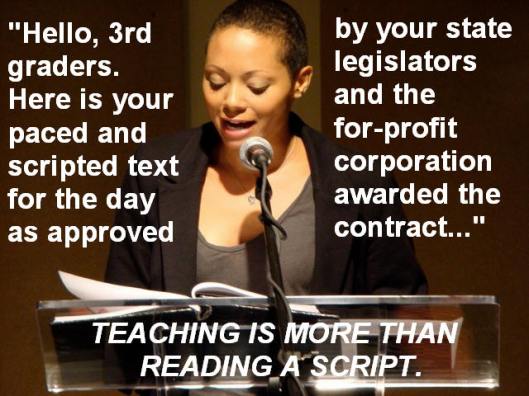
scripted text


Teacher, historian and philosopher Will Durant cut through the ideological propaganda of his era and ours. We must do the same, or we and our children will suffer and die in well indoctrinated semi-ignorance and poverty. Civil disobedience and the dissemination of truth are necessary.
“Perspective was lost. ‘Facts’ replaced understanding; and knowledge , split into a thousand isolated fragments, no longer generated wisdom.”
Just prior to the Great Depression of 1929, this corporate designed caste system was exposed for what it actually was. The brilliant Will Durant pointed out the main social/corporate schism of that time and predicted what is occurring today.
“The gap between life and knowledge grew wider and wider; those who governed could not understand those who thought; and those who wanted to know could not understand those who knew. In the midst of unprecedented learning, popular ignorance flourished and chose its exemplars to rule the great cities of the world; in the midst of sciences endowed and enthroned as never before, new religions [ideologies] were born every day, and old superstitions recaptured the ground they Dismantling Public Education: 1926 insight into 2016 corporate education reform programs and tests | Reclaim Reform:

When Allies Do What Enemies Cannot - Living in Dialogue

When Allies Do What Enemies Cannot - Living in Dialogue:

When Allies Do What Enemies Cannot


By Anthony Cody.
This week there has been another round of mean spirited divisiveness aired in the education movement, this time directed at Diane Ravitch. Diane posted a link to an article in Inside Philanthropy that described a corporate foundation that was donating to public schools instead of trying to undermine them, as most philanthropies have been doing.
In the comments on this post her readers raised some concerns – the emphasis on STEM and other aspects of the funding. But a couple of people on another site went farther, and accused Diane of shilling for the company in part because her son has invested in it. Diane responded in the comments on her post:
I was sitting in the park yesterday when I read the Inside Philanthropy article, and immediately posted it because I was astonished to discover a company that gives money to the local public schools.
I knew nothing about the company other than what was in the article.
I had no idea that my son’s company had invested in it.
If I had known, I would not have posted the article.
In any event, he won’t make money as a result of my posting the reference.
This was a very low blow.
She added:
I will never understand why people who are critics of the same things that I am 
When Allies Do What Enemies Cannot - Living in Dialogue:


Webinar: Addressing Classroom Bias to Improve Learning | Schott Foundation for Public Education

Webinar: Addressing Classroom Bias to Improve Learning | Schott Foundation for Public Education:

Webinar: Addressing Classroom Bias to Improve Learning


The school-to-prison pipeline has been prominent in the education debate for the past several years, and youth, parents, teachers, and communities across the country have put questions of school discipline, restorative justice and implicit bias at the heart of their organizing work. On September 1, Center for Policing Equity (CPE) Cofounder and President Dr. Phillip A. Goff joined us for a webinar, moderated by our President Dr. John H. Jackson, to unpack the latest research and insights on policing and implicit bias in schools.
CPE works collaboratively with law enforcement, school communities, and political stakeholders to identify ways to strengthen relationships with the communities they serve. Dr. Goff takes us back to where his interest in this research all began – his own high school experience. As a solid student, Goff found himself in unknown territory when a teacher antagonized him after missing school for being sick. The three black faculty members pulled Goff aside and said they were glad that it was Goff who was going through this – they’d seen this teacher pick on black students ever since he was hired, but they knew Goff was too strong of a student to be receiving this negative feedback. This experience woke him, and showed him that “if you are not steeped in the language of race and racial oppression, if you don’t have a language for engaging with it, you’ll find yourself often having conversations where you lose the argument, even though you know in your heart of hearts there’s something about it that wasn’t right.” Now, Goff knows the organizing research question – “What causes racial stratification? And can we use the language and the science of psychology to figure out better routes to address it?”
Goff’s research allows us to better navigate experiences similar to his own. He explains that the science shows that the issue is not simply contaminated hearts and minds or a matter of character – racial bigotry can decline significantly while racial inequality persists. The core lesson from the science is this: “attitudes are relatively weak predictors of behavior; situations are much, much better.” Goff explains that we all have implicit bias to various degrees, and thus what we should be looking at are the situations that are more likely to provoke behavior that is influenced by implicit bias.  
The majority of Goff’s research focuses on policing, and he studies identity traps and how they influence officer behavior. He explains that as of today, there is not a lot of publicly available data on these topics, and so CPE is building the National Justice Database in order obtain concrete data on police behavior. So far, over 40 national police departments and law enforcement agencies have signed on to participate in the building of the database.
The collaboration between CPE, law enforcement, and school communities proves as positive change forward, together, for gathering concrete research as tools to guide us in a more just direction in the future. A concrete thing you can do right now, Goff advises, is be aware of the risk factors (teachers multitasking, not prepared, not trained, don’t have enough resources, no clear rules or motivation for equity, etc.) for identity traps in your child’s classroom. He emphasizes it is these situations, not simply the attitudes of the individuals, which can provoke behavior influenced by implicit bias. We look forward to learning more from these inspiring and necessary collaborations between CPE, law enforcement, and school communities, as they work together to gather critical data in order to strive for equity within our children’s schools.

Webinar: Addressing Classroom Bias to Improve Learning | Schott Foundation for Public Education:

Image result for Schott Foundation for Public Education

A MUST READ - Kevin Rennie: Judge Decides Disabled Kids Not Worth Teaching - Wait What?

A MUST READ - Kevin Rennie: Judge Decides Disabled Kids Not Worth Teaching - Wait What?:

A MUST READ – Kevin Rennie: Judge Decides Disabled Kids Not Worth Teaching

Image result for Judge Decides Disabled Kids Not Worth Teaching


Hartford Courant columnist, blogger, lawyer and former legislator, Kevin Rennie, has a MUST READ commentary piece in the Hartford Courant today about Judge Moukawsher’s outrageous and mean-spirited attack on Connecticut children who require special education services.
Reposted below, you can read and comment on Kevin Rennie’s piece at:   http://www.courant.com/opinion/op-ed/hc-op-rennie-ct-school-moukawsher-disabled-0918-20160915-column.html
Kevin Rennie writes;
Compassion has been declared unconstitutional by a Superior Court judge. Our leaders refuse to condemn his brutal assault on those with disabilities. Delusions rule as Connecticut enters an age of shame.
Thomas Moukawsher, a judge, Malloy appointee and former Democratic organization foot soldier, read his meandering, sloppy decision on public school funding on Sept. 7. Then, otherwise comprehending people seemed not to understand what they had heard. The plaintiffs, a coalition of municipalities and education organizations, had sued for billions in new state spending but did not get it. They nevertheless declared victory.
Disclosure: I knew Moukawsher well when he was a banking lobbyist, during his one term in the legislature and for several years after that. I have not spoken to him in nearly 20 years.
The organizations in the coalition have maintained an indecent silence on what the decision says about providing an education for 15 percent to 17 percent of public school students with special needs. The reader will struggle to find an island of thought in the decision’s sea of bilge, but there is one on the subject of people with disabilities: It is irrational and unconstitutional, Moukawsher declaimed from the bench, to continue to provide an eduction for many of them.
The 20th century taught us that when societies turn on people with disabilities, they often do not stop there. They inflict misery on others and everlasting shame on themselves. Connecticut must not join them in the darkness.
If you want to know what an attack on freedom under the rule of law looks like, peruse the education funding decision. Special education was not an issue the plaintiffs raised. The attorney general, defending the state, warned 
A MUST READ - Kevin Rennie: Judge Decides Disabled Kids Not Worth Teaching - Wait What?:


 Connecticut Attorney General Jepsen to appeal CCJEF v. Rell ruling


Claiming that the State of Connecticut “far exceeds” what it needs to spend on public education, Attorney General George Jepsen announced today that he will appeal the recent court decision in the CCJEF v. Rell school funding lawsuit.
While Connecticut Superior Court Judge Thomas Moukawsher ruled Connecticut’s school funding program was irrational and unconstitutional, the judge went far afield of the actual case, using his decision to condemn Connecticut’s teachers and public schools and promoting his own version of a corporate education reform agenda.
An appeal will mean Connecticut’s Supreme Court will eventually weigh in on the ruling and confirm whether Connecticut’s elected officials must finally address Connecticut’s broken school funding formula.
The following is Attorney General Jepsen’s statement;
Statement from AG Jepsen on Next Steps in CCJEF v. Rell
Attorney General George Jepsen today issued the following statement to announce that the state will seek a direct appeal to the Connecticut Supreme Court of the ruling issued by the Superior Court last week in the case ofConnecticut Coalition for Justice in Education Funding v. Rell:
“Under our system of government, state education policy is determined by the Legislative and Executive Branches and implemented under a strong tradition of local control by municipal school boards and, ultimately, teachers. This decision would wrest educational policy from the representative branches of state government, limit public education for some students with special needs, create additional municipal mandates concerning graduation and other standards, and alter the basic terms of educators’ employment – and entrust all of those matters to the discretion of a single, unelected judge.
“For the public and legislators to trust the legitimacy of such a dramatically new system and the policies it produces, they must know that the ruling mandating it is legally correct. There are strong arguments that the trial court exceeded its authority and the standards articulated by the Connecticut Supreme Court, and so today we are asking that court to review this ruling.
“Despite its order, the trial court correctly determined that the state far exceeds its minimum constitutional obligations for providing equitable access to adequate education. Nevertheless, the ruling identified profound educational challenges that remain and must continue to receive serious and sustained attention – and action – at every level of government. Nothing about this appeal prevents policymakers from immediately addressing those challenges, and I urge them to do so without delay.”
More about this development and previous media coverage via links below:
CCJEF V. RELL MEDIA COVERAGE
CT Mirror
Hartford Courant
CT Newsjunkie
Stamford Advocate
Connecticut Post
New York Times
Links to the actual decision
Judicial Department – http://jud.ct.gov/CCJEFvRell.pdf

Related Statements:

Commentary pieces:

Schools Matter: How Opt Out Could Remain Legitimate, But Won't

Schools Matter: How Opt Out Could Remain Legitimate, But Won't:

How Opt Out Could Remain Legitimate, But Won't


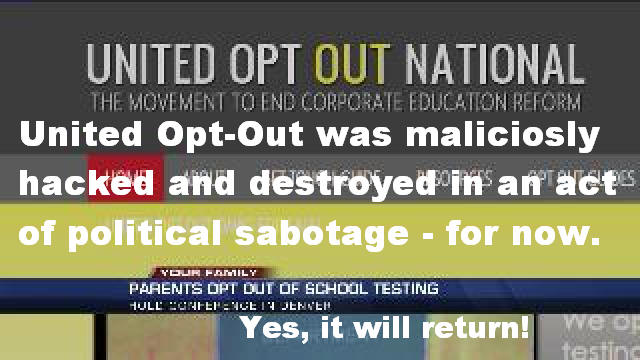
The last national conference held by United Opt Out in February featured Green presidential candidate, Jill Stein, long-time radical educator, Bill Ayers, and radical intellectual, Chris Hedges.  The line-up for the conference scheduled for next month in Houston is quite different.

The October UOO conference at the Hilton will be be co-sponsored by an AFT affiliate, the Houston Federation of Teachers, and the headliners will contain no radicals, free or otherwise.  Featured will be education economist and KIPP sympathizer, Samuel Abrams, along with Diane Ravitch's lieutenant at NPE, Julian Heilig.  In short, UOO has become the latest casualty of cooptation by the corporate unions, and just in time, it seems, for AFT/NEA/NPE to, perhaps, claim a victory of sorts for the opt out movement that they now control.

Even though the annual testing requirement for public schools remains a part of the ESSA federal statute going forward, the ominous plan for future testing accountability would impose test data gathering, storage, and sharing every day, rather than just once a year.  Assessment, under the new scheme that will receive federal millions under ESSA, will be as ubitiquous as getting on and off the bus.  So even as Randi and Lily are already leading testing victory laps for a false win not yet won, such a "victory" would come at an expense that no parent, student, or teacher can afford to pay.

You see, the new personalized testing paradigm on the horizon, if implemented, will not only change the face of school as we know it, but it will jeopardize the physical and mental health of children, as well as abridge their rights to privacy and the 
Schools Matter: How Opt Out Could Remain Legitimate, But Won't:


Donald Trump Dances to His Billionaire Backers’ Tune on School Choice - The Daily Beast

Donald Trump Dances to His Billionaire Backers’ Tune on School Choice - The Daily Beast:

Donald Trump Dances to His Billionaire Backers’ Tune on School Choice


Donald Trump was never a major presence in the school-choice world—he didn’t give give to activist groups, or back New York’s growing charter-school movement. But over the last few months he’s begun loudly singing their praises, a major change of thought that coincides with the growing influence within his campaign of donors—many with hedge fund backgrounds—who help fund that movement.
Trump’s campaign has framed the new emphasis as part of his new effort to reach out to black and Hispanic voters. His polling numbers with both demographics are abysmal, and he needs all the help he can get. But the real calculus behind his shift is likely more complicated. And it puts him in the middle of a debate that involves billionaire hedge-fund bosses, multimillion-dollar pension sums, and—in theory—every school child in America.
A handful of hedge fund bosses have long played outsize roles in the school-choice movement, which looks to increase enrollment in charter schools and give families vouchers to spend at the school of their choice. Several of those bosses are now backing Trump, just as he seems to have finally embraced their cause. Robert Mercer, for instance, heads a fund called Renaissance Technologies, and his family foundation has spent big to boost pro-school choice efforts. And John Paulson, another major Trump backer who heads a hedge fund, has poured millions into New York’s Success Academy charter school network.
Investopedia reported in March of this year that the federal tax code provides benefits to hedge funds that invest in charter schools. In 2000, then-President Bill Clinton set up a tax credit for banks and private equity funds that lend nonprofits the money they need to start charter schools.
“By combining the various credits with the interest from the loan itself, a lender can almost double his investment over the seven-year period,” wrote Juan Gonzalez at the New York Daily News. Not bad!
Trump, of course, isn’t a hedge-fund guy. And he’s criticized tax policies that give them special perks. He also hasn’t been a big school-choice guy; hebriefly mentioned charter schools in his 2000 book The America We Deserve, but otherwise stayed mum on them until launching his 2016 bid. He mentioned them briefly at the Miami Republican primary debate in March, saying Ben Carson supported them.
And in April, Ben Carson told The Washington Post that he had encouraged Trump to start talking about school choice.
“He’s been very enthusiastic about that suggestion,” Carson continued. “He’ll have to follow through and get through to those kids and families who don’t feel like they’re getting the best possible education.”
But despite that alleged enthusiasm, Trump still didn’t make much of a point to praise the charter-school movement.
In the meantime, he took a little heat for his silence. A few hours before he delivered his convention speech on July 21, the Washington Examiner ran a story headlined, “GOP megadonor wants Trump to start praising school choice.” The piece suggested that Betsy DeVos—one of the most powerful Republican mega-donors, and an ardent backer of charter schools—wouldn’t back Trump unless he started vocally praising the school-choice movement.
A few hours later, in Trump’s convention speech, he alluded to the charter-school movement.
“We will rescue kids from failing schools by helping their parents send them to a safe school of their choice,” he said. “My opponent would rather protect bureaucrats than serve American children.”
Less than a month later, Trump’s support for school choice had ramped up from understated to explicit. On Aug. 17 in West Bend, Wisconsin, he explicitly endorsed the school-choice movement.
“On education, it is time to have school choice, merit pay for teachers, and to end the tenure policies that hurt good teachers and reward bad teachers,” he said.
EdWeek noted that the mogul mentioned school choice at least three times in August: in West Bend, in his major economic policy speech in Detroit, and again during a Donald Trump Dances to His Billionaire Backers’ Tune on School Choice - The Daily Beast:

Former NFL Quarterback Supports Public Schools. That’s Right. PUBLIC Schools! | gadflyonthewallblog

Former NFL Quarterback Supports Public Schools. That’s Right. PUBLIC Schools! | gadflyonthewallblog:

Former NFL Quarterback Supports Public Schools. That’s Right. PUBLIC Schools!

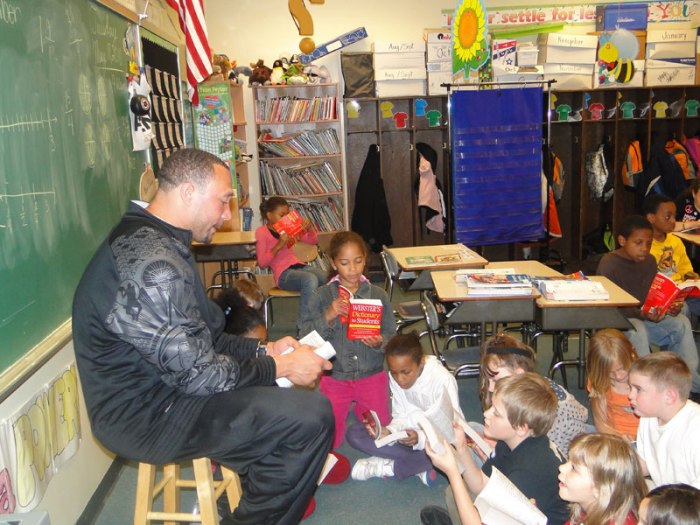
dictionary
So I’m in my classroom today, teaching, when I see something that stops me cold.
The door opens and in comes former Steelers backup quarterback Charlie Batch.
My mouth falls open. I don’t know what I was talking about. Vocabulary words or something.
The class of 8th graders falls silent, too. All eyes are on the two of us.
Batch looks me right in face with a big smile.
“Here you go,” he says and hands me a shopping bag full to bursting with school supplies and an extra-large tub of hand sanitizer.
By this time I’m probably blushing and grinning like my teeth are about to escape my face.
I hope I was able to mouth a “Thank you,” before he left, but I’m not really sure.
It all kind of happened in a daze.
He came. He gave me supplies. He left.
I guess I shouldn’t have been so taken by surprise.
Batch is a frequent face in my district. After all, he graduated from here, himself, before moving on to college and professional sports.
At the beginning of every year, Batch brings school supplies to every teacher in every building in the district. This was just the first time I was actually in the classroom when he dropped them off. Usually he sneaks in when I’m at lunch duty or Former NFL Quarterback Supports Public Schools. That’s Right. PUBLIC Schools! | gadflyonthewallblog:


Opt Out is DEAD | BustED Pencils

Opt Out is DEAD | BustED Pencils: "Opt Out is DEAD"

Opt Out is DEAD
Image result for big education ape Opt Out is DEAD

In its current form.
Did I get your attention? Good. Because right now I feel like I back peddled five years ago to the time when several of us started an FB page to create opt out guides/resources for each state. At that time, we/opt outers were mocked, ignored, and ostracized. Lots of big wig activists and educational groups treated us like the plague.  Opt out was not cool.
We have entered a new phase of activism – and it feels a bit like starting over. It’s now September of 2016 where everyone and their mother loves opt out – even New York RegentRoger Tilles!!!  Opt out has gone mainstream!!!!
When opt out starting going mainstream, it felt okay at first, but then, suddenly – it didn’t. Why was everybody sharing the opt out love??? Did humanity suddenly return? Um, no. I don’t trust easily and something felt amiss. And I always listen to my gut feelings and research to confirm these feelings.
Backtrack to March of 2015.
We at UOO discovered the ECS “opt out” guide and I pointed to  it on my blog.  ECS is partially funded by Pearson, among other folks.  Of course  we asked ourselves, why was ECS creating a state by state opt out guide? Since when did Pearson and the other corporate cronies want to help citizens figure out how to opt out?
Many of us started fishing. We discovered more. Opt out was a big fish in a little pond. We’d been had. Hook. Line. Sinker.
In October 2015 I wrote this – it was clear that opt out was on the way out as competency-based education (daily online curriculum and testing) entered.
Opting out of the end of year test now served the needs of the .01%. The opt out movement had been co-opted. The end goal – all along – was daily online testing – via online modules that break down learning into discrete skills that must be mastered – all under the guise of personalizing learning to better meet the needs of individual learners. Not only did they plan to personalize the academic skills per child, they also planned to tap into a child’s emotions and behaviors to further tailor the learning to the child’s needs (look up SEL/social-emotional learning) – all with the end goal to create more profit for the .01%.
Opt Out, in its current form, was dead.
But – let me make something very clear.  We needed the opt out movement to generate a pool of aware citizens – we needed it to build relationships. We, the people, helped fuel a movement of questioning, civil disobedience, and strategic problem solving – all absolutely necessary for this next phase of strategic actions . Opt out was necessary to save not only our public schools, but this planet. The opt out movement is and was important. But, we Opt Out is DEAD | BustED Pencils: "Opt Out is DEAD"


Ohio charter-school grant labeled ‘high risk’

Ohio charter-school grant labeled ‘high risk’:

Ohio charter-school grant labeled ‘high risk’

Image result for big education ape ohio charter schools


The U.S. Department of Education is letting Ohio keep its $71 million grant to expand charter schools.
But, it is designating the grant “high risk” and upping oversight to ensure there is no fraud.
The Ohio Department of Education must, among other restrictions:
  • Create a database that shows charter schools’ academic, operational and financial performance;
  • Submit documentation to the U.S. Department of Education for each withdrawal from the grant account;
  • Post semi-annual financial reports to show how the grant is being used;
  • And hire an independent monitor to oversee implementation of the special restrictions.
The new rules were announced Wednesday in a letter from the U.S. Department of Education’s Stefan Huh to Ohio’s Superintendent of Public Instruction, Paolo DeMaria. Huh's letter states that while the review of Ohio’s grant application didn’t find any significant inaccuracies, there were enough concerns raised to merit extra scrutiny.
In particular, Huh noted the “circumstances under which a key ODE staff member departed.” That’s a reference to David Hansen, a high-ranking Ohio education official who resigned in 2015 after he was accused of playing with charter-school rankings to protect poor performers.
The $71 million grant, spread out over several years, was first announced in September 2015. It was part of a package of more than $157 million for charter schools nationwide, and Ohio – known for its shaky performance when it comes to charter schools – got the biggest chunk of the pie. By comparison, the Illinois Department of Education got the next-biggest grant: $42.3 million.
Opponents said U.S. officials were throwing good money after bad and rewarding a system fraught with corruption. The Cincinnati Educational Justice Coalition sent a letter to then-U.S. Secretary of Education Arne Duncan asking him to cancel the grant and give the money to traditional public schools instead.
In November, the U.S. Department of Education essentially put the grant on hold while it reviewed Ohio's application.
ODE spokeswoman Brittany Halpin said the department is happy with the news it can move forward with the grant and dedicated to following the new stipulations.
"Ohio’s accountability system is stronger thanks to reforms in the state’s charter school law," Halpin wrote in an email. "The department now has greater authority to ensure that quality sponsors oversee schools and we’re able to provide incentives to sponsors that have track records of success. We’ve also taken steps to ensure the new sponsor evaluation system is clear, transparent and consistent with rule and law."
In a call with reporters on Wednesday, U.S. Sen. Sherrod Brown, D-Ohio, praised the restrictions. He called Ohio's for-profit charter system a "disgrace" and said the new checks will ensure the grant is properly spent.
Some charter schools are thriving in Ohio, Brown said, but “too many, particularly online for-profits .. aren’t meeting the needs of our students.
"Children pay the price for this mismanagement, and it costs taxpayers money."


Brown, one of several politicians to push for tougher restrictions after the grant was first announced, said the money might have been wasted without this extra oversight.
 Ohio charter-school grant labeled ‘high risk’:

ABCs of Classrooms at Risk: DON’T just #OPTOUT – Missouri Education Watchdog

ABCs of Classrooms at Risk: DON’T just #OPTOUT – Missouri Education Watchdog:

ABCs of Classrooms at Risk: DON’T just #OPTOUT

ipads-fingers

What are we doing to our kids?
Cancer doesn’t care if you are Democrat or Republican.  The dollars invested in the edtech industry don’t care if your child is Democrat or Republican either.  Why  then do we let this broken two party system divide us when it comes to education and doing what is best for our children?  Put children’s health and safety first.  Always.
A is for always protect kids and the American Academy of Pediatrics.
We know, despite campaigns from the tobacco industry that said otherwise, smoking cigarettes does have a direct link to causing cancer.  The sugar industry certainly has helped to prove the point recently, that data can be manipulated and studies and media can be bought.  So now, ask yourself this, remember those warnings from pediatricians about too much  TV and limited screen time?According to the American Academy of Pediatrics (AAP),  2015, kids were astonishingly spending 7 hours a day on “entertainment” media.
The American Academy of Pediatrics (AAP) released these guidelines for children and adolescents using media, recommending no more than two hours per day of any type of entertainment screen time for kids ages 3 to 18 and none for children 2 or younger. The guidelines cover media such as Internet and texting as well as TV, movies and video games.- Reported March 2014, Washington Post
How come we aren’t limiting screen time in school?
Instead, the federal government and the broadband industry are teaming up to bring Wi-Fi connectivity (via the FCC’s Lifeline) to all communities and schools.  The White House is also promoting classroom connectivity,  1:1 computers, chromebooks, or ipads for each child. ESSA has freed up Billions of dollars to spend on expanding technology use in the classroom. That’s MILLIONS of classrooms full of screens, Wi-Fi, online curriculum, online assessments and student data all bundled together for and by the industry. The federal government is actually giving grants for every textbook you replace with their “free” online curriculum.
glow kids
B  is for Billions of dollars.
Interestingly, there is now research proving that screen time is addictive, showing dopamine receptors in our brains react to screens equally as strong as receptors react to cocaine addiction.   Glow Kids author explains in TIME Magazine that screens in schools, edtech is a $60 Billion Hoax that is harming children.  We don’t see that posted on the US Dept of Ed or State Dept of Ed websites.   Nor do we see the studies that show memory retention,  scores on tests, academic performance are actually worse on screens. But we do see the federal government investing millions more into technology and data collection.
report-card-c
C  is for Cancer.
The Big (C).