Latest News and Comment from Education

Tuesday, September 1, 2015

Community members demand the Minneapolis Public Schools cancel Reading Horizons contract | Bright Light Small City

Community members demand the Minneapolis Public Schools cancel Reading Horizons contract | Bright Light Small City:

Community members demand the Minneapolis Public Schools cancel Reading Horizons contract


Background: In early August, several Minneapolis teachers contacted me about an early literacy training session they had been to. What happened there shocked and offended many of them. I am happy to help tell their stories, which I decided to do in a series of blog posts. The stories initially centered on two teachers–one white (Mandy Perna), one a teacher of color (Shana Dickson)–and their reactions to the religiously tinged, “Common Core” ready, and all-around offensive training they attended, put on by the Utah-based company, Reading Horizons. Now, the posts have expanded to include the community’s response.
The teachers’ decision to share their experiences has led to an outpouring of support for them, and against the Minneapolis Public Schools’s (MPS) decision to do business with Reading Horizons (via a $1.2 million contract). This is largely due to the  “Little Books”–deemed extremely offensive by many–that Reading Horizons produced for MPS’s K-2 classroom teachers. Please refer to previous posts for further details and pictures.
Since the blog posts hit on August 25, MPS has apologized for the books and said the offending Community members demand the Minneapolis Public Schools cancel Reading Horizons contract | Bright Light Small City:

Hunger Strikers to hold candlelight vigil tonight #FightForDyett

Hunger Strikers to hold candlelight vigil tonight:

Hunger Strikers to hold candlelight vigil tonight


On the 16th day of the Dyett High School hunger strike, protestors and supporters will join the strikers for a candlelight vigil.
The 12 hunger strikers and the Coalition to Revitalize Dyett will gather outside of the Tribune Tower, 435 N. Michigan Ave., by the DuSable bust at 7:30 p.m. tonight, joined by the Chicago Light Brigade.
The strikers do not want Chicago Public Schools (CPS) to reopen Dyett, 555 E. 51st St., as a contract school. The group has proposed its own plan for a “Dyett Global Leadership and Green Technology High School.”
Hunger strikers are asking the community to join in to “pray and build power behind the demand that [Mayor] Rahm Emanuel take action.”
Yesterday, Emanuel and Forrest Claypool, CEO of Chicago Public Schools (CPS), met with the hunger strikers, yesterday evening, after a public meeting on the Westside. Although a resolution was not reached and questions were left unanswered, the meeting was cordial.
Tomorrow, Sept. 2, two of the hunger strikers, Jitu Brown and April Stogner, will travel to Washington, D.C. to spread their fight for Dyett to the nation’s capital.
Other activists such as John Jackson, the Schott Foundation president, and Randi Weingarten, the American Federation of Teachers president, will join Brown and Stogner. They will deliver a letter to U.S. Secretary of Education, Arne Duncan, to urge him to sway Emanuel’s decision on the future of Dyett.
According to a press release, the group will gather at the U.S. Department of Education at 2:30 p.m. to continue their fight outside of their South Side community.
The hunger strikers’ mission to save Dyett has received national attention as it has gained momentum over the past two weeks.
Media outlets such as The Washington Post and The Huffington Post are covering the strikers’ stories and following the progression of the strike. According to Hashtag Scout, the hashtag #FightForDyett has been tweeted over 5,000 times per day.
Dyett hunger strikers will continue to consume only liquids until their demands are heard and their proposed RFP process is considered.
Until that happens, the strikers anxiously await the CPS hearing regarding Dyett on Sept.15.
Hunger Strikers to hold candlelight vigil tonight:

Scott Walker blames Milwaukee Public Schools for Wisconsin’s incarceration rate of African American men | Educate All Students: Larry Miller's Blog

Scott Walker blames Milwaukee Public Schools for Wisconsin’s incarceration rate of African American men | Educate All Students: Larry Miller's Blog:

Scott Walker blames Milwaukee Public Schools for Wisconsin’s incarceration rate of African American men


Sunday August 30: Chuck Todd, the host of Meet the Press, questioned Walker about Wisconsin having a higher incarceration rate of African-American men than anywhere in the country and ranking last in the country in the overall well-being of black children. Walker then blamed Milwaukee Public schools. See Milwaukee Journal report at: http://tinyurl.com/qbsxpwn
Milwaukee is the 2nd poorest city in America and the most segregated. For the last 13 years Scott Walker has been directly in a position to reverse poverty and segregation in Milwaukee. Instead both have gotten worse.
As Milwaukee County Executive, starting in 2002, Scott Walker cut jobs, health care, recreation and transportation serving Milwaukee’s African American community. As Governor one of his first acts was to refuse Federal high speed rail funding that would have given Milwaukee’s Black community significant access to suburban and rural jobs. His economic development Scott Walker blames Milwaukee Public Schools for Wisconsin’s incarceration rate of African American men | Educate All Students: Larry Miller's Blog:


Report: Wisconsin to spend $258M on school vouchers next school year


The state will spend $258 million the 2016-17 school year on private school vouchers, a new estimate shows.
At the same time, the amount of state aid sent to public schools will be reduced by $83 million to offset the voucher spending, for a net cost to the state of $175 million, according to an analysis drafted by the nonpartisan Legislative Fiscal Bureau in response to a request from Senate Minority Leader Jennifer Shilling, D-La Crosse, who opposes school vouchers.
9/1/15 Molly Beck Wisconsin State Journal
The state will spend $258 million in the 2016-17 school year on private school vouchers, a new estimate shows.
At the same time, the amount of state aid sent to public schools will be reduced by $83 million to offset the voucher spending, for a net cost to the state of $175 million, according to an analysis drafted by the nonpartisan Legislative Fiscal Bureau in response to a request from Senate Minority Leader Jennifer Shilling, D-La Crosse, who opposes vouchers.
The amount spent each year on vouchers will have increased by 77 percent next school year over 2011 levels, according to the estimate, as lawmakers have expanded the number of vouchers available to students and where they can be used.
The amount of money spent has risen from $146 million in the 2011-12 school year to $236 million this school year.
The state spent $5.2 billion on public schools in 424 school districts last school year, according to the LFB, when it spent $213 million on vouchers used in 159 private schools.
Over the six school years, $1.2 billion will be spent on school vouchers and about $30.6 billion will be sent to public schools during the same time, according to LFB and Department of Public Instruction data.
The number of students using school vouchers to attend private schools grew from 22,439 during the 2011-12 school year to 29,609 last school year, according to the DPI. At the same time, 870,650 students attended public schools last year — which is about the same number that did in the 2011-12 school year. Enrollment grew to 873,531 in the 2013-14 school year before decreasing last school year.
Gov. Scott Walker and Republican lawmakers have created new voucher programs in Racine and statewide to join the program in Milwaukee, created in 1990 as the country’s first.
Milwaukee and Racine school districts have been allowed to raise property taxes to offset their reductions in state aid.
Starting this school year, each voucher used outside of Milwaukee will be paid for using aid set aside for school districts. The districts won’t be able to raise taxes to make up the money, 

Report: Wisconsin to spend $258M on school vouchers next school year

The decline of play in preschoolers — and the rise in sensory issues - The Washington Post

The decline of play in preschoolers — and the rise in sensory issues - The Washington Post:

The decline of play in preschoolers — and the rise in sensory issues


Here is a new post from pediatric occupational therapist Angela Hanscom, author of a number of popular posts on this blog, including “Why so many kids can’t sit still in school today,” as well as “The right — and surprisingly wrong — ways to get kids to sit still in class” and “How schools ruined recess.” Hanscom is the founder of TimberNook, a nature-based development program designed to foster creativity and independent play outdoors in New England.

By Angela Hanscom
I still recall the days of preschool for my oldest daughter. I remember wanting to desperately enrich her life in any way possible – to give her an edge before she even got to formal schooling. I put her in a preschool that was academic in nature – the focus on pre-reading, writing, and math skills. At home, I bought her special puzzles, set up organized play dates with children her age, read to her every night, signed her up for music lessons, put her in dance, and drove her to local museums. My friends and I even did “enrichment classes” with our kids to practice sorting, coloring, counting, numbers, letters, and yes….even to practice sitting! We thought this would help prepare them for kindergarten.
Like many other American parents, I had an obsession: academic success for my child. Only, I was going about it completely wrong. Yes, my daughter would later go on to test above average with her academic skills, but she was missing important life skills. Skills that should have been in place and nurtured during the preschool years. My wake-up call was when the preschool teacher came up to me and said, “Your daughter is doing well academically. In fact, I’d say she exceeds expectations in these areas. But she is having trouble with basic social skills like sharing and taking turns.” Not only that, but my daughter was also having trouble controlling her emotions, developed anxiety and sensory issues, and had trouble simply playing by herself!
Little did I know at the time, but my daughter was far from being the only onestruggling with social and sensory issues at such a young age. This was becoming a growing epidemic. A few years ago, I interviewed a highly respected director of a progressive preschool. She had been teaching preschoolers for about 40 years and had seen major changes in the social and The decline of play in preschoolers — and the rise in sensory issues - The Washington Post:

8 Interesting Facts about the Aftermath of Sac City’s School Closures | Hmong Innovating Politics

8 Interesting Facts about the Aftermath of Sac City’s School Closures | Hmong Innovating Politics:

8 Interesting Facts about the Aftermath of Sac City’s School Closures


banner


1.  4 out of the 7 closed schools have re-opened


In January 2013, Sacramento City Unified School District and former Superintendent Jonathan Raymond proposed the closure of twelve (12) neighborhood elementary schools. Of those twelve, five (5) were quietly taken off the closure list prior to the final vote on the ‘wrong-sizing’ proposal. In February 2013, only a month after announcing the proposal, seven(7) neighborhood schools were closed in a controversial 4-3 vote.
It has been more than two years since the seven neighborhood schools were closed. In that time, 4 out of the 7 campuses have re-opened either as a charter school or a community center.

2.  Joseph Bonnheim re-opened as a Community Charter School

NJBCharter

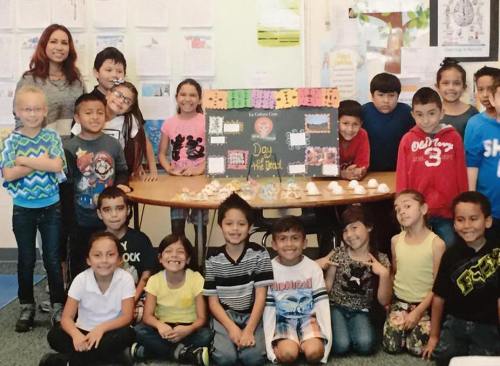
The first school site to re-open was Joseph Bonnheim Elementary. Immediately following the closures, parents, teachers and community members came together to save their neighborhood school. It became clear that the only way for the campus to remain a open would be to establish a community charter school. This small but incredibly passionate coalition of community leaders and parents raised money, passed around petitions and developed an organic proposal to re-open the school as a dependent charter. Finally, in 2014, the New Joseph Bonnheim (NJB) Community Charter opened its doors to a new cohort of students. NJB remains the only public school in Northern California with a special emphasis on agriculture. A week ago, NJB celebrated its second year and we’re thrilled to see students back at Bonnheim.

3.  La Familia finds new home at Maple Elementary


MapleElementary

For over 40 years, La Familia Counseling Center has been a fixture in the South Sacramento community and a hub for Sacramento’s Latino community. In recent years, the expanding number of staff and the growing need for services among Sacramento’s diverse populations made LFCC’s location on Fruitridge Road feel a bit cramped. In July 2015, LFCC was approved to lease Maple Elementary School as their new headquarters. By moving their main office to Maple Elementary, LFCC is now better situated to expand its world-class services to the Maple and South Sacramento community.

Mike Klonsky's SmallTalk Blog: Rahm's budget hearing not exactly what he had in mind

Mike Klonsky's SmallTalk Blog: Rahm's budget hearing not exactly what he had in mind:

Rahm's budget hearing not exactly what he had in mind


Rahm finally meets with Dyett hunger strikers. But makes no commitments. Strike continues into Day 16. 
The Sun-Times  reporter Stefano Esposito keeps referring to last night's public response at Rahm's budget hearing, as a "gripe session". Strange, but not a surprising view of democracy.


The mayor says his current public meetings are "to discuss the City's current budget outlook and solicit savings, reform and revenue ideas from residents to assist in the preparation of the 2016 budget." But in reality, as David Vitale once told me, such meetings are really about "reining in" dissident community voices.


Well, that sure as hell didn't work yesterday. With the creditors and Moody'sbreathing down his neck and with Dyett hunger strikers now into a health and life-threatening 16 days without solid food, those voices were not about to be reined in. The budget meeting at Malcolm X College, was turned into a demand for Rahm to stop stonewalling the Dyett school process they themselves launched months ago, Mike Klonsky's SmallTalk Blog: Rahm's budget hearing not exactly what he had in mind:

WV MetroNews – Reconnecting McDowell turns attention to absenteeism & reading proficiency

WV MetroNews – Reconnecting McDowell turns attention to absenteeism & reading proficiency:

Reconnecting McDowell turns attention to absenteeism & reading proficiency


WELCH, W.Va. — The partners involved in Reconnecting McDowell will next focus their efforts on addressing school absenteeism and ensuring all students reach reading proficiency by the 3rd grade as part of a larger education and economic revitalization effort in McDowell County.

“What we’ve asked the partners to do is to focus on two things which are state priorities, which are national priorities, that we know will really flip the switch in terms of outcomes for kids,” said Randi Weingarten, president of the American Federation of Teachers.
On Tuesday, she spoke with MetroNews from a day-long Reconnecting McDowell quarterly meeting in Welch that drew more than 100 program partners.
Gayle Manchin, chair of Reconnecting McDowell and a member of the West Virginia Board of Education, was also there.
“Children can’t learn if they’re not in school and, if children can’t learn to read by 3rd grade, they cannot read to learn during the rest of their school experience,” Manchin said.
According to Weingarten, 89 percent of students who reach reading proficiency by the 3rd grade go on to graduate from high school.
Reconnecting McDowell, a comprehensive, long-term effort aimed at improving McDowell County’s economy through education, launched in 2011 in a West Virginia county that consistently ranks at or near the bottom when it comes to health, income and education.
Since then, those involved have been working to address McDowell WV MetroNews – Reconnecting McDowell turns attention to absenteeism & reading proficiency:

A Manifesto for a Revolution in Public Education · Change.org

Petition · Citizens who care about public, Teachers, students, parents, and teacher educators: A Manifesto for a Revolution in Public Education · Change.org:

A Manifesto for a Revolution in Public Education


Teachers, students, parents, and teacher educators!
For decades politicians, corporate titans, businesspeople, and some compliant educators have bombarded us with half-truths that our public schools are terrible, that our children underperform, and that our teachers, teacher unions, and teacher educators are ruining our economy and the minds of our kids.
These self-styled “reformers” have sensationalized selected scores on standardized tests to manufacture a narrative of catastrophe, and have used that narrative to distract us from the real crises of poverty, racism, and growing inequality facing our public schools.
For over a decade these “reformers” have proclaimed that the solution to the purported crisis in education lies in more high stakes testing, more surveillance, more number crunching, more school closings, more charter schools, and more cutbacks in school resources and academic and extra-curricular opportunities for students, particularly students of color. As our public schools become skeletons of what they once were, they are forced to spend their last dollars on the data systems, test guides, and tests meant to help implement the “reforms” but that do little more than line the coffers of corporations, like Pearson, Inc. and Microsoft, Inc.
Under the avalanche of these “reforms,” any attention to creating citizens for a democracy has vanished. Gone is any focus on the emotional health of students or on their artistic, creative and physical development. Gone is a vibrant commitment to PUBLIC education and to equal educational opportunity.
For more than a decade we have heard our nation’s leaders, such as Barack Obama, Hillary Clinton, Jeb Bush, Michael Bloomberg, Bill Gates and Arne Duncan, repeat the mantra that all children deserve equal educational opportunities.  And for more than a decade we have watched as children who attend public schools receive a subsistence level education full of test preparation, and militaristic discipline, while,hypocritically, the sons and daughters of these “reformers” and the children of the well-to-do and the well-connected receive opportunities that look nothing like the ones foisted on the rest of the nation’s students. As the children of many of these “reformers” feast at the banquet of educational opportunities afforded them, the rest of the nation’s youth and their teachers are left with the withering skeleton of public education and are expected to be quiet as the corporate jackals pick the last bit of profit from the bones.
ENOUGH! We will no longer stand idly by as public education is dismantled by hypocrites, plutocrats, merchandisers and collaborators.
We reject the entire education “reform” agenda, its self-serving narrative of crisis, its ruinous reduction of education to cramming for an exam, its vocabulary of the marketplace that renders our teachers and children as numbers on a bottom line, its flawed science of value-added metrics hawked by those who never stepped foot in a classroom, its propaganda that poverty, institutional racism, white supremacy, and family situations can be overcome by a lone teacher armed with the right “tool-kit,” and its concealment of the income gap by the so-called “achievement gap.” We denounce in particular the emphasis on performance standards, with its fanatical faith in tests and algorithms, its blindness to all the other aspects of education, and its pernicious focus on equal outcomes rather than equal opportunities.
We aspire to something nobler and more just.
Teachers, students, parents and teacher educators!
We aspire to EQUAL EDUCATIONAL OPPORTUNITY for all our children. We therefore insist on standards that govern equality of educational opportunity, standards that ensure the nation’s children can, if they wish, receive the same educational opportunities as do the children of our nation’s rich and powerful.  If we are still a democracy, if we still believe in the PUBLIC, if we still believe in equal opportunity, then it is time we demand the following:
Our demands
1.      We demand that every child have equal educational opportunities. By this we mean that every child in pre-K through 12th grade should be provided with the conditions that make possible real study and human growth, conditions made available at the nation’s independent schools to the children of so many education “reformers” and of the well-to-do and well-connected.
2.      We demand that all students have the small classrooms that Jeb Bush experienced at Phillips Andover where the average class size is thirteen students and the overall student teacher ratio is 5 to 1, that his son experienced at Gulliver Preparatory School whose average class size is also thirteen, and that ex NYC mayor Michael Bloomberg’s daughters experienced at Manhattan’s Spence School, where the average high school class size is 13 students, and the overall student teacher ratio is 7 to 1.
3.      We demand that all students have access to schools with well-stocked libraries, quiet places for contemplation, study abroad opportunities, programs in music and art, regular field trips, a range of sports, healthy food in the cafeteria, well-staffed college counseling departments, athletic and art facilities, and a wide selection of foreign languages, vocational opportunities, AP courses, and numerous extra-curricular activities. All of these are offered at independent schools, such as Sidwell Friends, attended by Barack Obama’s children, Deerfield Academy, attended by Governor Andrew Cuomo’s daughters, Maumee Valley Country Day School in Ohio, where Michelle Rheewent, Manhattan’s Trinity School, attended by Rudolph Giuliani’s daughter, the Madeira School attended by Campbell Brown, and Phillips Exeter Academy, where Chester Finn was a student. In these schools children write all the time, because writing is easier to develop when teachers have between sixty and 70 students, as opposed to the 150 students most public school English teachers have. Such conditions have been available to the sons and daughters of education “reformers,” such as Bill GatesHillary ClintonGeorge W. BushRahm Emanuel, and all those hedge fund billionaires so heavily invested in charter schools.
4.      We demand equal educational opportunities for teachers such that teachers have opportunities to create their own curriculum, as do the teachers at Manhattan’s Dalton School, attended by the sons of New York State Regent, Merryl Tisch, and at Seattle’s Lakeside School, attended by Bill Gates, and at Chicago’s Lab School attended by Arne Duncan, and at the Panahou School, Obama’s alma mater in Hawaii.  None of these schools adhere to the Common Core. At such schools, teachers have considerable freedom to choose curricular materials, to structure learning based on their particular students’ needs, to follow their own intellectual, and artistic passions, and to benefit from funding for seminars, learning fellowships and sabbaticals. At such schools teachers are evaluated, not by student test scores or value-added measures, but according to qualitative criteria developed by their colleagues, their professional organizations, and themselves.
5.      We demand that rather than performance standards that focus on test scores and assume punishment is the best way to change people, states adopt opportunity-to-study standards, with metrics and consequences.  Such opportunity-to-study standards assess the conditions that make study possible. We emphasize study rather than learning, only because the concept of learning has been so corrupted as to mean nothing more than “performance” on high stakes tests. The conditions that promote and offer opportunities for study include the curriculum, the extra-curriculum, the available resources, the setting, and the infra-structure. Such conditions and opportunities can be assessed by opportunity-to-study standards.
6.      We demand a halt to charter schools, which present the veneer of small independent schools, but in fact offer a mediocre test prep program, military discipline, and few, if any, of the numerous opportunities for study available to the children of the wealthy backers of those charter schools.  If charters, such as the KIPP schools and Success Academy, are so great, how come “reformers,” politicians, and corporate backers don’t enroll their own children in them?
7.      We demand that at the community, district, state and national levels, education summits be held to delineate in detail suchopportunity-to-study standards, determine the cost, and establish time lines for these standards to be implemented. Furthermore, we demand that primarily educators, parents and students be included in these summits and that media and computer moguls, hedge fund managers, CEOs, and others who know little about teaching or curriculum be barred from participating.
These are the demands we make. Only when we achieve true equality of educational opportunity, only when those who spout this term are held to it, only then will we begin to see real educational change in this country. Only then will we have done a true service to our young and to the nation’s future.
Signed,
reClaiming the Conversation on Education Steering Committee:
Arnie Dodge, Chair/Associate Professor, Department of Educational Leadership and Administration, LIU-Post*
Lisa N. Edstrom, Parent and Educator
Julie Gorlewski, Associate Professor, State University of New York at New Paltz*
David A. Gorlewski, Chairperson, Educational Administration, State University of New York at New Paltz*
Andrew T. Kemp, Ed.D.
Steve London, University Wide Officer, PSC/CUNY*
Barbara Madeloni, MTA President*
Janet L. Miller, Professor
Wayne A. Reed, Assistant Professor of Education, Brooklyn College, CUNY*
Paula M. Salvio, Professor of Education
Jessica Siegel, Assistant Professor of Education, Journalism and English, Brooklyn College, CUNY*
Ruth Powers Silverberg, Associate Professor of Education, College of Staten Island, CUNY*
Laura Stolbova, Educator.
Debbie Sonu, Teacher Educator.
Janine Sopp,  Parent, Change the Stakes and NYC Opt Out*
Daiyu Suzuki, Co-founder, Edu4.  Doctoral candidate, Teachers College at Columbia University
Peter M. Taubman, Professor of Secondary Education, Brooklyn College, CUNY*
Barbara Winslow, Professor Emerita, Brooklyn College; Founder and Director, Shirley Chisholm Project of Brooklyn Women's Activism*
* Note: Affiliation for identification purposes only. The views may not express those of the institution.

Can Digital Games Improve Our Schools? - Living in Dialogue

Can Digital Games Improve Our Schools? - Living in Dialogue:

Can Digital Games Improve Our Schools?


By John Thompson.
With The Game Believes in You, Greg Toppo joins the ranks of great authors like Anya Kamenetz and James Paul Gee, who articulate a new, dynamic, creative, and holistic path to 21st– century schools. Like Kamenetz, Toppo shows how assessments embedded in computer games could inform authentic learning without the inherent downsides of today’s test-driven pedagogies. When combined with video gaming, these digital tools could unleash a golden age of learning. Like Gee, Toppo understands, “’Nobody has successfully underestimated a child.’” And, as Toppo concludes, children live inside a magic circle and know how powerful it is.” We adults “need to step back … then trust their creativity.”
Toppo’s basic political message is solid:
At exactly the same time that schools have taken the questionable path of implementing more high-stakes standardized tests keyed to the abilities of some imaginary bell-curved students, games have gone the opposite route, embedding sophisticated assessment into gameplay … becoming complex learning tools that promise to deflate the tired ‘teach to the test’ narrative that weighs down so many great teachers and schools.
Although my view of history is closer to that of Larry Cuban’s skeptical appraisal of how technology does and does not produce change, I would like to see Toppo proven right.  While I know nothing firsthand about these newfangled games that kids are all playing, when I first began teaching we received great professional development on turning group learning into a game. Those fun lessons produced great results throughout my career, even after they were dismissed by test-lovers as silly progressivism. So, I welcome the potential of digital games to make school more engaging.
I also respect Toppo’s scrupulous neutrality in regards to education reform wars. While I am not his editor, I can play one in the blogosphere.
Toppo acknowledges that “teachers have had good reason to keep new technology at arm’s link,” and part of Can Digital Games Improve Our Schools? - Living in Dialogue:

Thompson: Fact Checking the New Orleans Reformers' Spin This Week In Education:

This Week In Education: Thompson: Fact Checking the New Orleans Reformers' Spin:

Thompson: Fact Checking the New Orleans Reformers' Spin


When I first read the Education Research Alliance (ERA) report on the effectiveness of the competition-driven New Orleans model of reform, it was clear that true believers in "relinquishment" and market-driven reform would be disappointed by its findings. However, they have still spun the mixed results from the NOLA corporate reform model as a great success.
I have left the fact checking of the ERA's methodology and data to the experts. I've mostly limited myself to fact checking the reformers' spin - the soundbites they use to put the NOLA record in the best possible light, and to use its model to break unions and extend test-driven reform across the nation.
I admit to being surprised that analyses such as those of the NEPC, Andrea Gabor, The International Business Times, In These Times, Julian Vasquez Heilig, Mercedes SchneiderGary Rubenstein, and others have found so many problems with the ERA research. I still remain most shocked by the soundbite of the respected researcher Douglas Harris who has contributed to headlines asserting that the reforms "worked."
At first, I assumed Harris was just being diplomatic when he said that the "typical elementary- or middle-school student's scores rose by 8 to 15 percentage points," and that "We are not aware of any other districts that have made such large improvements in such a short time." 
In fact, I'm not aware of many districts that haven't made dramatic increases in bubble-in test scores over a short time, and then saw those illusory gains disappear.
It is hard to believe that any scholar would be so quick to trust bubble-in data after reading Is the No Child Left Behind Act Working? by Bruce Fuller, Kathryn Gesicki, Erin Kang, Joseph Wright. Fuller et. This Week In Education: Thompson: Fact Checking the New Orleans Reformers' Spin:

CURMUDGUCATION: Minneapolis Terrible Reading Choices

CURMUDGUCATION: Minneapolis Terrible Reading Choices:

Minneapolis Terrible Reading Choices


Imagine that you are a Native American teacher, working with six year old students, and you come back to start the school year, only to discover that the district would like you to teach your students that Christopher Columbus "discovered" America, as if your own ancestors had never even existed. Or depicted them as a culturally tone-deaf cartoon. And when you tried to point out that the materials you were being directed to use were sexist, racist and just plain wrong, your concerns were brushed off and dismissed.

That's the situation that Minneapolis teacher Shana Dickson found herself in last week, as Minneapolis Schools decided to kick off their school year with a truly terrible $1.2 million choice in reading materials for its K-2 students.

The story is laid out in a compelling and invaluable series from Sarah Lahm on her blog Bright Lights Small City. The series of posts start here, and you can follow trhe links until you need to jump tothis post and today's update.

I'm not going to recap all of Lahm's work-- you should go read it for yourself-- but there are details 
CURMUDGUCATION: Minneapolis Terrible Reading Choices:

With eye on local control, Newark officials push to speed up state evaluation process | NJ.com

With eye on local control, Newark officials push to speed up state evaluation process | NJ.com:

With eye on local control, Newark officials push to speed up state evaluation process


NEWARK — City school officials are throwing their support behind a measure aims to speed up a evaluation process that could prove critical in determining just how soon Newark's schools could emerge from two decades of state control.
Members of the city's School Advisory Board voted 8-0 last week in support of a resolution asking the state Department of Education to deliver the results of its QSAC (Quality Single Accountability Continuum) evaluations within 90 days after the assessments are complete.
Board member Rashon Hasan, who drafted the resolution, said the action was born out of frustration with the current process, which typically keeps districts waiting over a year to receive their results.
For instance, officials received their scores for the 2013-14 year in early August, more than 13 months after the school year ended.
"I think it impedes upon our ability to implement a sound action plan, to resolve any of those issues that have been identified because there's such a delay," Hasan said.

PLUS: Looking to trim deficit, Newark puts hundreds of unassigned teachers back to work


The annual assessments carry exceptional weight in state-controlled districts such as Newark, where they can serve as a measure of whether the school systems are ready to once again govern themselves.
City schools scored over 80 percent on all five measures of the test in 2011, placing it alongside so-called "high-performing" districts as classified by the state. The state declined to relinquish control, however, and scores once again fell the following year — something Hasan said might have been prevented had officials received them earlier.
"The state Department of Education owes that to all districts, especially districts that are under state supervision," Hasan said. "We really need to have those real-time results."
The resolution passed last week will be sent on to the New Jersey School Boards Association, and presented at an upcoming delegate conference. If other districts around the state follow Newark's lead, the organization could begin lobbying legislators to impose the 90-day deadline.
Department of Education Deputy Press Secretary David Saenz said that there was no official timetable for how long the test takes, though an initial self-assessment by With eye on local control, Newark officials push to speed up state evaluation process | NJ.com:

The Fight Over Dyett High School | #FightForDyett | WTTW

The Fight Over Dyett High School | Chicago Tonight | WTTW:

The Fight Over Dyett High School


Though Chicago Public Schools decided to phase out a low-performing, under-enrolled school in the city's Bronzeville neighborhood, it has agreed to reopen the school in the 2016-2017 school year.
The district has opened a request for proposals for the school to be reinvented, but a coalition of activists have gone on a hunger strike, claiming the city and the district don't really intend to allow the school to reopen.
We look at the history of the closure and what the new proposals are. 
TRANSCRIPT
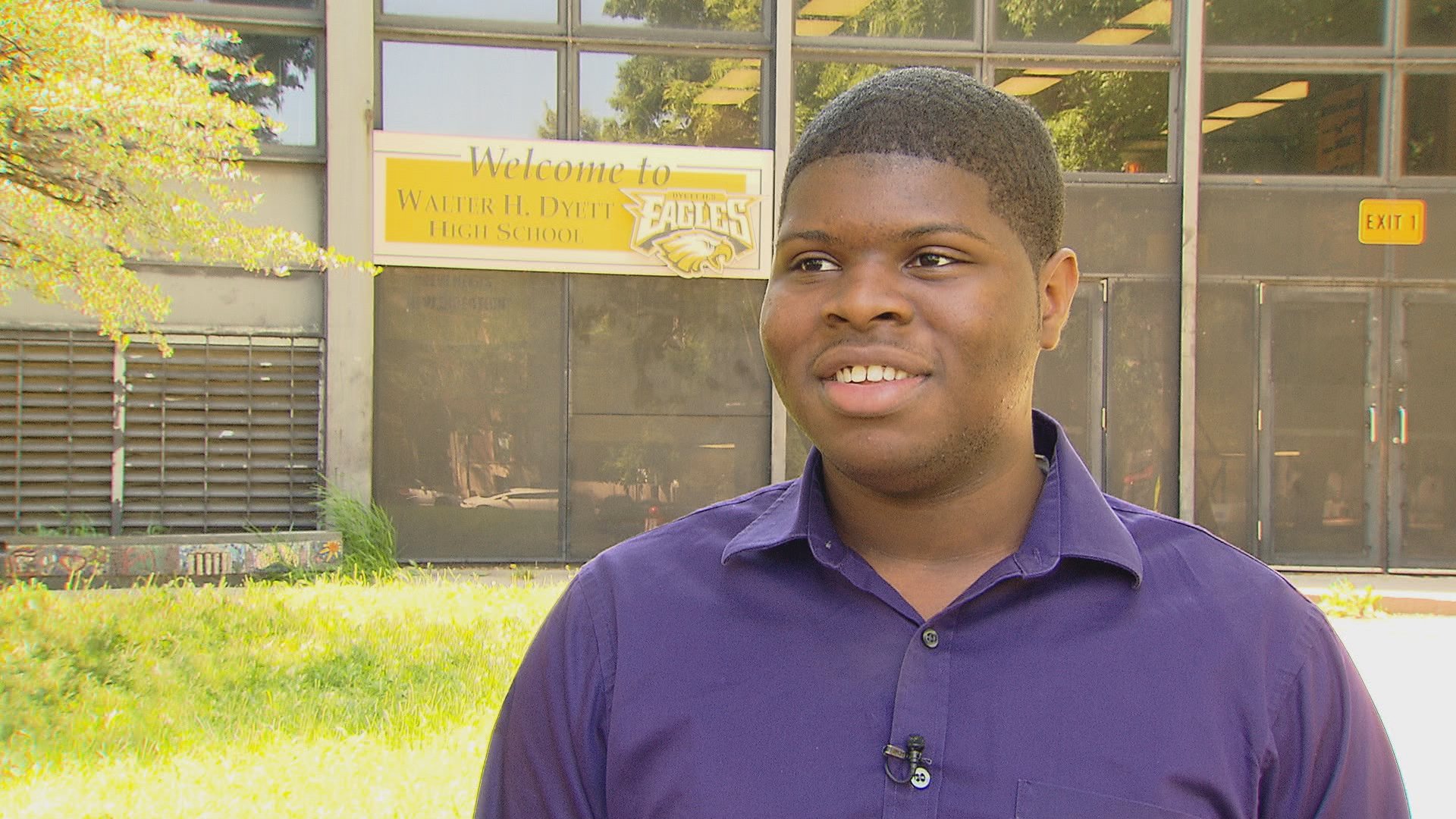
Kenneth BrownKenneth BrownBrandis Friedman: As he enters his freshman year of college, Kenneth Brown can proudly say he graduated at the top of his high school class – a class of 12 students.
Kenneth Brown: It wasn't the senior experience I was expecting it to be.
BF: Chicago Public Schools began phasing out Dyett High School three years ago.
By the time Kenneth’s class graduated, few students remained, and even fewer teachers.
KB: My last year of high school was … we had to take a lot of classes online, we didn't have math, we had to take gym online, art, science online. I would say you probably spent more time in computer lab, than you spent in an actual class with a teacher.
Charles CampbellCharles Campbell
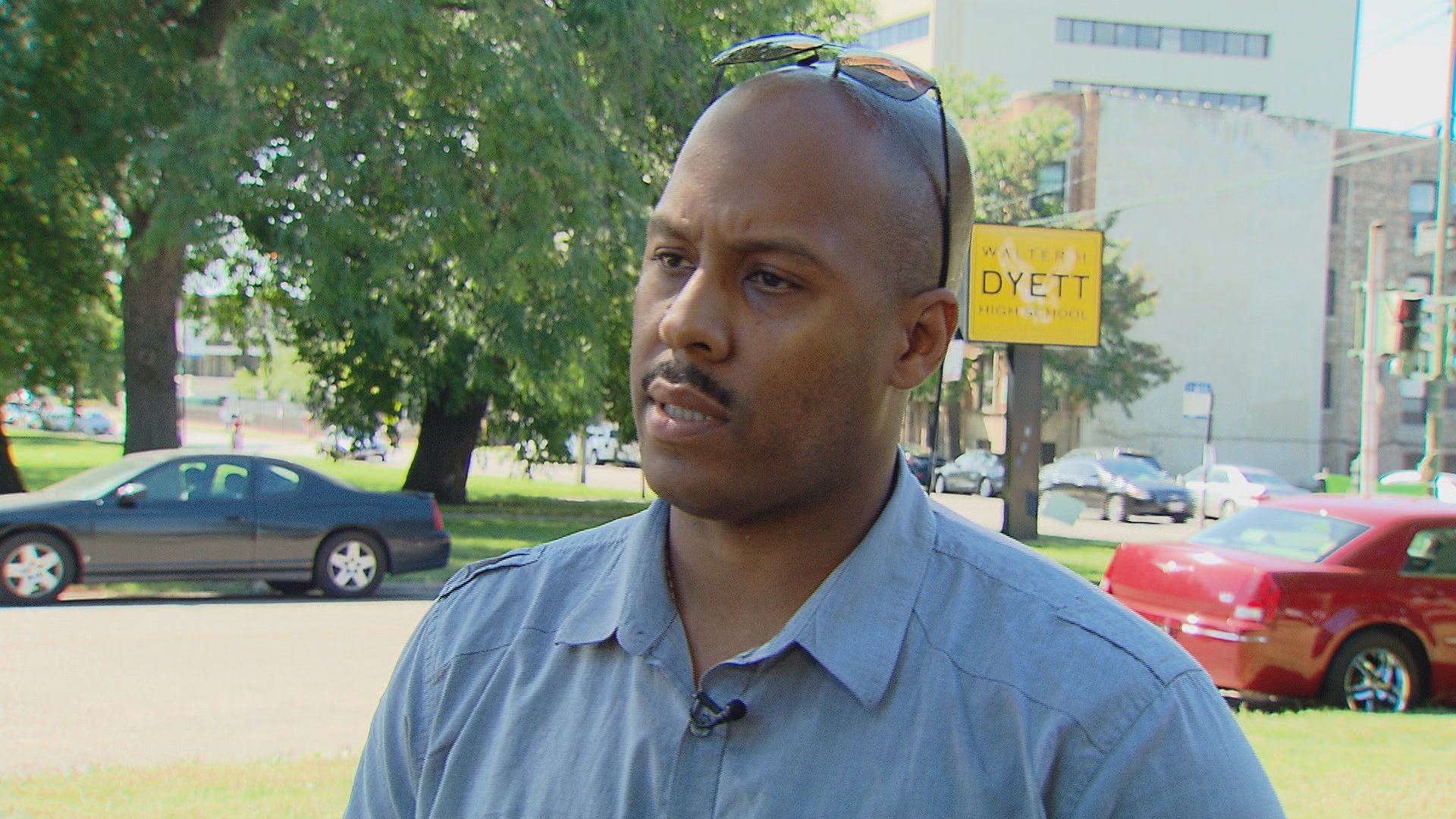
BF: Charles Campbell was the school’s last principal.
Charles Campbell: It was rough. My biggest challenge was battling the low morale, a lot of stakeholders, parents, students, staff felt as though they were forgotten, they were left to the wayside. 
BF: Records found on the district website show Dyett High was chronically underperforming. A level-three school on intensive support for 10 years.
The average ACT score in 2014 was 14.1 -- four points below the district average.
A 2012 CPS presentation on the school’s closing showed that two out of three Dyett students don’t graduate, 15 out of 16 students weren’t meeting standards on state tests, and only 25 percent of students in the boundary area chose to attend the high school.
BF: But none of that has stopped the community from demanding the district reopen and revitalize it.
Jitu Brown: We don't have a stable neighborhood high school in our community. Everything is either selective enrollment or charter. We have a problem with that, because we pay taxes, so why can't we have quality neighborhood schools.
BF: This year, CPS agreed to hear proposals for a new Dyett, and received three.
Among them, a proposal for the Dyett Global Leadership and Green Technology High School, submitted by a group called the Coalition to Revitalize Dyett High School.
The group advocates a high quality, open-enrollment school focused on environmental sustainability and leadership for peace and justice.
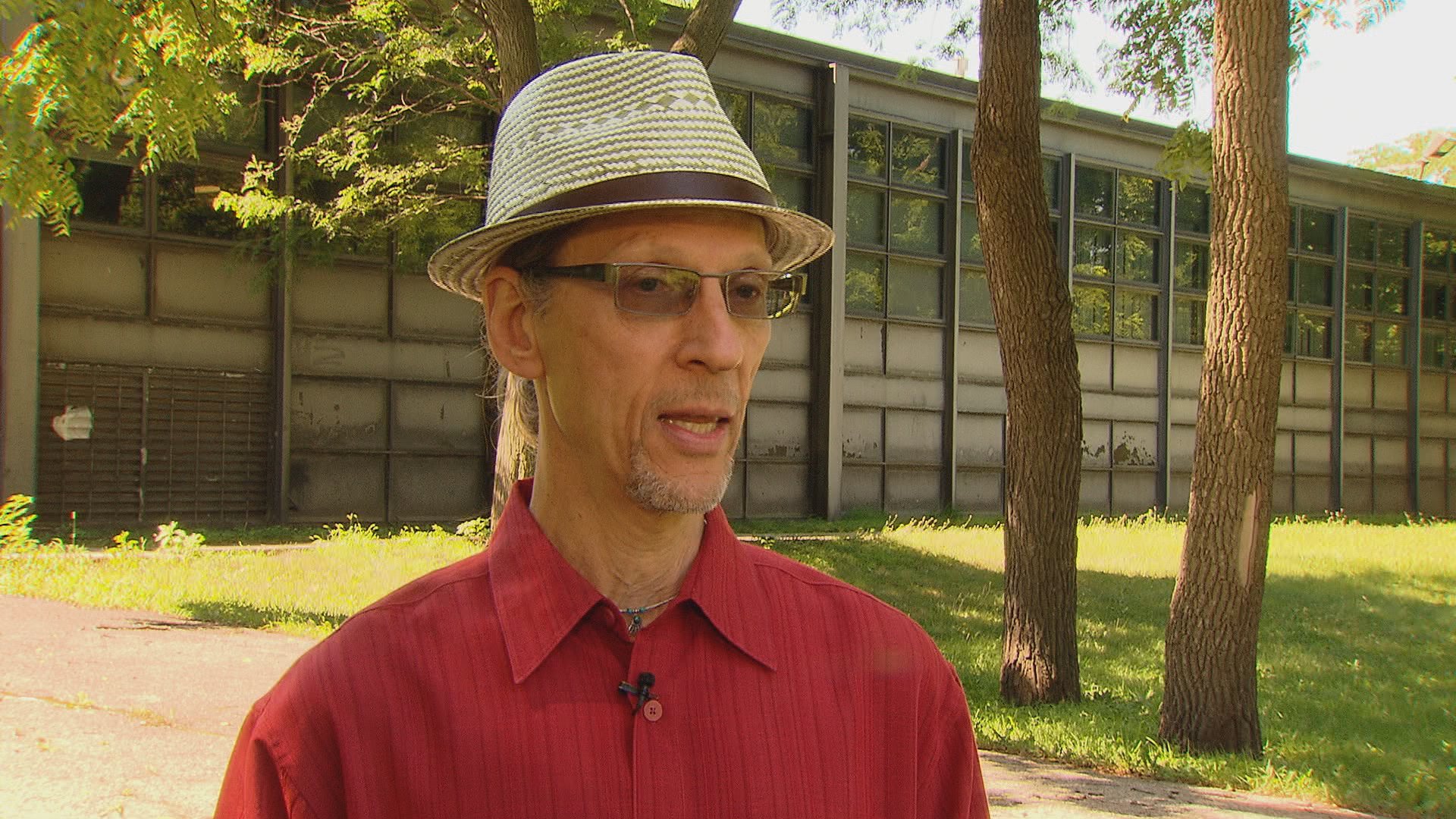
Rico GutsteinRico GutsteinUIC professor Rico Gutstein helped develop the proposal.
Rico Gutstein: It's tied into the idea of green technology because clearly we have economic and environmental ecological disaster facing us on a global scale, so we actually need global leaders who can emerge from the local to the global situation.
BF: Another comes from the arts organization Little Black Pearl Workshop, which already operates a CPS high school at its center in Kenwood.
LBP also teaches thousands of students through summer and after-school programming.
The non-profit proposes an open-enrollment, visual and performing arts high school, where students would also receive college-prep instruction.
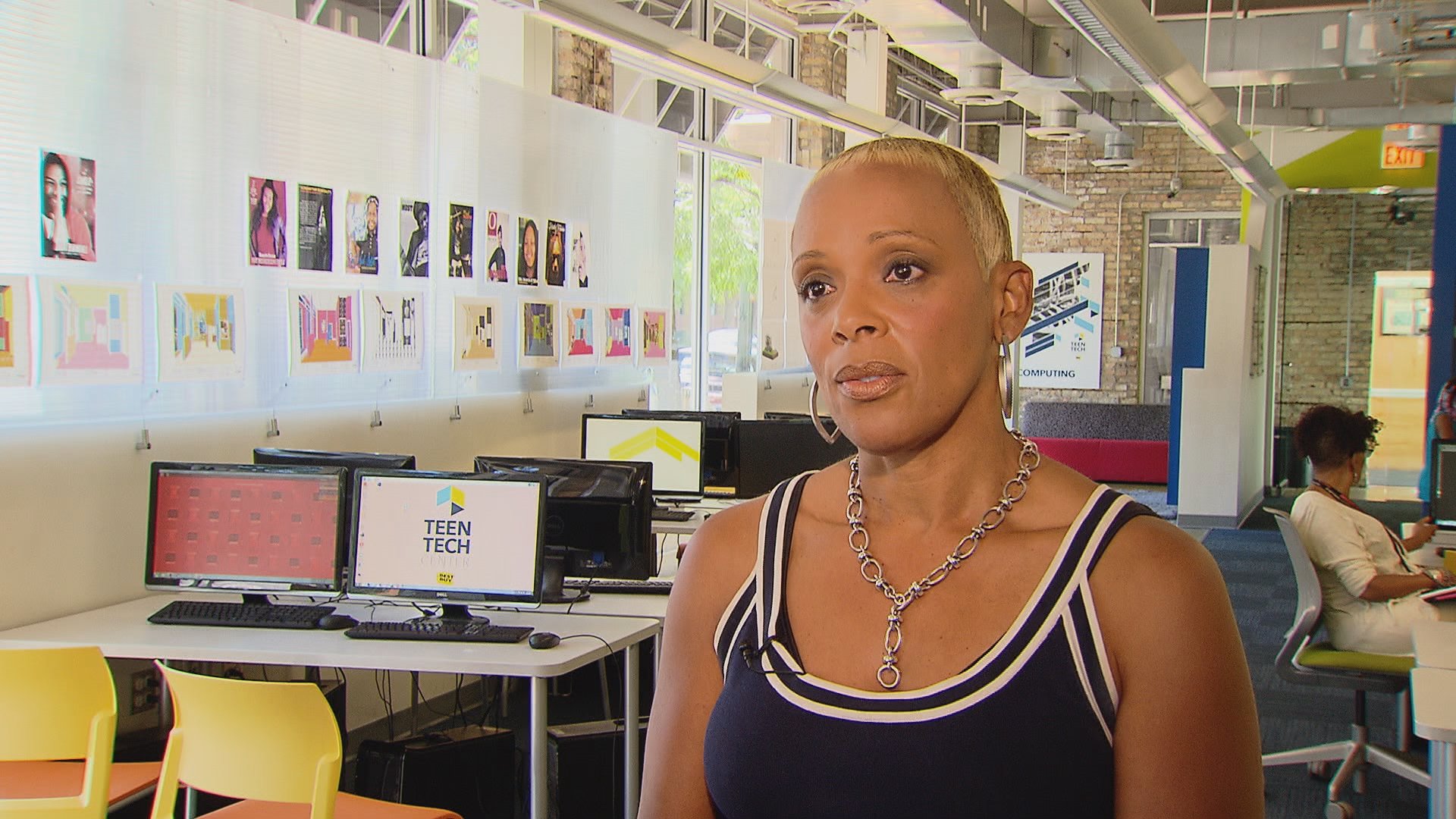
Monica HaslipMonica HaslipMonica Haslip of LBP: Because we know and have been able to see over the years how impactful the arts has been for a lot of students that have been a part of our other programs, our after school programs, summer program, we have artists that are now internationally known artists that came out of Little Black Pearl. We know that given access it creates a whole new world of opportunity for them.
BF: The third proposal comes from Dyett’s former principal, Charles Campbell.
His rebranding idea: The Washington Park Athletic Career Academy – a sports-themed high school using project-based learning to prepare students for college.
CC: Picture being a math teacher trying to teach statistics, but your students are just not getting the concept of statistics. What better way to engage students, [then to] have them compete in a fantasy football league, or a fantasy basketball league. Then you show the student, ‘This is how stats work in real time, this is what general managers get paid six figures to do, to figure out who stays, who they’re going to trade, who they’re going to release, based on statistical performance.’
BF: When Dyett was closed, incoming students in the boundary area were reassigned to Phillips High School, almost two miles away.
But it’s also a level-three school, and it’s been on intensive district support even longer than Dyett, at 19 years.
Map: Click on the icons to see school info, including CPS rating.
It’s why Anne Jones, a mother of four, is planning to send her 14-year-old daughter Tyler and hour away to a school in Little Village, rather than find a closer high school.
Anne JonesAnne Jones
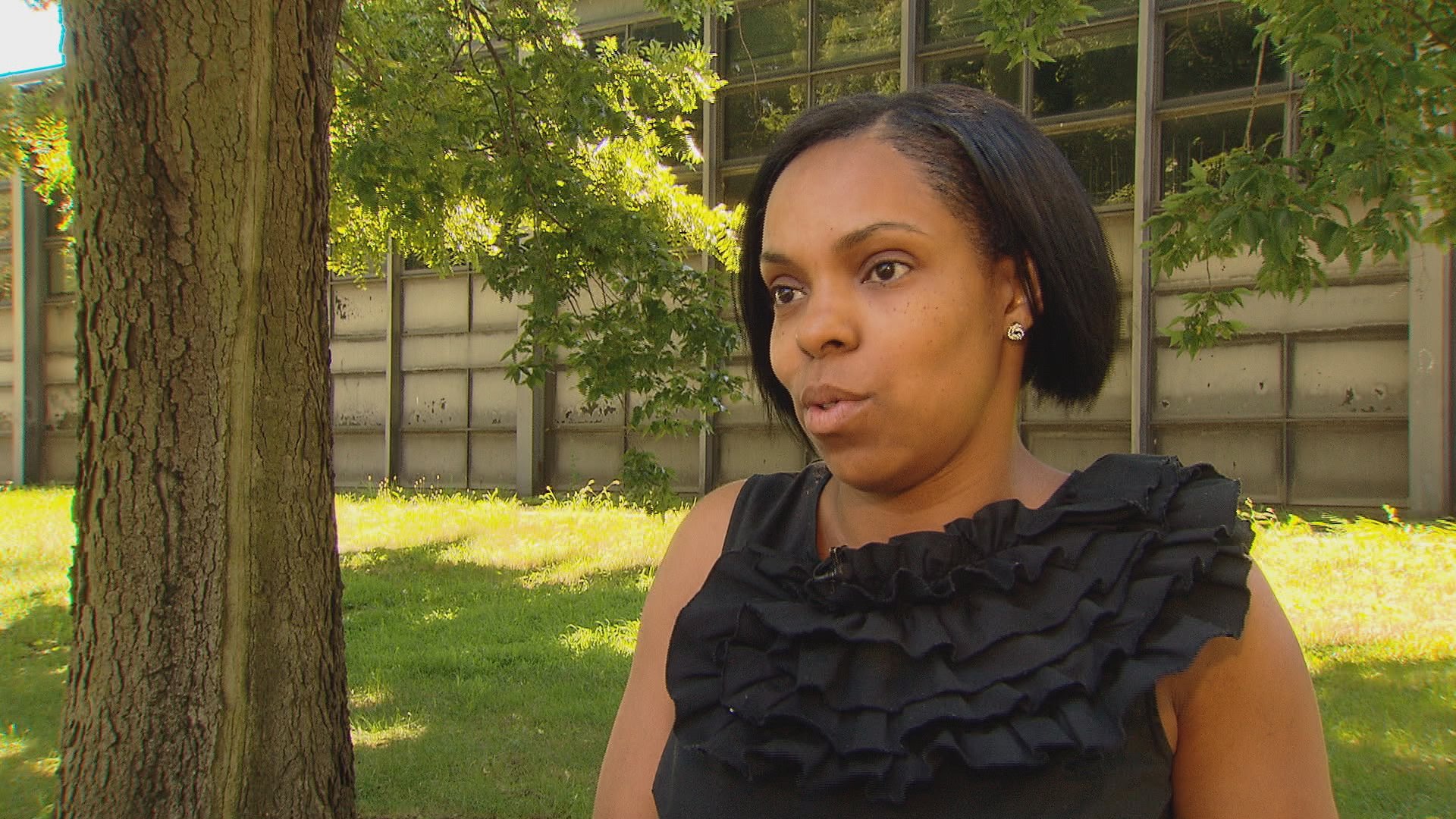
Anne Jones: She's going to commute two hours throughout the day. I'm afraid because of all the killings, children missing. She's not used to that kind of a travel. I'm being forced to introduce her to something she's not even used to.
BF: The district says there are three other CPS high schools nearby that would-be Dyett students can choose from – all open enrollment.
A spokesman says in a statement:
"As CPS continues to work through the RFP process, the new Board and administration want to be sure that they have time to make the right decision for students. Board of Education members and CPS leadership have met with members of the community to discuss the situation many times over the past year and as recently as last week with Board President Frank Clark. As we consider these proposals, we remain mindful of the declining population in the area, which is losing students and already has 12 high schools within a 3-mile radius. We also respect the community’s passion for Chicago’s children, and we will make the best possible decision to give all the children of the city a good education."
Though the people behind those three proposals may differ on the type of school Dyett should become, they can at least agree that the community needs a school on this campus.
For Chicago Tonight, I’m Brandis Friedman.

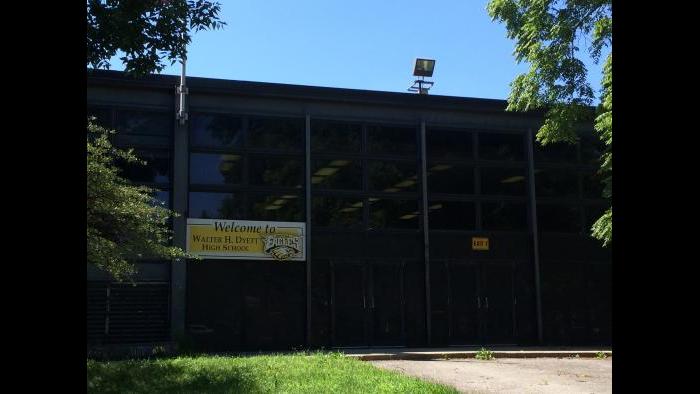
Below, Brandis' photos from a recent trip to Dyett High School and Little Black Pearl Workshop.
 The Fight Over Dyett High School | Chicago Tonight | WTTW: