Latest News and Comment from Education

Thursday, June 19, 2014

After Thousand of Years, #China Changing Mind on #Testing ? #edreform | Cloaking Inequity

After Thousand of Years, #China Changing Mind on #Testing ? #edreform | Cloaking Inequity:


After Thousand of Years, #China Changing Mind on #Testing ? #edreform

2014-06-19 16.03.31
I leave for China tomorrow. I will be accompanying the Teachers of the Year from several states as an NEA Foundation Global Fellow. We will visit schools in the Middle Kingdom over the next eight days.
This will be my third trip to China. My first trip was a six month stay in 1996. I studied Chinese high school students’ achievement motivation as a NIH Fogarty Fellow at the Institute of Psychology in the Chinese Academy of Sciences (A few photos from my summer in China included in this post). My second trip to was in 2004. My visit to Beijing was part of a 16-country Around-the-World trip where we circumnavigated the globe via air during a four week period. Next time you see me in person, ask me to tell you the backstory about the trip.

Julian Vasquez Heilig at Great Wall of China (Shanhaiguan) in 1996
I am looking forward to the 2014 trip. It is an interesting time to visit China. The country is potentially in the midst of an apparent sea change on high-stakes testing. Chinese society has been driven by testing for thousands of years, dating back to ancient times when civil servants were selected based solely on the imperial/civil service examination. While this old exam system was terminated in 1906, the high-stakes testing culture persists and it continues to play a critical role in selecting talents in contemporary Chinese society. The public school environment in China is testing-oriented largely because the sole mechanism of college access for the vast majority of high school students is the national higher education entrance examination. The testing culture cascades down from the higher education entrance examination through all levels of the educational system. As college admission rates determine secondary schools’ evaluation and enrollment, high school teachers often test students via test preparation classes. Since students that gain access to key high schools are more likely to enroll in selective universities, middle school students work hard to score at the top of their class in order to enroll in better high schools. Likewise, elementary school children are tested to determine which middle schools they will attend. Thus, extensive and systematic testing characterizes Chinese students’ entire educational experience.
To sum up, high-stakes test scores are not only the metrics determining students’ advancement from better elementary schools to key secondary schools to selective colleges, but are also determining a schools’ reputations. Thus, it comes as no surprise that teachers are forced to inundate students with testing. One common critique of the excessive focus on testing is that Chinese college students are said to have spectacular test scores but “low ability” (Zhao, 2010).
China’s recent education reform seeks to take the country in a new direction. Central to these reforms is a de-After Thousand of Years, #China Changing Mind on #Testing ? #edreform | Cloaking Inequity:

6/19/2014 – Dirty Secret In The Education Wars

6/19/2014 – Dirty Secret In The Education Wars:


Education Opportunity Network -


6/19/2014 – Dirty Secret In The Education Wars


THIS WEEK: Breaking The School-To-Prison Pipeline … Business Leaders Don’t Know Education … Schools Hit In Recovery … Tests Are For Profits … How To Stop College Debt

TOP STORY

Dirty Secret In The Education Wars: Money Matters

By Jeff Bryant

“The dirty, little secret in America’s education wars is that spending more money on schools is what most people really want – and for good reason, because it really tends to help. Yet what we’ve been seeing in a ‘reform’ agenda that has dominated the debate is an emphasis on anything else but.”
Read more …

NEWS AND VIEWS

Breaking The School-To-Prison Pipeline: Rethinking ‘Zero Tolerance’

The American Prospect

“The first federal measure to implement ‘zero tolerance’ in schools was the Gun-Free Schools Act of 1994 … Districts expanded on Congress’s obligatory punishments to include possession of drugs and alcohol; many began to require one- or ten-day suspensions for minor offenses like cursing or lying to an administrator. The suspension rate soared 87 percent between 1973 and 2006 … Even as most school districts across the country were cracking down in the mid-1990s, a different approach was being tried in Minnesota … As Minnesota’s pilots showed promising results, social-justice groups started pushing for restorative justice … Restorative-justice programs don’t cost a lot to implement … but they do require schools to have sufficient staff. The support staff on which the programs rely – counselors, assistant principals, restorative-justice coordinators – are often the first to go when budget cuts hit.”
Read more …

Business Leaders Lack Knowledge About K-12, Superintendents Say

Education Week

“Just 3% of school superintendents rate business leaders as ‘well-informed’ about public education, and 14% of the survey respondents say corporate leaders are actually misinformed … 95% of superintendents say that businesses are involved in their schools, according to the survey. By a nearly 3-to-1 margin, business efforts to donate money and goods and to support individual students outnumbered deeper engagement … 90% of superintendents who responded to the nationally representative survey believe that business’ engagement leads to a positive impact on education – although only 10% say the impact of that involvement has been evaluated.”
Read more …

Public Schools Are Hurting More in the Recovery Than in the Recession

FiveThirtyEight

“The slow economic recovery is taking a toll on the nation’s public schools… And school districts around the country have used them to hire thousands of foreign teachers … Total school funding fell in 2012 for the first time since 1977 … Adjusting for inflation and growth in student enrollment, spending fell every year from 2010 to 2012, even as costs for health care, pension plans, and special education programs continued to rise faster than inflation … Nearly 90 percent of big-city school districts spent less per student in 2012 than when the recession ended in 2009… The cuts are increasingly hitting classrooms directly.”
Read more …

Why Pearson Tests Our Kids

The Huffington Post

Education blogger Alan Singer writes, “‘Pearson Personalized Learning’ is not about supporting schools; it is about replacing them. And it is about replacing them without any evidence that their products work or any concern for the impact of their products on schools and student learning … Everything is actually organized around the Pearson goal of ‘finding business models for affordable schools’ … If you want to know how Pearson plans to operate, you have to look at McKinsey & Company, a global management consulting firm … The main job of McKinsey is to help companies maintain profitability by closing subsidies, selling assets, shifting production, and laying off workers … A fair question to ask is, do we want the business model that led to the Eron scam and these other corporate disasters employed in operating American schools?”
Read more …

College Is Ruining Lives! How To Stop Student Debt’s Paralyzing Spiral

Salon

“Wrangling over student loans and interest rates and refinancing obscures the long-term vision – public colleges and universities should be free to attend. Or at least as close to free as possible … This idea is not far-fetched … That’s the long-term vision. In the meantime, there’s a seemingly small fix that would significantly relieve student debt burdens and reduce defaults: eliminating the student loan servicer middleman … There is no real need to subcontract out monthly payment collection of direct student loans to servicers … The Education Department’s contracts with student loan servicers expire this month. Instead of renegotiating the terms of the contract, another one of the president’s executive orders … the government should cancel its contracts with the company formerly known as Sallie Mae, now called Navient.”
Read more …

NYC Educator: Little? Or Nothing?

NYC Educator: Little? Or Nothing?:


Little? Or Nothing?

There's a deal in place with Governor Cuomo to shield some teachers from Common Core junk science ratings. This is positive for those who are rated ineffective or developing due to Common Core junk science. Regrettably, those who are rated ineffective or developing due tonon-Common Core junk science are out of luck.

John King isn't worried about it because only 1% of teachers were rated ineffective last year. Of course, NYC has 28% of the state's teachers and wasn't rated at all, so that's a significant portion to overlook. But John King's not worried about that. After all, if statistics mattered to John King, he'd be worried that 70% of our children were declared failures by this program whose merits he praises at every opportunity. (Funny how he sends his own kids to a Montessori school, where they won't benefit from this incredible program.)

This is yet another band-aid. First, we temporarily shield the kids from CCSS high stakes. Then, we temporarily shield the teachers from CCSS high stakes. With the incredible statewide anger we saw the King face last year, someone had to do something. The problem is, there's this underlying assumption that the problem is in the rollout. It's the execution, not the program itself. What is this based on?

There's never been any proof that Common Core has any validity whatsoever. It's never been field tested. Perhaps the most extensiveNYC Educator: Little? Or Nothing?:

6-18-14 The Whole Child Blog — Insights on Making a Difference

Home Page — Whole Child Education:


Klea Scharberg

Insights on Making a Difference

Making a Difference - ASCD Educational LeadershipTeachers work every day for the benefit of their students. Learn how other educators make a difference in students' lives and learning in a special summer issue ofEducational Leadership and get inspired. This digital issue gives you instant access to stories about individuals, teams, schools, and even a U.S. state that are passionate about teaching and learning.
In her "Perspectives" column, Editor-in-Chief Marge Scherer reminds us to remember why we do what we do. She writes,
With so much energy devoted all year long to tackling problems, summer can be a good time to recall why you went into education in the first place, reflect on your many accomplishments, and think about the good you have done and will do in your life as an educator. It's not about self-congratulation, but about looking inside yourself for the rejuvenation and answers only you can find.
Articles in the issue include
View the insights of these and other contributors to the issue in the infographic (PDF) below.


6-18-14 The Whole Child Blog — Identifying Technology to Support Differentiation
The Whole Child Blog — Whole Child Education: THE WHOLE CHILD BLOGIdentifying Technology to Support DifferentiationJune 18, 2014 by ASCD Whole Child BloggersPost written by Melinda Sota, Ben Clarke, Nancy Nelson, Christian Doabler, and Hank FienEducational technology is compelling, largely because of its promising capability in enabling differentiated instruction. In a classroom of 30 students wit

6-19-14 Ed Notes Online

Ed Notes Online:


"Flowers for Algernon" Author/Teacher Daniel Keyes - and My Tenuous Connection
Daniel Keyes, the author of “Flowers for Algernon,” the story of a man with an I.Q. of 68 who temporarily becomes a genius after surgery — a book that inspired the film “Charly,” starring Cliff Robertson — died on Sunday at his home in South Florida.  He was 86.... NY Times--- He told the Japanese newspaper The Daily Yomiuri in 1999 that the character of Charlie occurred to him while he was teachi


Randi Influence Over NYSUT and Cuomo Endorsement? Peter Goodman vs Mercedes Schneider
Not endorsing is not the same as opposing and the majority of NYSUT local presidents oppose Cuomo.... Beth DiminoThere are some interesting posts up at Education Bloggers Network Central (bloggers plugged into the Ravitch network).Mercedes Schneider, a Randi Weingarten critic based in Louisiana, blogged about Randi's support for anti-teacher, ed deform Conn. Gov Malloy: AFT’s Weingarten Supports M


6-18-14 Ed Notes Online Week
Ed Notes Online: What's Up Today, June 18, 2014: Jose Vilson, NYCEducator on Class Size, RBE on Abusive PrincipalsA quick reminder about tonight's: MORE, Change the Stakes Sponsor Jose Vilson Book Conversation in InwoodStill in Cape Cod at FIRST robotics conference so I can't make it. (I have so much to write about being with hundreds of people from all over the world and most states. And if your


Choosing Democracy: Local Control Funding and Sac City Unified Board

Choosing Democracy: Local Control Funding and Sac City Unified Board:


Local Control Funding and Sac City Unified Board

Sacramento City Unified Board meeting tonight.  6 PM. Serna Center.


At the June 5 meeting, the Community Priorities Coalition presented the board with alternatives.
Funding of California’s k-12 public education system is changing fundamentally.  Some schools will get much more money to educate kids. The centerpiece of the change is the Local Control Funding Formula, designed to send additional funds to districts where  “the need and the challenge is greatest.”  The law requires that  parents, students, teachers, and other community members be involved in the process of deciding how new funds are spent. Ed Source has an excellent guide to these changes.

    Sacramento City Unified’s plan for Local Control Funding is here.
   LCAP Timeline and Process- Within a PowerPoint presentation, which the district provides on its website, SCUSD outlines its LCAP development process, Community Planning Process, timeline, and lists potential community partners to engage with in LCFF implementation.
            The following was submitted to the Board on June 5. 
 We, the undersigned organizations, write to respectfully request your support for the consideration of these community needs into the district’s draft LCAP. These issue areas represent the concerns of our community members as found in our conversation with them through community town halls and our own surveys.
1)   Class size adjustments on select high-need schools – beginning with grades K-3 with gradual progress up the grade scale base on three years LCAP implementation
2)   Culturally competent professional training that would enhance school climate on diverse schools and create effective restorative justice and disciplinary policies for students
3)   Afterschool programs that are design to improve class performance and further classroom lessons

The passage of the Local Control Funding Formula (LCFF) provides SCUSD with a unique opportunity to be innovative in the way it addresses the concerns of its high-need students and schools. We believe that this first year of the LCAP is critical and will set strong precedence for the designs of LCAP in the coming years.
Organizations:  Black Parallel School Board, Hmong Innovating Politics, Hmong Mein Lao Community Action Network, La Familia Counseling Center, Making Cents work, People Reaching Out, Area Congregations Together, Democracy and Education Institute, and more.

    SCUSD did not incorporate the suggestions of the Community Priority Coalition to focus on class size reduction, changes in discipline, and faculty in service.  Instead, they propose to use the extra funds to finance the programs they already support.  In this the SCUSD board relies on the district staff.  That is, they plan to continue what they Choosing Democracy: Local Control Funding and Sac City Unified Board:

Would You Recognize Real Parent and Community Engagement If It Jumped Up and Bit You on Your Butt?


Would You Recognize Real Parent and Community Engagement If It Jumped Up and Bit You on Your Butt?


Tonight SCUSD has an opportunity to support real parent and community engagement and authorize a New Charter School at the old Joseph Bonnheim Elementary site. The Plan has the support of students, parents and community leaders. 
From SacBee article Parents want to convert closed Sacramento campus into charter school "A group of parents Thursday night will urge Sacramento City Unified trustees to approve a charter school at Joseph Bonnheim Elementary, one of seven campuses closed last year due to falling enrollment.
The petition – initiated by parents late last year – seeks to educate more than 320 K-6 students starting in the fall. The charter school would hire district teachers, administrators and classified staff subject to collective bargaining. That approach helped parents win support last month of the Sacramento City Teachers Association, which historically has been critical of charter schools.
Many backers of New Joseph Bonnheim Community Charter School opposed the elementary school closures, which predominantly affected lower-income neighborhoods with disadvantaged students. Before Bonnheim’s closure, 94 percent of students at the south Sacramento campus qualified for free or reduced-price meals.
The school’s theme would be based on agriculture, drawing from the industry in the region. It touts support from agricultural organizations and educational institutions. The charter school also would pursue a “body-brain approach to teaching” that incorporates physical activity into academic exercises.
The educational plan, according to the petition, mirrors the Yav Pem Suab Academy on South Land Park Drive, which includes a Hmong-language component. The academy was founded by Dennis Mah and approved as an independent charter in the district in 2010. Mah has offered to lend $300,000 in startup costs and to work for free at Bonnheim, he said."
So what is the problem?

 New Joseph Bonnheim proponents initially submitted an application in December, but district staff recommended that the board reject the school. They said petitioners failed to adequately describe challenges facing the school’s target population, show an understanding of student needs or define approaches that would meet those needs. The board at the time voted to table the petition so that it could be retooled for reconsideration.
The latest petition has found similar district resistance. In a report Friday, staff reviewers found the proposed educational program lacked clarity in governance and hiring matters. And they repeated warnings that the petitioners are unlikely to succeed in launching the charter school and did not meet state Education Code requirements in explaining programs.
My question is why is "STAFF" so opposed to this type of Parent and Community Engagement. You would think that if you could have this level of support for any school that you would find a way to make it work. Not keep saying this is wrong and that is wrong.


So I say to the SCUSD Board, take a chance on Real Parent and Community Engagement and grant this petition.


Read more here: http://www.sacbee.com/2014/06/18/6494392/parents-want-to-convert-closed.html#storylink=cpy


Read more here: http://www.sacbee.com/2014/06/18/6494392/parents-want-to-convert-closed.html#storylink=cpy

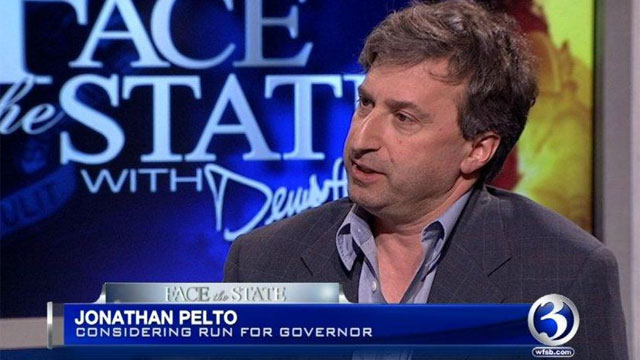
6-19-14 Wait What? - Jonathan Pelto: Gubernatorial Candidate and A Really Nice Guy

Wait What?:


Wait What? 


Malloy fails to make a real difference with home foreclosure crisis

Search the state database of the hundreds of press releases that Governor Malloy has over the past three and a half years and you’ll find numerous PR documents bragging that the Malloy administration was successfully fighting to protect Connecticut families from the predatory foreclosure practices of banks and the lawyers that are working overtime to […] The post Malloy fails to make a real differ


6-18-14 Wait What? - Jonathan Pelto: Gubernatorial Candidate and A Really Nice Guy
Wait What?: Wait What? Insurance Executives Win; Citizens and Mental Health Advocates LoseAt the end of May, Governor Dannel “Dan” Malloy stunned healthcare advocates when he vetoed an important bill that would have required insurance companies to provide data about how much substance abuse coverage and related mental health care they are actually providing Connecticut residents. The legislation w


Unidentified Bloggers Defending Themselves Anonymously |

Unidentified Bloggers Defending Themselves Anonymously |:


Unidentified Bloggers Defending Themselves Anonymously


“People should stand behind their own words…that’s doubly-true of people in public life.”
For those of you who missed it, about two weeks ago Diane Ravitch posted a piece about (and including) a set of emails exchanged between Diane, Raj Chetty, and me about Chetty et al.’s now infamous study, the study at the heart of the recent Vergara v. California win (see Diane’s post here). In the comments section of this blog post, a unidentified respondent by the name of “WT,” as in “What The…,” went after me and my review/critique of Chetty et al.’s study, also referenced in this same post. See WT’s comments, again here, about 40 comments down: “WT on June 2, 2014 at 4:00 p.m.”
Anyhow, it became clear after a few back-and-forths that “WT” was closer to this study than (s)he seemingly wanted to expose. Following these suspicions, I wrote that I was at that point “even more curious as to why the real “WT” [wasn't] standing up? Who [was] hiding behind (a perhaps fictitious) set of initials, or perhaps an acronym? Whoever “WT” [was] seem[ed] to care pretty deeply about this study, not to mention know a lot about it to cite directly from [very] small sections of the 56 pages (something I for sure would not be able to do nor, quite frankly, would I take the time to do given I’ve already conducted two reviews of this study since 2011). Might “WT” [have been] somebody a bit too close to this study, hence the knee-jerk, irrational reactions, that (still) lack[ed] precision and care? Everyone else (besides Harold [another commentator on this blog post]) ha[d] fully identified themselves in this string. So what [was to say] WT?”
Well, “WT” said nothing, besides a bunch of nothingness surrounding his anonymous withdrawal from the conversation string. Perhaps this was Chetty as “WT?” Perhaps not, but I’d bet some serious cash whoever “WT” was was pretty darn close to the Chetty et al. study and didn’t want to show it.
Sooo…now getting to the best part of all of this and how this has, in an interesting and similar turn of events, evidenced itself elsewhere. This video just came out on our local Unidentified Bloggers Defending Themselves Anonymously |:

Almost One Half of Americans Haven’t Heard of Common Core | Truth in American Education

Almost One Half of Americans Haven’t Heard of Common Core | Truth in American Education:


Almost One Half of Americans Haven’t Heard of Common Core

Filed in Common Core State Standards by  on June 19, 2014 • 0 Comments
public-polling.jpgMSNBC/Wall Street Journal released a poll that shows almost one-half of Americans have not heard of the Common Core State Standards.  The poll was conducted between June 11-15 of 1000 adults.  The margin of error is 3.1% +/-.
47% of Americans said they have not seen, read or heard news about the Common Core.  22% said they have heard about it a lot.  30% have said they have heard about this some. 1% said they were unsure.
Now keeping in mind 48% said no or that they were unsure a follow-up question was asked:
Just to make sure that everyone has the same information let me describe the Common Core standards in a bit more detail. The Common Core standards are a new set of education standards for English and math that have been set to internationally competitive levels and would be used in every state for students in grades K through 12.
Based on this information, do you support or oppose the adoption and implementation of the Common Core standards in your state?
59% responded said they supported.  31% said they opposed.  27% strongly supported it while 20% strongly opposed.  First this is a positive spin on the Common Core.  There is zero proof that these standards have been set to internationally competitive levels, but there is evidence that they haven’t been.  Secondly, when 48% of those surveyed know nothing about the Common Core it Almost One Half of Americans Haven’t Heard of Common Core | Truth in American Education:

6-19-14 LA School Report - What's Really Going on Inside LAUSD

LA School Report - What's Really Going on Inside LAUSD (Los Angeles Unified School District):


Vergara aside, CA lawmakers considering bill to expand tenure
Lorena Gonzalez, San Diego Democrat While much of the state waits out the appeal process in Vergara v. California, one member of the California assembly is moving forward with an effort to expand tenure to teachers in smaller school districts who have no tenure at all. The state law that grants tenure after two years was one of the five laws struck down in Vergara. A bill sponsored by Lorena Gonza


Analysis: CA’s season of change (maybe) for public education
Here’s one vision of the future for California public schools: Every teacher is effective. Schools are free of child molesters. Schools provide quality instruction time to every kid in every classroom. These are all possibilities, judging from this season of potential change for the state’s public schools. In recent weeks, a trio of separate but related actions has taken aim at the state in effort


Will water and school bonds contend on November ballot?
Via KQED News | By John Meyers The safe money, so to speak, in California politics for years has been that voters are usually happy to approve long-term government borrowing. In some ways, it has seemed like free money. But in the post-recession era, where debt has become a political hot potato and the incumbent governor has made debt reduction his mantra, a statewide bond measure is a bit more of


Morning Read: Immigrant education key to economy health
Report: Economic prosperity relies on boosting immigrant education Home to one-quarter of the nation’s immigrants and a top-destination for incoming refugees, California must significantly improve educational outcomes for immigrant youth if the state – and the nation – are to stay economically competitive, according to a new report. EdSource Appeals tie up teacher misconduct cases Two years after


6-18-14 LA School Report - What's Really Going on Inside LAUSD
LA School Report - What's Really Going on Inside LAUSD (Los Angeles Unified School District): Morning Read: Legislature votes on school bond bill todayState school bond faces critical vote today With a key committee vote set for today on legislation that would place a $9 billion, statewide school facilities bond on the November ballot, one group backing the proposal is already nearly a third of th