Six years ago, in another somewhat futile attempt to reduce the backlog of resources I want to share, I began this occasional “” post where I share three or four links I think are particularly useful and related to…ed tech, including some Web 2.0 apps. You might also be interested in THE BEST ED TECH RESOURCES OF 2019 – PART ONE , as well as checking out all my edtech resources . You might also w
Each year, I re-post my favorite blog posts, and then collect the links into one. This post is for my favorites from the first six months of 2019. You can see my choices for each of the past ten years here. And you can also see a list of my My All-Time Favorite Posts! I’ve also been highlighting some of the “best-of-the-best” in the “A Look Back” series. Here are My Favorite Posts In 2019 — Part
This blog has recently gained many new readers. Because of that, I thought it might be worth sharing a “A Look Back” where I periodically share my choices for the most important posts from the past twelve years. You can also see all of my choices for “Best” posts here . geralt / Pixabay I publish a lot of “Best” lists. You can see all 2100 of them here . Are my choices for the “Best of the best”
Andrew-Art / Pixabay You may have seen recent media attention to protests by Native Hawaiians against a decision to build a telescope there. I thought it was definitely worth a “Best” list, especially with the The International Day Of The World’s Indigenous People coming up. I’ll be adding this list to The Best Sites For International Day Of The World’s Indigenous People . You might also be inter
geralt / Pixabay I’ve just mailed out the August issue of my very simple free monthly email newsletter . It has over 3,000 subscribers, and you can subscribe here . Of course, you can also join the eighteen thousand others who subscribe to this blog daily. Here Are 8 Ways You Can Subscribe For Free…
They Shouldn’t Have to, But What Are Ways Teachers Can Raise Private Money for Their Classroom? is the new question-of-the-week at my Education Week Teacher column. Feel free to leave responses in the comments here or there…
I’m fairly active on Pinterest and, in fact, have curated 18,000 resources there that I haven’t shared on this blog. I thought readers might find it useful if I began sharing a handful of my most recent “pins” each week (I’m not sure if you can see them through an RSS Reader – you might have to click through to the original post). You might also be interested in My Seven Most Popular Pins In 2018
Clker-Free-Vector-Images / Pixabay TED-Ed has just published a lesson and video on cannibalism that will likely be high-interest in secondary classrooms:
I regularly highlight my picks for the most useful posts for each month — not including “The Best…” lists. I also use some of them in a more extensive monthly newsletter I send-out. You can see older Best Posts of the Month at Websites Of The Month (more recent lists can be found here ). You can also see my all-time favorites here . I’ve also been doing “A Look Back” series reviewing old favorite
Here’s my regular round-up of new “The Best…” lists I posted this month (you can see all 2,061 of them categorized here ): THE BEST RESOURCES, ARTICLES & BLOG POSTS FOR TEACHERS OF ELLS IN 2019 – PART ONE THE BEST SCIENCE SITES OF 2019 – PART ONE THE BEST COLLECTIONS OF DEMOCRATIC PRESIDENTIAL CANDIDATES’ POLICY POSITIONS THE BEST ARTICLES (& BLOG POSTS) OFFERING PRACTICAL ADVICE & RESOURCES TO T
As regular readers know, at the end of each week I share the five most popular posts from the previous seven days. I thought people might find it interesting to see a list of the ten most popular posts from the previous thirty days. You might
State Takeovers: Radical Seizure of School Districts vs. Organic, Community Grounded School Improvement
This blog will take a one-week, mid-summer break. Look for a new post on Monday, August 5.
We are in the midst of a wave of state school takeovers.
On Tuesday evening In Providence, Rhode Island, the state Council of Elementary and Secondary Education granted the authority for Rhode Island’s recently appointed State Education Commissioner, Angelica Infante-Green, to take over the Providence Schools. A new and scathing report by a team from John Hopkins University had criticized the current operation of the school district—already under mayoral governance. For the Providence Journal,Linda Borg reports: “Under a 1997 statute, Infante-Green now has the power to revamp the teachers’ contract, revise how the school district is governed, even make decisions over hiring and firing… Infante-Green also confirmed that she will hire a superintendent to takeover the schools by early November. In fact, she is already speaking with several individuals, although no one has been named.” Diane Ravitch provides some background about Angelica Infante-Green: “Infante-Green has never run a school district. She has never been a school principal. She entered education through Teach for America, then ran bilingual programs in Bloomberg’s (NYC) Department of Education. She belongs to Jeb Bush’s Chiefs for Change.”
In Benton Harbor, Michigan, Governor Gretchen Whitmer continues to threaten to close Benton Harbor’s high school or take over the school district. In a commentary for Bridge Magazine, Tom Watkins, the state’s school superintendent from 2001-2005 warns that shutting down the high school or taking over the district won’t solve the core problem: “The Benton Harbor school crisis is ground zero for a dysfunctional educational funding model and a state government that has been pretending to address the problem going back decades… If you have a hole in your roof, pretending to fix it does not keep the rain out. Our system of funding our schools is fundamentally, structurally unsound….” In a recent podcast (link includes a transcript), the education writer Jennifer Berkshire and Massachusetts education historian Jack Schneider add that Michigan’s system of cross-district open enrollment conspires with structural racism to undermine poor school students by driving out students, each one carrying school funding away from places like Benton Harbor. The system is set up to CONTINUE READING: State Takeovers: Radical Seizure of School Districts vs. Organic, Community Grounded School Improvement | janresseger
Emily Schultz is the director for state advocacy and policy with the National Alliance for Public Charter Schools [NAPCS]. Lawmakers consulted her as they shaped the education reform bill recently signed into law that allows for the establishment of charter schools in West Virginia for the first time in the state’s history.
WV legislators consulted with national-level charter school advocacy director, Emily Schultz, for a bill on charter schools in WV.
The question is, what charter school notches does Schultz have in her corporate-modeled, school choice belt as evidence that her advice is based upon actual success in establishing charter schools?
WV Public Broadcasting includes this brief bio for Schultz, which links to her NAPCS bio:
Emily Schultz is the director for state advocacy and policy for the National Alliance for Public Charter Schools. Prior to joining the National Alliance, she served as the executive director of the Alabama Coalition for Public Charter Schools.
Emily started her career in education as a second-grade teacher at Cascade Elementary in Atlanta through Teach for America. She is an Alabama native and has an undergraduate degree in Political Science and Educational Studies from Carleton College, and a Master in Education Policy from Stanford University.
Shanker Blog: The Role of States in Teacher Pay Gaps
We recently published a research brief looking at gaps in pay between teachers and comparable non-teacher professionals. These gaps are sometimes called “teaching penalties.” The brief draws on data from the School Finance Indicators Database (SFID), a collection of school finance and resource allocation measures published by the Shanker Institute and the Rutgers Graduate School of Education.
The first part of the brief presents our estimates of teaching penalties, by state, for young (age 25) and veteran (age 55) teachers. We find that the gaps between teachers and similar non-teacher professionals range between 5-10 percent in states like Pennsylvania and Montana to 35-40 percent in Arizona, Oklahoma and Colorado (the latter three are all states in which there were recent major teacher strikes). To be clear, these estimates do not include benefits, although our rough calculations (discussed in the brief) suggest that the inclusion of benefits would not come close to closing these gaps in most states.
Our primary focus, however, is on the relationship between these teaching penalties and states’ school finance systems.
Specifically, we find a significant relationship between the size of the penalties and adjusted state K-12 spending. In other words, states that spend more exhibit smaller gaps. We find a similar relationship between the penalties and states’ fiscal effort, which measures how much of their total “economic capacity” they spend on K-12 education – i.e., states that put forth more “effort” tend to have smaller gaps.
On the one hand, these findings are not surprising. A large proportion of state education spending goes to teachers’ salaries. So, teachers will tend to be better-paid in states that spend more, and will therefore earn wages that are more competitive with those of their non-teacher counterparts. Moreover, to be clear, we do not take any position on how additional funds to improve teacher pay, if allocated, should be distributed (e.g., across the board versus targeted raises).
On the other hand, our results illustrate a few important ideas underlying the eternal debates about the adequacy of teacher pay, debates that have gained new momentum in the wake of a recent proposal from a Democratic presidential candidate to supplement teacher pay with federal funds.
First, and most obviously, raising teacher pay to a more competitive level will require greater resources from some states than from others. Our results indicate that teacher/non-teacher pay gaps are substantial in virtually all states, but the magnitude of the problem varies considerably by state.
Second, policy matters in school finance when it comes to improving teacher pay. Teaching penalties vary between states for a variety of reasons, some of which may be peripheral to education policy – e.g., the composition of non-teacher workforces, collective bargaining laws, etc. But it is no accident that higher-effort, higher-spending states tend to have smaller teaching penalties.
Third, and perhaps most importantly, what we’re showing here, put simply, is that some states are constrained in how much they can pay their teachers, whereas others seem to underpay teachers by choice – i.e., by refusing to raise sufficient revenue to properly fund their school systems.
Mississippi, for example, exhibits a large teaching penalty – teachers in that state earn wages that are 23-27 percent lower than their non-teacher counterparts', depending on age. But that’s principally because Mississippi’s economy (economic capacity) is small, and despite their relatively high fiscal effort, they have trouble raising a lot of revenue. Put differently, Mississippi devotes a relatively large share of its economy to K-12 education, but its economy is so small that spending falls short.
By contrast, there are a number of other states, such as Arizona, Colorado and North Carolina, in which teaching penalties are among the largest in the nation, not because of a lack of economic capacity, but rather because these states put forth relatively low effort. That is, revenue – and therefore teachers’ salaries – is low due in part to deliberate policy choices.
From this perspective, regardless of how any federal efforts to improve teacher pay are distributed within states, we strongly recommend that they are designed to incentivize improvement in states’ funding systems.
For instance, priority should be given to helping states like Mississippi, which is putting forth effort but falling short due to economic constraints. When it comes to low-effort states, however, federal funds should be partially contingent on improvements to finance policy in these states.
Low teacher pay – and insufficient education funding, in general – are due to state-level choices and the ultimate focus should therefore be on state-level reform. The federal government should not be subsidizing states that can help themselves but have refused to do so.
This blog post has been shared by permission from the author. Readers wishing to comment on the content are encouraged to do so via the link to the original post. Find the original post here:
Additional Email Reveals More Deception, Hiding Facts and Fiscal Mismanagement From the Public
District aware of $7 million per year windfall due to undercounting students on April 1,
but pushed ahead with layoffs in May and higher class sizes for students
Link Available Hereto the Sacramento City Teachers Association Website
Sacramento, July 25, 2019–A recently-obtained email from Sacramento City Unified School District (SCUSD) Superintendent Jose Aguilar – in addition to those released last week – shows a growing scandal at the district.
Emails, sent in March, discovered by the Sacramento City Teachers Association (SCTA) through a public documents request, released last week, show that the Sacramento City Unified School District (SCUSD) ignored warnings from a state of California fiscal monitor about false and misleading budget data.
An additional email, dated April 1, also discovered by SCTA, from Aguilar to Sacramento County Education Superintendent David Gordon shows that top SCUSD officials knew as early as April 1 that they had undercounted enrollment by 730 students, resulting in $7 million in additional funds available in each of the next two school years, and in subsequent years.
Despite availability of these funds, Aguilar and SCUSD officials knowingly deceived the community, including some school board members, about its financial condition. The misleading data was used to justify important decisions, including the layoff of hundreds of teachers and other school employees in May. Hundreds of teachers and staff were sent pink slips. The district refused to honor its contract with SCTA resulting in a strike by educators.
Later the district acknowledged that instead of a projected $54 million negative ending fund balance for 2020-21, it would have a surplus of $15 million—a $69 million turnaround.
In March, Mike Fine of the state of California’s Fiscal Crisis and Management Assistance Team wrote in an email to SCUSD Superintendent Jorge Aguilar and board President Jessie Ryan that“[Y]our staff has again demonstrated that they don’t have the capacity or willingness to produce accurate data.” Sacramento Mayor Darrell Steinberg also was copied on the email correspondences.
Fine informed SCUSD officials in writing that he has “no confidence’ in the district’s business staff. At the time these emails were written district officials had claimed that SCUSD was on the brink of a state takeover.
The additional emails and those released last week indicate that district officials knew much earlier that the information that they were sharing with the community was not accurate.
With 40,000 students, the Sacramento City Unified School District is the 13th largest school district in California. The Sacramento City Teachers Association is an affiliate of the California Teachers Association and the National Education Association.
About the Sacramento City Teachers Association
Since 1921, the Sacramento City Teachers Association has represented teachers, school nurses, psychologists, language speech and hearing specialists, social workers, librarians and other certificated professionals who work for the Sacramento City Unified School District. SCTA represents 2800 professional educators.
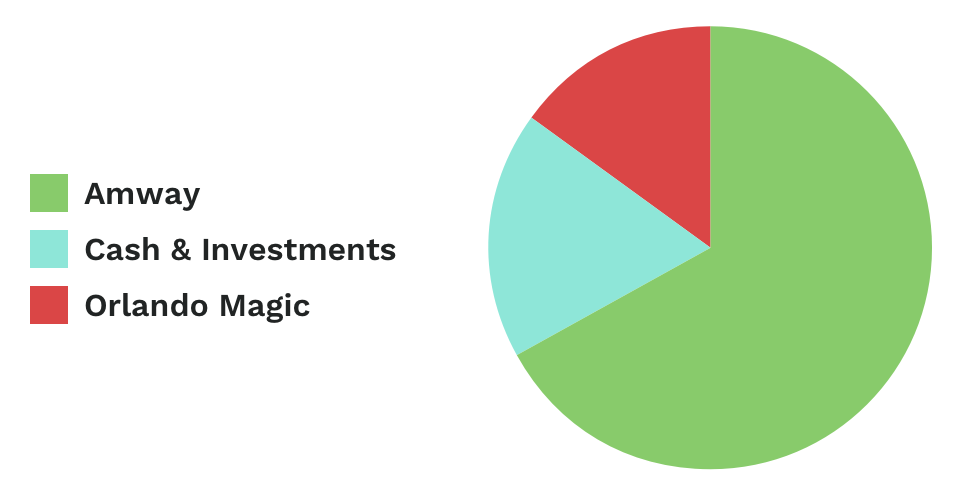
Among Donald Trump’s historically rich cabinet members, Betsy DeVos is the richest. But for more than two years, the extent of her finances has been a mystery. Now Forbes has zeroed in on the root of the DeVos family fortune, Amway, to come up with what we believe is the most realistic estimate of the size of her fortune published so far. Together, Betsy DeVos, her husband and their four adult children are worth roughly $2 billion.
The key to untangling DeVos’ empire appears to lie in Securities and Exchange Commission filings from the late 1990s and early 2000s, when Amway’s Asia-Pacific business operated through a publicly traded subsidiary. Those documents indicate that Betsy’s husband Dick DeVos and his three siblings had equal interests in the subsidiary, an indication that they equally split their ownership of the rest of Amway. Given that his parents have both passed away and the DeVos family continues to own half of the business, it seems reasonable to assume that Betsy, her husband and their kids now control one quarter of the family’s stake, or about 12% of Amway. That share is worth an estimated $1.3 billion.
Assuming they also own 25% of the family’s second-largest asset, the Orlando Magic basketball team, that’s another $300 million or so. Their slice of the family’s portfolio of commercial real estate, private equity investments, mansions and yachts makes up the rest of the education secretary’s net worth.
Betsy's Billons
Betsy DeVos is the richest member of Donald Trump's cabinet. She, her husband and their four adult children are worth an estimated $2 billion—mostly in Amway stock.
Betsy, the daughter of auto parts magnate Edgar Prince and sister of Blackwater founder Erik Prince, owes the vast majority of her fortune to her marriage to Dick DeVos. His father, Richard DeVos Sr., cofounded Amway in 1959 alongside his high school friend, Jay Van Andel. What began as two buddies selling an all-purpose cleaner door-to-door quickly grew into an army of independent salespeople hawking vitamins, soaps and other household goods to friends and family—and, controversially, earning money by signing others up as distributors too. Dick DeVos ran the company from 1993 to 2002. Today one DeVos (Dick’s brother Doug) and one Van Andel co-chair the board. The families split ownership 50/50, according to a spokesperson of the DeVos family. CONTINUE READING: Inside Betsy DeVos’ Billions: Just How Rich Is The Education Secretary?
Does Twitter’s new design make you grumpy? Use this extension to turn back time
Twitter for desktop now looks a bit more like the Twitter app — but not everyone is in love with the new design. For the change-wary users already referring to Twitter’s “good old days,” there’s a new browser extension that will make Twitter.com look like, well, Twitter again.
he new Mozilla Firefox add-on GoodTwitter forces the web browser to return back to Twitter’s previous design. As an OpenSource extension, the free download adjusts browser requests so that, on Firefox, Twitter looks like the more familiar social network.
The extension, created by user Zusor, is already in version 1.7 after launching just a few days after the new design began rolling out. It also fixes a few bugs from the original extension, including the inability to copy and paste. The extension now has a 4.7 star rating.
Along with adapting a more app-like look, Twitter’s redesign rearranges the desktop home page. The top navigation bar is gone, replaced by navigation options on the left-hand side, while standards like trends and “who to follow” jump over to the opposite side. The redesign also brings Explore from the mobile app to desktop, along with the bookmark option
Dissent within statewide task force adds tension to California’s charter school debate
There was disagreement over which proposals to forward to Gov. Newsom
Sitting on Gov. Gavin Newsom’s desk is a document that has added fuel to the roiling debate over legislation that would limit the growth of charter schools in California.
Newsom hasn’t taken a public position on the 13-page report by the California Charter School Policy Task Force, which he asked State Superintendent of Public Instruction Tony Thurmond to convene.
But the four members affiliated with charter schools on the 11-member task force say they’re concerned that the report misconstrues what the group supported. They are particularly critical of a package of proposals that Thurmond presented to the task force, put to a vote and then included in the report. Thurmond ran the task force meetings and oversaw the writing of the report.
Thurmond dismissed the criticisms as off-base and defends the wording of the report and the decisions behind it. Some committee members agree with him.
The disagreement highlights the struggle Newsom and the Legislature are having as they determine the future role and growth of charter schools. California has more than 1,300 charter schools. They serve more than 10 percent of the state’s 6 million public school students.
During the next two months, Newsom’s advisers, charter school advocates and detractors will be negotiating language in Assembly Bill 1505, which could substantially restrict charter school growth. Its author, Assemblyman Patrick O’Donnell, D-Long Beach, and its co-sponsor, the California Teachers Association, are citing some of the contentious proposals in the task force report to support their positions. Their ability and that of charter advocates to sway public opinion on charter school reform could shape a potential deal on the legislation.
Earlier this year Newsom asked Thurmond to create the task force and report back by July 1 on two key issues: how to weigh a charter school’s fiscal impact on school districts and how to change the way a school receives authorization to operate.
In consultation with the governor’s office, Thurmond appointed representatives from both sides of the charter controversy. The task force’s meetings were not open to the public, with Thurmond’s staff taking notes but with no formal minutes.
EdSource reached out to all 11
members and spoke with the eight who responded. They differ on some pivotal details.