Latest News and Comment from Education

Monday, January 9, 2017

Linda Darling-Hammond: Ending the No Child Left Behind Catch-22 on English learner progress | EdSource

Ending the No Child Left Behind Catch-22 on English learner progress | EdSource:

Ending the No Child Left Behind Catch-22 on English learner progress
Linda Darling-Hammond
CREDIT: LPI
Linda Darling-Hammond

California’s State Board of Education has an opportunity at its meeting this week in Sacramento to leave behind one of the most unfair and problematic features of No Child Left Behind (NCLB): the way it calculates English learners’ progress for purposes of accountability.
In doing so, however, the state will still have some other dilemmas to resolve with respect to how it will focus on, understand, and support the nearly 1.4 million public students classified as English learners.
These decisions, which have given rise to considerable debate, will be critically important in this state with the greatest concentration of English learners in the country (about 23 percent of K-12 public school students) so that it can both credit schools with their successes in moving English learners to proficiency in English and maintain a focus on those long-term English learners who have been left behind. Long-term English learners are students who have been English learners for six or more years, and are not making adequate progress on both learning English and mastering core content.

Kenji Hakuta
CREDIT: STANFORD UNIVERSITY
Kenji Hakuta
What’s the problem?
While NCLB established a noble new aspiration – raising achievement while closing achievement gaps among all groups of students – itsEnding the No Child Left Behind Catch-22 on English learner progress | EdSource:

Urban-Education Programs Prepare Teachers to Confront Racism - The Atlantic

Urban-Education Programs Prepare Teachers to Confront Racism - The Atlantic:

How Teachers Learn to Discuss Racism

Urban-education programs prepare them for imperative contemporary conversations with students.

People hold signs reading "say no to racism every day," "zero tolerance for racism," and "not on our campus!"

After a rash of police killings last summer, H. Richard Milner, a professor of urban education at the University of Pittsburgh, set out to answer a question that had been gnawing at him for some time. As a noted expert on race in education, he frequently received calls from journalists seeking comment on how to help teachers talk about race in the classroom, typically following the fatal police shooting of a black victim. And he always thought the questioning was misguided and inadequate. “Rather than asking me how to help teachers … we should be asking teachers if they believe race is salient … something [they] should be interrogating and thinking about [in the classroom].”

So in early fall 2016, he surveyed 450 pre-service and current public-school teachers on their beliefs about race. Despite the small sample size, the preliminary findings from the nationally representative group revealed an intriguing disconnect. Teachers overwhelmingly agreed that race should be discussed in classrooms; they felt woefully unprepared to lead such
conversations; and they strongly rejected discussing racial violence, which Milner called “central to working with … black and brown students” who are frequently the victims of police shootings. “Basically, teachers said ‘You’ve twisted my arm. We should talk about race. Nope, I don't feel prepared to do
that. And I'm definitely not going to [talk about] violence against black bodies.’ That’s where we are in 2017.”

With a profession that’s characteristically white, female, and middle class—and with students of color and children in poverty rapidly making up the majority of the public-school population—teachers equipped and willing to talk about race and racism has become a necessity. The mere mention of these topics can be awkward and difficult, yet various research findings point to the need to confront the discomfort to improve student learning. Increasingly, that duty has fallen to urban-education programs—a special category of teacher preparation that is reimagining how teaching candidates are prepared and disrupting the race and class stereotypes surrounding urban students and communities.

The dictionary definition of “urban” relates specifically to cities and people who Urban-Education Programs Prepare Teachers to Confront Racism - The Atlantic:


DeVos Hearing 1/11: UPDATED Senate HELP Committee Members. Call today. - Network For Public Education

DeVos Hearing 1/11: UPDATED Senate HELP Committee Members. Call today. - Network For Public Education:

DeVos Hearing 1/11: UPDATED Senate HELP Committee Members. Call today

no-devos


On January 11 at 10:00 am the Senate Health Education Labor and Pensions (HELP) Committee will begin a hearing on the nomination of Betsy DeVos to serve as Secretary of Education.
Below are committee members, along with their Washington phone number, fax numbers and local phone numbers. Often Washington numbers are busy. This list includes the new members of the HELP committee, not on the former list we sent. 
Following the the contact information you will find a suggested phone script.
Please be sure to call every member prior to the January 11 hearing. 
help-committee-contact-sheet-updated
My name is xxxx and I am calling to let the Senator know that I would like him/her to oppose the appointment of Betsy DeVos for Secretary of Education.
DeVos and her family heavily lobbied the Michigan legislature to shield the charter industry from greater oversight. She pushes for-profit charter schools and online schools, which consistently fail the students that they are supposed to serve.
I want my tax dollars to stay in my community to support my public schools.  Betsy DeVos is bad for American education. She is unqualified to serve as Secretary of Education.
DeVos Hearing 1/11: UPDATED Senate HELP Committee Members. Call today. - Network For Public Education:


Here’s what Elizabeth Warren wants to know from Trump’s education pick - The Washington Post

Here’s what Elizabeth Warren wants to know from Trump’s education pick - The Washington Post:

Here’s what Elizabeth Warren wants to know from Trump’s education pick
Sen. Elizabeth Warren, a Democrat from Massachusetts. (Pete Marovich/Bloomberg)

In advance of this week’s confirmation hearing, Sen. Elizabeth Warren (D-Mass.) on Monday sent Betsy DeVos, President-elect Donald Trump’s pick for education secretary, a litany of questions that raise concerns about the billionaire’s qualifications for the job.
“The Secretary’s actions can make a real difference in whether or not Americans can get a fair shot in reaching the American Dream,” Warren wrote in the letter to DeVos. “Given that you have virtually no experience with these important responsibilities, your testimony … will be critical to assessing you readiness for the position.”
Democrats have been pressing Republican leaders on the Senate Committee on Health, Education, Labor and Pensions (HELP) to delay DeVos’s Jan. 11 hearing until the Office of Government Ethics reviews her background and financial investments for conflicts of interest. But Republicans say they have no plans to postpone the hearing.
Liberal lawmakers, teacher’s unions and advocacy groups worry that DeVos’ political contributions to expand charter schools and taxpayer-funded vouchers for private and religious schools will cloud her judgement in overseeing public schools. Many are also concerned that she has no stated positions on higher education, which has become a considerable responsibility for the agency since the Obama administration kicked the banks out of the federal student loan program.
Among the questions in Warren’s 16-page letter are several addressing the expansive federal direct loan program, with its field of contractors managing payments and collecting on overdue debts. The senator has been a vocal opponent of the government making money off students’ Here’s what Elizabeth Warren wants to know from Trump’s education pick - The Washington Post:


Illinois public employee union strategy to fight for pensions: Members should “do nothing” and let Madigan be our goalie. | Fred Klonsky

Illinois public employee union strategy to fight for pensions: Members should “do nothing” and let Madigan be our goalie. | Fred Klonsky:

Illinois public employee union strategy to fight for pensions: Members should “do nothing” and let Madigan be our goalie.

goalie


On Saturday I wrote about the discussions among Democrats and Rauner’s legislative leaders for a grand bargain to resolve the state budget stalemate.
The agreement includes six points taken from Rauner’s Turnaround Agenda. 
· Imposing term limits on legislative leaders
· Increasing the state individual income tax to 4.9 percent
· Adding a statewide beverage tax on sugary drinks
· Changing Worker’s Compensation benefits
· Temporarily freezing property tax rates
· Pension reductions for active employees
A freeze on property tax rates would be devastating to local school districts.
Pension reductions?
Well, you know.
An email* from Illinois Education Association director of government relations Jim Reed to local leaders lays out what the state union coalition response appears to be.
The items with the most direct impact on education and education employees are the proposals for a two-year property tax freeze, proposed changes in workers’ compensation and pension reform.

Draining dollars from our students by Wendy Lecker - Wait What?

Draining dollars from our students by Wendy Lecker - Wait What?:

Draining dollars from our students by Wendy Lecker


Columnist and education advocate Wendy Lecker writes about Governor Dannel Malloy’s attack on Connecticut’s public schools and his ongoing effort to privatize public education in Connecticut.
In Draining dollars from our students, Wendy Lecker writes;
Though the CCJEF v. Rell trial, Judge Thomas Moukawsher ruled that the Connecticut provides more than adequate school funding, his actual findings of fact, found in the Appendix to his decision, confirm CCJEF’s claims that public schools are woefully under-resourced.
The judge found that CCJEF districts had severe deficiencies in special education teachers, interventionists for reading and math, social workers, guidance counselors, school psychologists, and services for English Language Learners. Bridgeport was forced to cut 73.5 teachers, including special education teachers, social workers and psychologists in one year, even as the population grew. New Britain had to make similar cuts.
Adequate funding for all means that children who need extra support to learn get it. As the New York court said, the opportunity for an adequate education “must be placed within reach of all students.”
Moukawsher found that CCJEF districts lacked resources to provide their most vulnerable students with the extra help and support they need to access basic educational opportunities. Therefore, his conclusion that the state is providing more than adequate funding is astounding.
Because of Moukawsher’s ruling, Gov. Dannel P. Malloy felt free to cut $20 million in school aid from the Education Cost Draining dollars from our students by Wendy Lecker - Wait What?:


Education Lessons From A Sparkly District: Follow Up To Who Is Voting On New Jersey's New Charter Regulations?

Education Lessons From A Sparkly District: Follow Up To Who Is Voting On New Jersey's New Charter Regulations?:

Follow Up To Who Is Voting On New Jersey's New Charter Regulations?

Last Sunday, I published a blog post about NJ State Board of Education (NJBOE) member, Peter Simon, and his family's philanthropic foundation, the William E. Simon Foundation. If it had not been for the New York Times piece, which mentioned his brother as a possible candidate for the Vatican Ambassadorship, I probably would never have taken the time to look closely at a Board member. 

I had decided to bring it up during public testimony at Wednesday's NJSBOE meeting. It was one of the rare days when testimony is permitted to be on any topic. I found out late Tuesday that Simon had stepped down from the Board. No one knew why. 

Wednesday morning, at the beginning of the NJSBOE meeting, Board President, Mark Biedron, announced that Peter Simon had stepped down. No reason was given. Biedron also said there had been discussion on "social media" about Simon's family's foundation and donations made to charters, and that Simon had abstained from voting. Biedron added, if Simon had remained on the Board, he would have abstained from voting on the new proposed charter regulations. 


Obviously, I was very glad to hear that, as were other people in attendance. Although, why mention it all? 

The day was filled with a lot of charter-related testimony, both for and against. As people representing entities who had received money from the Foundation spoke, I could't help but wonder if it would have mattered if Simon abstained. He still might have been tasked with listening to public testimony (not all board members do) and, presumably, providing some feedback to those who weren't there to hear testimony firsthand. 

This is not an indictment of Peter Simon. It's an honest question of how reasonable it is to presume the ability of anyone to separate their personal ties from their ability to perform due diligence for the public, with the public's interests foremost in mind. It also demonstrates the need to have transparency at all times. 

A couple of months ago, Mark Biedron introduced the new charter regulations with a nod to how hard the Department of Education (NJDOE) had worked on them with charter schools groups. I can't find meeting minutes from those meetings. They aren't posted anywhere that I 
Education Lessons From A Sparkly District: Follow Up To Who Is Voting On New Jersey's New Charter Regulations?:

Are Pence and DeVos a One-Two Knock Out for Education Policy? - Education Law Prof Blog

Education Law Prof Blog:

Are Pence and DeVos a One-Two Knock Out for Education Policy? Recent Reports Out of Indiana Suggest Yes

Image result for big education ape DeVos michigan schools

My recent posts have focused on DeVos and the problems she presents for public education, although I emphasize that without new legislation she does not have power to do too much.  Some new information out of Indiana regarding the education system Governor Pence has overseen suggests more trouble on the horizon and give me pause about assuming an incompetent education administration.  Pence actually has a track record of getting things done in Indiana and what he has accomplished should raise red flags for those invested in improving public education.  
Most notably is the state's teacher bonus system.  By law, the state mandated that $40 million in bonuses be handed out to the state's teachers.  I am all in favor of increasing teacher pay in ways that make the profession more attractive to new teachers and encourage others to stay.  Indiana's incentive pay, however, has two major problems.  First, it is having a very inequitable effect on teachers and driving most of the money to school systems that need it the least. Cory Doctorow offers this summary:
[The state gives] bonuses for teachers who preside over high-achieving classes. This year, the biggest payouts will go to schools teaching the richest kids in the state, while schools for poor kids will get little-to-none of the payouts.
The biggest winner in the giveaway are the Carmel Clay Schools, where 9% of kids qualify for free or subsidized lunches, where the teachers will get $2422 each. The Indianapolis district -- the largest in the state -- will give each teacher a $128.40 bonus.
Emanuel Felton adds:
Carmel Clay Schools, where just 9 percent of their 16,000 students qualify for free or reduced-price lunch, will get the most— $2.4 million or roughly $2,422 per teacher. Another well-off Indianapolis suburban district, Zionsville Community Schools, where fewer than 5 percent of students qualify for the free and reduced-price lunch program, will receive about $2,240 per teacher. Meanwhile, Indianapolis, the state's largest district will receive just around $330,875, or $128.40 per educator. So teachers in those wealthy suburban districts will get Education Law Prof Blog:


Hoosier School Heist TV is Doug Martin's channel featuring videos of his book tour across Indiana speaking on the corporate takeover of public education. Order Hoosier School Heist at http://hoosierschoolheist.com/.
Follow Hoosier School Heist on Facebook: https://www.facebook.com/HoosierSchoolHeist
Tweet with Doug Martin at: https://twitter.com/DougMartinED


The Pence-DeVos Threat to the Nation's Public Schools | United Federation of Teachers - http://www.uft.org/campaigns/pence-devos-threat-public-schools

Jersey Jazzman: Teaching In the Age of Trump

Jersey Jazzman: Teaching In the Age of Trump:

Teaching In the Age of Trump

Image result for Teaching In the Age of Trump:

Last week, Mrs. Jazzman and I decided to indulge one last time before we start our new years diets, and found ourselves in line for the best hot dogs north of the Bronx County line. As I waited for my turn at the condiments station (get the red relish), I overheard a conversation between a nice young woman working the counter and a nice young man working the grill.

To my best recollection, it went like this:

WOMAN: ... yes, he's crazy and disgusting, but I can't just vote on that. I have to vote on policy. 
MAN: Well, what did he say about policy that made you want to vote for him? 
WOMAN: Health care. Health care is a mess. 
MAN: But we have universal health care now. He wants to take that away. 
WOMAN: No, he wants everyone covered. But Obamacare isn't working. 
MAN: What's wrong with it? 
WOMAN: It's costing people a lot of money, and you don't get to choose your own plan, and everybody has to sign up for it. 
MAN: But that's the way universal health care works. Everyone has to be in it. It doesn't work unless everyone is in it. 
WOMAN: OK, but why does it have to cost so much then? I thought Obamacare was supposed to keep costs down...
And so on. It took all I had not to butt in and start flapping my mouth about things that I tell myself I have a better than average understanding of compared to the average person... but as every teacher knows, you usually learn more by letting a conversation spool out than Jersey Jazzman: Teaching In the Age of Trump:


Please Take a Minute Today to Call Both of Your Senators to Oppose Confirmation of Betsy DeVos | janresseger

Please Take a Minute Today to Call Both of Your Senators to Oppose Confirmation of Betsy DeVos | janresseger:

Please Take a Minute Today to Call Both of Your Senators to Oppose Confirmation of Betsy DeVos

Image result for Say ‘No’ to Betsy DeVos

The U.S. Senate Health, Education, Labor, and Pensions (HELP ) Committee’s confirmation hearing on Betsy Devos, President-elect Donald Trump’s nominee for Secretary of Education, is scheduled for this coming Wednesday, January 11.
Today I am privileged to be part of a small group who will deliver a statement from a number of organizations to the local offices here in Cleveland of U.S. Senators Sherrod Brown and Rob Portman.  I am delighted we’ll have the opportunity to talk with a staff person in our Senators’ local offices about why we believe Betsy DeVos is the wrong person to lead the U.S. Department of Education.
This blog has covered extensively all the reasons why Betsy DeVos—a billionaire philanthropist who has devoted her life and her money to opposing public schools and lobbying for school privatization through expanding vouchers and unregulated charter schools—should not be confirmed to lead the U.S. Department that oversees Title I, the Individuals with Disabilities Education Act, and the Department’s Office of Civil Rights.
Even if you have signed onto one of the many online petitions that are circulating to oppose the DeVos nomination, please make a phone call today to the offices of your two Senators. Tell the person who answers the phone that you oppose the confirmation of Betsy DeVos, President-elect Donald Trump’s nominee for Secretary of Education. The staff people in these offices are counting the phone calls they receive to support or to oppose confirmation of each nomination by President-elect Trump.
Make the phone call even if your Senator does not serve on the Senate HELP Committee, which is conducting this week’s hearing. DeVos’s confirmation will come before the entire U.S. Senate for a vote.
The Network for Public Education’s Campaign to Say ‘No’ to Betsy DeVos provides a toolkit including the phone numbers of the offices of all U.S. Senators. In the Network for Public Education’s toolkit, you will also find a couple of short sample scripts to help you when you make the call.
I will share that when I asked my own adult children who now live in other states to make calls to the offices of their Senators to oppose the DeVos confirmation, they didn’t even accuse me of nagging. They attended public schools and graduated from a public high school to which they are very loyal. They are determined that Betsy DeVos must not threaten public education, the institution that has been so important to them.  They even asked some of their friends and colleagues to make calls.Please Take a Minute Today to Call Both of Your Senators to Oppose Confirmation of Betsy DeVos | janresseger:
Image result for Say ‘No’ to Betsy DeVos
 Image result for Say ‘No’ to Betsy DeVos

LAUSD Schools Face Bankruptcy While Charters Cheat on Admissions

LAUSD Schools Face Bankruptcy While Charters Cheat on Admissions:

LAUSD Schools Face Bankruptcy While Charters Cheat on Admissions
– ACLU and Public Advocates
The LAUSD Charter School Division (CSD) says that “a review of charter school pre- and post-enrollment forms is part of our oversight process”.  It is, therefore, unclear how these regulators missed the fact that both Granada Hills Charter High School (GHCHS) and El Camino Real Charter High School (ECRCHS) have admission requirements that appear to violate LAUSD policy, their respective charters, the California Education Code and federal law. These organizations rely on public funds to operate but appear to be screening out students who should have a right to attend. Some examples of this cherry-picking are as follows:

Homeless Students:
The policies at ECRCHS are even more stringent as they require “three consecutive months of original current gas AND electric bills with the same parent name and address at the top of the bill” and “parent/guardian identification [that] must match proof of residential address“. More troublesome is the policy that states that “ECRCHS DOES NOT ACCEPT SHARED RESIDENCES OR ROOM RENTALS“. This violates the rights of students whose economic situation dictates that they must accept these types of living situations.
National Origin:

Mike Klonsky's SmallTalk Blog: WEEKEND QUOTABLES

Mike Klonsky's SmallTalk Blog: WEEKEND QUOTABLES:

WEEKEND QUOTABLES


Former Peltier prosecutor calls for his release. 
Author Yaa Gyasi ("Homegoing")

 The history of America has involved figuring out new ways to subjugate black people since the beginning. In this post-election in-between space, as Donald Trump takes over, we are wondering what fresh hell may be about to be devised. -- Guardian
James Reynolds, former U.S. attorney involved in the case against Leonard Peltier

“I just thought that it was time. With all the circumstances that have gone down, both good and bad, it was maybe time for the president to grant clemency and to end the justice part of the case.” -- Free Speech Radio News
Meryl Streep at the Golden Globes

Streep  noted that one "performance" stood out this year: that of Donald Trump when he publicly mocked The New York Times' Serge Kovaleski, a disabled reporter.
"There was nothing good about it, but it did its job. It kind of broke my heart when I saw it, and I still can't get it out my head because it wasn’t in a movie; it was in real life. That instinct to humiliate when it's modeled by someone in a public platform, it filters down into everyone's life because it gives permission for others to do the same." 
"Disrespect invites disrespect, violence incites violence. When the powerful use their position to bully others, we all lose."
Rep. Katherine Clark (MA)

"After discussions with hundreds of my constituents, I do not feel that I can contribute to the normalization of the president-elect's divisive rhetoric by Mike Klonsky's SmallTalk Blog: WEEKEND QUOTABLES:

The Fizzle of Common Core Face, Student Achievement Partners | deutsch29

The Fizzle of Common Core Face, Student Achievement Partners | deutsch29:

The Fizzle of Common Core Face, Student Achievement Partners


The chief purpose of the Common Core State Standards (CCSS) initiative was to develop a “common core” of ELA and math standards that states (ideally all) would adopt so that state education might be standardized and therefore comparable using similar assessments.
At the center of CCSS development was Student Achievement Partners (SAP), an organization created in 2007 that became a nonprofit in 2011 (EIN 27-4556045). SAP was founded by David Coleman and Jason Zimba, with Susan Pimentel later grafted in as a founding member– although any mention of her being involved in SAP prior to the emergence of completed CCSS in June 2010 is notably absent from all of her pre-2012, non-SAP bio sketches. (I briefly discuss the Pimentel SAP-founder grafting in this December 2013 post.)
On its 2017 “about” page, SAP offers the following info about its “founders”:
Student Achievement Partners was founded by David Coleman, Susan Pimentel and Jason Zimba, lead writers of the Common Core State Standards.
Prior to SAP, the well-connected Coleman had another ed org, a company called Grow Network, which had a $2 million contract with Chicago Public Schools (CPS) in 2003, when Arne Duncan was CPS CEO. In 2004, Coleman sold Grow Network to McGraw-Hill.
Following the completion of CCSS in June 2010, the SAP website, achievethecore.org, began promoting CCSS. At the time, it seemed like CCSS would be the next golden chariot for many with careers tied to ed reform, and for Coleman, it was, sort of. In May 2012, Coleman became president of the College Board, another organization on the inside of CCSS development. Zimba and Pimentel remained with SAP, and other CCSS “lead writers” (Phil Daro and Bill McCallum) boarded the SAP ship, as did former Council of Chief State School Officers (CCSSO) CEO, Gene Wilhoit. (It was Wilhoit who, with Coleman, approached billionaire Bill Gates in 2008 and asked him to finance CCSS.)
It is one thing to become College Board president; it is another to succeed at it. Under Coleman, the College Board has been riddled with difficulty and dysfunction, not the least of which is Coleman’s sloppy SAT revamp. Coleman has not been removed as College Board president. Not yet, at least.
As for Pimentel and Zimba: They are still listed on the SAP website, as “staff,” but nothing notable seems to have become of them (or of the CCSS they championed, for that matter). According to SAP’s 2014 tax form (the most recent one available), Pimentel and Zimba were SAP “executive directors” and were paid $338,491 and $331,813 in total compensation, respectively.
It remains to be seen what compensation the two pulled in 2015. Perhaps the grant The Fizzle of Common Core Face, Student Achievement Partners | deutsch29:


NAT HENTOFF: I’ve lost a hero. So has anyone who dares to write. |

NAT HENTOFF: I’ve lost a hero. So has anyone who dares to write. |:

NAT HENTOFF: I’ve lost a hero. So has anyone who dares to write.

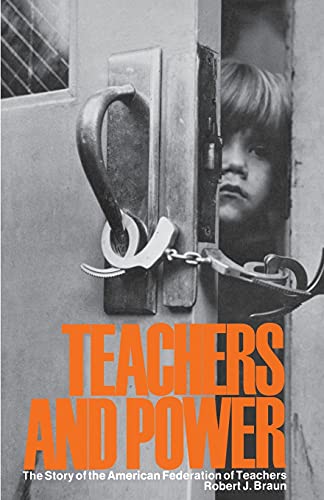
Image result for “Teachers and Power: The Story of the American Federation of Teachers.”

In 1972, when I was 25 years old, I wrote a book published by Simon and Schuster entitled “Teachers and Power: The Story of the American Federation of Teachers.” It was critical of the AFT, primarily because of the union’s efforts to destroy community control of public education in New York City.
I was sued for libel by the AFT and a number of its leaders, most prominently David Selden, then the union president.  Simon and Schuster ducked for cover and canceled the publication of the paperback edition. Selig J. Levitan, a white shoe law firm with an office atop Rockefeller Center, called me in and its associates reminded me that, under the terms of the contract I had signed with Simon and Schuster, I would have to indemnify the publisher for all of its legal fees defending the law suit. Of course, I’d have to pay for my own defense–but also that of Simon and Schuster as well.
Even if we won the case.
And then the lawyer handed me a letter and asked me to sign it. Selig J. Levitan would defend me–at its going Rockefeller Center rate–until such time as Simon and Schuster or its law firm decided a conflict existed between me and the publisher. At that point, the law firm would dump me and defend only Simon and Schuster. And I would still have to pay for it.
That was especially galling because one of the most serious counts against me in the lawsuit had nothing to do with what I wrote but  rather with a mistake on the dust cover made by the publisher after the book left my hands for the last time before publication.
I had an infant daughter and a new house with a sizable mortgage–and the AFT, in its lawsuit against me, wanted $17 million in damages. But, even if I won the lawsuit–and I knew what I wrote was true, an absolute defense against libel–Selig J. Levitan could charge me for hundreds of thousands of dollars in fees that should have been paid by Simon and Schuster.
The law firm also wanted me to agree to withdrawing unsold hard cover copies of the book–which had received great reviews, especially in The New York Times (page three, Sunday Book section)–and to cancel the paperback edition.
I remember my wife Lynda, brave through it all, reminding me I didn’t have much that could be attached by liens–a mortgaged up house, a loping, drooling St. NAT HENTOFF: I’ve lost a hero. So has anyone who dares to write. |:


Meryl Streep gives shout-out to public schools during her Golden Globes anti-Trump speech - The Washington Post

Meryl Streep gives shout-out to public schools during her Golden Globes anti-Trump speech - The Washington Post:

Meryl Streep gives shout-out to public schools during her Golden Globes anti-Trump speech

Meryl Streep holds the Cecil B. DeMille Award during the 74th Annual Golden Globe Awards in Beverly Hills, Calif. on Jan. 8, 2017. REUTERS/Mario Anzuoni
When actress Meryl Streep gave her speech at the Golden Globes awards Sunday night while accepting a lifetime achievement award, she instantly made news with her criticism of President-elect Donald Trump — without mentioning his name — and her plea to “the famously well-heeled Hollywood foreign press and all of us in our community” to support the Committee to Protect Journalists.
She also did another thing: She gave a shout-out to New Jersey public schools, which she attended when she was growing up.
She said in part:
Thank you, Hollywood foreign press. Just to pick up on what Hugh Laurie said. You and all of us in this room, really, belong to the most vilified segments in American society right now. Think about it. Hollywood, foreigners and the press. But who are we, and what is Hollywood, anyway? It’s just a bunch of people from other places. I was born and raised and educated in the public schools of New Jersey. Viola was born in a sharecropper’s cabin in South Carolina, came up in Central Falls, Rhode Island. Sarah Paulson was born in Florida and raised by a single mom in Brooklyn.
Streep, who grew up in Bernardsville, N.J., attended Bernards High School, a four-year regional public high school serving more than 800 students in grades 9-12 (which, for those who care about these things, was ranked #88 in the United States and #18 in New Jersey in Newsweek’s America’s Top High Schools 2016).
Streep has been a longtime supporter of public education. In 2001, she helped promote a PBS series of programs highlighting public education, saying: “I believe teachers are heroes. It’s time we recognize the importance of these people who, despite countless obstacles and hardships, choose to teach . . . because they believe they can change the world, one mind at a time.”
Trump has selected to be his education secretary Betsy DeVos, a Michigan billionaire who supports initiatives to privatize America’s  public education system.
You can watch the speech here:
Answer Sheet newsletter
Education questions and answers, in your inbox weekly.


Valerie Strauss covers education and runs The Answer Sheet blog.
  Follow @valeriestrauss