Latest News and Comment from Education

Thursday, September 8, 2016

Jeff Bryant: Who Gains Most From School Choice?

9/8/2016 – Who Gains Most From School Choice?:

Who Gains Most From School Choice?

Image result for School Choice


 September 8, 2016, 2016

THIS WEEK: Black Teachers Matter … Making Teachers Moonlight … Teacher Shortages Acute … How Charters End Afrocentric Education … How Charters Change Democrats

TOP STORY

Who Gains Most From School Choice? Not Low-Income Students Of Color

By Jeff Bryant

“No doubt school choice will benefit some parents – just as any market-based system has some winners and some losers. But who really stands to gain most from choice and why? … To get a broad view on how the policy actually is working for parents, I talked with a school choice consultant.”
Read more …

NEWS AND VIEWS

Black Teachers Matter

Mother Jones

“Across the country, scores of schools have been closed, radically restructured, or replaced by charter schools. And in the process, the face of the teaching workforce has changed. In one of the most far-reaching consequences of the past decade’s wave of education reform, the nation has lost tens of thousands of experienced black teachers and principals … Many of these departures came as part of mass layoffs and closings in schools with low test scores, a policy promoted with federal and state dollars since 2002 … 26,000 African American teachers have disappeared from the nation’s public schools … All in the name of raising achievement among black students.”
Read more …

Teachers Are Working For Uber Just to Keep A Foothold In The Middle Class

The Nation

“Uber has promoted its teacher/driver initiative as an act of civic altruism … Yet … there’s a far more troubling reality … Teachers working in increasingly expensive locales … are forced into the lowest echelons of the gig economy … For Uber, the struggles of these economically challenged teachers represent a dual opportunity: a marketing coup as well as a ready labor force … Uber is hardly the first company to exploit the financial vulnerability of teachers – and the desperation of public schools more broadly – to score PR points.”
Read more …

Kids Going Back To School Won’t Be Greeted By Enough Teachers

Fast Company

“Wisconsin has struggled to attract new teachers after killing collective bargaining laws. New York’s Board of Regents chancellor characterized the state’s teacher shortage as ‘severe’ … Maine is facing the worst shortage of special ed teachers it can remember. To deal with teacher shortages, states like Kansas and Michigan have voted to lower licensing requirements … Texas, Oklahoma, and Illinois too. Some states and schools are considering ‘virtual’ classrooms or staffing … It’s clear that governments need to do something to make teaching a desirable profession once again.”
Read more …

The Afrocentric Education Crisis

American Prospect

“While the rise of charter schools may once have seemed a blessing to champions of Afrocentric education, it has brought with it a host of problems … Charters’ emphasis on standardized testing has jeopardized the standing and existence of numerous Afrocentric schools … Low-test scores have led to the closure of many Afrocentric charter schools … As many Afrocentric charter schools have closed down, other charter operators have begun to adopt some of their rhetoric in order to justify their own overwhelmingly black and brown student compositions … Large charter networks are ‘fooling the community with their rhetoric’ A school shouldn’t be considered ‘culturally specific’ merely because it creates a space for black students to learn together.
Read more …

How The Charter School Lobby Is Changing The Democratic Party

Los Angeles Times

Harold Meyerson writes, “At a time when Democrats and their party are, by virtually every index, moving left, a powerful center-right pressure group within the liberal universe has nonetheless sprung up … the charter school lobby … Charter advocates don’t need to win the high-visibility offices to prevail. By spending sufficiently to shift the composition of Democratic caucuses in legislatures, city councils, or school boards to the right … they can also impede unrelated progressive initiatives for greater environmental protections and worker rights … By making Democratic elected officials even more dependent on the mega-donations of the 1%, they make campaign finance reform all the harder to win.”
Read more …

DeVos Family Contributes Lavishly to Legislators Who Defeated Detroit Charter School Oversight | janresseger

DeVos Family Contributes Lavishly to Legislators Who Defeated Detroit Charter School Oversight | janresseger:

DeVos Family Contributes Lavishly to Legislators Who Defeated Detroit Charter School Oversight

Image result for Dick and Betsy DeVos

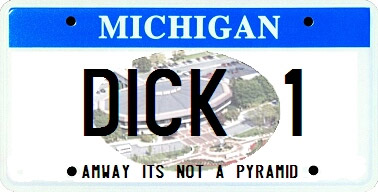
I grew up in Montana, where in Montana history class we learned that at one time Anaconda Copper owned the state legislature. While the patrons have changed over the decades, the political process hasn’t been cleaned up. Amazingly the extraction industry has been replaced by the education sector these days in a number of states. On Tuesday this blog covered the investments being made in Ohio to block the regulation of the notorious online charter schools. Today the subject is Michigan and the massive payoffs this summer by Dick and Betsy DeVos, the Grand Rapids couple who made their fortune in Amway. Dick and Betsy DeVos have been investing heavily this summer to ensure that Detroit’s for-profit charter operators won’t be regulated.
Stephen Henderson, editorial page editor of the Detroit Free Press, explains: “There’s nothing more difficult than proving quid pro quos in politics, the instances in which favor is returned for specific monetary support. But look at the amounts involved, and consider the DeVos’ near sole interest in the issue of school choice. It’s a fool’s errand to imagine a world in which the family’s deep pockets haven’t skewed the school debate to the favor of their highly financed lobby.”  The Great Lakes Education Project is the Michigan pro-charter school lobby underwritten by the DeVos family, who also launched All Children Matter in the spring of 2003 to promote private school vouchers. Dick and Betsy DeVos later founded the American Federation for Children, which has, according to ThinkProgress, worked with its closely related PAC to serve “as a launching pad for school choice legislation across the country.”
You’ll remember that earlier this summer the state legislature in Michigan passed a bill to prevent the bankruptcy of the Detroit Public Schools, but at the last minute the legislature removed the Detroit Education Commission, an agency that had been designed to regulate an out-of-control, for-profit charter school sector and to oversee, for example, the siting of schools to ensure that the needs of children instead of the marketing plans of charter chains determine where schools are opened and closed. Even Governor Rick Snyder had approved the creation of the Detroit Education Commission, but the Michigan House removed it suddenly in a late night session. (This blog has covered the Detroit Public Schools and charter school expansion in Detroit here.)
Henderson explains what happened: “Bought and paid for. Back in June, that’s how I described the Detroit school legislation that passed in Lansing—a filthy, moneyed kiss to the DeVos Family Contributes Lavishly to Legislators Who Defeated Detroit Charter School Oversight | janresseger:
Image result for Dick and Betsy DeVos

California students with highest chronic absentee rates concentrated in 14 districts | EdSource

California students with highest chronic absentee rates concentrated in 14 districts | EdSource:

California students with highest chronic absentee rates concentrated in 14 districts


The tiny Forks of Salmon Elementary School District in the far north of California reported that 100 percent of its students – all 12 of them – missed more than three weeks of school in 2013-14, a lapse that researchers say makes it more likely the students will drop out. It’s a speck of information about the district but a troubling one and now, for the first time, the rate of “chronic absenteeism” at Forks of Salmon Elementary and other districts across California and the nation is widely available for parents, nonprofit organizations and educators.
A data map of school districts with high rates of chronic absenteeism, defined as missing three or more weeks of school, uses the first collection by the federal Office for Civil Rights of chronic absenteeism data nationwide. California school districts submitted their information from 2013-14, and the data map provides the first statewide glimpse of chronic absenteeism. The Oakland nonprofit Attendance Works and the Everyone Graduates Center at Johns Hopkins University created the map, which was released Tuesday.
Nearly every school district in the state and, for that matter, the nation has a problem with chronic absenteeism, according to a report that accompanied the data release. The analysis is meant to show both how widespread chronic absenteeism is and where such problems are concentrated, said Robert Balfanz, a researcher at Johns Hopkins University who leads the Everyone Graduates Center, in a phone call with reporters.
“By middle and high school, it is a surefire predictor of kids being on the path to dropout, not success,” said Hedy Chang,executive director of Attendance Works.
In California, the researchers found that 1 in 4 students who have serious attendance problems are enrolled in just 14 school districts, including, as expected, the largest school district in the state – Los Angeles Unified (12.7 percent chronic absenteeism rate) – as well as the relatively small Antelope Valley Union High district (28.1 percent) north of Los Angeles. Districts in the group of 14 have at least 1,800 chronically absent students a year.
The other 12 districts with the highest concentrations of chronically absent students are: San Diego Unified (11.6 percent), Fresno Unified (18.4 percent), Long Beach Unified (12.7 percent), Kern Union High (23.3 percent), San Bernardino City Unified (15.1 percent), Elk Grove Unified (12.3 percent), Stockton Unified (19.1 percent), West Contra Costa Unified (21.6 percent), Sacramento City Unified (14.8 percent), Oakland Unified (16.6 percent), San Juan Unified (14.7 percent) and Moreno Valley Unified (17.3 percent).
Statewide, the chronic absenteeism rate is 12 percent, but 12 California districts have chronic absentee rates above 30 percent, according to the report. Those districts were not identified.


Chronic absentee rates in unified school districts

Source: US Department of Education Office for Civil Rights
“To solve chronic absenteeism we have to understand where the challenge is greatest, where it’s smallest, and where it’s moderate,” Balfanz said. “From there, we can tailor our approach.”
Rural areas with high rates of chronic absenteeism were tracked as well, even though their relative number of students was small. Those school districts tend to serve students who come from low-income families and who are more likely to be white, Balfanz said.
Chronic absenteeism, beginning as early as preschool, has emerged as an indicator of whether students will go on to graduate from high school. 
“By middle and high school, it is a surefire predictor of kids being on the path to dropout, not success,” said Hedy Chang, co-author of the report and executive director of Attendance Works, during the phone call with reporters.
The rate is not the same as truancy, which counts only unexcused absences, or average daily attendance, which can obscure a small number of students who are missing weeks of school whether excused, unexcused or caused by suspension.
California is expected to begin collecting chronic absenteeism data from districts in late spring 2017, based on attendance for the 2016-17 school year. The data will be entered into the statewide student information database to fulfill a requirement of the Every Student Succeeds Act, the new federal education law.California students with highest chronic absentee rates concentrated in 14 districts | EdSource:


The First Parent-Teacher Conference of One | The Jose Vilson

The First Parent-Teacher Conference of One | The Jose Vilson:

The First Parent-Teacher Conference of One

Image result for The First Parent-Teacher Conference of One
I’m not supposed to be nervous about the first day.
A couple of weeks ago, I told six hundred or so adults in Oak Park, IL that the first day doesn’t matter. I said it was the second day and beyond that ultimately determine a teacher’s effectiveness. But this first day is different. It’s not just my 12th First Day of class as a teacher. It’s my first as a parent. Alejandro’s going to Pre-kindergarten, and I don’t know what to do with myself. I’ve been sipping teas and scrolling through inordinate amounts of inspirational posters, distracting myself from feeling every knot I have tied in my stomach.
Those of you who read my book know that I hurled my first First Day of school in pre-k, and I still can’t live down the imagery. I had so many high hopes for coolness. I still hold high hopes today that I’ll be one of the cool kids. Until then, I’d love for Alejandro to have a much better head start.
Because we made the choice we did for our child, we also recognized the challenges that come with said decision. Even though Mayor Bill de Blasio touts accomplished educators and well-structured Pre-K programs, allow me a bit of time to doubt because, even with the plethora of structures, there The First Parent-Teacher Conference of One | The Jose Vilson:


Parent Revolution: Another Fiasco for Reformers | Diane Ravitch's blog

Parent Revolution: Another Fiasco for Reformers | Diane Ravitch's blog:

Parent Revolution: Another Fiasco for Reformers

Beware of AstroTurf Ed Reformers
Astroturf lobbying refers to political organizations or campaigns that appear to be made up of grassroots activists but are actually organized and run by corporate interests seeking to further their own agendas. Such groups are often typified by innocent-sounding names that have been chosen specifically to disguise the group's true backers


Caroline Grannan writes here about the rise and fall of a Big Reform Idea called “the parent trigger,” championed by an organization called Parent Revolution. Ben Austin started Parent Revolution as a way to empower disgruntled parents to take control of their low-scoring public school and turn it over to a charter operator. Austin led the charge for new legislation to codify Parent Revolution’s big idea (Gloria Romero claimed credit for writing the legislation; she became executive director of DFER after leaving the legislature). Parent Revolution attracted millions of dollars from the usual billionaires, including Gates, Broad, and Wasserman.
After many favorable articles, editorials, and massive publicity, what has PR accomplished?
Not much.
Grannan writes:
“Parent Revolution (PRev) started in Los Angeles in a blaze of publicity in 2009, predicting with great fanfare and much enthusiastic press coverage that it would transform many “failing” public schools into charter schools. PRev created the “parent trigger,” whereby a 50%+1 majority of parents at a school can sign a petition forcing “transformation” of the school, or forcing the school to close. PRev lobbying led to a California law in early 2010 allowing parent triggers statewide.
“Despite the fanfare, in those seven years, PRev has succeeded in turning only one school into a charter school – Desert Trails Elementary in Adelanto (San Bernardino County), Calif., in 2012. That effort ripped the school community apart — splitting up friendships, creating deeply hostile factions and even leading to schoolyard fights among the kids. Reports on the results of the charterization are wildly mixed, and the mainstream media, which descended on Adelanto eagerly to cover the battle, lost interest in following up afterward.
“Parent Revolution began in 2009 under the auspices of Los Angeles’ Green Dot charter school chain, launched by the mercurial, once-admired Green Dot founder Steve Barr. The intent appeared to be to enable Green Dot to take over schools.
“Barr’s name is no longer mentioned in connection with PRev, possibly because of his checkered history, including a rapidly squelched flap about misuse of funds and some much-publicized failed projects. The story of Barr and the Parent Revolution: Another Fiasco for Reformers | Diane Ravitch's blog:

Mike Klonsky's SmallTalk Blog: Notes from Standing Rock

Mike Klonsky's SmallTalk Blog: Notes from Standing Rock:

Notes from Standing Rock


We got to camp yesterday afternoon after driving hours through torrential rain storms. We drove in from the north (Bismarck), easily avoiding any roadblocks by taking Rte. 6 off of 94, to 24 and then east into camp.


By the time we arrived, the sky had broken and we got our first clear look at this stunning Missouri River valley rich in colors.  Clearly a land worth fighting for and keeping out of the clutches of oil-profiteers and polluters.

The dirt road into camp had turned to a river of mud. But that didn't seem to slow hundreds of new arrivals, now lined up along the side of 24 in cars, SUVs, pick-ups, and campers with license plates from seemingly every state, waiting to be guided past security and into the main camp. From up on the hill, the first sight of the main encampment is awesome. Thousands of supporters in tents, tipis, or just sleeping in sleeping bags on the ground or in cars. It's a beautiful collage of beloved, well-organized and self-run community and refugee camp. Tribes who, I'm told, haven't joined together in a hundred years or more now coming together with delegations of supporters.


Donated goods stack up at the food tent.
We parked and unloaded our food, warm clothing and feminine products at the donations center. We had stopped at a market in Jamestown to pick up more big cans of beans, diced tomatoes, pineapple chunks and whatever else they had on their shelves. No Costco in this part of N.D.

Teams of cooks and kitchen volunteers were serving meals 24/7. A free store offered clothing, toys and donated goods to whoever needed them. Tanker trucks brought in water for bathing and drinking. Horse corrals and lots and lots of of kids,

The first campers we met, a small group of Onondaga tribe members, had driven here non-stop Mike Klonsky's SmallTalk Blog: Notes from Standing Rock:

SKrashen: I do not support H.R. 4481, The "Education for All Act."

SKrashen: I do not support H.R. 4481, The "Education for All Act.":

I do not support H.R. 4481, The "Education for All Act."

Image result for Education for All Act."


Stephen Krashen    September, 2016

H.R. 4481, the "Education for All Act" has been introduced in the US House of Representatives. The description:  "To amend the Foreign Assistance Act of 1961 to provide assistance for developing countries to promote quality basic education and to establish the goal of all children in school and learning as an objective of the United States foreign assistance policy, and for other purposes."

Despite 4481's noble goals, I do not support it: 4481 appears to be supporting an approach for other countries that has not worked in the US. 

The Premise

HR 4481 assumes education is the driving force behind economic growth, reduction of poverty and inequality.  There is another point of view, clearly expressed by Martin Luther King (1967): "We are likely to find that the problems of housing and education, instead of preceding the elimination of poverty, will themselves be affected if poverty is first abolished."

The causality is not "improve education and it will reduce poverty and improve the economy," but rather "reduce poverty, and this will result in improved educational achievement."

There is strong evidence that Dr. King was right. Research done with countries, states, and individuals consistently shows that high levels of poverty are associated with low school achievement. There are good reasons for this: Among other things, poverty means food deprivation, lack of health care and lack of access to books, all of which have devastating
SKrashen: I do not support H.R. 4481, The "Education for All Act.": 

Obama’s education policies are a ‘disaster,’ Diane Ravitch tells Hillary Clinton - The Washington Post

Obama’s education policies are a ‘disaster,’ Diane Ravitch tells Hillary Clinton - The Washington Post:

Obama’s education policies are a ‘disaster,’ Diane Ravitch tells Hillary Clinton


For some time now, Diane Ravitch has been hoping to get a chance to speak with Democratic presidential candidate Hillary Clinton about public education policy. Finally, she did.
The meeting was not long, and Ravitch did not mince any words, telling her that President Obama’s education corporate-reform policies have been “a disaster.” Ravitch, describing the recent conversation, said in an email:
I am supporting her vigorously in this election but have no idea what she will do about K12 education. My first statement when I met her last Sunday [Aug. 28] was, “The Obama education policies have been a disaster. I hope you will go in a different direction.” She nodded her head “yes, yes, yes.” I told her that she must rethink federal support for charters because they are becoming the new segregation academies, especially in the South, and taking us back to pre-1954. She was surprised. She has probably heard no criticism of charters from staff.
It’s not clear what Clinton was agreeing with, or if she was agreeing at all with Ravitch but simply acknowledging that she was listening. The Clinton campaign, asked to respond, did not dispute the account.
Ravitch is an education historian, a research professor at New York University and a best-selling author. Her 2010 book, “The Death and Life of the Great American School System,” lifted her to the position of titular leader of the growing movement against corporate school reform, which includes standardized test-based “accountability” systems for schools, school “choice” and the privatization of public education. The book, which she updated this year, described her conversion from a conservative reformer who had worked in the Education Obama’s education policies are a ‘disaster,’ Diane Ravitch tells Hillary Clinton - The Washington Post:

Nearly 600 kids taken out of Dutch "Gulen-schools" - NL Times

Nearly 600 kids taken out of Dutch "Gulen-schools" - NL Times:

NEARLY 600 KIDS TAKEN OUT OF DUTCH “GULEN-SCHOOLS”


A total 588 children were removed from nine schools in the Netherlands believed to have ties to Turkish cleric Fethullah Gulen, according to a study by Dutch newspaper Trouw. That is about a fifth of the schools’ total student count.
PO-Raad, the umbrella organization for primary schools in the Netherlands, is concerned about what this may mean for the continuity of these kids education. At least 76 of them are siting at home. According to the PO-Raad, this is the first time that so many kids are removed from so many different schools in such a short time.
The nine schools on the so-called Gulen-list involves seven primary schools and two middle schools. They are located in Amsterdam, Rotterdam, The Hague, Zaandam, Purmerend and Arnhem.
Fethullah Gulen is seen as the main rival of Turkish president Recep Tayyip Erdogan. The Turkish government also believes that Gulen was the mastermind behind a failed military coup in the country in July. Since then tensions have been rising between Gulen- and Erdogan supporters in the Turkish community in the Netherlands.Nearly 600 kids taken out of Dutch "Gulen-schools" - NL Times:


Bill Gates Is a Nudge!

NITI Aayog plans ‘nudge unit’ to help push government's flagship schemes - The Economic Times:
Bill Gates Is a Nudge!
Image result for nudge


Wednesday, September 7, 2016

ESSA Regulations Expanded: Will They be Enough?

ESSA Regulations Expanded: Will They be Enough?:

ESSA Regulations Expanded: Will They be Enough?

essa regulations

St. Tammany Parish in Louisiana hugs the northern shores of Lake Pontchartrain and is considered one of the most affluent areas in the state. The school system is nationally recognized. Many of the students are consistently rated top performers. Extracurricular activities are bountiful. Free and reduced lunch recipients dip under 50 percent.
Drive about an hour northwest to St. Helena, a small rural area, and you’ll find one of the poorest communities in Louisiana. Earlier this year, The Advocate, the state’s daily newspaper, reported that “about 27 percent of parish residents live below the poverty line. Roughly 10 percent have a college degree, which is half the state average. The district has long been plagued by problems attracting teachers, in part because of its rural location.”
Schools here are regularly deemed low performing. Last year, the state gave the school district a “D” for reaching 54.9 points out of a possible 150.
“Not every student is being given the same opportunities,” says Debbie Meaux, president of the Louisiana Association of Educators (LAE), explaining how many of their affluent districts have updated buildings, with sport stadiums and swimming pools, and updated and readily available technology.
“Those are luxuries in St. Helena,” she says, “where students may not get tutoring or opportunities to play outside sports or participate in supplementary music lessons.”
“Some districts tend to shortchange the arts in order to provide extra time in core subjects because those are the ones that determine district scores on state testing,” says Meaux, a classroom teacher for 38 years before taking over as LAE’s top official. “It’s not an equal footing for kids who are in schools in less affluent areas than if they come from wealthy areas.”

ESSA: A Vehicle to Address Inequity

Last week, the U.S. Department of Education released proposed regulations to implement the Every Student Succeeds Act (ESSA) that attempt to tackle the problem in inequities in public education.
The changes include three fiscal requirements—one of which is supplement, not supplant (SNS), a provision that ensures federal funds are added to revenue streams, and are not used to replace state and local funds in low-income schools. This provision has come a long way from the original proposal, which had only one strict expenditures test. NEA heavily criticized the provision for not offering enough ESSA Regulations Expanded: Will They be Enough?:

Who Gains Most From School Choice? Not Low-Income Students Of Color

Who Gains Most From School Choice? Not Low-Income Students Of Color:

Who Gains Most From School Choice? Not Low-Income Students Of Color


As parents and students reenter public schools for a new year, they’re hearing a lot about “school choice.”
Having “choice,” they’re told, lets parents send their kids to schools other than their assigned neighborhood school, such as a charter school, a magnet school, or, in some cases, even a school in another district.
No doubt school choice will benefit some parents – just as any market-based system has some winners and some losers. But who really stands to gain most from choice and why?
“We will rescue kids from failing schools by helping their parents send them to a safe school of their choice,” Republican Presidential candidateDonald Trump declared at the Republican National Convention. Reporters at Education Week have noticed Trump’s campaign is “increasing focus”on the subject, and recently hired a policy expert, with a background in crafting education policy in Indiana, to “work on school choice issues.”
Although Trump is often known to stray from Republican orthodoxy, his positions on school choice are aligned completely with mainstream Republicans, such as Jeb Bush, who believe school choice creates a market-based education system, similar to commercial goods, where competition can improve product quality and consumer experience.
Democrats also pitch school choice as a policy prescription that will solve the problem of educating low-income black and brown children.
Specifically, this week The Atlantic has an interesting video report on how the Obama administration is advancing school choice as a solution to racially integrate public schools, and thereby give non-white school children access to the same education opportunities white students get.
Reporter Alia Wong explains how American schools are now more segregated than they were 50 years ago. Even though federally mandated integration policies, such as forced bussing of students to create more racially diverse schools, led to substantially better outcomes for all Who Gains Most From School Choice? Not Low-Income Students Of Color:


Kids Not Profits

kidsnotprofits:
Welcome to Kids Not Profits


Kids Not Profits has developed out of a growing concern from educators, parents, civil rights and community groups for greater accountability and transparency for California’s charter schools.  On kidsnotprofits.com you will find facts, figures, reports and updated news stories to help you become more aware of the impact current laws have on our students and communities. See for yourself. The facts speak for themselves.
Backed by a group of billionaires with their own agenda for public education, a new industry around charter schools is growing in California. Charter schools are taxpayer-funded public schools that are frequently operated by private companies. While these privately-managed schools receive billions in California taxpayer dollars every year, they are not required to follow the same laws and regulations that regular neighborhood public schools are required to follow.  

Charter schools are not subject to open meetings and open records laws, so parents and taxpayers don’t have full transparency and can’t see how the money is being spent. They ignore requirements to enroll all students from the community, and they are not required to hire credentialed teachers. 

Evidence shows that this lack of accountability has led to financial gains for these private charter operators, but has too often been disastrous for thousands of California students and has cost taxpayers millions of dollars in waste, fraud and abuse.  
Now, these billionaires are spending millions of dollars trying to influence local school board and state legislative elections across the state.

Public education should be about kids, not profits. Instead of subsidizing corporate charter schools with taxpayer dollars, we should be using the money to strengthen our neighborhood public schools for all California children. Join a growing coalition of education, parent, civil rights and community organizations calling for higher standards and more accountability for these privately-run charter schools.kidsnotprofits: