Latest News and Comment from Education

Sunday, May 8, 2016

TBFURMAN: The Manufactured Federal Blindness Toward The Gulen-Linked Charter Schools

TBFURMAN: The Manufactured Federal Blindness Toward The Gulen-Linked Charter Schools:

The Manufactured Federal Blindness Toward The Gulen-Linked Charter Schools


 The strange, pervasive federal blindness when it comes to the Gulen Movement-- what's it about? My guess is that it's just the fruit of an intensive influence-seeking campaign-- in other words, it's manufactured. But who knows?


Anyway, let's go down the list.
Dan Mihaloupoulos reported yesterday that the federales recently "awarded" the Gulen-linked charter almost $340k for various stuff that will no-doubt be purchased from firms sprouted within the growing closed economy that helps grow the Movement.  Remember this? Tiniest part of the tip of the iceberg. The feds apparently aren't going to wait until the conclusion of the ongoing FBI investigation of Concept to hand them more money.

Read Dan's report for the monkey business with the "advisory board." It's one of the fundamental m.o's across the Movement, a potemkin board of people who have literally no idea.

I don't know how the Gulenists got so "in" at the Department of Education, but I bet gifts of travel, 
check it out
campaign contributions, and relentless awards, honors and glomming-on played their part.  Please don't make me go through my notes for pictures of prominent Gulenists posing with Arne Duncan. It's a whole genre on Twitter. 

[Local Note: before I move on, let's just observe that Sunny Chico is on that list along with Arne Duncan. Chico was a start-up consultant during the original charter application of Chicago Math and Science Academy; then she received one of their random awards in 2006, and was junketed to Turkey at least once, along with Gery Chico, I am almost 99% certain. It's a relentless campaign of courting the influential.]

On a lighter notethis actually happened last week. 

The Navy's "Key Influencer" program invites people who have great influence over the lives of young people to take a ride in an F-18 jet.
Yes, a superintendent of one of the big Gulen-linked schools in New York state will be soaring in the sky with the Blue Angels next month. I don't know what the deal is with the Air Force, but they're in a love-fest with the Gulen Movement.  I bet if someone did a little digging, she or he would find the telltale signs--- the junkets, the awards, etc.

I might point out that the Air Force has always had a certain conservative religious fervor, and the Gulen Movement has a bit of a track record in working these people when there's a deal to be made. I wonder if the Gulenists honed in some particularly fundamentalist person influential in the Air Force, or perhaps several.

Incidentally, the particular superintendent mentioned above works at a school founded by one of Concept's co-founders, even though all of these schools are supposedly totally 
TBFURMAN: The Manufactured Federal Blindness Toward The Gulen-Linked Charter Schools:

Gulen's American Empire
Gulen Charter Schools in the USA http://bit.ly/275368i

How the schools serve the Gulen Movement - Gulen Charter Schools http://bit.ly/2753rYE

Picture

WGN: Chicago Corruption Runs “Very Deep & Very High” – Troy LaRaviere's blog

WGN: Chicago Corruption Runs “Very Deep & Very High” – Troy LaRaviere's blog:

WGN: CHICAGO CORRUPTION RUNS “VERY DEEP & VERY HIGH”


Watch this video of Chicago’s WGN News connecting the dots from Troy LaRaviere’s removal, to corruption in the Mayor’s Office.WGN: Chicago Corruption Runs “Very Deep & Very High” – Troy LaRaviere's blog:

Big Education Ape: Troy LaRaviere Learns about Free Speech in Rahmistan http://bit.ly/1SQ0xms

Big Education Ape: Public Schools Belong to the People—Not Just Mayors, CEOs, or the President http://bit.ly/1SqqMua

Big Education Ape: Outspoken CPS principal known as Emanuel critic ousted from Lakeview school - Chicago Tribune http://bit.ly/1plvMIe

Big Education Ape: Troy LaRaviere: Corrupt public servants. SUPES and Barbara Byrd-Bennett. | Fred Klonsky http://bit.ly/2751iMF

Big Education Ape: Chicago Principal Troy LaRaviere stops by to Bust some Pencils. 03/29 #‎Chuy2015‬ ‪#‎imwithchuy‬ http://bit.ly/2751jQF

Big Education Ape: Principal known as Emanuel critic reprimanded by mayor's school board - Chicago Tribune http://bit.ly/2751cVo

Are we asking too much of US teachers? Poll reveals widespread frustration. - CSMonitor.com

Are we asking too much of US teachers? Poll reveals widespread frustration. - CSMonitor.com:

Are we asking too much of US teachers? Poll reveals widespread frustration.

The vast majority of teachers surveyed by the Center on Education Policy said that they feel unheard by policymakers at the federal, state, and district levels.

A teacher (r.) looks over papers with students at Arlington High School in Nebraska. A survey of US educators reveals that a large percentage of teachers feel they are not getting the support they need.Tammy Real-McKeighan /The Tribune/AP


 Are the expectations and demands for public school teachers too high? According to a new poll, they might be.

The poll, which was conducted by the advocacy organization Center on Education Policy, found that while teachers themselves may feel reasonably satisfied with the state of their own classroom, when it comes to the profession itself, the vast majority feel discontented and unheard by policymakers at both the state and national level.

"The last decade has been a turbulent time for many teachers," Maria Ferguson, CEP's executive director, said in a press release. "Teachers seem to be growing weary of the demands being placed on them and the inability to get their voices heard."


CEP found that 46 percent, or nearly half, of teachers said state or district policies impeded their teaching. The vast majority of those surveyed, 94 percent, said their opinions weren't taken into account in state or national decisions, and 77 percent said the same was true at the district level.
When asked what would improve their teaching experience, 49 percent of teachers said they needed more planning time during the school day and 47 percent requested smaller class sizes.
Reexamination of the amount of time spent preparing for and taking standardized tests could alleviate the stresses teachers currently face in the classroom, the findings suggest.
"One size does not fit all," one teacher told the pollsters. "I differentiate my instruction; the state needs to differentiate their testing."
The majority of teachers that CEP surveyed said they felt they spend too much time preparing students for state and district-mandated tests. A majority also said they felt students spend too much time taking these required tests. Others said they would not eliminate the tests students are required to take, but merely cut back on how often they are supposed to take them.
Teacher strikes have made headlines in recent months as teachers in Chicago, Detroit, and elsewhere have organized large-scale protests both in support of their fellow teachers and against an education system they say is failing them and their students. In Detroit, the latest in a series of recent "sickout" protests drew 1,562 teachers and closed 94 out of 97 schools. Teachers in Detroit engaged in a districtwide sick-out earlier this week after hearing that of the possibility that they might not get paid over the summer if the district runs out of money. 
Still, some teachers told CEP that despite the challenges they face, they are motivated to stay because of the children they teach and the work they get to do.
"[One of the most rewarding aspects of teaching is] helping students realize that it’s alright to have dreams and goals and they can reach those dreams and goals," one teacher told CEP.
Related stories

Saturday, May 7, 2016

The Mom Factor vs. Helicoptering

The Mom Factor vs. Helicoptering:

The Mom Factor vs. Helicoptering

?????????????????????


 Happy Mother’s Day! I hope all moms and families have a beautiful Sunday.

Isn’t it interesting that Mother’s Day and Teacher Appreciation Week are close together? Perhaps it is because teaching and nurturing children (no matter how old a child is) are similar. When mothers (and dads) unite with teachers, there is no end to the positive influence they can have on students and schools. Yet, often such nurturing becomes fodder for school reformers to accuse parents of helicoptering.
This CNN article about the Opt Out movement is a good example. The report from a year ago describes how many New York parents kept their students from taking the high-stakes standardized tests. The article itself is quite good.
But CNN prefaces it with a video by the author, journalist Kelly Wallace, who talks about parents who overstep boundaries and don’t let their children experience failure. She indirectly accuses parents of keeping their children from something better by not permitting them to take the tests. She wants them to stop being helicopter parents.
But are parents, especially moms, helicoptering when they stand against harmful school reforms?
  • Are moms who keep their children from high-stakes testing helicopter parents? Or, are they savvy enough to realize the high-stakes testing scam is The Mom Factor vs. Helicoptering:

Newpoint Charter Schools: ‘A boondoggle for wealthy people to continue to be wealthy’ – Rick's Blog

Newpoint Charter Schools: ‘A boondoggle for wealthy people to continue to be wealthy’ – Rick's Blog:

Newpoint Charter Schools: ‘A boondoggle for wealthy people to continue to be wealthy’


 Yesterday, an Escambia County Grand Jury indicted Newpoint Education Partners, LLC; School Warehouse, Inc.; Red Ignition, LLC; and Epiphany Management, LLC for grand theft, money laundering and aggravated white collar crime in relation to the charter schools it ran in Escambia County.

Newpoint and three of its vendors – School Warehouse, Red Ignition and Epiphany–were charged with fraudulently billing the local charter schools for hundreds of thousands of dollars of supplies, equipment, and services. It is furthered alleged that Newpoint, in concert with the vendors, laundered the proceeds of the thefts through multiple bank accounts to conceal the criminal activity. The source of the funds was the charter school program grant funds appropriated by the State of Florida for charter schools to use to procure supplies, equipment, and services to start charter schools.
Last summer, I interviewed dozens of former teachers and administrators who worked for Newpoint in charter schools around the state of Florida that were run by Marcus May, President & CEO of Newpoint Education Partners. There wasn’t a lot about May in the media, but I found his bio in a 2010 charter school application for Pinellas County (Mystery man).
A former teacher in Bay County liked the challenge of teaching at a charter school but was quickly dismayed at how his Newpoint school was run.
“My perspective is that charter schools have a terrific opportunity to make a terrific difference for kids that really need this kind of environment,” he shared last June. “However, what very much disappoints me is that this has essentially become a boondoggle for wealthy people to continue to be wealthy.”
He said that May, who came from Ohio, looked down on people in Florida. “For some reason, I think Marcus got it into his mind that everybody down here in the south is dumb. I’ll tell you what, I’ve been in Ohio. They’ve got rednecks everywhere, Rick. Anyway, that’s why I think Marcus always, whenever he did show up with his very fashionable jeans and Corduroy jacket there, no tie. Anyway, he just tended to not show much respect for the people.”
The former teacher said that all financial decisions at the Bay County school had to be run through May. He said that several school vendors had ties to May
“I started to see that Newpoint is just a building, but it’s a 501(c)(3) (federal tax exempt non-profit). There’s nothing that the building has, nothing. Newpoint Education Partners is the business. All the money from the school goes to the business. The school itself has nothing. Everything goes through Newpoint.
It turns out that the IT providers is a business that Marcus had a vested interest in. It turns out that the people that were doing the website, and you’ll have to vet this of course, but it turned out that the people that were doing the website were also, Marcus had a vested interest in this. If I’m not mistaken, Ahola, which is the payroll company, Marcus also has a vested interest in it. Everybody’s getting paid and Marcus is sitting on the top of this pyramid.”
I’ve started pouring through my files and notes. I will post more next week. If any former Newpoint teachers want to contact me, please email me at rick@inweekly.net
Here are the indictments:

After teachers union protest, tensions rise on shared LAUSD-charter campus | 89.3 KPCC

After teachers union protest, tensions rise on shared LAUSD-charter campus | 89.3 KPCC:

After teachers union protest, tensions rise on shared LAUSD-charter campus

Maisha Riley, school leader at Community Preparatory Academy, a charter school, pulls from her trunk a stack of protest signs left along the fence of the L.A. Unified campus in Carson where they're co-located.


It wasn't until students at Community Preparatory Academy ran out to the playground on Wednesday morning that their teacher noticed the posters — dozens of signs hanging on the school’s perimeter fence, facing inward so kids and staff could read them.
“We Can’t Grow, So Charter Must Go,” one read. The teacher sent the kids elsewhere to play.
CPA, a charter school in Carson, occupies a corner of Ambler Ave. Elementary, sharing that playground on the L.A. Unified campus. The charter school’s co-leader, Maisha Riley, said the signs appeared after a rally outside Ambler on Wednesday morning, one of more than 150 organized by United Teachers Los Angeles.
Though many of the 150 rallies UTLA held on Wednesday took place at campuses that host co-located charters, the union's talking points also called for lower class sizes and more counselors and nurses. UTLA spokesperson Ana Bakalis said in an e-mail the intention of Wednesday's rallies "was not to target charter schools."
But perhaps 100 yards from the rooms CPA occupies at Ambler, Riley took down protest signs with messages that read, "It's Not Fair That We Have To Share."
"I think the staff or the UTLA folks on this campus used this as an opportunity to vent and talk about things that they were already feeling," said Janis Bucknor, also co-leader of CPA.
Ambler Avenue Elementary staff did not respond to KPCC's request for comment.
In a statement, L.A. Unified spokesperson Shannon Haber said district officials "take seriously all complaints and our staff will fully investigate these concerns."
Charter school co-locations appear to be the latest flashpoint in the ongoing political battle between charter schools and L.A.'s teachers union.
UTLA says its beef is really with L.A. Unified, which is compelled under the state law known as Proposition 39 to accommodate charter schools who wish to share space. But teachers union's leaders said charter schools game the system, over-estimating how much space they need and the district has failed to levy financial penalties against them — penalties the union claims would climb into the millions.
"Collecting these monies is not only the right thing to do," UTLA president Alex Caputo-Pearl wrote, "it is also a crucial step in the movement toward standards for all publicly funded schools, and it is a critical down payment toward class-size reduction and increases in staffing in LAUSD schools."
Co-locations are often the most expedient way for a charter school to find classroom After teachers union protest, tensions rise on shared LAUSD-charter campus | 89.3 KPCC:
 Charter Schools - Dividing Communities since 1991

Senators Hatch and Warner: What Congress Can Do to Make Every Day Teacher Appreciation Day | TIME

Senators Hatch and Warner: What Congress Can Do to Make Every Day Teacher Appreciation Day | TIME:
Senators Hatch and Warner: What Congress Can Do to Make Every Day Teacher Appreciation Day

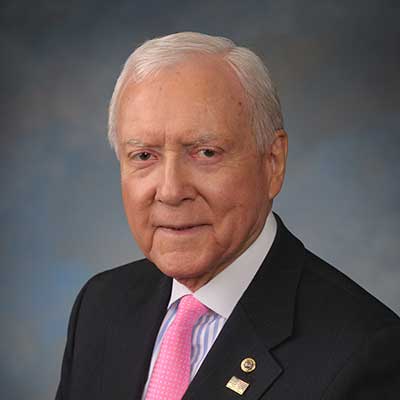
photo of Orrin G. Hatch
Teachers touch lives and transform communities by helping children realize their full potential. We believe America’s educators deserve greater recognition and support for their service, which is why we are joining millions of families across the country in commemorating National Teacher Appreciation Week. This week, and throughout the year, we can show teachers our appreciation by ensuring that they have the resources they need to succeed—both in life and in the classroom.
To that end, we have spearheaded efforts in Congress to bolster the teaching profession. Just last summer, we introduced the Teacher Loan Repayment Act (TELORA), a bipartisan bill that will make it easier for teachers to pay off their student loans. Our legislation improves loan forgiveness options for educators in several important ways:
First, it provides teachers entering high-needs schools with a monthly loan repayment that continues for up to six years, or for the length of the teacher’s employment. This monthly loan repayment increases each year an educator spends teaching—from $250 in years one and two up to $400 by years five and six. By increasing repayment amounts over time, we can incentivize and reward teachers who choose to stay in the classroom. This reform will help our most promising educators supplement their often paltry paychecks and alleviate the burden of student debt.
Second, our bill removes the current patchwork of wasteful loan assistance programs and replaces the current mess with one streamlined process that results in a single monthly sum for teachers. This periodic lump sum not only supplements a teacher’s pay in the cash-strapped period after graduation; it also eliminates much of the complexity, uncertainty, and delay that plagues existing loan forgiveness options. The promise of consistent and immediate loan assistance will also benefit students by encouraging more talented teachers to stay in the classroom. Ultimately, this reform will improve our schools and address the needs of students and teachers alike. Leveraging education dollars to attract, support, and retain high-quality teachers is an investment that will yield meaningful returns for decades to come.
In addition to reforming the loan repayment process, we must also increase professional development opportunities for educators. The first few years in the classroom can be overwhelming for many teachers, but we can support them by using valuable federal resources to expand access to education training programs. With this goal in mind, we helped author theElevating Educator Preparation through Innovation Act. This bill allows schools in high-needs districts the ability to partner with a broader range of organizations to provide more professional development opportunities for educators and help prepare them for a career in the classroom. In short, this proposal ensures that teachers have greater access to the resources they need to thrive in their professions and inspire a new generation of Americans.


The Every Student Succeeds Act (ESSA), which passed Congress last fall, also strengthens teacher training programs by allowing schools to use Senators Hatch and Warner: What Congress Can Do to Make Every Day Teacher Appreciation Day | TIME:

Charter school lobbyists blind legislators from coming up with fix for Detroit schools | Michigan Radio

Charter school lobbyists blind legislators from coming up with fix for Detroit schools | Michigan Radio:

Charter school lobbyists blind legislators from coming up with fix for Detroit schools


 Listen

If you’ve been paying attention to Lansing over the past several years, you know that the Michigan legislature seldom ever misses an opportunity to do the wrong thing.
This is due in large part to ideological fanaticism, strengthened by gerrymandering and term limits, which has given massive powers to lobbyists and special interests. In recent years, the House has been considerably worse than the Senate.
This is why, for example, the roads haven’t really been fixed. There are many other such examples, and here’s the newest: The Detroit public schools are about to run out of money.
Michigan has a constitutional obligation to provide an education for all its children. The state house of representatives, under pressure from the so-called “school choice lobby,” passed a plan that:
A) doesn’t provide enough money to fix the problem,
B) rejects the governor’s plea to provide some oversight over the proliferation of out-of-control charter schools, and
C) is more interested in punishing teachers and especially their unions than in helping children, most of whom are poor, black, and in districts that never vote Republican.
That is the cold, hard truth. There’s plenty of blame to go around for the Detroit schools, which were once among the finest in the nation.
Detroiters did much of it to themselves, by electing a series of incompetent and politicized school boards, who wasted vast amounts on huge contracts for failed superintendents.
The state then appointed a series of emergency managers who got lots of favorable press, but failed to fix the finances. What also baffles me is the recent story of the thirteen Detroit school principals charged with taking bribes and kickbacks on school supplies, black people stealing from the poor black children it is their supposed mission to help.
Probably the worst plague of all has been the charters, which I see as essentially private schools running on government money siphoned off from the public schools.
Some of these do provide a good education. Many are substandard, as a massive Detroit newspaper study has shown, and some run out of money and close down mid-year.
Under my government, I’d eliminate state funding to every charter in the state, and return that money to public education. Charters would be welcome to try and survive as private schools.
That may never happen, but Governor Snyder did propose as part of his Detroit school bailout plan a Detroit Education Commission that would have a role in determining where any new school would be allowed to open.
This makes a great deal of sense, largely for the same reason McDonald’s doesn’t allow two of its franchises on the same block. But the charters don’t want any oversight, and they got their puppets in the House to pass a bill without any Democratic support. This stands in stark contrast to the Senate, where both parties worked hard on a reasonable, bipartisan proposal.
The Senate plan would cost a little more, but actually might save the schools. Anyone who knows anything about this will tell you the House bill would be a disaster.
Now, we have to see if reason prevails. What happens won’t be important just for Detroit’s kids, but for the economic future of our state. I’m hoping for the best.
But I wouldn’t say I’m optimistic.
Jack Lessenberry is Michigan Radio's political analyst. Views expressed in his essays are his own and do not necessarily reflect those of Michigan Radio, its management or the station licensee, The University of Michigan.Charter school lobbyists blind legislators from coming up with fix for Detroit schools | Michigan Radio:

Friday, May 6, 2016

The Fraud of Computer Scoring on the Common Core Exams - Network For Public Education

The Fraud of Computer Scoring on the Common Core Exams - Network For Public Education:

The Fraud of Computer Scoring on the Common Core Exams


 By Leonie Haimson, co-chair, Parent Coalition for Student Privacy and a member of the Board of Directors of the Network for Public Education

On April 5, 2016 the Parent Coalition for Student Privacy, Parents Across America, Network for Public Education, FairTest and many state and local parent groups sent a letter to the Education Commissioners in the PARCC and SBAC states, asking about the scoring of these exams.
We asked them the following questions:
  • What percentage of the ELA exams in our state are being scored by machines this year, and how many of these exams will then be re-scored by a human being?
  • What happens if the machine score varies significantly from the score given by the human being?
  • Will parents have the opportunity to learn whether their children’s ELA exam was scored by a human being or a machine?
  • Will you provide the “proof of concept” or efficacy studies promised months ago by Pearson in the case of PARCC, and AIR in the case of SBAC, and cited in the contracts as attesting to the validity and reliability of the machine-scoring method    being used?
  • Will you provide any independent research that provides evidence of the reliability of this method, and preferably studies published in peer-reviewed journals?
Our concerns had been prompted by seeing the standard contracts that Pearson and AIR had signed with states. The standard PARCC contract indicates that this year, Pearson would score two thirds of the students’ writing responses by computers, with only 10 percent of these rechecked by a human being. In 2017, the contract said, all of PARCC The Fraud of Computer Scoring on the Common Core Exams - Network For Public Education:

New Orleans' Katrina school takeover to end, Legislature decides | NOLA.com

New Orleans' Katrina school takeover to end, Legislature decides | NOLA.com:
New Orleans' Katrina school takeover to end, Legislature decides


The Louisiana Legislature is ready to close a chapter in New Orleans and Hurricane Katrina history. Both the Senate and House have voted to reverse the 2005 state takeover of most of the city's public schools.
By July 1, 2018 -- or 2019, at the latest -- 52Recovery School District charters will move back to the oversight of the Orleans Parish School Board, unifying the school system once more, emptying out the Recovery system in New Orleans and symbolically healing a wound torn open after the hurricane.
The measure, Senate Bill 432, squeaked out of the House Thursday (May 5) on a 55-16 vote. It needed at least 53 votes to pass. It's now headed back to the Senate briefly because of a technical change made on the House side, but that alterations is expected to be little more than a speed bump in the process.  
The Senate unanimously approved essentially the same bill as the House, minus one small technical change, on April 20. Gov. John Bel Edwards has said he will sign the legislation once the Senate approves it again. 
But the re-unified school system won't be the same as the old days. In the past decade, the Recovery system has become a realm of independent charter schools, mini-kingdoms run by non-profit, non-elected boards. Those boards will continue to reign after the transition, making their own decisions but to meet the Orleans Parish School Board's benchmarks. Currently they report to the Recovery district, which is a unit of the state Education Department, and to the Louisiana Board of Elementary and Secondary Education.
The School Board won't be allowed to meddle in charters' affairs. The bill says the board may not impede charters' control of calendars, personnel, collective bargaining, contracts and curriculum, among other areas.
"For all intents and purposes, the schools will continue to function exactly as they do now," state Rep. Walt Leger, D-New Orleans, told the House. 
Why now?
Exciting to some, the post-Katrina takeover was painful to others. Everyone agreed New Orleans schools were in deep trouble – academically, financially and politically -- even before the deep waters unleashed by the storm and the levee failures. The School Board hurt its cause after the storm by refusing to reopen schools immediately, even as some private schools and public ones in the suburbs were managing despite their losses.
As a result, the Recovery system seized four fifths of New Orleans public schools. That was all the schools that had been officially deemed failures and many that were simply scoring below the state average.
But the state seizure came from Baton Rouge, without community discussion, at New Orleans' Katrina school takeover to end, Legislature decides | NOLA.com:

How to Appreciate Teachers | Daniel Katz, Ph.D.

How to Appreciate Teachers | Daniel Katz, Ph.D.:

How to Appreciate Teachers


It is the national PTA Teacher Appreciation Week 2016, and there are a number of ideas hosted on the PTA’s website for how you can #thankateacher.  If you are a teacher, you can start a GoFundMe campaign for classroom supplies or, if you are a parent, to personally thank your children’s teachers. The PTA offers a toolkit so you can plan events to honor teachers in your schools as part of a celebration that has taken place in the first week of May since 1984.
(The National Alliance for “Public” Charter Schools also decided to schedule their “National Charter Schools Week” for the same week this year in what I am sure was not a deliberate effort to steal some free publicity at all.)
Teacher Appreciation Week is, of course, a lovely idea, and when it was launched in 1984, I doubt any of its founders could envision the issues facing teachers and teaching today.  Teachers across the country are getting cards, flowers, baked good, and some very well deserved naches.  Historically, teachers always have been highly motivated by the affective rewards of teaching – seeing children learn, gaining affirmation from their successes, building relationships with children and colleagues – but who can say no a nicely concentrated dose of positivity?
Gift baskets and flowers, however, don’t address the other 175 days of the school year, and those remain, as they have for some time now, unnecessarily stressfuland subject to policies and incentives that diminish teachers’ autonomy and satisfaction in their work.  Teachers remain with policies that reduce their ability to plan their own classrooms, subjected to evaluations based upon invalid statistical methods using standardized test scores, and blamed for everythingfrom being lazy to putting the future of the nation in jeopardy.  No wonder thatenrollments in teacher preparation programs have fallen steeply from a high of over 700,000 in 2009 to barely above 450,000 in 2014 – high school students have ears and eyes, after all.  If we keep appreciating teachers like this, we may not have very many of them left to appreciate.
How should we really appreciate our teachers all year long?  A few suggestions:
Actually Treat Teachers as Professionals.  Education reform has an unfortunate tendency to treat teachers as if they are hopelessly outdated, the equivalent of a quill pen and parchment in the digital age.  In that view, teacherHow to Appreciate Teachers | Daniel Katz, Ph.D.:

Survey: Nearly half of teachers would quit now for higher-paying job

Survey: Nearly half of teachers would quit now for higher-paying job:

Survey: Nearly half of teachers would quit now for higher-paying job


They may be smiling, America, but your public school teachers are a frustrated bunch.
About six in 10 are losing enthusiasm for the job, and just as many say they spend too much time prepping students for state-mandated tests. Nearly half say they’d quit teaching now if they could find a higher-paying job.
The grim findings come from a wide-ranging survey of K-12 public school teachers released Thursday by the Washington, D.C.-based Center on Education Policy, a centrist think tank. Maria Ferguson, executive director for the center, said the results show teachers are “constantly feeling yanked in a million different directions.”
In all, 3,328 teachers completed the 67-question online survey last fall. Among the findings:
  • 62% of teachers say they spend too much time prepping students for state-mandated tests.
  • 81% of teachers say students spend too much time taking those tests.
  • 60% of teachers say they “don’t seem to have as much enthusiasm now” as when they started teaching.
While 64% say they like their school and are part of “a satisfied group” of teachers, 49% say the stress and disappointments “aren’t really worth it.” And 49% also say they’d leave teaching “as soon as possible” if they could find a higher-paying job.
Some even share similar feelings as their students: 42% of teachers agreed with the statement “I think about staying home from school because I am just too tired to go.”
Frustration with standardized testing apparently goes all the way to the top. In herapplication to become the 2016 National Teacher of the Year, Jahana Hayes, a Waterbury, Conn., high school history teacher honored Tuesday by President Obama at the White House, said keeping schools accountable through tests is important. But students “should be able to articulate what they have learned in innovative and Survey: Nearly half of teachers would quit now for higher-paying job:


We Won’t Improve Education By Making Teachers Hate Their Jobs - In These Times

We Won’t Improve Education By Making Teachers Hate Their Jobs - In These Times:

We Won’t Improve Education By Making Teachers Hate Their Jobs

How can you improve education by attacking educators?

This post first appeared at Common Dreams.
Does this sound like a place you’d like to work?
The work environment is “depressing” … “morale is at an all-time low.”
“It feels like a lot of busy work and hoop jumping and detracts from the work.” “Every move … needs to be documented and noted.”
“We have to respond to feedback given by an administrator who did a one-minute walk through and thought they knew what was going on … but didn’t.”
“There is no time for conversations” … “my salary has been frozen for six years” … “everyone feels like losers.”
Probably not.
But this is how classroom teachers and school principals describe what it’s like to work in public schools.
The comments come from a new survey of K-12 educators nationwide that yielded responses from 2,964 teachers and principals from 48 states. The survey was conducted by the Network for Public Education, a grassroots public school advocacy group founded by public school advocates, parents, educators, and university professors, including education historian Diane Ravitch. NPE recently released the survey findings in a report titled “Teachers Talk Back: Educators on the Impact of Teacher Evaluation” at its national conference in Raleigh, N.C.
The survey findings add strong anecdotal weight to previous statistical surveys of teachers that have found their work dissatisfaction is at an all time high. A survey from 2012, found teacher job satisfaction has plummeted to 39 percent, its lowest level in 25 years, according to one review of the findings.
Findings from a more recent survey, published in 2015, revealed only 15 percent of teachers feel enthusiastic about the profession, and about three in four “often” feel stressed by their jobs.
One likely outcome of this high work dissatisfaction rate among teachers is that many states and school districts are now reporting acute teacher shortages. One major school system, Philadelphia, still struggles to fill teacher vacancies, even as the current school year nears end.
Meanwhile, other reports reveal record low numbers of college students enrolling into teacher preparation programs, foretelling even worse teacher shortages in the future.
Certainly, it doesn’t help that teacher salaries are stagnant. As an op-ed writer in a recentU.S. News and World Report noted, “Teachers haven’t gotten a raise in 15 years.” But poor teacher pay is a chronic problem that doesn’t by itself explain the shortages.
Teacher pension programs are also being chiseled away, but why would even short-timers—such as those coming from Teach for America, whose recruitment is down 35 percent over three years—be discouraged?
Indeed, the NPE survey reveals there are factors other than economics that are making teachers’ work-lives miserable.
What value added subtracts from teaching
As an article for Education Week explains, the NPE survey had a specific target in mind: to paint a qualitative, descriptive portrait of the effects of new teacher evaluation systems that are now in place in most schools.
“The new evaluation systems,” according to the EdWeek reporter, “were mostly developed as part of the U.S. Department of Education’s Race to the Top competition and NCLB-waiver projects” during the Obama administration. The evaluations combine the traditional practice of classroom observations with a heavy emphasis on student test scores. The test scores are fed into a computer-driven algorithm typically referred to as a value-added model, or VAM, which, according to the reporter, “attempts to estimate how much a teacher has contributed to student-achievement growth by factoring in the gains the student We Won’t Improve Education By Making Teachers Hate Their Jobs - In These Times: