Latest News and Comment from Education

Tuesday, September 1, 2015

Can Digital Games Improve Our Schools? - Living in Dialogue

Can Digital Games Improve Our Schools? - Living in Dialogue:

Can Digital Games Improve Our Schools?


By John Thompson.
With The Game Believes in You, Greg Toppo joins the ranks of great authors like Anya Kamenetz and James Paul Gee, who articulate a new, dynamic, creative, and holistic path to 21st– century schools. Like Kamenetz, Toppo shows how assessments embedded in computer games could inform authentic learning without the inherent downsides of today’s test-driven pedagogies. When combined with video gaming, these digital tools could unleash a golden age of learning. Like Gee, Toppo understands, “’Nobody has successfully underestimated a child.’” And, as Toppo concludes, children live inside a magic circle and know how powerful it is.” We adults “need to step back … then trust their creativity.”
Toppo’s basic political message is solid:
At exactly the same time that schools have taken the questionable path of implementing more high-stakes standardized tests keyed to the abilities of some imaginary bell-curved students, games have gone the opposite route, embedding sophisticated assessment into gameplay … becoming complex learning tools that promise to deflate the tired ‘teach to the test’ narrative that weighs down so many great teachers and schools.
Although my view of history is closer to that of Larry Cuban’s skeptical appraisal of how technology does and does not produce change, I would like to see Toppo proven right.  While I know nothing firsthand about these newfangled games that kids are all playing, when I first began teaching we received great professional development on turning group learning into a game. Those fun lessons produced great results throughout my career, even after they were dismissed by test-lovers as silly progressivism. So, I welcome the potential of digital games to make school more engaging.
I also respect Toppo’s scrupulous neutrality in regards to education reform wars. While I am not his editor, I can play one in the blogosphere.
Toppo acknowledges that “teachers have had good reason to keep new technology at arm’s link,” and part of Can Digital Games Improve Our Schools? - Living in Dialogue:

Thompson: Fact Checking the New Orleans Reformers' Spin This Week In Education:

This Week In Education: Thompson: Fact Checking the New Orleans Reformers' Spin:

Thompson: Fact Checking the New Orleans Reformers' Spin


When I first read the Education Research Alliance (ERA) report on the effectiveness of the competition-driven New Orleans model of reform, it was clear that true believers in "relinquishment" and market-driven reform would be disappointed by its findings. However, they have still spun the mixed results from the NOLA corporate reform model as a great success.
I have left the fact checking of the ERA's methodology and data to the experts. I've mostly limited myself to fact checking the reformers' spin - the soundbites they use to put the NOLA record in the best possible light, and to use its model to break unions and extend test-driven reform across the nation.
I admit to being surprised that analyses such as those of the NEPC, Andrea Gabor, The International Business Times, In These Times, Julian Vasquez Heilig, Mercedes SchneiderGary Rubenstein, and others have found so many problems with the ERA research. I still remain most shocked by the soundbite of the respected researcher Douglas Harris who has contributed to headlines asserting that the reforms "worked."
At first, I assumed Harris was just being diplomatic when he said that the "typical elementary- or middle-school student's scores rose by 8 to 15 percentage points," and that "We are not aware of any other districts that have made such large improvements in such a short time." 
In fact, I'm not aware of many districts that haven't made dramatic increases in bubble-in test scores over a short time, and then saw those illusory gains disappear.
It is hard to believe that any scholar would be so quick to trust bubble-in data after reading Is the No Child Left Behind Act Working? by Bruce Fuller, Kathryn Gesicki, Erin Kang, Joseph Wright. Fuller et. This Week In Education: Thompson: Fact Checking the New Orleans Reformers' Spin:

CURMUDGUCATION: Minneapolis Terrible Reading Choices

CURMUDGUCATION: Minneapolis Terrible Reading Choices:

Minneapolis Terrible Reading Choices


Imagine that you are a Native American teacher, working with six year old students, and you come back to start the school year, only to discover that the district would like you to teach your students that Christopher Columbus "discovered" America, as if your own ancestors had never even existed. Or depicted them as a culturally tone-deaf cartoon. And when you tried to point out that the materials you were being directed to use were sexist, racist and just plain wrong, your concerns were brushed off and dismissed.

That's the situation that Minneapolis teacher Shana Dickson found herself in last week, as Minneapolis Schools decided to kick off their school year with a truly terrible $1.2 million choice in reading materials for its K-2 students.

The story is laid out in a compelling and invaluable series from Sarah Lahm on her blog Bright Lights Small City. The series of posts start here, and you can follow trhe links until you need to jump tothis post and today's update.

I'm not going to recap all of Lahm's work-- you should go read it for yourself-- but there are details 
CURMUDGUCATION: Minneapolis Terrible Reading Choices:

With eye on local control, Newark officials push to speed up state evaluation process | NJ.com

With eye on local control, Newark officials push to speed up state evaluation process | NJ.com:

With eye on local control, Newark officials push to speed up state evaluation process


NEWARK — City school officials are throwing their support behind a measure aims to speed up a evaluation process that could prove critical in determining just how soon Newark's schools could emerge from two decades of state control.
Members of the city's School Advisory Board voted 8-0 last week in support of a resolution asking the state Department of Education to deliver the results of its QSAC (Quality Single Accountability Continuum) evaluations within 90 days after the assessments are complete.
Board member Rashon Hasan, who drafted the resolution, said the action was born out of frustration with the current process, which typically keeps districts waiting over a year to receive their results.
For instance, officials received their scores for the 2013-14 year in early August, more than 13 months after the school year ended.
"I think it impedes upon our ability to implement a sound action plan, to resolve any of those issues that have been identified because there's such a delay," Hasan said.

PLUS: Looking to trim deficit, Newark puts hundreds of unassigned teachers back to work


The annual assessments carry exceptional weight in state-controlled districts such as Newark, where they can serve as a measure of whether the school systems are ready to once again govern themselves.
City schools scored over 80 percent on all five measures of the test in 2011, placing it alongside so-called "high-performing" districts as classified by the state. The state declined to relinquish control, however, and scores once again fell the following year — something Hasan said might have been prevented had officials received them earlier.
"The state Department of Education owes that to all districts, especially districts that are under state supervision," Hasan said. "We really need to have those real-time results."
The resolution passed last week will be sent on to the New Jersey School Boards Association, and presented at an upcoming delegate conference. If other districts around the state follow Newark's lead, the organization could begin lobbying legislators to impose the 90-day deadline.
Department of Education Deputy Press Secretary David Saenz said that there was no official timetable for how long the test takes, though an initial self-assessment by With eye on local control, Newark officials push to speed up state evaluation process | NJ.com:

The Fight Over Dyett High School | #FightForDyett | WTTW

The Fight Over Dyett High School | Chicago Tonight | WTTW:

The Fight Over Dyett High School


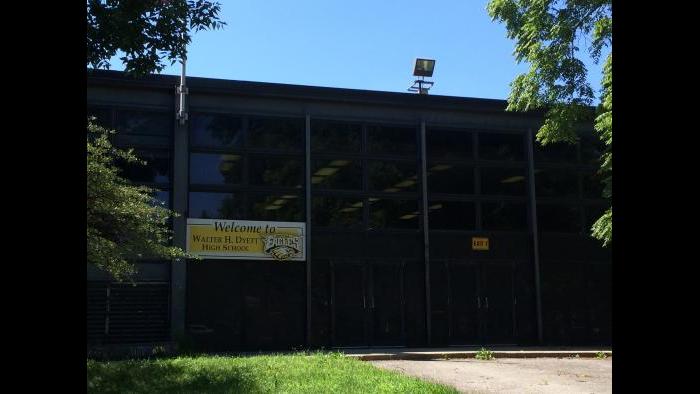
Though Chicago Public Schools decided to phase out a low-performing, under-enrolled school in the city's Bronzeville neighborhood, it has agreed to reopen the school in the 2016-2017 school year.
The district has opened a request for proposals for the school to be reinvented, but a coalition of activists have gone on a hunger strike, claiming the city and the district don't really intend to allow the school to reopen.
We look at the history of the closure and what the new proposals are. 
TRANSCRIPT
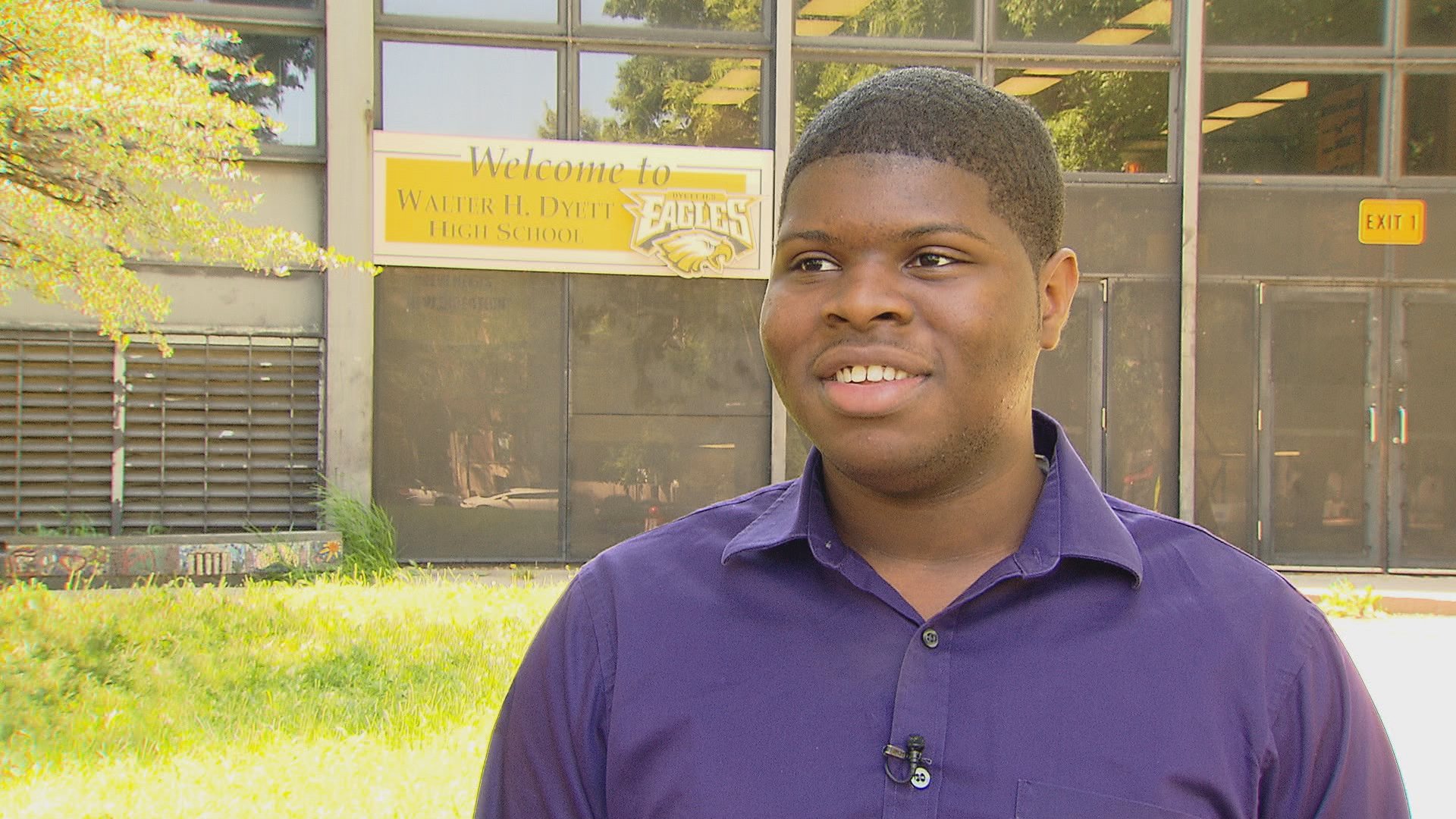
Kenneth BrownKenneth BrownBrandis Friedman: As he enters his freshman year of college, Kenneth Brown can proudly say he graduated at the top of his high school class – a class of 12 students.
Kenneth Brown: It wasn't the senior experience I was expecting it to be.
BF: Chicago Public Schools began phasing out Dyett High School three years ago.
By the time Kenneth’s class graduated, few students remained, and even fewer teachers.
KB: My last year of high school was … we had to take a lot of classes online, we didn't have math, we had to take gym online, art, science online. I would say you probably spent more time in computer lab, than you spent in an actual class with a teacher.
Charles CampbellCharles Campbell
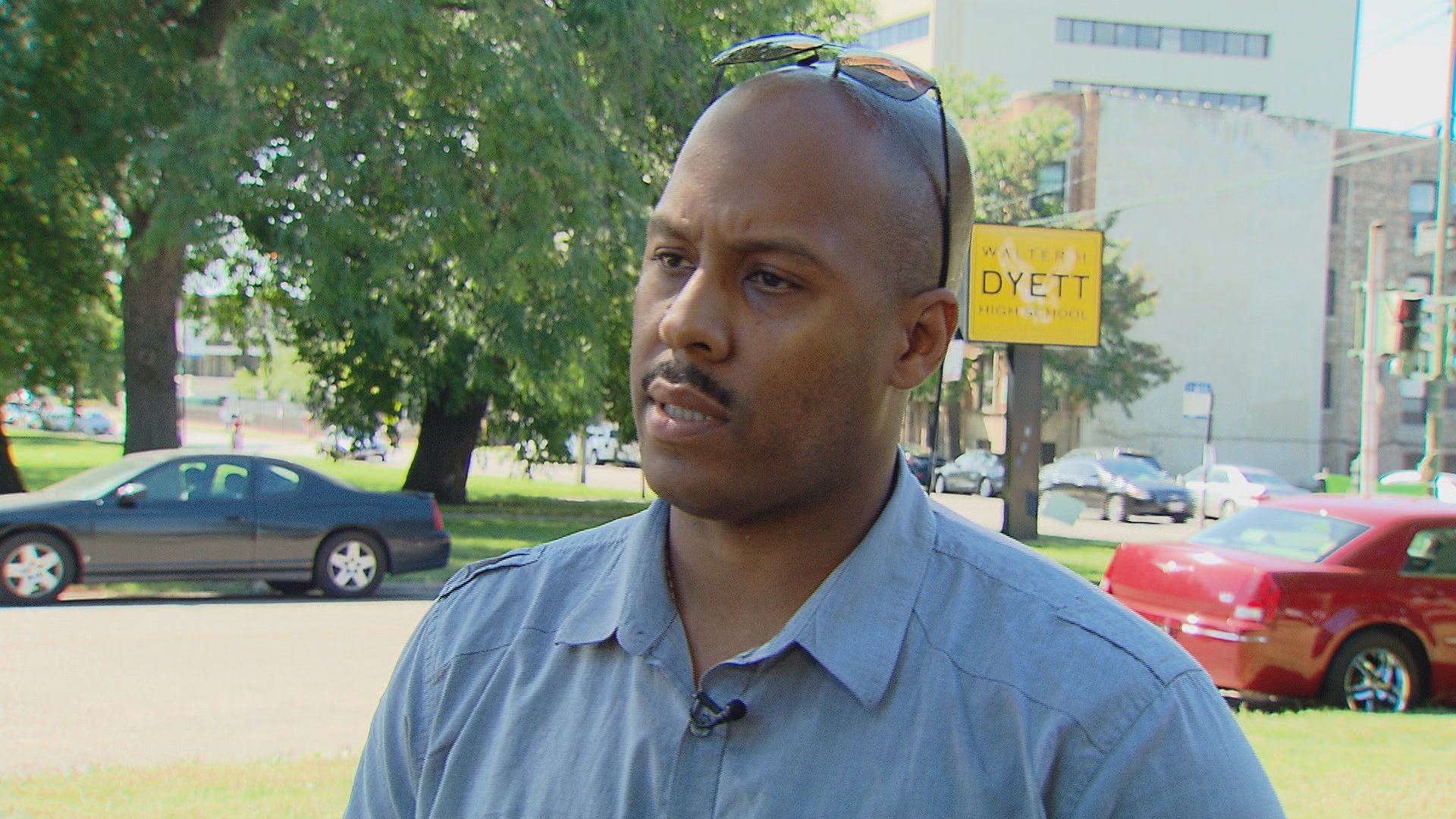
BF: Charles Campbell was the school’s last principal.
Charles Campbell: It was rough. My biggest challenge was battling the low morale, a lot of stakeholders, parents, students, staff felt as though they were forgotten, they were left to the wayside. 
BF: Records found on the district website show Dyett High was chronically underperforming. A level-three school on intensive support for 10 years.
The average ACT score in 2014 was 14.1 -- four points below the district average.
A 2012 CPS presentation on the school’s closing showed that two out of three Dyett students don’t graduate, 15 out of 16 students weren’t meeting standards on state tests, and only 25 percent of students in the boundary area chose to attend the high school.
BF: But none of that has stopped the community from demanding the district reopen and revitalize it.
Jitu Brown: We don't have a stable neighborhood high school in our community. Everything is either selective enrollment or charter. We have a problem with that, because we pay taxes, so why can't we have quality neighborhood schools.
BF: This year, CPS agreed to hear proposals for a new Dyett, and received three.
Among them, a proposal for the Dyett Global Leadership and Green Technology High School, submitted by a group called the Coalition to Revitalize Dyett High School.
The group advocates a high quality, open-enrollment school focused on environmental sustainability and leadership for peace and justice.
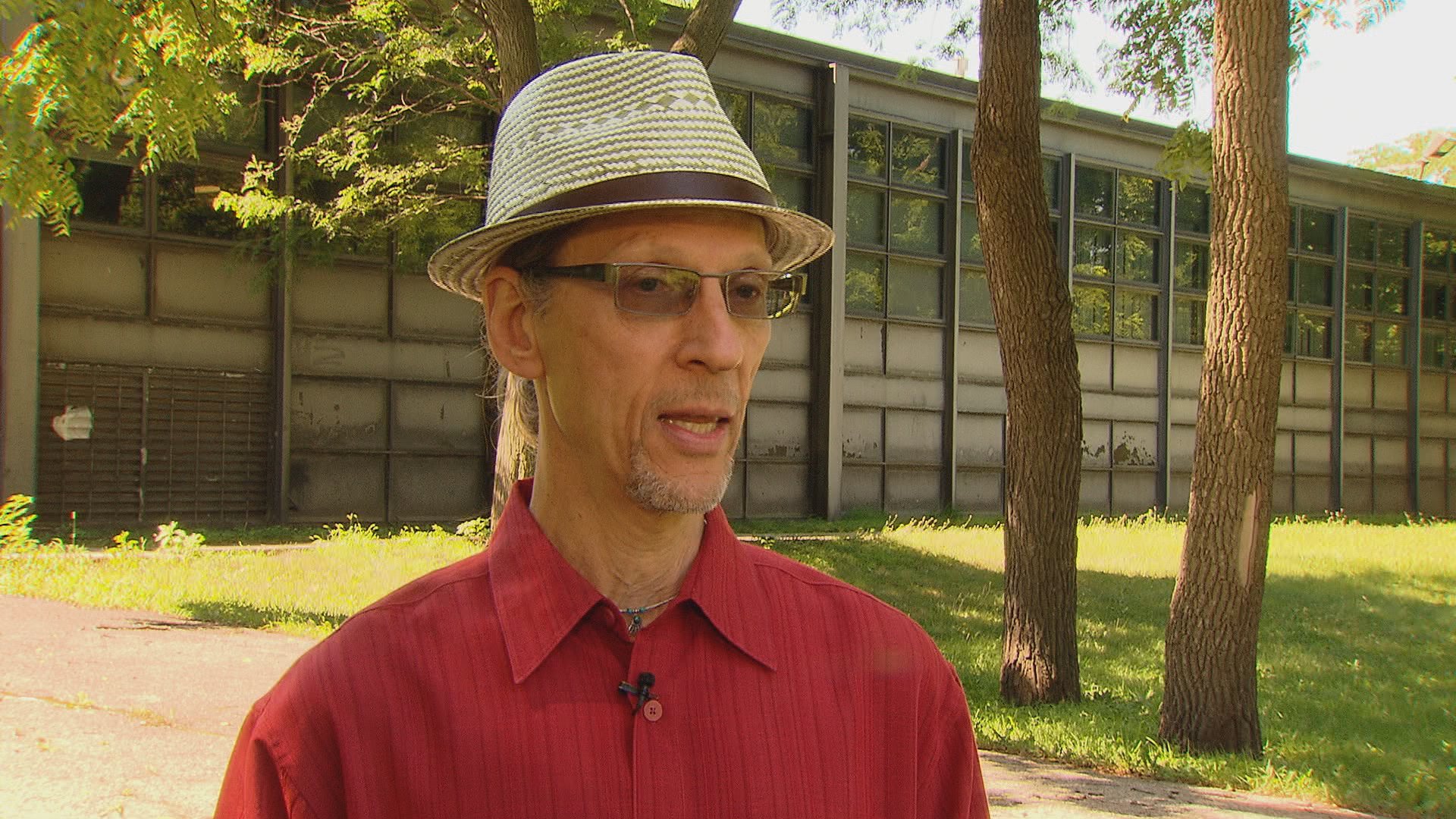
Rico GutsteinRico GutsteinUIC professor Rico Gutstein helped develop the proposal.
Rico Gutstein: It's tied into the idea of green technology because clearly we have economic and environmental ecological disaster facing us on a global scale, so we actually need global leaders who can emerge from the local to the global situation.
BF: Another comes from the arts organization Little Black Pearl Workshop, which already operates a CPS high school at its center in Kenwood.
LBP also teaches thousands of students through summer and after-school programming.
The non-profit proposes an open-enrollment, visual and performing arts high school, where students would also receive college-prep instruction.
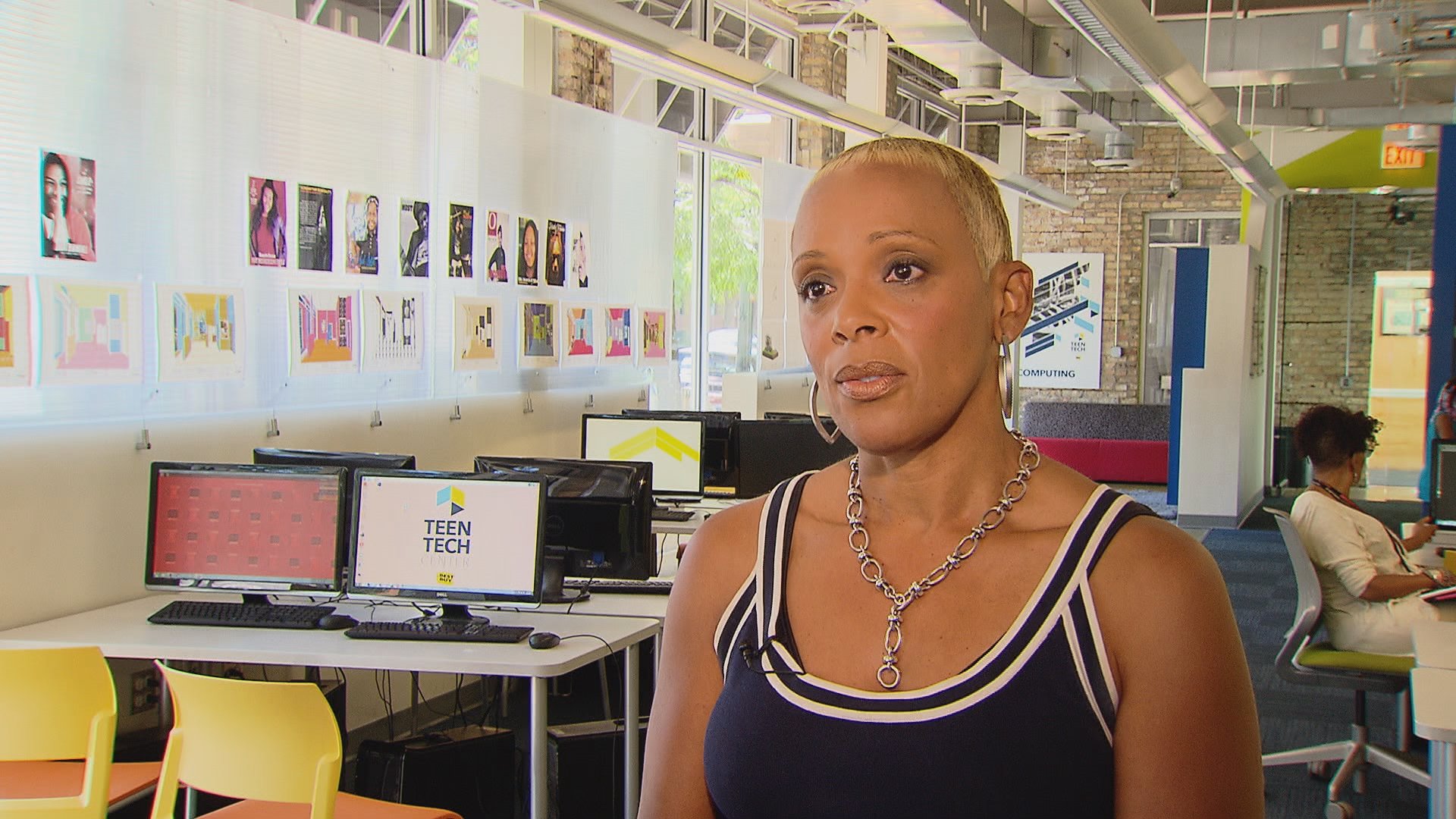
Monica HaslipMonica HaslipMonica Haslip of LBP: Because we know and have been able to see over the years how impactful the arts has been for a lot of students that have been a part of our other programs, our after school programs, summer program, we have artists that are now internationally known artists that came out of Little Black Pearl. We know that given access it creates a whole new world of opportunity for them.
BF: The third proposal comes from Dyett’s former principal, Charles Campbell.
His rebranding idea: The Washington Park Athletic Career Academy – a sports-themed high school using project-based learning to prepare students for college.
CC: Picture being a math teacher trying to teach statistics, but your students are just not getting the concept of statistics. What better way to engage students, [then to] have them compete in a fantasy football league, or a fantasy basketball league. Then you show the student, ‘This is how stats work in real time, this is what general managers get paid six figures to do, to figure out who stays, who they’re going to trade, who they’re going to release, based on statistical performance.’
BF: When Dyett was closed, incoming students in the boundary area were reassigned to Phillips High School, almost two miles away.
But it’s also a level-three school, and it’s been on intensive district support even longer than Dyett, at 19 years.
Map: Click on the icons to see school info, including CPS rating.
It’s why Anne Jones, a mother of four, is planning to send her 14-year-old daughter Tyler and hour away to a school in Little Village, rather than find a closer high school.
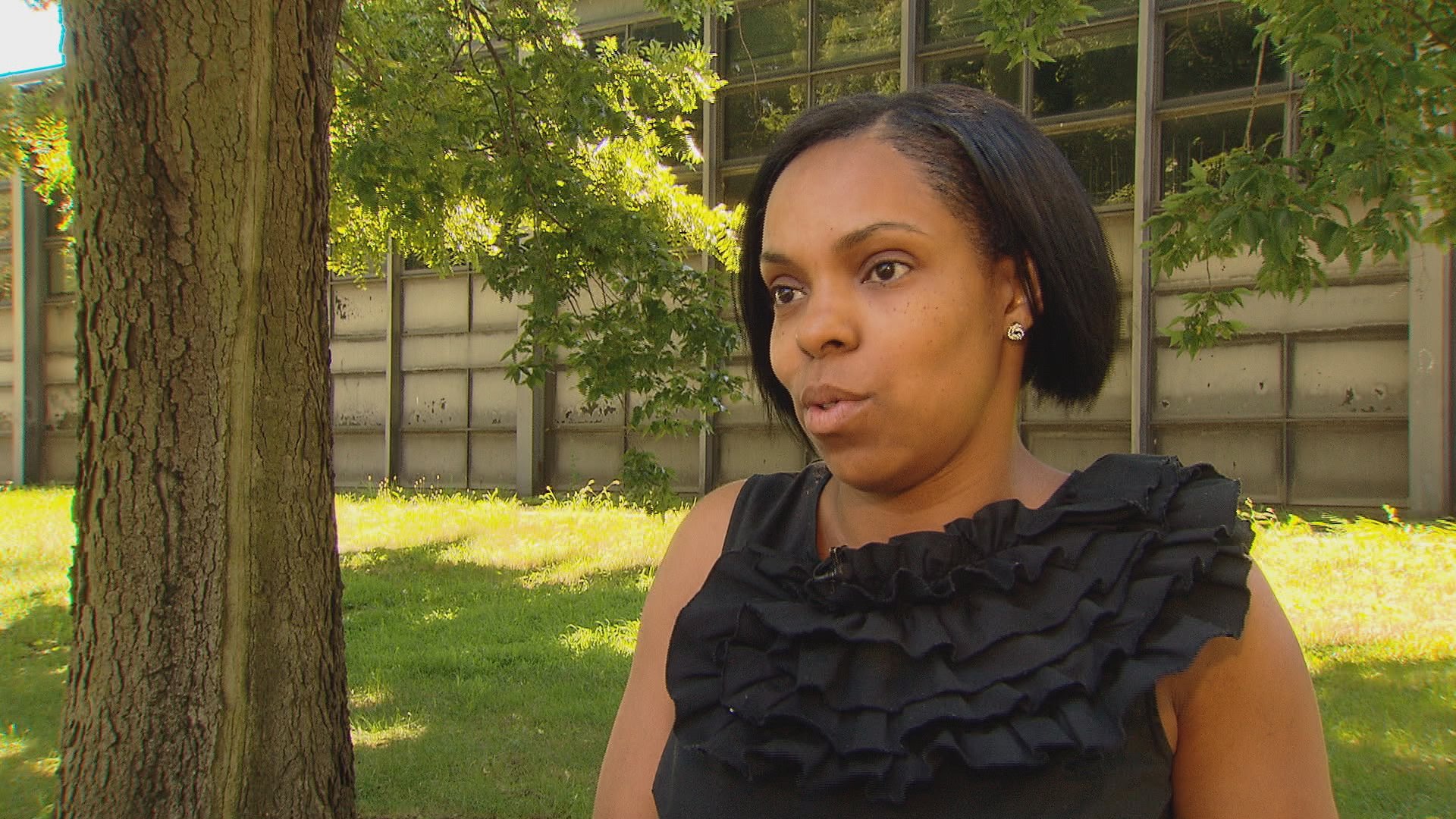
Anne JonesAnne Jones
Anne Jones: She's going to commute two hours throughout the day. I'm afraid because of all the killings, children missing. She's not used to that kind of a travel. I'm being forced to introduce her to something she's not even used to.
BF: The district says there are three other CPS high schools nearby that would-be Dyett students can choose from – all open enrollment.
A spokesman says in a statement:
"As CPS continues to work through the RFP process, the new Board and administration want to be sure that they have time to make the right decision for students. Board of Education members and CPS leadership have met with members of the community to discuss the situation many times over the past year and as recently as last week with Board President Frank Clark. As we consider these proposals, we remain mindful of the declining population in the area, which is losing students and already has 12 high schools within a 3-mile radius. We also respect the community’s passion for Chicago’s children, and we will make the best possible decision to give all the children of the city a good education."
Though the people behind those three proposals may differ on the type of school Dyett should become, they can at least agree that the community needs a school on this campus.
For Chicago Tonight, I’m Brandis Friedman.

Below, Brandis' photos from a recent trip to Dyett High School and Little Black Pearl Workshop.
 The Fight Over Dyett High School | Chicago Tonight | WTTW:

Common Core SBAC testing – Big Cost, No Value - Wait What?

Common Core SBAC testing – Big Cost, No Value - Wait What?:

Common Core SBAC testing – Big Cost, No Value


Over the past two years Connecticut taxpayers have dropped $32 million on the Common Core SBAC tests and another $12.4 million for implementation of the Common Core.  The Connecticut state budget allocates another $43.1 million for the Common Core and Common Core SBAC tests for this year and next.
Add in the tens of million spent by local school districts on computers and internet expansion so that students can take the on-line tests, along with the substitute teachers who were brought in so that full-time teachers could be pulled out to “learn about the Common Core,” and well over $150 – $200 million dollars (or more) in public funds have been diverted from instruction to the Common Core and Common Core testing disaster.
So what has all that money gotten the students, parents, teachers and taxpayers of Connecticut?
Public education advocate, commentator and educator Ann Policelli Cronin addresses the issue in her latest blog post entitled, SBAC: The Beginning Of The End
So what did we learn from the release of the SBAC scores?  …
Not much.
We did learn that the achievement gap has not been in any way affected by implementation of the Common Core. I have been in a position to analyze CMT and CAPT scores over many years, and the SBAC scores tell the same story as the CMT and CAPT scores. That story is that students in affluent communities score significantly higher than students in poor communities do. No administration of a test will ever change that fact. No set of national standards or standardized test on those standards will ever “close the 
Common Core SBAC testing – Big Cost, No Value - Wait What?:

Teaching English at Mission High School (Kristina Rizga) | Larry Cuban on School Reform and Classroom Practice

Teaching English at Mission High School (Kristina Rizga) | Larry Cuban on School Reform and Classroom Practice:

Teaching English at Mission High School (Kristina Rizga)


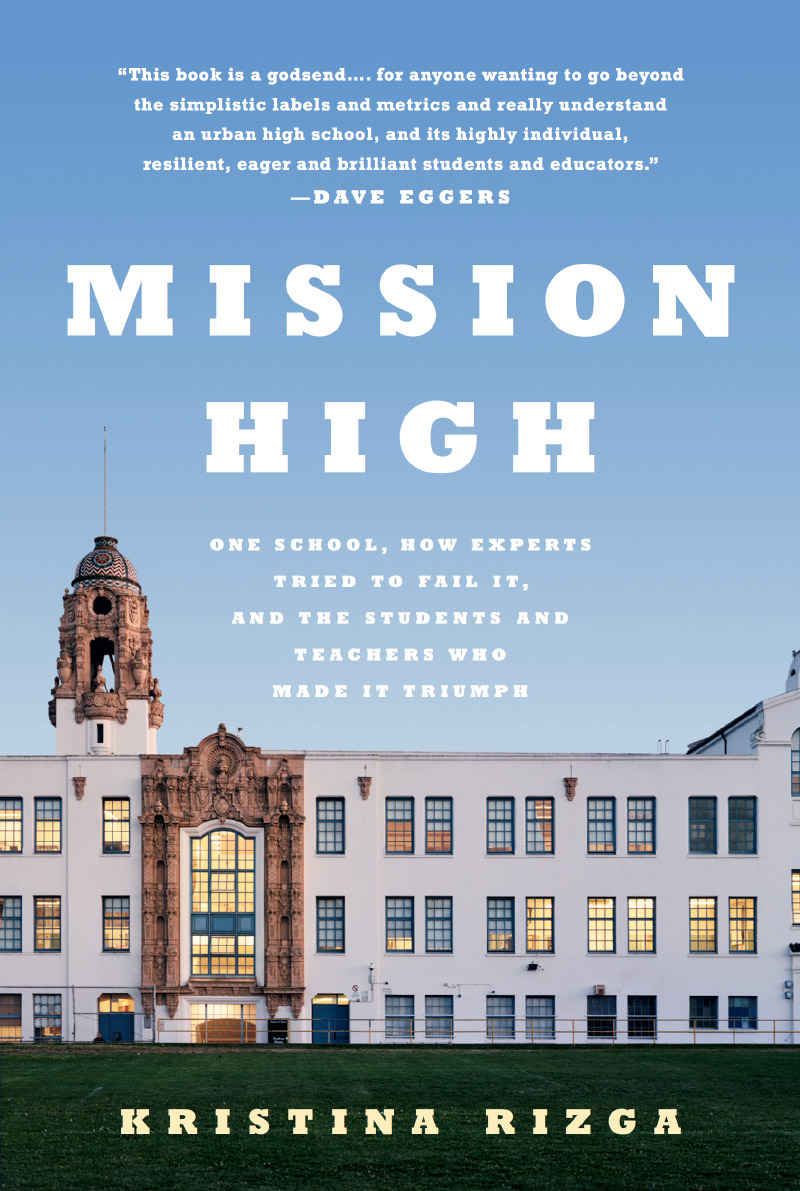
This is the second post (see here) drawn from journalist Kristina Rizga’s account of teaching and learning at San Francisco Unified School District’s Mission High School. Rizga is a journalist who spent four years observing and interviewing teachers and students at Mission High School in San Francisco. Her book, Mission High (New York: Nation Books, 2015) contains descriptions of both students and teachers inside and outside classrooms.* Mission High School has 950 students with the vast majority coming from Latino, African American, and Asian American families. Seventy-five percent are poor and 38 percent are English Language Learners.
What distinguishes Rizga’s book from so many journalist and researcher accounts about high schools with largely minority and poor students are two facts: First, she spent four years–a life time to researchers–at the school. Few researchers or journalists ever spend more than a year in a high school. The second fact is that Rizga addresses a long-time paradox buried at the core of  U.S. schooling in an age of accountability-driven reform when federal and state mandates (No Child Left Behind) label many schools as failing. The paradox is straightforward. Mission High School had been tagged as a failing school–“low performing” is the jargon of the day–and had been a step away from being shut down through No Child Left Behind rules. Yet 84 percent of its graduates were accepted to college, attendance rates have risen above the district high school average and suspensions have fallen between 2008 and 2014 nearly 90 percent. As one student put it: “How can my school be flunking when I am succeeding?”  Indeed, the contradiction of a school labeled by authorities as failing, succeeding with students beyond what other district high schools achieve is the puzzle that Rizga unravels in this book.    
With Rizga’s permission, I offer here descriptions of lessons in math, social studies, and English. This post describes an English Teaching English at Mission High School (Kristina Rizga) | Larry Cuban on School Reform and Classroom Practice:

Dyett hunger strikers begin third week without food - #FightForDyett

Dyett hunger strikers begin third week without food - Chicago Tribune:

Dyett hunger strikers begin third week without food 


Dyett hunger strikers begin third week without food, call on Mayor Emanuel to move meeting to an earlier date. Aug. 31, 2015. (WGN-TV)Dyett hunger strikers begin third week without food - Chicago Tribune:


Louisiana Educator: The Great Predatory Charter School Ripoff

Louisiana Educator: The Great Predatory Charter School Ripoff:

The Great Predatory Charter School Ripoff

Lafayette group Exposes Charter Enrollment Violation


Charter Schools - Dividing Communities since 1991


This story in the Lafayette advertiser helps to demonstrate for us what a predatory charter school does. But the Advertiser story only describes the tip of the iceberg of charter school profiteering.

Thank you to the public school advocates of the group, Power of Public Education, for insisting that the Acadiana Renaissance Charter Academy in Lafayette follow state laws and their contractual agreements relative to implementing a balanced student enrollment. The only problem is that BESE is apparently reluctant to enforce its own regulations.

The operators of these relatively new charters in Louisiana, know that they can rig the game and make their managers rich by simply suppressing the number of at-risk students served. Let me show you why this strategy is unfair to students, taxpayers and to our real public schools.


This new charter school in Lafayette operated by Charter Schools USA has contrived to enroll only 30.3% of its students from the economically disadvantaged population in the Lafayette area. This is a much lower percentage of at-risk students than is the average for the state or the area. The charter operators know that there is a remarkable difference in the academic performance of free lunch-qualifying students compared to more advantaged students.

The following chart demonstrates the relationship between student body wealth and school performance in our Louisiana public school districts serving the lowest percentages of low income students. Note: Every one of these school systems is rated as an "A" school system! (Click on image to enlarge)


The above data makes it clear why there is a regulation in Louisiana Educator: The Great Predatory Charter School Ripoff: