Latest News and Comment from Education

Monday, April 6, 2015

At Success Academy Charter Schools, Polarizing Methods and Superior Results - NYTimes.com

At Success Academy Charter Schools, Polarizing Methods and Superior Results - NYTimes.com:

At Success Academy Charter Schools, Polarizing Methods and Superior Results


At most schools, if a child is flailing academically, it is treated as a private matter.

But at Success Academy Harlem 4, one boy’s struggles were there for all to see: On two colored charts in the hallway, where the students’ performance on weekly spelling and math quizzes was tracked, his name was at the bottom, in a red zone denoting that he was below grade level.


The boy, a fourth grader, had been in the red zone for months. His teacher, Kristin Jones, 23, had held meetings with his mother, where the teacher spread out all the weekly class newsletters from the year, in which the charts were reproduced. If he studied, he could pass the spelling quizzes, Ms. Jones said — he just was not trying. But the boy got increasingly frustrated, and some weeks Ms. Jones had to stop herself from looking over his shoulder during the quizzes so she would not get upset by his continued mistakes.

Then, one Friday in December, she peeked at his paper, and a smile spread over her face. After he handed in his quiz, she announced to the class that he had gotten a 90. “I might start crying right now,” she said, only half-joking. “I’ve got to call your mom.”

In its devotion to accountability, Success Academy, New York City’s polarizing charter school network, may have no peer.


Though it serves primarily poor, mostly black and Hispanic students, Success is a testing dynamo, outscoring schools in many wealthy suburbs, let alone their urban counterparts. In New York City last year, 29 percent of public school students passed the state reading tests, and 35 percent passed the math tests. At Success schools, the corresponding percentages were 64 and 94 percent.

Those kinds of numbers have helped Success, led by Eva S. Moskowitz, expand to become the city’s largest charter network. By next year Ms. Moskowitz, known for her attention-grabbing rallies and skirmishes with the teachers’ union and Mayor Bill de Blasio, will have 43 schools; a proposal by Gov. Andrew M. Cuomo could get her closer to her goal of 100. That would give Success more schools than Buffalo, the state’s second-largest district.

In a rare look inside the network, including visits to several schools and interviews with dozens of current and former employees, The New York Times chronicled a system driven by the relentless pursuit of better results, one that can be exhilarating for teachers and students who keep up with its demands and agonizing for those who do not.

Rules are explicit and expectations precise. Students must sit with hands clasped and eyes following the speaker; reading passages must be neatly annotated with a main idea.

Incentives are offered, such as candy for good behavior, and Nerf guns and basketballs for high scores on practice tests. For those deemed not trying hard enough, there is “effort academy,” which is part detention, part study hall.

For teachers, who are not unionized and usually just out of college, 11-hour days are the norm, and each one is under constant monitoring, by principals who make frequent visits, and by databases that record quiz scores. Teachers who do well can expect quick promotions, with some becoming principals while still in their 20s. Teachers who struggle can expect coaching or, if that does not help, possible demotion.

Rachel Tuchman, 25, said that during her three years as a teacher at Success, she had friends who worked in the fields of finance and consulting, and she went to work earlier and stayed later than they did.

“You’re being treated like you’re on the trading floor at Goldman while you’re teaching in Harlem,” said Ms. Tuchman, who is now in her first year at Yale Law School.

She also said that she thought the workload was necessary to achieve the results that Success has, adding: “It takes a very specific type of person who can handle the pressure.”

One consequence of the competitive environment is a high rate of teacher turnover. Some teachers who left said that the job was too stressful. Others said they left because they disagreed with the network’s approach, particularly when they believed it was taken to extremes. In an internal email that some former teachers said typified the attitude at some schools, one school leader said that students who were lagging should be made to feel “misery.” Suspension rates at Success schools, compared with public schools, are higher.

Former staff members described students in third grade and above wetting themselves during practice tests, either because teachers did not allow them to go to the restroom, which Ms. Moskowitz disputed, or because the students themselves felt so much pressure that they did not want to lose time on the test.

Jasmine Araujo, 25, who joined Success through the Teach for America program, quit after half a year as a special-education teacher at Success Academy Harlem 3. She now teaches at a charter school in New Orleans. “I At Success Academy Charter Schools, Polarizing Methods and Superior Results - NYTimes.com:


School Superintendents' Association Pushes Congress on NCLB Rewrite - Politics K-12 - Education Week

School Superintendents' Association Pushes Congress on NCLB Rewrite - Politics K-12 - Education Week:

School Superintendents' Association Pushes Congress on NCLB Rewrite


In an unprecedented move by the nation's public school superintendents' groups at both the state and national level, AASA, the School Superintendents Association, and 49 state affiliates sent a letter to members of Congress Monday urging them to overhaul the No Child Left Behind Act, the latest iteration of the Elementary and Secondary Education Act.
"We cannot continue to ask our nation's schools and the students they serve to live under the approach offered by the administration's waivers," wrote  Daniel Domenech, executive director, in the letter dated April 6. "Congress alone can and should address the shortcomings of the current law and the waivers."
Education advocates send letters to lawmakers all the time, so why is this one notable?
Well, for starters, it's the first time AASA has wrangled this many of its state affiliates—which represent an incredibly diverse group of school system leaders—to sign on to one policy letter.
The AASA has affiliates in every state but Hawaii, and has two in North Carolina. And with the exception of California, all of its state affiliates signed on to the letter.
The push from the superintendents' organization comes at a precarious time for lawmakers trying to rewrite the federal K-12 law. A Republican-backed bill in the House is still stalled after being yanked from the floor amid dwindling GOP support for the measure. And after months of negotiating, education leaders in the Senate are set to unveil a bipartisan bill this week (Politics K-12 got the scoop on that late last week) and begin marking up the bill next week, a delicate process that's sure to test the politicking skills of both parties.
With so much uncertainty still surrounding the legislative process and an increasingly clogged congressional calendar leading into the appropriations season, the AASA letter is a strong reminder to lawmakers that this is a priority for almost every school system in the country.
"AASA as well as our affiliates nationwide are urging Congress to move forward with the very critical work of reauthorizing ESEA," Domenech wrote. "We need legislation that supports state and local innovations that strike the appropriate balance between federal government authority, School Superintendents' Association Pushes Congress on NCLB Rewrite - Politics K-12 - Education Week:

Low bidder says California will overpay testing contractor | The Sacramento Bee The Sacramento Bee

Low bidder says California will overpay testing contractor | The Sacramento Bee The Sacramento Bee:

Low bidder says California will overpay testing contractor


California education officials relied on three paper slips and a box to help determine who would win a nearly quarter-billion-dollar contract to overhaul the state’s system of testing students.
At a state Board of Education meeting last month, board President Michael Kirst drew each of the three firms’ names to decide the order in which they would present their case.
“It will be a random choice,” Kirst said, illustrating the lengths taken to help ensure a thorough and evenhanded bidding process.
The apparent loser, however, says it was anything but fair. Pearson School questions whether it was put through an elaborate charade designed to pick the state’s current testing vendor, Educational Testing Service. Pearson representatives want the job rebid and are threatening a lawsuit.
In the world of lucrative government contracts, the effort to design and build a system for more than 3 million students a year could have far-reaching implications. The new assessments are considered a cornerstone of the state’s education system, helping improve classroom instruction and marking progress in English and mathematics for kindergarten through 12th grade. Given the innovative approaches being considered, experts said the winning bidder would be in position to parlay the agreement to provide tests to other states.
At the urging of Superintendent of Public Instruction Tom Torlakson, Kirst and his colleagues unanimously agreed to pursue a pact with ETS, which is proposing a three-year deal worth $240 million, $34 million more than the plan submitted by Pearson. ETS has provided testing in California for more than a dozen years.
“ETS’ flexibility and corporate agility will allow negotiations and scope(s) of work to benefit not only the (department), but also our students, educators, and the people of California,” Torlakson said.
In the days that followed, Pearson attorney Donald G. Featherstun wrote that the company had serious concerns about the propriety of the department’s evaluation. He pointed to the decision to shred original notes used to score the bids and demanded officials “cease destroying any additional documents,” according to a letter obtained by The Sacramento Bee.
The company also complained that ETS was required to essentially adopt a portion of Pearson’s plan calling for the recruitment, training and paying of teachers to help score parts of the standardized tests.
Doug Kubach, the president and chief executive of Pearson School, the assessment division of London-based Pearson, urged in a letter of his own that the job be rebid “to remove any taint to the procurement process.”
“We have a lot of questions about the process because it does not seem to have been transparent and necessarily is a process that leads to the best result for the teachers and taxpayers in California,” he said in an interview.
Keric Ashley, deputy state superintendent, said in a written statement that although costs are crucial, the most important consideration is the technical ability of a company to test millions of students every year,Low bidder says California will overpay testing contractor | The Sacramento Bee The Sacramento Bee:

Could Rahm Emanuel Lose Chicago Race to 'Hanukkah Harry' Challenger? #‎Chuy2015‬ ‪#‎imwithchuy‬

Could Rahm Emanuel Lose Chicago Race to 'Hanukkah Harry' Challenger? – Forward.com:

Could Rahm Emanuel Lose Chicago Race to 'Hanukkah Harry' Challenger?

Election Pits Liberals Against Jewish Establishment


 Chicago Mayor Rahm Emanuel is in a race to retain his job against Jesus “Chuy” Garcia, a career politician with strong ties to Chicago’s progressive community. And, the upcoming Chicago mayoral election being held on Tuesday, April 7, has been characterized by some as Jews for Jesus versus Jews for “Mayor 1 Percent.”

After ailing Chicago Teachers Union president Karen Lewis chose not to run, Garcia was drafted for the “anybody but Rahm” ticket and emerged as Emanuel’s challenger when the mayor couldn’t capture 50 percent of the vote against four other candidates February 24, forcing the April election. And this despite spending almost $7 million in television ads, half of what he raised for the first vote, and now at more than $30 million since 2011 for his total re-election effort. Garcia has raised about $4.6 million, mostly from teachers unions and the Service Employees International Union.
At their final debate, held on Tuesday, March 31, Emanuel pulled out the Jewish card by characterizing Garcia as “Hanukkah Harry” for offering a list of expensive proposals without explaining how he would find the necessary revenue. “Such a deal!” Emanuel blurted our. And the Chicago Reader has bolstered Emanuel’s Jewish street cred when it turned up a five-second appearance by the 18-year-old Emanuel protesting during a 1978 city-approved neo-Nazi rally captured in the short documentary “Marquette Park II,” by Tom Palazzolo and Mark Rance, about one of the city’s historically white ethnic neighborhoods.
For the city’s Jewish population the choice is not about being a Jewish voter but about whether Emanuel represents Jewish-style politics — despite his years as a congressman, and chief of staff to Presidents Bill Clinton and Barack Obama, respectively, with a two-and-a-half-year stint in between as an investment banker.
Even some Jews who support Emanuel say they simply don’t like him. One Jewish donor who has been a leading and decades-long contributor to local and national Democrats, including being among the first in the 1983 campaign to elect Harold Washington as Chicago’s first African-American mayor, told me that she doesn’t feel Emanuel “represents us very well.” Still, she adds, “Rahm can get the smartest people on Earth to help this city solve its problems. Don’t we want that?”
For other Jews that sounds patronizing. Marguerite Horberg has been politically and culturally active in Chicago for decades and is organizing throughout the city for Garcia. She sees Garcia’s candidacy squarely within her longtime Jewish political posture for “equal rights, women’s rights, and social justice. For progressives, ’Chuy’ is that candidate.”
This is the first contested mayoral election in Chicago in over two decades, since Mayor Richard M. Daley opted out after he generally defalcated the third largest city in America over 22 years partially through what has been characterized as reckless borrowing and privatization. Daley still enjoys a positive reputation — even after plunging Chicago’s debt rating, now at Baa2, only two places above “junk” status (the fifth drop during Emanuel’s term). Emanuel was a major fundraiser for Daley, though now they’re in a weird pas de deux as Emanuel often criticizes “the way things were done” before he became mayor without mentioning Daley by name. Daley has endorsed Emanuel.
One member of the Daley family, who has asked not to be named, remembers Emanuel’s well-honed profane hamishness: Not long after winning his first term and, seeing the horror of the city’s finances, telling this person at a sports event, “Please tell [Rich Daley]: ‘Thanks for leaving me a sh-t sandwich of an administration.’”
For his part, Garcia is solidly within the progressive/liberal community of people — many of them Jewish — who helped energize and fund the 1983 campaign of Harold Washington to defeat former state legislator Bernard Epton (also Jewish). As an alderman, Garcia worked with Washington and helped deliver votes for Washington’s policies.
The split between the city’s roughly 90,000 Jews can be viewed as a “progressive versus establishment Jewish family feud.” Among Emanuel’s supporters are several of the city’s most prominent Jewish families, including the Pritzkers and Crowns as well as others, incluing Emanuel compadre Michael Saks of Grosvenor Capital Management.
Perhaps it might be more accurate to say it’s a J Street versus AIPAC situation. Garcia is supported by Progressives for Chuy — a collaboration by MoveOn, Daily Kos, Democracy for America, Progressive Change Campaign Committee, and Working Families, among others.
Emanuel’s campaign has also drawn money from Hollywood, courtesy of his younger brother, Ari, the co-C.E.O. of a dominant talent agency who is thusly described in Vanity Fair magazine: “Generally seen as the inspiration for Ari Gold, the crass, overbearing talent

Read more: http://forward.com/articles/217853/could-rahm-emanuel-lose-chicago-race-to-hanukkah-h/#ixzz3WXbHmSWW

John McDonogh Flunkie “Manager” Steve Barr Is Doing Just Fine in Los Angeles | deutsch29

John McDonogh Flunkie “Manager” Steve Barr Is Doing Just Fine in Los Angeles | deutsch29:

John McDonogh Flunkie “Manager” Steve Barr Is Doing Just Fine in Los Angeles


The Los Angeles (LA) Times has a column entitled, “Chat and Selfie.” On April 4, 2015, the column featured “education rabble rouser Steve Barr.”
The column featured Barr taking a “selfie” “in front of his Silver Lake (Los Angeles) home.” In California, of course, because that is where he lives.
steve barr selfie
Steve Barr’s Los Angeles “Selfie”
Barr is in Los Angeles– not New Orleans, where he decided in 2012 to long-distance “manage” the over-100-year-old John McDonogh High School– and decided in 2014 to long-distance ditch the project after two years of doing nothing.
McDonogh was supposed to be renovated. Nothing happened. (Photos below from Crazy Crawfish’s October 2013 posting on McDonogh.)
john mcdonogh
john mcdonogh2
john mcdonogh3
john mcdonogh4
Rat feces/termites?/rotting wood
john mcdonogh5
Asbestos
Asbestos, rat feces, rotting wood, and in October 2011, we have then-Recovery School District (RSD) superintendent John White basically telling McDonogh parents, students, and staff that renovation was contingent upon test scores rising. In the 12-minute Youtube video below, White also talks about finding the “right” operator for McDonogh.


That’s right, McDonogh parents: You put up with that asbestos and rat feces, those leaky windows and rotten floors, until your kids Make the Grade.
White throws the word “commitment” around often in his psychologically-twisted, “no renovation without higher test scores first” approach, but when it came to Barr’s commitment to McDonogh, failure was not only an option– it was a convenient escape without any inkling of consequence.
No inkling.
No loss to Barr. Not his community. Not his kids attending that school. (They attend school in Silver Lake, and I’m thinking their floors are rat-feces free.) Just a long-distance business deal that did not pan out.
And what with New Orleans being 1,892 miles from Los Angeles, few in the City of Angels likely understand the implications of Barr’s failure to follow through on his John McDonogh Flunkie “Manager” Steve Barr Is Doing Just Fine in Los Angeles | deutsch29:


Did Atlanta Educators Get Equal Justice Before the Law? | Diane Ravitch's blog

Did Atlanta Educators Get Equal Justice Before the Law? | Diane Ravitch's blog:

Did Atlanta Educators Get Equal Justice Before the Law?

Click on picture to Listen to Diane Ravitch


Michael Klonsky posted on his blog these photographs of some of the Atlanta educators who were investigated for cheating; 11 were convicted and sent directly to jail to await sentencing (excepting a pregnant woman.) Superintendent Beverly Hall died weeks before the verdict was handed down. He said they were “taking the fall” for “Duncan’s Testing Madness.”
atlanta_superintendent_teachers_arrested_cheating_scandal-640x487
In an earlier post, I said that the lesson of Atlanta is “never never never cheat.” Don’t do it, don’t tolerate it.
But as I saw educators led away in shackles, as I saw speculation that they were facing 20 years in prison, I began to think again. Yes, cheating is wrong and should never be tolerated, but this punishment does not fit the crime. It is way too disproportionate to the charges. Some criminals get lesser jail sentences for murder and armed robbery. Since when did cheating in school become racketeering?
My thinking was nudged along by three important articles about this affair.
One was by Richard Rothstein. In this brilliant article, Rothstein argued that the 11 convicted educators were “taking the fall” for a thoroughly corrupt testing regime that set impossible goals and punished those who can’t meet them:
Rothstein writes:
Eleven Atlanta educators, convicted and imprisoned, have taken the fall for systematic cheating on standardized tests in American education. Such cheating is widespread, as is similar corruption in any institution—whether health care, criminal justice, the Veterans Administration, or others—where top policymakers try to manage their institutions with simple quantitative measures that distort the institution’s goals. This corruption is especially inevitable when out-of-touch policymakers set impossible-to-achieve goals and expect that success will nonetheless follow if only underlings are held accountable for measurable results.
There was little doubt, even before the jury’s decision, that Atlanta teachers and administrators had changed answers on student test 


Atlanta Teacher RICO Conviction is Blood Sacrifice to the Testocracy | EduBloggers

Atlanta Teacher RICO Conviction is Blood Sacrifice to the Testocracy | EduBloggers:

Atlanta Teacher RICO Conviction is Blood Sacrifice to the Testocracy


Make no mistake.
The conviction of 11 former Atlanta public school teachers for cheating on students standardized tests has little to do with what these people actually did or didn’t do.
It is meant as a message for the entire education profession: if you cheat on standardized tests, you will be given the harshest possible punishment!
Don’t get me wrong. These people deserve punishment. They easily deserve to be stripped of their teaching certifications  and to return the bonuses they received for engaging in this activity.
However, they are each looking at a potential 20 year jail sentence for essentially making copies, erasing pencil marks on paper and filling in different bubbles.
This is absurd.
It’s only possible because they were charged with and found guilty of racketeering. You know, the same charge we use against organized crime!
The justification given was that bonuses and raises were awarded to the former educators based on test scores. Prosecutors characterized this behavior as participation in a massive criminal conspiracy and charged the former teachers with violating the state’s RICO (Racketeer Influenced and Corrupt Organizations) Act.
I’m not surprised that the state of Georgia tried to use this statute against these people. I am shocked, however, that it held up in court.
These defendants have been charged and found guilty of the same crime as the Hells Angels Motorcycle Club and theGambino Crime Family.
Changing standardized test answers to make it appear students are doing better than they really are is certainly a crime, but is it really on the same level as the mafia!? Is it the same as extortion, money laundering, loan sharking, obstruction of justice and bribery?
Because those are the crimes usually prosecuted with a RICO charge!
One thing is certain: it’s worse than murder.
According to Georgia law, actually killing somebody will get you a less severe sentence than cheating on standardized tests!
The mandatory sentence for second degree murder and voluntary manslaughter in the state is only 10 years in prison. Involuntary manslaughter and assisted suicide will get you 5 years.
Heck! Even a first degree murder charge leaves you eligible for parole in 30 years! That’s only 10 years more than cheating on a bubble test!
Again, this has nothing to do with what these defendants did. It’s a message to the rest of us.
These people – all of whom are people of color – are being offered as a blood sacrifice on the altar of the testing gods.
Those of a reflective nature have already suggested that what this scandal really shows isn’t the danger of cheating so much as the problems of high stakes testing.
When you hold educators and schools responsible for student test scores, you create an environment rife for cheating. When you threaten to close schools and/or fire educators and/or withhold pay based on factors out of an individual’s Atlanta Teacher RICO Conviction is Blood Sacrifice to the Testocracy | EduBloggers:

With A Brooklyn Accent: The Tragedies that Have Befallen Public Education in the Last 20 Years

With A Brooklyn Accent: The Tragedies that Have Befallen Public Education in the Last 20 Years:

The Tragedies that Have Befallen Public Education in the Last 20 Years


1. The closing of thousands of public schools in US urban areas, destabilizing communities and make them rife for gentrification and real estate speculation

2. The ethnic and racial cleansing of US teaching force through school closings and cost cutting "reforms," leading to sharp declines in percentages of teachers of color, particularly African American teachers.

3. The Bi-Partisan acceptance of universal testing from K-12 as vehicle to make US schools globally competitive, promote equity, and make students "College and Career Ready."

4. The development and implementation of statistical models of teacher evaluation- i.e. VAM and APPR- which are little more than junk science and totally undermine the only valid purpose of testing, which is to help individual students improve their skills

5. The highly secretive, and elite financed development of a set of National Standards- the Common Core- which are imposed on the nation's schools without experimentation, without debate, and in an atmosphere of coercion and intimidation, destroying local control of public schools in theory and practice

6. The Bi-Partisan promotion of Charter Schools as a substitute With A Brooklyn Accent: The Tragedies that Have Befallen Public Education in the Last 20 Years:


Sunday, April 5, 2015

Testing Games : Fire is Catching – If We Burn, You Burn With Us

Testing Games : Fire is Catching – If We Burn, You Burn With Us – Comparing Ed Reform to the Hunger Games | Welcome to the Testing Games:

Testing Games : Fire is Catching – If We Burn, You Burn With Us – Comparing Ed Reform to the Hunger Games


Welcome back to the Testing Games. This week, in our comparison of current education reform policies to the popular, Hunger Games series, we will dive deep into the heart of the games: The Burn Scene.
The idea came from a ten year old. My ten year old. Driving to school, recently, I turned to my daughter, a self proclaimed, Hunger Games expert, and asked:
“What is your favorite scene in the Hunger Games?”
She responded, “When Katniss says, ‘If we burn, you burn with us.’”
I was speechless. I can’t not deny: She is absolutely right. That is the pivotal scene of the story. It is the scene in which Katniss, during a fight with the capital, uses a bow and arrow to shoot down their hovercrafts. As she retreats back and discovers the capital has bombed a hospital full of children, she turns in frustration and yells, “Fire is catching. If we burn, you burn with us.”
It is definitely a powerful scene and begs for comparison in our Testing Games analogies. And,  as I must admit, the timing has never been more perfect. You see, we are full blown right in the middle of our Testing Games here in Florida. In fact, my own ten year old daughter recently entered the testing arena:  The Florida Standards Assessment (Common Core) State Test.
No doubt, she was well prepared for the test, having sat through a year of test prep, practice,  and training. Not to mention, she is in fifth grade. In America, that means she has been playing these Testing Games for years. Thus, she is well aware of the consequences of losing the game. Believe her when she says, the struggle is real.
This year, however, was different than previous years. This year, she broke the seal of the test, put down her pencil, and refused to answer any questions. Simply put, my daughter opted out.
Let me say, upfront, the choice to opt out was her own. While only ten years old, she has been accompanying me to conferences, rallies, and school board meetings for years. Being the daughter of a teacher, and an outspoken teacher at that, she has heard me holler, over and over, about the disadvantages of investing our resources into these high Testing Games : Fire is Catching – If We Burn, You Burn With Us – Comparing Ed Reform to the Hunger Games | Welcome to the Testing Games:


Good News, Transparency: Louisiana CREDO Data No Longer Exclusive to CREDO | deutsch29

Good News, Transparency: Louisiana CREDO Data No Longer Exclusive to CREDO | deutsch29:

Good News, Transparency: Louisiana CREDO Data No Longer Exclusive to CREDO


 According to Louisiana-based Research on Reforms (ROR), between 2010 and March 2015, the Stanford-University-based, Hoover-Institute-run Center for Research on Education Outcomes (CREDO) was the only research body allowed access to decoded student data on Louisiana students.

Prior to 2010, from 2005 to 2009, the Louisiana State Department of Education (LDOE) also sent the same decoded data to ROR. However, ROR findings regarding the state-run Recovery School District (RSD) often did not support the state’s own findings on its state-run district (a conflict of interest, no?). So, according to ROR, beginning in 2010, LDOE stopped sending ROR decoded student data but continued to send such data to CREDO.
In short, CREDO remained the favored research outfit in shaping an image for New Orleans RSD.
Given CREDO’s favor with a pro-privatizing LDOE, one might wonder: Who funds CREDO?
Well, you won’t find a list of CREDO funders on the CREDO website. However, that does not mean CREDO’s funders cannot be found. In 2012, New Jersey blogger Mother Crusader found CREDO funding by researching CREDO director, Margaret Raymond:
…I did a bit of digging, and found that her (Raymond’s) bio on the Hoover Institution’s website disclosed her funding sources.
In partnership with the Walton Family Foundation and Pearson Learning Systems, Raymond is leading a national study of the effectiveness of public charter schools. The public-academic-private partnership helps public charter schools adopt information technologies as a means to both support their operations and generate information required by the study design.  (emphasis mine)
So CREDO is funded not just by Walton, but by Pearson as well.  Pearson, the biggest test pusher on the planet, and Walton, whose “core” education strategy is to “infuse competitive pressure into America’s K-12 education system by increasing the quantity and quality of school choices available to parents, especially in low-income communities.”
A marriage made in heaven for CREDO which seems to be using test scores to push charters. 
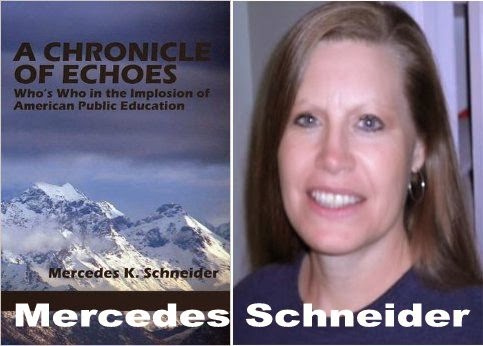
Speaking of “marriage,” Raymond is married to Hoover Institute Senior Fellow Eric Hanushek, who is also a CREDO researcher and who is fine with larger class sizes and lesser school funding. (Don’t get me started. I wrote a chapter on Hanushek in my ed reform whistle blower, A Chronicle of Echoes. Feel free to read it.)
Regarding those “test scores” on which CREDO’s power rests, education writer Valerie Strauss of the Washington Post observes:
CREDO’s unique studies of charter schools around the country….
What gets often lost in these discussions is that the studies are based on reading and math standardized test scores. Even if you think that high-stakes standardized test scores reveal something about how much a student knows in the tested subject — and many researchers and educators don’t — it is a different thing altogether to judge an entire school on the results of narrow 
Good News, Transparency: Louisiana CREDO Data No Longer Exclusive to CREDO | deutsch29:

Seattle Schools Community Forum: Student Data Privacy Meets " Not Cooperative" Sped Parents in Massachusetts

Seattle Schools Community Forum: Student Data Privacy Meets " Not Cooperative" Sped Parents in Massachusetts:

Student Data Privacy Meets " Not Cooperative" Sped Parents in Massachusetts


In what can only be termed "disgraceful," Tewksbury Public Schools accidentally released private student info about the out-of-district placements for 83 Special Ed students and rated parents by their "cooperativeness."  The document had been online for almost a week.  From the Tewksbury Town Crier:

In December the district blamed a projected $2 million shortfall for FY2016 on ‘skyrocketing’ out of district costs, and said that it could not implement a proposed free full-day kindergarten program as a result. That action generated distrust and backlash by the special education community, and this most recent release of data has parents ready to file complaints at the state and federal levels.

The seven-page memo from Rick Pelletier, Director of Student Services, to the Superintendent was included in the School Committee packet as part of its budget justification package last week. The memo includes a spreadsheet that listed all the students with out of district placements – and also included a ranking on ‘parental cooperativeness.’ The amount of data included could indicate a violation of state and federal law.

The office of Student Services also published its rating of parents according to their ‘cooperativeness with the district.’ Parents rated a ‘1’ are cooperative, ‘2’ somewhat cooperative, and those rated ‘3’ are ‘not cooperative.’


The newspaper itself said they could "easily identify" at least seven families in the list with readers contacting them saying they, too, could figure out who students were in the document.

The district, the state and the feds all had different levels of reaction.  (Interestingly, Massachusett's law is stronger than FERPA - good for them.)

The feds:
That same spokesman told the Town Crier that if the information was publicly disclosed and a parent believes that the disclosure of this information is personally identifiable to their child, they may file a complaint with the Family Policy Compliance Office for consideration.

Big whoop.  There have been virtually NO complaints that to the DOE on 
Seattle Schools Community Forum: Student Data Privacy Meets " Not Cooperative" Sped Parents in Massachusetts:


Online Test-Takers Feel Anti-Cheating Software’s Uneasy Glare - NYTimes.com

Online Test-Takers Feel Anti-Cheating Software’s Uneasy Glare - NYTimes.com:

Online Test-Takers Feel Anti-Cheating Software’s Uneasy Glare


NEW BRUNSWICK, N.J. — Before Betsy Chao, a senior here at Rutgers University, could take midterm exams in her online courses this semester, her instructors sent emails directing students to download Proctortrack, a new anti-cheating technology.
“You have to put your face up to it and you put your knuckles up to it,” Ms. Chao said recently, explaining how the program uses webcams to scan students’ features and verify their identities before the test.
Once her exam started, Ms. Chao said, a red warning band appeared on the computer screen indicating that Proctortrack was monitoring her computer and recording video of her. To constantly remind her that she was being watched, the program also showed a live image of her in miniature on her screen.
Even for an undergraduate raised in a culture of selfies and Skype, Ms. Chao found the system intrusive. “I felt it was sort of excessive,” she said.
As universities and colleges around the country expand their online course offerings, many administrators are introducing new technologies to deter cheating. The oversight, administrators say, is crucial to demonstrating the legitimacy of an online degree to students and their prospective employers.
 Some schools use software that prevents students from opening apps or web browsers during online exams. Others employ services with live exam proctors who monitor students remotely over webcams.

But the rise of Proctortrack and other automated student analysis services like it have raised questions about where to draw the line, and whether the new systems are fair and accurate.
The University of North Texas Health Science Center, for instance, is partway through a two-year pilot test of Proctortrack involving the 160 students enrolled in its online public health master’s degree program.
“If you are going to offer online learning, you need to find ways to ensure the integrity of the course, the test-taking and the degree,” said Jeff Carlton, a university spokesman. “For us, this is high-stakes.”
These schools are not simply trying to protect the academic integrity of their brands. They are seeking to stay competitive in a rapidly expanding industry. The market for online higher education could reach $32 billion in the United States this year, up from $25 billion in 2012, according to estimates from Eduventures, a research firm in Boston.
And the increased oversight of test-taking only intensifies a college experience that is monitored and analyzed more than ever. More than 3,500 institutions of higher learning, for instance, use an automated plagiarism detection system called Turnitin, which scans students’ papers for copied passages. And at Utah Valley University in Orem, the school developed its own early warning system, called Stoplight, which uses academic and demographic details about students to predict their likelihood of passing specific courses; as part of the program, professors receive class lists that color-code each student as green, yellow or red.
Proctortrack works along similar lines. The software, developed byVerificient Technologies, is marketed as “the world’s first automated remote proctoring solution.” Although some schools are still evaluating Proctortrack, Rutgers has already deployed it among several thousand students, the company said.
Tim Dutta, Verificient’s chief executive, said his company’s chief technology officer came up with the idea for the service after he worked on a project for the Transportation Security Administration which involved scanning airport security video footage for abnormal facial expressions. Proctortrack uses algorithms to detect unusual student behavior — like talking to someone off-screen — that could constitute cheating. Then it categorizes each student as having high or low “integrity.”
Mr. Dutta said the program was not so much intended to identify cheaters as to authenticate the identity of students enrolled in online courses.
“We are really about ensuring the integrity of that online credential,” he said.
Proctortrack, however, seems to impose more onerous strictures on students than a live proctor would. Among other things, it requires students to sit upright and remain directly in front of their webcams at all times, according to guidelines posted on the company’s site.
“Changes in lighting can flag your test for a violation,” the guidelines say. And, “Even stretching, looking away, or leaning down to pick up your Online Test-Takers Feel Anti-Cheating Software’s Uneasy Glare - NYTimes.com: