Latest News and Comment from Education

Tuesday, September 17, 2013

Coggins report: Did Dallas ISD Superintendent Mike Miles buy former communication chief’s silence? | Dallas Morning News

Coggins report: Did Dallas ISD Superintendent Mike Miles buy former communication chief’s silence? | Dallas Morning News:

Coggins report: Did Dallas ISD Superintendent Mike Miles buy former communication chief’s silence?

1
5
0
5
Mike Miles and Rebecca Rodriguez.
The independent investigation of Dallas ISD Superintendent Mike Miles raises questions about his motivation for offering a large severance to a former communications chief who filed a complaint against him.
Rebecca Rodriguez, the communications chief, filed a report with the district’s Office of Professional Responsibility on June 14 over concerns she had with Miles’ handling of parent services contract award. Miles had discussed the contract with trustees in a June 13 board briefing.
About 10 days after Rodriguez filed the complaint, Miles informed Don Smith, who oversees OPR, to cease the district’s investigation because of a Rodriguez’s pending severance.
The independent investigation raised concerns with severance amount and the deal’s “non- disparagement” clause. Rodriguez received four months of pay — about $51,600 — after she worked in DISD for only three months. The deal also included a clause that essentially prohibited Rodriguez from speaking out about her concerns with Miles.
“The fact that Superintendent Miles played a direct and substantial role in negotiating the terms of Rodriguez’s severance during the pendency of an OPR complaint she filed against him raises clear conflict of interest concerns,” states the investigative report by  attorney Paul Coggins. “Indeed, the 
Dallas is not the only place with superintendent/school board tensions
Los Angeles skyline Interesting story here from Los Angeles, which shows that Dallas is hardly the only urban school district with tensions … [visit site to read more]

ED Pulse Poll Results: What Do You Feel Should Be the Primary Goal of Improving School Climate? — Whole Child Education

ED Pulse Poll Results: What Do You Feel Should Be the Primary Goal of Improving School Climate? — Whole Child Education:

Kit Harris, ASCD Research

ED Pulse Poll Results: What Do You Feel Should Be the Primary Goal of Improving School Climate?

ASCD continually seeks to provide solutions to the challenges that face educators of all levels. Recently theASCD SmartBrief ED Pulse poll asked about the important topic of school climate.
A new report on school climate (PDF) discusses creating a holistic framework for education reform, with school climate as the center. The report states that "[s]chool climate—the totality of factors that affect a learning environment—is talked about much less often ... despite research showing that a school's climate, whether positive, negative, or somewhere in between, is connected to the level of students' engagement in their course work and, consequently, to student success."
These ASCD SmartBrief readers felt that the primary goal of improving school climate is to create a climate conducive to teaching and learning (79 percent). Following this, far fewer mentioned that they desired an improvement in school climate to foster social and emotional learning (13 percent). The other reasons were selected as the primary goal far less often. These were to
  • Make students and staff feel safe (5 percent)
  • Ensure students are well-behaved (2 percent)
  • See that bullying rarely occurs (1 percent)
This survey question was included in ASCD SmartBrief, a free daily e-mail news service that provides summaries and links to major education 

Chicago Teachers Union provides analysis of new University of Chicago research on teacher evaluation - Report shows flaws in CPS’s evaluation system

Chicago Teachers Union | www.ctunet.com:

Chicago Teachers Union provides analysis of new University of Chicago research on teacher evaluation
Report shows flaws in CPS’s evaluation system
CHICAGO—The Chicago Teachers Union (CTU) today responded to a study released by the University of Chicago Consortium on Chicago School Research (CCCSR) on the first year of the Chicago Public Schools teacher evaluation system. The new report found a number of shortcomings, including a lack of principal training, issues of trust and transparency and the overall use of student test scores in rating teacher ability and performance.

The report, Teacher Evaluation in Practice: Implementing Chicago’s REACH Students, is the first in a series of reports about REACH (Recognizing Educators Advancing Chicago Students), and used surveys and interviews to examine the perceptions and experiences of teachers and school administrators during the first year of REACH implementation.

The report found that while teachers and administrators found the observation process useful for improving instruction, REACH placed considerable demands on administration time and capacity, communication between teachers and administrators was in need of improvement and teachers remained hesitant about the use of student growth on assessments to evaluate their work in the classroom.

“This is what we’ve been saying all along—the evaluation system is deeply flawed. Teachers don’t like testing being part of their evaluations, not because we think that student outcomes are unimportant, but because these tests do not indicate how teachers are contributing to learning,” said CTU President Karen GJ Lewis. “The test is just a snapshot—classroom observation is still the best way to measure teacher performance.”

CTU analysis of Teacher Evaluation in Practice found that there is much room for growth in the ability of principals to properly evaluate teachers. Principals are supposed to provide feedback, but because they have not been trained in coaching teachers, their impact is limited. This remains a problem for CPS and a condition that has not changed significantly in the two years since the release of a previous CCCSR report, Rethinking Teacher Evaluation in Chicago, found that the vast majority of questions principals asked teachers were of low or medium depth and failed to promote discussions about instruction. 

“Even though CPS knew from a previous report the importance of training principals to have meaningful discussions during the post-conferences, they rolled out the new system without providing for this important component,” said CTU Research Consultant, Carol Caref, Ph.D. 

Teacher Evaluation in Practice also highlighted the concerns special education teachers have about REACH assessment being “nearly impossible” for their students who are “four and five grade levels behind,” and the belief that holding their students—and subsequently, their own evaluation—to the same standard as general education students and teachers is unfair.

Regarding EPAS assessments (part of the ACT testing system for grades 9-11) which will be used this year as part of teacher evaluation, 51 percent of teachers reported that it was not useful or a little useful for their instruction.

Furthermore, as interviews in the report showed, the results of EPAS assessments are not detailed or timely enough to guide teachers’ instruction. Teachers receive scores, but no analysis.

“We find EPAS to be very unsuitable for measuring student growth; it tests only a small part of math, science and English and disregards other subjects,” Caref said.

Among the greatest concerns about REACH assessment is the lack of trust and transparency between the district and its employees, according to CTU analysis of Teacher Evaluation in Practice. While testing is just one aspect of the overall education landscape in Chicago, events of the past year—mass school closings, thousands of teacher layoffs, budget crises for dozens of school communities—have led many teachers to mistrust the district’s motives across the board.

While, according to the report, teachers have little faith that administrators could “set aside personal biases” or “provide support for self-supported weakness without harshly judging those weaknesses in the evaluation itself,” the CTU finds that these reservations may be indicative of the dynamic between teachers and the district on a whole.

“Take school closings, for example,” Lewis said. “This is not just about REACH assessment and evaluation, but trust and transparency, period.”

###
 The Chicago Teachers Union represents 30,000 teachers and educational support personnel working in the Chicago Public Schools, and by extension, the more than 400,000 students and families they serve.  The CTU is an affiliate of the American Federation of Teachers and the Illinois Federation of Teachers and is the third largest teachers local in the United States and the largest local union in Illinois.  For more information please visit CTU’s website at www.ctunet.com.

Diane in the Evening 9-17-13 Diane Ravitch's blog | A site to discuss better education for all

Diane Ravitch's blog | A site to discuss better education for all:


Jose Vilson Reviews “Reign of Error”
Jose Vilson wins the prize for the best, most original title of a review of “Reign of Error.” Sort of like that phone company where the guy moves to a new spot and says “Can you hear me now?” Only the language is saltier. Jose knows I curse in private, not in public. Or it might be “I’m mad as hell, and I’m not gonna take it anymore!” Did you hear me now?

Steve Strieker Reviews “Reign of Error”
Steve Streiker is a teacher and a proud union member who lives in Janesville, Wisconsin. He has felt the brunt of “reform,” where teachers, unions, and public education are the targets. Here is his review of “Reign of Error.” He writes: “Today, Ravitch’s much-anticipated new book, Reign of Error, hits Kindles, Nooks, mailboxes, libraries, schools, and bookstores across the country. While the titl


LISTEN TO DIANE RAVITCH 9-17-13 Diane Ravitch's blog | A site to discuss better education for all
Diane Ravitch's blog | A site to discuss better education for all: Today Is the Day: “Reign of Error” Is Available!Maybe you have not been anticipating this day as much as I have. But I can tell you as an author that waiting for “pub date” is excruciating. It seems like forever between the time you make the final edit and the actual appearance of the book. I finished about June 1. And now, three a


“Reign of Error” Ends Here: Diane Ravitch and the Facts of “Education Reform” | Kids in the system

“Reign of Error” Ends Here: Diane Ravitch and the Facts of “Education Reform” | Kids in the system:

Reign of Error” Ends Here: Diane Ravitch and the Facts of “Education Reform”

Posted: September 17, 2013 in "Race to the Top""Reign of Error"At-risk kidsCommon Core CurriculumDiane RavitchEducation Reform
Tags: 


When it comes to education reform I’m a struggling optimist. The news is rarely good, with a steady diet from the media of school failures, lukewarm test scores, the self-serving demands of teacher unions, and even threats to our national security.
So what to make of Reign of Error: The Hoax of the Privatization Movement and the Danger to America’s Public Schools? The title itself seems to promise nothing but more bad news.
But this book is not a lament. Instead, in lean, measured prose Diane Ravitch addresses the many erroneous claims made by the “education reform” movement and then presents a realistic and humane plan for true educational improvement.
Ravitch doesn’t, however, just say that the reformers’ claims are wrong. That’s too easy, and Ravitch refuses the easy way out. She recognizes that the public is confused. For over a decade, it has been told by the government that our children’s schools are in a dangerously sorry state. The Bush Administration’s major tactic in presenting education reform (among other issues) was to repeatedly insist that something was “fact” despite solid contrary evidence until the public believed it. Unfortunately the Obama Administration has continued this same tactic in its education agenda.
In an effort to clear up some of the public’s confusion and to address the reformers’ accusations and claims, Reign of Error examines a wide variety of topics such as who constitutes what Ravitch calls “the corporate reformers,” the validity of high-stakes testing, the expanding achievement gap, charter schools and vouchers, and local school 

"Reign of Error:" Who Should Read It? - Teacher in a Strange Land - Education Week Teacher

"Reign of Error:" Who Should Read It? - Teacher in a Strange Land - Education Week Teacher:

"Reign of Error:" Who Should Read It?

As facilitator of an online graduate course in teacher leadership, I strongly recommend that participants read lots of education policy blogs, across a range of political convictions. In the course syllabus, there are a dozen suggestions, but students--all practicing K-12 educators--are free to find and share others, posting their thoughts about the discourse they find.
The first discussion board question: Who is this blog for?
One teacher-participant compared a widely read policy blog to the "cool kids' table" in the school cafeteria: a place where other students are intentionally left behind, where the conversation often centers around a handful of people, clubs and shifting loyalties--who said what and how should we spin it?
Teachers often come away from their tour of Ed Policy World dismayed by the things policy "experts" are saying. Angry, sometimes. Frustrated at being left out of a dialogue where their hard-won practice expertise is undervalued, even scorned.
Good news. Diane Ravitch has written a book for them. While many of the early reviews ofReign of Error: The Hoax of the Privatization Movement and the Danger to America's Public Schools came from the "cool kids," the audience that will find Reign of Error indispensible is teachers, school leaders and parents.
For them, it's a sourcebook of key issues, solid evidence and confirmation that yes, there's been a media-fed, policy-driven, politically instigated sea change in public perspectives around education. Plus--there's a template for the kinds of smart investment that could make our public education system sound and vigorous for decades. A rough guide to getting back on track, preserving America's best idea: a free, high-quality public education for every child, rich 

BOOK REVIEW: "Reign of Error": The Hoax of the Privatization Movement and the Danger to America's Public Schools | Alternet

BOOK REVIEW: "Reign of Error": The Hoax of the Privatization Movement and the Danger to America's Public Schools | Alternet:

BOOK REVIEW: "Reign of Error": The Hoax of the Privatization Movement and the Danger to America's Public Schools

Forget low test scores, says one of the nation's foremost education experts in her new book. The privatizers are the real threat to America's schools.
Photo Credit: DianeRavitch.com
 
When faced with the many competing narratives of the religions of the world, comparative myth/religion scholar Joseph Campbell explained to Bill Moyers that Campbell did not reject religion, as some scholars have, but instead reached this conclusion:
Every religion is true one way or another. It is true when understood metaphorically. But when it gets stuck to its own metaphors, interpreting them as facts, then you are in trouble.
Since Ravitch is a respected historian of education, a brief history seems appropriate for context.
Ravitch 1.0 established herself as a leading scholar of the history of education. She also wrote best-selling and influential books on education beginning in the 

House Republicans Step Into School Vouchers Fight Between DOJ, Louisiana

House Republicans Step Into School Vouchers Fight Between DOJ, Louisiana:

Vouchers Fight Between DOJ, Louisiana

Posted:   |  Updated: 09/17/2013 1:21 pm EDT

House Republicans are stepping into the legal battle over school vouchers in Louisiana.
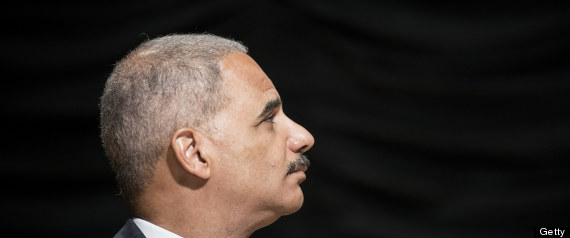
On Tuesday, a group of high-ranking GOP legislators wrote Attorney General Eric Holder to argue that the Department of Justice lawsuit over the vouchers will force Louisiana students to "remain in failing schools." The group -- which includes House Speaker John Boehner (R-Ohio), Majority Leader Eric Cantor (R-Va.) and Rep. John Kline (R-Minn.), chairman of the Education and the Workforce Committee -- also charged that the DOJ suit could "cause other states to feel pressured to shut down similar initiatives that provide countless children the opportunity to receive a better education."
School voucher systems use taxpayer dollars to help students attend private, often religious schools. In August, DOJ sued the state of Louisiana, seeking to block implementation of its voucher program starting next school year in the 34 Louisiana school districts under desegregation orders. The department argues that "the loss of students through the voucher program reversed much of the process made toward integration."
Louisiana Gov. Bobby Jindal (R) has championed vouchers, arguing that they can help poor students overcome their circumstances. In 2012, the state created a voucher system for about 380,000 low-income students enrolled in schools that received a C 

Reign of Error | Deborah Meier on Education

Reign of Error | Deborah Meier on Education:


Reign of Error

Dear readers,
Definitely go out and buy Reign of Error: The Hoax of the Privatization Movement and the Danger to Americas Public Schools by Diane Ravitch, which just been launched with proper publicity. She is a phenomenal woman—sending out a half-dozen e-mails a day, two books in the last decade, and traveling to speak throughout the USA. And….while she’s younger than me, she’s old enough to have rested on her laurels. Maybe it helps to change your mind, because my exhaustion comes (in part) from feeling it’s all been said before (including by me).
reignReign of Error lays out step by step the relentless thirty year drive to ether centralize the education of the young—on one hand—or divest it entirely into privatized hands on the other. Finally, the two sides have joined forces on a strategy that simultaneously does both. While this coalition has many old roots, in its current form it began with the fanfare around the publication of A Nation at Risk (1983). Ravitch was, at that time, a supporter of this bold statement that more or less accused America’s teachers and school boards of a plot to undermine American health and welfare o the international scene. We were, said the signers, at risk of becoming a second rate nation if we didn’t take this crisis seriously. I asked my colleague on the NBPTS, AFT leader Al Shanker, why he had signed on. He said it was a good strategy because only in a crisis is the nation willing to put the money into schooling needed to make it really first-rate. He said—as I recall (paraphrased), ‘It’s true our schools are not as bad as the report suggests, but we are entering a new period and they either have to change dramatically or what the 

One Teacher's Perspective: Diane Ravitch: Public Schools' Modern-Day Dewey

One Teacher's Perspective: Diane Ravitch: Public Schools' Modern-Day Dewey:

Diane Ravitch: Public Schools' Modern-Day Dewey

Three years ago, a colleague of mine kept telling me I just had to read Diane Ravitch’s The Death and Life of the Great American School System.Admittedly, I knew little about Ravitch then and was less enthused to take on the read, realizing Ravitch previously served in President George W. Bush’s administration. My colleague, however, was relentless in getting me to take on the book. The persistent pestering paid off and her book instantly became one of my favorite professional reads.

Two pages into Ravitch’s reflection on her life’s work, I was hooked. She jumped right into a courageous mea culpa for formerly supporting failed education reforms--such as accountability, high-stakes testing, and school choice. At the time of her conversion, Ravitch was already well-past retirement. Instead of looking back nostalgically, Ravitch reflected critically on her former support for competition-based education reforms. Ravitch asked herself, “What should we think of someone who never admits error, never entertains doubt but adheres unflinchingly to the same ideas all his life, regardless of new evidence?” I was and still am impressed with Ravitch’s open-mindedness and authenticity. Since then, I have soaked up almost all that she has written.

Ravitch was a renowned education historian long before The Death and Life of the Great American School System, but has emerged in the past three years as the most respected, modern-day defender of public education. She is refreshingly authentic in an educational world saturated with self-serving reformers. She is as critical of President Obama’s test-based education policies as she is of Republican plans to dismantle public education. She stands for public education. Her style is direct. Her work is reasoned and researched. She courageously takes on the corporate education reformers determined to inject free market ideology into public education. She thinks 

LA Unified may expand preschool with new state funds for disadvantaged kids | Pass / Fail | 89.3 KPCC

LA Unified may expand preschool with new state funds for disadvantaged kids | Pass / Fail | 89.3 KPCC:


LA Unified may expand preschool with new state funds for disadvantaged kids

Transitional Kindergarten

Grant Slater/KPCC

The younger sibling of a graduating student plays in a Transitional Kindergarten classroom's toy school bus at Stanley Mosk elementary school in Winnetka.
The Los Angeles Unified School District is considering spending new state money for disadvantaged kids to restore preschools and other early education programs to set them on the right path from the start.
"Studies show that early childhood education is impactful in terms of making sure that children that come from at-risk neighborhoods that are low-income benefit appreciably from having the foundational skills that are imparted in early ed," said Kim Patillo Brownson, a member of L.A. Unified's new ad-hoc early education committee and Director of Educational Equity at the Advancement Project.
"After the fact costs," she added, "are much much higher than dealing with prevention costs."
The money would come from California’s new Local Control Funding Formula, which gives school districts extra money for students who come from low-income families, are still learning English or are in the foster care system. Districts are given freedom on how to spend it - as long as their plans help those populations. More than 80 

PSAT for 9-17-13: Join Illinois Friends of Public Education! Parents United for Responsible Education

Parents United for Responsible Education » Blog Archive » PSAT for 9-17-13: Join Illinois Friends of Public Education!:

PSAT for 9-17-13: Join Illinois Friends of Public Education! 


IFPEflyer

Education historian Diane Ravitch counters the testing and privatization of public schools - Pittsburgh Post-Gazette

Education historian Diane Ravitch counters the testing and privatization of public schools - Pittsburgh Post-Gazette:

Education historian Diane Ravitch counters the testing and privatization of public schools

As for cyber charter schools: 'They're scams'


New York University professor Diane Ravitch -- once a supporter of the education overhaul movement and now an outspoken critic of testing and privatization of public schools -- believes the tide is turning against a culture reliant on test scores and corporate profit.


Ms. Ravitch spoke Monday to more than 600 people at Temple Sinai in Squirrel Hill where her appearance was hosted by Great Public Schools Pittsburgh, which includes Action United, One Pittsburgh, Pennsylvania Interfaith Impact Network, Pittsburgh Federation of Teachers, Service Employees International Union and Yinzercation. The event took on the air of a pep rally, with student musicians performing and a group sing.


The visit was co-sponsored by the education schools or departments at Carlow, Chatham, Duquesne, Robert Morris and Slippery Rock universities, University of Pittsburgh and Westminster College as well as Temple Sinai, First Unitarian Church Social Justice Endowment and Pennsylvania State Education Association.


Her speech came on the eve of the release of her latest book, "Reign of Error: The Hoax of the Privatization Movement and the Danger to America's Public Schools."


Ms. Ravitch, 75, a research professor of education, is the president of the Network for Public


Read more: http://www.post-gazette.com/stories/news/education/education-expert-tide-is-turning-703626/#ixzz2fAbuRkxm

End of an Error? | EduShyster

End of an Error? | EduShyster:

End of an Error?

Can Diane Ravitch’s new book reshape the nonsensical debate about our public schools?
I first met Diane Ravitch when she was in Boston to promote her last book: The Death and Life of the Great American School System. The editor of a newspaper for AFT Massachusetts, I planned to interview Ravitch for the final issue of the school year. But I harbored a shameful secret: I had not read the book. You see, “editor” doesn’t quite describe the job that I held. I was responsible for producing a monthly newspaper–entirely by myself. By the time Ravitch arrived, I was on my ninth paper of the school year, and completely fried

But I had a plan. I’d skim the book on the train then, channeling my many years of graduate school, I’d wing it. Except that Ravitch turned out to be rather more formidable than I’d expected. This had the effect of causing the few questions I’d prepared to tumble out in a nervous rush, while her answers seemed to be of the short, definitive variety. When one of 

State report cards show: Student performance is related to income and poverty levels, yet again | cleveland.com

State report cards show: Student performance is related to income and poverty levels, yet again | cleveland.com:

State report cards show: Student performance is related to income and poverty levels, yet again


CLEVELAND, Ohio -- Scores on state tests are higher in richer school districts and lower as the poverty rate of students increases, the Ohio School Boards Association reported Monday, using data from the new 2012-13 state report cards.

The findings mirror some of the work that Cleveland.com's Rich Exner didright after the Aug. 22 report cards' release. In each case, the data continues a trend that has been documented for several years.

With several agencies and interest groups analyzing report card data to determine trends across Ohio, we'll pass on some of the findings as they become available.

While Cleveland.com used the A to F grades that districts received, the OSBA study uses Performance Index (PI), a composite score that rounds up several subjects and grades of test data into a single score. The highest possible score is 120. PI does not measure what many educators consider the other main indicator of school and student performance -- academic growth. PI looks at how well students scored on the tests, but not how much they improved from year to year.

The OSBA compared PI scores to the income level of a district, the poverty rate, the percentage of adults with a college degree and the percentage of minority students. A graph of each of these can be seen here: OSBA Report Card PI Charts.pdf

Though the relationship changed somewhat between each of the four factors, the graphs 

FCMAT » Cali Education Headlines Tuesday, September 17, 2013

FCMAT » Fiscal Crisis & Management Assistance Team:


Education Headlines

Tuesday, September 17, 2013

Ventura police aim to improve safety by monitoring live video feeds from schools

In what may be the first such arrangement statewide, police soon will be able to view live video footage from five of Ventura’s largest schools in the hope of responding faster to and being better prepared for a campus shooting or other emergency.

Local schools lead state in personal belief vaccine exemptions

Health experts say the Sacramento region’s large immigrant population is one factor in the growing number of parents declining to get shots for their children. The number of children in Yolo, Sacramento, Placer and El Dorado counties starting kindergarten without vaccines jumped 30 percent, or by 350 children, in the last school year, according to new data from the California Department of Public Health.

School taxes concentrated in wealthier areas

Lowering the vote threshold for California school parcel taxes likely would allow more of them to pass but probably would not have a significant effect on school funding statewide, according to a report released Monday from the Public Policy Institute of California.

SD Superintendent continues to revamp administration

Superintendent Cindy Marten continues her reorganization of the San Diego Unified School District administration, calling personnel changes she said will direct more attention and resources to teaching and learning.

Study: Lowering school parcel tax threshold to 55% would not encourage more districts to seek them

Lowering the threshold for school parcel taxes -- from the currently required two-thirds majority to a 55 percent vote -- would not necessarily encourage more school districts to try to pass them, according to a report released Monday.

Adams: School finance reform prompts dispute over counting low-income students

Two months into the rollout of the reforms, which Gov. Jerry Brown praised as a victory for the neediest students, two of the largest districts – Los Angeles Unified and Fresno Unified – are in a dispute with the state over a last-minute change in how children who receive free meals are counted. I

Fensterwald: Brown not backing away from decision to suspend state standardized tests

In remarks Monday, Gov. Jerry Brown defended the state’s decision to suspend state standardized tests this year and instead offer students a practice test in the Common Core standards that’s now being developed. And he gave no sign of steering away from a collision with the federal government over this issue.
Monday, September 16, 2013

S.J. educators welcome testing shift

California educators who have anxiously awaited a transition from well-worn standardized K-12 tests to a new system that measures student achievement through Common Core standards are cheering a new bill that could make for a longer, but smoother, testing transition.

Former Bassett school board member denied teaching position within school district

The Bassett Board of Education accepted the resignation of Art Sandoval, minutes before denying him the job he left the board to take.

Walnut Valley Unified’s virtual teaching could foreshadow future of education

Walnut Valley Unified is trying virtual teaching this semester in an interesting experiment that could foreshadow the future of education.

Long Beach charter school teaches intellectual virtues

The school, founded by two philosophers, opened its doors to students for the first time on Sept. 4 at Grace Brethren Church of Long Beach. IVA will eventually be home to students in grades 6 through 8 but kicked off its launch with just the sixth grade, a class of 56 currently.