Latest News and Comment from Education

Thursday, September 24, 2020

A VERY BUSY DAY Larry Ferlazzo's Websites of the Day... The latest news and resources in education since 2007

  Larry Ferlazzo's Websites of the Day... | The latest news and resources in education since 2007


A VERY BUSY DAY
Larry Ferlazzo's Websites of the Day...
The latest news and resources in education since 2007


Big Education Ape: THIS WEEK IN EDUCATION Larry Ferlazzo's Websites of the Day... The latest news and resources in education since 2007 - http://bigeducationape.blogspot.com/2020/09/this-week-in-education-larry-ferlazzos_19.html


My Latest BAM! Radio Show Is On Supporting Muslim & Arab Students
My latest ten-minute BAM! Radio Show is on how we can best support Arab and Muslim students. I’m joined in the discussion by Dr. Sawsan Jaber, Dr. Nina Shoman-Dajani, and Abeer Shinnawi, who have also all contributed written commentaries to my Ed Week column. In fact, Dr. Jaber has guest-edited the series, which begins next week. I’m adding it to All My BAM Radio Shows – Linked With Descriptions
Video: “The Largest Star in the Universe – Size Comparison”
FelixMittermeier / Pixabay I’m adding this new video to The Best Web Tools That Show You Objects To Scale :
Video: “What Your Life Looks Like in Numbers”
geralt / Pixabay I’m adding this new video from Bright Side to The Best Visualizations Of How People Spend Their Days :
Zoom Adds The Ability Of Participants To Self-Select Their Breakout Rooms, But There Is A Catch
febrianes86 / Pixabay I’ve been writing about the upcoming Zoom feature to let participants select their own breakout rooms for awhile (see ZOOM ADDS FEATURES FOR EDUCATORS and ON SEPT. 21ST, ZOOM IMPLEMENTS A FEATURE TO ALLOW PEOPLE TO CHOOSE THEIR OWN BREAKOUT ROOMS ). They finally did it and, with some help from folks on Twitter, I’ve been able to figure it out. First, and most disappointedly,
My Favorite Posts That Appeared In September
I regularly highlight my picks for the most useful posts for each month — not including “The Best…” lists. I also use some of them in a more extensive monthly newsletter I send-out. You can see older Best Posts of the Month at Websites Of The Month (more recent lists can be found here ). You can also see my all-time favorites here . I’ve also been doing “A Look Back” series reviewing old favorite
Everything You Wanted To Know About Collaborative Learning But Were Afraid To Ask
Alexas_Fotos / Pixabay I have over 2,100 frequently revised and updated “Best” lists on just about every subject imaginable, and you can find them listed three different ways in three different places (see Three Accessible Ways To Search For & Find My “Best” Lists ). I’m starting to publish a series where each day I will highlight the “Best” lists in a separate category. Today, it’s on Collaborat
Lessons From Four Weeks Of Teaching Fulltime Distance Learning
johnhain / Pixabay I taught daily live online classes to English Language Learners (and less frequently to my IB Theory of Knowledge students), and had high attendance and student engagement. I learned a lot then and, with my co-author Katie Hull, wrote a first draft of a chapter on distance learning for ELLs that will appear in our next book. It was released for free by the publisher over the su
Wednesday’s Must Read Articles & Must-Watch Videos On School Reopening
ds_30 / Pixabay Here are new additions to THE BEST POSTS PREDICTING WHAT SCHOOLS WILL LOOK LIKE IN THE FALL : What We Know About Coronavirus Cases in K-12 Schools So Far is from The NY Times. New 

  Larry Ferlazzo's Websites of the Day... | The latest news and resources in education since 2007

Wednesday, September 23, 2020

Florina Rodov: Online Charter Schools Are Not a Solution to Education in a Pandemic | Ed Politics

Florina Rodov: Online Charter Schools Are Not a Solution to Education in a Pandemic | Ed Politics

FLORINA RODOV: ONLINE CHARTER SCHOOLS ARE NOT A SOLUTION TO EDUCATION IN A PANDEMIC


“Instead of going to school every morning, what if school could come to you?” an ad asks enticingly, promising students “online personalized learning” tailored to their specific needs. It’s one of hundreds of active Facebook ads run by K12 Inc., the largest for-profit virtual charter school provider in the United States. As public schools rose to the challenge of educating students online during the pandemic, corporations like K12 Inc., whose stock price has been climbing since mid-March, were licking their chops at the prospect of moving kids online permanently. Though virtual charter schools perform dismally academically and are plagued by scandal, the goal is for them to replace traditional brick-and-mortar public schools in an effort to privatize education. While this would harm students, it would most egregiously damage Black and Latino children, who’ve already been disproportionately impacted by the coronavirus, due to structural inequities such as lack of access to computers and internet service, as well as inconsistent health care and crowded housing.
K12 Inc. was founded in 2000 by investment banker Ron Packard, “junk bond king” Michael Milken, and Bill Bennett, the U.S. secretary of education under President Ronald Reagan, who was also the company’s first board chairman. Betsy DeVos was an early investor in K12 who held shares in the company until she became education secretary in 2017. The idea behind virtual charter schools was promising: to serve a varied group of students who might benefit from the flexibility of learning online, from those who struggled academically, to others CONTINUE READING: Florina Rodov: Online Charter Schools Are Not a Solution to Education in a Pandemic | Ed Politics

Black Parents: Vanguards of Black Student Advocacy - Philly's 7th Ward

Black Parents: Vanguards of Black Student Advocacy - Philly's 7th Ward

BLACK PARENTS: VANGUARDS OF BLACK STUDENT ADVOCACY


Contrary to the stereotypes, education continues to be a value of the highest priority in the Black community; dating back to the underground schools in the Antebellum South where Black people, at the risk of losing limbs and life, taught themselves reading and writing.
After the Civil War, education attainment was a primary goal for Black people: from 1870-1885, their attendance rates were equal to, if not greater than, Whites. Booker T. Washington observed that “in every part of the South, during the Reconstruction period, schools, both day and night, were filled to overflowing with people of all ages and conditions.” By 1900, the illiteracy rate among African-Americans under the age of 40 was virtually non-existent.
There are some who claim Black people themselves are the reason why Black students underachieve academically. However systemic racism is to blame. Black children are too often overdisciplined, undereducated with fewer resources and attend schools in dangerous conditions. In addition, Black CONTINUE READING: Black Parents: Vanguards of Black Student Advocacy - Philly's 7th Ward

OPINION: Even before the pandemic, students with disabilities and other challenges were being left behind - The Hechinger Report

OPINION: Even before the pandemic, students with disabilities and other challenges were being left behind - The Hechinger Report

OPINION: Even before the pandemic, students with disabilities and other challenges were being left behind
Here are some ideas about ways to help all learners


Through no merit of her own, my 5-year-old daughter is already on the other side of an educational opportunity divide, in a world of haves and have-nots.
Through no effort or talent on her part, she was born into a community with good schools. She has two parents with advanced degrees and stable jobs that enable them to work from home.
In so many ways, she won the lottery. We have the flexibility to send her to school or to home-school her for the coming year. We have Wi-Fi, financial resources, supervision and an environment to make it work. My daughter has no disability, so we have no worries about advocating for her educational rights. Her school sends us materials in her native language.
My wife and I are anxious, but it’s an anxiety based on inconveniences, rather than on a lack of options.
I contrast that with what my own mother might have felt when I was my daughter’s age. A solo working parent, she emigrated from Iran to a new country alone and raised two sons, including one, me, who couldn’t speak English. Had broadband even existed then, chance are we wouldn’t have been able to afford it.
As vulnerable as she must have felt, my mother would have relied on one principle: The richest society in the world would have a moral responsibility for the well-being of kids like me, along with families who faced even more extreme obstacles.
The nonprofit education equity group I have the privilege to co-chair has drafted explicit questions for decision-makers, including educators, school leaders and district, state and national policy leaders. We are urging them to consider the needs of students who confront barriers to reaching their fullest educational potential.
They may have disabilities or not speak English as a first language or come from low-income families or lack access to stable housing. They may live in CONTINUE READING: OPINION: Even before the pandemic, students with disabilities and other challenges were being left behind - The Hechinger Report

A Union President to Head the Department of Education? It Could Happen – Intercepts

A Union President to Head the Department of Education? It Could Happen – Intercepts

A Union President to Head the Department of Education? It Could Happen


Last week Politico reported on a memo by the DC lobbying firm of Brownstein Hyatt Farber Schreck regarding what a Biden presidency might look like and whom he could pick for various Cabinet posts.
The firm admits the memo is “highly speculative,” and it doesn’t provide any analysis of why certain candidates are favored, but merely recites their background and history.
When it comes to the three possible appointees to become U.S. Secretary of Education, the memo is both on target and way off.
The misfire is suggesting former Democratic presidential candidate Pete Buttigieg for the post. Buttigieg will likely serve in a Biden administration, but not here. Biden promised delegates to the National Education Association Representative Assembly last year he would name a teacher to the job. Buttigieg has never been a teacher, and Biden would not renege on this promise when it is such an easy one to fulfill.
A more likely choice is one of the other two names in the memo: American Federation of Teachers President Randi Weingarten and former National Education Association President Lily Eskelsen García.
Either one would satisfy the union lobby, regardless of whatever education policies ultimately emerged from a Biden presidency. It would also answer CONTINUE READING: A Union President to Head the Department of Education? It Could Happen – Intercepts

New Dashboard Tracks Coronavirus Cases In Schools Across 47 States | 89.3 KPCC

New Dashboard Tracks Coronavirus Cases In Schools Across 47 States | 89.3 KPCC

New Dashboard Tracks Coronavirus Cases In Schools Across 47 States


A new national effort asks K-12 schools to voluntarily — and anonymously — report their confirmed and suspected coronavirus cases, along with the safety strategies they're using.
Opening schools safely in person is seen as key to restarting the economy and recovering the learning loss that has fallen most heavily on marginalized groups of students. There are also many fears associated with reopening — of severe illness among vulnerable staff and family members, and of stoking broader outbreaks, as seems to have happened where colleges have reopened in person.
The COVID-19 School Response Dashboard, which NPR is reporting on exclusively, was created with the help of several national education organizations. Right now it shows an average of 230 cases per 100,000 students, and 490 per 100,000 staff members, in the first two weeks of September. The responses come from public, private and charter schools in 47 states, serving roughly 200,000 students both in person and online, as of Tuesday, Sept. 22.
As of right now, this sample is a tiny fraction of the more than 56 million K-12 students in the United States. But the dashboard will be continuously updated, and the number of schools participating is expected to grow.
Emily Oster, an economist at Brown University, is spearheading the effort. She is known for her popular writing on data and science literacy for parents. She said she got involved in independent data collection on coronavirus cases in schools because "other people weren't doing it." Eventually, the School Superintendents Association, the National Association of Elementary School Principals, the National Association of Secondary School Principals and groups representing charter and independent CONTINUE READING: New Dashboard Tracks Coronavirus Cases In Schools Across 47 States | 89.3 KPCC

Now Here Is a Balanced Discussion of Teachers Unions! | Diane Ravitch's blog

Now Here Is a Balanced Discussion of Teachers Unions! | Diane Ravitch's blog

Now Here Is a Balanced Discussion of Teachers Unions!


The Harvard Program on Education Policy and Governance is led by Professor Paul Peterson, an advocate for school choice. It would not be off the mark to say that PEPG exists to promote the DeVos agenda. Soon after she was confirmed, PEPG invited her to speak, and her speech was disrupted by Harvard students not affiliated with PEPG. Peterson has been the mentor for a generation of pro-school choice academics, including Jay Greene (University of Arkansas, Department of Education Reform), Patrick Wolf (same, also served as “independent evaluator” of Milwaukee and DC voucher prigrams), and Martin West (Harvard Graduate School of Education). Peterson recently appeared at the White House to support Trump’s call to reopen schools and co-wrote an oped with Dr. Scott Atlas (both are senior fellows at the rightwing Hoover Institution). Dr. Atlas supports Trump’s views that mask-wearing should not be mandatory, that children and adolescents don’t get the virus, th ast schools should reopen without delay, and that lockdowns are unnecessary. In many articles about Dr. Atlas, Peterson is his reliable defender.

The event today asks whether teachers unions can be part of the solution. Michelle Rhee and George Parker. Parker was head of the Washington Teachers Union when Rhee was chancellor. When he stepped down, he went to work for Rhee. He now works for a charter school lobbying group. More than 90% of charters are non-union.

Fall 2020 Colloquium Series: Can Teachers Unions Be Part of the Solution?

The PEPG Colloquium series continues Thursday, Sept. 24, with “Can Teachers Unions Be Part of the Solution?,” a talk by Michelle Rhee, Founder and CEO, StudentsFirst, former Chancellor for District of Columbia Public Schools, and George Parker, Senior Advisor, National Alliance for Public Charter Schools, former President, District of Columbia Teachers Union.

Thursday, Sept. 24
12-1:15 p.m.

Teacher Tom: To Know and to Love

Teacher Tom: To Know and to Love

To Know and to Love


"Curiosity killed the cat." 


Whenever the notion of curiosity comes up in an English language conversation, someone is bound to say it. Yes, I suppose curiosity can kill, but come on. It's not curiosity that kills the cat, it's rashness or heedlessness or impulsiveness that leads to a careless act, yet curiosity gets the blame, as if we somehow must caution one another against it.


We all know that curiosity makes life at least a million times better than the alternative, which is to be uncurious. 


Curiosity is the impulse behind science. We wonder why or what, when, who, where, why, and how, then undertake to figure it out. It is likewise the impulse behind play. CONTINUE READING: Teacher Tom: To Know and to Love

The Challenges of Reopening Public Schools in Fall 2020 | janresseger

The Challenges of Reopening Public Schools in Fall 2020 | janresseger

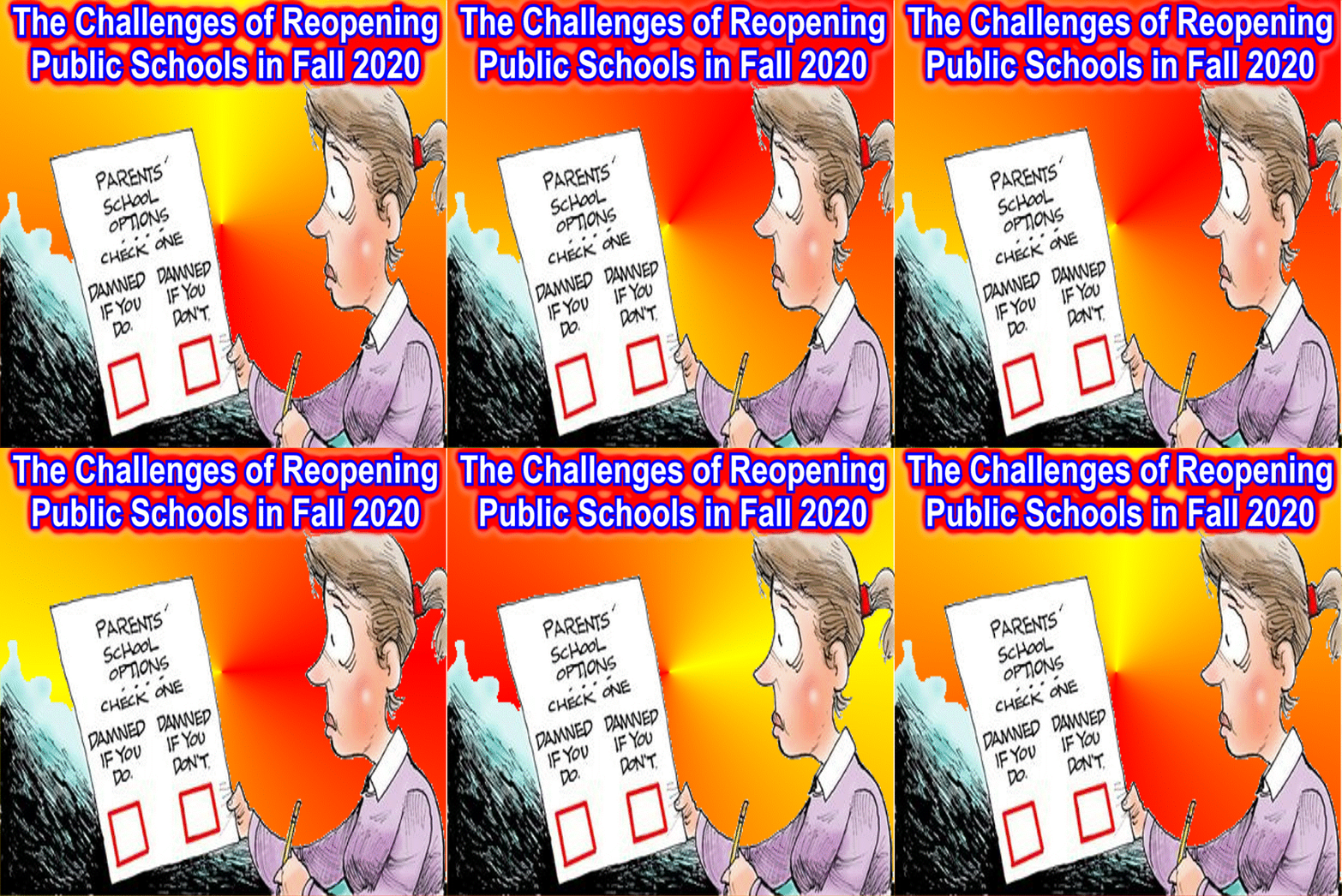
The Challenges of Reopening Public Schools in Fall 2020


It’s hard to get a handle on how reopening public schools this autumn is going across the United States. A lot of blame and anger is floating around—for botched plans on the one hand and COVID-19 outbreaks on the other. Nobody endorses full-time remote learning, but it seems to be the reality in most places, especially in the nation’s biggest school districts where school operations on a huge scale complicate the best intentions of the people trying to work it all out.
On Monday to examine trends across the country, the NY Times published a major analysis including charts and maps of several states. The conclusion: “Schools are not islands, and so it was inevitable that when students and teachers returned this fall to classrooms, coronavirus cases would follow them. But more than a month after the first school districts welcomed students back for in-person instruction, it is nearly impossible to tally a precise figure of how many cases have been identified in schools.”
Just as the Trump administration has failed to institute national COVID-19 testing and contact tracing across the states, the Trump administration also failed, during many months before schools were scheduled to reopen this fall, to convene health and education experts with state school superintendents, local superintendents, principals and school teachers to listen to their concerns and plan for contingencies.  While the states are, through the mandates of their own constitutions, themselves responsible for providing “a thorough and efficient system of common schools” (the language in several of the state constitutions), some effort at least to coordinate school opening plans with broader testing and contact tracing would have made things smoother. The NY Times reports that there has been no systematic collection of data and in many places no reporting of data: “In an effort to better account for virus cases in Kindergarten through 12th grade, The New York Times set out to collect data from state and local health and education agencies and through directly surveying school districts in eight states. Our goal was to understand, as well as possible, how prevalent the virus was in CONTINUE READING: The Challenges of Reopening Public Schools in Fall 2020 | janresseger

Trump Attacks Howard Zinn and the Zinn Education Project — Defend Teaching People’s History Today! – I AM AN EDUCATOR

Trump Attacks Howard Zinn and the Zinn Education Project — Defend Teaching People’s History Today! – I AM AN EDUCATOR

Trump Attacks Howard Zinn and the Zinn Education Project — Defend Teaching People’s History Today!


I’m excited to announce that I have taken a part time position with the Zinn Education Project to help lead the Teach the Black Freedom Struggle campaign.
What makes this work even more important right now is that President Trump has launched an all out attack on the Zinn Education Project and the legacy of the great radical historian, Howard Zinn.
Trump organized an entire White House Conference on American History for Constitution Day, where a series of white historians attacked efforts to teach about racial and social justice. Then Trump announced his new “1776 Commission,” a “national commission to support patriotic education”–in other words, discouraging critical thinking that can lead students to join social movements against injustice and promote unquestioning support for America.
Donate Button | Zinn Education Project
If you want to support the Zinn Education Project bring a people’s history to classrooms around the country, please donateYour donation will be matched, up to $10,000, by a generous donation from by a former student of Howard Zinn’s and lawyer for whistleblowers, Dave Colapinto.
Please read more below about what it means to teach people’s history and about Trump’s attacking of the Zinn Education Project below.
——————
On Thursday, Sept. 17, at the White House Conference on American History, right-wing historians took aim at the Zinn Education ProjectHoward Zinn, and the New York Times 1619 Project. President Trump said, “Our children are instructed from propaganda tracts, like those of Howard Zinn, that try to make students ashamed of their own history.”
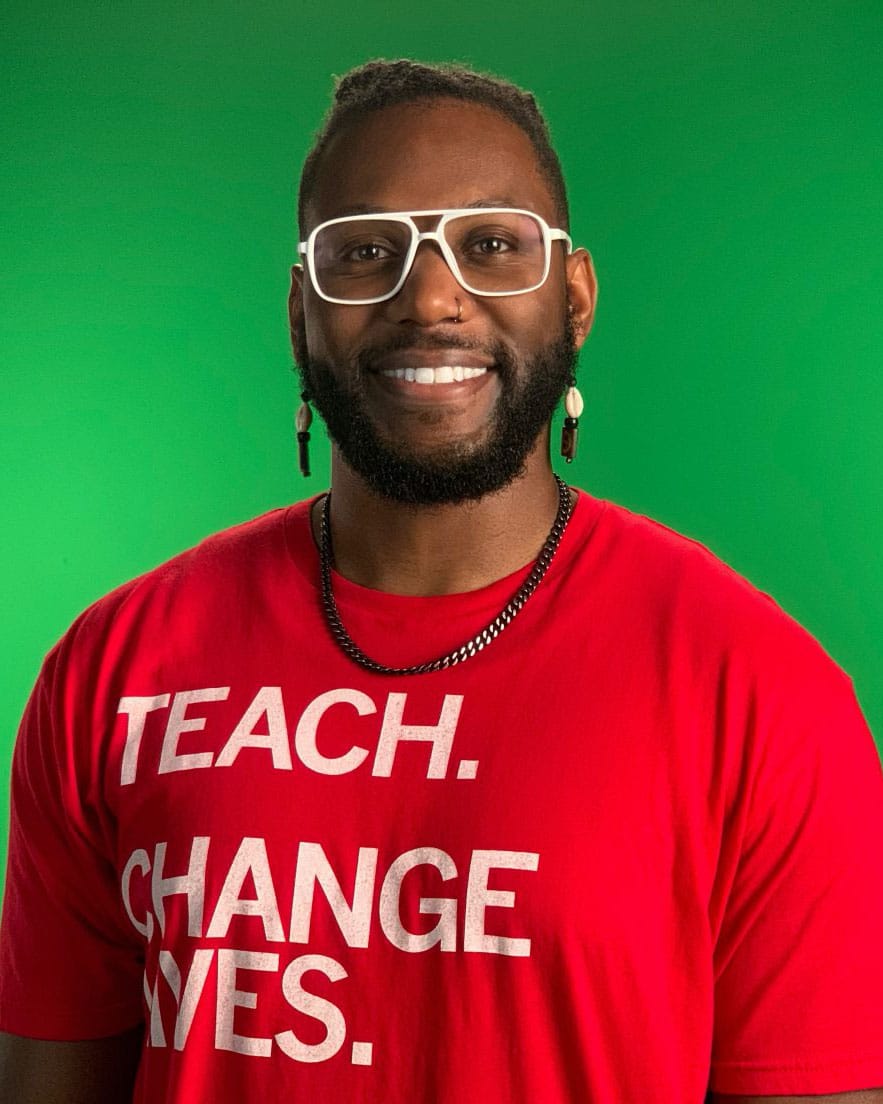
Corey Winchester
Award-winning Illinois high school U.S. history teacher Corey Winchester disagrees with Trump. Instead of leaving his students paralyzed with shame, he said of the Zinn Education Project’s curriculum, “It is empowering to learn from multiple perspectives and invigorates their desire to learn and disrupt the status quo.”
Winchester is right. Teaching people’s history is about empowering and invigorating students to better understand the perspectives of workers, women, Black, Indigenous, and people of color, whose voices are too often erased in the corporate-produced textbooks. CONTINUE READING: Trump Attacks Howard Zinn and the Zinn Education Project — Defend Teaching People’s History Today! – I AM AN EDUCATOR

CURMUDGUCATION: DC: Lessons About Charter Schools

CURMUDGUCATION: DC: Lessons About Charter Schools

DC: Lessons About Charter Schools


DC schools have a history of being messy. There's the entire checkered history of Michelle Rhee, followed by the entire checkered history of the people either trying to build on or clean up after Michelle Rhee. I'm reminding you of this as context for the revelations that are about to be unintentionally provided about the DC charter sector.

You can get a taste of the mess in the public schools from two pieces of testimonial from Richard Phelps, who came on as Director of Assessment just as Rhee was edging toward the door in 2010.Part One looks at how Phelps worked hard to poll over 500 staff members to come up with concrete improvements for the testing system, which boiled down to a ton of work that was summarily rejected by four central office staff, including Rhee. He was supposed to get the staff to buy in to the crappy existing system, not make it better. The Ed Reform Club. he concluded, was there to exploit DC for its own benefit. Part Two looks at the cheating scandals, most specifically the scandal that never became a story--DCPS's technique of using the test blueprint to teach to the test. In the end, he concludes, despite their rhetoric, school leaders Rhee, Henderson and McGoldrick had no interest in making their system more transparent or accountable.

So in a way, I guess it's not surprising that the charter sector that has blossomed in DC is also filled with the same Ed Reform Club problems. And this comes from looking at a piece, not by a DC charter critic, but by one of their big cheerleaders, who can't help saying some of the quiet parts CONTINUE READING: 
CURMUDGUCATION: DC: Lessons About Charter Schools