Latest News and Comment from Education

Friday, May 29, 2020

California students to wear masks, get daily temperature checks under Newsom rules

California students to wear masks, get daily temperature checks under Newsom rules

California students to wear masks, get daily temperature checks under Newsom rules


SACRAMENTO, Calif. — Gov. Gavin Newsom’s reopening guidelines for schools include recommendations that students and teachers wear face coverings and receive daily temperature checks, according to a summary of the not-yet-released state guidance.
A summary of the guidance obtained by POLITICO suggests keeping desks six feet apart or creating partitions between desks and staggering arrival and drop off times to minimize physical contact. It also includes considerations for increased sanitation and portable hand washing stations.
Newsom is expected to release the guidelines publicly on Friday.
The guidance recommends that individually plated or bagged meals be served in classrooms instead of cafeterias and that students remain with the same small group of classmates and teachers as much as possible.
Cloth face coverings would be used by staff at all times, and would be most essential for students when physical distancing is not possible, according to the guidelines.
Schools would implement screening of all staff and students before they enter campus and monitor signs of illness throughout the day, sending any students with a temperature of 100.4 degrees or higher, a cough or other Covid-19 symptoms home.
Both school staff and parents would need training on how to use masks and increase sanitation, with the possibility of standardized videos and online training CONTINUE READING: California students to wear masks, get daily temperature checks under Newsom rules

Randi Weingarten: Despite coronavirus, how schools can reopen safely: Teachers' union

Despite coronavirus, how schools can reopen safely: Teachers' union

Coronavirus anxiety is real, but schools have to try to reopen: Q&A with teachers' union
It’s not good for kids to be home like this, says Randi Weingarten, head of the American Federation of Teachers.


This week, as U.S. coronavirus deaths topped 100,000 and President Donald Trump tweeted that “schools in our country should be opened ASAP,” the USA TODAY Editorial Board spoke with Randi Weingarten, president of the American Federation of Teachers. The teachers’ union has issued detailed guidelines for reopening schools. Questions and answers have been edited for length, clarity and flow:
Q. Do you agree with President Trump that schools should reopen as soon as possible?
A. Trump has created this false narrative that people either want to stay in place, locked down, or you open things up as if it was last June. So, no, I don’t agree with him. I’m actually less sanguine this week about opening than I was three or four weeks ago (based on) what happened at Lake of the Ozarks (in Missouri) and other places. Because if we have community spreaders and a second wave (of infections) before the summer ends, then I think all bets are off.
Q. What have we learned about online education?
A. Remote-only education is something that we all know has not been good for kids. People have tried really hard, and they’ve worked really hard, and they’ve turned on the dime in amazing ways. I think people really respect teachers now for what they’ve tried to do. But (online education) is not a substitute for the relationship building and the alchemy that happens in schools and in classrooms. Even though you’ll probably find a kid or two who will excel in it, this remote way of educating kids is not great.
Q. Is there a point this summer when we should know whether schools are going to open on time for the fall semester?
A. A lot of schools in the South start opening Aug. 1. So you’re going to see schooling. I think your question is, what’s going to happen in terms of school buildings? And I think we’re going to know that based upon two facts. Will we get this (financial aid) package (from Congress)? Because if we don’t get that package, then school buildings are not going to reopen in the way that they need to. The second real issue, which is a big uncertainty, is whether there’s going to be a second wave. If a second wave crops up that you can’t contain, then schools won’t open in September. I want schools to open safely and responsibly, and as a union, we are doing everything in our power to prepare people to do that and to try to make it work.
Q. Tell us about AFT’s plan for reopening.
A. We talked to a bunch of epidemiologists and people from (foundations). We talked to doctors. We had our members involved. And we realized that there is a CONTINUE READING: Despite coronavirus, how schools can reopen safely: Teachers' union

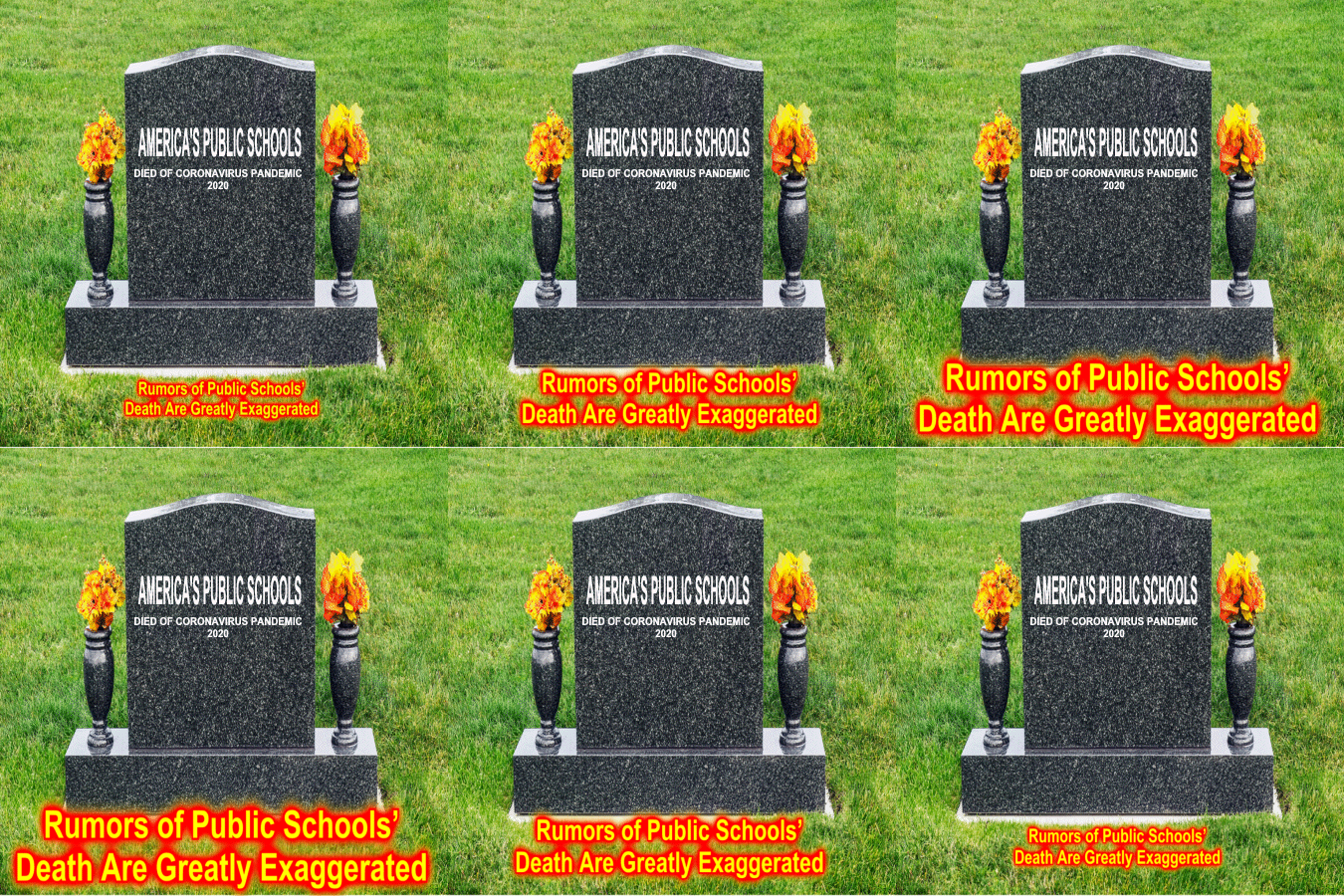
Rumors of Public Schools' Death Are Greatly Exaggerated - Teacher Habits

Rumors of Public Schools' Death Are Greatly Exaggerated - Teacher Habits

Rumors of Public Schools’ Death Are Greatly Exaggerated


These are scary times for those who support public schools. Legislators in most states are preparing the public for deep funding cuts. The federal government does not seem to be in a hurry to bail out states. The Secretary of Education continues her crusade to ram her personal affinity for private schools down everyone’s throats. There’s concern about just how many parents will feel comfortable sending their children back to brick-and-mortar schools. And on top of all of that, it’s likely that schools will be instituting changes to their operations, some of which will depress attendance and most of which will cost additional money that they will not have.
Enemies of public education smell blood, and they’re positively giddy about the prospects of a weakened public school system. Ryan McMaken, in an article titled “The School Closures Are a Big Threat to the Power of Public Schools,” tries to argue that emergency learning has exposed just how ineffectual and oversold our education system is. Based on the article’s comments, Ryan is hardly alone in his wishful thinking. McMaken starts by crediting COVID-19 for exposing the truth about school: It wasn’t actually “all that important after all.” His evidence?
“Yes, the schools have tried to keep up the ruse that students are all diligently doing their school work at home, but by late April it was already apparent that the old model of “doing CONTINUE READING: Rumors of Public Schools' Death Are Greatly Exaggerated - Teacher Habits

Betsy DeVos Ignores Congress: Orders Distribution of CARES Act Dollars to Private Schools Instead of Public Schools Serving Poor Children | janresseger

Betsy DeVos Ignores Congress: Orders Distribution of CARES Act Dollars to Private Schools Instead of Public Schools Serving Poor Children | janresseger

Betsy DeVos Ignores Congress: Orders Distribution of CARES Act Dollars to Private Schools Instead of Public Schools Serving Poor Children


On April 30, U.S. Education Secretary Betsy DeVos released informal guidance directing federal Covid-19 stimulus funds to private schools at the expense of the public schools that educate 50 million American children and adolescents.  DeVos is using the pandemic crisis to promote her own agenda supporting the privatization of American public education.  Her recent action also undermines one of the most fundamental purposes of the U.S. Department of Education for which she is responsible.
On Wednesday, the NY Times‘ Erica Green described DeVos responding to criticism from the Council of Chief State School Officers: “Ms. DeVos accused the state education chiefs of having a ‘reflex to share as little as possible with students and teachers outside of their control,’ and said she would draft (a final) rule codifying her position to ‘resolve any issues in plenty of time for the next school year.’ The proposed rule would need to go through a public comment process before it could take effect.”
But the issue is far more complicated than what DeVos claims is public schools’ selfish unwillingness to share.
In the CARES Act, Congress directed the U.S. Department of Education to distribute $13.5 billion to the nation’s public schools according to the principles of the Title I formula.  The Title I formula represents—more than any other policy or program—the very role of the federal government in U.S. public education.  Public schools are created and funded under the 50 state constitutions, but in 1965, when Congress passed the Elementary and Secondary Education Act in the midst of the Civil Rights Movement and Lyndon Johnson’s War on Poverty, the federal purpose was to support the education of impoverished children and confront unequal access to education across the states.
Jack Jennings, founder and retired CEO of the Center on Education Policy, describes the CONTINUE READING: Betsy DeVos Ignores Congress: Orders Distribution of CARES Act Dollars to Private Schools Instead of Public Schools Serving Poor Children | janresseger

What do you think? Are charter schools public schools or small businesses? - Network For Public Education

What do you think? Are charter schools public schools or small businesses? - Network For Public Education

What do you think? Are charter schools public schools or small businesses?


What do you think? Are charter schools public schools or small businesses?
On her recent blog, Diane asked an important question.
“Are charter schools public schools or small businesses with government contracts? They claim to be public schools, even though they have private, unelected boards and private management.”
Diane is outraged, as we all should be because charters took CARES Act funding for public schools, and then some double-dipped into Small Business Administration Paycheck Protection  Program (PPP) funds intended to keep small businesses from shutting down.
Read what happened here in The Washington Post where we explain what we uncovered.
NPE’s Marla Kilfoyle has been diligently collecting the names and the amounts that charter schools have received from the SBA. It has not been easy because charters do not want to admit they are taking these funds.
Will you lend Marla a hand? Check the board minutes of your local charter schools during April and May and see if the charter Board approved applying for and accepting PPP funds. If you find any, send the name of the school, amount and a link to the board minutes to marlakilfoyle@networkforpubliceducation.org.


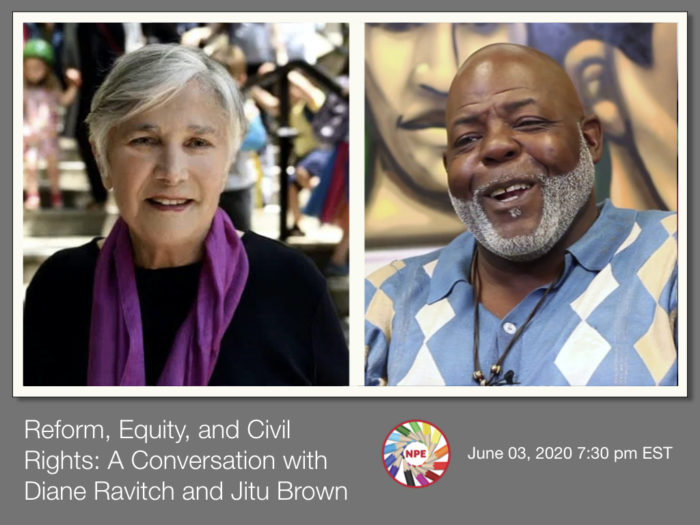
On Wednesday evening, please join Diane and her guest community leader and public school advocate Jitu Brown for an important discussion about equity and civil rights. Register for this important event here.

Nutrition CARES Act Guidance - FEMA Deadline Extension - Nutrition (CA Dept of Education)

Nutrition CARES Act Guidance - Nutrition (CA Dept of Education)

Nutrition CARES Act Guidance


On May 1, 2020, the U.S. Department of Agriculture issued guidance regarding the Coronavirus Aid, Relief, and Economic Security (CARES) Act. The CARES Act provides funding to Child Nutrition Programs to assist with the impact of COVID-19. The California Department of Education (CDE) Nutrition Services Division (NSD) is providing clarification on how the CARES funding can be used.
The U.S. Department of Agriculture has instructed us that these funds can only be used for paying reimbursement claims for actual meals served to eligible children in the National School Lunch Program, Summer Seamless Option, and School Breakfast Programs, Special Milk Program, Child and Adult Care Food, and Summer Food Service Programs, and therefore cannot be used to offset revenue loss. In addition, these funds can only be used for claims during the time period March through September 2020.
The CDE NSD is committed to advocate and support your needs. We are seeking additional flexibility for the use of CARES Act funds for child nutrition programs to ensure students continue to receive nutritious meals during this difficult time.
Please note, these funds cannot be used for Child Care Audit, Child Care Sponsor Administration, Summer Food Service State Administrative Expenses or Health Inspections.
Contact Information
If you have any questions regarding this subject, please contact Mike Salazar, Financial Management Unit Manager, by phone at 916-322-3287 or by email at msalazar@cde.ca.gov.
Questions:   Nutrition Services Division | 800-952-5609


Nutrition CARES Act Guidance - Nutrition (CA Dept of Education)

FEMA Deadline Extension


Coronavirus (COVID-19) Main Web Page

The Federal Emergency Management Agency (FEMA) has announced that the deadline for Reimbursement of Purchases and Distribution of Food, FEMA-4482-DR-CA (COVID-19) has been extended until June 10, 2020.

FEMA’s March 19, 2020 Fact SheetExternal link opens in new window or tab. describes emergency protective measures in more detail.

Resources
Contact Information

Please direct any questions related to FEMA training sessions to FEMA-Recovery-PA-Grants@fema.dhs.gov or call the Grants Manager/Portal Hotline at 1-866-337-8448.

LEA questions about FEMA Public Assistance and the RPA deadline can be directed to Cal OES at PAProcurement@caloes.ca.gov.

Questions:   Nutrition Services Division | 800-952-5609
FEMA Deadline Extension - Nutrition (CA Dept of Education) - https://www.cde.ca.gov/ls/nu/femadeadlineextension.asp


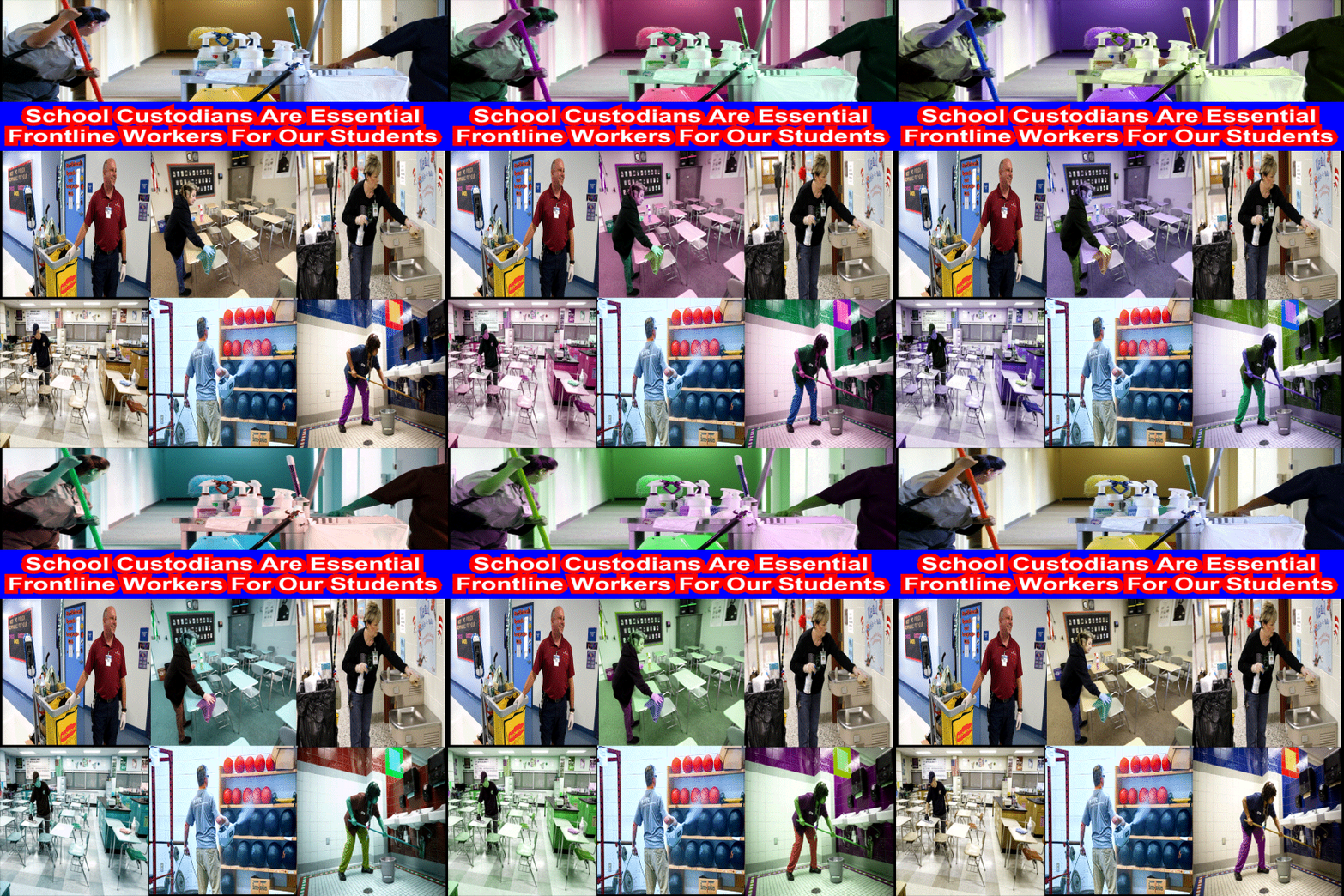
School Custodians Are Essential Frontline Workers For Our Students

School Custodians Are Essential Frontline Workers For Our Students

School Custodians Are Essential Frontline Workers For Our Students


Juan Ramos has been a school custodian and union member for nearly 30 years. His father was a custodian before him, and Ramos spent summers helping his dad starting out when he was just fourteen-year-old. With that much experience under his utility belt, Ramos definitely has the know-how to protect students and educators from coronavirus, but only if he and his colleagues have the equipment and staff-power necessary to fight the deadly virus.
school custodians covid
School custodian Juan Ramos
“Custodians are on the front line of defense at school,” says Ramos, who works at Maple Brook Elementary School in Naperville, Illinois. “We need to make sure our schools are thoroughly cleaned and disinfected throughout the day, after the students leave, and before they come each morning — now more than ever in history.”
It’s not just hand sanitizer, hand washing and social distance that will keep schools safe, he says, but sophisticated cleaning equipment designed to take on the deadly virus.
“Custodians will need electrostatic sprayers to make sure that we hit high touch surfaces with the right chemicals for fighting the virus, we need hospital grade, which is the best there is,” Ramos says.
The sprayers should use a solution that is EPA registered for use against the cause of COVID-19 and should be applied to all touch and hard surfaces, door handles, furniture, floors – everything. The solution takes about 10 minutes to activate so it can’t be rushed and will need to be used in hallways, bathrooms and classrooms CONTINUE READING: School Custodians Are Essential Frontline Workers For Our Students

NANCY BAILEY: Beware of Education Frenemies!

Beware of Education Frenemies!

Beware of Education Frenemies!


Frenemies are everywhere when it comes to public education, while many of us fear disaster capitalism as the future of public schools.
Dictionary.com defines frenemy as a person or group that is friendly toward another because the relationship brings benefits, but harbors feelings of resentment or rivalry.
What makes an education frenemy and not an enemy, is that frenemies pretend to care about public education and children, while instituting harsh education reforms to end the schools children need. Education frenemies are masters of gaslighting. They might seem like they understand, might even be nice on other issues, but they are intent on ending democratic public schools.
Education enemies are different. They will say outright, “Public schools suck! We need to get rid of them all!” At least you know where they stand.
Education Secretary Betsy DeVos tried to be a frenemy at first. But her actions even before her appointment were too obvious. Few were deceived by her plans, and she’s CONTINUE READING: Beware of Education Frenemies!

Thursday, May 28, 2020

CURMUDGUCATION: Betsy DeVos, the Catholic Church, and Public Tax Dollars

CURMUDGUCATION: Betsy DeVos, the Catholic Church, and Public Tax Dollars

Betsy DeVos, the Catholic Church, and Public Tax Dollars


The Trump administration and the Catholic Church have seemed extra tight lately. And an awful lot of it has to do with public education.


Cardinal Timothy Dolan (New York) took the lead in a fun conference call last month in which Trump, along with Betsy DeVos, swapped personal admiration and what is either some quid pro quo or just a shared love for the notion of shredding public education and replacing it with private religious schools.

Soon after, the cardinal hosted DeVos on his SiriusXM show, where this exchange was reported by Matt Barnum for Chalkbeat:

In a conversation with DeVos on SiriusXM radio, Cardinal Timothy Dolan, the Catholic archbishop of New York, suggested that the secretary was trying to “utilize this particular crisis to ensure that justice is finally done to our kids and the parents who choose to send them to faith-based schools,” including through a new program that encourages states to offer voucher-like grants for parents.

“Am I correct in understanding what your agenda is?” Dolan asks.

“Yes, absolutely,” DeVos responded. “For more than three decades that has been something that I’ve been passionate about. This whole pandemic has brought into clear focus that everyone has been impacted, and we shouldn’t be thinking about students that are in public schools versus private schools.”

None of this is new for the Catholic Church. Google your state's "Catholic Conference school choice" and in most cases you'll be taken to an entire page of school choice advocacy. In Pennsylvania, CONTINUE READING: 
CURMUDGUCATION: Betsy DeVos, the Catholic Church, and Public Tax Dollars

Mike Klonsky's Blog: We're re-imagining post-corona schools. So are they.

Mike Klonsky's Blog: We're re-imagining post-corona schools. So are they.

We're re-imagining post-corona schools. So are they.


Betsy DeVos Just Made It Harder for Defrauded Students to Get ...
Using federal school rescue funds to feed private school operators.
I find myself wishing for a storm in Chicago — an unpredictable, haughty, devastating swirl of fury. A dramatic levee break. Geysers bursting through manhole covers. A sleeping city, forced onto the rooftops. " -- Kristen McQueary, Chicago Tribune Editorial Board
Rethinking corona-era schooling seems to be the order of the day for progressives and community educators. But rest assured, we're not the only ones doing the rethinking. Fifteen years ago, the shock & awe that came with Hurricane Katrina, left the door open for conservative ideologues like Friedman, along with the privateers and charter hustlers to reimagine the Gulf Coast disaster not as a crisis, but as an opportunity for privatization and profit.

I remember Obama's Secretary of Education Arne Duncan calling Katrina “the best thing that happened to the education system in New Orleans,” because it gave the city a chance to bust the teachers union, fire the predominantly-black teaching force, and replace every public school CONTINUE READING: 
Mike Klonsky's Blog: We're re-imagining post-corona schools. So are they.

NYC Public School Parents: Problems with remote learning from the perspective of a NYC student and a NYC teacher

NYC Public School Parents: Problems with remote learning from the perspective of a NYC student and a NYC teacher

Problems with remote learning from the perspective of a NYC student and a NYC teacher


First, here is testimony from Joshua Applewhite, NYC high school student, at yesterday's City Council hearings, who said that because of remote learning, "I feel like a robot. As a matter of fact, I feel like this whole situation is handled like we’re robots and we’re not humans with different feelings and different circumstances and different situations.” 

More on the findings from these hearings here and here, including the fact that the city’s summer school plan for remote learning calls for only one counselor or social worker for every 1,045 students and only one teacher for 30 struggling students.

Below this video is a piece by Ronit Wrubel, a NYC teacher, who points out another big problem  with remote learning - it's difficult for teachers to see their students' eyes.


DON'T FORGET THE EYES by Ronit Wrubel


Exactly 10 years ago, in April of 2010, I wrote an essay called "Don't Forget The Eyes".
I had been teaching using a document camera where I projected images onto a pull-down screen and showed most of my lessons using slides, photos, and various worksheets that had been transferred onto clear acetate pages. I used colored write on/wipe off markers to share my teaching points. I found value in the interactivity of this ‘teaching tool’.
My document camera was positioned behind my class meeting area in order to properly project what we were learning. The children would look at the screen while listening to CONTINUE READING: NYC Public School Parents: Problems with remote learning from the perspective of a NYC student and a NYC teacher

David Berliner: Kids Missing School? Don’t Worry. | Diane Ravitch's blog

David Berliner: Kids Missing School? Don’t Worry. | Diane Ravitch's blog

David Berliner: Kids Missing School? Don’t Worry.


David Berliner, one of our nation’s most eminent researchers, advises parents not to worry that their children are “falling behind.” School is important. Instruction is important. But “soft skills” and non—cognitive skills matter more in the long term than academic skills. Relax.
He sent this advice to the blog:
Worried About Those “Big” Losses on School Tests Because Of Extended Stays At Home? They May Not Even Happen,
And If They Do, They May Not Matter Much At All!
David C. Berliner
Regents Professor Emeritus
Mary Lou Fulton Teachers College
Arizona State University
Tempe, AZ.
Although my mother passed away many years ago, I need now to make a public confession about a crime she committed year in and year out. When I was young, she prevented me from obtaining one year of public schooling. Surely that must be a crime!
Let me explain. Every year my mother took me out of school for three full weeks following the Memorial Day CONTINUE READING: David Berliner: Kids Missing School? Don’t Worry. | Diane Ravitch's blog

Are you trying to teach your kids too much at home? - Teachers weigh in on what’s most important

Parents teaching kids: Teachers weigh in on what’s most important

Are you trying to teach your kids too much at home?
Teachers weigh in on what’s most important

For parents of young children who are still trudging along with homeschooling, the early years pose some of the most flummoxing challenges: Many children are trying to learn to read basic words and write simple sentences, yet they aren’t old enough to work independently. Social media is full of stories of parents-turned-teachers who are over it, sharing stories of hours spent trying to get their kids to write a few sentences or follow a packed daily assignment schedule.
For those who are still trying to forge ahead, I spoke to three educators for advice:
Writing
“I wouldn’t focus on formal writing instruction,” said Christa Newcum, a second grade teacher at Future Public School in Garden City, Idaho. “It’s hard to teach and will no doubt create unnecessary stress for families and children.” If parents do want to teach writing, Newcum suggests they keep it informal. Ask children to write in a journal, write letters to pen pals or let kids do “free writing” with no rules.
“I wouldn’t focus on formal writing instruction. It’s hard to teach and will no doubt create unnecessary stress for families and children.”

Christa Newcum, second grade teacher at Future Public School in Garden City, Idaho.
Sarah Adkins, a kindergarten teacher in the Nooksack Valley School District in Washington state, said parents should be careful not to push for perfection—particularly when it comes to spelling. “We shouldn’t be CONTINUE READING: Parents teaching kids: Teachers weigh in on what’s most important

JONATHAN KANTROWITZ: The Great Recession Badly Hurt Kids’ Schooling; Today’s Recession Could Do Much Worse - Jonathan Kantrowitz

The Great Recession Badly Hurt Kids’ Schooling; Today’s Recession Could Do Much Worse - Jonathan Kantrowitz

The Great Recession Badly Hurt Kids’ Schooling; Today’s Recession Could Do Much Worse


Source: Center on Budget and Policy Priorities
Whenever our kids return to school, a severely diminished learning experience awaits them unless the federal government learns an important lesson from the past and significantly boosts state aid — and soon.
The last time that states faced a budget crisis, in the wake of the Great Recession of a decade ago, emergency federal aid closed only about one-quarter of state budget shortfalls. Once the aid was gone, states started cutting funding to K-12 schools to help comply with their balanced budget requirements. By 2011, 17 states had cut per-student funding by more than 10 percent. Local school districts responded by cutting teachers, librarians, and other staff; scaling back counseling and other services; and even reducing the number of school days. Even by 2014 — five years after the Great Recession ended — state support for K-12 schools in most states remained below pre-recession levels.
School districts have never recovered from the layoffs they imposed back then. When COVID-19 hit, K-12 schools employed 77,000 fewer teachers and other workers even though they were teaching 2 million more children, and overall funding in many states was still below pre-Great Recession levels.
Money matters in education. As my colleague Cortney Sanders recently noted, “Adequate school funding helps raise high school completion ratesclose achievement gaps, and make the future workforce more productive by boosting student outcomes, studies show.” The Great Recession in particular hurt students’ educations, driving down test scores and the rate at which students attend college, Northwestern University economist C. Kirabo Jackson and two colleagues found.
Now, with the deepest economic downturn since the Great Depression closing businesses and sending unemployment soaring, state income and sales taxes — on which states overwhelmingly rely to fund education and other services — are drying up. As a result, we estimate that state budget shortfalls over the next three years will total $765 billion.
Federal aid to date, plus state rainy day funds, can close about one-fifth of those state gaps, leaving states $590 billion CONTINUE READING: The Great Recession Badly Hurt Kids’ Schooling; Today’s Recession Could Do Much Worse - Jonathan Kantrowitz

School Reopenings: Expect Masks, Tiny Classes, Staggered Days | Los Angeles, CA Patch

School Reopenings: Expect Masks, Tiny Classes, Staggered Days | Los Angeles, CA Patch

School Reopenings: Expect Masks, Tiny Classes, Staggered Days
The L.A. County Office of Education released a detailed plan for returning to school, featuring stark changes for students and teachers.


LOS ANGELES, CA — The L.A. County Office of Education released a detailed plan for returning to school in the fall, and it's like nothing American schools have ever seen before. Under the new guidelines, all students will be required to wear masks, and classrooms would be limited to 16 students with lunch being served in the classroom and recess a solitary affair. School days would be staggered, each student could be assigned one ball to play with and hallways will see one-way foot traffic — all in an effort to protect the county's two million students and their families from the coronavirus outbreak.
The detailed 45-page plan released Wednesday imposes severe restrictions on both teachers and students. According to the Los Angeles Times, the framework was developed through the work of county staffers, outside advisors and representatives from the 23 county school systems, each of which must develop its own reopening plan. It remains to be seen if the county's various school districts will have the means to impose many of the recommended restrictions.
"Our main priority is health and safety," said Debra Duardo, the superintendent for the L.A. County Office of Education, which provides services and financial oversight for the county's 80 school systems. "Unfortunately some of the things that children could enjoy in the past, they're not going to be able to do that."

Don't miss local and statewide news about coronavirus developments and precautions. Sign up for Patch alerts and daily newsletters.

Teachers and administrators face a monumental task trying to balance the health of students with their emotional and developmental need for socialization. Getting through to kindergartners eager to play tag with one another will be a major challenge.
Subscribe
"That is a big challenge because our nature is to play together and the socialization is so important at that age," Cerritos Principal Perla Chavez-Fritz told the Los Angeles Times. "Maybe hula hoops and things that the students can play together alone."
Despite unprecedented efforts, schools and teachers have had mixed success garnering student engagement through remote learning. The need for a robust return to academics has never been higher than in the upcoming school year, yet schools face budget cuts of about 10% in the governor's proposed budget.
City News Service and Patch Staffer Paige Austin contributed to this report.
School Reopenings: Expect Masks, Tiny Classes, Staggered Days | Los Angeles, CA Patch

Randi Weingarten: What summer programs can teach us about reopening schools this fall - The Washington Post

Randi Weingarten: What summer programs can teach us about reopening schools this fall - The Washington Post

This summer, we can test-drive best practices for safely reopening schools


Randi Weingarten is president of the American Federation of Teachers.
Parents, educators and students are wondering whether, and how, public schools will reopen in the fall. It’s a daunting challenge. But with real investment and planning, the next few months could provide an opportunity to test-drive best practices for safely reopening schools. If safe to do so, school districts might offer voluntary summer school, adhering to public health protocols to prevent the spread of the novel coronavirus. This could help students catch up on lost learning as well as get needed social and emotional support.
The covid-19 pandemic closed schools practically overnight. Absent other choices, distance learning ramped up almost as quickly. Although teachers have done remarkable work, the past two months make clear that remote learning is no substitute for in-person classroom learning and interaction. Many parents have newfound respect for the craft of teaching, and students say they can’t wait to get back to school.
The covid-19 crisis has exacerbated some glaring inequities. Rural and low-income students often lack broadband Internet, laptops, tablets or phones with which to work. They have missed opportunities to connect with their teachers and classmates. English-language learners and students with disabilities have been at a disadvantage, as have students facing housing or food insecurity.
As much as 70 percent of the achievement gap between affluent students and their less-advantaged peers can be attributed to the “summer slide.” This year’s unprecedented “spring slide” is certain to worsen that gap. But studies also show that students who participate in high-quality, voluntary, multiweek summer learning programs make significant gains in reading and math, as well as experiencing social and emotional benefits.
Reopening schools is a key part of overall reopening, but it must be done safely and thoughtfully. The fight against the coronavirus is far from over, and the second wave of the 1918 flu was worse than the first. Absent a vaccine, no one knows what the future will bring. Adhering to public health safeguards is CONTINUE READING: Randi Weingarten: What summer programs can teach us about reopening schools this fall - The Washington Post