Latest News and Comment from Education

Saturday, August 31, 2019

Peter Greene: The SAT Tweaked The Adversity Score. Can They Undo The Damage It Caused?

The SAT Tweaked The Adversity Score. Can They Undo The Damage It Caused?

The SAT Tweaked The Adversity Score. Can They Undo The Damage It Caused?


Since David Coleman took the helm at the College Board, their flagship product--the ubiquitous SAT, one-time Queen of the college entrance exams--has been the victim of a series of unforced errors. The roll out and walk back of the "adversity score" is only the latest--and recent reports of that score's death may be greatly exaggerated.
The company ran into some glitches in its rush to get a new, Common Core-aligned test to market. Coleman expressed a desire for the test to be a great leveler, a test that would recognize and elevate intellectual prowess wherever it was found. The SAT has long been criticized as being loaded with cultural bias, and their own data seems to support that assertion. The other knock on the test was that could be beaten with the help of test prep and coaching (a criticism bolstered by an entire SAT test prep industry). And the College Board has been confirming that these criticisms are valid.
In 2014, the College Board entered into a partnership with Khan Academy to offer free test prep to anyone who wanted it. Rather than designing a test that was immune to test prep (which may, in fact, be impossible), the College Board appeared to be conceding that SAT scores measured, at least in part, how well the student had been CONTINUE READING: The SAT Tweaked The Adversity Score. Can They Undo The Damage It Caused?

Neighborhood Council Reiterates Support For School Board Resolution

Neighborhood Council Reiterates Support For School Board Resolution

Neighborhood Council Reiterates Support For School Board Resolution

Last October, the Northridge East Neighborhood Council (NENC) passed a resolution calling on the Los Angeles City Council “to urge the LAUSD School Board to pass the ‘Board Meeting Accessibility to the Public’ [proposal] that has been submitted to them for consideration.” In doing so, they joined parents and other district stakeholders in asking board members to take concrete actions to make sure that those affected by actions taken during their meetings have more of an opportunity to participate in the proceedings. The proposed requirements included a prohibition against holding meetings when school is in session, assurance that stakeholders who could not fit into the meeting room are still given the opportunity to participate, and making sure that differing opinions were heard during public comment.
In the time since the NENC expressed their support for the “Board Meeting Accessibility to the Public”, the proposal has been formally presented to the LAUSD Board. While two board members have expressed interest in moving the proposal forward, it has yet to be voted on by the board. Instead, Board Member Nick Melvoin has tried to limit the amount of time that the public is given to address the board through a series of CONTINUE READING: Neighborhood Council Reiterates Support For School Board Resolution

Little Rock, Arkansas: Dr. Anika Whitfield Pleads for a Return of Democracy | Diane Ravitch's blog

Little Rock, Arkansas: Dr. Anika Whitfield Pleads for a Return of Democracy | Diane Ravitch's blog

Little Rock, Arkansas: Dr. Anika Whitfield Pleads for a Return of Democracy


Dr. Anika Whitfield is a remarkable woman. She is a podiatrist. She is an ordained Baptist minister. She has volunteered as a tutor in the public schools of Little Rock for many years. She is active in Save Our Schools Arkansas and Grassroots Arkansas. She is a fighter for social justice and equity. She wrote the following letter to Johnny Key, who is Commissioner of Education in the state. Key was trained as an engineer and served in the state legislature for a decade. Anyone who cares about the children and schools of Little Rock should listen to Dr. Whitfield. She is a dynamo.
The state took control of the Little Rock School District because six of its 48 schools were low-performing. Instead of helping the schools, the state simply abolished local control. The Walton family plays a large role in the state due to its dominance of the state’s economy and its many political lackies.
Dr. Whitfield wrote:
Commissioner Key,
For two weeks now, the Arkansas State Board of Education has been hosting public meetings to discuss the future of the LRSD. Since the LRSD was taken over by the state on January 28, 2019, you have been serving, by appointment, as our sole board member. Sadly, you have not been present for any of the four meetings that CONTINUE READING: Little Rock, Arkansas: Dr. Anika Whitfield Pleads for a Return of Democracy | Diane Ravitch's blog

From Policy To Practice: Reforming American Schools and Classroom Lessons | Larry Cuban on School Reform and Classroom Practice

From Policy To Practice: Reforming American Schools and Classroom Lessons | Larry Cuban on School Reform and Classroom Practice

From Policy To Practice: Reforming American Schools and Classroom Lessons


I have just sent in my manuscript to the publisher entitled “Chasing Success and Confronting Failure in American Schools.” Every book I have written in the past decade since I started this blog, I have posted the argument, drafts of chapters, and vignettes of schools and teacher lessons.
Now I am considering my next project. I would like to draw together certain themes that I have lived, taught about, and researched since I began teaching over a half-century ago. The title of this post captures those themes. For this post, I am offering the condensed argument I have thought of making in my next book. I attach no endnotes or citation of sources at this point. Just the distilled argument.
I am concerned that the logic of the argument is clear, crisply stated, and coherent. So I ask readers of this post to look for holes, errors, and missing parts that should be included. I would appreciate reader comments.
What teachers teach and students learn in American classrooms are (and have been) shaped (but not determined) by political and organizational forces:
First, there is the decentralized system of governance and funding of schools over the past two centuries.
Second, the age-graded school with its “grammar of schooling” has been the reliable vehicle for moving state and local policies into classroom lessons.
Third, the constant flow of social, political, and economic problems in the larger CONTINUE READING: From Policy To Practice: Reforming American Schools and Classroom Lessons | Larry Cuban on School Reform and Classroom Practice

Betsy DeVos denounced for student debt relief rule change that critics say ‘Takes a scythe to defrauded borrowers’ – Raw Story

Betsy DeVos denounced for student debt relief rule change that critics say ‘Takes a scythe to defrauded borrowers’ – Raw Story

Betsy DeVos denounced for student debt relief rule change that critics say ‘Takes a scythe to defrauded borrowers’


“With this policy overhaul, Secretary DeVos has cemented her legacy as best friend to predatory colleges and enemy to the students they rip off.”
Critics condemned Trump Education Secretary Betsy DeVos Friday for replacing Obama-era federal loan forgiveness regulations for student borrowers who claim that they were defrauded by their schools with new policies that could make it more difficult to access relief.
“On the Friday of Labor Day weekend, Betsy DeVos is gleefully forcing hundreds of thousands of students defrauded by for-profit colleges to suffer yet another indignity,” Randi Weingarten, president of the American Federation of Teachers, said in a statement. “Shame on her.”
Outlining the policy changes, which the Department of Education announced late Friday, The New York Times reported:
The new rules apply to federal student loans made from July 2020 onward. They will replace a set of policies, completed by the Obama administration in 2016, that Ms. DeVos had delayed carrying out until a court ordered her to do so last year.
Under the new rules, borrowers seeking loan forgiveness will have much higher hurdles to clear. They will need to prove that their college made a deceptive statement “with knowledge of its false, misleading, or deceptive nature or with reckless disregard for the truth,” and that they relied on the claim in deciding to enroll or stay at the school. They will also need to show that the deception harmed them financially.

Labor movement fights leadership gender gap – People's World

Labor movement fights leadership gender gap – People's World

Labor movement fights leadership gender gap

The president of the nation’s largest union is a woman. The president of the nation’s second largest union is a woman. The president of the union that is arguably tied for third in numbers is a woman. And the Secretary-Treasurer of the AFL-CIO, the federation’s #2 job, is a woman.
And that’s a problem. An important problem.
The lack of female leaders defies the sheer numbers of women at work. Federal data show that of the 157.288 million employed people aged 16 or over (as of July), 73.705 million (46.8%) are women. The Bureau of Labor Statistics also calculates 6.662 million (45.2%) of the nation’s 14.744 million union members last year were women.
It stands to reason, given those figures, that more women should be in the top ranks of organized labor. They aren’t. Including the three union presidents and Shuler, the number of female presidents of the nation’s 60 or so unions – including AFL-CIO unions, independents such as the NEA and the three unions in Change To Win – can be counted on the fingers of two hands. And the recent death of Margaret Blackshere of Chicago, the first woman ever to run a state labor federation, in Illinois, is a reminder of how few women head state CONTINUE READING: Labor movement fights leadership gender gap – People's World

Helping Students Through Anxiety - Teacher Habits

Helping Students Through Anxiety - Teacher Habits

Helping Students Through Anxiety

Guest Writer: Piper McIntosh
How to Recognize Anxiety
Children get anxious from time to time – it’s only normal. They may become nervous before presenting in front of the class, for example, be it right before the presentation or even beginning the night before. Sometimes they can become anxious even for activities like lunch and recess. Luckily, there are specific signs that tend to pop up even at a young age that signal an anxiety disorder might be developing. As a professional, it is important to be able to recognize when a student has anxiety so that you may treat them the proper way and potentially help them to grow as a person. 
Common Signs of Anxiety in Children
When a child has anxiety, they may express this in a few different ways. They may avoid others and end up isolating themselves, for example, and become overwhelmed in large groups of people. It may be hard for them to focus. The child may also express their anxiety in ways such as frequent crying, tantrums, and general restlessness. It is important to recognize the differences between shyness and social anxiety, as an aside, because not every child without plenty of friends is anxious or unhappy. Children who are shy simply keep to themselves. Those with social anxiety become anxious when they must talk to people.
Signs of anxiety may also depend on age. For instance, most one-year-old babies will cry often, however, it is unusual for a twelve-year-old to show the same behaviors. Pay close attention to how children interact CONTINUE READING: Helping Students Through Anxiety - Teacher Habits

Spending an Hour Interviewing Trevor Noah | Cloaking Inequity

Spending an Hour Interviewing Trevor Noah | Cloaking Inequity

SPENDING AN HOUR INTERVIEWING TREVOR NOAH
Image result for SPENDING AN HOUR INTERVIEWING TREVOR NOAH
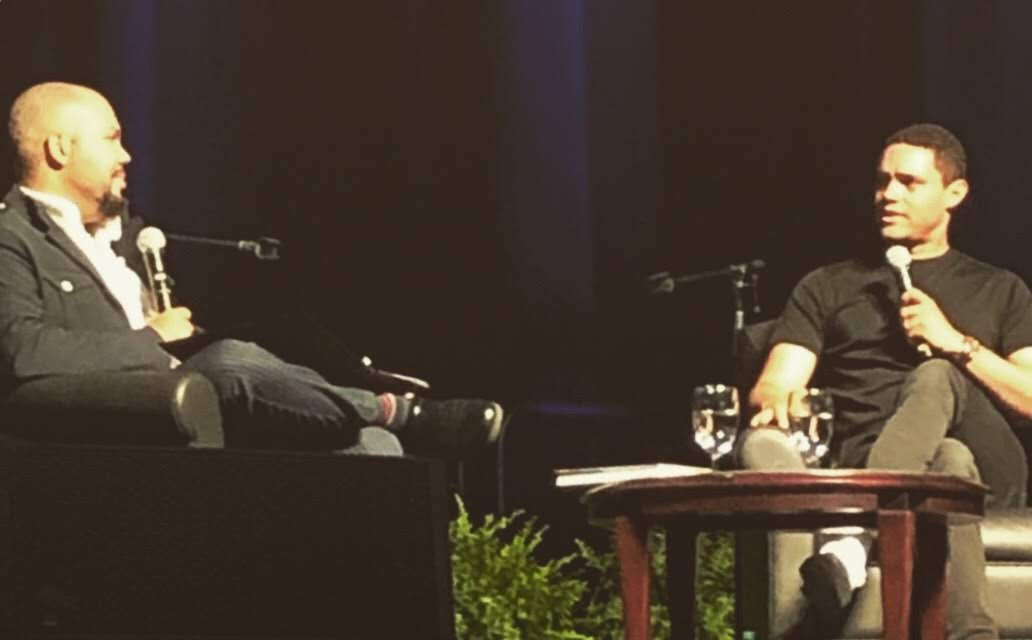
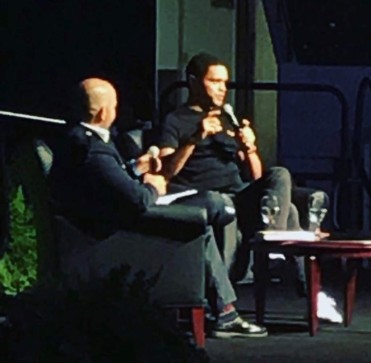
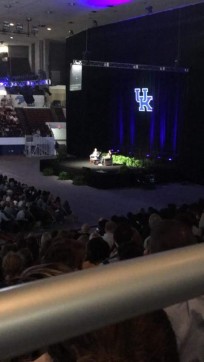
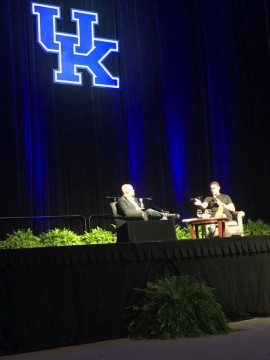
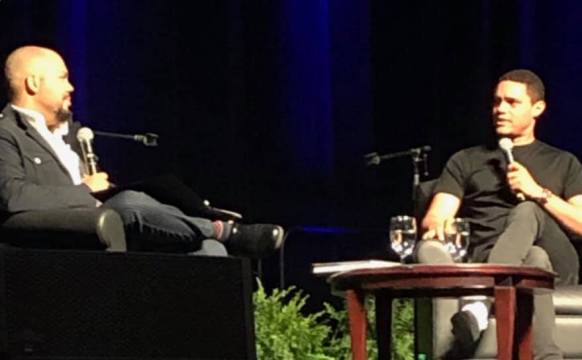
Enjoyed spending an hour interviewing Trevor Noah yesterday at the University of Kentucky’s historic Memorial Coliseum. The conversation focused on race and equality.
Here are the questions that I asked:
  • Many are familiar with your life story told in “Born a Crime,” growing up mixed-race in Apartheid South Africa. Are there particular lessons from your experiences that you think would translate well to the higher education conversations surrounding race and social justice?
  • As we, the University of Kentucky, spend this next academic year, reflecting on the progress we’ve made over the last 70 years as an institution, what are some things we should keep in mind as we strive to move this work forward?
  • What role does higher education play in a national conversation regarding race and social justice? What do these institutions add to that conversation?
  • What from your background has made you particularly prepared to talk about the issues of race and social justice in America in a meaningful way?
  • What do you think the role of young people is going to be in terms of changing the discourse in our nation in the next five years? (Parkland and BLM, etc.) What will the role of youth activism be in social justice issues across the United States?
  • What has made some of the young leaders and activists you have met distinctive or that made them stand out in your mind? Is there something you can pinpoint that makes young leaders/innovators/activists stand out?
  • Is there a particular guest you have interviewed that had a real impact on you related to issues of race and social justice?
  • Is there one person in history you would like to interview on the issues of race and social justice? Who is that person and what would you like to ask him/her?
  • Could you speak to the importance of diversity in the comedy and entertainment industry? Why it is important that people of color are represented in particular spheres of influence across industries and professions?
  • How do you create and design humor that doesn’t offend but gives people some levity—and sense of engagement—around very serious topics like race and social justice?
  • Have you encountered any stories recently that have had a major impact on you?
  • We have a tendency to form relationships with persons we have the most in common. Can you think about a time when you established a relationship with someone that was different from you? What was the benefit of this relationship and what did you learn from it?
  • A hot topic on college campuses in recent years has been the tension between protection for free speech and space where hate speech can erupt. Can you share your perspective on this tension and how you see it shaping higher education environments in the US?
(CLARIFICATION: The space referred to is a college campus as a public institution where protecting the right for free speech can sometimes mean protecting the right for individuals to say things that could be offensive to others and perceived as hate speech. One example, would be in 2018 when the University of Virginia banned white supremacist speaker, Richard Spencer and other leaders of violent ‘Unite the Right’ rally.)
FUN QUESTIONS TO MIX IN:
  • What do you enjoy doing more – standup or the Daily Show?
  • What’s the backstory to your new podcast and what are you talking about in your episodes? Does a podcast allow you to reach different audiences?
  • Do you have a favorite Kentucky Bourbon and have you mixed it with Ale 8 One?
Unfortunately, due to the event contract, a video is not planned to be available to the public.
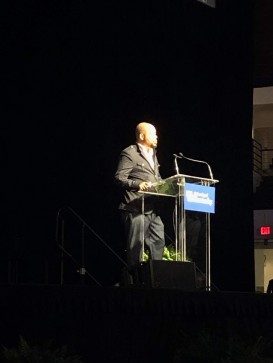
Here are a couple of pictures from the event.

The hour went by too fast! Also, see reporting about the event here: https://www.kentucky.com/…/celebrities/article234552032.html
Please Facebook Like, Tweet, etc below and/or reblog to share this discussion with others.
Check out and follow my YouTube channel here.
Twitter: @ProfessorJVH
Click here for Vitae.

Mayor Lightfoot, sustainable COLA pension benefits and the pension betrayal of the IFT’s Dan Montgomery. – Fred Klonsky

Mayor Lightfoot, sustainable COLA pension benefits and the pension betrayal of the IFT’s Dan Montgomery. – Fred Klonsky

MAYOR LIGHTFOOT, SUSTAINABLE COLA PENSION BENEFITS AND THE PENSION BETRAYAL OF THE IFT’S DAN MONTGOMERY.

Chicago Mayor Lightfoot caused some concern yesterday when she spoke of “unsustainable” COLA benefits for retired public employees of the city when she sat down with editors from Crain’s Chicago Business.
It is hard to know what she actually said since Greg Hinz didn’t  quote her except to put quotation marks around the word, “sustainable.” He does quote the mayor as saying paying the COLA benefits would be a “tough slog.”
Later her office issued a statement walking all that back. But, too late. Any mention of cutting pension benefits will prompt an immediate response from retirees.
Including from me.
I tweeted: “Changes to current retirees and employees COLA? Not unless she can get 8 Supreme Court members (or at least 5) to change their minds. Not going to happen.”
I don’t know what the Mayor actually said to Crain’s editors. Maybe somebody has the transcript and can share.
Let’s deal with what we do know.
The current benefits, including the 3% COLA increases, are protected contractually CONTINUE READING: Mayor Lightfoot, sustainable COLA pension benefits and the pension betrayal of the IFT’s Dan Montgomery. – Fred Klonsky

Choosing Democracy: Sac City Opens Schools Without Enough Teachers

Choosing Democracy: Sac City Opens Schools Without Enough Teachers

The Staffing Crisis
School Board Member Transparency and Accountability Scorecard

Sac City has a staffing crisis. Our conservative estimate is that at least 100 certificated position are unfilled, meaning that between 3,000 to 4,000 Sac City students are without a credentialed educator--or nearly 10% of the entire student population. As of today (August 30), Human Resources has been unable to provide the list of current vacancies, or the number of unstaffed classroom positions.

At CK McClatchy, for example, it was reported that classes began with 19 substitute teachers, nearly 20% of the staff. Many vacancies remain unposted. At Rosa Parks, the numbers reported were 10 of the 40 staff were substitutes, with several vacancies that were known for months only being posted Wednesday night.

Sadly, last March and April, the Sac City school board voted unanimously to lay off more than 400 educators, including the elimination of 175 certificated positions. Predictably, many of those teachers are no longer available after taking jobs at other districts after being laid off. Additionally, the District only posted the new, vastly improved salary schedules on August 13--three months after the arbitrator's decision--missing another opportunity to attract staff to take positions with the District.

Recently disclosed communications between FCMAT and Superintendent Aguilar and Board President Ryan from March, and additional communication between SCOE Superintendent Dave Gordon and Mr. Aguilar--as reported in the Sacramento Bee--indicate that the decision to layoff was based on faulty numbers and a huge enrollment error that was not disclosed to board members before those layoff decisions were finalized.

Chief Human Resource Officer Cancy McArn confirmed to us that she was not informed about the letter from Dave Gordon and Mr. Aguilar's confirmation of the mistake before the school board made the decision to lay off. She testified under oath at the layoff hearings in late April 2019, based on the inaccurate numbers.

To understand how something like this occurred and to try to prevent it from happening in the future, we asked each board member the following questions:

1) Can you please confirm unambiguously that you did not receive the March 7, 2019 exchange of emails between Mike Fine of FCMAT and Superintendent Jorge Aguilar and Board President Jessie Ryan prior to the District providing them to SCTA via a CPRA request on or about July 15, 2019?
If you did receive them prior to that date, can you please provide the approximate date they were provided to you and the manner in which you received them?

2) Can you also confirm unambiguously that you did not receive copies of Dave Gordon’s March 19, 2019 letter to Mr. Aguilar regarding questions of enrollment and Mr. Aguilar’s April 1, 2019 email response to Mr. Gordon prior to the release of the Third Interim Budget on or about May 16, 2019?

If you did receive them prior to that date, can you please provide the approximate date they were provided to you and the manner in which you received them?

Here are the responses:

To view the original letter to Lisa Murawski, the chairperson of the Sac City School Board's Fiscal Transparency and Accountability Committee, click here.

To view, Ms. Murawski's response and our follow-up, click here.

To view, the letter from Superintendent Aguilar written on Ms. Murawski's behalf, click here.

It is notable that Mr. Minnick, Ms. Murawski and Mr. Aguilar directly avoid answer the questions. According to Mr. Aguilar: he "strives" to keep board members informed but won't give a straight answer to these questions.

We're interested in your thoughts on this.

Should board members confirm whether they received this vital information?
Yes
No


CURMUDGUCATION: Burn And Churn McModel Is Failing

CURMUDGUCATION: Burn And Churn McModel Is Failing

Burn And Churn McModel Is Failing


To launch the fast food industry, owners and operators refined and adapted an industrial model, with every kitchen an assembly and every employee an easily-replaced meat widget, performing unskilled labor on a job that was employee proof. In the last couple of decades, some education reformsters have tried to adapt that McModel to education, creating teacher-proof content delivery systems that would allow schools to be staffed by easily and swiftly replaced low-cost meat widgets (if you want to talk about the industrial model in education, that's where it really is).

But we've had the McModel of churning turnover in place for it decades, and it turns out there are problems with it.


The headline of this piece hollers that Panera has worker turnover of 100%. But read the article and you discover that 100% employee turnover is actually pretty good in the industry. The industry standard is 130%, and some places run much higher. (That's mathematically possible if you lose workers and their replacements within one year). And--

“It’s definitely been going up,” said Rosemary Batt, chair of HR Studies and International  Comparative Labor at the Cornell School of Industrial Labor Relations.

The turnover-proof model, considered essentially cost-free, has been in place for years, but now CONTINUE READING: 
CURMUDGUCATION: Burn And Churn McModel Is Failing