Latest News and Comment from Education

Friday, March 22, 2019

Failing math Sac schools flirting with disaster - Sacramento News & Review #Unite4SACKids #WeAreSCTA #WeAreCTA #strikeready #REDFORED #SCTA #CTA #UTLA

Sacramento News & Review - Failing math - News - Local Stories - March 21, 2019

Failing math
Sac schools flirting with disaster


By  


This article was published on .


Members of the Sacramento City Teachers Association announce March 15 that they have the votes to strike if the district doesn’t agree to their demands over a 2017 labor agreement.
PHOTO BY SARAH HANSEL
spacer

In November 2017, Sacramento City Unified School District and the unionrepresenting its teachers reached an eleventh-hour agreement to avert a strike.

Among the Sacramento City Teachers Association’s demands were salary increases, reduced class sizes and additional nurses and school psychologists. At the time, the district was in the black and the parties fleshed out an agreement with the help of Mayor Darrell Steinberg.

Less than two years later, the district is in the red and trying to avoid both a state takeover and its first teacher strike since 1989.

At a March 15 press conference, SCTA President David Fisher cited the district’s “unlawful, unfair labor practices” as the reason that 92 percent of the union’s members authorized a strike. Fisher said SCTA, which represents about 2,500 teachers, librarians, psychologists and others, has requested a sit-down with Superintendent Jorge Aguilar at the end of March to work on a solution and avoid a strike.

“We don’t want to go to a strike,” Fisher said. “However, that is our lawful way of getting the district to live up to its commitments.”

At the same time, the district is on the brink of a multimillion-dollar budget shortfall.

Last August, the Sacramento County Office of Education rejected the district’s adopted budget for 2018-19, citing a projected $62.1 million deficit over the next two school years. Subsequent revised budgets were also rejected.

A December 2018 report from the Fiscal Crisis & Management Assistance Team, or FCMAT, projected the district would be insolvent by 2019. The team, which helps California school districts identify, prevent and resolve financial issues, called for $30 million in reductions, imploring the district to focus on cuts that could be made immediately.

“Without action, state intervention is certain,” the FCMAT report summarized. “Failure to act quickly and CONTINUE READING: Sacramento News & Review - Failing math - News - Local Stories - March 21, 2019


Big Education Ape: STEINBERG AND SERNA: Sacrifice and compromise necessary to avoid insolvency, protect Sacramento schools #Unite4SACKids #WeAreSCTA #WeAreCTA #strikeready #REDFORED #SCTA #CTA #UTLA - http://bigeducationape.blogspot.com/2019/03/steinberg-and-serna-sacrifice-and.html


Big Education Ape: Sacramento Unified School District on Verge of Insolvency While Super Takes $35K Junket to Harvard - California Globe #WeAreSCTA #WeAreCTA #strikeready #REDFORED #SCTA #CTA #UTLA - http://bigeducationape.blogspot.com/2019/03/sacramento-unified-school-district-on.html


School Accountability Begins With the People Who Make the Rules: A Code of Conduct for Politicians and Test Makers | gadflyonthewallblog

School Accountability Begins With the People Who Make the Rules: A Code of Conduct for Politicians and Test Makers | gadflyonthewallblog

School Accountability Begins With the People Who Make the Rules: A Code of Conduct for Politicians and Test Makers


Standardized testing is all about accountability.
We’ve got to keep schools accountable for teaching.
We’ve got to keep students accountable for learning.
It’s kind of a crazy idea when you stop to think about it – as if teachers wouldn’t teach and students wouldn’t learn unless someone was standing over them with a big stick. As if adults got into teaching because they didn’t want to educate kids or children went to school because they had no natural curiosity at all.
So we’ve got to threaten them into getting in line – students, teachers: march!
But that’s not even the strangest part. It’s this idea that that is where accountability stops.
It’s just teachers and students.
So I thought I’d fix that with a “Code of Conduct for Politicians and Test Makers.”

NYC Public School Parents: VIDEO Class Size Matters, Diane Ravitch, AOC, and State Legislators Speak at Public Education Town Hall

NYC Public School Parents: Class Size Matters, Diane Ravitch, AOC, and State Legislators Speak at Public Education Town Hall

Class Size Matters, Diane Ravitch, AOC, and State Legislators Speak at Public Education Town Hall


Here is  Leonie Haimson speaking on the myriad benefits of smaller class size, especially for children considered at risk; how class size has skyrocketed in NYC; and how a lawsuit, proposed legislation, and adequate funding could remedy this equity issue.

Thank you to S4E Media for the videos.


Part 1
TRANSFORMING THE CONVERSATION ON PUBLIC EDUCATION
Amanda Vender, Jackson Heights People for Public Schools
vimeo.com/325191468/3242902bd6

Part 2
PARENT EMPOWERMENT AS RESISTANCE
Robert Jackson, NY State Senator
Johanna Garcia, NYC Opt Out & New York State Allies for Public Education
vimeo.com/325193259/8751a891eb

Part 3
MAKING SCHOOL SAFE & WELCOMING FOR CHILDREN OF COLOR
Maria Bautista, Alliance for Quality Education
vimeo.com/325195289/ebc805dc06

Part 4
CLASS SIZE & EQUITY
Leonie Haimson, Class Size Matters
vimeo.com/325194937/ebbfd1bf6c

Part 5
THE IMPERATIVE OF BILINGUAL EDUCATION FOR OUR SCHOOLS
Kate Menken, New York State Association for Bilingual Education
vimeo.com/325194457/823d4ea9de

Part 6
WAR ON PUBLIC EDUCATION: CHARTERS & VOUCHERS
Carol Burris, Network for Public Education
vimeo.com/325191672/53caf8839e

Part 7
FIGHTING BACK: REFUSE STATE TESTS!
Diane Ravitch, Network for Public Education
vimeo.com/325192088/9f31ee23cd

Part 8a
NY STATE SENATOR JESSICA RAMOS RESPONDS
vimeo.com/325192892/188d2b41fd

Part 8c
CONGRESSWOMAN OCASIO-CORTEZ RESPONDS
vimeo.com/325190755/8e5d4deffb

Part 9a
Q&A I: ESSA
vimeo.com/325195655/292bcdf611

Part 9b
Q&A II: BILINGUAL EDUCATION
vimeo.com/325196134/b423807f1e

Part 9c
Q&A III: “Diane Ravitch, what changed your mind?”
vimeo.com/325196402/3d6da0ca28

Part 9d
Q&A IV: NYC’S SPECIALIZED HIGH SCHOOLS
vimeo.com/325196799/dd265c6fd2

Part 9e
Q&A V: INFLUENTIAL EDUCATORS
vimeo.com/325197845/7c6bde519a


50-State Comparison: K-12 Special Education Funding

50-State Comparison: K-12 Special Education Funding

50-State Comparison: K-12 Special Education Funding


Across 50 states, there are 50 different ways in which states allocate special education funding to districts. Click on a metric below for 50-State Comparisons showing how all states approach special education funding. View a specific state’s approach by going to the state profiles page. See below for a description of each metric in this comparison.
50-State Comparison: All data points for all states.
Funding Mechanism: Each state’s funding mechanism can be sorted into one or more of seven categories:
  1. Multiple Student Weights System
  2. Single Student Weight System
  3. Census-Based System
  4. Resource-Allocation Model
  5. Reimbursement System
  6. Block Grant
  7. High-Cost Students System
Multiple Student Weights System
The most common model for distributing special education funding to districts is through the use of multiple student weights. In the funding formula, students are assigned a different weight or dollar amount based on certain factors. The weights can be assigned based on severity of disability (e.g., mild, moderate or severe); on specific disability (e.g., visually impaired students receive X amount and students with autism receive Y amount); or on the resources that the student receives (e.g., students who are educated in a resource room receive X amount, students who have an aid for part of the day receive Y amount).
Single Student Weight System
Under this funding mechanism, districts receive additional funding for each student identified as having disabilities. The weight or dollar amount is the same regardless of the severity, disability or resources.
Census-Based System
Under a census-based system, the state assumes that each district has the same percentage of students who require special education, regardless of the student count, then applies an additional weight or dollar amount for those students. There are eight states that use a census-based system and the percentage of students who require special education services varies among those states.
Resource-Allocation Model
Under a resource-allocation model, states distribute resources — not dollars — based on the number of identified students who require special education services. For example, the state would provide one teacher and one instructional assistant for every X number of students who require special education services and one psychologist for every Y number of students who require special education services.
Reimbursement System
There are seven states that use a reimbursement model for special education funding. Under this model, districts submit actual expenditures to the state, and the state reimburses districts for all or a portion of their actual spending.
Block Grant
Under a block grant model, the state gives the districts a grant to use on special education services. The block grant can be calculated based on past years’ spending on special education services.
High-Cost Students System
Because of the financial burden that special education services can impose on a district, some states provide additional funding for very high-cost students. This is often coupled with another funding mechanism to help offset that cost of some services. For example, while districts are responsible for the cost of special education services up to a certain threshold, if costs exceed that threshold, that state would then provide additional funding to the district.
Description: A description of the funding mechanism.
Dollar amount or weight: How much additional funding is provided, either as a dollar amount or as a percentage of the base funding amount?
Is there a cap or a minimum threshold in place? Is there a cap on the maximum percentage of students who can be identified as requiring special education services? Is there a minimum threshold that a district must reach before it receives funding from the state?
Citation: Where in statute or code can the funding mechanism for students who require special education services be found?
If you have suggestions or questions, please contact Emily Parker at eparker@ecs.org.


General Notes:

Special education funding is unique because there are more federal requirements on funding for special education than there are for other high-need populations. Since 1975, states and school districts have had to comply with the mandates of the Individuals with Disabilities Education Act. The federal law requires that states provide a free, appropriate public education to all children with disabilities, regardless of the cost. Services to each student with disabilities must be based on their individualized education program. A student’s education services must be provided, to the maximum extent appropriate, in the least restrictive environment.

State Notes:

Information on Hawaii’s system of funding special education services comes from the Hawaii Department of Education.
Information on West Virginia’s system of funding special education services comes from the West Virginia Department of Education: Source 1 and Source 2.

 PUBLISHED: March 20, 2019
 AUTHOR(S): 
 RESOURCE TYPE: 
 EDUCATION LEVEL: 
 STATE(S): Nationwid

50-State Comparison: K-12 Special Education Funding


partners for their support:


Platinum Partners


Bill & Melinda Gates Foundation

Guided by the belief that every life has equal value, the Bill & Melinda Gates Foundation works to help all people lead healthy, productive lives. In developing countries, it focuses on improving people’s health and giving them the chance to lift themselves out of hunger and extreme poverty. In the United States, it seeks to ensure all people — especially those with the fewest resources — have access to the opportunities they need to succeed in school and life. For more information, please visit www.gatesfoundation.org.

Strada Education Network

Strada Education Network, formerly USA Funds, is a new kind of nonprofit organization that takes a fresh approach to improving the college-to-career connection. Through a unique combination of strategic philanthropy, research and insights, and innovative solutions, Strada Education Network advances Completion With a Purpose, building a more purposeful path for America’s students to rewarding careers and fulfilling lives. Learn more at www.stradaeducation.org and follow Strada Education on Twitter @StradaEducation.

The Wallace Foundation

The Wallace Foundation is a national philanthropy that seeks to improve learning and enrichment for disadvantaged children and foster the vitality of the arts for everyone. For more information, please visit www.wallacefoundation.org.

Walton Family Foundation

The philanthropic vision of Sam and Helen Walton has driven the work of the Walton Family Foundation for nearly three decades. Their legacy is more important than ever as we accelerate our efforts to improve K-12 education for all students in America, to protect our rivers and oceans and the communities they support, and to give back to the region that first gave the Waltons opportunity. Learn more at www.waltonfamilyfoundation.org or follow us on Twitter @waltonfamilyfdn.

Gold Partners

Silver Partners

50-State Comparison: K-12 Special Education Funding

Bernie Sanders, Elizabeth Warren, Kamala Harris, and any Other Candidate Seeking Teacher Votes - Living in Dialogue

Bernie Sanders, Elizabeth Warren, Kamala Harris, and any Other Candidate Seeking Teacher Votes - Living in Dialogue

Bernie Sanders, Elizabeth Warren, Kamala Harris, and any Other Candidate Seeking Teacher Votes
Stop Ignoring K12 Education


By Anthony Cody.
I just received an issue survey from Bernie Sanders’ presidential campaign. It asks which issues I want him to focus on. The twenty issues listed include a $15 minimum wage, combatting climate change, affordable housing and more. The only thing on the list related to education is Free College. There is no mention of K12 education at all. Sanders is not alone in this regard. I wrote about the same problem back in 2015, when “Bold Progressives” offered a similar survey.
Sanders and other candidates are missing a huge opportunity to engage one of the largest, most well organized constituencies in the US today – teachers. There are about five million teachers in our nation, and most of them belong to a union. Teachers have come alive in the past year, through a series of strikes – in West Virginia, Oklahoma, Los Angeles, Oakland. Denver, and beyond. The issues often went beyond pay. Teachers were fighting back against vouchers, charters, and for smaller class sizes. Both Kamala Harris and Bernie Sanders sent their support to the Oakland teachers during their strike, but we need to see support for policies that will help our schools.
A focus on  K12 education has created a real problem for some Democratic Party candidates, who have flat out been wrong on some of these issues. Cory Booker, for example, has been a strong supporter of school choice and charter schools. Elizabeth Warren has been a supporter of high stakes tests. The Network for Public Education Action has created a site that tracks the positions of leading candidates, and awards CONTINUE READING: Bernie Sanders, Elizabeth Warren, Kamala Harris, and any Other Candidate Seeking Teacher Votes - Living in Dialogue

CURMUDGUCATION: TN: Taxation Without Representation

CURMUDGUCATION: TN: Taxation Without Representation

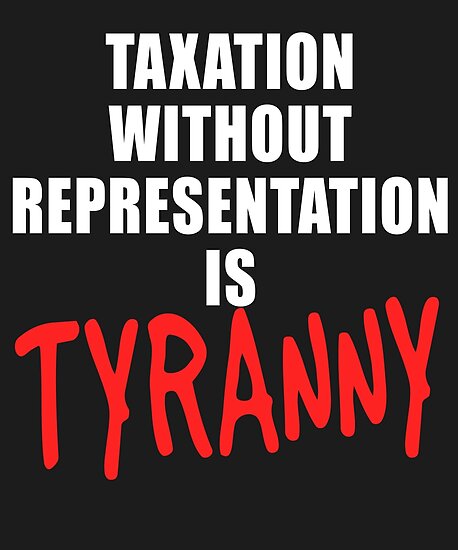
TN: Taxation Without Representation

Image result for Taxation Without Representation


Tennessee's Governor Bill Lee has set a brick on the gas pedal of the school privatization bus, and that bus is driving right through the powers of democratically elected school boards.

Lee's very first budget proposal was unveiled at the beginning of the month, supported by Lee's deep, insightful observation "Choice is good." The budget has big money for vouchers; Lee is going with the education savings account approach, handing each family $7,300 and saying, "Go spend this on something educationny." Taxpayers will also foot more of the bills for charter facilities. How cool is that? If you were going into business, wouldn't you like the taxpayers of your state to buy a building for you?

A big kicker is Lee's bill for charter school authorization.

Previously, Tennessee made local school districts the authorizers of charter schools. This seems like a sensible approach-- let the decision for a charter rest with the elected representatives of the taxpayers who will foot the charter bills.


This damn guy.
The original version of the bill would have allowed charter operators to simply bypass local school boards for authorization. But a new scaled-back version of the bill allows  charters... to bypass local school boards. Well, now there would be an extra step, a state-level appeals board. The Tennessee Public Charter Commission would have the power to override a local school board's denial of a charter application. The nine members of the board would be appointed by the governor and approved by the legislature-- so there would be another layer of bureaucracy before the governor's handpicked board okays the bypassing of the local elected board.

This system is the very picture of taxation without representation. Tax dollars will go to the charters, and local elected boards will have no say. CONTINUE READING: 
CURMUDGUCATION: TN: Taxation Without Representation

Thursday, March 21, 2019

Alexandria Ocasio-Cortez: CONSERVATIVES' BIGGEST BOOEYMAN - Diane Ravitch's blog | A site to discuss better education for all

Diane Ravitch's blog | A site to discuss better education for all

I wrote a post about my very pleasant experience meeting the wonderful, charming, brilliant Alexandria Ocasio-Cortez in Jackson Heights


I wrote a post about my very pleasant experience meeting the wonderful, charming, brilliant Alexandria Ocasio-Cortez in Jackson Heights, and I described her as “warm, comfortable in her skin, somewhat taken aback by her sudden fame, and unpretentious.” I said that she paid attention, and that she came to listen and learn. Everyone at the meeting was thrilled to meet her, and she took the time to shake hands, take selfies, and give generously of herself to all of the people who crowded in to meet her. She is a superstar, deservedly.
I noted that “It was a bit jarring to hear AOC say that she was treated in the Yorktown schools as in need of remedial education because she was Hispanic, not mainstream, but, she said, “a-high-stakes standardized Test” revealed she was in the 99th percentile. No one stopped to point out that she could not be referring to any high-stakes test used for accountability purposes because they don’t rank by percentile. They classify students as 1, 2, 3, or 4. Her teacher must have given her a no-stakes individual test that produces a percentile ranking for diagnostic purposes. Well, she can’t know everything about everything. None of us do.” I was not criticizing her but pointing out that she probably took an Iowa test or some other kind of test that gives percentile rankings, which NCLB tests do not. When you are a student, when you are in elementary school, you are not likely to know what kind of test you are taking, whether it is an Iowa test or a Pearson test or some other kind of test.
Imagine how surprised I was to see that a number of right-wing blogs claimed that I accused AOC of “lying.” Nothing could be further from the truth.
This was picked up by another blog.
And yet another blog, which attacked me too, for my writings about Afrocentrism from nearly 30 years ago.
And yet another blog, called “Liberty Redux.”
This was repeated by another blog.
Probably it is continuing to spread through the fevered CONTINUE READING:  Diane Ravitch's blog | A site to discuss better education for all

A lifelong teacher | Phyllis Bush's lessons will be remembered long after her Tuesday passing| The Journal Gazette

A lifelong teacher | Columns | The Journal Gazette

A lifelong teacher

Phyllis Bush's lessons will be remembered long after her Tuesday passing


KAREN FRANCISCO | The Journal Gazette


Teaching mattered to Phyllis Bush. The retired South Side High School teacher, who died Tuesday after a long battle with cancer, taught English and so much more.

Close readers of our opinion pages recognize her name as an ardent supporter of public schools. Area lawmakers knew her as a formidable and persistent critic of vouchers and other education privatization efforts. Her students knew her as a dedicated, caring and creative teacher – the kind whose lessons resonate long after graduation.

Broadcast journalist Kathy Hostetter is among the latter group. She recalled a memorable creative-writing assignment in Bush's senior English class in 1987:

“I decided to write a first-person narrative in the 'voice' of my autistic brother, who was a year behind me,” wrote Hostetter in an email. “My effort threw some serious shade at fellow classmates for bullying him. It may not have been creative, but man it felt good!

“We all had to read our efforts aloud, and I may have – well, fired some shots across the bow with lines directed at some of the offenders, who were in class with me. At the end, there was stunned silence. Mrs. Bush asked who I had written about, and one of the students answered for me. Mrs. Bush remarked, I hope you all listened to that. School can be really hard for some, and here, some of your actions are personified in words. Knock. It. Off.”

Hostetter, now news director for the CBS affiliate in Pittsburgh, said the experience helped her find her voice in both written and spoken words.

“I wouldn't be where I am without Mrs. Bush's drive and encouragement to work hard, respect literary works, and always, always WRITE.”

After Phyllis retired from her 32-year teaching career – 24 years at South Side – she jumped into a second career as a public school advocate. A letter to the editor she wrote in 1999 is as relevant today:

“Take the millions of dollars being wasted on testing and inject them into ensuring smaller classes for all students, not just those that are academically at the top or at the bottom,” Phyllis wrote. “Require schools to clearly state what their focus is and then stick to it. Is it to create a better workforce? Is it to create higher standardized scores? Is it to help at-risk students or the non-mainstream students to feel more able to function in a world they increasingly view as dysfunctional? Is it to create an atmosphere in which thoughtful, caring human beings can learn and grow?”

Bush took on standardized testing, low teacher pay, block scheduling and more in her letters. But she CONTINUE READING: A lifelong teacher | Columns | The Journal Gazette