Latest News and Comment from Education

Tuesday, September 11, 2018

Brett Kavanaugh White House emails released by Cory Booker cite Cleveland voucher case | cleveland.com

Brett Kavanaugh White House emails released by Cory Booker cite Cleveland voucher case | cleveland.com
Brett Kavanaugh White House emails released by Cory Booker cite Cleveland voucher case
Image result for education against Brett Kavanaugh


WASHINGTON, D.C. - A landmark U.S. Supreme Court decision that upheld the legality of Cleveland's school voucher system was cited in emails to and from current Supreme Court nominee Brett Kavanaugh released Thursday by New Jersey Sen. Cory Booker.
Booker, a potential Democratic presidential candidate who is a member of the Senate Judiciary Committee, said the committee's Republicans improperly designated the documents he released as "confidential," when they illuminate Kavanaugh's thinking on hot-button issues like racial profiling and affirmative action.
"The public has a right to access documents about a Supreme Court nominee's views on issues that are profoundly important, such as race and the law," Booker said as he released the emails. "This process has demonstrated an unprecedented level of secrecy and opaqueness that undermines the Senate's Constitutional duty to advice and consent."
A few of the emails that Booker released referred to a 2002 Supreme Court decision that allowed public money to be spent on tuition vouchers that Cleveland students were using to attend religious schools The decision said Cleveland's voucher program didn't violate a constitutional prohibition against promoting religion because religious schools were among a variety of secular and religious options available to parents who were frustrated with the city's public schools.


Current U.S. Solicitor General Noel J. Francisco - who was then an Continue reading: Brett Kavanaugh White House emails released by Cory Booker cite Cleveland voucher case | cleveland.com


Geofeedia Touted Surveillance Of Students To Sell Services To Police

Geofeedia Touted Surveillance Of Students To Sell Services To Police

CIA-BACKED FIRM TOUTED SOCIAL MEDIA SURVEILLANCE OF STUDENTS TO SELL SERVICES TO EVANSTON POLICE


Emails obtained by Lucy Parsons Labs reveal that Geofeedia touted social media surveillance of middle and high school students by its suburban Chicago police customers in an effort to sell their services to Evanston police.
Geofeedia provides law enforcement with tools to monitor social media use by mapping location and other data. It has received funding from the investment arm of the CIA, In-Q-Tel.

The company became infamous after the American Civil Liberties Union (ACLU) published a report in 2016 on the use of their products by police to monitor demonstrations against police violence.
Geofeedia’s courting of the Evanston Police Department (EPD) goes back to 2013, and as emails show, the company developed a relationship with police at a time when the sale of surveillance technology to law enforcement became ubiquitous.
“Skokie Police has been very successful in identifying drug related crimes as well as monitoring local middle and high schools 24/7,” wrote Jon Newman of Geofeedia in an email to EPD Commander Jay Parrott sent on October 23, 2013.
Parrott responded to that email by writing, “Thanks for the email, and I will speak with our analyst and intelligence officers about setting up a time to look over your product.”
The Skokie Police Department previously denied the existence of any emails between them and Geofeedia for the years 2012 through 2014.
The social media surveillance company was founded in 2011 and moved to Evanston in 2012.
In October 2013, Parrott spoke with Newman at the International Association of Chiefs of Police conference in Philadelphia. Parrott received a follow-up email from Newman  after the conference.
“Thank you for taking the time to speak with me during IACP. Sorry I grabbed you out of nowhere,” wrote Newman. “I just noticed the Evanston on your badge.” He hoped to visit the department to show off his  Continue reading: Geofeedia Touted Surveillance Of Students To Sell Services To Police


A Measure of This Teacher | The Jose Vilson

A Measure of This Teacher | The Jose Vilson
A MEASURE OF THIS TEACHER


This is how it had to be.
90° weather permeated a musty classroom, untouched since mid-summer when custodians and school aides moved furniture away then into the center to wax the floors. My old room’s furniture found its way into this room as well. The first two days of setting up my classroom involved lifting bookshelves, setting up student desks, the teacher area, and textbook collections (because calling them “libraries” would be an insult to libraries). I wore a dark polo, jeans, and Jordans while dumping curricula older than my teaching career. Shakira and the Carters pushed me through the eight-foot wooden apparatuses in need of tender loving construction and screws. I repaired shelves and mirrors, cleaned out lockers, fixed a quick bulletin board, put up a few posters, and took inventory of the supplies I needed. I folded boxes with the contents of my old desks, dusted every piece of lumber in the place, Lysol’ed the desks, and shook the chairs to see which ones would wobble if and when my students got anxious in class.
This is my fifth classroom in five years. Each time, I’m asked to process, sort, and discard of what was left behind. Each time, I oblige because the kids need an environment where the person in charge of it looks like they care. This time was different. Last year, I walked into work with business attire. This year, I wore sunglasses and a t-shirt. Last year, I was given a room with a broken air conditioner. This year, I had an air conditioner. Last year, I had a teacher improvement plan. This year, I didn’t.
No sweat.
I have every intention of shedding the gripes, too. Teacher improvement plans are as anonymous as they sound, and usually just as capricious. I won’t bother you with the minutiae of every sharp Do Now / warm-up, every activity I presented, every student response, every missed opportunity for deeper questioning, every minutes of lost time due to having a broken clock in my classroom, and every moment of wit and anxiety while children and adults take furious notes with different implications. Each time, I never felt I had to prove my pedagogy, but I had to convince others that the dubious measures of evaluation from the year before weren’t a reflection of my classroom. We use an evaluative rubric that provided plenty of appropriate examples in its dimensions, and plenty of wiggle room for folks to mis- and re-interpret.
But it never tells me why students got love for me. Danielson got nothin’ on that. Or me.
Doubt stung my skin and made welts all over it, and, rather than seeking the appropriate ointment, I let it sting so I could empathize with the hundreds of others I’d watch in the news, the Internet, and the grievance offices down at my union. I had a hard time blaming the people in my building because I knew the numbers were out of their control, but Continue reading: A Measure of This Teacher | The Jose Vilson


Monday, September 10, 2018

Teacher Pay: What Teachers Want Americans to Understand | Money

Teacher Pay: What Teachers Want Americans to Understand | Money

7 Big Things You Should Understand About Teacher Pay, According to Teachers


Chances are you’ve witnessed a teacher at work. They taught you in your childhood and adolescence; they graded your tests and essays. Perhaps they also served as your high school soccer coach or drove the bus you took to school each day. They may now be shepherding your children through the same educational system, helping them strengthen basic skills and uncover their passions.
But as a student — or even a parent — you’ve probably only observed the basics. “People think they know what it’s about because they went to school,” says Randi Weingarten, president of the American Federation of Teachers, a union that represents more than 1 million teachers nationwide. “But going to school and being a school teacher are the difference of night and day.”
Over the last year, educators in a number of states have launched protests, strikes, and walkouts to draw attention to what they say is unfair pay and work conditions. Teachers have detailed the financial difficulties that come as the result of years-long pay freezes and growing pensions that dig deeper into their paychecks. Many of them work second or third jobs to make ends meet and pick up extra responsibilities in the school district for extra cash.
And that long-sought-after summer break, which corporate employees can only dream of? A lot of educators work then, too — teaching summer school, picking up more restaurant shifts than during the school year, or spending weeks in training and preparing new lessons plans.
Teaching in America now appears to have reached a tipping point. Low wages have driven some teachers out of the profession entirely, and fewer people want to become educators — heightening a teacher shortage crisis as class sizes grow larger and educators take on extra roles. Educators who spoke with MONEY believe they are undervalued, underpaid and underappreciated. They cited countless stories of peers who denigrated their careers and friends who misunderstood all that it takes to be a teacher.
“It’s an extreme amount of pressure. It’s like running a sprint that’s the length of a marathon; it’s just constant,” says Emily James, a high school English teacher in Brooklyn, N.Y. “You can’t mess up because you have kids right in front of you. You can’t mess up because they’ll break down. You have to be there physically, emotionally and academically at all times.”
MONEY asked more than 10 current and former teachers from around the country what they wished Americans understood about their jobs, their work conditions, and their pay. Here’s what we learned.

Teachers make less even than workers with similar qualifications.

Teachers have faced stifled wages and pay freezes for years. And a recent report from the Economic Policy Institute, a left-leaning organization, found that Continue reading: Teacher Pay: What Teachers Want Americans to Understand | Money
Image result for Teacher Pay


LADY LIBERTY: Why is Murphy covering up Christie’s $10 million loan to failing charter school? |

LADY LIBERTY: Why is Murphy covering up Christie’s $10 million loan to failing charter school? |

LADY LIBERTY: Why is Murphy covering up Christie’s $10 million loan to failing charter school?


The New Jersey state education department has refused to release public documents that might  shed light on former Gov. Chris Christie’s loan of $10 million in state funds to a failing Newark charter school and its partner, a private, for-profit real estate developer that was receiving more than $800,000 in public funds as annual rent from the school.
The state’s  action, in response to a demand filed under the Open Public Records Act (OPRA), contributes to a stifling veil of silence covering up the details of the unusual $10 million loan—a loan granted by the New Jersey Economic Development Authority (NJEDA) despite the lack of any collateral that could be used to repay the loan if the school defaulted.
The school, Lady Liberty Academy Charter School, did close and no longer receives the state aid it needs  to pay its rent to the developer, BWP School Partners, LLC.  Under the unusual terms of the loan agreement between the NJEDA and BWP,  the state has limited its ability to recoup the loan from the developer  to finding a new charter school to take the place of Lady Liberty. The school is now boarded up and so, this year at least, that won’t happen.
The existence of the unusual $10 million loan was first disclosed by this site last month but the continued refusal by the NJEDA, the state education department, the Newark school district and private sources to discuss details has added to the mystery of why the state would loan $10 million to a charter school that faced problems since 2003, when it was opened as part of Newark’s New Community Corporation’s social outreach efforts. Lady Liberty was placed on probation by the state three times and finally closed this year after  Christie left office.
So that’s the first question that no one at the  state or elsewhere wants to answer:
Why would the NJEDA invest $10 million in a school that its state Continue reading: LADY LIBERTY: Why is Murphy covering up Christie’s $10 million loan to failing charter school?


Education Research Report:Quality Counts 2018: Grading the States

Education Research Report: Quality Counts

Quality Counts 2018: Grading the States

Image result for Quality Counts


First Installment:

Quality Counts 2018: Grading the States

Quality Counts 2018: Grading the StatesThis 22nd edition of Quality Counts, an annual state-by-state assessment of public education, paints a portrait of middling performance overall with patches of high achievement, along with perennial struggles to improve on the part of states mired at the bottom. This is the first of three data-driven Quality Countspackages this year exploring distinct aspects of the performance of America's public schools.

Second Installment:

Quality Counts 2018: School Finance

Education Week puts the nation's K-12 finance performance under the microscope in this second installment of Quality Counts 2018, looking at how much gets spent state by state, and how fairly it's divvied up.

Third Installment:

Quality Counts 2018: K-12 Achievement and Chance for Success

The third and final installment of Quality Counts 2018 digs deeply into the data behind how states rank on academic achievement and on students' chance for success in a complex, ever-changing society.

From the report:

Education Research Report: Quality Counts

Big Education Ape: NPE and Schott Issue a 50 State Report Card on School Privatization - Network For Public Education - https://bigeducationape.blogspot.com/2018/06/npe-and-schott-issue-50-state-report.html


Does Teacher Diversity Matter for Students’ Learning? - The New York Times

Does Teacher Diversity Matter for Students’ Learning? - The New York Times
Does Teacher Diversity Matter for Students’ Learning?
Research shows that students, especially boys, benefit when teachers share their race or gender. Yet most teachers are white women.


As students have returned to school, they have been greeted by teachers who, more likely than not, are white women. That means many students will be continuing to see teachers who are a different gender than they are, and a different skin color.
Does it matter? Yes, according to a significant body of research: Students tend to benefit from having teachers who look like them, especially nonwhite students.
The homogeneity of teachers is probably one of the contributors, the research suggests, to the stubborn gender and race gaps in student achievement: Over all, girls outperform boys (with an exception in math in certain districts), and white students outperform those who are black and Hispanic.

Yet the teacher work force is becoming more female: 77 percent of teachers in public and private elementary and high schools are women, up from 71 percent three decades ago. The teaching force has grown more racially diverse in that period, but it’s still 80 percent white, down from 87 percent.

There are many things that contribute to children’s academic achievement, including teachers’ experience and training; school funding and zoning; and families’ incomes and home environment. But studies have shown that teacher diversity can also make a difference in students’ performance and their interest in school.

It’s particularly true for boys, and black boys. Research has found that they are more affected than girls by disadvantages, like poverty and racism, and by positive influences, like high-quality schools and role models. Yet they are least likely to have had a teacher that looks like them.
Image result for Teacher Diversity
“We find that the effect is really driven by boys,” said Seth Gershenson, an economist studying education policy at American University. “In the elementary school setting, for black children and especially Continue reading: Does Teacher Diversity Matter for Students’ Learning? - The New York Times


Sunday, September 9, 2018

Arizona Lawmakers Cut Education Budgets. Then Teachers Got Angry. - The New York Times

Arizona Lawmakers Cut Education Budgets. Then Teachers Got Angry. - The New York Times

THE TEACHERS'
MOVEMENT
ARIZONA LAWMAKERS CUT
EDUCATION BUDGETS.
THEN TEACHERS GOT
ANGRY 


Early on the morning of March 14, Kelly Berg went to her closet and picked out a bright red blouse. Until recently, she had rarely worn red, but she was heading to the Arizona State Capitol in Phoenix, and a red top would tell everyone exactly who she was: a teacher.


Red shirts and blouses had emerged as the official uniform of teacher uprisings against low pay that were spreading from West Virginia to Oklahoma and Kentucky under the rallying cry “Red for Ed.” Just one week earlier, a Facebook post by Noah Karvelis, a 23-year-old teacher in Phoenix, lit the spark in Arizona, asking teachers to wear red on March 7 to demand more money for the state’s chronically underfunded public schools. Within days, 6,000 people clicked that they were on board. Berg, a high school math teacher for 23 years with a master’s degree who was taking home $1,620 a month, was one of them. On the designated day, a Wednesday, thousands of Arizona teachers turned campuses red from the New Mexico line to California. Karvelis and other young teachers then took it upon themselves to keep the activism going, declaring every Wednesday Red for Ed day — but Berg decided to wear it daily. “I wanted people to come up and say: ‘Kelly, today isn’t Wednesday. Why are you wearing red?’ ” she said. “It was so I could tell them, This is how important it is. We need to make our voices heard.”


In the past, the idea of participating in anything that resembled a political movement had repelled Berg. “I would say, ‘Don’t talk to me about politics,’ ” she recalled. “ ‘I think it’s a waste of time.’ ” A 46-year-old lifelong Republican, she called herself a “sleepy voter,” as if she sleepwalked through the voting booth every four years. “I was just voting for the person with an R by their name or not voting.”


This was true even though the Legislature and governor — unified under Republican control since 2009 — cut education spending more than any other state in the wake of the Great Recession. Berg suffered doubly because her husband, a web developer, lost his state job, and now the entire family of six — they have four sons, ages 7 to 13 — was on her health plan, with the premiums cutting her previous take-home pay almost in half. She was working three extra jobs to keep the family afloat, arriving home most nights barely in time to check her kids’ homework and kiss them good night. Across the state, teachers were taking in roommates, working second and third jobs and leaving the profession in such waves that substitutes without standard certifications were leading more than 3,400 classrooms statewide. Two thousand more couldn’t be staffed at all.


In December 2016, the day before Christmas break, Berg heard that her son Mark’s sixth-grade teacher had quit to take a private-sector job for more money, and suddenly she felt that she couldn’t take it anymore. She needed to understand why Arizona’s schools were so poorly funded and who was responsible. She turned for help to her best friend, Tiffany Bunstein, who followed state politics closely and, like Berg, had been teaching for more than 20 years at Dobson High School in Mesa, a sprawling, demographically diverse suburb east of Phoenix. “I went to Tiffany and said, ‘I want to know what you know,’ ” Berg said.


Bunstein, 47, an active member of the teachers’ union and a Democrat, told her friend that she had once been uninformed, too. “Then when you start paying attention and you see what’s been happening,” she said, “it’s like clearing your glasses: Damn, this is what’s been going on all along?” With Continue reading: Arizona Lawmakers Cut Education Budgets. Then Teachers Got Angry. - The New York Times

Privatization Report Card - Network For Public Education - https://wp.me/P3bR9v-2IA via @Network4pubEd


The Other Side Of School Safety | PopularResistance.Org

The Other Side Of School Safety | PopularResistance.Org

THE OTHER SIDE OF SCHOOL SAFETY

Image result for black lives matter at school
Image result for THE OTHER SIDE OF SCHOOL SAFETY
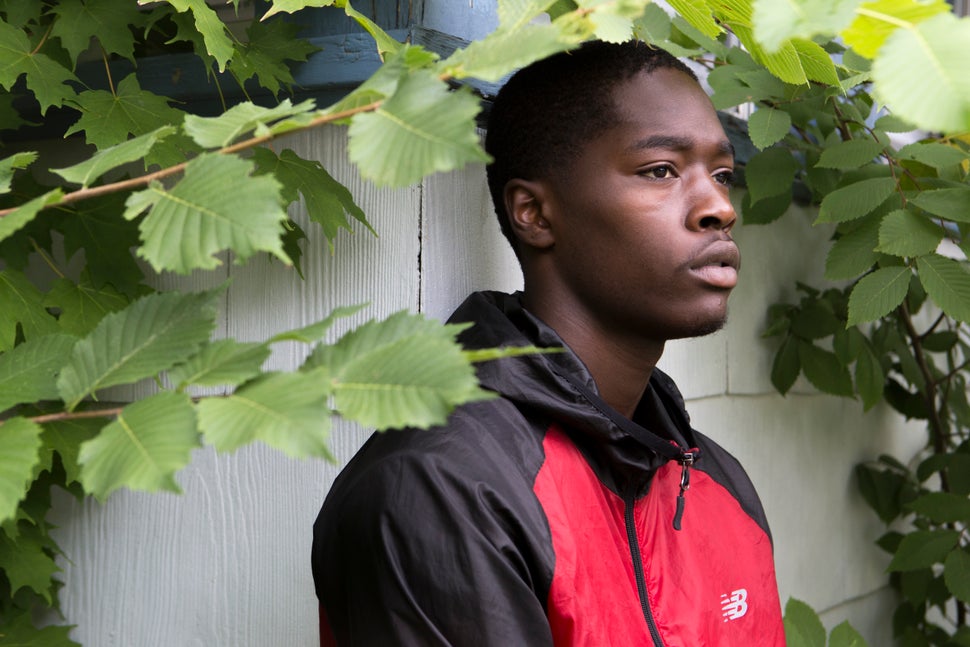
Above photo: Jalijah Jones, 16, poses for a portrait at his home in Kalamazoo, Michigan, on July 22, 2018. In December 2017, Jones was Tasered at school by a police officer while already being restrained by four school security guards following an altercation with another student. At the time, Jones was 15 years old and weighed about 120 pounds. The other student walked away. Casey Sykes.

Students Are Getting Tasered And Beaten By Police

In the wake of the deadly Parkland shooting, more armed police officers are being stationed in schools. But what happens when they’re the ones perpetrating violence?
Jalijah Jones, then a freshman at Kalamazoo Central High School in Michigan, remembers the punch of thousands of volts hitting his slight frame. At 5 feet, 4 inches tall and weighing 120 pounds, he was small for his age.
He remembers four school security guards officers pushing him up against a hallway wall before a school police officer arrived and Tasered him. He remembers a feeling of intense cold as if his high school hallway had just turned into a walk-in freezer. He remembers falling to the ground, his muscles betraying his mind’s desire to stand.
Then he remembers nothing.
Jones, who loves to run track and play football, had never been in a physical fight at school before. It was just a teenage drama. He owed another kid a small amount of money. Angry words were thrown back and forth, then a push and a shove and some swinging. But no one had been hurt until a school police officer Tasered the teen.
Jones, who says he blacked out after falling to the ground from the shock of the stun, remembers being cuffed a few seconds later, and the school cops dragging him through the hallways and out of school. His body shook furiously as he was loaded into a police car, before being escorted to the hospital in an ambulance. He was charged with resisting arrest ― a charge that he is still fighting many months after the December 2017 incident.

No One Tracks Police Brutality In Schools

The police officer who stunned Jones is one of over 80,000 currently stationed in public schools around the country, according to the most recent data available from the U.S. Department of Education, covering the 2015-16 school Continue reading: The Other Side Of School Safety | PopularResistance.Org
Image result for black lives matter at school


DeVos' advocacy - high profile to under radar | Opinion | The Journal Gazette

DeVos' advocacy - high profile to under radar | Opinion | The Journal Gazette

DeVos' advocacy - high profile to under radar


WASHINGTON – Education Secretary Betsy DeVos came to Washington, to promote the cause of her life – school choice. Republicans controlled both the House and Senate. President Donald Trump had promised a $20 billion program.
But more than a year and a half later, the federal push is all but dead.
That's partly because DeVos herself emerged badly damaged from a brutal confirmation process, with few people – even in her own party – interested in taking up her pet cause.
She's also been stymied by division among Republicans over the idea of federal incentives for school choice. And Democrats are united against her.


“She's certainly not a very effective lobbyist” for her cause, said Frederick Hess, director of education policy studies at the conservative American Enterprise Institute. “She has enthusiastically pushed it, and arguably the politics of choice are more complicated than they were two years ago, and the choice community is more split.”
That has left DeVos with the bully pulpit. She uses it to promote alternatives to traditional public schools, typically plans that allow tax dollars to follow children when they leave for private schools. She may have won some converts, but she's alienated many others.
Congress already has said no to her budget proposals. A proposed tax credit supporting voucher-like scholarships has died. A new spending bill again offers little for school choice enthusiasts.
And if Democrats gain power after this fall's midterm elections, chances for action would fall even further. For all practical purposes, the fight is over, and she lost. School choice has become the latest ambitious policy plan to arrive in Washington with great hope, only to die a quiet death.
Opposition has come from lawmakers who represent rural states and see little benefit in school choice programs when so few alternatives to traditional public schools exist in their communities. As structured, critics say, a grant plan proposed by DeVos would have amounted to a windfall for states that already have these programs.
That concern arose as early as DeVos' confirmation hearing, when Republican Sen. Mike Enzi questioned whether school choice would offer much for rural places such as his home state of Wyoming.
DeVos also ran into trouble with libertarian-minded conservatives who complain that a new federal program will bring new federal regulations.


Her aides reply that she doesn't want a large federal program, either. They point to states enacting or expanding school choice, and they claim success with a heightened public debate.
“The focus of the education debate is on school choice now in a way it never has been,” said Nathan Bailey, an Education Department spokesman. He added: “Secretary DeVos has been clear from Day One that school choice should be driven from the local level.”
And there has been movement at that level. In Illinois, a new program creates a backdoor voucher, giving corporations a tax credit if they donate money for private school scholarships. Georgia expanded a similar program. And North Carolina created publicly funded educational savings accounts to help families of children with disabilities pay private school tuition and other expenses.
Tommy Schultz, spokesman for the American Federation for Children, the group DeVos founded and Continue reading: DeVos' advocacy - high profile to under radar | Opinion | The Journal Gazette


There Is Virtually No Difference Between Nonprofit and For-Profit Charter Schools

There Is Virtually No Difference Between Nonprofit and For-Profit Charter Schools
Every single charter school in the United States of America is either a disaster or a disaster waiting to happen


Stop kidding yourself.
Charter schools are a bad deal.
It doesn’t matter if they’re for-profit or nonprofit.
It doesn’t matter if they’re cyber or brick-and-mortar institutions.
It doesn’t matter if they have a history of scandal or success.
Every single charter school in the United States of America is either a disaster or a disaster waiting to happen.
The details get complicated, but the idea is really quite simple.
It goes like this.
Imagine you left a blank check on the street.
Anyone could pick it up, write it out for whatever amount your bank account could support and rob you blind.
Chances are you’d never know who cashed it, you’d never get that money back, and you might even be ruined.
That’s what a charter school is—a blank check.
It’s literally a privately operated school funded with public tax dollars.
Compare that to a traditional public school—an institution invariably operated by duly elected members of the community with full transparency and accountability in an open forum where taxpayers have access to internal documents, can have their voices heard and even seek an administrative position.
THAT’S a responsible way to handle public money!
Not forking over our checkbook to virtual strangers!
Sure, they might not steal our every red cent. But an interloper who finds a blank check Continue reading: There Is Virtually No Difference Between Nonprofit and For-Profit Charter Schools
public edu


Stop Corporate Surveillance In Schools: A Movement Supporting People-Powered Classrooms (Webinars 9/11& 12/28 ) – Seattle Education

Stop Corporate Surveillance In Schools: A Movement Supporting People-Powered Classrooms (Webinars 9/11& 12/28 ) – Seattle Education

STOP CORPORATE SURVEILLANCE IN SCHOOLS: A MOVEMENT SUPPORTING PEOPLE-POWERED CLASSROOMS (WEBINARS 9/11& 12/28 )

data-mining


Exciting news and updates!
Classrooms, Not Computers has found a new title for its campaign:
Stop Corporate Surveillance in Schools: A Movement Supporting People-Powered Classrooms Without Corporate Data Mined Students. 
Our mission is the same—to build a community-based movement to dismantle the corporate-driven policies and practices in schools that lead to violations of student privacy, surveillance of children and teachers, and corporate profiteering (we call this Education Reform 2.0).
You can check out the first call here:
We will be holding our second webinar on Sept 11 from 8:00-9:00pm EST.


This webinar will cover these three points:
1) Provide a brief overview of what Education Reform 2.0 is
2) How the SCSS campaign is working to eliminate corporate surveillance
3) How teachers, students, parents and members of communities can coordinate locally to be part of the campaign effort.
Our two-part strategy is to inform and then to develop sustainable, empowering actions centered on local community agency and control.
Who we are:
Morna McDermott is the SCSS campaign coordinator
Peggy Robertson is the SCSS information and communications coordinator
Michael Ippolito is the technical organizer and outreach
Alison McDowell is the lead researcher
Popular Resistance is the “parent” platform
Call times in Pacific and Eastern Time:
  • Tuesday, Sep 11, 2018 5pm PT / 8pm ET (1 hours 30 minutes)
  • Friday, Dec 28, 2018 5pm PT / 8pm ET (1 hours 30 minutes)
To register click here.
Stop Corporate Surveillance In Schools: A Movement Supporting People-Powered Classrooms (Webinars 9/11& 12/28 ) – Seattle Education

Image result for CORPORATE SURVEILLANCE IN SCHOOLS:


What School Safety Reports Ignore: Reducing Class Size – Seattle Education - https://wp.me/pNbRQ-8ED via @writernthesky

gettyimages-918330158_custom-3f37851970bc440f28c09daf8102d8a39e3d0dfd-s900-c85

Seattle’s Naviance Opt-Out Go Round – Seattle Education - https://wp.me/pNbRQ-8DZ via @writernthesky

merry go round

Saturday, September 8, 2018

Those Who Seek to Privatize Public Schools are Working WITHIN the System!

Those Who Seek to Privatize Public Schools are Working WITHIN the System!

Those Who Seek to Privatize Public Schools are Working WITHIN the System!


Since the anonymous New York Times Opinon piece claiming there’s a critic in the White House, at least one comedian has referenced the 2006 remake horror movie When a Stranger Calls. The babysitter contacts the police to get threatening phone calls traced. The bad guy turns out to be in the house!

On a similar, but slightly different note, those who seek to destroy democratic public education are also working within the system. They’re inside the schoolhouse, and there’s an attempt to dupe us into thinking they’re seeing the light when it comes to the right way of thinking about public schools.
It revolves around the word, “local.” We like that word. It makes us feel like we belong. But that’s not the case here. That’s why it is dangerous for public education.
In “School Reformers Switch Gears,” we read that the Gates Foundation is backing off.
Now, the foundation seems to be stepping back from sweeping national initiatives in its bid to remake education. In the coming years, its K-12 philanthropy will concentrate on supporting what it calls “locally driven solutions” that originate among networks of 20 to 40 schools, according to Allan Golston, who leads the foundation’s U.S. operations, because they have “the power to improve outcomes for black, Latino, and low-income students and drive social and economic mobility.”
The reality is, the Gates Foundation and other corporate school reformers are aggressively moving forward with their privatization plans. Helping the poor has always Continue reading: Those Who Seek to Privatize Public Schools are Working WITHIN the System!