Latest News and Comment from Education

Saturday, June 24, 2017

Schools Matter: PROTEST: Mind Trust’s IPS and the Almighty Dollar

Schools Matter: PROTEST: Mind Trust’s IPS and the Almighty Dollar:

PROTEST: Mind Trust’s IPS and the Almighty Dollar


by Doug Martin

Please see the poster above for details on Tuesday’s public demonstration protesting the closing of 3 IPS schools.  

The $200,00 the Silicon Valley based-NewSchools Venture Fund (see my recent article here) gave to Phalen Leadership Academy in October 2015 helped with the takeover of IPS Francis Scott Key 103, now known as PLA@103, a blended learning school.  The Mind Trust and Bellwether Education Partners had worked behind the scenes to plan the takeover, according to documents released to the Indiana Department of Education (see page 28).  

Bellwether is led by former Mind Trust board member and former Clinton Administration official Andrew Rotherham, who appears in Hoosier School Heist.  Co-partner Andy Smarick, who was an official at the U.S. Department of Education under George W. Bush, is now the president of the Maryland State Board of Education.  He still is a partner at Bellwether, according to the Maryland State Board of Education. 

Funded by the Walton Family Foundation, the Gates Foundation, and numerous consulting gigs (clients include the Friedman Foundation, among many others), Bellwether is smothered in money, too, from the Laura and John Arnold Foundation. 

Besides the gift of $11,075,000 to the Mind Trust and the $1,256,250 to the Indianapolis Public Schools Education Foundation, Inc., the Arnold Foundation has recently given the Mind Trust-spinoff Education Cities, Inc. $1,900,000 and has promised Bellwether Education Partners over $1.5 million for sustainable public finance grants from 2013-2018.
  
In 2015, when the Mind Trust handed Christel House International $250,000 in grant money, Education Cities $500,000, KIPP Indianapolis $300,000, and Phalen Leadership Academy $200,000 (page 20), Mind Trust CEO David Harris pulled in just over $238, 000 in just base compensation (page 31).

Bellwether did very good during this period, too.

From September 1, 2014 to August 31, 2015, Andrew Rotherham made almost $264,000 at Bellwether and Andy Smarick close to $216,000 (page 7).

Bellwether lately has been pumping out propaganda on how to spread blended/personalized learning into schools. The Schools Matter: PROTEST: Mind Trust’s IPS and the Almighty Dollar:
 

Hoosier School Heist TV is Doug Martin's channel featuring videos of his book tour across Indiana speaking on the corporate takeover of public education. Order Hoosier School Heist at http://hoosierschoolheist.com/.
Follow Hoosier School Heist on Facebook: https://www.facebook.com/HoosierSchoolHeist
Tweet with Doug Martin at: https://twitter.com/DougMartinED

Stop wating money on school vouchers | Charlotte Observer

Stop wating money on school vouchers | Charlotte Observer:

The evidence is clear, vouchers don’t work


Students who accept vouchers to attend private schools lose ground academically and perform worse on standardized tests than students who remain in public schools.
That’s the takeaway from studies involving state vouchers in Louisiana, Ohio, and Indiana, as well as the only federally funded vouchers in Washington, DC.
In April, the Institute of Education Sciences, the independent, non-partisan research wing of the Department of Education, published the performance measures of students who used Opportunity Scholarship Program vouchers in Washington, DC to attend private schools. On the whole, students posted a 7 percentile-point decline in mathematics and a 5 percentile-point decline in reading compared to students who applied for the vouchers but attended public schools instead.
McSpadden
McSpadden
DON WILLIAMSON
Studies of state-supported voucher programs show similar negative impacts on learning. In Louisiana, voucher students fell from 50th to 34th percentile in math scores. In Ohio, the Thomas B. Fordham Institute said that the voucher program was “unambiguously negative across a variety of model specifications, for both reading and mathematics.” The largest voucher program in the US is in Indiana, and it, too, posted negative impacts on learning.
Researchers Christopher Lubienski, education policy professor at Indiana University, and Sarah Lubienski, a mathematics education professor at the University of Illinois, published a lengthy analysis of these recent voucher studies and concluded that “any apparent advantages for students in private schools are actually a reflection of the fact that private schools do a better job of attracting – not producing – high-scoring students.”
Voucher supporters argue that vouchers help children by giving them an opportunity to attend superior religious or private schools. Those schools, however, only appear superior because they already enroll high-performing advantaged children. The IES study shows that voucher children coming from “underperforming” public schools show no improvement at all on achievement, while students coming from higher-performing public schools lose considerable academic ground in private schools.


The Lubienskis point out that early voucher programs might have seemed more effective Stop wating money on school vouchers | Charlotte Observer:


Former Sacramento Mayor Kevin Johnson Subpoenaed In Pie-Throwing Case « CBS Sacramento

Former Sacramento Mayor Kevin Johnson Subpoenaed In Pie-Throwing Case « CBS Sacramento:

Former Sacramento Mayor Kevin Johnson Subpoenaed In Pie-Throwing Case


SACRAMENTO (CBS13) — Former Sacramento mayor Kevin Johnson has been subpoenaed in a trial for a man accused of hitting him with a pie.
CBS13’s Steve Large reports that Johnson and his wife Michelle Rhee were served with the subpoenas at Sacramento International Airport.


1/2 Kevin Johnson and Michelle Rhee served subpoena at Sac International re: new pie-throwing hearing. Attorney for pie-thrower will ask...


2/2 about force of impact and have ability to ask Johnson under oath about credibility of testimony, including history of past allegations.


The attorney for the defendant, Sean Thompson, is expected to ask about the force of impact from the pie and will have the ability to ask Johnson under oath about the credibility of testimony, including history of past allegations.
Thompson is accused of hitting Johnson with a pie in the face in September. He says he planned the pie throwing in September as an act of civil disobedience, saying he felt pressure to do something because he believes the mayor didn’t do enough for the homeless and was too focused on the Golden 1 Center.
Thompson’s lawyers had tried to subpoena Johnson in that case, but were unable to find him.
In May, Thompson faced felony assault and misdemeanor battery charges, but a mistrial was declared when the jury deadlocked on May 15.
Earlier this month, the Sacramento County District Attorney’s Office decided to try him again, this time with two misdemeanor charges of assault and assault on a public official. He is due in court on Aug. 18.Former Sacramento Mayor Kevin Johnson Subpoenaed In Pie-Throwing Case « CBS Sacramento:
Big Education Ape: K.J.’s gift to the arts: ‘Pie-gate’ inspires sculpture as second trial approaches - Sacramento News & Review - - http://bigeducationape.blogspot.com/2017/06/kjs-gift-to-arts-pie-gate-inspires.html

John Thompson: U.S. Rep. Russell's Waste Watch report a 'publicity stunt' - NonDoc

U.S. Rep. Russell's Waste Watch report a 'publicity stunt' - NonDoc:

U.S. Rep. Russell’s Waste Watch report a ‘publicity stunt’

Waste Watch


Congressman Steve Russell’s latest Waste Watch “report” proves the timeless maxim: Even a broken clock is right twice a day.
In reviewing the June installment of Russell’s newsletter, News 9 emphasized and The Oklahoman championed Russell (R-Oklahoma) for his partially true criticism of the Obama administration’s school-improvement grant program (SIG). (Also, who would have thought the Veterans Administration exhibits wasteful habits?)
But it was the federal government itself that had already revealed both of those shortcomings, and the Office of the Inspector General offered recommendations for fixing the errors of the U.S. Department of Veteran Affairs. Maybe because veterans’ issues are important to Russell, he judiciously concluded his report thus: “It is important that VBA follow these recommendations.”
Russell also claims to have found about $74 billion in wasted taxpayer money during the past 17 years. For instance, U.S. taxpayers provided $30.6 billion in Pell grants to 8.3 million students. Guess what the government had to spend in administrative costs?
Five bucks per student!

Waste Watch report lacks objectivity

One would think that an objective report would have praised such low overhead. Follow the footnotes in Russell’s 15-page report, however, and it is clear that government U.S. Rep. Russell's Waste Watch report a 'publicity stunt' - NonDoc:

Does It Matter Who Runs New York City’s Schools? - The New York Times

Does It Matter Who Runs New York City’s Schools? - The New York Times:

Does It Matter Who Runs New York City’s Schools?

Image result for mayoral control
Top 5 Things to Know About Mayoral Control of Schools - Center for American Progress - https://ampr.gs/ZZxj35


The State Legislature’s failure to pass a bill extending mayoral control of New York City’s schools before the end of the term on Wednesday had no immediate effect on the city’s 1.1 million schoolchildren: Mayor Bill de Blasio’s hold on education policy in the city continues through June 30. After that, Mr. de Blasio has warned of “chaos and corruption” that could return if control reverts to the Board of Education.
Not everyone agrees with that dire prediction. In 2009, the last time mayoral control lapsed, things went fairly smoothly, and it was restored in August.
Is having a city’s mayor run the schools necessarily better? Joseph P. Viteritti, a professor of public policy at Hunter College, who was a special assistant to the New York City schools chancellor from 1978 to 1981, said that there was “nothing inherently bad” about school boards and that mayoral control was not a panacea for the challenges facing urban districts.
Which is not to say that Professor Viteritti endorses returning to the old model. In New York City, he said, mayoral control has clearly been shown to work better than the structure that preceded it. “It makes absolutely no sense to go back to the old system,” he said.
Here is a guide to understanding why who runs the schools matters and what education specialists say works best.
How were schools governed in New York City before mayoral control?
Before the Legislature gave the mayor control over the schools in 2002, they were governed by a Board of Education and 32 elected community school boards. The Board of Education had seven members; the mayor appointed two, and each of the five borough presidents appointed one. The Board of Education selected the chancellor. The mayor could also influence the school system through the city budget.
Until 1996, the community school boards had authority over the elementary and middle schools in their districts, including the power to appoint superintendents and to approve the superintendents’ choice of principals. High schools were under the control of the Board of Education and the chancellor. In 1996, confronted with evidence of corruption and patronagein many school districts, the Legislature diminished the boards’ power and gave the chancellor the ability to select superintendents.
Why is mayoral control better?
Virtually all education specialists agree that mayoral control has proved Does It Matter Who Runs New York City’s Schools? - The New York Times:

School equity? The problem is funding, not formulas. | Fred Klonsky

School equity? The problem is funding, not formulas. | Fred Klonsky:

School equity? The problem is funding, not formulas
 460x.jpg


Democrats in the Illinois state legislature have been focused on the school funding formula for years. One of the leaders in this effort has been Democratic State Senator Andy Manar.
While Illinois state funding for public education ranks among the lowest in the nation, even the state’s progressive elected officials prefer to concede this inadequacy as a permanent feature while debating how to more equitably divide the crumbs.
This is aside from the fact that the current iteration of this plan, Senate Bill 1, would remove direct and dedicated funding for special education teachers from state education funding.
There can be no quality special education instruction without special education teachers.
In a state that supports our children’s public schools based on local property taxes and inadequate state funding, there can be no equity, regardless of the formula.
It is a moral failing of legislators who would rather do nothing to address the racism of current levels of state school funding while making bogus changes to the formula School equity? The problem is funding, not formulas. | Fred Klonsky:


Personalized Learning Is NOT Inclusion!

Personalized Learning Is NOT Inclusion!:

Personalized Learning Is NOT Inclusion!


One is the loneliest number that you will ever do…. ~Three Dog Night
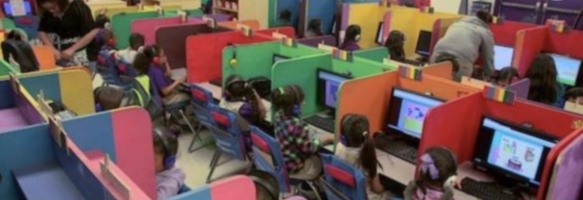
Personalized learning must not be mistaken for inclusion. The reality is that it’s student isolation!
Inclusion is generally defined as the action or state of including or of being included within a group or structure. Doing schoolwork on a digital device by yourself is not inclusion. It’s ability grouping for one!
In special education, inclusion is often described as students working alongside their peers. Alongside? Please tell me that doesn’t mean sitting next to another student on the computer!
The National Center for Learning Disabilities (NCLD) praises personalized learning as a customized learning experience in their latest report. There are some good things Personalized Learning Is NOT Inclusion!:

30 years after Edwards v. Aguillard: Here’s why creationism still lingers in America’s public schools

30 years after Edwards v. Aguillard: Here’s why creationism still lingers in America’s public schools:

30 years after Edwards v. Aguillard: Here’s why creationism still lingers in America’s public schools


his month marks the 30th anniversary of the U.S. Supreme Court’s decision in Edwards v. Aguillard, a groundbreaking case that ruled it unconstitutional to require creationism to be taught in public schools.
Though much has changed in 30 years, the broad questions raised by this case remain timely. Who gets to decide what knowledge will be transmitted to the next generation – parents? Elected officials? Academic experts? What role (if any) should the courts play in policing such decisions?
As a scholar of education law and First Amendment law, I’ve seen these very questions animate curricular controversies over climate change, American history, and more.
While recent debates seem to share a common structure with controversies about the teaching of evolution, there’s a key difference: Edwards v. Aguillard stands not for the broad idea that it’s unconstitutional for public schools to teach “bad science,” but for the narrower idea that it’s unconstitutional for them to teach religion as truth.

A century of science and religion


In 1883, illustrator Joseph Ferdinand Keppler envisioned a future where religion and science were one.
Puck, via Library of Congress

Some conservative religious believers – mainly fundamentalist or evangelical Protestants – have long viewed Darwin’s ideas as incompatible with their faith. Consequently, they’ve resisted the undiluted teaching of evolutionary theory in public schools.
Early resistance took the form of statutes criminalizing the teaching of evolution, most famously the Tennessee ban at the heart of the famous “Scopes Monkey Trial” of 1925.
In the next four decades, the legal playing field changed dramatically. The Supreme Court applied the Constitution’s Establishment Clause to the states in 1947, initially reading the clause to require the “separation of church and state.” In the early 1960s, 30 years after Edwards v. Aguillard: Here’s why creationism still lingers in America’s public schools:


Mike Klonsky's SmallTalk Blog: Rethinking binary gender views on Pride Week

Mike Klonsky's SmallTalk Blog: Rethinking binary gender views on Pride Week:

Rethinking binary gender views on Pride Week


Klonsky brothers talking intersex with Pidgeon Pagonis on Hitting Left. 
After all these years, I find I'm still working to get unstuck from traditional, binary views of gender and sexuality and the power-laden and oppressive use of language that goes with it.

Thanks to Friday's in-studio guest on Hitting Left, intersex activist and artist, Pidgeon Pagonis, for schooling us. But the educational burden shouldn't all be on them. We all need to share in the work, educate ourselves, each other, and our students, not just to better understand our world, but to change it.

If you missed Friday's show, you can listen to it this week by clicking on the link above or to the podcast any time at http://hittingleft.libsyn.com/ .

SAVE THE DATE...Our Hitting Left Labor Day Bash is set for Sept. 4th at our beautiful Co-Prosperity Sphere Studio in Bridgeport, on Chicago's south side. We'll be partying, broadcasting live and raising dough for Lumpen Radio, all at the same time. Not easy. Don't try this at home. We're professionals. More details to follow.Mike Klonsky's SmallTalk Blog: Rethinking binary gender views on Pride Week:


“The Fart-Free Classroom” (Jerry Heverly) | Larry Cuban on School Reform and Classroom Practice

“The Fart-Free Classroom” (Jerry Heverly) | Larry Cuban on School Reform and Classroom Practice:

“The Fart-Free Classroom” (Jerry Heverly)


After the previous post on the teachers being practical politicians, Jerry Heverly commented on it and sent along a post he had written illustrating the inexorable dependence of teachers upon their students and the inherent dilemmas teachers face in exerting power, fostering relationships with students and managing their behavior. In effect, teachers have to engage in  practical politics by working out with students compromises to the dilemmas they face in order to get students to learn.
Heverly granted me permission to use this post. He is a veteran San Leandro High School English teacher and written extensively about his experiences teaching over the years. This post appeared March 28, 2012.

“Mr. Heverly, you can’t tell somebody not to fart!”
I was trying to get my students to read, something I struggle with every day.
“It’s like a natural thing. You can’t stop it. People can die from that.”
This was “Sustained Silent Reading”, basically a time for my students to pick a book or magazine and read.
I try very hard to get my students to like reading. My room is lined on two sides with books I’ve accumulated.  My bookcases are a kaleidoscope of colors. I have novels by Jack London, picture books of African-American history, a history of football, teen romances; anything I can find that might appeal to a 15 year old.
I was trying to keep the room quiet. It wasn’t working.
It’s a tight rope I walk every day. If I want a quiet, organized room I must devise “The Fart-Free Classroom” (Jerry Heverly) | Larry Cuban on School Reform and Classroom Practice:

An Open Letter to the Mukilteo School Board: Sometimes Doing the Right Thing Means Breaking the Rules and Allowing Kids to Walk in Graduation with Their Peers. | Seattle Education

An Open Letter to the Mukilteo School Board: Sometimes Doing the Right Thing Means Breaking the Rules and Allowing Kids to Walk in Graduation with Their Peers. | Seattle Education:

An Open Letter to the Mukilteo School Board: Sometimes Doing the Right Thing Means Breaking the Rules and Allowing Kids to Walk in Graduation with Their Peers.

graduation_cap


Dear Mukilteo School Board members,
Over the two weeks before our district graduations, I wrote and implored you to allow students who have not yet met standards via these tests to be allowed at graduation. This was not the first time this issue has been placed before you and as you have previously chosen to do, you neglected to do what was right by kids.
You used the last opportunity that you had to shame them. You should be ashamed of your inability to see beyond the board policy you quoted me. You should be ashamed that you failed the kids in this district that we have all worked to educate and to support.
You knew their stories: a young foster child who had been in nearly 30 homes in four years, or a recent immigrant with a GPA over 3.0. Students who have met every credit requirement, who have shown the ability to persevere, to grow, to engage in their school community, to become young adults ready to take the next step of their lives.
You have stolen their rite of passage.
We advocated for them. We explained to you that this would happen. We showed you the evidence of this impending legislation. We reminded you that you have done this before.
You choose to remain unmoved. You chose to be callous rather than to show compassion. You showed these young adults that, in the end, the education system does not care for them as people.
You should be ashamed.
But I know you’re not.
-Anonymous
 An Open Letter to the Mukilteo School Board: Sometimes Doing the Right Thing Means Breaking the Rules and Allowing Kids to Walk in Graduation with Their Peers. | Seattle Education: