Latest News and Comment from Education

Sunday, April 9, 2017

Special Nite Cap: Catch Up on Today's Post 4/9/17


Special Nite Cap: Catch Up on Today's Post 4/9/17
Featured Post

Education in 2017 and The American Eugenics Movement


Next Friday on Hitting Left: Jose Rico joins us. | Fred Klonsky
Next Friday on Hitting Left: Jose Rico joins us. | Fred Klonsky : Next Friday on Hitting Left: Jose Rico joins us. Next week’s guest on Hitting Left is Jose Rico. Jose is a long-time community organizer, educator and activist in Chicago’s Little Village Community. As a member of the Small Schools Workshop, he was active in the 2001 hunger strike that lead to the birth of Little Village/Lawndale H
Is LAUSD Really Going Broke? - LA Progressive
Is LAUSD Really Going Broke? - LA Progressive : Is LAUSD Really Going Broke? A ll of the recent years for which final (“actual”) budget data are published show every single annual budget has finished in the black. This graph tracks the inflow of revenues (sum of dark and light grey bars), which have outpaced the outflow of expenditures (blue bar) in the LAUSD General Fund (GF) over the last eight
Superintendent’s Contract: Sects, Lies and Videotape. – Educate Louisiana
Superintendent’s Contract: Sects, Lies and Videotape. – Educate Louisiana : Superintendent’s Contract: Sects, Lies and Videotape. When John Bel Edwards won the gubernatorial runoff election in November 2015, teachers and parents across the state of Louisiana sat on the edge of their seats in anticipation of the exit of State Superintendent of Education, John White. Edwards, after all, was very vo
School choice a sham, profits on the taxpayers’ dime - Network For Public Education
School choice a sham, profits on the taxpayers’ dime - Network For Public Education : School choice a sham, profits on the taxpayers’ dime By: Guest Opinion April 6, 2017 , 3:38 pm It is time for Arizonans to take a hard look at who really benefits from school choice. While some families may want tax-payer funded options, the dizzying array of choices, combined with lax oversight and weak laws, m
Walker wants Wisconsin to be first state to stop dictating how much time kids should go to school - The Washington Post
Walker wants Wisconsin to be first state to stop dictating how much time kids should go to school - The Washington Post : Walker wants Wisconsin to be first state to stop dictating how much time kids should go to school If Wisconsin Gov. Scott Walker (R) has his way, the Badger State will become the first to stop requiring students in public schools to spend a minimum number of hours in class. A
Seattle Schools Community Forum: PTAs and Sharing Dollars
Seattle Schools Community Forum: PTAs and Sharing Dollars : PTAs and Sharing Dollars The New York Times had a revealing article today about sharing PTA fundraising dollars. According to a new report by the Center for American Progress , a liberal advocacy group, schools that serve just one-tenth of 1 percent of American students collect 10 percent of the estimated $425 million that PTAs raise nat
CURMUDGUCATION: ICYMI:Earth Day Edition + Catch up with CURMUDGUCATION
CURMUDGUCATION: ICYMI:Earth Day Edition (4/9) : ICYMI:Earth Day Edition Every Sunday I try to share some of the noteworthy reads of the previous, focusing on the pieces you might have missed. You can also keep up with plenty of what's worth reading by using the column to the right, where I list most of my regular reads. Read-- stay informed-- and share. If something speaks to you, amplify that vo
Beyond ‘The Apprentice’: Why the U.S. needs a thriving apprenticeship system - The Washington Post
Beyond ‘The Apprentice’: Why the U.S. needs a thriving apprenticeship system - The Washington Post : Beyond ‘The Apprentice’: Why the U.S. needs a thriving apprenticeship system If you hear the word “apprentice,” you may well think of Donald Trump’s “The Apprentice” television show, where he famously told people they were fired, or have a flashback to learning in school about “apprenticeships” in
PTA Gift for Someone Else’s Child? A Touchy Subject in California - The New York Times
PTA Gift for Someone Else’s Child? A Touchy Subject in California - The New York Times : PTA Gift for Someone Else’s Child? A Touchy Subject in California SANTA MONICA, Calif. — Of all the inequalities between rich and poor public schools, one of the more glaring divides is PTA fund-raising, which in schools with well-heeled parents can generate hundreds of thousands of dollars a year or more. Se
CURMUDGUCATION: What the Public Sees + Soap Box Derby Equity
CURMUDGUCATION: What the Public Sees : What the Public Sees While reading my way around the web this weekend, I came across this "Topline Report" of the Phi Delta Kappa annual poll about education issues . I'm way late to sifting through this data, but it's an interesting report, so I'm going to do it anyway. It gathers together the data over the past several decades into some quick-and-dirty cha
Study: Black students from poor families are more likely to graduate high school if they have at least one black teacher - The Washington Post
Study: Black students from poor families are more likely to graduate high school if they have at least one black teacher - The Washington Post : Study: Black students from poor families are more likely to graduate high school if they have at least one black teacher A new study says that assigning black students from low-income black families to at least one black teacher in the third, fourth or f
Sunny Side Up With Diane Ravitch's blog | A site to discuss better education for all
Diane Ravitch's blog | A site to discuss better education for all : Sunny Side Up With Diane Ravitch's blog A site to discuss better education for all Maine: Trump Plan for “School Choice” Would be a Disaster for Rural Schools by dianeravitch / 39min The Bangor Daily News in Maine reports that Trump’s push for school choice in Maine would be a disaster for rural schools. This article helps to exp
Tax Credit Scholarships: “Neovoucher” Profiteering Disguised as Philanthropy | deutsch29
Tax Credit Scholarships: “Neovoucher” Profiteering Disguised as Philanthropy | deutsch29 : Tax Credit Scholarships: “Neovoucher” Profiteering Disguised as Philanthropy In October 2016, Carl Davis of the Institute on Taxation and Economic Policy published a paper entitled, “State Tax Subsidies for K12 Private Education.” Below is Davis’ introduction: One of the most important functions of governme
Chicago Mayor's Plan To Update H.S. Graduation Has A Fatal Flaw : Code Switch : NPR
Chicago Mayor's Plan To Update H.S. Graduation Has A Fatal Flaw : Code Switch : NPR : Chicago Mayor's Plan To Update H.S. Graduation Has A Fatal Flaw In recent years, the fate of the Chicago's public schools is increasingly driven by Mayor Rahm Emanuel, a former Obama Administration top advisor and Chicago native. Some community activists and a growing number of black and Latino parents are expre
Education in 2017 and The American Eugenics Movement
Education in 2017 and The American Eugenics Movement : Education in 2017 and The American Eugenics Movement Pleas e join Internet radio host Dr. James Avington Miller Jr. for a deep look into the connections between high stakes standardized testing, failing schools, teachers, students, VAM, I Q Tests, Inferior and exceptional students and the American Eugenics Movement. Dr. Miller has studied thi
Sunday follies. | Fred Klonsky
Sunday follies. | Fred Klonsky : Sunday follies. Nursing home workers demand living wage on Friday. Logan Square, Chicago. Photo: Fred Klonsky Faced with an expiring supply of a controversial sedative, the state of Arkansas plans to execute eight men over 11 days — a pace that is unprecedented in recent U.S. history and that has been criticized by lawyers and former corrections officials. The sta
Russ on Reading: Teacher Evaluation: It's About Relationships Not Numbers
Russ on Reading: Teacher Evaluation: It's About Relationships Not Numbers : Teacher Evaluation: It's About Relationships Not Numbers In an article this week in Education Week, Van Schoales, CEO of A+ Colorado, an education reform think tank, declared that Colorado's model for teacher evaluation was a failure. This was a model that seemed to possess all the "right stuff" of teacher evaluation that

YESTERDAY

Special Nite Cap: Catch Up on Today's Post 4/8/17
Special Nite Cap: Catch Up on Today's Post 4/8/17 Featured Post Why Keith Olbermann is thinking about a ‘President Betsy DeVos’ - MarketWatch Mike Klonsky's SmallTalk Blog: Byrd-Bennett asks judge for less jail time. Says she 

Top Posts This Week


Next Friday on Hitting Left: Jose Rico joins us. | Fred Klonsky

Next Friday on Hitting Left: Jose Rico joins us. | Fred Klonsky:

Next Friday on Hitting Left: Jose Rico joins us.

HITTING LEFT (1)

Next week’s guest on Hitting Left is Jose Rico.
Jose is a long-time community organizer, educator and activist in Chicago’s Little Village Community.
As a member of the Small Schools Workshop, he was active in the 2001 hunger strike that lead to the birth of Little Village/Lawndale High School. He become the founding principal of Multicultural Arts High School (MAS), one of the small schools within LVLHS. He then served as an adviser on Latino education affairs in the Obama White House. 
In February, as Chairman of the CPS Latino Advisory Committee, Jose was part of the mass resignation of most of its members in protest of the under-funding of Latino students and after the school board turned a deaf ear on the committee’s recommendations.
Hitting Left with the Klonsky Brothers broadcasts live over the air on Lumpen Radio WLPN 105.5FM in Chicago and live streamed on http://www.lumpenradio.com. Download the app.  Fridays at 11AM.
Meanwhile, download Hitting Left #10 with guests Camille Williams from Chicago Votes and Matt Blizek from MoveOn. Next Friday on Hitting Left: Jose Rico joins us. | Fred Klonsky:

Is LAUSD Really Going Broke? - LA Progressive

Is LAUSD Really Going Broke? - LA Progressive:

Is LAUSD Really Going Broke?

LAUSD Going Broke

All of the recent years for which final (“actual”) budget data are published show every single annual budget has finished in the black. This graph tracks the inflow of revenues (sum of dark and light grey bars), which have outpaced the outflow of expenditures (blue bar) in the LAUSD General Fund (GF) over the last eight years.
While the entirety of the LAUSD budget includes various capital and internal funds, for the purposes of tracking the actual operating budget, these GF revenues and expenditures are of most importance. The amount unspent every year is represented by the green bar, and labeled in green. “▲” green figures indicate that the net (what’s left after expenditures come out of revenues) is ‘positive’; the GF was operating without a loss. Both “restricted” (e.g., Federal Title 1 (low income) funds) and “unrestricted” (e.g., discretionary funds available to address school-site-specific priorities) funds are included here. Prior to 2007 GF expenditures were reported a little differently so the trend isn’t comparable, but those budgets were also balanced.

Recent school board candidate’s statements casting shade on LAUSD’s current solvency are just wrong.

So recent school board candidate’s statements casting shade on LAUSD’s current solvency are just wrong.
But what about the future, is the District simply swirling that bankruptcy toilet, circling inevitably toward the abyss? Even if currently flush, how well can past financial performance predict the future?
The District’s Chief Financial Officer (who just resigned after 10 years of constitutional, if not justifiable, worry), publishes a projected budget for one and two years beyond the current operating year. That current operating year’s budget is finalized in June prior to the start of the upcoming school year. And there’s a big accounting midyear to check up on things.
So that means there are four forecasts for any given year, snapshots of how budget forecasts Is LAUSD Really Going Broke? - LA Progressive:


Superintendent’s Contract: Sects, Lies and Videotape. – Educate Louisiana

Superintendent’s Contract: Sects, Lies and Videotape. – Educate Louisiana:

Superintendent’s Contract: Sects, Lies and Videotape.
When John Bel Edwards won the gubernatorial runoff election in November 2015, teachers and parents across the state of Louisiana sat on the edge of their seats in anticipation of the exit of State Superintendent of Education, John White. Edwards, after all, was very vocal about his desire to see White replaced by a “Louisiana educator.” Here we are 15 months after Edwards took office and White’s contract expired. Alas, White is still here.
Shortly after the November election, Mercedes Schneider wrote in her blog, John White’s Contract, about the anticipation of what was to come. She talks about the different ways that White could be ousted which range from a BESE vote to various gubernatorial actions. She includes a quote from former BESE member, Jane Smith, “No matter the composition of BESE, never underestimate the power of a newly-elected governor.”
Most people continue to blame Gov. Edwards for White remaining as superintendent. The truth is, above the table, the governor has little ability to select and/or dispose of an appointed superintendent. Though it has been described as a member of the governor’s cabinet, the superintendent isn’t appointed by the governor. He is appointed by BESE with a super majority (2/3) vote. The current BESE make up consists of three gubernatorial appointees, one John White opposer elected by the people, and 7 elected members who enjoyed the financial support of special interest groups who, along with their supporters, worship John White in a fashion that one would associate with a religious sect.
Below the table, there are a number of options available to the governor that range from slash the budget and cancelling contracts to issuing executive orders and making White’s life miserable. Some of the actions available could be viewed as a unilateral move and politically motivated. While you can’t ever separate a governor’s actions from political motivations, it isn’t likely that any of these options would be used. It is much more effective if the above the table options were successful, but there is a hindrance to that happening.
It has been known since January 2016 that White’s contract expired. If you do a google search for “John White contract month to month,” you will find a number of news articles that discuss this fact. During the first half of 2016, there were only two full board BESE meetings. In January, the newly elected board said good-bye to the previously appointed BESE members and established the new officers of the new board. Jim Garvey was installed as BESE president, and it was his first meeting as president.


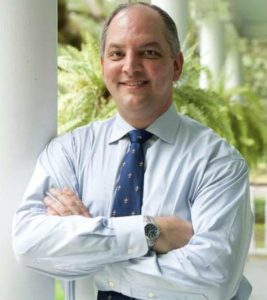
Superintendent, John White.

In February, there was no meeting because of Mardi Gras. The March meeting, in theory, should have been the meeting to discuss the superintendent’s contract; however, it was not on the agenda. It was at this meeting, the second general meeting of the new members, that a finance report prepared by White for the legislature was challenged by appointee Doris Voitier. Her challenge was backed Superintendent’s Contract: Sects, Lies and Videotape. – Educate Louisiana:

School choice a sham, profits on the taxpayers’ dime - Network For Public Education

School choice a sham, profits on the taxpayers’ dime - Network For Public Education:

School choice a sham, profits on the taxpayers’ dime 


 April 6, 2017 , 3:38 pm


It is time for Arizonans to take a hard look at who really benefits from school choice. While some families may want tax-payer funded options, the dizzying array of choices, combined with lax oversight and weak laws, make Arizona’s taxpayers easy marks for profiteering on the taxpayers’ dime.
Arizona is the Mecca of School Choice – for-profit charters, non-profit “fronts” for for-profit charters, Empowerment Scholarships Accounts (ESAs), and tax credits all compete with little regulation and oversight.
Let’s begin with charters. Arizona’s charter laws are some of the worst in the nation when it comes to protecting taxpayer money. For example, the Arizona State Office of the Auditor General is not allowed to monitor charter school spending. Only the Arizona State Board for Charter Schools (AZCB), whose members (with one exception) are appointed by the charter-friendly Governor, can keep an eye on charter school finances.
To read Carol’s entire Arizona Capital Times opinion piece, click here.


 School choice a sham, profits on the taxpayers’ dime - Network For Public Education:


Walker wants Wisconsin to be first state to stop dictating how much time kids should go to school - The Washington Post

Walker wants Wisconsin to be first state to stop dictating how much time kids should go to school - The Washington Post:

Walker wants Wisconsin to be first state to stop dictating how much time kids should go to school


If Wisconsin Gov. Scott Walker (R) has his way, the Badger State will become the first to stop requiring students in public schools to spend a minimum number of hours in class.
A proposal in Walker’s new budget plan calls for ending the state’s current minimum requirements — 437 hours for kindergarten, 1,050 hours for elementary schools and 1,137 hours for secondary schools —  and allowing school districts to do what they want in terms of seat hours for students.
Districts and schools would then be judged on their state report cards, which are produced annually by the Department of Public Instruction, based largely on standardized test scores. During a recent visit to a school in Waukesha to talk up his budget proposal, he said: “To me, the report card is the ultimate measure. It’s not how many hours you are sitting in a chair.”
The reaction? WISN reported: “A spokesperson with the state Department of Public Instruction said the agency has no official position on the governor’s plan but said that overall students need more access to learning, not less.”
Walker’s proposal is in direct opposition to what has been an attempt in recent years by policymakers to expand instructional time in public schools. The Obama administration encouraged schools to add instructional time, with then-President Barack Obama saying in 2009:
We can no longer afford an academic calendar designed for when America was a nation of farmers who needed their children at home plowing the land at the end of each day. That calendar may have once made sense, but today it puts us at a competitive disadvantage. Our children — listen to this — our children spend over a month less in school than children in South Korea — every year. That’s no way to prepare them for a 21st century economy. That’s why I’m calling for us … to rethink the school day to incorporate more time -— whether during the summer or through expanded-day programs for children who need it.
But it is in line with thinking of school reformers, such as Education Secretary Betsy DeVos, who are pushing school choice as a top educational priority. That includes a broad increase in 
Walker wants Wisconsin to be first state to stop dictating how much time kids should go to school - The Washington Post:

Seattle Schools Community Forum: PTAs and Sharing Dollars

Seattle Schools Community Forum: PTAs and Sharing Dollars:

PTAs and Sharing Dollars

The New York Times had a revealing article today about sharing PTA fundraising dollars.  

According to a new report by the Center for American Progress, a liberal advocacy group, schools that serve just one-tenth of 1 percent of American students collect 10 percent of the estimated $425 million that PTAs raise nationwide each year.
Addressing inequities:

Leaders at several overachieving PTAs also said their generosity addressed another kind of inequality: Their schools did not benefit from Title I, the federal taxpayer-funded program for schools that serve large numbers of poor children.

But Catherine Brown, a co-author of the report, said that when richer PTAs paid for teachers and programs that poorer ones could not afford, students in less well-off schools fell even further behind.
The district written about in the Times is the tony/not-so-tony Malibu/Santa Monica district.

But there is poverty, too; of the 11 elementary schools in the 11,000-student district, four in Santa Monica, including Edison, qualify for Title I aid. Half of Edison’s students come from low-income families, and three-quarters are Hispanic.
Several years ago, the Santa Monica-Malibu school board came up with a solution: Pool most donations from across the district and distribute them equally to all the schools.

The funding program is considered a national model, and has many enthusiastic supporters. But for some locals it is a sore point that has helped fuel a long-simmering secession movement in which Malibu — more solidly affluent than Santa Monica — would create its own district, allowing it to keep all of its donations in its own schools.
What one school board member had to say - read it twice and tell us what you think:

An ideal PTA system gives a parent “the opportunity to put your Seattle Schools Community Forum: PTAs and Sharing Dollars:


CURMUDGUCATION: ICYMI:Earth Day Edition + Catch up with CURMUDGUCATION

CURMUDGUCATION: ICYMI:Earth Day Edition (4/9):

ICYMI:Earth Day Edition


Every Sunday I try to share some of the noteworthy reads of the previous, focusing on the pieces you might have missed. You can also keep up with plenty of what's worth reading by using the column to the right, where I list most of my regular reads. Read-- stay informed-- and share. If something speaks to you, amplify that voice, boost that signal, and get the word out. 

Is Louisiana's NAEP Miracle Significant

Gary Rubinstein is a gifted debunker. Read here as he explains why Louisiana is bragging abot a nothingburger, and in the process, learn a little bit about how little those NAEP scores really tell us.

Arizona Shows What Can Go Wrong with Tax Credit Vouchers

Seems we're all spending a little time talking about the stealth vouchers-- education tax credits. Here's an example of how badly they can go wrong.

Prince

Audrey Watters and the end of educational technology.

Crony Capitalism

Jennifer Berkshire talks to Dr. Preston Green about the parallels between the charter boom, Enron, and the housing bubble disaster of 2008.

Why Google Can't Replace Individual Human Knowledge

Interesting piece about why the whole "we don't need to know stuff because internet" argument is specious and just plain wrong.

Standardized Testing Creates Captive Markets

Steve Singer provides one more way to understand the wrongness of the Big Standardized Test. Hint: it has to do with $$$$.

Why Do Rural Legislators Vote For Voucher Programs That Deliver No Benefits to Their Counties

Looking at education tax credits in Pennsylvania, the writers ask a simple question-- why are rural legislators voting for these things that provide zero benefits to rural areas?

Teacher Evaluation: It's About Relationships

Russ Walsh looks at teacher evaluation from the, you know, human being perspective.

40 Quick and Easy Switches for Earth Day

My daughter is also a bloggist (or rather, I am also a bloggist because she got there first) and she frequently offers concrete advice for people who are interested in being more responsible economic and ecological stewards. Here are 40 simple things you can do.


CURMUDGUCATION: ICYMI:Earth Day Edition (4/9):


Big Education Ape: CURMUDGUCATION: What the Public Sees + Soap Box Derby Equity - http://bigeducationape.blogspot.com/2017/04/curmudgucation-what-public-sees-soap.html

Catch up with CURMUDGUCATION


 Big Education Ape: Catch up with CURMUDGUCATION - http://bigeducationape.blogspot.com/2017/04/catch-up-with-curmudgucation_8.html

Beyond ‘The Apprentice’: Why the U.S. needs a thriving apprenticeship system - The Washington Post

Beyond ‘The Apprentice’: Why the U.S. needs a thriving apprenticeship system - The Washington Post:

Beyond ‘The Apprentice’: Why the U.S. needs a thriving apprenticeship system

Image result for apprenticeship

If you hear the word “apprentice,” you may well think of Donald Trump’s “The Apprentice” television show, where he famously told people they were fired, or have a flashback to learning in school about “apprenticeships” in the Middle Ages, when young people would learn a trade at the foot of skilled craftsmen (while providing virtually free labor for years).
Well, apprenticeships never died. In Germany today, for example, 60 percent of high school students spend half of their school time doing academic work and the other half getting hands-on training at a company. Other countries, too, have successful apprenticeship programs that successfully keep young people working.
In the United States, where the focus for years has been getting more people to graduate from college, less than 5 percent of young people train as apprentices. But there is new interest among policymakers in raising that number significantly. President Trump recently embraced the idea of creating millions of apprenticeships over the next five years.
Here’s more on this subject from Jonathan Hasak,  a director of public policy and government affairs at Year Up, a national nonprofit that connects low-income young adults with livable-wage careers. It is one of a number of organizations in that space, including YouthBuild, which works with unemployed young people around the world who dropped out of high school to gain skills they need for employment.
By Jonathan Hasak
An interesting thing happened at the White House recently when Salesforce chief executive Marc Benioff attended a roundtable discussion on vocational training with U.S. and German business leaders.  President Trump left that meeting and embraced Benioff’s moonshot goal of creating 5 million apprenticeships within five years, winning praise from advocates who believe that a four-year college should not be the only pathway to a good job in this country.
But with only 505,000 apprentices currently enrolled in Labor Department-registered programs, getting to 5 million apprenticeships will require a level of commitment and investment from America’s C-suites that has been largely absent.  Consider that in 2014, then-President Barack Obama used his State of the Union address to call on employers to double the number of apprenticeships at the time to 750,000 by 2019.
Still, any commitment from the White House that helps Americans gain skills that have real currency in today’s labor market should be applauded.  But instead of focusing solely on apprenticeships — an employer-led, driven, and funded model — the Trump administration and corporate leaders like Benioff ought to reframe their moonshot goal and embrace a Beyond ‘The Apprentice’: Why the U.S. needs a thriving apprenticeship system - The Washington Post:

PTA Gift for Someone Else’s Child? A Touchy Subject in California - The New York Times

PTA Gift for Someone Else’s Child? A Touchy Subject in California - The New York Times:

PTA Gift for Someone Else’s Child? A Touchy Subject in California

SANTA MONICA, Calif. — Of all the inequalities between rich and poor public schools, one of the more glaring divides is PTA fund-raising, which in schools with well-heeled parents can generate hundreds of thousands of dollars a year or more.
Several years ago, the Santa Monica-Malibu school board came up with a solution: Pool most donations from across the district and distribute them equally to all the schools.
This has paid big benefits to the needier schools in this wealthy district, like the Edison Language Academy in Santa Monica, where half the children qualify for free or reduced-price lunch. The campus is decorated with psychedelic paintings of civil rights icons such as Cesar Chavez and the Rev. Dr. Martin Luther King Jr., the work of the school’s art teacher, Martha Ramirez Oropeza, whose salary is paid by the pooled contributions. That money has also funded the school’s choral program, teacher aides, a science lab and a telescope.
The funding program is considered a national model, and has many enthusiastic supporters. But for some locals it is a sore point that has helped fuel a long-simmering secession movement in which Malibu — more solidly affluent than Santa Monica — would create its own district, allowing it to keep all of its donations in its own schools.


Los Angeles
101
CALIFORNIA
TOPANGA
Santa Monica-Malibu
Unified School District
405
Franklin
Elementary School
1
Juan Cabrillo
Elementary School
MALIBU
Edison Language
Academy
SANTA
MONICA
Pacific Ocean
5 Miles

Craig Foster, a school board member from Malibu who favors separation, said parents voluntarily giving money wanted to see the fruits of their donations.
An ideal PTA system gives a parent “the opportunity to put your money where your heart is,” said Mr. Foster, a former managing director at Morgan Stanley and Credit Suisse. “It has to be an emotional appeal, and it has to be for the benefit of the donor.”
Indeed, the powerful appeal of helping one’s own child has turned the apple-pie PTA into a mirror of society’s larger stratification. According to a new report by the Center for American Progress, a liberal advocacy group, schools that serve just one-tenth of 1 percent of American students collect 10 percent of the estimated $425 million that PTAs raise nationwide each year.
And those schools, not surprisingly, are some of the least needy, according to the study, which analyzed PTA tax returns from 2013 and student demographics. The richest PTA in the nation, with $2 million in revenue, was at Highland Park High School in a suburb of Dallas, where no one PTA Gift for Someone Else’s Child? A Touchy Subject in California - The New York Times:


CURMUDGUCATION: What the Public Sees + Soap Box Derby Equity

CURMUDGUCATION: What the Public Sees:

What the Public Sees

While reading my way around the web this weekend, I came across this "Topline Report" of the Phi Delta Kappa annual poll about education issues. I'm way late to sifting through this data, but it's an interesting report, so I'm going to do it anyway. It gathers together the data over the past several decades into some quick-and-dirty charts, and it makes for some interesting reading. The newest results aren't very new (May of 2016), but the trends over the years are illuminating.


Biggest Problems?

The survey allows for three open-ended responses to the question of the biggest problems in schools. In 2016, funding won with 19% which is down 13% from just two years ago. 2009-2014 funding stayed on top with over thirty percent voting for it.

Standards have rarely made the list at all, except for a period from 2004-2009 (No Child Left Behind days) when they hovered around 3%. They reappeared as a problem in 2015 at 7% and were way up to 9% last year.

The chart is also a reminder of some things we used to consider a big deal. 9% considered discipline a problem, but from 1969 until 2010, discipline was never out of double digits, and from 1969 till 1987, it never dropped below 20%. Why are we so much less concerned nowadays? Better behaved children or, as I suspect is the case in many of these answers, does the shift reflect a shift in what is reported by the press and amplified by whoever's trying to stir things up. Violence, drugs, and overcrowding were also seen as huge problems back in the day and now don't register so much. Race was a regular double-digit issue in the 70s but in 2016, it only stood at 2%-- the first time it cracked the list at all since 1996.

How Good Are Which Schools?

PDK gives us the classic question-- how good are schools. Specifically, how good are the nation's 
CURMUDGUCATION: What the Public Sees:

Soap Box Derby Equity


We have tied to explain the problems of equality and equity and opportunity dozens of ways. Here are two you've probably seen, many times:


I'm going to offer another metaphor today-- the soap box derby.

Let's imagine two racers approaching the starting line. Our two young divers are seated in similarly-built cars, made well enough for the race. The race down the hill begins at the starting line, but before they arrive at that line, anything goes.

Chris's car is carried to the starting line, and there Chris sits, waiting for the flag to be waved, at which point Chris will take off the break and let gravity move the car down the hill.

Meanwhile, Pat is lined up further in back of the starting line. Pat has family there, too, and when the flag waves, Pat's family will push Pat just as hard as they can.


A few seconds later, we see the two cars on the hill. The race has begun. Pat is out in front, going far faster than Chris. But when someone among the spectators complains that the race is not fair, the reply they hear is this:

"It's perfectly fair. Look-- they're in equal cars, on the same hill, each one steering and driving their car depending on nothing but their own skills, reflexes, talents and abilities. If Pat wins, that must be because Pat is a better driver, and Chris would be better off building a skill set and becoming a better driver than worrying about. Because right now, on that hill, they are perfectly equal."

We could make the metaphor more complicated, give Pat and Chris different vehicles to represent various obstacles Chris brings into the race. But here's the thing-- even if Chris has just as good a Soap Box Derby Equity

Study: Black students from poor families are more likely to graduate high school if they have at least one black teacher - The Washington Post

Study: Black students from poor families are more likely to graduate high school if they have at least one black teacher - The Washington Post:

Study: Black students from poor families are more likely to graduate high school if they have at least one black teacher


A new study says that assigning black students from low-income black families to at least one black teacher in the third, fourth or fifth grades reduces the probability that they drop out of high school by 29 percent. The results are even larger for male African American students from persistently low-income families: Their chance of dropping out of high school falls 39 percent.
The study also found that black students of both sexes from low-income families are more likely to aspire to attend a four-year college if they have at least one black teacher between third and fifth grades There was, however, no effect found of having a same-race teacher on the dropout decisions of female students, “perhaps due to females’ significantly higher baseline graduation rates,” the study said.
The results are the latest in a growing body of evidence that race affects how teachers view and treat their students. As my colleague Emma Brown wrote in this story, black students taught by white teachers are less likely to be identified for gifted programs than black students taught by black teachers and biases exist in teachers’ grading of work by students of different genders, races and ethnicities.
The new study was published by the IZA Institute of Labor Economics, an independent economic research institute in Germany, and conducted by Seth Gershenson, an associate professor in the Department of Public Administration and Policy at American University and IZA; Cassandra M.D. Hart, an assistant professor of education policy at the University of California at Davis; Constance A. Lindsay, a professorial lecturer in the School of Public Affairs of American University; and Nicholas W. Papageorge, assistant professor of economics at Johns Hopkins University and IZA.
The new study goes beyond previous research that showed short-term benefits to pairing students with teachers of the same race, demonstrating longer-term affects. The implications are important, Papageorge said, because policymakers can act quickly to improve black students’ chances of academic success.
“This isn’t a situation where students need two, three or four black teachers to make a difference,” he was quoted as saying in a Johns Hopkins release. “This could be implementable tomorrow. You could literally go into a school right now and switch around the rosters so that every black child gets to face a black teacher.”