Latest News and Comment from Education

Sunday, January 10, 2016

Marie Corfield: No armed police in my school, please

Marie Corfield: No armed police in my school, please:

No armed police in my school, please


"It'll be a sad day for this country if children can safely attend their classes only under the protection of armed guards." ~ President Dwight D. Eisenhower 


 On January 8th, NJ.com reported:

A bill before the state Legislature would create a new category of police officer, stationing armed, retired cops under the age of 65 inside New Jersey schools.
The bill (S2983) establishes "Class Three" special police officers designated to provide security at both public and private schools. They would not replace school resource officers, who are specially trained full-time police officers stationed at some schools.  
The bill, drafted in the wake of the 2012 attack at Sandy Hook Elementary School in Newtown, Conn., was approved by the Senate Law and Public Safety Committee Thursday. It's unclear if it will get a full vote before the end of the legislative session next week.
The bill is sponsored by Senators Anthony Bucco (R-25) and Steve Sweeney (D-3).

Writing at Blue Jersey in response to this article, student activist, Melissa Katz, writes about how, if signed into law, this bill would exacerbate the school-to-prison pipeline that currently plagues many of our school districts serving students of color:
This bill will only further criminalize our youth, especially our youth of Marie Corfield: No armed police in my school, please: 

From Compassionate Schools To A Compassionate Society | PopularResistance.Org

From Compassionate Schools To A Compassionate Society | PopularResistance.Org:

From Compassionate Schools To A Compassionate Society

Susan DuFresne quote
This is the 4th and final post in a series on childhood trauma. In the 1st post, I expose my personal reasons for being an example in this struggle to create Compassionate Schools. In the 2nd post, I tell the stories of how children who have walked through my classroom doors have been impacted by trauma. The 3rd post discusses new pathways to creating cultural changes within our schools. Here, in this last post, I connect the dots of EduActivists’ work to other movements through Paulo Freire’s Pedagogy of the Oppressed and collaborative activist work I engaged in this summer. Here I make the point that in order to have Compassionate Schools, we also need a compassionate society.
In this post I will discuss the liberation involved in developing compassionate schools and how that liberation is connected to the development of a compassionate society. Who are the leaders and who must be involved in the struggle as examples? How are the genres of activist movements connected to the struggle for a compassionate society?
We are in a stage in fighting education reform where we are gaining power, reaching for the tipping point. While the numbers of children of trauma are increasing in our schools, the reforms themselves are causing trauma, as you can read about in post 2.  One can see that our public schools are becoming schools of trauma. The reformers’ policies have dehumanized schooling, the children, and teachers to the point where schooling itself is traumatic. Children who cry and vomit over high stakes tests. Children and teachers who are punished over test scores. Schools closed causing actual deaths in Chicago for children who must cross gang lines to attend their new schools. Zero Tolerance policies that imprison children for minor infractions. Relay charter schools that treat young black and brown urban youth like animals using compliance training with clicks and demands to walk in silence in the hallways with their hands behind their backs – “prison ready”. And Rex Tillerson, CEO of ExxonMobil spelling this dehumanization out directly:
“I’m not sure public schools understand that we’re their customer—that we, the business community, are your customer,” said Tillerson during the panel discussion. “What they don’t understand is they are producing a product at the end of that high school graduation.”
The Exxon CEO didn’t hesitate to extend his analogy. “Now is that product in a form that we, the customer, can use it? Or is it defective, and we’re not interested?” American schools, Tillerson declared, “have got to step up the performance level—or they’re basically turning out defective products that have no future. Unfortunately, the defective products are human beings. So it’s really serious. It’s tragic. But that’s where we find ourselves today.” – Peter Elkind, Fortune Magazine
The real thinking of reformers has been clear to many of us by the way we are being From Compassionate Schools To A Compassionate Society | PopularResistance.Org:


GROWING UP IN THE SOUTH BRONX ENLIGHTENED THIS “WHITE SHADOW”. | DCGEducator: Doing The Right Thing

GROWING UP IN THE SOUTH BRONX ENLIGHTENED THIS “WHITE SHADOW”. | DCGEducator: Doing The Right Thing:

GROWING UP IN THE SOUTH BRONX ENLIGHTENED THIS “WHITE SHADOW”.

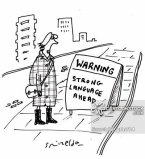
Warning: Strong language ahead.
WARNING: URBAN LANGUAGE  AHEAD
William Wordsworth wrote in his famous poem, TheRainbow, “The child is the father of the man.” It sure applies to me.
I went to kindergarten in PS 96, the Bronx. At the time it was in the mostly Jewish Pelham Parkway area. I wasn’t there long. My mom and I had to move out of our nice digs to my grandmother’s place in the south (at the time misnamed east) Bronx. It turns out that we were evicted for lack of rent. Dad did not pay his obligated monthly child support and alimony payments and mom’s job in the garment district as a former model turned “Gal Friday” paid her slave wages. She had no union. So, like little red riding hood, it was off to grandmother’s (Mom’s mom) I went, and PS 61, on Boston Road and Charlotte Street to finish kindergarten.
You might know grandma’s place. President Jimmy Carter visited the area. She lived on Minford Place and Charlotte Street. Somehow we were able to move to our own place a few blocks away on Longfellow Ave. and 172nd street, not far from Grandma and a block from my new scholastic and athletic home, PS 66. It was there that I endured Mrs. Witch in class 1-3. I have one class picture of me in a cowboy outfit. I was smiling; it must have been Halloween. It was probably the only time. I smiled in first grade. What I do remember is getting yelled out for putting my feet in the aisle because I didn’t GROWING UP IN THE SOUTH BRONX ENLIGHTENED THIS “WHITE SHADOW”. | DCGEducator: Doing The Right Thing:

Jersey Jazzman: Can We Please Get the Facts Right About Newark's Schools?

Jersey Jazzman: Can We Please Get the Facts Right About Newark's Schools?:

Can We Please Get the Facts Right About Newark's Schools?


Let me start by saying I like David Kirp's work enormously; I think everyone who cares about education policy should read Improbable Scholars, a detailed and thoroughly readable piece of qualitative research about school reform in Union City, NJ. I have some issues with the generalizability of Kirp's work, but he's a fine writer and I think, like Jonathan Kozol, he does a good job of describing what actually happens in an urban public school system.

Let me further say I think Kirp is on to something in his piece today for the NY Times. There's little doubt the "creative destruction" approach to schooling found in Newark has not led to any measurable gains in student learning. Bruce Baker and I recently pointed out that any gains in test scores in Newark, if they even exist, are part of a larger, statewide pattern. And I'll have new work out soon that shows the same thing with the vaunted increases in graduation rates that the fans of Cami Anderson like to crow about.

Kirp is not the first to note that urban districts in New Jersey that have resisted charter schools, such as Elizabeth and Union City, have schools that do comparatively well on tests compared to state averages, even though they have large numbers of students in economic disadvantage. Of course, we rarely hear about these schools because, unlike the large, - See more at: http://jerseyjazzman.blogspot.com/2016/01/can-we-please-get-facts-right-about.html#sthash.ZsIH8TkV.dpuf


CURMUDGUCATION: NC: Covering Charter Butts

CURMUDGUCATION: NC: Covering Charter Butts:

NC: Covering Charter Butts


This week, reporter Ann Doss Helms of the Charlotte Observer and Lynn Bonner of the News & Observer both offered accounts of a striking example of 'how the sausage is made" and how public officials make sure that the sausage carries a nice chartery taste.

Wednesday was the day to present the state department of public instruction's report on charter schools to the State Board of Education. They were supposed to accept the report on Thursday, but Lt. Governor Dan Forest had a problem. Per Bonner:

Lt. Gov. Dan Forest argued that the report, intended for the legislature and full of data on charter school enrollment, demographics and costs, was too negative. 

“The report, to me, did not have a lot of positive things to say,” he said.

And just in case you're thinking maybe Forest is just concerned that charters aren't getting the job done and he wants to shape them up and that's what he's responding to...

Once the board issues reports, Forest said, “that is the fuel the media uses for the next year to criticize whatever we’re doing.”

And so Forest sent the report back to the drawing board, even though the deadline for acceptance of the report is January 15. Forest said that he would "run interference" with the legislature if anyone complained about the missed deadline. Helms offered her own analysis:

I was among the reporters present. The brief discussion struck me as an unusually blunt demand to 
CURMUDGUCATION: NC: Covering Charter Butts:


ICYMI: Edu-reading from the week


This isn't everything there is to read out there, but it's a damn fine sampling of worthwhile stuff.

PA Budget or Hell Freezing Over-- Which Will Come First 

Pennsylvania may become the first state to ever lap itself in the budget process. Okay, this is actually just me, writing in this case for NEA's Education Votes website not because I've suddenly developed a love for NEA's political choices, but because I support any attempt by NEA to A) join the late twentieth century and B) include a variety of voices. For the record, they don't pay me, so I still do not qualify as a full-fledged union stooge.

An Open Letter to Janelle Monae : TFA's cultural appropriation

It is hard not to love someone who writes under the name Walter Crunkite. This open letter (to one of the more awesome and underappreciated artists out there) does a great job of addressing the problems of TFA.

Detroit Schools Plan Shows Lack of faith in Democracy

The Detroit Free Press gets exactly to the heart of what is so wrong with the sort of school takeover that so many urban systems are seeing.

Return to Teachers' Village (Part IV)

Begun back in December, Jersey Jazzman has been unrolling an impressive and well-researched look at New Jersey's plan to create its own little educational oasis, and why it all went South. This installment puts a cap on the story, as well as including links to the first three installments.

An Open Letter to Darrell Earley

It would have been easy to miss this gem tucked away in facebook. Here's a teacher's response to one more boneheaded state official.

The Joyful Illiterate Kindergartners of Finland

Not a new piece, and references many pieces that are also not new, but the perspective of an American teacher in Finland makes this special.

All I Really Need To Know I (Should Have) Learned in Kindergarten 

You may remember Emily Kaplan as the Boston-area teacher who wrote a guest post here that gave a gut-wrenching look inside a No Excuses school. She's back this week at Edushyster (connecting those two near-neighbors will stand as one of my more useful accomplishments) with another must read post about pushing young kids too hard.

Reformy Myth Busting: 2016 Edition

Jersey Jazzman again, swatting down some of the currently-favored reformster talking points.

Gaslighting and Turnaround Schools 

You've probably caught this must-read piece from must-read bloggist Peg with Pen, but on the off-chance you missed it, here is a brave, bold take-- from inside a turnaround school-- at how deliberately crazy-making the process is. 


CURMUDGUCATION http://bit.ly/1hqZ7wL


Connecticut’s historic school funding trial finally begins next week - Wait What?

Connecticut’s historic school funding trial finally begins next week - Wait What?:

Connecticut’s historic school funding trial finally begins next week


As Connecticut education advocate and columnist, Wendy Lecker, reports in her latest commentary piece in the Stamford Advocate, Connecticut’s children finally get day in court.
Of the many disappointments that have arisen since Governor Dannel Malloy and Lt. Governor Nancy Wyman were sworn in to office in January 2011, few, if any, is greater than their immoral efforts to dismiss, derail and delay what may be the most important Connecticut court case in our lifetime – the Connecticut Coalition for Justice in Education Funding (“CCJEF”) v. Rell School Funding Lawsuit.
The truth is that Connecticut’s school funding formula is not only illegal, it is unconstitutional. 
Inadequate funding is robbing Connecticut’s public schoolchildren of their constitutional right to a quality education, while placing an unfair burden on Connecticut’s local property taxpayers.
A new funding formula is needed.  But Connecticut politicians lack the will to adopt one, so the responsibility to act has fallen on the courts.
Despite having been supporters of the lawsuits prior to taking office, Malloy, Wyman and Connecticut Attorney General George Jepsen have wasted five years and massive amounts of taxpayer funds trying to stop Connecticut’s judicial branch from even hearing the critically important court case.
As mayor of Stamford, Dan Malloy was actually one of the original sponsors and plaintiffs Connecticut’s historic school funding trial finally begins next week - Wait What?:


Details on the Success Academy “Got to Go List” Lawsuit | deutsch29

Details on the Success Academy “Got to Go List” Lawsuit | deutsch29:

Details on the Success Academy “Got to Go List” Lawsuit


Success Academy Fort Greene (SAFG) opened in the 2013-14 school year as an elementary school with grades K-1, with the intention of adding a grade each year until the school served grades K-4.
An archived SAFG web page from March 27, 2014, features SAFG’s first principal, former Teach for America (TFA) alum Kate Cunningham:
Kate CunninghamKate Cunningham
An alumna of Teach for America, Kate taught elementary school in both district and charter settings before joining the team at SA Harlem 1 in 2010 as a Student Achievement Manager. She also managed Success Academy’s special education program prior to becoming a leadership resident at SA Harlem West. Kate is dedicated to leading a school community where scholars love learning and are pushed to their highest potential every day. A graduate of the College of William & Mary, Kate earned her master’s degree from the Relay Graduate School of Education.
Some notable issues: Cunningham was in charge of special education for SA, which implies that SA has (or had) a special education program. As for the specifics regarding Cunningham’s qualifications to run a special education program, Cunningham’s SA bio is lacking.
Though her 2014-15 SA bio (as archived October 20, 2014) includes more details, it lacks information to support that Cunningham was certified to run a special education program:
An alumna of Teach for America, Kate taught elementary school in both 
Details on the Success Academy “Got to Go List” Lawsuit | deutsch29:


On Professionalism and Good Intentions: More on Education and Journalism | the becoming radical

On Professionalism and Good Intentions: More on Education and Journalism | the becoming radical:

On Professionalism and Good Intentions: More on Education and Journalism


While journalist Nichole Dobo has not corresponded with me since I posted Dear Journalists Covering Education, Let Me Explain, Dobo has posted a Tweet I believe deserves additional consideration:


Dobo’s insistence that her professionalism be respected (which I support fully) raises a key aspect of my concern for how journalists tend to cover education.
Like Dobo, Stephen Sawchuk, a top education journalist for Education Weekbristled at being criticized for education coverage, characterizing the challenges as “pretty offensive.”
Here, then, I am being sincere when I ask: How is the constant and unwarranted drumbeat about “bad teachers,” “failing schools,” and “education crisis” treating educators as professionals? How is the overwhelming lack of seeking teachers and educators as sources in education journalism treating educators as professionals?
Shouldn’t teachers treat journalists as professionals and journalists treat teachers as professionals? Doesn’t our democracy need the professionalism of both journalists and educators?
I taught high school English for about two decades in a rural South Carolina public school, including several years when I also had achieved my doctorate in education while remaining a high school teacher.
During those years, the best I could manage in many efforts to reach into the media were a few letters to the editor.
Once I was in higher education, however, I was given access to Op-Eds as well as frequent interviews by TV and print journalists.
What message does that send?
For both educators and journalists, demanding our professionalism be respected and havingOn Professionalism and Good Intentions: More on Education and Journalism | the becoming radical:

Lead Poisoning and “No Excuses”

Lead Poisoning and “No Excuses”:

Lead Poisoning and “No Excuses”

The word "LEAD" written in vintage ink stained wooden letterpress type in a partitioned printer's drawer.
It is appalling to hear about the situation in Flint, Michigan where lead has been pouring into the drinking cups of children for months. Lead is known to cause serious health problems, including cognitive disorders and learning disabilities. The effects can last, and most exposed children will need special education.
And, if the trend in schools continues, these same students will someday be told they have no excuses when it comes to learning, mastering standards and doing well on high-stakes tests. Of course, their teachers will be blamed if they don’t do well. And what kind of special education will be left for them?
There could also be a correlation between lead and violent crime. It is connected to impulsiveness and other serious reactions. Think about how that can be a concern with teen and adult behavior.
In Baltimore, they examined the house of Freddie Gray, whose death in police captivity last year caused riots in the city. Freddie had difficulty in school from a young age. The Lead Poisoning and “No Excuses”:

How to Fix the Country’s Failing Schools. And How Not To. - The New York Times

How to Fix the Country’s Failing Schools. And How Not To. - The New York Times:

How to Fix the Country’s Failing Schools. And How Not To.


A QUARTER-CENTURY ago, Newark and nearby Union City epitomized the failure of American urban school systems. Students, mostly poor minority and immigrant children, were performing abysmally. Graduation rates were low. Plagued by corruption and cronyism, both districts had a revolving door of superintendents. New Jersey officials threatened to take over Union City’s schools in 1989 but gave them a one-year reprieve instead. Six years later, state education officials, decrying the gross mismanagement of the Newark schools, seized control there.

In 2009, the political odd couple of Chris Christie, the Republican governor-elect, and Cory Booker, Newark’s charismatic mayor, joined forces, convinced that the Newark system could be reinvented in just five years, in part by closing underperforming schools, encouraging charter schools and weakening teacher tenure. In 2010 they persuaded Mark Zuckerberg, Facebook’s chief executive, to invest $100 million in their grand experiment. “We can flip a whole city!” the mayor enthused, “and create a national model.”
No one expected a national model out of Union City. Without the resources given to Newark, the school district there, led by a middle-level bureaucrat named Fred Carrigg, was confronted with two huge challenges: How could English learners, three-quarters of the students, become fluent in English? And how could youngsters, many of whom came from homes where books were rarities, be turned into adept readers?
Today Union City, which opted for homegrown gradualism, is regarded as a poster child for good urban education. Newark, despite huge infusions of money and outside talent, has struggled by comparison. In 2014, Union City’s graduation rate was 81 percent, exceeding the national average; Newark’s was 69 percent.
What explains this difference? The experience of Union City, as well as other districts, like Montgomery County, Md., and Long Beach, Calif., that have beaten the demographic odds, show that there’s no miracle cure for what ails public education. What business gurus label “continuous improvement,” and the rest of us call slow-and-steady, wins the race.
Slow-and-steady was anathema to Mr. Booker and Mr. Christie, who had big dreams for Newark. But as Dale Russakoff writes in her absorbing account “The Prize,” the politicians’ optimism proved misplaced. What went wrong had as much to do with their top-down approach as with the proposals themselves.
The mayor pledged to involve the public before making any decisions, but efforts at community engagement, orchestrated by out-of-town advisers, proved shambolic. The only recommendations that got traction — closing How to Fix the Country’s Failing Schools. And How Not To. - The New York Times:


Yong Zhao: What Easter Island’s colossal stone statues teach about the dangers of modern school reform WaPo

What Easter Island’s colossal stone statues teach about the dangers of modern school reform - The Washington Post:

What Easter Island’s colossal stone statues teach about the dangers of modern school reform

EASTER ISLAND, CHILE: A tourist walks behind a platform with seven huge statues (moais in Rapa Nui language), the only ones facing the sea, in Ahu Akivi in Easter Island, 3700 km off the coast of Chile, 12 February 2005. The Chilean island, located in the Polynesian archipielago, has many archeological sites and its Rapa Nui National Park is included on UNESCO’s World Heritage Site list since 1995. AFP PHOTO/MARTIN BERNETTI (Photo credit should read MARTIN BERNETTI/AFP/Getty Images)

Eastern Island is a remote volcanic island in Polynesia that is a territory of Chile and known worldwide for its colossal statues — more than 800 — that were created by early inhabitants during the 10th – 16th Centuries. The carved statues, known as moia, humans with huge heads, sometimes sitting on platforms of rock called ahus. What, you might ask, does this have to do with education reform (given that this is an education blog)? Read on and Yong Zhao will explain. Yong Zhao is presidential chairman and director of the Institute for Global and Online Education in the College of Education at the University of Oregon. He is also a professor in the Department of Educational Measurement, Policy and Leadership at the university.  He is the author of several books, recently co-authoring “Never Send a Human to do a Machine’s Job: Correcting the Top 5 Edtech Mistakes.” This post was adapted from the introductory chapter of a recent book co-authored/edited by Yong Zhao, titled “Counting What Counts: Reframing Educational Outcomes,”published by Solution Tree.
 By Yong Zhao
The stone statues on Easter Island (Diamond, 2005) have a lot to teach us about education. The hundreds of stone statues on Easter Island have been one of the greatest mysteries on earth. Located in the southern Pacific Ocean, Easter Island is over 2,000 miles away from the closest land, Chile, and 1,400 miles away from the nearest island, which is uninhabited. It is also a very small island, only 15 miles long and 10 miles wide. Yet, on this remote and small island are more than  800 giant statues carved out of stone. They are large and heavy—ranging from 15 feet to 70 feet and from 10 to 270 tons. The largest ever erected weighed over 80 tons. Some of them have a separate headpiece, a cylinder of red scoria that weighs up to 12 tons. When the first European explorers discovered it in 1722, the island was almost uninhabited, with just a few thousand people living in poor conditions without any advanced technology. The explorers did not find any large animals or trees that could be used to help move and lift the statues.
How could the islanders have carved, transported, and erected the statues because “organizing the carving, transport, and erection of the statues required a complex populous society living in an environment rich enough to support it” (Diamond, 2005, p. 81) and such a society was apparently nonexistent when Easter Island was discovered?
Early Europeans did not believe that the “Polynesians, ‘mere savages,’ could have created the statues or the beautifully constructed stone platforms” (Diamond, 2005, p. 82). They attributed these grand works to other civilizations and even intelligent space aliens. Unless you believe in aliens, Pulitzer Prize–winning scientist Jared Diamond (2005), a professor of geography and physiology at the University of California–Los Angeles (UCLA), provides a compelling and sobering account of how a civilization destroyed itself by diligently pursuing the wrong outcome in his book “Collapse: How Societies Choose to Fail or Succeed.” The giant statues were created by the Polynesians who began to occupy Easter Island about one thousand years ago, when it was covered with forests of big and tall trees, some of which reached to about one hundred feet in height and seven feet in diameter. These trees were used to make seafaring canoes that enabled more productive fishing. Coupled with a rather sophisticated agriculture, Easter Islanders developed a civilization that once had an estimated What Easter Island’s colossal stone statues teach about the dangers of modern school reform - The Washington Post:

Christie: Teachers union ‘single most destructive force’ in education | TheHill

Christie: Teachers union ‘single most destructive force’ in education | TheHill:

Christie: Teachers union ‘single most destructive force’ in education


New Jersey Gov. Chris Christie (R) says real education reform is impossible as long as teachers unions remain a powerful force for the status quo.
“The single most destructive force for public education in this country is the teachers union,” Christie said at a Jack Kemp Foundation panel discussion in Columbia, S.C., on Saturday. “It is the single most destructive force.”
The Republican presidential candidate called the labor groups an “absolute subsidiary of the Democratic Party.”
“In New Jersey alone, the teachers union has 200,000 members, and they collect mandatory dues of $730 per person per year," he said. "That’s $140 million that the teachers union just in New Jersey collects a year, and they pay nothing toward teacher salary, teacher pension or teachers healthcare.
“It’s a $140 million political slush fund to be able to reward their friends and punish their enemies," he added. “Now imagine that kind of force and it’s replicated in state after state after state in this country.”
Christie said Democratic presidential front-runner Hillary Clinton is “bought and paid for” by the unions. Clinton has been endorsed by the National Education Association, the largest labor union in the nation.
The governor also called the current mode of education “obsolete” and said schools need to incorporate innovative technologies into the classroom.
“Why are kids still carrying around, you know, 40-pound backpacks on their back? I see it with my kids every morning,” he said.
“Every kid should just be carrying an iPad. You can download instead of outdated books that you’re carrying around that are three or four years old, they could download the most current material, and they’re more comfortable working on that stuff than they are lugging those books around.”
The panel discussion in South Carolina was also attended by Republican primary candidates Jeb Bush and Ben Carson. It was moderated by House Speaker Paul Ryan (R-Wis.) and Sen. Tim Scott (R-S.C.).Christie: Teachers union ‘single most destructive force’ in education | TheHill:


Editorial: Good news for charter schools - Spokesman.com - Jan. 10, 2016

Editorial: Good news for charter schools - Spokesman.com - Jan. 10, 2016:

Editorial: Good news for charter schools


Charter schools still have a fighting chance, thanks to two bipartisan bills in the Legislature, some creative thinking and a timely grant from the Bill and Melinda Gates Foundation.
We support the schools because they provide an outlet for innovation and a learning environment for students who may not thrive in a traditional setting. If successful, they can provide the impetus for traditional schools to adopt more effective methods.
Voters narrowly adopted a charter school initiative in 2012, but the Supreme Court ruled the measure unconstitutional just as classes were getting underway last fall.
The two Spokane charters were authorized by Spokane Public Schools, which became the only school district in the state to view them as an opportunity, not a hindrance. Nonetheless, Pride Prep and Spokane International Academy were lumped with schools authorized by the Washington State Charter Commission when the court ruled that charters aren’t “common schools” and thus cannot receive funds intended for traditional schools.
The Washington State Charter Schools Association has raised enough private money to keep the nine schools open through this school year.
The challenge for lawmakers is to propose a way for charters to retain autonomy while being directly accountable to the public, or to find a funding source that would pass constitutional muster.
A bill sponsored by Spokane Sens. Andy Billig, a Democrat, and Michael Baumgartner, a Republican, would place charters under elected school district boards, which would contract with nonprofit organizations to run the schools. Charters would negotiate with districts for freedom and flexibility on issues such as staff, curriculum and school hours, but they would still have to comply with state laws, regulations and standards.
A bill by Sen. Steve Litzow, R-Mercer Island, and Rep. Eric Pettigrew, D-Renton, would ensure that charter school funding come from the state’s Opportunity Pathways Account, which is financed by the state lottery and is not restricted to common schools. The account already finances higher education grants and scholarships, and programs designed for innovation.
The court ruled that charter schools, as currently set up, cannot receive tax dollars from general-fund accounts.
Meanwhile, The Gates Foundation awarded $2.1 million to the small Mary Walker School District, north of Spokane, which had agreed to absorb six of the state’s charter schools under its elected board as a temporary solution. The schools would be classified as Alternative Learning Experience programs, which allow for off-campus instruction.
This flurry of activity on multiple fronts is good news for people who worked hard to bring charter schools to Washington. It’s also heartening to parents whose children are thriving in their new environments.
Given the will shown by so many to make these schools succeed, we are confident a solution will emerge that earns a passing grade from the Supreme Court.Editorial: Good news for charter schools - Spokesman.com - Jan. 10, 2016:

Out of Options, California Ships Hundreds of Troubled Children Out of State | Alternet

Out of Options, California Ships Hundreds of Troubled Children Out of State | Alternet:

Out of Options, California Ships Hundreds of Troubled Children Out of State

One 14-year-old boy’s search for care takes him to Utah as his home state struggles to safeguard its most challenging children.

At 14, Deshaun Becton’s life is a roadmap to California’s faltering efforts to care for its most troubled children.

Over more than a dozen turbulent years, he lived with a half-dozen foster families and in five different group homes. Now he is among the more than 900 children that California sends to out-of-state residential facilities, most of them in Utah, a ProPublica analysis shows.
Each of these children represents a surrender of sorts: a tacit acknowledgement that California — the nation’s biggest and, by some measures, richest state — somehow has no good answer for them.
In the late 1990s, after a 16-year-old boy died from abuse at an Arizona boot camp, California pledged not to export its troubled youth to out-of-state group homes and juvenile detention facilities that didn’t meet certain standards. The number of kids sent away plummeted.
Today, however, the state is grasping for options anew.
California has shuttered most of its secure facilities for youth and done away with almost all beds for children in psychiatric hospitals. It has moved to curtail the use of group homes, partly because, as ProPublica has reported, several have melted down into chaos in recent years. Most recently, the state has adopted reforms meant to keep children in need of acute care as close to home as possible, pumping money into county programs to create new centers and recruit foster families.
At the same time, California is sending more and more children to facilities out of state — some as far away as Florida. Indeed, the number of children sent from probation and child welfare agencies across the state has more than tripled since 2008.
“What’s happening in California is dishonest,” said Ken Berrick, the founder of Seneca Family of Agencies, a major child services agency based in Oakland. “We’re saying we don’t want locked facilities here and we don’t want group homes, so instead we’re sending kids to Utah where we can’t monitor them. What’s that about? It’s just wrong.”
There are signs that California has a limited ability to guarantee the health and welfare of the children it sends beyond its borders.
For one thing, state officials struggle even to keep track of how many children they’ve sent away. They couldn’t provide a total. Using several different sources of state data, ProPublica calculated that county probation departments in 2015 had some 235 children living out of state; child welfare agencies in 2015 had another 52 placed outside California; and local school districts had more than 600, including Deshaun Becton.
California’s Department of Social Services conducts occasional inspections of Out of Options, California Ships Hundreds of Troubled Children Out of State | Alternet:


Saturday, January 9, 2016

BATs LEGISLATIVE ACTION TEAM WEEKLY UPDATE - Badass Teachers Association

Badass Teachers Association:

BATs LEGISLATIVE ACTION TEAM WEEKLY UPDATE


NATIONAL LEVEL

On Monday, January 11th the Supreme Court will hear Friedrichs vs. CTA.  In a nutshell, if the Court rules in favor of Friedrichs we will become a RIGHT TO WORK NATION.  It is important that we all spread the word about this.  Here are some materials that you can share which describe what this case is really about! 

http://www.badassteacher.org/the-art-of-deception-friedrich-vs-cta/

http://badassteachers.blogspot.com/2015/08/the-deception-goes-deeper-friedrichs-vs.html

http://edit.aflcio.org/Blog/Political-Action-Legislation/What-s-This-Friedrichs-Case-Really-About

http://www.nytimes.com/2016/01/09/us/politics/union-fees-friedrichs-v-california-teachers-association.html?_r=0

http://www.thenation.com/article/this-supreme-court-case-could-make-all-public-unions-right-to-work/


STATE LEVEL NEWS

Massachusetts- Amy Wolpin

Charter School Expansion (H3804)


"A bill raising the cap on the number of charter schools allowed to operate in Massachusetts was passed in the House in the 2013-’14 session, but did not pass in the Senate. [Gov] Baker has come out in favor of raising the cap, as has Boston Mayor Marty Walsh. Both testified in favor of the bill in October.


In recent months, senators have been holding a series of closed-door meetings in an attempt to find common ground on the issue in the current session. On Monday [1/4/16], Senate President Stanley Rosenberg said he is trying to determine if there is enough support for the bill to bring it up, adding it is a “politically and substantively complicated issue.” The Senate may very well opt not to take up the matter this session, leaving it instead to the voters to decide. A referendum calling for the cap to be raised will likely be on the ballot in November 2016."


http://www.wbur.org/2016/01/06/key-2016-bills-massachusetts-legislature


Alabama- Terri Michal Rector


Sen. Del Marsh (R-AL) has released a bill he will propose in the upcoming legislative session beginning on Feb. 2. The RAISE Act is a Performance Pay scam that basically will pay teachers up to $4,000 a year in increased salaries and stipends to give up their tenure. It will also tie students assessments to evaluations through a VAM formula. Up to 67% of the teacher's final score will be based on student assessments. The bill also will allow for the revocation of tenure for new teachers that chose the tenure pathway instead of the performance pay pathway if they have two poor evaluations in a row. It does not stipulate any specifics on what actions will take place to aid teachers that are struggling, it simply states the teachers should 'seek PD' and that they will reimburse up to $1,000 for PD for teachers that score in the lowest category. Of course, since they can fire teachers that do not have tenure for any reason I doubt they will be dishing out too many thousand dollar bills. It also increases the number of years it takes to earn tenure from 3 to 5.


http://www.alreporter.com/marsh-unveils-controversial-tenure-reform-bill/


Hawaii - Mireille Christianne Ellsworth 


Hawaii State Teachers Association announced last month its bill for Schools Our Keiki Deserve ("keiki" means children in Hawaiian). Our state president, Corey Rosenlee, announced tBadass Teachers Association:

How Standardized Testing is Contributing to the Rise in Charter Schools – Massachusetts Education Justice Alliance

How Standardized Testing is Contributing to the Rise in Charter Schools – Massachusetts Education Justice Alliance:

How Standardized Testing is Contributing to the Rise in Charter Schools

More and more charter schools are appearing around the country, and in many cities, such as in Philadelphia (alternet), they are replacing public schools that have been shutdown.  For the most part, these school closings are due to low standardized testing scores that give government officials reasons to underfund and close schools (almost always in poor, inner-city communities).  These two issues are closely related: schools that have lower test scores generally get less funding than schools who do well; this in turn gives under-funded schools even fewer resources, essentially setting them up for failure.
Both Presidents George W. Bush and Barack Obama have passed legislation that requires public education to rely heavily on testing (procon).  Bush passed the No Child Left Behind Act in 2002, mandating that public schools in all 50 states annually test their students.  In 2009, Obama passed Race to the Top, a program that makes schools compete for extra funding based on test scores.  Because of both of these programs, many schools have been forced to shut down, paving the way for private corporations to make profit off of investing in charter schools without thinking of students’ best interests.
The way that charter schools are run allows private companies to invest in them.  These corporations do so because they gain huge profits from it.  In 2000, congress passed a bill (alternet and shadowproof) that included the New Market How Standardized Testing is Contributing to the Rise in Charter Schools – Massachusetts Education Justice Alliance:

Are Charter Schools Todays Version of Sub Prime Mortgages? - YouTube

Are Charter Schools Todays Version of Sub Prime Mortgages? - YouTube:

Are Charter Schools Todays Version of Sub Prime Mortgages? 


Mark Naison debunks Charter School mythology in this episode of Education News. Comparing the Charter School explosion to the subprime mortgage collapse, Naison reveals the startling failures and false promises of the Charter mystique.