Latest News and Comment from Education

Thursday, January 7, 2016

Louisiana Educator: Bassett Examines Progress Point Influence on School Performance Scores

Louisiana Educator: Bassett Examines Progress Point Influence on School Performance Scores:

Bassett Examines Progress Point Influence on School Performance Scores

Why question School Performance Scores?


 The School and District Performance Scores, along with their associated letter grades, were released without fanfare just as schools dismissed for the Christmas holiday. Potentially controversial news is often held until a holiday.


Despite the letter grades being curved to maintain a constant grade distribution, well over one third of schools and almost one-fourth of districts moved up or down a letter grade.

I would like to explain to your readers how the LDOE designed this churn into the accountability system. The promulgated rules for Progress Points magnify small changes in performance into large point jumps. A computer model that produces highly erratic year-to-year outcomes determines the winners and losers of a Hunger-Games style competition for the Progress Points.

This churn-by-design perpetuates an unjustified sense of crisis about school performance. When your local school drops a letter grade, you are concerned. The churn means that, if not this year, sometime within the next few years you will almost certainly experience the concern. This turmoil provides a ready environment into which LDOE can plant its next untested reform. Progress Points fertilize the turmoil.

After careful study, my opinion is that they are complete natural fertilizer.

Herb Bassett

Progress Points introduce unnecessary volatility to school performance measures 

The 2015 School and District Performance Scores were released later than usual this year, just before the Christmas holiday. An important feature in those scores in the John White era is Progress Points which were first known as Bonus Points when introduced in 2013. Progress Points are proving to be a major source of year-to-year volatility in the performance scores.

In theory, Progress Points identify and reward schools and districts that excel at the job of improving the performance of struggling students.  In reality, they fail at that task and randomly fluctuate the letter grades assigned to schools and districts, causing turmoil and giving a false impression that we have found ways to break the relationship between scores and poverty.

The LDOE curved the School Letter Grades this year to hold the Louisiana Educator: Bassett Examines Progress Point Influence on School Performance Scores:

Wendy Lecker explains - Again - Why the Malloy-Wyman teacher evaluation system is a terrible farce - Wait What?

Wendy Lecker explains - Again - Why the Malloy-Wyman teacher evaluation system is a terrible farce - Wait What?:

Wendy Lecker explains – Again – Why the Malloy-Wyman teacher evaluation system is a terrible farce


In her commentary piece last week, public education advocate Wendy Lecker returned to the issue of Governor Dannel Malloy and Lt. Governor Nancy Wyman’s unfair, inappropriate and fundamentally flawed teacher evaluation system.   Her article, entitled Teacher evaluation system needs overhaul, first appeared in the Stamford Advocate.
While Wendy Lecker has pounded away about the problems associated with Connecticut’s teacher evaluation system for four years, the good news is that it seems that some of the power-elite are finally listening.
Having helped craft and usher in the absurd and destructive teacher evaluation system, the Connecticut Education Association (CEA) will be holding a press conference later today, January 7, 2016, in which they will apparently stand up for Connecticut educators and take a strong stand against Malloy and Wyman’s anti-teacher and anti-public school, teacher evaluation program.
The problem with the existing teacher evaluation system could not be any clearer.  As Wendy Lecker explains – Teacher evaluation system needs overhaul;
With the passage of the new federal law replacing the No Child Left Behind Law (NCLB), Connecticut now has a unique opportunity to rethink its flawed teacher evaluation system.
In response first to the federal Race to the Top grant and then the NCLB waiver mandates, Connecticut developed a teacher and principal evaluation system calling for student standardized test scores to be a part of a teacher and principal’s effectiveness rating.
Under the federal law replacing NCLB, the Every Student Succeeds Act (“ESSA”), the federal government no longer requires states to link student standardized test scores to teacher evaluations.
Connecticut’s Performance Evaluation Advisory Council (“PEAC”), the body 
Wendy Lecker explains - Again - Why the Malloy-Wyman teacher evaluation system is a terrible farce - Wait What?:

All I Really Need to Know I (Should Have) Learned in Kindergarten | EduShyster

All I Really Need to Know I (Should Have) Learned in Kindergarten | EduShyster:

All I Really Need to Know I (Should Have) Learned in Kindergarten

backpack-school

Are no excuses charter schools setting kids up to struggle later by pushing academic skills too hard, too soon? 
By Emily Kaplan
backpack-schoolThe very youngest children at the charter school at which I taught all start their nine-hour school day in the same way: by reciting the school “creed.”
“I AM A…SCHOLAR,” the two hundred children chant. The principal weaves among the tables, making sure that the children “track” her by turning their heads in accordance with her movement. One child lets out a giggle. He is immediately sent to the Silent Area.
I HAVE THE POWER TO DETERMINE WHO I AM, WHO I WILL BECOME, AND WHAT I DO IN LIFE. They point their thumbs to their chests, extend their arms, and stack their fists in unison. I WILL STAY FOCUSED ON ACHIEVING EXCELLENCE. 
I notice that one of my second-grade students is wearing one neon green sock, in stark defiance of the dress code. I am contractually obligated to order him to take it off or to send him to the dean. I smile and look away.
I WILL MAKE SMART CHOICES BECAUSE I CARE ABOUT MYSELF, MY TEAMMATES, AND MY COMMUNITY. 
I turn my attention to the table of kindergartners next to me. They’re my favorite to watch, these tiny children who haven’t yet learned to be predictable.
Most mouth the words obediently: TODAY IS A STEP ON MY PATH TOWARD SUCCESS! On cue, their little fists shoot into the air.
The principal smiles and returns to the front of the cafeteria. Ignoring the group of All I Really Need to Know I (Should Have) Learned in Kindergarten | EduShyster:


Quality Counts - Education Week

Quality Counts - Education Week:

QUALITY COUNTS

Quality Counts is Education Week's annual report on state-level efforts to improve public education. Published in January.

Quality Counts 2016: Called to Account

Quality Counts 2016: Called to AccountThis 20th edition of Quality Counts takes a deep look at a welter of issues surrounding educational accountability and how the changes being ushered in by what's widely seen as a scaling back of the federal government's policy footprint are putting newfound autonomy and opportunities for innovation in the hands of states and school districts. This year's Quality Counts also includes summative grades for the nation, each of the 50 states, and the District of Columbia on key education indicators.

Web-only and multimedia content includes:


Prior Years

2015: Preparing to Launch


With A Brooklyn Accent: Tom Porton's Parting Shot: Why One of the Bronx's Most Brilliant Teachers Decided to Retire

With A Brooklyn Accent: Tom Porton's Parting Shot: Why One of the Bronx's Most Brilliant Teachers Decided to Retire:

Tom Porton's Parting Shot: Why One of the Bronx's Most Brilliant Teachers Decided to Retire


To all my friends and supporters:... It is with mixed emotions that I announce that I will be retiring from the New York City Department of Education on February 1, 2016.


Looking back on 47 years in education (46 in the James Monroe building), I see a mosaic of thousands of faces…students, parents, colleagues. I have so many great memories of those years, from the excitement of the classroom, to the applause for shows I directed, to the impact of my many school and community projects. My heart is filled with so many great relationships that came from those years…so many of which I maintain even to the present day.


It is because of the joy I feel when I think of my teaching career that I have such mixed emotions about retiring. And yet, as this new year began and I took inventory of my daily routine, I realized there was a need to make a change in my professional life.


First and foremost, I do not feel that I have the same impact on young people that I have had in the past. The reason I continued teaching at Monroe for so many years was the fact that I really thought I was making a difference in the lives of my students, not only in the classroom, but especially through my work in school and community activities. It was that energy and excitement of creating and working with motivated, committed young people that kept me young and vital.


However, beginning this school year, my opportunities for continuing that impact have been lessened to the point where each day has become a struggle. For over 35 years, I began each day with my Leadership class, where I was able to create a core of 40-50 students who would facilitate a wide variety of school and community events in the Monroe Campus. Now, with that class programmed away by the current administration, making those events continue becomes harder and harder. I realized this during the past several months where I struggled to continue such projects as the Blood Drive, the Thanksgiving Community Dinner, the World AIDS Day commemoration, and 
With A Brooklyn Accent: Tom Porton's Parting Shot: Why One of the Bronx's Most Brilliant Teachers Decided to Retire:

Thinking Big: How to Expand Democratic Schools - Bridging Differences - Education Week

Thinking Big: How to Expand Democratic Schools - Bridging Differences - Education Week:

Thinking Big: How to Expand Democratic Schools


Deborah Meier continues her conversation with Harry Boyte. To read their full exchange, please visit here.
Dear Harry and friends,
Three things have come together—your pre-Christmas letter being the clincher. 
My recent medical problems involving when and on whom certain new experimental procedures can be used has led me into thinking about the degree of autonomy doctors should have, and by extension teachers, and going one step further, ordinary citizens!
Listening to the political debates led me to think about the underlying assumptions regarding top-down vs. bottom-up initiatives. Hillary Clinton and Bernie Sanders represent a different take on this. But we are none of us consistent—and for probably good reasons. The desire for a strong, powerful leader probably lurks in the hearts of many a staunch Democrat.
Then as I reread your letter and its description of the remarkable work in Columbia, I'm reminded of how I stuck closely to single-school "reform" vs. systemic reform. For most of the first 40 years of work in public education I focused on what could be done in a school setting to further democratic concepts. I didn't think it possible to expand much further in the climate I worked. Schools couldn't lead the revolution; and in the words of a famous socialist, "You cannot build socialism in a single country." In short, my aims were modest. Maybe too modest.
Still, I was deeply committed to the idea that schooling had a huge impact on its citizen-members. I explored the limits in the three schools I was most involved with—one school at a time. I put my oar into widening our own autonomies—with or without permission—and building networks of like-minded school people.
I was occasionally pushed to think bigger by the readings of others—like Seymour Sarason and Vito Perrone, Lillian Weber and Ted Sizer. The first try was to transform a non-zoned large high school into many small Coalition K-12 schools. It worked!
By luck (named Ted Sizer) the Annenberg Institute offered me a chance to consider a far larger project in the 1990s. We put together a coalition, not always like-minded, with a plan to expand to 150 K-6, 7-12 schools. We rested our hopes on the idea of changing the odds in favor of schools with far greater autonomy and the power of networks to sustain the work while also providing feedback and accountability. I depended on Linda Darling-Hammond, then at Columbia, and Tom Sobol, then-chief of New York City's public system, to find ways these could be accountable to/with publicly elected authorities! They did some pioneering work in this direction—work now lost. 
What did they know in Colombia that we hadn't yet acknowledged that has given them such staying power?
Most of those schools still are hanging on. Perhaps by creating a coalition between the mom-and-pop charters and progressive-minded public schools seeking greater autonomy we might come up with a set of basic principles of democratic accountability alongside with sufficient autonomy to build onto this past work before it's lost.
We may need to learn from other fields. This morning I read a piece by Adam Gopnik in the November 30 issue of The New Yorker called "Spooked," with the subhead, "What do we learn about science from a controversy in physics?" One particular lesson is about the nature of "evidence" in science vs. "evidence" in education. They are, as I read in Gopnik, not as far apart as we think, not because we aren't tough or rigorous enough as educators, but because even in science "evidence" is no simple yes/no matter. 
I also discovered a piece called "Public Accountability for Charter Schools," published in 2014 by the Annenberg Institute for School Reform at Brown University, that I hadn't read! Everyone Thinking Big: How to Expand Democratic Schools - Bridging Differences - Education Week:

Public Education Advocates Stall School Takeovers - NEA Today

Public Education Advocates Stall School Takeovers - NEA Today:

Public Education Advocates Stall School Takeovers

school takeover Milwaukee


In late November, students, parents, educators, and community members in Milwaukee, Wis. took a step toward victory when Amy Mizialko, a special education teacher and vice president of the Milwaukee Teachers Education Association (MTEA), urged Chris Abele, the city’s county executive, to commit to only one school takeover—which he did! Mizialko relentlessly asked, “Will you say tonight that you’re one and done?” (see video below) Abele plans to acquire one empty school building and convert it to a private Pre-K charter school. Mizialko wanted assurance that he would not take possession of other empty buildings and “bleed more population and dollars” from Milwaukee Public Schools (MPS).
“I’m not going to take away a school. I’ll do whatever I can to try to help MPS,” Abele said. Abele gave a firm “yes” to only taking one school.
The takeover plan was passed in July 2015 as part of the Wisconsin budget and mirrors similar efforts in Louisiana, Michigan, and Tennessee, which usurp local control as a way to transform struggling schools. Some of these strategies include charter conversion, indiscriminate staff and leadership removal, or school closures.
A recent report on school takeovers by the Annenberg Institute for School Reform at Brown University and the Southern Education Foundation stated that “These state takeover districts have failed to consistently improve student outcomes, and failed to engage (and invest) communities and educators in any kind of visionary transformation that is needed in our public schools. Without such investment, even initial academic results will falter.”
A Tipping Point
The Wisconsin law transfers control to the county executive’s handpicked commissioner, Dr. Demond Means, superintendent of Mequon-Thiensville, to be the Public Education Advocates Stall School Takeovers - NEA Today:

Debt-laden Detroit schools need state help -study - Yahoo News

Debt-laden Detroit schools need state help -study - Yahoo News:

Debt-laden Detroit schools need state help -study

Jan 6 (Reuters) - Detroit's public school district is drowning under $3.5 billion of debt and needs to be rescued by the state of Michigan, according to a report by a nonprofit public affairs group released on Wednesday.
The Citizens Research Council of Michigan said debt payments by the Detroit Public Schools (DPS) are consuming revenue required to fund education services. The findings increase pressure on state lawmakers, who have been reluctant to pass a financial fix for Michigan's biggest school system.
"For the current year, 40 percent of the district's per-pupil funding will have to go towards repaying past cash-flow borrowings; borrowings that supported education provided to previous DPS students," the report said.
Despite being under state oversight since 2009, the district continues to struggle financially due to falling enrollment and hefty pension and debt obligations.
The city of Detroit exited the biggest-ever municipal bankruptcy in December 2014. A report in November by school officials, including state-appointed Emergency Manager Darnell Earley, said that unlike Detroit, a bankruptcy by DPS would be harmful because it would shift liabilities for pensions and bonds onto the state and potentially other local governments.
"Given the sheer size of the debt, there is no way of escaping the fact that state lawmakers are going to have to address the financial situation," Craig Thiel, the council's senior research associate, said in a statement.
Michigan Governor Rick Snyder's proposal to create a new district responsible for operations, while the current district would be charged with eliminating a budget deficit projected to hit $515 million in June, stalled in the legislature.
DPS spokeswoman Michelle Zdrodowski said the district expects to run out of cash in April and that the emergency manager has taken steps to address fiscal woes, including restructuring central office operations.
Snyder's office did not immediately respond to a request for comment.
DPS's debt load includes $1.7 billion of bonds backed by a dedicated property tax levy, $1.3 billion in unfunded pension and retiree healthcare liabilities, and $463 million of debt paid with operating revenue, according to a breakdown by the research council.
(Reporting by Karen Pierog in Chicago; Editing by Matthew Lewis)Debt-laden Detroit schools need state help -study - Yahoo News


A primer on the damaging movement to privatize public schools - The Washington Post

A primer on the damaging movement to privatize public schools - The Washington Post:

A primer on the damaging movement to privatize public schools


Marion Brady is a veteran educator who has long argued that public education needs a paradigm shift. Brady says schools need a complete transformation in what and how students learn — not the Common Core State Standards, standardized tests and other elements of corporate-influenced school reform. Here’s his latest piece, on efforts by some reformers to privatize America’s public school system, which many see as the most important civic institution in the country.
What is school privatization? It is part of a larger campaign to diminish public institutions by contracting out to the private, for-profit sector jobs and responsibilities of the public sector. School vouchers and charter schools run by for-profit companies are seen as part of the school privatization movement, which critics say will ultimately undermine the country’s democracy.
By Marion Brady
When, about 30 years ago, corporate interests began their highly organized, well-funded effort to privatize public education, you wouldn’t have read or heard about it. They didn’t want to trigger the debate that such a radical change in an important institution warranted.
If, like most pundits and politicians, you’ve supported that campaign, it’s likely you’ve been snookered. Here’s a quick overview of the snookering process.
The pitch
Talking Points: (a) Standardized testing proves America’s schools are poor. (b) Other countries are eating our lunch. (c) Teachers deserve most of the blame. (d) The lazy ones need to be forced out by performance evaluations. (e) The dumb ones need scripts to read or “canned standards” telling them exactly what to teach. (f) The experienced ones are too set in their ways to change and should be replaced by fresh Five-Week-Wonders from Teach for America. (Bonus: Replacing experienced teachers saves a ton of money.) (g) Public (“government”) schools are a step down the slippery slope to socialism.
Tactics
Education establishment resistance to privatization is inevitable, so (a) avoid it as long as possible by blurring the lines between “public” and “private.” (b) Push school choice, vouchers, tax write-offs, tax credits, school-business partnerships, profit-driven charter chains. (c) When resistance comes, crank up fear with the, “They’re eating our lunch!” message. (d) Contribute generously to all potential resisters—academic publications, professional organizations, unions, and school support groups such as PTA. (e) Create fake A primer on the damaging movement to privatize public schools - The Washington Post:

To the 1 percent pouring millions into charter schools: How about improving the schools that the vast majority of students actually attend? - Salon.com

To the 1 percent pouring millions into charter schools: How about improving the schools that the vast majority of students actually attend? - Salon.com:

To the 1 percent pouring millions into charter schools: How about improving the schools that the vast majority of students actually attend?
If we really want to improve education for all, we must address income inequality. Charter schools are no cure-all


Obscured by the rancor of the school reform debate is this fact: Socio-economic status is the most relevant determinant of student success in school.
It is not a coincidence that the so-called decline of the American public school system has coincided with the ever-widening gap between the rich and the poor.  According to a 2014 Pew Research Center report, the wealth disparity between upper-income and middle-income families is at a record high. Upper-income families are nearly seven times wealthier than middle-income ones, compared to 3.4 times richer in 1983. Upper-income family wealth is nearly 70 times that of the country’s lower-income families, also the widest wealth gap between these families in 30 years.
As the income disparity has increased, so has the educational achievement gap. According to Sean F. Reardon, professor of education and sociology at Stanford University, the gap for children from high- and low-income families is at an all-time high—roughly 30 to 40 percent larger among children born in 2001 than among those born 25 years earlier. With 22 percent of children in the U.S. living in poverty, this country’s 27th-place PISA ranking—the worldwide study that measures K-12 academic performance—simply cannot be compared to a country like Finland, which ranks 12th and, at 5.3 percent, has the second-lowest child poverty rate in the world.
So, why are wealthy school reform funders so squarely focused on identifying teachers and their unions as the cause of public education’s decline and advancing charter schools as the best solution?
Charter schools will never be the answer to improving education for all. It is simply not scaleable. And yet titans of industry such as Bill Gates, Eli Broad and the Walton family, and billionaires such as John Paulson who earlier this year gave $8.5 million to New York’s Success Academy charter school system, are pouring their millions into support for charter schools—millions that will not, incidentally, be invested in improving the schools that the vast majority of U.S. students attend: traditional public schools.
Can it be a coincidence that those who have benefited most from the last 50 years of steadily increasing income inequality—the top 10 percent–support an education solution that hinges on denigrating public school teachers, dismantling unions and denying that income inequality is the underlying condition at the root of the problem?
The most generous explanation for this phenomenon says that the wealthiest among us are motivated to support charter schools purely out of ideology. They are operating under deeply held beliefs that a school system run by the government smothers innovation and that teachers unions inhibit a free market system that, if allowed to operate, would result in better teachers and child outcomes. In addition, these philanthropists believe that public education has become so hidebound that meaningful change within the system is no longer possible, and that fresh ideas and To the 1 percent pouring millions into charter schools: How about improving the schools that the vast majority of students actually attend? - Salon.com:

Big Education Ape: Why Wal-Mart family foundation is spending $1 billion on charter schools - CSMonitor http://bit.ly/1OCnFAG

Why Wal-Mart family foundation is spending $1 billion on charter schools - CSMonitor

Why Wal-Mart family foundation is spending $1 billion on charter schools - CSMonitor.com:

Why Wal-Mart family foundation is spending $1 billion on charter schools
The Walton Family Foundation has already spent $385 million to help start charter schools in poor communities.


A foundation run by the heirs of Wal-Mart founder Sam Walton said Thursday it will spend $1 billion over the next five years to improve public education by backing new charter schools and helping programs already up and running.
The foundation has spent more than $1 billion on K-12 education over the past 20 years, including $385 million to help start charter schools in poor communities. The new money will be spent in places where the foundation already has ties — creating new schools and developing "pipelines of talent," said Marc Sternberg, a former high school principal who directs education philanthropy for the Walton Family Foundation.
"People in poverty need high-performing schools," Sternberg said. "Our goal is that all families ... have better schools. To be the rising tide to lift all boats."
The foundation said that, after analyzing its previous work, it's clear that students and their families should have more options, such as at charter schools, and that it should be easier for families to learn about them.
"This means creating enrollment platforms, equitable transportation access, fair funding and readily accessible, current information on schools and student performance for families and other(s)," a report by the foundation said.
Charter schools were first created in Minnesota in 1992, touted as a way to promote innovation in public schools. Many of the schools that are privately run but receive public funding specialize in science, math or the arts; hold classes in nontraditional settings; and heavily involve parents. The Walton Family Foundation is involved in schools in about two dozen states.
But not all charter schools are success stories. In Arkansas, for instance, four charter schools were listed in September among 46 schools with consistently poor results on standardized tests.
"We know that not every charter school fulfills its promise," the foundation report said. "On balance, however, it is clear that most charter schools have a positive impact on student learning."
Kim Anderson, the senior director of the Center for Advocacy and Research at the National Education Association, the nation's largest teachers union, said charter schools have mixed results and suggested the foundation could give money to public school districts directly.
"What returns have we all seen as a society?" she asked. "A billion dollars would provide a tremendous amount of services to a number of school districts around the country. Eyeglasses. Hearing exams. It is not as though we have things in the (traditional) public school systems that don't need to be improved."
The Walton foundation has funded charter schools since 1997 and says its start-up grants to 2,110 schools account for about a quarter of all charter schools nationally.
Some of the new funding will go to researchers who track successes and Why Wal-Mart family foundation is spending $1 billion on charter schools - CSMonitor.com:

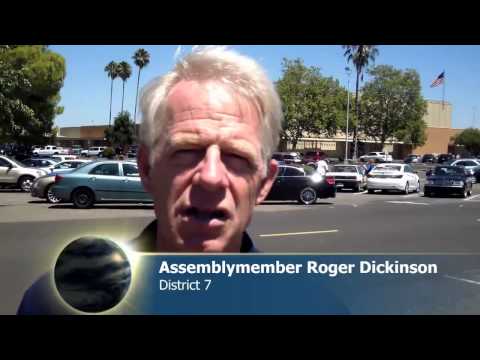
Sacramento News & Review - Run, Roger, Run! SN&R’s CEO urges Roger Dickinson to enter city council race - Greenlight - Opinions - January 7, 2016


Sacramento News & Review - Run, Roger, Run! SN&R’s CEO urges Roger Dickinson to enter city council race - Greenlight - Opinions - January 7, 2016:

Run, Roger, Run! SN&R’s CEO urges Roger Dickinson to enter city council race

He may not be running, but he should be


Please join me in supporting former Sacramento County Supervisor and former member of the California state Assembly Roger Dickinson in his race for Sacramento City Council. (Jeff vonKaenel is the president, CEO and majority owner of the News & Review newspapers in Sacramento, Chico and Reno. )
There is just one problem: Roger is not running for city council.
I have never spoken with him about running for city council. However, I am writing this column because I believe that Sacramento would be a better place with Roger on the council. Here is why:
We in Sacramento are moving out of the Kevin Johnson era and into the (hopefully) Darrell Steinberg era of city government. This new era will be marked by regional cooperation instead of noncooperation, government transformation instead of public relations. And I anticipate that we will be able to more effectively solve critical issues.


We face challenges with homelessness, transportation and economic growth, and we need to develop community-wide programs that reform our criminal justice system and expand the region’s mental-health programs. I anticipate improvements, in part because we will have a new and very experienced mayor. But regional cooperation will require more than just changes in the city government.
In Sacramento, our biggest regional county, we already have new leadership. With the addition of Patrick Kennedy to the board of supervisors, which already includes Phil Serna and Don Nottoli, we have a working majority of knowledgeable, progressive board members. They have already been making an impact.
We’ve seen other impressive regional changes. The new president of Sacramento State, Robert Nelsen; the new CEO of Greater Sacramento Area Economic Council, Barry Broome; and the new President and CEO of the Sacramento Metro Chamber of Commerce, Peter Tateishi, are all moving their organizationSacramento News & Review - Run, Roger, Run! SN&R’s CEO urges Roger Dickinson to enter city council race - Greenlight - Opinions - January 7, 2016:


Reinventing Angelique

From struggling single mom to mayoral candidate, can Councilwoman Angelique Ashby distance herself from K.J. and become Sacramento’s next mayor?
The Starbucks on Ninth and I streets bustles with a morning rush of potential voters: the businesswoman who talks too fast and laughs too loud, the guy who takes one look at the snaking line and gulps “nope,” the young professional whose friend lends her cash for a beverage, the homeless man with a scraggly beard who keeps rising to offer his seat. Regular folks. Constituents. Everyday Sacramentans.

The candidate walking past outside will need their support if she wants to become the next mayor of Sacramento. And by all accounts, District 1 Councilwoman Angelique Ashby really, really wants the job.

“I’m poised to step in right now. There’s no learning curve for me,” she said, a not-so-veiled dig at her main rival, Darrell Steinberg, a onetime councilman who served most recently at the state Capitol. “I don’t have to figure out who’s in charge of what in the city or who’s been working on what.

“I’m a day-one-ready mayor.”

Ashby’s rise from a broke, 20-year-old single mom to a 40-year-old mayoral candidate is the stuff of stump-speech gold. But not many outside her Natomas-centered district, where Ashby evolved from a well-liked community activist to a well-liked elected representative, know it.

Her campaign is an opportunity to redress that, as well as to extract herself from the long and complicated shadow of Mayor Kevin Johnson, with whom she was closely aligned until his star imploded over resurfaced sexual-misconduct allegations. And until Ashby pre-empted K.J.’s announcement that he wasn’t going to run again with her own mayoral bid.

Others contend that Ashby is rewriting the past out of convenience, and because she can.

“I get the sense that she is trying to distance herself from the mayor, but there is a record,” said Heather Fargo, Johnson’s predecessor and a Steinberg supporter. “Because she’s not that known citywide, I think Reinventing Angelique

California governor to propose increased funding for education | Reuters

California governor to propose increased funding for education | Reuters:

California governor to propose increased funding for education

California Governor Edmund ''Jerry'' Brown attends a meeting during the World Climate Change Conference 2015 (COP21) at Le Bourget, near Paris, France, December 5, 2015. REUTERS/Stephane Mahe
California Governor Edmund ''Jerry'' Brown attends a meeting during the World Climate Change Conference 2015 (COP21) at Le Bourget, near Paris, France, December 5, 2015.
REUTERS/STEPHANE MAHE

California Governor Jerry Brown on Thursday is set to propose a budget that increases public spending in areas including education, the latest indication of the most populous U.S. state's rebound from years of economic doldrums.
Brown, a Democrat, will release a budget plan at the State Capitol Thursday morning that is expected to top $115 billion in spending from what is known as the general fund, the money appropriated by the legislature and approved by the governor each year. The expected spending increase for the fiscal year beginning July 2016 reflects unexpectedly higher revenues at the end of 2015.
The 77-year-old, who also served as governor from 1975 to 1983, has been notoriously tight-fisted since returning to office in 2011, reining in the state's liberal Democratic majority lawmakers to build a rainy-day fund and hold down expenses after facing down a $27 billion budget deficit.
H.D. Palmer, the governor's spokesman on financial issues, confirmed on Wednesday that Brown would propose spending more on education and other issues. However, he declined to specify what those other areas might include.
Palmer said Brown would also address spending on health care and the state's crumbling infrastructure on Thursday but added that the fiscally moderate Democrat would continue to chart a prudent course.
Last year, the state's final budget reached a total of $168 billion, of which about $115 billion was general fund spending controlled by the legislature and governor.
Since voters in 2012 approved a temporary tax increase that allowed the state to cover its budget gap and restore some social services, California's finances have stabilized.
Brown has been willing to restore some of the deep cuts made during the financial crisis to social services, health care, education and other programs.
But his fiscal caution has left many advocates for the poor and disabled angry, and frustrated some of his fellow Democrats in the legislature.


One area likely to gain scrutiny on Thursday is funding to help people with disabilities, California governor to propose increased funding for education | Reuters:


Sen. Bernie Sanders said he opposes privately run charter schools

Bernie Sanders LIVE - Newmarket Town Hall - YouTube:


From Politico

 NO CANDIDATE LEFT BEHIND: At a recent town hall event in New Hampshire, Vermont Sen. Bernie Sanders said he opposes privately run charter schools. He said, “If we are going to have a strong democracy and be competitive globally, we need the best educated people in the world. And I believe in public education — I went to public schools my whole life. So I think rather than give tax breaks to billionaires, I think we invest in teachers and we invest in public education.” (h/t Diane Ravitch) Watch the video: (Sanders’ comments start around the 1-hour, 48-minute mark.) http://bit.ly/1JYENv6.


Read more: http://www.politico.com/tipsheets/morning-education/2016/01/first-look-does-guidance-go-too-far-bernie-sanders-rejects-privately-run-charters-new-year-new-edu-quality-counts-212052#ixzz3wZYoNlCY

Chicago Teachers Union Joins Demand for Rahm Emanuel, Anita Alvarez To Resign - Working In These Times

Chicago Teachers Union Joins Demand for Rahm Emanuel, Anita Alvarez To Resign - Working In These Times:

Chicago Teachers Union Joins Demand for Rahm Emanuel, Anita Alvarez To Resign

The Chicago Teachers Union's House of Delegates, the union's member-led governing body, voted tonight to demand the resignations of Mayor Rahm Emanuel and State's Attorney Anita Alvarez in the wake of the Laquan McDonald scandal, which has roiled the city for nearly two months and led to the resignations of multiple city officials, including Chicago police superintendent Garry McCarthy.
"Both Cook County State's Attorney Anita Alvarez and Mayor Rahm Emanuel orchestrated and intentionally delayed the release" of multiple videos showing police killings of African Americans, the statement reads, "apparently for their own political gains in order to secure victory in their 2015 re-election bids. ... The only way to restore this trust is with their resignations."
The statement goes on: 
[T]he CTU support[s] demands that Mayor Rahm Emanuel, and Cook County State's Attorney Anita Alvarez resign immediately from public office forthe unconscionable delay of their governmental institutions in addressing Laquan McDonald's killing and other issues of excessive, unwarranted, unjustified, and lethal police force in the City of Chicago.
The move is unprecedented: The CTU has never before called for a sitting mayor to resign.
McDonald was a 17-year-old African-American boy who was shot 16 times by Chicago Police Department (CPD) officer Jason Van Dyke in October 2014. CPD squad car dash cameras captured footage of the shooting which contradicted the department's early statements saying McDonald had been shot as he lunged at police with a knife, but the city fought to suppress the footage for over a year as Mayor Emanuel sought reelection—leading to accusations that Mayor Emanuel and the city had engaged in a cover-up.
In December 2015, the CTU also passed a resolution calling to endorse a Civilian Police Accountability Council (CPAC), Chicago Teachers Union Joins Demand for Rahm Emanuel, Anita Alvarez To Resign - Working In These Times: