Latest News and Comment from Education

Saturday, May 9, 2015

Special Nite Cap: Catch Up on Today's Post 5/9/15


Special Nite Cap 

CORPORATE ED REFORM


Michelle Rhee, ed choice advocates gather at Meharry
Michelle Rhee, ed choice advocates gather at Meharry: Michelle Rhee, ed choice advocates gather at MeharryA list of big-name pro-choice education advocates gathered Saturday as part of the Stand Up Organization’s seminar in Nashville to call for better outcomes for black students.The overriding message was that black students are capable of receiving a better education but need Nashville’s black c
The Longest Lasting Lesson - A Thank You to All the Excellent Teachers I've Ever Had - Badass Teachers Association
Badass Teachers Association: The Longest Lasting Lesson - A Thank You to All the Excellent Teachers I've Ever HadWritten by Steven Singer, BAT Leadership Team MemberOriginally post on his Blog:  https://gadflyonthewallblog.wordpress.com/2015/05/07/the-longest-lasting-lesson-a-thank-you-to-all-the-excellent-teachers-ive-ever-had/They say teaching is the one profession that creates all the others. T
Oakland Teachers Vote to Authorize Strike, Stage ‘Work-to-Rule’ Actions in Protest of Low Pay - Working In These Times
Oakland Teachers Vote to Authorize Strike, Stage ‘Work-to-Rule’ Actions in Protest of Low Pay - Working In These Times: Oakland Teachers Vote to Authorize Strike, Stage ‘Work-to-Rule’ Actions in Protest of Low PayPublic school teachers with the Oakland Education Association (OEA) voted last week to authorize strike action if the union’s executive board cannot come to an agreement with the Oakland
If competition is good for education, how about the police?
If competition is good for education, how about the police?: IF COMPETITION IS GOOD FOR EDUCATION, HOW ABOUT THE POLICE?We expect the police to be close to the population that they serve to create order and peace. Photo Credit: class M planet via Compfight cc If competition would improve public education, would it also improve police services?Certainly with issues of public policing continuing to
Another Charter School Front Group – More apparent ethics law violations - Wait What?
Another Charter School Front Group – More apparent ethics law violations - Wait What?: Another Charter School Front Group – More apparent ethics law violationsHere we go again… Yet another faux education advocacy groups appears unwilling or unable to follow Connecticut’s ethics laws.The number of corporate funded education reform and charter school front groups in Connecticut is popping up faster
On the CNBC Interview of Gates, Munger, and Buffett about Education. | DCGEducator: Doing The Right Thing
On the CNBC Interview of Gates, Munger, and Buffett about Education. | DCGEducator: Doing The Right Thing: On the CNBC Interview of Gates, Munger, and Buffett about Education. | DCGEducator: Doing The Right Thing What if all schools were public and integrated racially and economically? Three people are interviewed. Two come off as fools. Only Buffett speaks about a hard truth. Bill Gates sounded f
Ethnic Studies Helped Me Tap Into My Full Potential | Hmong Innovating Politics
Ethnic Studies Helped Me Tap Into My Full Potential | Hmong Innovating Politics: Ethnic Studies Helped Me Tap Into My Full PotentialPosted on May 8, 2015 by Hmong Innovating PoliticsOn Wednesday, C.K. McClathchy High School and UC Berkeley alumni Pachia Vang returned home to share her story about impact ethnic studies had on her life. Here is her touching testimony that she shared with the SCUSD B
Devaluation of Black Lives Starts in Classrooms | Al Jazeera America
Devaluation of Black Lives Starts in Classrooms | Al Jazeera America: Devaluation of black lives starts in classroomsIn New York City, where youth of color live under the shadow of stop-and-frisk policing and hundreds of children are jailed each year, school authorities recently promised to limit the use of metal handcuffs on students younger than 12 years old — unless absolutely necessary. Yes, t
Just whose rights do these civil rights groups think they are protecting? - The Washington Post
Just whose rights do these civil rights groups think they are protecting? - The Washington Post: Just whose rights do these civil rights groups think they are protecting?A dozen civil rights groups this week issued a statement contending that parents opting their children out of high-stakes standardized tests are harming at-risk students. That sparked a response from the Network for Public Educati
Jersey Jazzman: The KIPP Propaganda Machine and Its Willing Saps In the Media
Jersey Jazzman: The KIPP Propaganda Machine and Its Willing Saps In the Media: The KIPP Propaganda Machine and Its Willing Saps In the MediaUPDATE: Bruce was writing about this exchange as I was. Go read what he says, then come back. Much more to come.Tomorrow morning, if you pick up a copy of the Star-Ledger (chances are, you won't), you will see a big, fat, wet kiss to the KIPP/TEAM charter scho
Peg with Pen: Opt Out is the People's Movement
Peg with Pen: Opt Out is the People's Movement:Opt Out is the People's MovementMike Petrilli recently stated, "If this [opt-out] thing goes national, the whole education reform movement is in serious trouble.”Indeed it is. (Listen to him state it here in the Fordham Institute podcast at the 6:43 mark.)The Opt Out Movement is the people's movement and that makes us dangerous.Petrilli worries a
The Willful Ignorance of the NJ Star Ledger | School Finance 101
The Willful Ignorance of the NJ Star Ledger | School Finance 101: The Willful Ignorance of the NJ Star LedgerAfter having a series of conversations with Star Ledger reporter Julie O’Connor about her desire to write a cover story about how TEAM Academy is producing miracles in Newark, I wrote this post:https://schoolfinance101.wordpress.com/2015/01/30/ed-writers-try-looking-beyond-propaganda-press-
There used to be 3 main reasons state legislators hated Common Core. Now there are 8. - Vox
There used to be 3 main reasons state legislators hated Common Core. Now there are 8. - Vox: There used to be 3 main reasons state legislators hated Common Core. Now there are 8.Reasons state legislators gave for opposing the Common Core used to be pretty predictable. They worried the standards cost too much, were imposed without their consent, or impinged on local control.Since 2012, though, the
Teachers union case could reshape U.S. labor law - StarTribune.com
Teachers union case could reshape U.S. labor law - StarTribune.com: Teachers union case could reshape U.S. labor lawA case on dues could affect not only teachers, but cops — and labor in general. Supreme Court cases have a way of changing American society far beyond the intentions and expectations of the litigants who start them — or even the justices who decide them.Marbury vs. Madison began as a
Suit against teachers unions isn't about free speech but silencing members - LA Times
Suit against teachers unions isn't about free speech but silencing members - LA Times: Suit against teachers unions isn't about free speech but silencing membersBain vs. California Teachers Assn. is being bankrolled by StudentsFirst, a group founded by onetime Washington, D.C., schools chancellor Michelle Rhee. (Allen J. Schaben / Los Angeles Times)Attacks on public employee unions, especially tea
LABI leader caught on video: ‘Paycheck protection’ bill is ‘fatal spear to the heart’ of teacher unions | Something Like the Truth
LABI leader caught on video: ‘Paycheck protection’ bill is ‘fatal spear to the heart’ of teacher unions | Something Like the Truth: LABI leader caught on video: ‘Paycheck protection’ bill is ‘fatal spear to the heart’ of teacher unions By Robert MannTo hear its supporters describe it, the so-called “pay check” protection billrecently approved by a Louisiana House committee is all about saving tax
Opt-out Information from a Pearson-funded Organization? | deutsch29
Opt-out Information from a Pearson-funded Organization? | deutsch29: Opt-out Information from a Pearson-funded Organization?I just read a document summarizing state position on opting out of testing from an unlikely place: the Education Commission of the States (ECS) website.ECS is an organization created in 1967 and chaired by governors. On its website, ECS portrays itself as neutral on issues (“

YESTERDAY

Special Nite Cap: Catch Up on Today's Post 5/8/15
Special Nite Cap CORPORATE ED REFORMWhat are Bill Gates and Warren Buffet talking about? - The Washington PostWhat are Bill Gates and Warren Buffet talking about? - The Washington Post: What are Bill Gates and Warren Buffet talking about? Here’s one depressing conversation.Three of the most successful men in the history of men — Microsoft founder Bill Gates, Berkshire Hathaway chief  Warren Buffet


Michelle Rhee, ed choice advocates gather at Meharry

Michelle Rhee, ed choice advocates gather at Meharry:

Michelle Rhee, ed choice advocates gather at Meharry


A list of big-name pro-choice education advocates gathered Saturday as part of the Stand Up Organization’s seminar in Nashville to call for better outcomes for black students.
The overriding message was that black students are capable of receiving a better education but need Nashville’s black community to rally support behind them.
The Stand Up Organization, a pro-choice advocacy group focused on black students, held the seminar at Meharry Medical College for about 50 predominantly black church leaders, community organizers and parents. This is the second trip to Nashville for the group, which also has held seminars in Memphis.
The panel discussion was a group that included Sacramento Mayor Kevin Johnson, his wife, Michelle (Rhee) Johnson, and CNN contributor Roland Johnson. Michelle Johnson, who lives part-time in Nashville, is the former leader and founder of StudentsFirst, which seeks quality education for all students. She is also a polarizing figure in the Tennessee and national education politics scene.
The group touched on how to produce better results for black students, as well as the impact of charters and vouchers on students. The group also discussed underperforming schools in the Metro Nashville.
George Parker, a former educator and StudentsFirst fellow, said teachers need to reach black students on a personal level. Many, he said, deal with economic and family hardships.
“There’s a difference between instructing and teaching,” he said. “You can tell anyone to stand up, that’s instructing. But if you tell them why, and how it benefits them, that’s teaching. It’s about having a relationship.”
The group also touched on what it sees as a backlash to school options in Nashville and around the country. Michelle Johnson criticized Tennessee’s Democrats for what she sees as voting against vouchers because it is a Republican-led effort.
There is a voucher bill ... it died this year,” she said. “This would impact low-income students in failing schools so they can attend a private school with funds. I cant get over it (not passing in the General Assembly), it makes no sense. I see this as an opportunity to give excellent education.”
The real question should be how to better all schools, said School Board member Tyese Hunter. She added there are many problems, including the conversation’s focal point, and too many are worried about preserving the institution and not bettering outcomes for students.
“If you fix this over here,” she said, “you might never get another (charter).”
But part of the issue, CNN’s Johnson said, is that the debate is led by white reformists and not black voices.
“They’re talking about changes,” he said. “But we have to be the leading messenger.”
Reach Jason Gonzale at 615-259-8047 and on Twitter @ByJasonGonzales.Michelle Rhee, ed choice advocates gather at Meharry:

The Longest Lasting Lesson - A Thank You to All the Excellent Teachers I've Ever Had - Badass Teachers Association

Badass Teachers Association:

The Longest Lasting Lesson - A Thank You to All the Excellent Teachers I've Ever Had

Written by Steven Singer, BAT Leadership Team Member


Originally post on his Blog:  https://gadflyonthewallblog.wordpress.com/2015/05/07/the-longest-lasting-lesson-a-thank-you-to-all-the-excellent-teachers-ive-ever-had/


student-teacher


They say teaching is the one profession that creates all the others.

 That teachers affect eternity; no one can tell where their influence stops.

 And it’s certainly true in my life.

 I wouldn’t be the person I am today without a string of excellent educators.

 For better or worse, I am the product of decades of first-rate instruction and inspiration.

 There are so many teachers who made a profound impact on my life.

 Mr. Mitchell taught me how to express my opinion, listen to others and consider their point of view before responding.
 Ms. Robb taught me how to organize my thoughts so they make sense to someone else.

 Mr. Geissler taught me how money and politics work together.

 Ms. Neuschwander taught me the value of a good story.

 And there are so many more. I wish I could remember them all.

 If we’re honest, everyone had a plethora of powerful pedagogues in their lives.

 Their names are legion – even if we can’t remember most of them.

 During this Teacher Appreciation Week, the one that keeps popping into my head is Ms. Zadrel.

 She was my third grade teacher.

 I don’t remember what she looked like. I don’t remember most of her lessons. I’m not even sure if I’m spelling her name right.

 But I do remember how she organized her class.

 The room was a separate town called Zadrelville. The rows of desks were streets. Each student had a job and we earned play money.

 We could send each other letters, play the lottery, vote for class mayor – almost everything you’d do in a small town. Everyday tasks were jobs – emptying the pencil sharpener, passing out papers, cleaning the blackboard, etc.

 And me? I wrote the newspaper. “The News of 201” it was called.

 It was a fairly gossipy rag. Headlines included things like who liked whom, if someone got paddled in gym, and which was better – Indiana Jones or Star Wars movies.

 I made the paper myself, ran it off on the copier and delivered it to subscribers’ desks.

 I published about once a week. Any day a new edition would roll hot off the press (and it actually was warm), everyone in the class had to have one. It was essential reading.

 There even may have been a few fights caused by some of my articles.

 “You like Beth!? She’s got cuties!”

 I never got a chance to see Ms. Zadrel’s lesson plans. I’m not sure exactly what she had in mind for us from this classroom management model. But I learned a lot.

 Perhaps the longest lasting lesson was about myself. I learned how much I love being creative and how important it is for me to impact people’s lives.

 Would I have become a teacher, myself, if I hadn’t had this experience? Maybe not.

 I’d always enjoyed writing, but seeing such a demand for my work probably changed my life.

 I wasn’t just writing for ME. I was writing for an audience. I gauged what the class wanted from a newspaper and provided it.

 My articles may have caused a stir, but no one ever unsubscribed. By putting all 
Badass Teachers Association:

Oakland Teachers Vote to Authorize Strike, Stage ‘Work-to-Rule’ Actions in Protest of Low Pay - Working In These Times

Oakland Teachers Vote to Authorize Strike, Stage ‘Work-to-Rule’ Actions in Protest of Low Pay - Working In These Times:

Oakland Teachers Vote to Authorize Strike, Stage ‘Work-to-Rule’ Actions in Protest of Low Pay


Public school teachers with the Oakland Education Association (OEA) voted last week to authorize strike action if the union’s executive board cannot come to an agreement with the Oakland Unified School District (OUSD) in its year-long bargaining for a new contract.
A central sticking point in the negotiations is over salary increases, which teachers say are so low that they hurt the district’s faculty retention rate. A 2013 report by an Alameda County Grand Jury cites that “approximately 13% of Oakland’s teachers leave the district each year, which is about twice the state average, and 70% leave within the first five years.” The union says that this low retention rate stems from an average pay rate that sees OUSD teachers earn $12,000 less than peers elsewhere in Alameda County.
“Every teacher that I’ve talked to, every mentor that I’ve had, has urged me to find a job outside of Oakland, or at least suggested I consider other district, because of the pay issue,” says Valerie Lines, a third-year first-grade teacher at Montclair Elementary. “They talk about what is best for a teacher as an individual—buying a home, settling down, starting a family. The advice that is coming through most frequently is, ‘Oakland Unified is not the best place [for that] in the long term.
“Teaching needs to be a long-term profession everywhere, and not something where you get your three years of training and then move on to some district that pays better,” Lines says.
OEA union president Trish Gorham said last year that OUSD district officials have only agreed to a total pay increase of 3.25% since 2003. According to 2014 findings by the National Council on Teacher Quality, out of the 125 largest school districts in the country, OUSD ranks 120th in a comparison of starting/ending salaries and lifetime salary, adjusted for cost of living. The report claims that it would take over 30 years for an Oakland teacher to reach a salary of $70,000.
Approximately 700 of the union’s 2,400 members participated in the vote, with 93% voting in favor of the act. California’s collective bargaining process ensures that a potential strike will not occur until at least the start of the 2015-2016 school year.
Gorham said in a statement, “The members have clearly stated that, while we hope for the best, we need to start preparing for the worst now and not wait to the very end of the school year.”
As of the latest bargaining session last week, both parties had agreed on firm counselor-to-student ratios and improved benefits for substitutes, but still remain in conflict over district proposals to handle its own hiring, void of any seniority rules, when transferring displaced teachers. Additionally, the union has made clear its desire for class size caps in special education: Gorham claims “some [teachers] are teaching as many as 18” students.
But a large portion of contract negotiations have centered on teacher pay. While the two sides have conceptually agreed on higher salaries for teachers who take on students over regular class size caps, the two sides remain significantly far away from one another on the issue of salary increases: the union wants 14-17% while the district has proposed 10.5%.
While dealing with the pressure of teachers’ strike authorization, the district is simultaneously facing so-called “work-to-rule” actions at over 40 of Oakland’s 86 school sites, where teachers are limiting their work to instruction only, leaving all after-school activity such as grading and extracurricular activities aside until they receive what they consider acceptable contract proposals.
Teachers have also held  “grade-ins”, conducting their grading sessions together outside to publicly display how much of work is done outside of school hours—time for which their contracts don’t account. Between grading, curriculum planning and other activities, teachers say their work often goes into evenings and weekends. The union says these protests have not been organized as official union actions, but were a way for teachers to display solidarity with one another.
The protests will be necessary with the kind of superintendent that the union is dealing with in settling this contract.
According to union president Gorham, OUSD superintendent Antwan Wilson is a graduate of the Broad Superintendent Academy, an academic leadership training academy created by billionaire educational reformers Eli and Edythe Broad that has churned out superintendents trained under the Boards’ preferred corporate-tinged model of pro-charter school policy that many teacher activists say has proven detrimental to the working lives of teachers across the country. Such reform has meant a decrease in work stability measures for teachers like tenure, attempts to break teachers’ unions, an increase in standardized testing for students, disruptive measures like school closings for schools that “underperform” on those tests and other measures. The Christian Science Monitor reported in 2011 that 21 of the nation’s 75 largest districts had Broad Academy graduates at the helm or near the top, giving the Broads, as well as other notable corporate reformers such as Bill Gates and the Walton family (the owners of Walmart), a foothold for considerable influence over public education reform.
“Oakland has been a target for the Broad-Gates privatization movement for years,” Gorham claims. “[Superintendent Wilson] is proposing many familiar ‘reforms’ that reinforce instability and a lack of confidence in our schools that make our parents vulnerable to charters’ snake oil pitch.”
Although OUSD’s charter school population is California’s highest per capita as of 2013, OEA’s most recent win came in March when, after an active presence in the streets and at school board meetings, they successfully pushed back against the Oakland Teachers Vote to Authorize Strike, Stage ‘Work-to-Rule’ Actions in Protest of Low Pay - Working In These Times:

If competition is good for education, how about the police?

If competition is good for education, how about the police?:

IF COMPETITION IS GOOD FOR EDUCATION, HOW ABOUT THE POLICE?


Police and community
We expect the police to be close to the population that they serve to create order and peace. Photo Credit: class M planet via Compfight cc


 If competition would improve public education, would it also improve police services?
Certainly with issues of public policing continuing to rise throughout the U.S. from Ferguson, Missouri to Baltimore, Maryland, the question about how to improve policing is rising along with concerns.
But we have not heard much of anything about creating private competition for publicly-funded police departments as a way of improving them.
If, as school choice advocates maintain, competition is good and transformative for public services like education, why not for the police?
Creating order in a society easily drawn to chaos
We look to the police to maintain order.
The best police departments are made up of members of the community they police. They represent the brightest and the best of what society can produce.
Our modern violence-centered media saturation causes us toassume that the most important thing a police officer carris is a gun. 
It isn’t.
It’s the badge.
The badge design usually has a symbol of the city that issues it, and for good reason.
The symbol of the city reminds anyone who views it that theofficer’s commitment is to the city and those in it.
And those who wear it are reminded that they neither representthemselves as individuals, nor small fragments of the city they serve.
They represent the whole of the public in that city.
That’s why creating competing police forces have not been tolerated. Those whose job it is to promote order have a singular purpose that should not be fragmented by competing police If competition is good for education, how about the police?:

Another Charter School Front Group – More apparent ethics law violations - Wait What?

Another Charter School Front Group – More apparent ethics law violations - Wait What?:

Another Charter School Front Group – More apparent ethics law violations


Here we go again… Yet another faux education advocacy groups appears unwilling or unable to follow Connecticut’s ethics laws.
The number of corporate funded education reform and charter school front groups in Connecticut is popping up faster than the buds appear during a warm spring week and these groups seem virtually incapable of adhering to Connecticut’s ethics and lobbying laws.
You may need to read this post a few times to follow the bouncing ball…
It was just a few weeks ago that CT News Junkie columnist Sarah Darer Littman wrote a scathing column on the ethics problems associated with the New York based corporate education reform industry group called Families for Excellent Schools and its subsidiary, and entity called the Coalition for Every Child.
In the piece entitled, Are Charter Advocacy Groups Skirting CT Ethics Laws?, Darer Littman laid out the facts surrounding the Families for Excellent Schools/Coalition for Every Child controversy.
The well-financed charter school advocacy group is the organization that is paying for the television ads promoting Governor Dannel Malloy’s proposed state budget that makes historic cuts to public education while dramatically increasing funding for charter schools.
The group was also one of the sponsors of this week’s pro-charter school rally at the State Capitol that featured Malloy.
As the Hartford Courant reported, charter school students and parents were bused in to Hartford from as far away as Boston and New York City in an attempt to persuade Connecticut legislators to divert even more money so that Steve Perry could open a charter school in Bridgeport and a Bronx charter school chain could open up a charter school in Stamford.
As Sarah Darer Littman explained, not only had Families for Excellent Schools run into ethics issues in New York, but they were failing to report activities and expenditures here in Connecticut.
Now it looks like another new charter school advocacy group called “FaithActs for Another Charter School Front Group – More apparent ethics law violations - Wait What?:

Just Like Michelle Rhee's Students first only BETTER


Astroturf lobbying refers to political organizations or campaigns that appear to be made up of grassroots activists but are actually organized and run by corporate interests seeking to further their own agendas. Such groups are often typified by innocent-sounding names that have been chosen specifically to disguise the group's true backers

Just Like Michelle Rhee's
 Students first Astroturf lobbying (only Better) 
Other Astroturf lobbying groups


Just Like Michelle Rhee's
 Students first Astroturf lobbying (only Better) 

On the CNBC Interview of Gates, Munger, and Buffett about Education. | DCGEducator: Doing The Right Thing

On the CNBC Interview of Gates, Munger, and Buffett about Education. | DCGEducator: Doing The Right Thing:

On the CNBC Interview of Gates, Munger, and Buffett about Education. | DCGEducator: Doing The Right Thing


kevin rudd hard to be humble


 What if all schools were public and integrated racially and economically?

 
Three people are interviewed. Two come off as fools. Only Buffett speaks about a hard truth.
 
Bill Gates sounded foolish. He said NYC and Chicago have had superior results because of Mayoral takeovers. He obviously doesn’t see the facts. He thinks public schools must use charters’ “best practices.”
Such drivel. All schools can learn form others best practices…We have been doing that for a century.
 
More from Gates: This is most difficult area in all our foundations’ work because there are some entrenched practices, a very big system… very resistant to change. His version of change!
 
Munger thinks McDonalds does a better job educating than charters, and Buffett implies, for all practical purposes, that McDonalds is a school to make happy smiling servants.
 
But Buffett is interesting. He understands the underlying problem: That private schools exist:
 
He says: If public schools were the only choice, we’d have great public schools, but the wealthy have opted out in many cities…and send their kids to private schools.
 
Most importantly, he admits the existence of a two class system. He points out that the rich get the education they want for their kids. Some are philanthropic but they don’t try the same way they would as if their kids were in those public schools. They will not care as much about those schools as the ones who have no choice.
His dad was on Omaha public school Board and cared about the schools because his children went to the public schools. Both he and Munger were products of Omaha Public schools.
That is a big truth. Affluent public school districts do not have public education problems, do they?
What if all schools were public and integrated racially and economically?

Ethnic Studies Helped Me Tap Into My Full Potential | Hmong Innovating Politics

Ethnic Studies Helped Me Tap Into My Full Potential | Hmong Innovating Politics:


IMG_9042-2

Ethnic Studies Helped Me Tap Into My Full Potential

On Wednesday, C.K. McClathchy High School and UC Berkeley alumni Pachia Vang returned home to share her story about impact ethnic studies had on her life. Here is her touching testimony that she shared with the SCUSD Board of Education.


Dear Superintendent and Members of the Sacramento City Unified School District,
I wanted to talk to you about adopting ethnic studies as a high school graduation requirement. In high school, I was a part of the HISP program at C.K. McClathchy High School. HISP stands for the Humanities and International Studies Program – which means that everything we learned, we learned from an international and human-centric perspective.
quote1I know HISP isn’t exactly the same thing as Ethnic Studies but being able to learn about history from a non-Western perspective as a woman of color at a young age was empowering because I was able to identify with something in the classroom for the first time. I consider myself lucky to have been able to be a part of HISP because it has given me the courage to look for and grasp onto opportunities in life that I never thought was possible. Last year, I graduated with honors from UC Berkeley and since have been able to work alongside amazing individuals within local government, agencies, different non-profits, and community organizations really giving back to where I come from.
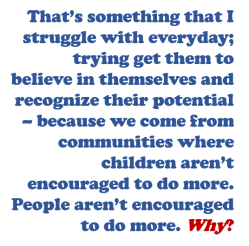
Out of my entire family I am the only person who’s been able to have an education like this. And when I think about everything that I’ve been able to accomplish this far I should feel great but I feel very sad because my I see that my education has been able to give me something that my brothers and sisters don’t have. That’s something that I struggle with everyday trying get them to believe in themselves and recognize their potential – because we come from communities where children aren’t encouraged to do more. People aren’t encouraged to do more. Why?
These things aren’t easy to change but I think it’s the responsibility of schools to provide an environment for our kids to understand why. To understand where they come from so that they can understand who they are, what they can do for themselves and what they can do in this world. Introducing ethnic studies as a high school requirement is one of the first steps we can take in this direction so I hope that you really do consider this not just as a resolution but as a plan to be implemented.
Ethnic Studies Helped Me Tap Into My Full Potential | Hmong Innovating Politics: