Latest News and Comment from Education

Sunday, January 18, 2015

Koch brothers/charter school nightmare: “White kids get to go to a school with a Montessori approach while children of color get eye control” - Salon.com

Koch brothers/charter school nightmare: “White kids get to go to a school with a Montessori approach while children of color get eye control” - Salon.com:


Koch brothers/charter school nightmare: “White kids get to go to a school with a Montessori approach while children of color get eye control”

A fight over education in Nashville might come your way next: It's a proxy for dangerous right-wing education ideas


“We know we need to do something about students who are not achieving in our schools.”
That anxious appeal – along with its many variations – has become the refrain now firmly embedded in speeches and opinion columns about American public education.
Yes! Do something. About those kids.
Only this time, the anxious appeal is coming from Jai Sanders, an African-American parent in Nashville, Tennessee, who has a stake in the matter: The something about to be done is aimed squarely at him and his children.
Sanders, pausing briefly before assembling a bagel with lox and cream cheese, explains, “But what we’re currently doing is throwing solutions at the wall to see what sticks, without any research or any consultation with the people who are affected the most.”
His tone of voice doesn’t carry a trace of the anger or resentment that could be inferred from what he just said. Actually, Sanders exudes affability. With a green ball cap tipped slightly back from his cherubic face, he gestures broadly and smiles incessantly. His impossibly well-behaved 3-year-old daughter seated beside him only occasionally diverts him as she carefully navigates her bagel.
They live with mom and the rest of the family in the same house where Jai grew up – the third generation of Sanders to live in their home in East Nashville.
Sanders, who attended both public and private schools while growing up in East Nashville, has chosen, along with his wife, to send their children to their neighborhood public school, Inglewood Elementary. Inglewood was “the default for us,” he says.
An older daughter who attends the school has been identified gifted and talented which has enabled her to be included in a program where she is provided with an Individual Education Plan so she receives specific attention to her abilities.
Yet now Sanders finds himself and his family swept into a raging Music City controversy. Conversations about public education – where you send your kid to school, where other parents send their kids, and who gets to decide – have exploded into acrimonious bickering, full of charges and counter-charges.
The debate pits parents against parents, schools against schools, and communities against communities. School board meetings have turned into raucous events that sometimes descend into boisterous demonstrations. And public officials swipe at each other in social media and opinion columns, accusing one another of having ulterior motives.


“None of this was in the “dad manual” when I started a family,” Sanders explains, making quote marks in the air. “I’d much rather go back to being a PTO dad planning the Christmas party rather than going to meetings and shouting my head off to save our school.”
“We love Inglewood Elementary,” Sanders says, although he admits, “not all parents agree with me.”
Apparently, neither does the state of Tennessee.
We’ve Made Your School a “Priority”
As state media outlet The Tennessean reported recently, low scores on student standardized tests and other indicators led the state to designate 15 Metro Nashville Public Schools, including Inglewood, as “Priority Schools.”
“Priority Schools are the lowest-performing 5 percent of schools in Tennessee,” according to the state’s education department, making them “eligible for inclusion in the Achievement School District or in district Innovation Zones. They may also plan and adopt turnaround models for school improvement.”
The plain English translation of that benign bureaucratic speak is that Inglewood has been labeled a failure by the state, which gives the state or district power to do something to it. Often, the something that gets done to a Priority School in Tennessee is to fire the school’s principal or teachers, hand the school over to a charter school management organization, or a mixture of the above.
One of the potential options the district has chosen for Inglewood is for the school to be taken over by the KIPP nationwide charter school management organization. The Koch brothers/charter school nightmare: “White kids get to go to a school with a Montessori approach while children of color get eye control” - Salon.com:


Saturday, January 17, 2015

Why Preschool Shouldn’t Be Like School

Preschool lessons: New research shows that teaching kids more and more, at ever-younger ages, may backfire.:


Why Preschool Shouldn’t Be Like School

New research shows that teaching kids more and more, at ever-younger ages, may backfire.

Illustration by Alex Eben Meyer. Click image to expand.
Illustration by Alex Eben Meyer
Ours is an age of pedagogy. Anxious parents instruct their children more and more, at younger and younger ages, until they're reading books to babies in the womb. They pressure teachers to make kindergartens and nurseries more like schools. So does the law—the 2001 No Child Left Behind Act explicitly urged more direct instruction in federally funded preschools.
There are skeptics, of course, including some parents, many preschool teachers, and even a few policy-makers. Shouldn't very young children be allowed to explore, inquire, play, and discover, they ask? Perhaps direct instruction can help children learn specific facts and skills, but what about curiosity and creativity—abilities that are even more important for learning in the long run? Two forthcoming studies in the journal Cognitionone from a lab at MIT and one from my lab at UC-Berkeley—suggest that the doubters are on to something. While learning from a teacher may help children get to a specific answer more quickly, it also makes them less likely to discover new information about a problem and to create a new and unexpected solution.
What do we already know about how teaching affects learning? Not as much as we would like, unfortunately, because it is a very difficult thing to study. You might try to compare different kinds of schools. But the children and the teachers at a Marin County preschool that encourages exploration will be very different from the children and teachers in a direct instruction program in South Side Chicago. And almost any new program with enthusiastic teachers will have good effects, at least to begin with, regardless of content. So comparisons are difficult. Besides, how do you measure learning, anyway? Almost by definition, directed teaching will make children do better on standardized tests, which the government uses to evaluate school performance. Curiosity and creativity are harder to measure.
Developmental scientists like me explore the basic science of learning by designing controlled experiments. We might start by saying: Suppose we gave a group of 4-year-olds exactly the same problems and only varied on whether we taught them directly or encouraged them to figure it out for themselves? Would they learn different things and develop different solutions? The two new studies in Cognition are the first to systematically show that they would.
In the first study, MIT professor Laura Schulz, her graduate student Elizabeth Bonawitz, and their colleagues looked at how 4-year-olds learned about a new toy with four tubes. Each tube could do something interesting: If you pulled on one tube it squeaked, if you looked inside another tube you found a hidden mirror, and so on. ForPreschool lessons: New research shows that teaching kids more and more, at ever-younger ages, may backfire.:

Education Writers Association: Independent Bloggers Need Not Apply - Living in Dialogue

Education Writers Association: Independent Bloggers Need Not Apply - Living in Dialogue:


Education Writers Association: Independent Bloggers Need Not Apply 


By Anthony Cody. 
The Education Writers Association has decided that, although I was awarded a first prize for my writing just last year, I am no longer permitted to submit my work for consideration for future awards. Leaders of the organization have decided that I do not meet their definition of a journalist. Investigative blogger and author Mercedes Schneider recently applied for membership, and was likewise denied on the same grounds.
I think this decision constricts the vital public discourse, and excludes those of us not on the payroll of mainstream corporate media.
The EWA has two forms of membership; Journalist and Community. I joined the EWA when I was still working full time as a teacher coach for the Oakland schools. Since writing about education was not my primary occupation, I signed up as a “community member.” This status did not prevent me from submitting my work for their award competition, or from participating in their events, though as a non-journalist I was not allowed to pose questions at their events.
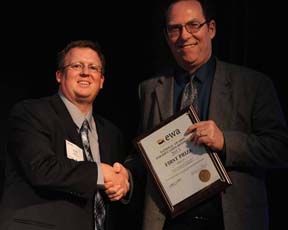
In 2010, my work was awarded a “special citation” by EWA. Two years ago, my dialogue with the Gates Foundation won second prize. Last year, I was awarded first prize in the opinion category for my posts about the Common Core. The judges commented that:
Very good. This is by far the best and most rational coverage I’ve seen on Common Core in a long time. You can tell he knows his stuff and I appreciate his conversational tone. I’m sure part of that is because these are blogs but still, it’s a skill and one that few can do well.
and
Cody is clearly well-versed on these issues, writes in a comfortable cadence and provides some much-needed cool-headed rational balance to a very incendiary topic. I particularly liked the exchange with an articulate, reasoned reader — interactive journalism and blogging is best when it isn’t a one-way communication. … [R]eaders can dip in when they wish, dip out when they’ve had their fill or chase links down bunny holes if they wish. A valuable on-going contribution to discussion on this matter.
Acody2014EWASo I was surprised when my submission for this year’s award was rejected. I was told that going forward, only journalist members would be allowed to compete. I asked EWA to change my designation to that of journalist, since that is now my primary pursuit. At first I was told that I was in a “gray area,” and EWA leadership needed to consider the request. After several days, I received word that my request was denied. The EWA staffer wrote:
We found your work to be very important in promoting the conversation on education practices and policies, but it didn’t align with EWA’s stricter standards for independent news media. Among many factors, we look for is the media outlet’s independence from what is covered, institutional verifications, and editorial processes.
At this point in time, we hope to have you continue as an active EWA Community Member.
Investigative writer Mercedes Schneider likewise was informed:
Your blog is important in the conversation about education practice, policy, and 
Education Writers Association: Independent Bloggers Need Not Apply - Living in Dialogue:
 

Chairman Alexander ANNOUNCES COMMITTEE HEARING ON TESTING AND ACCOUNTABILITY

Chairman Alexander Announces Plan to Fix No Child Left Behind - Press Releases - United States Senator Lamar Alexander:


Chairman Alexander Announces Plan to Fix No Child Left Behind

RELEASES STAFF DISCUSSION DRAFT AND ANNOUNCES COMMITTEE HEARING ON TESTING AND ACCOUNTABILITY

Posted on January 14, 2015

***
“During the last six years, this committee has held 24 hearings and reported two bills to the Senate floor to fix the law’s problems. We should be able to finish our work within the first few weeks of 2015 so the full Senate can act."   –Lamar Alexander
WASHINGTON, D.C., Jan. 13 –U.S. Senate education committee Chairman Lamar Alexander (R-Tenn.) today announced on the Senate floor his plans to fix the No Child Left Behind law, wrapping up six years of committee work and sending a bill to the Senate floor within the first few weeks of 2015. [Click HERE for video of Alexander’s full remarks today.]
“No Child Left Behind has become unworkable—and fixing this law, which expired over seven years ago, will be the first item on the agenda for the Senate education committee,” Alexander said. “I look forward to input from all sides on this proposal as we move forward with a bipartisan process that will keep the best portions of the law, while restoring responsibility to states and local communities and ensuring that all 50 million students in our nation’s 100,000 public schools can succeed.”
Alexander also released a staff discussion draft of his bill to fix the problems with No Child Left Behind (NCLB) to begin discussion with his Senate colleagues, and also to solicit public feedback on the proposed draft. [Click HERE to access the discussion draft.]
Alexander announced the committee’s first hearing this year on No Child Left Behind, and said he would hold additional hearings after conferring with Ranking Member Patty Murray (D-Wash.) He also announced beginning this week bipartisan meetings in the Senate education committee to discuss the chairman’s discussion draft, consider changes and improvements, identify areas of agreement, and discuss options to proceed.
Chairman Alexander asked for input from the public on his staff discussion draft by Monday, February 2 at:FixingNCLB@help.senate.gov. Comments will be shared with all members of the Senate HELP Committee.
The first hearing will be scheduled as follows:
  • Wednesday, January 21 – “Fixing No Child Left Behind: Testing and Accountability”

NPE Calls for Congressional Hearings – PRESS RELEASE

EarlyBirdReg
Please join us for the Network for Public Education 2015 Conference in Chicago from April 24th – 26th – 2015! Click HERE to get the EARLY BIRD Registration rates now! These low rates will last for the month of January.

The Network for Public Education’s 2015 Conference will be the place to be this spring, in the historic city of Chicago, home of the Chicago Teachers Union. The theme of the conference is:
“Public Education: Our Kids, Our Schools, Our Communities.”

The event is being held at the Drake Hotel in downtown Chicago.  Here is the link for special hotel registration rates.  Here are some of the event details.

There will be a welcoming social event  7 pm Friday night, at or near the Drake Hotel — details coming soon.

Featured speakers will be:
  • Jitu Brown, National Director – Journey for Justice, Kenwood Oakland Community Organization, Network for Public Education Board of Directors
  • Tanaisa Brown, High School Senior, with the Newark Student Union
  • Yong Zhao, Author, “Who’s Afraid of the Big Bad Dragon?
  • Diane Ravitch in conversation with
    • Lily Eskelsen Garcia, NEA President and
    • Randi Weingarten, AFT President
  • Karen Lewis, President, Chicago Teachers Union
There will be a special optional luncheon on Saturday that will feature a conversation between Edushyster and surprise guests.
There will be dozens of workshops and panels offered by activists from coast to coast. Proposals for these sessions are being solicited by the NPE, and can be submitted HERE until the Jan. 20 deadline.
The organizers worked to make the conference as affordable as possible. Please be aware that the room reservations and food costs offset the use of the hotel space. This conference is priced as cheaply as possible so that the maximum number of people can attend. We are hoping to raise money to provide a limited amount of scholarships. HERE is the link for the scholarship application.
If you would like to make a donation to allow others to attend who otherwise could not afford participating, please go HERE and indicate that this is for the “NPE Conference Scholarship Fund”

NPE Calls for Congressional Hearings – PRESS RELEASE

PRESS RELEASE
Press Conference to be held in the Thompson Conference Center at 3:30 pm, Sunday, March 2.
AUSTIN, TX The Network for Public Education (NPE) closed out its first National Conference here with a call for Congressional hearings to investigate the over-emphasis, misapplication, costs, and poor implementation of high-stakes standardized testing in the nation’s K-12 public schools.
In a Closing Keynote address to some 500 attendees, education historian and NYU professor Diane Ravitch, an NPE founder and Board President, accused current education policies mandated by the federal government, such as President Barack Obama’s Race to the Top, of making high-stakes standardized testing “the purpose of education, rather than a measure of education.”
The call for Congressional hearings – addressed to Senators Lamar Alexander and Tom Harkin of the Health, Education, Labor and Pension Committee, and Representatives John Kline and George Miller of the House Education and Workforce Committee – states that high-stakes testing in public schools has led to multiple unintended consequences that warrant federal scrutiny. NPE asks Congressional leaders to pursue eleven potential inquiries, including, “Do the tests promote skills our children and our economy need?” and “Are tests being given to children who are too young?”
“We have learned some valuable lessons about the unintended costs of test-driven reform over the past decade. Unfortunately, many of our nation’s policies do not reflect this,” stated NPE Executive Director Robin Hiller. “We need Congress to investigate and take steps to correct the systematic overuse of testing in our schools.”
“Our system is being rendered less intelligent by the belief that ‘rigor’ equates to ever more difficult tests,” warned NPE Treasurer Anthony Cody. “True intelligence in the 21st century depends on creativity and problem-solving, and this cannot be packaged into a test. We need to invest in classrooms, in making sure teachers have the small class sizes, resources, and support they need to succeed. We need to stop wasting time and money in the pursuit of test scores.”
About NPE:
The Network for Public Education is an advocacy group whose goal is to fight to protect, preserve and strengthen our public school system, an essential institution in a democratic society. We are many. There is strength in our numbers. Together we will save our schools.

WE ARE MANY. THERE IS POWER IN OUR NUMBERS. TOGETHER WE WILL SAVE OUR SCHOOLS.

Friday, January 16, 2015

How the Ghost of Booker T. Washington Haunts Today’s Testing Advocates – The Anarres Project

How the Ghost of Booker T. Washington Haunts Today’s Testing Advocates – The Anarres Project:


How the Ghost of Booker T. Washington Haunts Today’s Testing Advocates

 
By Mark Naison
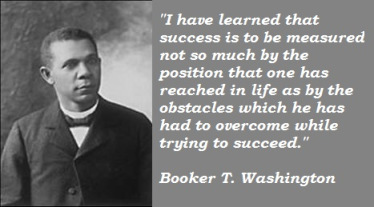
When I read the statement from 19 Civil Rights organizations supporting universal testing in the nation’s public schools, I couldn’t help but recall a time in American History when an African American educator named Booker T Washington stepped forward with a plan to have character training and instruction in skilled trades supplant liberal arts education in schools serving African Americans, and in so doing managed to neutralize opposition to Black Education in the South, while attracting the support of education philanthropists in the North.
Washington put forward his plan at a time, eerily akin to ours, when the rights of African Americans and working class Americans were under assault. In the South, white supremacists were moving forward with plans to put a final end to the voting rights of African Americans which had been secured during Reconstruction, while passing laws requiring segregation of Blacks and whites in both public and private institutions. In the North, powerful industrialists were banding together to crush an emerging industrial labor movement, imposing devastating defeats on organizing efforts among steel workers in the Homestead Strike of 1892 and to efforts to build a national railroad union in the Pullman Strike of 1894.
Washington, one of the most astute political thinkers of his age, saw which way the wind was blowing and decided that to create any space for Black education, he had to make an accommodation with both Southern segregationists and Northern industrialists. As a result, he put forward his plans to remake Black education as a narrow skill and character enterprise, while proclaiming his opposition to civil rights agitation, labor organizing and efforts by Blacks to seek political power.
Washington’s program, by most standards, was an astonishing success. Not only were schools on his model allowed to survive in the south at time of fierce anti-black violence, and the imposition of the Jim Crow regime, he became the How the Ghost of Booker T. Washington Haunts Today’s Testing Advocates – The Anarres Project:

Sen. Alexander's Draft NCLB Bill: Cheat Sheet - Politics K-12 - Education Week

Sen. Alexander's Draft NCLB Bill: Cheat Sheet - Politics K-12 - Education Week:


Sen. Alexander's Draft NCLB Bill: Cheat Sheet

Sen. Lamar Alexander, R-Tenn., the chairman of the Senate education committee, put out his opening bid for reauthorizing the No Child Left Behind Act earlier this week.
And so far, all the interesting discussion has been about testing, testing, and more testing. But there's a lot more to the draft.
What would it actually do?
Testing is up in the air, right? Right. Two options floated to spark conversation. Option A: Let states choose their own testing adventure, including annual tests, portfolios, grade-span tests (a policy the National Education Association hearts), formative assessments, competency-based education, the whole shebang. Districts could also cook up their own assessment systems to use instead, with permission from their states.
The language here seems to have been crafted just to show the edu-world that absolutely everything is on the table. But lots of anti-testing groups, including Parents Across America, arejumping for joy just to see it enshrined in real live legislative language.
Option B: The current NCLB testing regime, which calls for reading and math tests in grades 3 through 8 and once in high school. But there's a big twist. Under this option, districts could also go their own way on assessments, with the permission of their states.
The district route in both options is similar to what the Council of Chief State School Officers asked for in its NCLB recommendations. The key difference between the two: Under the draft, the feds would get absolutely no role in approving these local systems. They would in CCSSO's proposal.
What would happen to accountability? States would have way more control over what their systems look like than they do under NCLB Classic, or under the Obama administration's NCLB waivers. Unsurprisingly, the sections on Adequate Yearly Progress, the yardstick at the heart of the NCLB law, are totally cut, and the NCLB sanctions like tutoring and public school choice are out the window. That's not such a big deal because the waivers pretty much made AYP moot anyway, at least in most states.
Instead, the bill would let states come up with their own accountability methods, within certain parameters. State systems would have to consider student achievement, but measuring year-to-year student-growth would be optional. And states would have to consider the performance of student subgroups (like students in special education and English-language learners), and use a four-year graduation rate. There don't seem to be major requirements beyond that.
Do states and districts still have to identify low-performing schools? Yep. States would have to single out low-performing schools—but the draft doesn't say that it would have to be a particular percentage of schools, or that certain kinds of struggling schools—such as those with big achievement gaps or low grad rates—would have to be in the mix. 
That's a key difference from the waivers, which require states to single out the lowest-performing 5 percent "priority" schools for dramatic interventions (involving things like extending the day or getting rid of half the staff), and another 10 percent of "focus" schools with big achievement gaps or other problems, for more targeted help.
So what happens to these low-performing schools? Pretty much whatever districts think would work, although states would be allowed to come up with interventions too, and have districts carry them out, as long as that's in line with state law.
Meanwhile, the administration's School Improvement Grant models would be toast, a move thateveryone saw coming a gazillion miles away. In fact, the language authorizing the original SIG program in the law would be kaput, too. And, unlike an earlier Alexander bill, states wouldn't have to identify a particular percentage of schools for serious turnaround efforts.
Instead, states would be permitted to reserve 8 percent of their Title I money for school Sen. Alexander's Draft NCLB Bill: Cheat Sheet - Politics K-12 - Education Week:

Majority of U.S. public school students are in poverty - The Washington Post

Majority of U.S. public school students are in poverty - The Washington Post:


Majority of U.S. public school students are in poverty


 January 16 at 5:00 AM  
For the first time in at least 50 years, a majority of U.S. public school students come from low-income families, according to a new analysis of 2013 federal data, a statistic that has profound implications for the nation.
The Southern Education Foundation reports that 51 percent of students in pre-kindergarten through 12th grade were eligible under the federal program for free and reduced-price lunches in the 2012-2013 school year. The lunch program is a rough proxy for poverty, but the explosion in the number of needy children in the nation’s public classrooms is a recent phenomenon that has been gaining attention among educators, public officials and researchers.
“We’ve all known this was the trend, that we would get to a majority, but it’s here sooner rather than later,” said Michael A. Rebell, the executive director of the Campaign for Educational Equity at Columbia University, noting that the poverty rate has been increasing even as the economy has improved. “A lot of people at the top are doing much better, but the people at the bottom are not doing better at all. Those are the people who have the most children and send their children to public school.”
The shift to a majority-poor student population means that in public schools, more than half of the children start kindergarten already trailing their more privileged peers and rarely, if ever, catch up. They are less likely to have support at home to succeed, are less frequently exposed to enriching activities outside of school, and are more likely to drop out and never attend college.
It also means that education policy, funding decisions and classroom instruction must adapt to the swelling ranks of needy children arriving at the schoolhouse door each morning.

Schools, already under intense pressure to deliver better test results and meet more rigorous standards, face the doubly difficult task of trying to raise the achievement of poor children so that they approach the same level Majority of U.S. public school students are in poverty - The Washington Post: