Latest News and Comment from Education

Monday, January 6, 2014

Dallas ISD trustees to hear alternatives to traditional public schools; Harllee Elementary could reopen | Dallas Morning News

Dallas ISD trustees to hear alternatives to traditional public schools; Harllee Elementary could reopen | Dallas Morning News:

Dallas ISD trustees to hear alternatives to traditional public schools; Harllee Elementary could reopen

1
2
0
A protest in support of using Texas' Rainy Day Fund to help keep schools fully funded was held in front of Harllee Elementary School in Dallas on March 23, 2011. (John F. Rhodes / The Dallas Morning News)
Dallas ISD trustees will hear a report this week on ways to expand school choice in the district. The report is also expected to focus on possible uses for district facilities, including schools that have recently closed.
Moak, Casey and Associates will present the report at Thursday’s board briefing.
Also at the briefing, trustees could discuss a proposal to reopen Harllee Elementary School as an early childhood center in 2014-15. The school would serve students age 3, 4 and 5.
Startup costs and first-year operations for Harllee is estimated at $2 million, with an initial enrollment of 192. Trustees are scheduled to vote on the proposed reopening on Jan. 23. Community members were invited to a meeting hosted by trustee Lew Blackburn on Nov. 19 to provide input on the reopening.
Trustees were given a “concept paper” by district administration in November on ways to reopen several schools over the next two school years. Also recommended were changes to a couple of current campuses.
A proposal to reopen H.S. Thompson Learning Center was pulled from the board’s November agenda. 

V.A.M.: Value Added Measure: In the Classroom (based on "In the Ghetto," written by Mac Davis, sung by Elvis)

V.A.M.: Value Added Measure: In the Classroom (based on "In the Ghetto," written by Mac Davis, sung by Elvis):

In the Classroom (based on "In the Ghetto," written by Mac Davis, sung by Elvis)


As the tests fly
With a cold and grayish Common Corin',
A poor little baby child is bored
In the classroom.
And his teacher cries
'Cause if there's one thing that she don't need
Its another eager mind to bleed
In the classroom.

People, don't you understand
The child needs a helping hand
Or he'll grow to be an angry student someday?
Take a look at you and me,
Are we too blind to see?
Do we simply prep for the test
And look the other way.

Well the world turns
And a failing little boy with academic woes
Closes his ears and mind to endless noes
In the classroom.

And he fails to learn.
So he starts to roam the halls all day

The Appointment Imperative In Ms. LaMotte’s Wake – redqueeninla

The Appointment Imperative In Ms. LaMotte’s Wake – redqueeninla:

The Appointment Imperative In Ms. LaMotte’s Wake

Written by redqueeninla in LAUSD


 The immediate crisis following LAUSD board member Marguerite LaMotte’s untimely death involves deciding whether to name her replacement through an election or via school board appointment.  Current board member Bennett Kayser has articulated the issues and consequences of this decision very clearly.
As a direct consequence of her very strong character, Ms. LaMotte’s death leaves a void of conscience that many are concerned be filled appropriately.  In direct parallel with the previous three regular board elections (first for Bennet Kayser, next for Steve Zimmer and most recently for Mónica Ratliff) that were underwritten by monied philanthropists many of whom (i) do not live in this city, (ii) do not have children in the public school system and (iii) do not support a democratic ideal of public education for and by the public – in parallel with an election underwritten by billionaires’ interests it is feared that such an election would also therefore be undergirded by stealth agendas.
The argument being hoisted to justify an election is to tint the dilemma in civil rights colors.  It is observed that representation is the focus of injustice and claimed that without a special election the people of LAUSD1 cannot be faithfully represented.
But omitted from this argument is the long campaign season during which 

EdWatch 2014: Top 12 education issues in the new year | EdSource Today

EdWatch 2014: Top 12 education issues in the new year | EdSource Today:

edwatch-main
The new year is ushering in some big changes in public education, from a revamp of school funding to unchartered territory in student testing and new educational standards. Here’s a glance at issues to watch this year that will define California education in 2014.

Budget battles

Gov. Jerry Brown will present next year’s state budget on Friday, with a first glimpse at how he’ll be looking to divvy up revenues from the state’s continuing economic recovery. If his numbers mesh with the Legislative Analyst’s projections, K-12 schools can expect a whopper of a funding increase: upward of 14 percent, depending on how Brown’s budgeters do the math on Proposition 98, the main source of education funding.
After a half-decade of budget cuts, education groups and legislators will be hungry to lay claim to an additional $8 billion to $12 billion. Brown’s biggest dilemma will be how to divvy up the increase for school districts between one-time appropriations and ongoing operating budgets committing future spending. Since 2014-15 will be the first year in which districts must comply with new regulations under the Local Control Funding Formula, Brown might be inclined to give a big boost in per pupil spending. That might ease some of the tensions between districts and advocates for high-needs students who have different priorities for the new money.
But there are also legitimate demands for one-time spending:
  • Brown’s preference: Paying off past debts, including deferrals, the billions in late payments to districts;
  • Teacher pensions: The state and districts must contribute more to the California State Teachers’ Retirement System to keep the defined benefit 

Now for the hard part on school reform: from legislation to implementation - by Louis Freedberg
The past year witnessed the passage of legislation presaging historic changes in California’s struggling public school system that could place the state in a leadership position nationally on education reform. The focus will now be on be on implementation, which will be far more challenging. Almost exactly a year ago, Gov. Jerry ... [[ This is a content summary only. Visit the Edsource Today webs

The Case for Nagging Kids About Their Homework - Lisa Endlich Heffernan - The Atlantic

The Case for Nagging Kids About Their Homework - Lisa Endlich Heffernan - The Atlantic:

The Case for Nagging Kids About Their Homework

The backlash against "helicopter parenting" may have gone too far.


A fifth-grade student at California's Halecrest Elementary School holds his head as a teacher goes over his test scores with his parents. (Denis Poroy/AP Photo)


The helicopter parent has crashed and burned.  With millennials reaching adulthood it has become clear that this hovering style of parenting results in overly dependent young adults, plagued by depression or less satisfaction with their lives and anxiety, who cannot even face the workplace without the handholding their parents have led them to expect.  The literature is now replete with indictments of over parenting and the havoc it creates. In her bookSlouching Toward Adulthood, Sally Koslow documented a generation so cosseted that they have lost the impetus to grow up or leave home.  The over-involved parent has gone from paragon of caring to a figure of fun.  
The pendulum has swung, and as is so often the case, it may have over reached its mark.  Parenting pundits now argue for the benefits of natural consequences, for letting the world take it toll on kids as method of teaching them grit and life’s necessary coping skills.  Failure has become the new success.
Time captured this zeitgeist with a cover story in which editor-in-chief Nancy Gibbs explained:
Less is more; hovering is dangerous; failure is fruitful. You really want your children to succeed? Learn when to leave them alone. When you lighten up, they'll fly higher. We're often the ones who hold them down. 
This thinking was a reaction to a generation of hovering parents who cleared the way and smoothed over life’s bumps, who metaphorically swaddled their 

1-6-14 Seattle Schools Community Forum: Speaking out at the School Board Meeting

Seattle Schools Community Forum: Speaking out at the School Board Meeting:


A Start of a New Day for SPS?
I doubt it.I'm reading the presentation for tomorrow's Work Session on Transportation and School Start Times.  Staff is explaining why they could not implement any change to high school start times in 2014-2015.  There are valid reasons, of course, but then there are several references to "all stakeholders who will be affected need to be consulted and kept informed."  You read that and t


Speaking out at the School Board Meeting
I am urging you to speak out - either via e-mail or via public testimony - to the Board about two subjects.One, student data privacy.  We see from the agenda the RTTT item, some of which is about helping PreK-3rd grade students.  It's a fine idea but again, that's exactly the starting age that many entities want to start data tracking.  Will their parents be told this is happening (or asked if the

1-5-14 Seattle Schools Community Forum
Seattle Schools Community Forum: What the McCleary Decision was AboutIt will soon be the start of a new legislative session in Olympia, which, of course, means that the Legislature will take another run at doing the absolute minimum they can do and still claim to be making progress towards their obligation under the McCleary decision.It also means that there will be a bunch of people - all of the

Thoughts on Elite Private Independent Schools and Public Education Reforms | School Finance 101

Thoughts on Elite Private Independent Schools and Public Education Reforms | School Finance 101:

Thoughts on Elite Private Independent Schools and Public Education Reforms

Posted on January 6, 2014


Rate This


Slide1

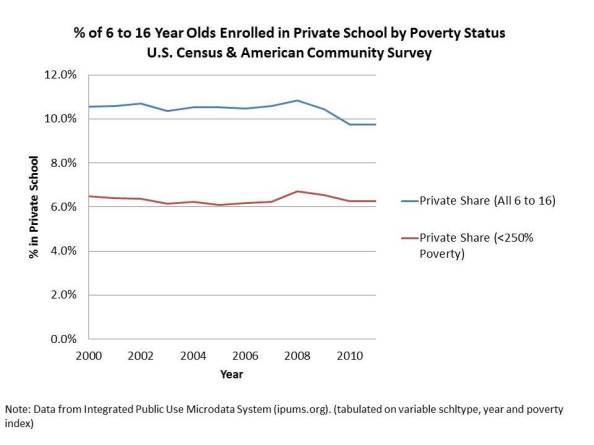
I was informed by my brilliant and thoughtful cousin Bill the other day that today and tomorrow in Washington, DC., John Chubb, the new head of the National Association of Independent Schools is convening what he refers to as a Prominent Research Gathering, described here:
NAIS will convene leading economists and educational research professionals with a cross section of independent school thinkers on January 6-7 at the association’s DC offices to address the economics of independent schools. The group will identify market trends affecting independent schools, new business models that will drive growth, and methodologies to measure and articulate the benefits of an independent school education.
There are many reasons why this gathering is both interesting and somewhat disconcerting.

First, few of the “prominent researchers” invited have actually done much if any research pertaining to private schools generally, or NAIS and NAIS type schools specifically.

Really, only Peter Cookson has written anything of substance on private independent schools (specifically on elite boarding schools). Others have opined broadly about private schooling wri

Public school magnet lotteries: Why do we have winners and... | Get Schooled | www.ajc.com

Public school magnet lotteries: Why do we have winners and... | Get Schooled | www.ajc.com:

Public school magnet lotteries: Why do we have winners and losers?  

Shouldn't all kids have the same chances? Why should luck play a role?
I don’t understand why school systems with popular oversubscribed magnet programs can’t simply expand them rather than have a “sorry your child can’t have this” policy that only embitters parents.
I have seen this most vividly in DeKalb, which has several desirable magnet programs. I am not sure why DeKalb, which is one of the state’s highest spending districts, doesn’t expand those programs in communities where the demand exists rather than have unhappy parents with their noses pressed against the glass watching other kids get advantages denied their children.
 I can assure you that many DeKalb parents would be happy to have their kids in a portable if it meant their children could go to Kittredge Magnet School, which is open to “high achievers” and is among the highest performing academic programs in the state.  
As the DeKalb policy on magnets states: Since the number of student placements is limited per program and grade level, all eligible students applying are not guaranteed enrollment. Students are selected to enroll in the programs using an automated random student selection process.
Why can’t every eligible child enroll?  Why does a child’s education depend on luck? Why would districts perpetuate a system of winners and losers?
Historically, DeKalb saw the creation of magnets as a way to foster voluntary integration. Now, the high achiever magnets serve another purpose – offering families choice and an escape route out