Latest News and Comment from Education

Saturday, February 29, 2020

Why a Threatened Teacher Walkout Points the Way to Reverse America’s Underfunded Public Services - LA Progressive

Why a Threatened Teacher Walkout Points the Way to Reverse America’s Underfunded Public Services - LA Progressive

Why a Threatened Teacher Walkout Points the Way to Reverse America’s Underfunded Public Services


In the early morning of February 26, a chill hung in the air as a line of teachers and school support staffers clad in bright red union hats, jackets or some combination thereof stood on a busy street corner outside of Highland Park Middle School in St. Paul, Minnesota.
As cars sped past, some with horns blaring in support, the teachers and school workers—who are members of the St. Paul Federation of Educators (SPFE)—hoisted signs proclaiming their willingness to fight on behalf of students.

Teachers in St. Paul, Minnesota, are raising the stakes this March to shift the politics of what the public funds.

SPFE represents more than 3,500 teachers, education assistants and school and community support staff members. Minnesota state law requires districts to negotiate with their unionized employees every two years, and the current round of contract talks between SPFE and the St. Paul Public Schools, under the leadership of Superintendent Joe Gothard, has been going on since last May.
Now, SPFE President Nick Faber says the union and the students and families they serve can no longer wait for Gothard and his team to step up and negotiate in good faith. On February 20, a majority of SPFE members voted to authorize a strike against the St. Paul Public Schools.
If an agreement between the union and the school district is not reached by March 10, thousands of SPFE members will walk off the job for the first time since 1946.
The key contract items SPFE is pushing for include fully staffed mental health teams in all schools CONTINUE READING: Why a Threatened Teacher Walkout Points the Way to Reverse America’s Underfunded Public Services - LA Progressive

A Teacher on Classroom Praise (Steven Singer) | Larry Cuban on School Reform and Classroom Practice

A Teacher on Classroom Praise (Steven Singer) | Larry Cuban on School Reform and Classroom Practice

A Teacher on Classroom Praise (Steven Singer)


“Steven Singer is an 8th grade Language Arts teacher in western Pennsylvania. He is a Nationally Board Certified Teacher and has an MAT from the University of Pittsburgh. He is Director of the Research and Blogging Committee for the Badass Teachers Association…. He ran a successful campaign through Moveon.org against the since repealed Voter ID law in the Keystone State…. His writing on education and civil rights issues has appeared in the Washington Post, Education Week, the LA Progressive, Commondreams.org, Portside Navigator and has been featured on Diane Ravitch’s Site. He blogs at gadflyonthewallblog.wordpress.com.”
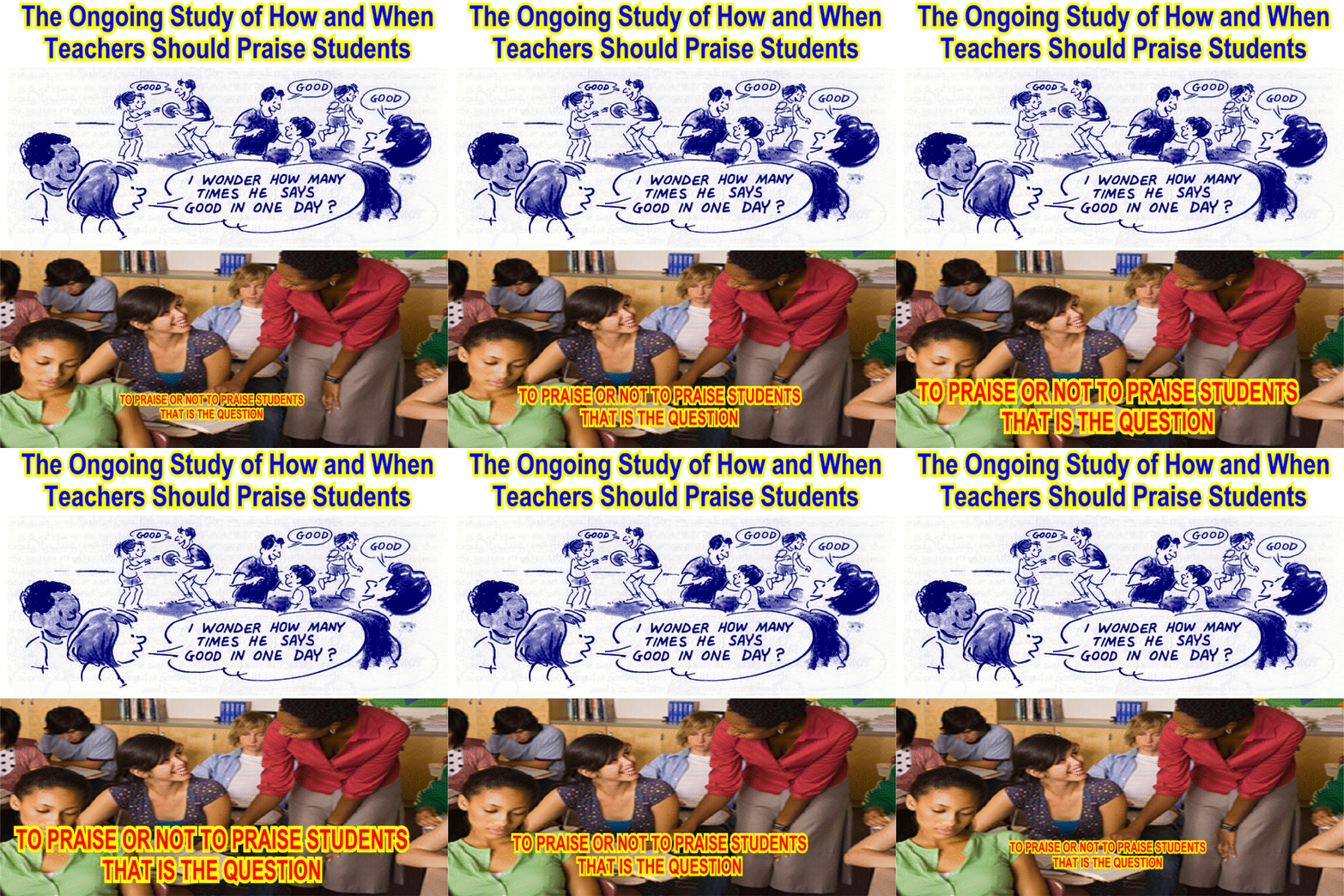
Should teachers praise their students?
It’s a simple question with a multiplicity of answers.
A 2020 study published in the journal Educational Psychology concludes that teachers who use praise see a 30% increase in good behavior from their classes.
Meanwhile, reprimands actually increase misbehavior and unwillingness to comply with instruction.
Researchers suggest a 3:1 or 4:1 praise-to-reprimand ratio. So for every one CONTINUE READING: A Teacher on Classroom Praise (Steven Singer) | Larry Cuban on School Reform and Classroom Practice

An experienced educator shares thoughts on Restorative Practices in SFUSD - SF PUBLIC SCHOOL MOM

An experienced educator shares thoughts on Restorative Practices in SFUSD - SF PUBLIC SCHOOL MOM

An experienced educator shares thoughts on Restorative Practices in SFUSD


As you may have heard there has been a LOT of discussion surrounding school safety and district implementation of its Safe and Supportive Schools Policy. For the record, Restorative Practices (one of the main focuses of this resolution) was originally piloted in 2009. Later, in 2016, an official policy was drafted and ultimately approved to implement Restorative Practices district-wide.
I have been pretty transparent in sharing my questions and frustration with the implementation of this important policy. Many schools report it is being used successfully to reduce suspensions and expulsions and resolve conflicts in our school communities. Nonetheless, full implementation continues to elude our district, with many families and staff reporting a lack of site and central office support to implement it with fidelity.
Last year, during my very first meeting on the Board of Education, staff were unable to answer many of my questions. See a clip of my questions during the January 15, 2019 Board Meeting below. (Watch the full presentation, starting at 58:40 minutes.)


On June 16, 2019, at a special meeting, I continued grilling staff, which included Chief Lau-Smith (who is our new Chief of Student Family and Community Support Division (aka SFCSD). I asked her and the former Cheif, Kevin Truitt outright for an actionable plan, which I have yet to actually see. Listen to audio of this meeting. The Safe and Supportive Schools update begins at 1:46 minutes. My comments start at 20:19 minutes.
This past Tuesday, during our February 25, 2020 Board Meeting, we got another update from Mele Lau-Smith. She has only been in her new role for a CONTINUE READING: An experienced educator shares thoughts on Restorative Practices in SFUSD - SF PUBLIC SCHOOL MOM

GoLocalProv | “Teachers Are Being Vilified” in Providence, Says American Federation of Teachers’ Weingarten

GoLocalProv | “Teachers Are Being Vilified” in Providence, Says American Federation of Teachers’ Weingarten

“Teachers Are Being Vilified” in Providence, Says American Federation of Teachers’ Weingarten


American Federation of Teachers President Randi Weingarten will be in Providence on Saturday for a "Strengthening Local Public Schools" community event at the Juanita Sanchez Education complex -- and said that she believes Providence teachers are being "vilified" in the state takeover of Providence public schools. 

Weingarten's most notable visit to Rhode Island came in 2011, when she blasted the mass firing of teachers by then-Mayor Angel Taveras -- SEE VIDEO BELOW.
"I’m not a big fan of state takeovers — but Rhode Island already had one," Weingarten told GoLocalProv in an interview on Thursday. "The rationale for a state takeover is to provide support and services, not to dump on the schools further. One of the reasons that people have pushed hard for democratic control (under elected leaders) is that at least there’s a connection between voter and community and schools directly."
"Unfortunately, the current Commissioner just continues to do the same things that Joel Klein or Michelle Rhee would do. Rather than work with teachers, they’ve set up other 'process' committees that will come out and say all the things are wrong, and what teachers should do in collective bargaining to fix it," said Weingarten. "It's not as though we haven’t seen this movie before — you have to roll up your sleeves and work together and you have to lift the morale. You don’t create a situation were every utterance the boss says divides people more and more."
Rhee was the controversial chancellor of D.C. public schools that famously fired underperforming teachers and evaluated teachers based on student performance -- before stepping down in 2010 -- and Klein was the Chancellor of Education in New York City under then-Mayor Michael Bloomberg that challenged the teachers' union. 
Weingarten said that she believed Providence Mayor Jorge Elorza had allowed the schools to fall into disrepair -- but that takeover by Rhode Island education commissioner Angélica Infante-Green was not necessarily the answer.
"Here you had a situation where you had city control and the mayor was not giving the school the resources they need — just look at the shape they were in. He was not going to play that role, so this was viewed as no worse CONTINUE READING: GoLocalProv | “Teachers Are Being Vilified” in Providence, Says American Federation of Teachers’ Weingarten

AMERICAN FEDERATION OF TEACHERS CELEBRATE PUBLIC SCHOOLS WEEK 2020 | Black Star News

AMERICAN FEDERATION OF TEACHERS CELEBRATE PUBLIC SCHOOLS WEEK 2020 | Black Star News

AMERICAN FEDERATION OF TEACHERS CELEBRATE PUBLIC SCHOOLS WEEK 2020
BY RANDI WEINGARTEN


 Public Schools Week


AFT President Weingarten: "We need strong public schools now more than ever...Our public schools are not simply places of opportunity but also places where we can embrace our diversity and forge a common identity."


Photo: Facebook


In honor of Public Schools Week, a national celebration dedicated to recognizing the essential role public schools play in our democracy, AFT President Randi Weingarten issued the following statement:


“In an era where the economy creates some winners as well as many people who struggle not just with affordability but to make ends meet, where we confront growing ethnic and racial tensions and the daily undermining of our democracy, we need strong public schools now more than ever. Educators, students, parents and leaders must work together to make them safe and welcoming places where students thrive academically and emotionally. Our public schools are not simply places of opportunity but also places where we can embrace our diversity and forge a common identity.


“As a former social studies teacher, it is an incredible privilege to travel the country and meet with educators, school staff, parents and students to see the remarkable things happening in America’s public schools. I’ve seen high-quality preschool programs like those in Van Wert, Ohio, which give kids a foundation for success and contribute to 96 percent of students graduating on time. And in Peoria, Ill., career and technical programs provide opportunities for more than 400 students in fields ranging from health services to manufacturing, arts and entertainment to city government. These and other public schools are playing crucial roles in shaping the next generation with the knowledge, skills and resiliency to thrive in a complicated world.


“Still, the reality remains that 21 states spend less on public education than they did before the Great Recession. As we celebrate the accomplishments of our public schools, we must continue to fight to fund our students’ future and to invest in the social, emotional and academic resources they need—including school counselors, librarians and nurses—to make every public school in America a place where educators want to teach, parents want to send their kids, and students can learn and succeed.”

AMERICAN FEDERATION OF TEACHERS CELEBRATE PUBLIC SCHOOLS WEEK 2020 | Black Star News

US schools rushing to update emergency plans for coronavirus | TheHill

US schools rushing to update emergency plans for coronavirus | TheHill


US schools rushing to update emergency plans for coronavirus
Multiple school systems are taking advanced precautions in the event of an outbreak. 


Story at a glance
U.S. schools are preparing for prolonged closures due to COVID-19.
This follows news of the first case of community spread in the U.S.

With the first case of community spread detected in the U.S., schools across the country are taking precautions to prevent the spread of COVID-19 by adopting several emergency strategies like canceling abroad programs and setting up online lessons, according to an AP report.

Following the temporary emergency closing of Bothell High School in Seattle, schools are taking similar tactics as hospitals and health clinics in the U.S. are steadily preparing for new infections. AP reports that some schools are in the process of developing online curriculums in the event of a larger outbreak that mandates the school closing. Others are expecting increased student absences and are trying to anticipate how they would be able to compensate for missing days 

Other school systems are taking distinct approaches. Miami school superintendent Alberto Carvalho reportedly said that the Miami-Dade County School System is preparing 200,000 laptops and tablets to send home with students in the event of school cancellations. Miami schools will also implement a separate registration process for new students who potentially had exposure to COVID-19. 

School custodial staff and cleaning crews have also been advised to focus on frequently touched locations, like doorknobs and bathroom facilities. 

“If there is one place where a contagion can actually spread, it can be the schoolhouse,” Carvalho said in a news conference

Other schools with abroad programs in Europe, where the virus has spread and appears to grow, have canceled CONTINUE READING: US schools rushing to update emergency plans for coronavirus | TheHill

First woman of color elected to lead L.A.'s largest teachers union - Los Angeles Times

First woman of color elected to lead L.A.'s largest teachers union - Los Angeles Times

First woman of color elected to lead L.A.'s largest teachers union


The L.A. teachers union has elected the first woman of color, Cecily Myart-Cruz, to lead the organization, part of a familiar and experienced team that will include outgoing union President Alex Caputo-Pearl, who was elected as a vice president.
“I’m proud of the way we have worked with members to create a union that is inclusive, that is a fighting union, that cares not only about educators, but about parents, the community and students,” said Myart-Cruz, 46, who as union president assumes a role of influence and power in the Los Angeles Unified School District, the second-largest in the nation.
Myart-Cruz received nearly 69% of the vote to represent some 31,000 Los Angeles teachers, school nurses, counselors and librarians. The next closest was Marisa Crabtree, with nearly 11% of the vote in the five-candidate field. Crabtree had proposed to turn the union more toward classroom and teaching issues, while deemphasizing politics.
But Myart-Cruz said she sees the fight for political influence as essential to improving teaching and classroom learning conditions.
A little over a year ago, United Teachers Los Angeles went on strike for six days, bringing a focus to overcrowded classrooms and staffing shortages. While Caputo-Pearl headed that effort, Myart-Cruz was a key advisor. Caputo-Pearl is barred by term limits from seeking a third three-year term.
“The work is not done. Our educators need the resources and our babies need the resources as well,” Myart-Cruz said.
“By almost any measure, Caputo Pearl has been a strong and effective leader,” said Charles Kerchner, professor emeritus of the Claremont Graduate University School of Educational Studies. “The plan to swap offices with Cecily Myart-Cruz would essentially keep the leadership regime in place. That creates stability in CONTINUE READING: First woman of color elected to lead L.A.'s largest teachers union - Los Angeles Times

File This in the Department of “Some People Never Learn” | Diane Ravitch's blog

File This in the Department of “Some People Never Learn” | Diane Ravitch's blog

File This in the Department of “Some People Never Learn”


Say this for Eric Hanushek: He never gives up on his obsession with paying teachers more if their students get higher test scores. Arne Duncan built this concept into the requirements of his disastrous Race to the Top” program, which caused almost every state to adopt a teacher evaluation plan in which student test scores played a significant role. Harvard economist Raj Chetty wtote a highly-publicized paper with two colleagues, claiming that one good teacher (who raised test scores in the early grades) would raise lifetime incomes (by about $5 a week), reduce pregnancies, and be a life-changer. President Obama cited Chetty in his 2012 State of the Union address, but efforts to turn the theory into reality fell flat. (Read more about this catastrophe in SLAYING GOLIATH.) In fact, every state that imposed value-added measurement learned that it discouraged teachers from teaching in high-needs schools, where their chance of getting a big test score gain was reduced. It did not produce any of the promised benefits.
But forget about reality! Let’s stand by the theory. Hanushek’s new venture at the conservative Hoover Institution is joined by Christopher Ruszkowski, who served as Commissioner of Education in New Mexico after the resignation of Hanna Skandera (who previously worked for the Hoover Institution, Jeb Bush and Arnold Schwarzenegger). After eights years of “reform” CONTINUE READING: File This in the Department of “Some People Never Learn” | Diane Ravitch's blog

Grassroots Education Network- February 2020 Newsletter - Network For Public Education

Grassroots Education Network- February 2020 Newsletter - Network For Public Education

Grassroots Education Network- February 2020 Newsletter


The NPE Grassroots Education Network is a network of over 140 grassroots organizations nationwide who have joined together to preserve, promote, improve, and strengthen our public schools. If you know of a group that would like to join this powerful network, please go here to sign on. 
If you have any questions about the NPE Grassroots Education Network please contact Marla Kilfoyle, NPE Grassroots Education Network Liaison at marlakilfoyle@networkforpubliceducation.org

Notes from Marla


Notes from Marla
NPE became a proud partner in Screen Free Week, which will be held in May.  Please take a look at this information and consider becoming a partner in Screen Free Week.
NPE President Diane Ravtich launched her new book in January.  Slaying Goliath is a tribute to the work we all do every single day!  To purchase her book and see her tour dates/places go here
The NPE Action National Conference is next month. Registration is still open but please remember that seats are limited this year to 425, so DO NOT delay your registration. Go here to register and book your hotel. There are no hotels left for Saturday, so please go to the booking site to book your hotel for Saturday.  
Our March newsletter will be a round-up of the conference and all the amazing work that will be done in Philadelphia in March! 

National Organizing

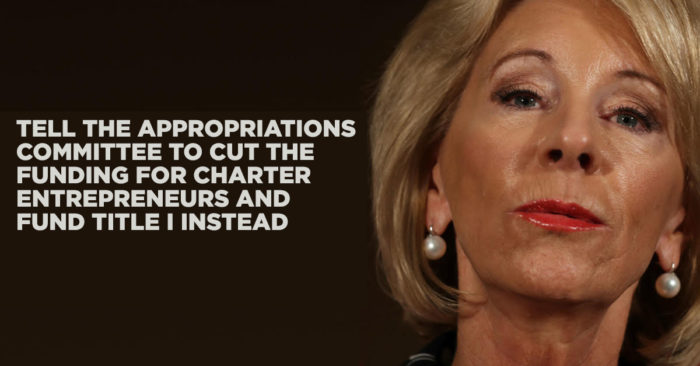
The Network for Public Education is asking for everyone to continue making calls and sending emails to the House Appropriations Subcommittee. In the next several weeks they will be making decisions on education funding.  We are asking for a moratorium on funding of the Charter Schools Program and for this money to be pushed to the states where it can be monitored better. Here is the information for calling.  Here is the link to continue emailing.
Defending the Early Years is now calling on people to attend their Summer Institute in Washington, D.C.  They have an early bird special going on until March. For more information, and to register, go hereIn the Public Interest continues to publish powerful articles on the impact of public education privatization. Jeremy Mohler wrote National School Choice Week is actually about promoting certain choices over others last month. It is a must read, and share! The Journey for Justice Alliance  podcast On The Ground, hosted by Jitu Brown, airs every Monday at 6 PM CST. J4J is also getting ready for their annual conference in May. For information and registration go hereFairtest publishes a newsletter each week about the misuses and flaws of standardized testing. They are a valuable resource and clearinghouse for everything testing and test reform. Rethinking Schools editors have created Black Lives Matter at School: From the Week of Action to Year-Round Anti-Racist Pedagogy and Protest. To access this work go hereThe Parent Coalition for Student Privacy is asking organizations, community members, and citizens to contact their state Attorney Generals and urge them to investigate the selling of student data by the College Board.  Parents for Public Schools National Board Chair, Kathy Herring, talks about the importance of the work that PPS National does across the country. Give it a listen. Parents Across America Roanoke Valley leader, Laura Bowman, shared the following email with Virginia Delegates who are considering a bill on best practices for digital device use in public schools. Parents Across America feels that as the use of digital devices in schools continues to grow at unprecedented rates, it’s vitally important that the parent voice is heard when it comes to the healthy and safe use of these devices by children. Schott Foundation published their 2019 Education Justice Victories That Give Us Courage for 2020.
The Badass Teachers Association (BATs) are supporting and promoting a new film out called Parent-Teacher. They did a live stream interview on Facebook with the producer of the film. To see that interview and promotion go hereTrinational Coalition to Defend Public Education (USA) reported that over 50 teachers, parents, and students were arrested and beaten in Mexico for demanding additional funding for their schools. Two teachers are currently missing. The Ontario (Canada) Secondary School Teachers Federation continues to provide facts to the public about what is eroding the quality of publicly-funded education in their province. Wear Red for Ed has an active open Facebook page which tracks the Red for Ed movement nationwide. Find out what Save our Schools March is up to by following their open Facebook page. First Focus Campaign for Children joined a broad coalition of nonprofit and faith-based groups from across the nation in declaring that no child in the world’s wealthiest nation should go to bed hungry or be deprived of clean air or be without a safe, affordable place to call home. Check out a few highlights from their work this month. Kinderchat hosts their popular twitter chat every Monday night at 9 PM EST. The chats are informative and engaging.  Check them out on twitter at #Kinderchat. Instituto Nueva Escuela wants to hear from students and their families who have graduated from Montessori Public Schools. Estudiante y/o egresado de escuelas públicas Montessori, queremos saber de ti! Campaign for a Commercial-Free Childhood is requesting communities say NO to online preschool.  To see that campaign go here  CCFC is also leading the movement for Screen Free Week which will be held in May. 

NYC Public School Parents: Council hearings on class size so overcrowded that scores of parents and advocates are turned away

NYC Public School Parents: Council hearings on class size so overcrowded that scores of parents and advocates are turned away

Council hearings on class size so overcrowded that scores of parents and advocates are turned away


Today, from 10 AM to 3:45 PM, the City Council Education Committee held hearings on class size at City Hall.  So many people showed up to testify that it was standing room only in the Committee hearing room.  It was so overcrowded that City Hall guards did not allow many of the parents and advocates who had planned to testify enter the room, and many left before they had a chance to speak. 
First, Chair of the Education Committee Mark Treyger, a former teacher himself, opened the hearings by saying that “Unfortunately, efforts to reduce class size in New York City public schools haven’t gotten very far despite all the passion & hard work of parents, advocates, teachers & students - including many here today.”  Indeed class sizes have risen substantially since NY state’s highest court said that class sizes in NYC schools were too large to provide students with their constitutional right to an adequate education.
Chair Treyger questioned Karin Goldmark , Deputy Chancellor of the NYC Department of Education and Lorraine Grillo, President of the School Construction Authority, asking if they prioritized reducing class size as a goal.  Goldmark was non-committal, saying  that though the DOE realized the research shows that smaller classes do lead to better student outcomes, there is a lack of resources and NYC schools have many needs.
When Chair Treyger asked her what number she would give to the importance of class size from one to ten, she refused to say. She also said she didn’t know if the DOE had ever tried to analyze the results to see if smaller classes were correlated with student success, and she did not know if Edustat or any of the other data systems that the DOE currently uses or plans to use in the future even capture class size as a critical factor. It was clear after questioning that the Quality Reviews that DOE officials carry out and that are supposed to highlight for principals what changes are needed in their schools never mention class size.
Then many parents, former teachers, students, advocates, education leaders, professors, school service providers and representatives from community based organizations testified from their own experience how NYC students are deprived of a quality education and a better chance to learn because of class sizes out of control.  Many urged the City Council to ensure that at least $100 million is allocated for class size reduction in next year’s budget, as the first step towards providing an equitable education for the city’s students..  All children benefit from smaller classes, the research shows, but especially those children from low-income families, students of color, English Language Learners, and students with special needs, which together make up the majority of NYC public school students.
Kathleen Cashin, former NYC Superintendent and now a member of the NY State Board of Regents from Brooklyn, observed: “In 1999, when I was Superintendent of District 23 in Ocean Hill Brownsville, the fourth graders had to take a multi-faceted state test for the first time, including reading, writing and listening.  The first thing I did was to reduce class size in that grade to 16 to 20 students per class. The results were astounding.  The children in one of the poorest districts in the nation had the greatest growth of any district in the city.  The key initiative that caused this substantial growth, I believe, was lowering their class size.  Teachers were able to manage their classes better, which caused them to gain confidence, and encouraged them to collaborate with each other.  This in turn, strengthened their professionalism and skills.”  She added, “When you reduce class size, everything changes.  The world changes.”
"Class size is one of the reasons I helped start the Campaign for Fiscal Equity back in 1993, seeing how overcrowded the schools in District 6 were during my time as president of the board," said State Senator Robert Jackson. "I understand some of DOE's resistance to hiring more teachers comes from fiscal concerns. That’s why I’m committed to fully funding the Foundation Aid formula at the state level. I’ve introduced a bill that adds a new bracket to increase income tax on New York’s highest earners, generating an estimated $4.5 billion in revenue. But the DOE has to commit to use that in adherence to the Contracts for Excellence," Senator Jackson added, which requires NYC to implement class size reduction.
Joshua Aronson, NYU Professor of Psychology and Education explained: "I have visited many schools in NYC and elsewhere in the nation. Manageable class sizes aren’t sufficient to fix our schools. But from my personal observations as well my analysis of the research, I believe small class sizes may be necessary to creating the a powerful school culture, especially in underserved populations, that students need to succeed. All children can become eager, curious learners, but only when their key physical and social needs are met.  This takes time, care, compassion— and most importantly—small class sizes. When a school offers small classes it can accomplish what others can only dream of. Reducing class size is expensive on the front end, but the benefits will soon outweigh the costs in my opinion, and in the opinion of nearly every teacher and principal I have ever met."

Tiffani Torres, a senior at Pace HS and a member of Teens Take Charge, said: “Having been in both small and large classes, I know first-hand the difference between both.  In smaller classes, I can ask questions without fear of distracting 30 other students, and can receive more one- on- one help from my teachers.”  She talked about how many students had dropped out of her calculus class because it was too large, and how many of those who remained were confused because of the lack of focused feedback and support from her teacher. Both she and Lorraie Forbes, another student, said that they would give class size a ten for its importance for student learning and engagement.
Jacqueline Shannon, Associate Professor and the Department Chair of Early Childhood and Art Education at Brooklyn College, said: “In 2014, I helped write a letter to then-Chancellor Farina, warning her that increases in class size that had occurred since 2007 in NYC public schools, particularly in the early grades, threatened to undermine the gains one might otherwise expect from the expansion of preK.  Our letter was signed by over 70 professors of education, psychology, and sociology. Since then, the city has made very little progress in lowering class sizes.  The number of children in Kindergarten in classes of 25 or more has risen by 68%  since 2007, and the number of  1st through 3rd graders of thirty or more has increased by nearly 3000%.  While the Mayor should be thanked for expanding preK and now 3K, early childhood education does not end at age 5.  The city should now  focus on lowering class sizes in our public schools.”


Shino Tanikawa, the co-chair of the Education Council Consortium, which represents the parent-led Citywide and Community Education Councils in NYC, said, “It has been nearly twenty years since the landmark CFE decision, which mandated smaller classes for NYC schools.  Although the City submitted a class size reduction plan, it was abandoned by both the DOE and the NYS Education Department, and instead our schools experienced a sharp increase in class sizes across the city.  The Chancellor has been pushing for school integration but we must reduce class sizes for integration to succeed.  Class size reduction is an urgent need that cannot wait."
“I’ve worked in many schools and know from my own personal experience that class sizes should be smaller to give students a better chance at success,” said Evie Hantzopoulos, Executive Director of Global Kids and public school parent.  “Research proves that this simple strategy helps all students, and especially our most vulnerable ones, achieve the positive learning outcomes needed for the 21st Century.”   
State Senator Brad Hoylman, whose statement was read for him by a staffer, observed : “On average, NYC public school classrooms have 10-30% more students than elsewhere in the state. As the elected representative for thousands of families with young children, I know reducing class size is a primary concern. My constituents — and every child in New York — deserve the opportunity to succeed in school, and class size is an integral factor in determining student success. I’m proud to stand with my colleague Senator Jackson and Class Size Matters in support of reducing class size in New York.”
Tanesha Grant, a member of the Community Education Council in District 5 as well as AQE and CEJ, stated:  “Class size has grown tremendously since 2007 in our schools, which has a deep impact on the quality of education our children receive.  This impacts black and brown students the hardest. Our children are given hurdles to jump over to just to get an equitable  education. As a black mother of three and grandmother of an autistic grandson, I know class size matters. I see how it affects my children’s learning. The  data proves that class size MATTERS!”
Parent advocate Johanna Garcia and plaintiff in the class size lawsuit launched by nine NYC parents, Class Size Matters and AQE that was argued in the Appellate court last month said: "Class size matters. It’s a simple idea, and it’s one of the single most effective tools we have to improve the quality of the education our children receive. As a Black and Latina parent advocate, I understand the failures to reduce New York City class size to be a huge factor in educational racism because it has detrimental effects on a student body that is 85% Black and Brown and predominantly working-class. If we are serious about addressing that educational racism, we must get serious about class size in our schools. We have to be honest about the problems and clear-eyed about implementing the solutions going forward. Let's count our students fairly and hire more teachers in line with the law so our children  get the quality education they deserve."
Nearly half of all middle school students are in classes of 30 or more; and more than half of high school students are in classes thirty or more.  Jessica Siegel, a professor at Brooklyn College and a former teacher, recounted what one middle school teacher had told her about how she felt  being unable to give sufficient help to all her students: My largest 8th grade class is a whopping 37 students. I teach two more classes, one with 32 and the last one with 28. Both include English Language Learners and students who require push in services for their Individualized Education Plans. I feel as though I’m being torn to shreds when I’m helping others, their eyes hungry and ready and yet there you are unable to reach them. It’s as if you have one life raft and must choose which child gets saved. It’s heart wrenching and demoralizing.”
Elsie McCabe Thompson, head of the Mission Society, one of the nation’s oldest social service organizations, testified that they see thousands of children in poverty. One third have diagnosed special needs; but most have suffered trauma. Smaller classes are important for ALL these children, she said, because as a teacher, “you cannot authentically have high expectations for kids that you do not know.”
A statement was read on behalf of Diane Ravitch, eminent historian and education advocate: “The single most effective way to improve instruction is to reduce class size. The benefits of class size reduction are greatest for the neediest students. . If you are serious about helping children, reduce class size. If you are serious about helping teachers to be more effective, reduce class size. Reducing class size is more effective than test prep; it is more effective than hiring coaches and consultants. It is more effective than buying new hardware and software. It is more effective than any of the many other "reforms" that have been imposed by the federal or state government.  New York State's scores on national tests have been flat for twenty years. It is time for fresh thinking. Do what works! Reduce class sizes!”
For data on current class sizes in NYC schools and trends, as well as the research on class size, check out www.classsizematters.org
For immediate release
Friday, Feb. 28, 2020
Contact: Leonie Haimson; leoniehaimson@gmail.com; 917-435-9329.

NYC Public School Parents: Council hearings on class size so overcrowded that scores of parents and advocates are turned away