Latest News and Comment from Education

Saturday, August 17, 2019

Nick Melvoin LAUSD Board Member - 10 Photos & 27 Reviews - Yelp

Nick Melvoin LAUSD Board Member - 10 Photos & 27 Reviews - Public Services & Government - 333 S Beaudry Ave, Westlake, Los Angeles, CA - Phone Number - Yelp
Nick Melvoin LAUSD Board Member 
10 Photos & 27 Reviews  - Yelp


Nick Melvoin LAUSD Board Member - 10 Photos & 27 Reviews - Public Services & Government - 333 S Beaudry Ave, Westlake, Los Angeles, CA - Phone Number - Yelp


Pennsylvania: The Political Contributions of the Owner of the State’s Largest Charter School | Diane Ravitch's blog

Pennsylvania: The Political Contributions of the Owner of the State’s Largest Charter School | Diane Ravitch's blog

Pennsylvania: The Political Contributions of the Owner of the State’s Largest Charter School

Pennsylvania’s largest charter school is the Chester Community Charter School. It is owned by Philadelphia lawyer Vehan Gureghian, who is a major donor to the Republican Party in the State. He was the biggest contributor to former Republican Governor Tom Corbett. What is surprising about his political donations is how little it takes to win the affection of the party in power. The Chester Community Charter School enrolls most of the elementary students in its district and even draws students from Philadelphia, despite the fact that it is a low-performing school on state tests. As you will see in one of the articles below, CCCS received a charter renewal through 2026, an extension not given to any other charter in the state.
The Keystone State Education Coalition posted this list of his political contributions. 
Blogger commentary: In an effort to gain a better understanding of the dynamics in Harrisburg, from time to time over the years we have published “Follow the Money” charts using data from the PA Department of State’s Campaign Finance Reporting website:
We’ll leave it up to our readers to draw their own conclusions regarding how such contributions may or may not influence policymakers as they go about the people’s business in Harrisburg.
The chart below lists over $470,000 in campaign contributions made by Mr. and Mrs. Gureghian for PA state offices from 2013 through 2019.
Highlights include $205,000 to the House Republican Campaign Committee, $37,000 to the Senate Republican Campaign Committee, $30,000 to House Speaker Mike Turzai, $82,000 to Senate Majority Leader Jake Corman’s Build PA PAC, $85,000 to Senate President Pro Tempore Joe Scarnati  CONTINUE READING: Pennsylvania: The Political Contributions of the Owner of the State’s Largest Charter School | Diane Ravitch's blog

With A Brooklyn Accent: A Time For Heroism

With A Brooklyn Accent: A Time For Heroism

A Time For Heroism

There are historical moments when ordinary people are called upon to be heroes. This is one of them. It will require heroism to protect our most vulnerable people, who face the daunting prospect of being attacked by racist neighbors as well as the government. 

Will you be a hero?  Will you hear the cries of pain of those under attack?

The future of the nation depends on your answer

To respond to this challenge a group of educators around the nation have created a new organization that allows people to identify themselves as anti racist fighters who will come the defense of people under attack in their communities, workplaces, and schools. The organization is called NARA -the National Anti Racism Alliance 

Here’s the link for joining 

Be a hero!  Your neighbors and friends will thank you!

One Way or Two-Way Traffic? The Policy to Practice Street | Larry Cuban on School Reform and Classroom Practice

One Way or Two-Way Traffic? The Policy to Practice Street | Larry Cuban on School Reform and Classroom Practice

One Way or Two-Way Traffic? The Policy to Practice Street

The past half-century has seen record-breaking attempts by policymakers to influence how teachers teach. Record-breaking in the sense that again and again (add one more “again” if you wish) federal and state policymakers and aggressive philanthropists have pushed higher curriculum standards in math, science, social studies, and reading decade after decade. With federal legislation of No Child Left Behind (2002-2015) and Every Student Succeeds Act (2015-) teaching has been influenced, even homogenized (following scripts, test prep, etc.) in those schools threatened by closure or restructuring.  Now with Common Core standards, the push to standardize math and language arts instruction in K-12 (e.g., close reading for first graders) repeats earlier efforts to reshape classroom lessons. If past efforts are any indicator, then these efforts to homogenize teaching lead paradoxically, to more, not less, variability in lessons. But this increased variation in teaching seldom alerts policymakers and donors in their offices and suites to reassess the policies  they adopt.
The take-aways from this post are first, policies aimed at standardizing classroom practice increase variation in lessons, and, second, teachers are policymakers.
Policies aimed at standardizing classroom practice increase variation in lessons
Consider math standards. An unusual research project in the early 1990s examined California’s major policy effort–a new math curriculum framework– to lift the low floor in both math content and instruction in 1,000 school districts. Policymakers wanted to rid the state of teaching math mechanically and instead have students grasp a deeper understanding of math concepts.  The ambitious policy gave detailed instructional guidance to teachers and new  CONTINUE READING: One Way or Two-Way Traffic? The Policy to Practice Street | Larry Cuban on School Reform and Classroom Practice

Thomas Ultican: The Billionaire Drive to Privatize Public School

The Billionaire Drive to Privatize Public School

The Billionaire Drive to Privatize Public School


By Thomas Ultican / Tultican / August 10, 2019
The New Teachers Project (TNTP) is one of several organizations that only exist because billionaires have financed them. Wendy Kopp founded TNTP in 1997. She assigned Michelle Rhee, who had recently finished a two year Teach For America (TFA) tour, to run TNTP. Along with TNTP and TFA there are also the uncertified Broad Superintendents Academy and the fake school for professional educators called Relay Graduate School forming a significant part of the infrastructure instilling a privatization mindset into the education community.
TNTP says it mission is to partner with educational entities to:
  • “Increase the numbers of outstanding individuals who become public school teachers; and
  • Create environments for all educators that maximize their impact on student achievement”
These are laudable goals but why would any school district or state education department turn to an organization with minimal academic background and experience to train teachers and school leaders? Michelle Rhee earned a B.A. in Government from Cornell and a master’s in public policy from Harvard with no education studies. In the Book Chronicle of Echoes, Mercedes Schneider observes that “Wendy Kopp was a child of privilege”. She left her exclusive Highland Park neighborhood in Dallas to study International Affairs at Princeton. Kopp had no education experience or training and Rhee had five weeks of training to go along with two years experience teaching elementary school in Baltimore.\
In 2001 despite lacking expertise in training educators, TNTP was able to report,
“In its first full year of operation, The New Teacher Project entered into 3 contracts, and in its second year of operation, the number of contracts jumped to 11. This year, The New Teacher Project has over 20 contracts, and is working with school districts, state departments of education and universities across the country.” And they stated, “We have worked with numerous clients across the country, including The New York City Board of Education, CONTINUE READING: The Billionaire Drive to Privatize Public School

The deceptive corporatist rewriting of the history of the #FlintWaterCrisis is in full swing | Eclectablog

The deceptive corporatist rewriting of the history of the #FlintWaterCrisis is in full swing | Eclectablog

The deceptive corporatist rewriting of the history of the #FlintWaterCrisis is in full swing

During the time when the Flint water crisis was unfolding, right wing conservatives spent a lot of time trying to convince the country and the world that it was all the fault of the local government. They portrayed these local leaders as incompetent buffoons who poisoned themselves, countering the reality that the local government officials had literally NO POWER to do anything because their government had been taken over by an un-elected, state-appointed overseer, the Emergency Managers.
With former governor Rick Snyder now out of office and contending with a legacy of having poisoned a major American city by attempting to run government like a business, this charade of blaming local elected officials and showering accolades on the corporations who did the bare minimum to help the residents of Flint continues apace.
Robby Soave from the conservative, corporatist Reason magazine is a millennial conservative who is on the forefront of this effort. He, along with his colleague at Reason, Shikha Dalmia, have been pushing the idea that the decision made to have Flint join the Karegnondi Water Authority and build their own water pipeline from Lake Huron rather than purchasing treated water from the Detroit Water and Sewerage Department was done as a jobs and infrastructure program:
Snyder’s office did not return my call, but sources close to the situation at the time tell me that it was essentially because Genesee County and Flint authorities saw the new water treatment as a public infrastructure project to create jobs in an area that has never recovered after Michigan’s auto industry fled to sunnier business climes elsewhere. And neither Snyder nor his Emergency Manager Ed Kurtz nor the state treasurer Andy Dillon had the heart to say “no,” especially since to hand Flint to DWSD would have made the whole project less viable. What’s more, they felt that just as Detroit was receiving an infrastructure boost post-bankruptcy (with the state-backed $650 million ice-hockey-arena-cum-CONTINUE READING: The deceptive corporatist rewriting of the history of the #FlintWaterCrisis is in full swing | Eclectablog

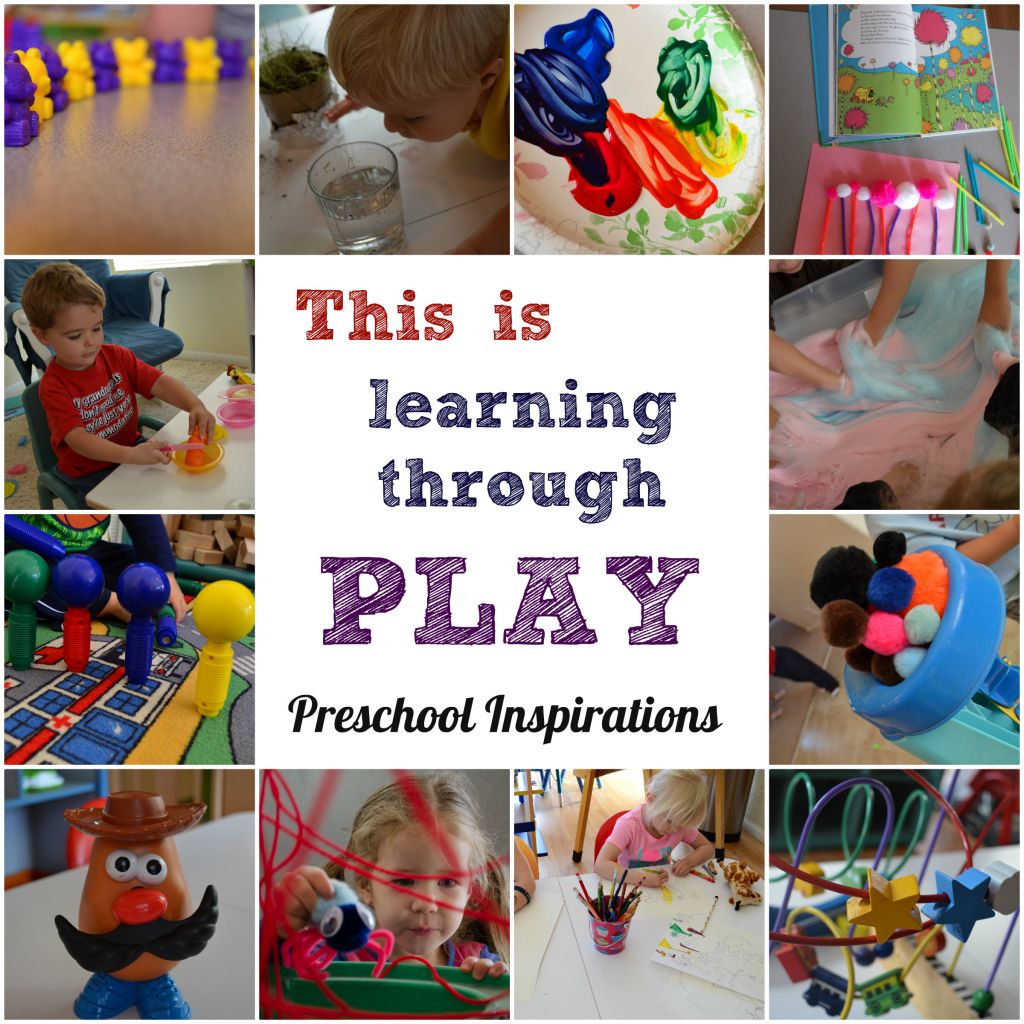
Let’s Keep Preschool Play-Based and Developmentally Appropriate | Parents Across America

Let’s Keep Preschool Play-Based and Developmentally Appropriate | Parents Across America

Let’s Keep Preschool Play-Based and Developmentally Appropriate 

Image result for Let̢۪s Keep Preschool Play-Based and Developmentally Appropriate
Parents Across America board member and leader of Parents Across America-Roanoke Valley, Laura Bowman, attended a listening session yesterday headlined by the Commissioner of Virginia Department of Social Services and the Superintendent of Public Instruction. The focus of the session was school readiness for Virginia’s at-risk three and four year olds.
In July, 2019, Virginia’s Governor signed an executive order establishing the Executive Leadership Team on School Readiness. The Team is responsible for creating recommendations that would unify Virginia early childhood systems that receive public funding and ensure all of Virginia’s at-risk three and four year olds are given access to subsidized preschool and care by the year 2025. The full text of the order is found here. It should be noted that there is no push for compulsory preschool in the Governor’s executive order. Many parents across the state (and nation) are struggling with the costs of preschool, child care, and after school care for their children. The Executive Leadership Team will inform legislation in the upcoming Virginia General Assembly session where they will ask for consolidated oversight and administration of programs across Virginia.
Laura submitted the following remarks to the Executive Leadership Team via email. Public input is being requested by the Team using the following email address: info@vecf.org.
Parents Across America is grateful to our friends at Defending the Early Years for their Early Childhood Activist Tool Kit, found here. Their website is full of resources and strategies for anyone to to use when advocating for the best interests of young children.
Dear Executive Leadership Team,
I’m Laura Bowman and I’m on the board of Parents Across America, a national child and public school advocacy organization. Thank you for asking for input on Virginia’s school readiness platform. My comments  CONTINUE READING: Let’s Keep Preschool Play-Based and Developmentally Appropriate | Parents Across America


Weingarten to Walmart: Stop selling guns, or we’ll stop shopping there – People's World

Weingarten to Walmart: Stop selling guns, or we’ll stop shopping there – People's World

Weingarten to Walmart: Stop selling guns, or we’ll stop shopping there

WASHINGTON – Having had it up to here with gun-caused carnage, including at the nation’s schools, Teachers (AFT) President Randi Weingarten has a blunt message for the nation’s biggest retailer, Walmart: Stop selling guns or we’ll stop shopping there.
That bombshell is just before the end of a letter Weingarten sent August 7 to Walmart CEO Doug McMillon. He has yet to reply.
“Walmart has millions of customers and they all should feel safe while shopping,” Weingarten wrote after a gunman, armed with a semi-automatic weapon, entered the Walmart in El Paso, Texas and slaughtered 22 people, most of them Hispanic.
The gunman previously posted an anti-Mexican internet screed and used phrases associated with GOP President Donald Trump, but Weingarten didn’t mention Trump in her letter. Instead, she unveiled her warning to Walmart:
“If you choose to act, it could change our national conversation in an instant. And if Walmart continues to provide funding to lawmakers who are standing in the way of gun reforms, teachers and students should reconsider doing their back-to-school shopping at your stores.” Even without anti-gun laws, Weingarten urged Walmart “to be part of the solution.”
That solution should not only include a total gun ban in Walmart but the withdrawal of Walmart campaign CONTINUE READING: Weingarten to Walmart: Stop selling guns, or we’ll stop shopping there – People's World

With a new school year underway: Reinvesting in teachers is the best way to fix public education | TheHill

With a new school year underway: Reinvesting in teachers is the best way to fix public education | TheHill

With a new school year underway: Reinvesting in teachers is the best way to fix public education

As a young girl attending Los Angeles Unified public schools, I distinctly remember a favorite teacher telling our class at times that she had to miss a day of school to take her own classes to learn how to be a better teacher. Even as a small child, nothing could make more sense.
Unfortunately, that level of investment in our teachers has declined. Teachers are no longer getting the training and professional development they need. That is simply unacceptable.
As students prepare to return for another school year, there are some ways to help our teachers immediately. The House of Representatives just passed a bill providing $25 million to support teacher professional development, which comes through the Supporting Effective Educator Development (SEED) grant program. I’m calling for the Senate to do the same, and for President Trump to sign the bill. But we can and must do more.
Some aspects of education policy can be partisan and contentious, but not this. Through both red and blue lenses, it is clear that our society is not living up to our end of the bargain we make with those who educate our children. And the consequences are damaging to generations of our children.
I have been in business for decades and have seen firsthand how technology has leveled the playing field between countries. Our kids have to be able to compete against those from around the world in the economy of today and the future, which increasingly requires advanced skills. Even more importantly, with the rise of anti-democratic movements CONTINUE READING: With a new school year underway: Reinvesting in teachers is the best way to fix public education | TheHill

Betsy DeVos Funds IDEA and Kipp to Saturate San Antonio with Charter Schools | Diane Ravitch's blog

Betsy DeVos Funds IDEA and Kipp to Saturate San Antonio with Charter Schools | Diane Ravitch's blog

Betsy DeVos Funds IDEA and Kipp to Saturate San Antonio with Charter Schools

Texas Public Radio describes Betsy Devos’s audacious plan to overwhelm San Antonio with charters created by two corporate chains: IDEA and KIPP.
Some of the new charters will open in middle-class areas with good public schools.
Apparently, DeVos just wants to torpedo public schools in a major Texas city.
Camille Phillips of TPR reports:
San Antonio’s largest charter school network is gearing up for a fast-paced expansion over the next three years. IDEA Public Schools plans to add 15 schools in Bexar County by 2022, doubling its local enrollment to nearly 24,000 students.
It is part of an ambitious larger plan by the Rio Grande Valley-based charter network plan to add 120 schools in Texas, Louisiana and Florida by 2024. IDEA has gotten a big boost to help make that plan happen: four federal grants in five years worth more than $211 million combined.
This year, the U.S. Department of Education awarded IDEA its largest grant yet: $117 million to expand classrooms and launch new charter schools.
“We cast a vision for our growth plan, and then it has to CONTINUE READING: Betsy DeVos Funds IDEA and Kipp to Saturate San Antonio with Charter Schools | Diane Ravitch's blog


Officials horrified after first graders get ahold of gun meant to protect school against mass shootings – Raw Story

Officials horrified after first graders get ahold of gun meant to protect school against mass shootings – Raw Story

Officials horrified after first graders get ahold of gun meant to protect school against mass shootings


Officials at an Ohio elementary school were shocked to learn that a gun stored on campus was found by two first-grade students who picked it up and removed it from its case, The Columbus Dispatch reports.

The incident took place at a district transportation office near Highland Elementary School in South Bloomfield Township in mid-March, but only recently came to light. News of the mishap has reportedly divided the community over arming teachers in schools.

According to reports, transportation director Vicky Nelson, who was trained as part of the district’s concealed carry program and allowed to have a gun on school grounds, left her firearm in an unlocked case as she went to the restroom. Also in the office was her grandson and the daughter of a co-worker, who were both first graders. When she returned from the restroom, she saw that the gun had been taken out of its case and left on the desk.

“I’m assuming that the child picked up the gun from behind the desk and had been holding it,” Superintendent Dan Freund said.

Freund reportedly removed Nelson from the concealed carry program this April and suspended her without pay for three days, but he didn’t report the incident to police, leaving Morrow County Sheriff John L. Hinton to find out about the incident only recently through someone’s Facebook post.

From The Columbus Dispatch: Officials horrified after first graders get ahold of gun meant to protect school against mass shootings – Raw Story

When is it too hot to go to school? - The Washington Post

When is it too hot to go to school? - The Washington Post

When is it too hot to go to school?
Some campuses that just opened for the new year are closing because of heat.

In Virginia’s Pulaski County public school district, two campuses closed early Friday because of “extreme heat,” officials said.
In Baltimore City, where extreme weather in summer and winter has long created problems for aging and cash-strapped schools, the teachers union is seeking donations to buy hundreds of fans for the beginning of the school year Sept. 3.
The 2019-2020 academic year is just getting started, and already schools throughout the country are facing a big problem: searing heat and classrooms without air conditioning. It’s not just about comfort, researchers say, but about teachers and students being able to do their best work.
“If we want our students to do their very best, to tackle and master rigorous content, to imagine creative solutions to the complex problems of our world, we need to provide them with an environment where they can focus on the task at hand, rather than the sweat beading on their foreheads,” the Baltimore union said in appealing for donations on its website. It noted that schools’ internal temperatures have been measured at more than 100 degrees.
In Memphis, schools opened Aug. 12 amid an excessive heat warning issued by the National Weather Service as the heat index — what it feels like when humidity is factored in — rose above 110 degrees, hitting 115, and at least one campus closed. Athletic teams could not practice outdoors because the Tennessee Secondary School Athletic Association says no outdoor practice should be held if the heat index is above 104 degrees.
In Georgia, a 16-year-old female basketball player died following a conditioning drill at a Clayton County school during extreme heat. The Atlanta Journal-Constitution said the temperature reached 100 degrees that day. It also said the Georgia High School Association, the governing body for sports, prohibits outdoor workouts at 92 degrees. The cause of the student-athlete’s death is unknown.
School districts maintain their own weather guidelines, and officials — and sometimes principals — can make CONTINUE READING: When is it too hot to go to school? - The Washington Post

Technologies That Help Students Build Real-World Skills - Teacher Habits

Technologies That Help Students Build Real-World Skills - Teacher Habits

Technologies That Help Students Build Real-World Skills

Guest Writer: Frankie Wallace
English, math, science, and history — these are the subjects students often learn about throughout their years of public education. Although these are important subjects for students to learn about as a part of their educational foundation, there are some basic life skills that students don’t learn as part of their curriculum. This leads many students to struggle without basic knowledge of how to “adult,” or to complete basic tasks that all adults must do. 
Over the last decade, technology has had a huge impact on how school administrators have approached education. It’s now easier than ever for teachers and other education professionals to personalize their lesson plans. Instructors can easily customize the way they engage with individual students, even remote learners. By exploring some of these technologies, teachers can develop classes that will give students the type of education they need to be ready for life after graduation.
U.S. Education System
Technology is a great resource for students to use to apply themselves, especially when more formal resources are limited. According to a 2015 study by the National Center for Education Statistics, 94% of kids between 3 years old and 18 years old lived in a household with a computer, but only 61% of that group had access to the internet at home. Although schools could bridge this gap, many CONTINUE READING: Technologies That Help Students Build Real-World Skills - Teacher Habits

THIS WEEK Education Research Report

Education Research Report


THIS WEEK 
Education Research Report


Bullying associated with increased suicide attempts among 12-to-15-year-olds
A new study in the Journal of the American Academy of Child and Adolescent Psychiatry (JAACAP), published by Elsevier, reports that bullying victimization may increase the risk of suicide attempts among young adolescents by approximately three-times worldwide. "Globally, approximately 67,000 adolescents die of suicide each year and identifying modifiable risk factors for adolescent suicide is a p

AUG 15

Teens devoting more of their time in the summer to educational activities
The way U.S. teens spend their summer hours is changing. Compared with 10 years ago, teens ages 15 to 17 are devoting more of their time in the summer to educational activities and less time to leisure, according to a new Pew Research Center analysis of Bureau of Labor Statistics data. Teens now spend an average of 39 minutes a day – more than four hours a week – engaged in homework or classwork
Where Do Educators Turn to Address Instructional and Behavior Challenges?
Teachers and school leaders frequently make decisions about which strategies will best support students who struggle academically or behaviorally, but evidence-based information about the quality of these strategies is not always available. Moreover, educators do not always find the available evidence to be useful, and they consider a variety of other factors to be relevant to these decisions. Th

AUG 14

Classroom Instruction in Mathematics, Reading, and Science
Emphasis on certain content areas in mathematics, reading, and science instruction has changed over time in 4th, 8th, and 12th grades. Overall, results indicate that the level of emphasis teachers report placing on certain types of content and instructional activities varies by student performance. On July 30, the National Center for Education Statistics released a new report titled, 2015 Survey
Undergraduate nonfederal grant and scholarship aid between 2003–04 and 2015–16
Overall, in each selected year, 2003–04 through 2015–16, between 36 and 46 percent of undergraduates received nonfederal grant aid, which includes grants and scholarships from states, institutions, and private organizations. The National Center for Education Statistics released a new set of web tables today (August 14) entitled Trends in Undergraduate Nonfederal Grant and Scholarship Aid by Demog

AUG 13

A Case Study of the College Success Report
Unless significant advancements are made in closing existing gaps in educational attainment, America's current employment gaps will worsen as the student population becomes more diverse. Introduced in 2015, Delaware's College Success Report (CSR) enables such advancements by connecting high school course outcomes in math and English to college remediation rates in these same subjects. Delaware's
National report card rates states' safety policies for high school athletes x
In the two years since the Korey Stringer Institute (KSI) first assessed all 50 states and the District of Columbia on key health and safety policies for high school athletes, 31 states have adopted new policies -- 16 this year alone. With more than 7.8 million high school students participating in sanctioned sports each year, the need for comprehensive safety policies and training is critical. A
Launch of standardised tool to assess cognitive and language development in two year olds x
A new paper published in The Lancet Child & Adolescent Health co-authored by a University of Warwick researcher provides standardised scores for The Parent Report of Children's Abilities Revised (PARCA-R) questionnaire. The PARCA-R is recommended for routine use in the UK to screen for cognitive and language developmental delay in children born preterm and can be completed by parents in 10 to 15
'Conversation-based' activities reduce mental illness stigma among college students
College students who participate in fun, peer-directed activities that openly and honestly address mental illness are significantly less likely to stigmatize people with these conditions, according to a new study led by researchers at Indiana University. The work, published online in the Journal of the American Academy of Child and Adolescent Psychiatry , is the first study to systematically surv
Growth mindset intervention boosts confidence, persistence
A low-cost intervention aimed at fostering a growth mindset in students gave the students more confidence in their entrepreneurship abilities and helped them persist when challenges arose. "The finding is valuable because efficacy, or confidence in one's abilities, and perseverance are powerful motivators and are critical for career development in entrepreneurship," says Jeff Pollack, second auth
Without social and emotional support, adolescent students who have recently made the difficult transition to middle sch...
Without social and emotional support, adolescent students who have recently made the difficult transition to middle school experience decreased social belonging, waning academic performance, and increased risk of dropping out. This randomized field trial, conducted at scale across a Midwestern school district, reveals how a psychologically precise intervention for students supported transitioning
Programs and practices in place at schools across the nation
The National Center for Education Statistics released a new report, Characteristics of Public and Private Elementary and Secondary Schools in the United States: Results From the 2017–18 National Teacher and Principal Survey First Look . The report introduces new information about public and private K–12 schools. During the 2017–18 school year, 78 percent of all schools reported that they particip

AUG 12

Public opinion and education spending has become inversely related
Using new estimates of state-level public opinion, this study explores the relationship between support for increased education spending and statewide per-pupil expenditures from 1986 to 2013. In the 1980s, there was a modest, positive relationship between public opinion and actual spending: States with greater support for increased education spending tended to have slightly higher per pupil expe
Do r to teacher evaluation and tenure policies affect teacher retention?
This study examines the effect of Michigan’s 2011 reforms to teacher evaluation and tenure policies on teacher retention. The data are drawn from administrative records containing the population of public school employees from 2005–2006 through 2014–2015. The authors find that, on average, Michigan’s teacher reforms had little impact on teacher attrition overall. However, further analyses provide

AUG 09

How Math Sequences in Grades 6–11 Relate to College Readiness in Math
A new study from REL Southeast examined the sequences of math courses that Mississippi students took in grades 6–11; the math achievement and demographic characteristics of students who took similar math sequences; and 


Education Research Report