Latest News and Comment from Education

Tuesday, June 4, 2019

CURMUDGUCATION: Teach for America: The Other Big Problem

CURMUDGUCATION: Teach for America: The Other Big Problem

Teach for America: The Other Big Problem

Teach for America's most famously flawed premise is well known-- five weeks of training makes you qualified to teach in a classroom. It's an absurd premise that has been criticized and lampooned widely. It is followed closely in infamy by the notion that two years in a classroom are about providing the TFAer with an "experience," or a resume-builder so they have a better shot at that law or MBA program they're applying to. That premise has also been widely criticized.

There's another TFA premise that is less remarked on but is perhaps, in the long run, far worse. From the TFA website:

To change our country’s education system, we need leaders challenging conventional wisdom and the status quo, working for the long term from both inside and outside the school system. Once you become an alum of TFA, you’ll bring an invaluable perspective to any career field in working to create opportunity for students and communities nationwide.

This is the other TFA premise-- that two years in a classroom makes you qualified to run a school, or a school district, or a state education department. Two years in a classroom makes you qualified to be an education policy leader.

This is nuts.


First of all, two years in a classroom is nothing. For most folks it takes five to seven years to really get on your feet as a classroom teacher, to really have a solid sense of what you're doing (and you will never, ever, reach a point at which you don't have much more to learn about the work). The beginning two years are a challenge for anyone, and in the case of TFA, we're talking about the first two years of a person who only prepped for the job for five weeks! So they are starting out behind the average traditional new teacher. And if they are teaching in, say, a charter where they are surrounded primarily by other newbies, or being coached and led by TFA staff who are alumni who only have CONTINUE READING: CURMUDGUCATION: Teach for America: The Other Big Problem


Measure EE Puts Your LAUSD Child First

Measure EE Puts Your LAUSD Child First

Measure EE Puts Your LAUSD Child First
Proceeds from the Tax shall be used for: lowering class sizes; providing school nursing, library, and counseling services and other health and human services for student support; providing instructional programs, school resources, and materials; retaining and attracting teachers and school employees; and providing necessary administrative services.
– Measure EE
When the business interests opposing Measure EE state that the parcel tax will “compound the affordable housing problem”, I can not help but wonder how many of these same people also worked against California Proposition 10 in last year’s election. Had this proposal passed it would have allowed “local governments to adopt rent control on any type of rental housing.” This would have given local governments a powerful tool in combating the affordable housing problem and gentrification. Unfortunately, the nearly $100 million spent against Proposition 10 helped to ensure its defeat. As a result, most local governments in California are still prohibited from enacting rent control.
Like the opponents of Proposition 10, those who are trying to get you to vote against Measure EE, have resorted to altering reality. For example, they claim that the funding for our students will come from “regressive property tax.” In fact, the parcel tax is based on the total square footage of improvements on a property. Therefore, the owners of a modest, single story, two bedroom house will pay much less than a property owner living in a luxurious McMansion. The owners of record-breaking skyscrapers being built downtown will pay even more. Low-income seniors and those with disabilities can apply for exemptions so that they will pay nothing at all. By definition, this tax is borne the most by those who can afford to purchase larger properties and is, therefore, a progressive tax. While the measure could have been made even fairer by exempting the first thousand square feet of improved property, it is still far from being regressive.

Those opposing Measure EE also would like to pretend that the “money won’t go to the classroom or to the kids. It has no oversight and no accountability.” They do not have facts to back up their assertion but rely on the distrust of government that Trump has bread in our citizenry. In fact, the wording of the resolution says that the proceeds will be used “to retain/attract quality teachers; reduce class sizes; provide counseling/nursing/library services, arts, music, science, math, preschool, vocational/career education, safe/well-maintained schools, adequate instructional materials/supplies; support disadvantaged/homeless students”. It also specifies that “the District shall arrange for an independent financial audit annually detailing the amount of funds collected and expended during the fiscal year, and the status of any project or description of any programs authorized to be funded by the Measure.” Additionally, the members of the LAUSD School Board are each elected by their constituents. If the citizenry is not holding them accountable for District spending on each election, then voters are not doing their jobs.
The measure should have been written differently so that it had additional protections for taxpayers. For one, it could have specifically included an oversight committee like the one that looks over bond funding. Even better, it could have given this committee more independence from special interests and additional authority to stop projects like the iPad disaster. Perhaps the people funding the No on EE campaign should have spent their money pushing for reforms instead of funding a campaign meant to deprive our children of badly needed funding.
Hundreds of thousands of parents kept their children out of school during the teacher’s strike. Many joined the teachers on the picket line in the pouring rain. We fought so that our children would get the education they deserve and together we won the battle. Measure EE will help pay the costs for that win.
The business interests who oppose the parcel tax are doing so to protect their bottom line. Will you show up to the polls on Tuesday to tell them that public education should have a higher priority?
Measure EE Puts Your LAUSD Child First


Lightfoot’s new school board and an elected one. – Fred Klonsky

Lightfoot’s new school board and an elected one. – Fred Klonsky

LIGHTFOOT’S NEW SCHOOL BOARD AND AN ELECTED ONE.

Mayor Lightfoot fired all of Rahm’s school board members – or they knew to resign – and yesterday appointed her own.
It looks to be a very good board of very good people.
5327956_060319-wls-lightfoot-school-board-img
If nothing else, it will be the first Chicago school board in history made up entirely of people of color and women.
No white guys.

22555112_10156692157517067_8326134815984108118_n
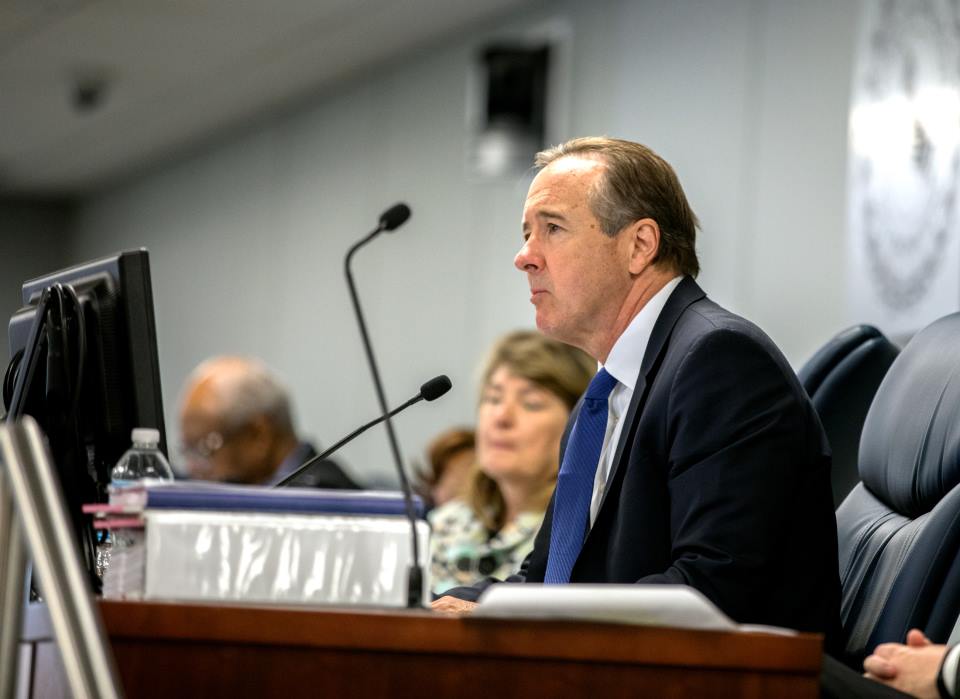
Rahm’s former CPS CEO Forrest Claypool.

Is selecting good people to be on the Chicago school board some devious trick by Mayor Lightfoot to derail our fight for an elected school board?
It is hard to believe that some folks are making that claim on social media this morning.
But they are.
Some of them are the same people who spread the bullshit lie that then Mayor-elect Lightfoot was going to pick Arne Duncan for her transition team.
I won’t be fooled. I joined up with the movement for an elected school board more than a decade ago. I knocked on hundreds of doors in 2014 with a petition for an elected school board. I cast my vote for one along with 90% of the voters of Chicago when CONTINUE READING: Lightfoot’s new school board and an elected one. – Fred Klonsky

Fordham Institute and Center for American Progress Collaborate on “Moon Shot” for Kids | Diane Ravitch's blog

Fordham Institute and Center for American Progress Collaborate on “Moon Shot” for Kids | Diane Ravitch's blog

Fordham Institute and Center for American Progress Collaborate on “Moon Shot” for Kids


You probably thought that the rightwing Thomas B. Fordham Institute, which supports charters and vouchers but not public schools, was on the opposite side of the political aisle from the Center for American Progress, which is described by the New York Times and the Washington Post as “left-leaning” (which is inaccurate).
  • By August 1, 2019, submit a brief application through our online portal. We are seeking ideas that would help the U.S. achieve one of the following big goals (your choice):
    • Cut in half the number of fourth graders reading “below basic”
    • Double the number of eighth graders who can write an effective persuasive essay
    • Shrink by 30 percent the average time a student spends in English-language-learner status
    • Double the amount of high-quality feedback the average middle schooler receives on their academic work
    • Ensure that every student receives high-quality college and career advising by ninth grade
    • Double the number of students from low-income families and students of color who graduate from high school with remediation-free scores on the SAT, ACT, or similar exams
    • Double the number of young women who major in STEM fields
The portal provides a place where, in no more than 500 CONTINUE READING: Fordham Institute and Center for American Progress Collaborate on “Moon Shot” for Kids | Diane Ravitch's blog

Monday, June 3, 2019

The "X"odus Files: Toxic Stress and Accountability. | BustED Pencils

The "X"odus Files: Toxic Stress and Accountability. | BustED Pencils

The “X”odus Files: Toxic Stress and Accountability.

Last night I posted this on my personal Facebook page.
How many of our colleagues need to take medication, pursue counseling, have their own families disrupted, and then finally quit teaching before we can say, “accountabilityis the poison?”
Slekar Facebook
The reason for posting this came as I was combing over my survey results regarding the teacher “X”odus. The shear volume of respondents that openly shared their experience with workplace induced anxiety leading to mental health counseling and medication was striking. In addition, there were multiple stories of family disruptions—some even resulting separation and divorce.
This in turn led me to do some research to see if there was national data to support my 


Video: Oakland trustee grabbing picketing teacher's throat

Video: Oakland trustee grabbing picketing teacher's throat

Video shows school Oakland board member’s hand on throat of teacher at picket line
Teachers formed a picket line around an elementary school where school board members were scheduled to vote on budget cuts.


OAKLAND — A video circulating social media shows Oakland school board member Jumoke Hinton-Hodge trying to push past a crowd of picketing teachers and putting a hand on the throat of a teacher while trying to enter La Escuelita Elementary School for a scheduled board meeting Friday.

Darnisha Wright, a kindergarten teacher at Markham Elementary School, identified herself to this news organization as the teacher in the video.
“My neck and throat hurts, and my head is pounding. I may have went to the hospital if I didn’t have a (more than) 100-page tentative agreement to read, understand and vote on within 24 hours,” Wright said via Facebook Messenger. “The vote won’t wait for me to get better.”
Hinton-Hodge issued a statement Saturday afternoon apologizing to Wright. She said she was “pushed to the ground, briefly disoriented, and tried to get back up,” when she realized she was “inadvertently pushing up against a teacher’s neck.”
“I would never have intentionally touched another person or a sister in that way, and I CONTINUE READING: Video: Oakland trustee grabbing picketing teacher's throat


Johnson City Press: On charters, proof is in the percentages

Johnson City Press: On charters, proof is in the percentages

On charters, proof is in the percentages
BILL SMITH, COMMUNITY VOICES • JUN 1, 2019 AT 8:00 AM 
In recent years Republicans in Nashville have actively promoted school privatization through charter schools and vouchers. Tennessee’s first charter schools opened in 2003, and the numbers have grown slowly but steadily.

Vouchers are not yet in effect, but the House and Senate recently passed Gov. Bill Lee’s voucher bill, and it is awaiting his signature. In the process of promoting the bill, local representative Matthew Hill amended it to limit its impact to Memphis, Nashville, Knoxville and Chattanooga, explaining he wanted to be sure his schools and teachers would be “held harmless” from the law’s effects. Jason Zachary provided the tie-breaking vote in the House only after receiving a promise that citizens in his Knoxville district would also be “held harmless.” In the end, the final version of the bill applies only to Nashville and Memphis.
We’re kidding ourselves if we think charters and vouchers can never come to our region, and we now have further evidence why we need to keep that from happening.
The Network for Public Education recently released a study of the federal Department of Education’s spending on startup funding for charter schools. The researchers found that the Charter Schools Program awarded roughly $1 billion between 2006 and 2014 to “charter schools that never opened or opened for only brief periods before being shut down for mismanagement, poor performance, lack of enrollment, and fraud.”
The data on these defunct charter schools are eye opening. For example, the CSP granted $20,272,078 from 2006 to 2014 to 109 charters that never opened or are now closed (out of a total of 250 approved charters) in secretary of education Betsy DeVos’ home state of Michigan. Despite this 42 percent failure rate, DeVos granted Michigan an additional $42,222,222 for new charters in 2018.
Florida, California, Ohio, and Louisiana had failure rates of 36, 38, 40, and 46 percent respectively in the years examined. Taxpayer dollars squandered by charter operators were in the tens of millions in each of these states and over $100 million in California alone.
When DeVos was questioned about this report in a Congressional hearing, she responded, “You’re always going to have schools that don’t make it.” Then she argued for the establishment of more charters and asked Congress to increase CSP’s annual funding to $500 million.
DeVos might have said that most of this waste occurred on her predecessor’s watch (it did) and that she would attempt to correct the problems (she didn’t). Instead she doubled down and gave no indication that she would work to prevent behavior that, at best, indicates a weak screening process, and, at worst, suggests complicity with scammers.
Having begun my educational career in 1974, I’ve been listening to CONTINUE READING: 

California: Two of Four Charter Reform Bills Remain Alive; Will Charter Lobbyists Block Them? | Diane Ravitch's blog

California: Two of Four Charter Reform Bills Remain Alive; Will Charter Lobbyists Block Them? | Diane Ravitch's blog

California: Two of Four Charter Reform Bills Remain Alive; Will Charter Lobbyists Block Them?

While the charter lobbyists (who call themselves “families”) managed to knock out two bills to harness their unrestricted expansion, two others remain alive, thanks in part to the vigorous efforts of the California NAACP, whose education leader is charter expert Julian Vasquez Heilig. 
The two that remain viable are AB 1505 and 1507, which establish local control and oversight of charters.
● AB 1505 – The bill gives local school districts sole authority to approve new charter schools and to consider how new schools would impact the district’s budget in the approval process. Since new charter schools typically attract students – and their per pupil funding – away from traditional public schools, many expect that this measure would make it much more difficult for new charter schools to be approved. AB 1505 passed May 22 and will now go to the state Senate.
● AB 1507 – This bill closes a loophole in state law that has let some districts boost their budgets by approving charter schools outside their boundaries. AB 1507 would require all charter schools approved by a district to be located within it. It passed on May 13 in the state Assembly and is also now headed to the Senate.
If these two bills pass, charters will be authorized only by the district in which they are located. Rural districts in CONTINUE READING: California: Two of Four Charter Reform Bills Remain Alive; Will Charter Lobbyists Block Them? | Diane Ravitch's blog

A scholar revives the argument for racial school integration

A scholar revives the argument for racial school integration

A scholar revives the argument for racial integration in schools
A conversation with Berkeley's Rucker Johnson about unintended consequences, charter schools and the data debate

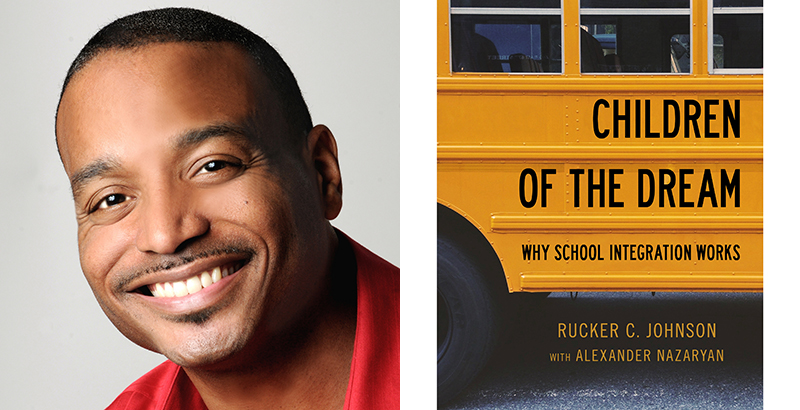
Image result for Children of the Dream: Why School Integration Works
Rucker Johnson, an economist, sees himself as a poster child for school integration.
His grandfather was denied admission to the University of West Virginia, still an all white school after World War II. Johnson’s father was among the first generation of children to attend desegregated schools in Minneapolis. (“People think of segregation as a Southern story,” Johnson said. “That’s a misconception.”)  Johnson was educated in Minneapolis’s suburban schools, which he describes as “overwhelmingly white.” In 2011, he became the first black economist to earn tenure at the University of California, Berkeley, and as of May 2019, at age 46, he’s a full professor at the Goldman School of Public Policy at Berkeley. His new book, “Children of the Dream: Why School Integration Works,” (April 2019) recounts the history of school desegregation and presents his research on how black children benefited from the nation’s all-too-brief effort to integrate schools in the 1970s and 1980s. Improvements in academic achievement and college attendance, he found, extended even to the next generation, just as they did for Johnson after his father attended desegregated schools.
The main argument of Johnson’s book is much bigger than racial integration. He says three things are essential for schools to give poor kids a chance to break out of poverty: money, preschool and desegregation. Johnson finds that black children make much larger academic gains when integration is accompanied by more funding for low-income schools. Similarly, the benefits of early child education endure when they’re followed by well-resourced schools.  All three — money, preschool and desegregation — are a powerful combination in which the whole is greater than the sum of the parts.  “Synergy has the power to take two policies that in isolation seem flat and transform them into one package of policies with profound CONTINUE READING: A scholar revives the argument for racial school integration

That's Not Helpful, Rick - Rick Hess Straight Up - Education Week

That's Not Helpful, Rick - Rick Hess Straight Up - Education Week

That's Not Helpful, Rick

It seems like at least once or twice a week for the past couple decades (and, sometimes a whole lot more frequently than that, as when Jay Greene and I examined the partisan makeup of the education reform community this spring), someone has e-mailed, called, or otherwise told me that something I'd said or written "wasn't helpful." Usually absent are the nouns and verbs that would give the sentiment more shape. Helpful how? Helpful to whom? That stuff is missing, I suspect, because including it would make clear that there's a perfectly good reason for a skeptic to be unhelpful.
The funny thing is that I often think, "Geez, I'd like to be more helpful." After all, if you know me, you know that I don't enjoy spats. I don't like chasing clicks or engaging in theatrical debates, and I don't want to be some polarizing media personality. In fact, I'd suggest that I rather like being helpful when I can.  
So, what's going on? Why do so many people think I'm so monumentally unhelpful?
It turns out that when someone says "that's not helpful," what they usually have in mind is "shut up and get with the program." Of course, the people instructing others to be "helpful" are always hugely sure about how to "fix" things—even though that assurance is rarely accompanied by obvious expertise in the specific stuff (pedagogy, instructional materials, assessment, bureaucracy) that they're out to fix.   
Weirdly, the lack of relevant knowledge often seems to fuel self-assuredness. I've wondered why, and recently had an "ah-ha!" moment when steered to a 2018 article from the Journal of Personality CONTINUE READING: That's Not Helpful, Rick - Rick Hess Straight Up - Education Week
Learning Styles: Detrimental or Useful? | Teacher in a strange land

Learning Styles: Detrimental or Useful? | Teacher in a strange land

Learning Styles: Detrimental or Useful?

Did you ever sit through a professional development workshop on learning styles? I have—at least twice. Once with the dreaded Outside Presenter (from a university that shall not be named), and once with a well-respected teacher in my building, both at least 20-25 years ago, when learning styles were a thing.
They’re not a thing anymore.
In fact, they’re ‘detrimental.’ According to a number of education psychology experts, learning styles themselves don’t exist, so actually it’s believing in them that’s detrimental. Detrimental to whom? Students. Teachers. Parents.
Shaylene Nancekivell, PhD, visiting scholar at the University of Michigan and lead researcher for a new study on the myth of learning styles, divides folks who believe in them–some 80%-95% of people across the globe, BTW—into two groups: Essentialists and Non-essentialists.
Psychological essentialism is the belief that certain categories of people have a true nature that is biologically based and highly predictive of many factors in their lives. People with essentialist opinions about learning styles may be more resistant to changing their strongly held views even when they learn that numerous studies have debunked the concept of learning styles.
Non-essentialists are ‘more flexible.’  The other group–those who understand that learning styles are myths that have been debunked by scientific research—doesn’t have a formal name. Let’s call them academic pedants.
And now you’ve just read the first reason why these cyclical pieces about how learning styles don’t exist drive me crazy: researchers set up experiments to examine a bit of ‘conventional wisdom’ that some (not all) teachers find useful–or have found useful at CONTINUE READING: Learning Styles: Detrimental or Useful? | Teacher in a strange land

State School Rankings and School Report Cards Drive Racial and Economic Segregation | janresseger

State School Rankings and School Report Cards Drive Racial and Economic Segregation | janresseger

State School Rankings and School Report Cards Drive Racial and Economic Segregation


The federal Every Student Succeeds Act, passed in 2015 to replace No Child Left Behind, requires states to provide school report cards as an accountability tool.  The promotional materials from the U.S. Department of Education describe state report cards as a resource for parents—a way to help them know the quality of their child’s school. The report cards must include at least the school’s aggregate standardized test scores, and if the school is a secondary school, its graduation rate. Overall grades are not federally required, but many states now assign overall summative ratings. But instead of a valuable resource about the quality of particular public schools, the report cards and the rankings and ratings that frequently accompany them have become racist dog whistles telling parents just which schools serve homogeneous, privileged student populations. Websites like Zillow publish the school ratings as part of real estate advertising.

Even though they are used these days by policy makers for evaluating the quality of public schools, standardized test scores are known to be a poor yardstick for measuring school quality. And high school graduation rates reflect many factors beyond school quality. Research demonstrates that the report cards and test-based accountability in general simply brand schools in the poorest communities—schools that may be doing a good job—as failures. The damage is made more serious when states assign letter grades—“A”, “B”, “C”, “D”, and “F”.   A school’s poor grade makes it easier for the public to condemn the “F” rated school and the community that surrounds it.  Some states have even begun ranking school districts according to their letter grades. Widespread school funding inequity compounds the problem, as wealthy enclaves can raise adequate funding locally, while the poorest school districts remain dependent on state funding, which has fallen precipitously in many places in the decade since the Great Recession
Furman University education professor and blogger about racial injustice in education, Paul Thomas recently published a critique of South Carolina’s school rankings. Thomas quotes South Carolina newspapers bragging about two top-ranked schools—Academic Magnet High, and the elite Brockman Elementary School.  Here is what Thomas discovered when he did CONTINUE READING: State School Rankings and School Report Cards Drive Racial and Economic Segregation | janresseger

K-12 Education: Democrats Must Choose Between Plans Of Biden and Sanders | Real Learning CT

K-12 Education: Democrats Must Choose Between Plans Of Biden and Sanders | Real Learning CT

K-12 Education: Democrats Must Choose Between Plans Of Biden and Sanders

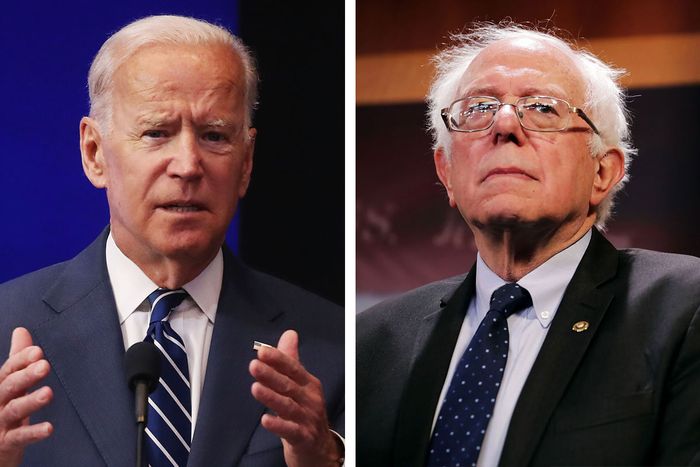
Image result for Biden and Sanders
Two plans about how to improve K-12 are before us. Which one are we to choose, which one are the Democrats to choose: Bernie Sanders’ plan or Joe Biden’s plan?
Both candidates presented their plans as centerpieces of their campaigns, Sanders announcing his on the 65thanniversary of Brown vs. the Board of Education, the landmark case making school segregation unlawful, and Biden making his plan the first policy rollout of his 2020 campaign. The differences in the plans tell us about both candidates and give the Democratic Party a choice about where to make its stand about K-12 education.
Difference #1: Biden and Sanders give two different views about teachers.                
Joe Biden sees teachers as suffering financially, stating incorrectly that “public school teachers’ average weekly wage hasn’t increased since 1996” and calling for using Title I funds (federal money targeted for at-risk schools) to increase their pay. Biden’s pledge is to “support our educators by giving them the pay and dignity they deserve”.  It is not just pay he wants to give teachers but also dignity.
Sanders seeks a different way to fund the same need for increased teacher CONTINUE READING: K-12 Education: Democrats Must Choose Between Plans Of Biden and Sanders | Real Learning CT

Sunday, June 2, 2019

Measure EE Puts Your LAUSD Child First – Carl J. Petersen – Medium

Measure EE Puts Your LAUSD Child First – Carl J. Petersen – Medium

Measure EE Puts Your LAUSD Child First
Proceeds from the Tax shall be used for: lowering class sizes; providing school nursing, library, and counseling services and other health and human services for student support; providing instructional programs, school resources, and materials; retaining and attracting teachers and school employees; and providing necessary administrative services.
- Measure EE
When the business interests opposing Measure EE state that the parcel tax will “compound the affordable housing problem”, I can not help but wonder how many of these same people also worked against California Proposition 10 in last year’s election. Had this proposal passed it would have allowed “local governments to adopt rent control on any type of rental housing.” This would have given local governments a powerful tool in combating the affordable housing problem and gentrification. Unfortunately, the nearly $100 million spent against Proposition 10 helped to ensure its defeat. As a result, most local governments in California are still prohibited from enacting rent control.
Like the opponents of Proposition 10, those who are trying to get you to vote against Measure EE, have resorted to altering reality. For example, they claim that the funding for our students will come from “regressive property tax.” In fact, the parcel tax is based on the total square footage of improvements on a property. Therefore, the owners of a modest, single story, two bedroom house will pay much less than a property owner living in a luxurious McMansion. The owners of record-breaking skyscrapers being built downtown will pay CONTINUE READING: Measure EE Puts Your LAUSD Child First – Carl J. Petersen – Medium


Democrats Must Choose Between Teachers and Charter Schools - Truthdig

Democrats Must Choose Between Teachers and Charter Schools - Truthdig

Democrats Must Choose Between Teachers and Charter Schools

For years, the safe havens for education policy debate in the Democratic Party have been expanding pre-K programs and providing more affordable college, but in the current presidential primary contest, another consensus issue has been added to the party’s agenda: salary increases for K–12 classroom teachers. Kamala Harris has gotten the most press for coming out strongly for raising teacher wages, but other frontrunners including Joe BidenPete Buttigieg, and Bernie Sanders have also called for increased teacher pay.
But what will happen when a consensus issue like teacher salary increases comes into conflict with a lightning rod issue like charter schools? That’s a scenario currently playing out in Florida.
A recent law passed by the majority Republican Florida state legislature and signed by newly elected Republican Governor Ron DeSantis will force local school districts to share portions of their locally appropriated tax money with charter schools, even if those funds are raised for the express purpose of increasing teacher salaries in district-operated public schools. (Charter schools in Florida, as in many states, do not receive funds that are raised through bond referendums, mill levies, or other forms of local funding initiatives.)
Florida teachers have openly opposed the new law, and local school districts have taken it to court to have it overthrown. But given this new law, it’s not at all hard to imagine a scenario, even at the national level, where Democrats pushing to increase funds for teacher pay will have to confront an expanding charter school industry—and now voucher programs—that would claim their portion of that money to use as private institutions for whatever purposes they wish.
“An Effort to Redefine Public Schools”
“The problem with charter schools isn’t that they’re competing with public schools; it’s that they’re supplanting public schools,” says Justin Katz in a phone call. Katz, who is president of the Palm Beach County Classroom Teachers Association, recently helped organize a rally in West Palm Beach where more than 200 teachers and public school advocates showed up to voice their opposition to distributing funds raised by local tax increases to charter schools. CONTINUE READING: Democrats Must Choose Between Teachers and Charter Schools - Truthdig