Saturday, March 30, 2019

Mitchell Robinson: Betsy DeVos Wants More "Innovation" in Public Schools: How About Public School Food Trucks? | Eclectablog

Betsy DeVos Wants More "Innovation" in Public Schools: How About Public School Food Trucks? | Eclectablog

Betsy DeVos Wants More “Innovation” in Public Schools: How About Public School Food Trucks?


Photo credit: credit Michael Vadon, https://www.flickr.com/photos/80038275@N00/33073563866

One of Secretary of Education Betsy DeVos’ favorite “talking points” is that public schools are not “innovative,” and that the solution to our problems in education is to invest public tax dollars in creating more charter schools and voucher programs for private and religious schools:
“There’s still not enough innovation,” she said Tuesday, continuing her familiar focus on school choice and schools or networks working outside the traditional public system. “The reality is there are a number of challenges and opportunities facing American students, and Washington, DC, does not have all the answers.”
I’d suggest that it is Ms. DeVos who “does not have all the answers,” and in fact isn’t really sure of what the questions are–but more on that in a minute.
In the meantime, I thought it would be helpful to share a story about an example of true innovation happening in Ohio, where the public schools are initiating a new program involving food trucks:
Last week saw Middletown Schools unveil the district’s first food truck, part of a $225,000 program to feed the district’s needy students by going to them on non-school days. The giant, brightly colored truck will travel to some of Middletown’s low-income communities this summer to deliver free lunches to children and teens who during the school year depend on such meals from their school cafeterias.
A couple of points worth mentioning here…
1. It’s important to note that these are traditional public schools in Ohio providing these food trucks…not charter schools, or private schools, or even religious schools. Because traditional CONTINUE READING: Betsy DeVos Wants More "Innovation" in Public Schools: How About Public School Food Trucks? | Eclectablog

Standards Based Education is Bad Education Theory | tultican

Standards Based Education is Bad Education Theory | tultican

Standards Based Education is Bad Education Theory


While discussing a student’s next class schedule with an outstanding student counselor, I learned my colleague had become dependent on testing data to place her students. That is not a surprise; it is one of the fundamental errors permeating education globally. Standards based testing is a fraud; a mirage that falsely projects an aura of objective analysis. As soon as high stakes are tied to these tests, their validity is undermined.
The learning standards upon which high stakes testing is based come from a mistaken philosophy of pedagogy that posits: a standardized learning rate, standardized interests, linear learning progression, developmental alignment, etc. Humans are not standard. Some learn to speak at 16 months and some don’t acquire that skill until 72 months. Some are short, others are tall. Some are fast, other are not. A child from urban Chicago has different perceptions and interests than a child from Winnemucca, Nevada. A global curriculum will not meet the needs of an endlessly diverse population. One size truly does not fit all. Even if it did, it would still be a bad idea to have political entities in centers of power deciding what that curriculum should be.
About 500 BC, the ancient Pythagoreans were a mathematically based cult. One of their beliefs (mathematical standard) was that there was no such thing as an irrational number. An irrational number is a number that cannot be expressed as a ratio of two numbers such as ½. The most famous irrational number is the ratio of the circumference of a circle divided by its diameter which is expressed as π (≈3.14). The writer, Morris Kline, claims that the man credited with the discovery of irrational numbers was a Pythagorean named Hippasus who had the bad sense to announce his discovery while at sea. He was thrown overboard for his heretical thinking![1] This story may be apocryphal but it does delightfully illustrate the danger associated with ossifying thinking with standards.
The longest most sustained use of standards and standardized testing arose in China more than 2000 years ago during the Han dynasty. It was an attempt to select government official based on some sort of meritocracy rather than feudal CONTINUE READING: Standards Based Education is Bad Education Theory | tultican

Why I was Shaking My Head at Betsy DeVos - Living in Dialogue

Why I was Shaking My Head at Betsy DeVos - Living in Dialogue

Why I was Shaking My Head at Betsy DeVos


By Anthony Cody.
A video of Betsy DeVos responding to questions from Lucille Roybal-Allard of the House Appropriations Committee hearing has gone viral, and has been watched now by many thousands of people. I appear in the background, shaking my head as DeVos asserts that larger class sizes might actually be beneficial since they allow students to collaborate with more classmates, and might allow the best teachers to be paid more. So in this post, I will take a look at the actual research on the subject, and a bit of the history of the idea.
But first, a little about the day. I was in Washington,DC, because the group I work with, the Network for Public Education, has just released a major report: Asleep at the Wheel, How the Federal Charter Schools Program Recklessly Takes Taxpayers and Students for a Ride. This report reveals that over the past decade, the Federal government has wasted roughly a billion dollars on charters that never opened or closed within a year or two. It is a shocking report, with examples from all over the country. It paints a portrait of careless disregard for taxpayer funds, and a willingness to forego any semblance of quality or oversight in the pursuit of the magical virtues of “freedom” and “choice.”
There was a House Appropriations committee hearing at 10:15 am. I arrived at the room at about 7:40 am, and was the third in line, behind two paid “linestanders,” who were there holding spots for lobbyists who would arrive later in the morning sipping lattes. When we entered the room, I chose a seat in line with a large TV camera, behind where Secretary DeVos would be seated.
The hearing started off with a bang, with chairperson Rosa DeLauro taking on DeVos over the cruel budget cuts she has proposed. DeLauro cited NPE’s report, covered in the Washington Post by the excellent Valerie Strauss, and asked DeVos how she could propose an increase in funding for charter schools at the same time she was slashing funding for dozens of far more valuable programs. DeVos grinned like an organ CONTINUE READING: Why I was Shaking My Head at Betsy DeVos - Living in Dialogue

Kamala Harris’ Big Plan for Teacher Pay Is Promising—But It’d Require a Major Change for How the Feds Handle Education – Mother Jones

Kamala Harris’ Big Plan for Teacher Pay Is Promising—But It’d Require a Major Change for How the Feds Handle Education – Mother Jones

Kamala Harris’ Big Plan for Teacher Pay Is Promising—But It’d Require a Major Change for How the Feds Handle Education
The 2020 presidential candidate has a plan to close the pay gap for educators.

California Sen. Kamala Harris wants to see teachers across the country get a massive pay bump, and she’d have the federal government take on an unprecedentedly large role in making that happen. Earlier this week, Harris, who is running for the 2020 Democratic nomination, proposed an ambitious plan that would target the growing pay gap between teachers and other professions, aiming to give educators a $13,500 pay increase on average. 
In an op-ed in the Washington Post introducing the plan, Harris focused on recent teachers strikes in West Virginia, Oklahoma, and California, noting that the demonstrations “reflect our national failure to value educators and pay them what they deserve.” Harris’ proposal represents one of the most ambitious plans toward investment in education by a presidential candidate. In a statement, Randi Weingarten, president of the American Federation of Teachers, one of the nation’s largest teachers unions, praised the plan as “one of the most thoughtful initiatives we’ve seen in years” and encouraged other 2020 candidates to follow Harris’ lead in offer solutions. 
Though specific in its intent, it’s hard to know how, exactly, the sweeping investment would play out on the ground.
A recent study from the left-leaning Economic Policy Institute found an 11 percent pay gap between teachers and their fellow college graduates. Under Harris’ plan, the goal is to completely erase that difference by the end of her first term in office if she wins the 2020 election. The federal government would invest $315 billion over the course of a decade in an effort to raise the average salary by 23 percent. The feds would contribute part of the initial investment and then, through matching funds, incentivize states to close the rest of the gap: For every $1 a state spends on boosting teacher salaries, the feds would chip in $3 until the pay gap in that state is closed. Though the average teacher currently makes $60,483, the average pay varies widely from state to state, as does the wage gap. 
Dan Goldhaber, a professor at the University of Washington and director of its Center for Education Data & Research, applauded Harris’ proposal but questions whether a 23 percent pay increase across the board could realistically happen. Harris’ proposal, he noted, also represents a more “micromanagement role from the federal side” than usual. In 2016, the federal government spent about 8 percent of total K-12 funding, or $56 billion, covering Title I, special education spending, and other grants to states and school districts. Back in 2009, in response to the recession, Congress passed the American Recovery and Reinvestment Act and injected$100 billion to help state budget shortfalls and prevent teacher layoffs. While the stimulus attempted to blunt the effects of the recession, Harris’ $315 billion plan would offer a targeted federal investment toward an issue CONTINUE READING: Kamala Harris’ Big Plan for Teacher Pay Is Promising—But It’d Require a Major Change for How the Feds Handle Education – Mother Jones

AFT members to drive presidential endorsement – People's World

AFT members to drive presidential endorsement – People's World

AFT members to drive presidential endorsement


WASHINGTON—This time around, members of the American Federation of Teachers will drive its presidential endorsement process – and it’s going to demand Oval Office hopefuls walk in teachers’ shoes, too.
The March 20 decision came after a 30,000-person mass conference call convened the night before by AFT President Randi Weingarten to hash out the details, explain the proposed plan and – most importantly – get feedback.
That’s not what happened in 2015-16, when Weingarten and the union board approved an early endorsement of former Secretary of State Hillary Clinton for the White House, over the objections of supporters of her main challenger, Sen. Bernie Sanders, Ind-Vt.
“There was a lot of uproar over that,” one local union president said recently. “A lot of people were very unhappy.”
This time, AFT hopes they won’t be.
The endorsement of the 1.7-million-member union, one of the two largest in the AFL-CIO, is important. Teachers, from both AFT and the even-larger and independent National Education Association, are not only politically active but also trusted by parents and voters.
That trust came through in the success of bottom-up, parent-led forced teacher strikes over the last 12 months, starting in West Virginia and spreading to Arizona, Oklahoma, Kentucky, Denver (twice), Los Angeles, Oakland, Calif., and even to unionized charter schools in Chicago and Ohio.
And while the West Virginia parents, students, and teachers shut down every school in the state for nine days in 2018, and won, they had to walk out again when the GOP-run legislature tried to take back the gains this year. The legislature caved, after nine hours.
Those strikes were not primarily around pay, but about conditions affecting the students: Crumbling buildings, outdated textbooks, money for education diverted to tax cuts for the rich and pay so low that it CONTINUE READING: AFT members to drive presidential endorsement – People's World

CURMUDGUCATION: Is CTE Good News Or Bad News + Squeezing the Clock

CURMUDGUCATION: Is CTE Good News Or Bad News

Is CTE Good News Or Bad News

In the last two decades of education reform, a great deal of emphasis has been put on sending high school graduates to college. President Obama in his 2009 State of the Union address proclaimed that by 2020 America would "once again have the highest proportion of college graduates in the world" (though he hedged that a bit by later saying simply that everyone would need some kind of post high school education.) We've repeatedly used college enrollment and completion as a measure of K-12 success. While the modern reform movement paid lip service to "college and career," policies have always suggested that college is the superior part of that team.
Now it is finally occurring to some folks that A) college is not necessarily the best choice for all students and B) the world needs people who do what Mike Rowe always called the jobs "that make civilized life possible for the rest of us." Done well, new studies show, it can boost both academics and wages for students. It might even help solve the mystery of the missing non-college educated male workers. And so Career and Technical Education (CTE) is coming back into its own.
This movement does not come without some concerns. Mishandled CTE can end up replacing a full education with simple vocational training, reducing public education to a provider of free meat widgets for selected employers, but opening up a limited future for the students who receive the narrow education. CTE programs are most effective when schools partner with relevant industries, but that partnership can't be one-sided, with schools subordinated to HR departments. Badly mishandled CTE can also become a dumping ground for "problem" students, a type of education that some students are encouraged to "settle for" by adults who have decided that the student just isn't smart enough or good enough for college education.
In short, CTE reflects our own culture's conflicted feelings about blue collar workers. On the one CONTINUE READING: CURMUDGUCATION: Is CTE Good News Or Bad News

Squeezing the Clock

Put this on my list of Things I've Noticed Since Retiring From The Classroom.

In a teaching day, every single second counts. Teachers squeeze the clock till it screams. Five minutes left in the period? Just enough time to review the main concept from yesterday. Three minutes between classes? More than enough time to pee and swing by the office to pick up my mail. Twenty-five minute lunch period? If I get my eating done in ten minutes, then I have time to make some copies, answer three parent e-mails, check my phone messages, and finish making up a test for tomorrow.


You know you're operating at a fast clip when you're still in it, but like many things about teaching, you just don't realize how very hard you are working at using every minute of your day. Ask a civilian how long X will take, and the answer is, "I don't know-- about five or ten minutes?" Ask a teacher and the answer is, "Three minutes. Four if someone asks a question." Five or ten minutes? To a teacher that is crazy inaccurate, a difference of an entire five minutes. Five minutes! Do you have any idea what I can do with five minutes?!

And I'm talking about a high school setting. Ask an elementary teacher how long it takes them to pee and the answer will be, "It takes until I get home after school."

This is one of the things about teaching that non-teachers just don't get. If you have an office job 
CONTINUE READING: Squeezing the Clock


Jersey Jazzman: Jersey Jazzman: Year 9

Jersey Jazzman: Jersey Jazzman: Year 9

Jersey Jazzman: Year 9


I keep of list of stuff I'm supposed to blog about, and right now that list is long. I've yet to give my thoughts on Bruce Baker's excellent report on New Jersey school funding, which you really need to read. There's also the tax incentive nonsense happening here in Jersey, which is a cautionary tale for the rest of the country. There are the great reports about charter school abuses in New Jersey and California we need to examine.

I still haven't discussed my own work on how charter school growth negatively affects the finances of public school districts. I want to talk about my field trip to Kansas City to party/parry with labor economists. And it's time to go back and look again at all the problems with measuring student growth and attributing that growth to teachers and schools.

But before I get to all that, let me take a minute and talk about this blog on its ninth anniversary.

When I told Mrs. Jazzman last night I've been at this for nine years, she didn't believe it. But in my mind, it makes perfect sense: I started this thing in response to the nonsense coming from the Chris Christie administration way back in the spring of 2010. Now Christie's gone, after wreaking havoc on the state for two terms. Nine years seems just right.

At the time, Christie was running around the state demanding teachers take a pay freeze and pay more toward their health care. He claimed this would make up for a $800 million shortfall, which was largely caused because he refused to renew a millionaire's tax that had been in place for years. Of course, his claim wasn't true, and he forgot that freezing teacher pay would bring down income tax revenues for the state.

What frustrated me at the time was that no one in the press appeared interested in asking about the specifics of Christie's plan -- and yet the specifics were what made the plan viable CONTINUE READING: 
Jersey Jazzman: Jersey Jazzman: Year 9


50 Years of Affirmative Action: What Went Right, and What It Got Wrong - The New York Times

50 Years of Affirmative Action: What Went Right, and What It Got Wrong - The New York Times

50 Years of Affirmative Action: What Went Right, and What It Got Wrong


On cold mornings, Les Goodson shows up early outside the University Club, on a wealthy stretch of Fifth Avenue in Manhattan, and races two panhandlers he has nicknamed Catman and Pimp-the-Baby for a warm spot in front of a steam vent. He launches into “Take Five” on his saxophone, leaving his case open for bills and coins.
In a good week, it’s a living — enough to pay the rent on his railroad flat in Harlem and put food on the table. A few times, he has seen a former classmate, Gregory Peterson, bound into the social club without so much as a nod.
Mr. Goodson, 67, and his classmate were among a record number of black students admitted to Columbia University in 1969. Columbia and other competitive colleges had already begun changing the racial makeup of their campuses as the civil rights movement gained ground, but the assassination of the Rev. Dr. Martin Luther King Jr. in 1968, and the resulting student strikes and urban uprisings, prompted them to redouble their efforts.
They acted partly out of a moral imperative, but also out of fear that the fabric of society was being torn apart by racial conflict. They took chances on promising black students from poor neighborhoods they had long ignored, in addition to black students groomed by boarding schools.

A look back through the decades shows what went right in the early years of affirmative action in college admissions, but also what can go wrong even with the best of intentions.
Those who were able, through luck or experience or hard work, to adapt to the culture of institutions that had long been pillars of the white establishment succeeded by most conventional measures. Others could not break through because of personal trauma, family troubles, financial issues, culture shock — the kind of problems felt by many white students as well, but compounded by being in such a tiny minority. And universities at the time, they said, did not have the will or the knowledge to help.
“I think it’s a fair question to ask: Did we really understand or know what we were doing, or could we have predicted what the issues would be?” said Robert L. Kirkpatrick Jr., who at the time was dean of admissions at Wesleyan University in Middletown, Conn., which was part of these early efforts. “The answer is no. I think we were instinctively trying to do the right thing.”
Columbia — an Ivy League campus right next to Harlem — was a particularly revelatory setting. Perhaps nowhere else were the divisions more striking between the privilege inside university gates and the troubles and demands of black people outside them.
The New York Times tracked down many of the nearly 50 black students in Columbia’s Class of 1973, who arrived on campus as freshmen in 1969. Some of them have remained close friends and CONTINUE READING:  50 Years of Affirmative Action: What Went Right, and What It Got Wrong - The New York Times

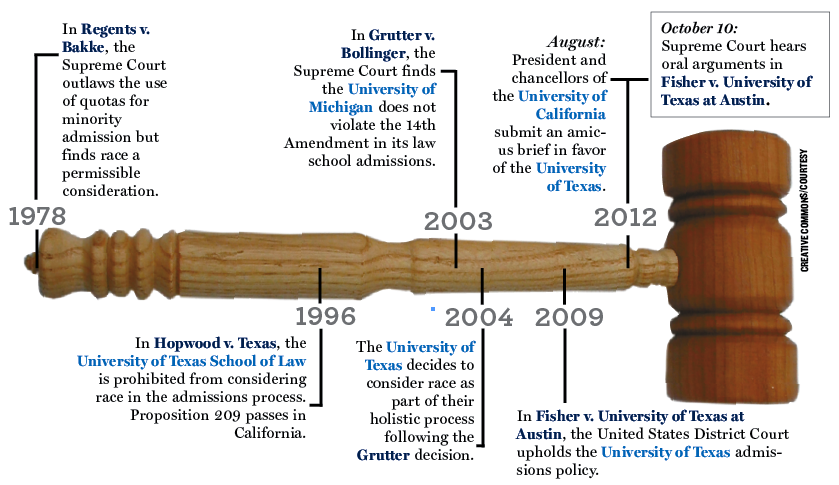
A Timeline of Key Supreme Court Cases on Affirmative Action - The New York Times - https://www.nytimes.com/2019/03/30/us/affirmative-action-supreme-court.html
Image result for A Timeline of Key Supreme Court Cases on Affirmative Action

PART TWO: CASHING IN ON CHARTER SCHOOLS

Central Jersey Arts Charter School was struggling, but kept getting tax money

New Jersey kept sending tax money to troubled charter school and its building project

CASHING IN ON CHARTER SCHOOLS: PART TWO

A series in five parts

Millions of NJ tax dollars were used by Central Jersey Arts Charter School, which was put on probation for a host of deficiencies.

By 2010, four years after it opened, the Central Jersey Arts Charter School in Plainfield was in trouble.
The state had just put it on probation for a host of deficiencies, ordering it to limit spending, develop a curriculum and address problems with its board and student achievement.  
Yet little more than three weeks later, a state agency voted to issue bonds that allowed a fledgling nonprofit called the Friends of Central Jersey Arts Charter School to borrow $8.2 million to buy and renovate a building for the school to rent and, one day, potentially own.
It was a loan whose repayment was based on the tax dollars flowing to the public charter school.
The Friends quickly ran out of cash, and about six months later approached a different state agency seeking millions of dollars in additional financing to finish the project without explaining why they had come up short. The next year, another $1.7 million in bonds were issued, this time with the federal government picking up most of the interest.
While the Friends were permitted to borrow nearly $10 million, the school itself was floundering. A financial report covering the 2010-11 school year stated that Central Jersey Arts was “not in good financial condition” and raised “substantial doubt” about its survival.
The building opened with fanfare as contractors went unpaid. The next year, the school was back on probation, where it stayed until the state shut it down in 2015 for weak finances and “dismal” academic performance — but not before dumping more taxpayer cash into a now-defunct for-profit management company in the hope of turning it around.
This is the story of a charter school that failed, and a building that used up millions in public dollars and continued to receive federal aid long after it was left vacant. It’s a story about dubious decisions by multiple state agencies, one that raises questions about the use of public money and the oversight of private groups that own real estate for public charter schools. CONTINUE READING: Central Jersey Arts Charter School was struggling, but kept getting tax money

With One Reply, Betsy DeVos Told Us Her Real Plan for America’s Public Schools

With One Reply, Betsy DeVos Told Us Her Real Plan for America’s Public Schools

With One Reply, Betsy DeVos Told Us Her Real Plan for America’s Public Schools


In one of Education Secretary Betsy DeVos’s most troubling responses of both days of testimony, she responded to an inquiry by Sen. Jack Reed (D-RI) about this nation’s crumbling school infrastructure. It comes about 1:09:45 into the tape (below) from the PBS News Hour.
It’s important to remember that she has always said that public schools were “in the mix” when it came to Educational Freedom and Educational Savings Accounts. Her statement here indicates that is not what she truly believes.
Sen. Reed states, One emergency I believe at least are crumbling schools throughout the country, elementary and secondary.
He goes on to tell how he and Rep. Bobby Scott (D-VA) have a bill called Rebuild America’s Schools Act to invest, he says, I hope, 100 billion dollars in school infrastructure. I don’t think there’s anyone on this committee who has not visited a school in their state that doesn’t need significant repairs and also updating for technology available now for teachers and young people. And there will be savings with better heating and cooling systems. I would hope you will support this effort. I think it is important and I’d like to get your reaction to helping out with this school CONTINUE READING: With One Reply, Betsy DeVos Told Us Her Real Plan for America’s Public Schools

Family Empowerment voucher paves the way: Choice 2.0 Education Savings Accounts | The Edvocate Blog

Family Empowerment voucher paves the way: Choice 2.0 Education Savings Accounts | The Edvocate Blog

Family Empowerment voucher paves the way: Choice 2.0 Education Savings Accounts


Choice 2.0,  Education Savings Accounts (ESA) are the “reform” endgame and they won’t live up to Florida’s “choice” lore.  With the Family Empowerment Voucher, former Governor Jeb Bush, the Milton Friedman Foundation/Ed Choice, voucher and charter proponents and of course vendors are teetering on the edge of their most ideological, profit-driven dreams. Corporate charter operators are dreaming about converting to private schools as soon as ESAs become a reality. All at the expense of the three million students who attend public schools.
Florida’s Corporate Tax Credit voucher allows corporations to divert their taxes to Step Up for Students, the state’s largest designated Scholarship Funding Organization (SFO). The resulting vouchers are then used primarily for private religious schools that do not have to meet any of the standards imposed by the state on public schools. Since its inception in 2001, lawmakers have expanded Florida’s voucher program so that $1 billion dollars annually, once destined for state general revenue that should have funded a wide range of needs has been diverted to private schools. Keep in mind that Step Up for Students has been paid at least 3% of the gross or $81 million dollars over the years as a “fee.”
Education “reform” is all about chaos and disruption. Because it’s hard to tear down a cornerstone asset like public education, reformers rely on issuing a series of unfounded “studies” in the hopes that the press and politicians will quote their theoretical “findings” as fact. That strategy, called “moving the Overton window,” manipulates public perception with the goal of normalizing radical policy ideas like annually transferring $800 billion public tax dollars into privatizing public schools.

Did you think Betsy DeVos’s terrible, horrible, very bad, no-good week would drive her to quit as education secretary? Guess again. - The Washington Post

Did you think Betsy DeVos’s terrible, horrible, very bad, no-good week would drive her to quit as education secretary? Guess again. - The Washington Post

Did you think Betsy DeVos’s terrible, horrible, very bad, no-good week would drive her to quit as education secretary? Guess again.


If you were hoping Betsy DeVos’s terrible, horrible, very bad, no-good week would drive her to quit as U.S. education secretary, this is going to disappoint you.
No, she did not resign in a huff of indignation after being publicly pilloried over her defense of the Trump administration’s plan to end federal funding for Special Olympics. Nor did she quit after she found herself being reversed by her boss, President Trump, who decided to throw the funding back into his proposed 2020 budget after she spent three days trying to justify eliminating it.
In fact, she appeared Friday before a friendly audience at the National Review Institute’s Ideas Summit in Washington and said with a big smile that she still likes her job. Onstage, DeVos talked about education with Jay Nordlinger, a senior editor of the National Review:
NORDLINGER: I’m glad you’re education secretary. Are you?
DEVOS: I am indeed. Yes, most days I am.
Let’s be clear: People who like their job “most days” don’t usually quit because of a few bad ones — especially those, like DeVos, who find themselves in a position of power to influence government policy and regulations around beliefs fervently held for decades.
Besides, it’s not the first time this has happened to DeVos, and she weathered the previous storms.
During her 2017 confirmation hearing, she was asked whether she thought guns belonged in schools and referred to one Wyoming school and said, “I would imagine that there is probably a gun in the schools to protect from potential grizzlies.” And she did not seem to understand that states could not choose whether to comply with the federal Individuals With Disabilities Education Act.
Her confirmation by the Senate was the first in U.S. history to require a vice president to break a tie. She has been living with opprobrium for a while now.
In 2018, she testified before Congress and was blasted for, among other things, being unable to explain the mission of the Education Department’s Office for Civil Rights.
DeVos’s troubles this week began in earnest Tuesday when she testified before a U.S. House Appropriations subcommittee to defend her proposed 2020 department budget. It included cuts to some special education programs and elimination of federal funding for Special Olympics.
The proposed cut to Special Olympics, which gives people with intellectual and physical disabilities the chance to compete in athletics on a world stage, struck a nerve with lawmakers.
“I still can’t understand why you would go after disabled children in your budget,” Rep. Barbara Lee (D-Calif.) said. “You zero that out. It’s appalling.”
When Rep. Mark Pocan (D-Wis.) asked her why she had proposed cuts to special education programs, she CONTINUE READING: Did you think Betsy DeVos’s terrible, horrible, very bad, no-good week would drive her to quit as education secretary? Guess again. - The Washington Post

NYC Public School Parents: Hilarious video of DeVos testimony on class size - with a more serious message lurking behing it

NYC Public School Parents: Hilarious video of DeVos testimony on class size - with a more serious message lurking behing it

Hilarious video of DeVos testimony on class size - with a more serious message lurking behing it


Check out hilarious clip below of Anthony Cody reacting to Betsy Devos testifying before the US House of Representatives on Wednesday that larger classes have benefits to students.  Anthony, who is a former teacher and a fellow board member of the Network for Public Education, got up at the crack of dawn to attend these hearings and we're glad he did.


Not to detract from the absurdity of her comments, I'd like to point out that individuals including Bill Gates and our Michael Bloomberg have made similar absurd claims.  In fact, Anthony Cody himself rebutted Bill Gates' damaging ideas on class size in the Washington Post.

When he was Education Secretary Arne Duncan also advised districts to increase class size, offering this likely fabricated example: CONTINUE READING: NYC Public School Parents: Hilarious video of DeVos testimony on class size - with a more serious message lurking behing it

Friday, March 29, 2019

CURMUDGUCATION: What Did We Learn From DeVos Hearings This Week?

CURMUDGUCATION: What Did We Learn From DeVos Hearings This Week?

What Did We Learn From DeVos Hearings This Week?


So during Betsy DeVos's terrible horrible no-good very bad week of hearings, what did we learn?

Opposition Parties Matter

This is the third budget in which DeVos tried to zero out Special Olympics. The third. So why so much fuss this time around? Perhaps because somebody made her go before Congress and explain herself (or not) in some exchanges that made for insta-viral hits.

Just imagine what it would be like if more legislators acted more like actual defenders of public education more often.

Finally, Evidence of the Deep State

Donald Trump stepped in to "override" his people, so the Special Olympics are off the chopping block sooner rather than later (this was a cut that was never, ever going to happen). Then DeVos said she was delighted because she has "fought behind the scenes" for the Special Olympics for years. She's the head of the department, and he's the President-- who put that cut in there if neither of them wanted it? It must be--gasp-- the Deep State, trying to make them look bad by somehow sneaking damn fool items into the budget.

But boy-- for someone who fought for it behind the scenes, she sure stood up for it in front of the scenes.

The Benefits of Big Classes

DeVos touted the advantages of larger classes. This is the second time in one month that a North American education official has tried to argue for this piece of fried baloney. It's an idea so bad that CONTINUE READING: 
CURMUDGUCATION: What Did We Learn From DeVos Hearings This Week?


Guess Who’s Not Here for Your Nonsense? | Teacher in a strange land

Guess Who’s Not Here for Your Nonsense? | Teacher in a strange land

Guess Who’s Not Here for Your Nonsense?


First off, I have to credit Shanna Peeples, all-around cool edu-person and 2015 National Teacher of the Year, for the title of this blog, swiped from her Twitter feed. It’s about those marvelous young ladies, high school students in Maryland who confronted the boys who were rating their looks and ranking them on a list with numbers calculated to the hundredth place. And then passing the list around for up-to-the-minute updates.
If you missed the story, it’s well worth a read (here). The blog title should give you a clue: these girls were not having it.
photo-smug
Furthermore, they did something about it. When an administrator limited formal consequences to a single boy and asked the girls not to spread the story around, they organized, confronting their principal, gathering 80 students into an ‘intense’ co-ed meeting where they expressed their anger and discomfort, and putting a series of follow-up responses and conversations into action.
The young women interviewed in the story were powerfully articulate about why they wanted an end to this boys-will-be-boys nonsense.
“Knowing that my closest friends were talking to me and hanging out with me but under that, silently numbering me, it definitely felt like a betrayal. I was their friend, but I guess also a number.”
They also talked clearly about what it felt like to suddenly feel unsafe at school, when they already felt unsafe in the wider world. One boy—the contrite and admittedly ‘privileged’ young man who started the list—says All the Right Stuff. No mention of CONTINUE READING: Guess Who’s Not Here for Your Nonsense? | Teacher in a strange land