Latest News and Comment from Education

Saturday, October 13, 2018

Los Angeles teachers are a step closer to a potential strike after mediation with district ends - Los Angeles Times

Los Angeles teachers are a step closer to a potential strike after mediation with district ends - Los Angeles Times

Los Angeles teachers are a step closer to a potential strike after mediation with district ends


The union representing Los Angeles teachers moved one step closer to a possible strike Friday after ending mediation sessions with the L.A. Unified School District.
Union officials accused the district of “failing to offer any substantial proposals to reinvest in our schools.”
For its part, district leaders announced that they had filed a complaint with a state oversight board. They allege that the union has failed to negotiate in good faith and that any strike would therefore be illegal.

The union “has trounced through the impasse procedure in bad faith, in order to have cover to initiate a strike,” trying to “shortcut the process and achieve its bad faith objectives,” according to the district filing with the Public Employment Relations Board.
The filing also accused the union of making “histrionical demands that the mediation process wrap up quickly.”
The two sides had three sessions with a professional mediator, starting Sept. 27 and ending Friday.
The district is offering teachers a 3% raise retroactive to July 1, 2017, plus an additional 3% retroactive to this past July. The second half would not be permanent unless the county certified the district as financially healthy for the length of the agreement. The district has settled with most other employee unions on terms similar to these.

The teachers have asked for a 6.5% raise that goes back an additional year, to July 1, 2016.
The dispute goes beyond wages.
“The district thinks they can buy us off with a modest pay raise, but our fight has never been just about salary,” UTLA President Alex Caputo-Pearl said in a statement. “What’s driving educators is the absolute need to fix what we see every day: too many overcrowded Continue reading: Los Angeles teachers are a step closer to a potential strike after mediation with district ends - Los Angeles Times


R U READING THESE PROGRESSIVE EDUCATION FELLOWS — A voice for peace, social justice, and the common good - Progressive.org

The Progressive — A voice for peace, social justice, and the common good - Progressive.org

R U READING THESE PROGRESSIVE EDUCATION FELLOWS 


Public School Shakedown—A project of The Progressive - Progressive.org - https://progressive.org/public-school-shakedown


THE PROGRESSIVE EDUCATION FELLOWS

Public School Shakedown—A project of The Progressive - Progressive.org - https://progressive.org/public-school-shakedown

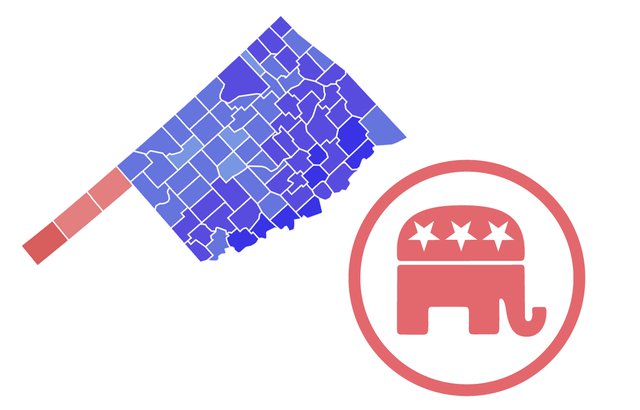
Education May Spell Doom for Oklahoma’s Republican ‘Subprime’ Gubernatorial Candidate - Progressive.org

Education May Spell Doom for Oklahoma’s Republican ‘Subprime’ Gubernatorial Candidate - Progressive.org

Education May Spell Doom for Oklahoma’s Republican ‘Subprime’ Gubernatorial Candidate
Oklahoma educators have had enough of outsiders imposing their untested opinions on classrooms.


Much has been made in this election season of the success educators have had in winning down-ballot primaries and competing strongly in the November midterms. There’s also evidence of a “trickle up” effect, even in the reddest states where you’d expect to see Republican candidates skating to easy victories.
In Oklahoma, the governor’s race would ordinarily result in a solid victory for an enthusiastic Trump supporter like Republican Kevin Stitt, who brandishes a “100 percent Pro-Life score” and an “A” rating from the National Rifle Association.
But this year’s focus on education could turn the election for Stitt’s competitor, veteran Democrat Drew Edmondson, who trails by only four points, according to a recent poll.
At a recent forum, Stitt has evaded the question of how he would fund a teacher pay raise without raising taxes. Edmondson, in contrast, committed to a $300 to $350 million annual increase for education, funded by taxes on oil and gas production, removing a capital gains exemption for high-income taxpayers, and a 50-cent tax hike on cigarettes.
Asked about this difference in strategy, Edmondson’s campaign manager Michael Clingman said in an email, “the lack of specificity in Kevin Stitt's messages is troubling. Teachers marched on the Oklahoma Capitol last April demanding real solutions, not vague promises.”
The Stitt campaign did not respond to a request for an interview.

Stitt is basing much of his campaign on running government like a publicly-traded company—setting performance metrics for state governance and holding subordinates accountable for measurable outputs. Drawing from his Continue Reading: Education May Spell Doom for Oklahoma’s Republican ‘Subprime’ Gubernatorial Candidate - Progressive.org
th.jpg

CURMUDGUCATION: How Teachers Avoid the Common Core

CURMUDGUCATION: How Teachers Avoid the Common Core

How Teachers Avoid the Common Core


Here's an important thing to understand about the Common Core Standards--nobody is in charge of them.

Many standards have official gatekeepers. For instance, the National Institute of Standards and Technology in Colorado is the official civilian source for the answer to "What time is it?" through the national atomic clock.


There is no such body for the CCS. When the standards were first unleashed, the official word was that a state could not change a single word of them, and the states could add no more than 15%. The unanswered question was, "Or what...?" There has never been an official body to monitor state use of the standards. The folks who wrote the standards might have fulfilled such a function, but they dispersed almost immediately to new jobs (David Coleman took over the College Board, Jason Zimba booked some consultant gigs, etc). Sure, there's a site where you can look at the standards and read some PR, but it's the equivalent of a business site that won't let you contact the company or order product.

There has never been an official Common Core office to say, "This is correct, but that is not."

The implications for the use of the standards are huge. There is not, for instance, a body that approves whether or not a textbook can call itself "Common Core ready." Some organizations have tried to fill that gap by doing reviews based on textbook alignment to the Core, but those groups are themselves taking an unauthorized stab at what the Core says.

When the Core started finding its way to individual districts and schools, an army of consultants was unleashed to lead sessions on "unpacking" the standards. At these sessions, teachers would be put Continue reading: CURMUDGUCATION: How Teachers Avoid the Common Core


Quit Saying Special Ed. Costs Too Much! 8 Cost-Cutting Signs to Watch Out For

Quit Saying Special Ed. Costs Too Much! 8 Cost-Cutting Signs to Watch Out For

Quit Saying Special Ed. Costs Too Much! 8 Cost-Cutting Signs to Watch Out For

Image result for Cost-Cutting animated gif'


In 1975, President Gerald Ford signed Public Law 94-142. The law guaranteed every child a free appropriate public education. This positively impacted millions of children across the country. The law was later reauthorized and renamed the Individuals with Disabilities Education Act (IDEA).
Many politicians never wanted to fund special education. From the start, there was no Rose Garden ceremony for signing the bill. Why? Shouldn’t such compassionate commitment to America’s kids be cause for a celebration? We should have been proud of a country that valued its children.
Since the signing of that law, we still have local, state, and federal policymakers who don’t want to pay for special education. IDEA gets in their way.
Now, corporate school reformers seek to privatize public schools and create charter schools for students with disabilities. When parents leave public schools they lose the protections afforded their child through IDEA.
This is not a poor nation. Legislators think nothing of giving the wealthiest Americans huge tax breaks. They find money to pay for what they prioritize.
Here are cost-cutting messages meant to Continue reading: Quit Saying Special Ed. Costs Too Much! 8 Cost-Cutting Signs to Watch Out For
Image result for Costs Too Much

Friday, October 12, 2018

Latinx LGBTQ Youth Report | Human Rights Campaign

Latinx LGBTQ Youth Report | Human Rights Campaign

Latinx LGBTQ Youth Report


In 2017, the Human Rights Campaign Foundation partnered with researchers at the University of Connecticut to conduct a groundbreaking survey of over 12,000 LGBTQ youth and capture their experiences in their families, schools, social circles and communities. More than 2,900 LGBTQ Latinx youth responded to the survey. This resource presents data collected from these Latinx youth, shedding light on their challenges and triumphs encountered while navigating multiple, intersecting identities. 
Additionally, you can learn more about the intersectional challenges that LGBTQ Latinx Americans can face when coming out in HRC's Living Authentically as LGBTQ Latinx Americans.  

Download the 2018 LGBTQ Latinx Youth Report or flip through the digital version below. 


Latinx LGBTQ Youth Report | Human Rights Campaign

NAACP Legal Defense Fund Asks Florida DoE to End Biased Hair Policies

NAACP Legal Defense Fund Asks Florida DoE to End Biased Hair Policies

Education, Not Discrimination: NAACP Legal Defense Fund Asks Florida Schools to End Biased Hair Policies

Image result for NAACP Legal Defense Fund Asks Florida Schools to End Biased Hair Policies
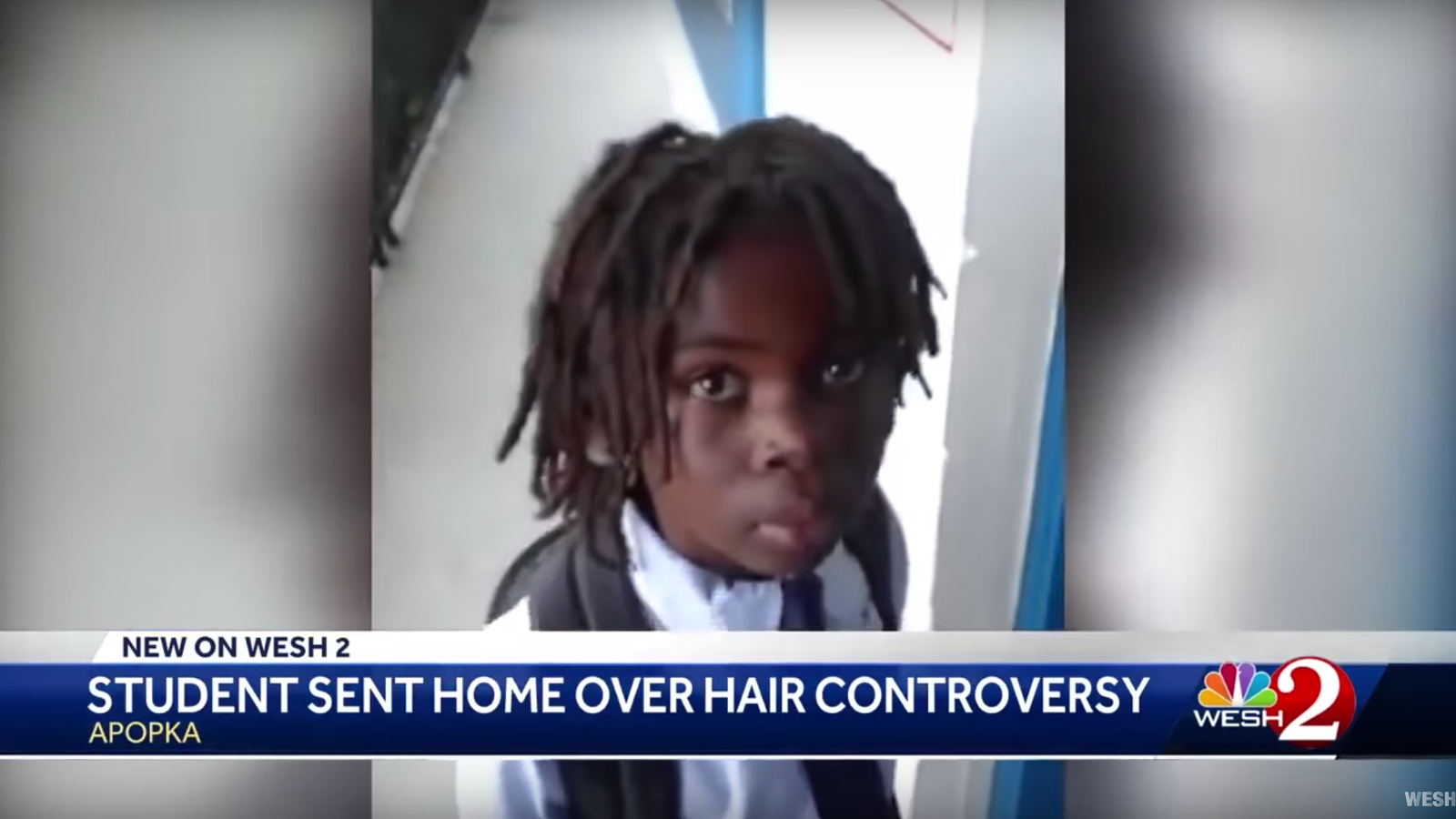
As children returned to school this fall, new teachers and classmates weren’t the only things that greeted some students. More than one story surfaced of children being turned away, or sent home from school, because of culturally-specific hairstyles like braids or dreadlocks. One such child was six-year-old Clinton Stanley, Jr., whose story went viral when he was denied his first day at A Book Christian Academy in Apopka, Fla., because his dreadlocks were deemed non-compliant with the school’s dress code.
A Book Christian Academy is only one of many private evangelical schools in Florida enacting this type of policy. Many of the schools participate in the Hope Scholarship program, Florida’s new school voucher program. (A Book Academy is not part of the voucher program but does benefit from government funding.) While the publicly-funded scholarship program was, ironically, implemented to help students escape bullying in public schools, an investigation by the Huffington Post revealed that as many as Continue reading: NAACP Legal Defense Fund Asks Florida DoE to End Biased Hair Policies

Support Andrew Gillum for Florida Governor -https://andrewgillum.com/

Image result for Andrew Gillum for Florida Governor

Support Andrew Gillum for Florida Governor - https://andrewgillum.com/

We’ve known since the 1940s that kids don’t do well in school when they’re hungry

We’ve known since the 1940s that kids don’t do well in school when they’re hungry

We’ve known since the 1940s that kids don’t do well in school when they’re hungry


National School Lunch week is here (October 15-19), a time for shining the spotlight on this essential program that feeds hungry children.

For just a moment, let’s take a step back in time to see what President Harry Truman and the United States Army were doing about school lunches in the fall of 1946.
Truman had recently signed the National School Lunch Act, which provided meals for needy children.  This meant free or reduced price school lunches for children of families living in poverty. The school lunches meant better health and education.
“The well-nourished school child is a better student. He is healthier and more alert. He is developing good food habits which will benefit him for the rest of his life” explained the President.

Truman sought to spread the initiative as far as possible. This was vital for the health of children, and of the nation.
President Truman proclaimed “The school lunch program provides a cooperative means of assuring adequate nutrition for millions of our children who otherwise might be denied this basic need.”
But Truman also cautioned that more needed to be done. Hunger is relentless.  We must keep advancing school feeding. Truman said “This is a splendid start, but we must look forward to the day when the lunches are available in every community in every State and territory.”
Our National School Lunch Program has been expanded in the decades since Truman. Thirty million children depend on these meals during the school year today. But the Continue reading: We’ve known since the 1940s that kids don’t do well in school when they’re hungry