Latest News and Comment from Education

Friday, March 16, 2018

Most U.S. Teachers Oppose Carrying Guns in Schools

Most U.S. Teachers Oppose Carrying Guns in Schools:

Most U.S. Teachers Oppose Carrying Guns in Schools


STORY HIGHLIGHTS

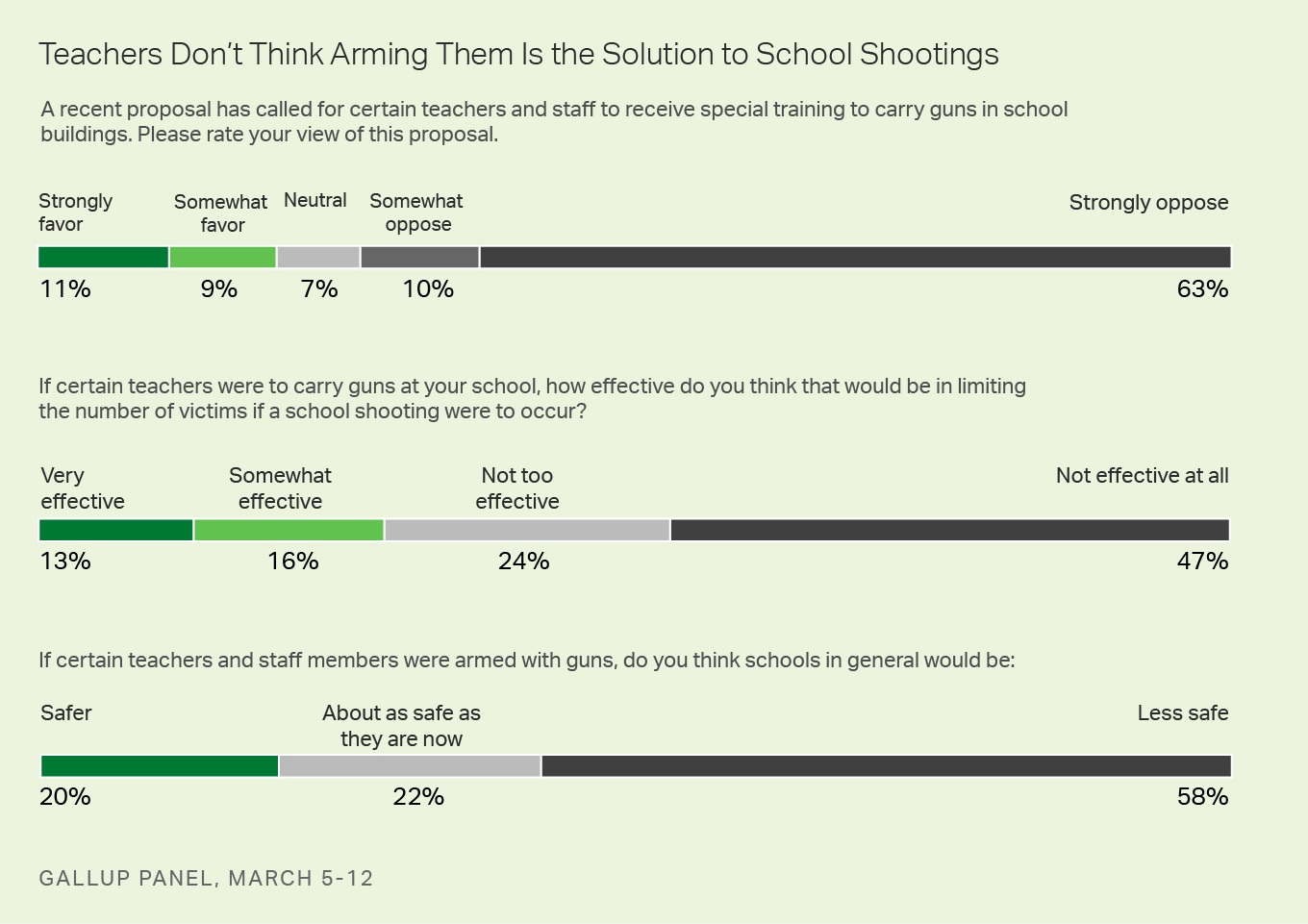
  • 73% of teachers oppose teachers and staff carrying guns in schools
  • 58% say carrying guns in schools would make schools less safe
  • 18% would be willing to carry a gun in school buildings
This story is part of a special series on U.S. teachers' views of carrying guns and school safety.


WASHINGTON, D.C. -- Arming teachers and school staff as a way to handle the United States' problem with school shootings will be a tough sell to those who would have to carry it out -- teachers across the nation.
Nearly three-quarters of U.S. school teachers oppose the idea of training certain teachers and staff to carry guns in school buildings. Nearly six in 10 teachers think it would make schools less safe, and about seven in 10 teachers think carrying guns would not effectively limit the number of victims in the event of a shooting.
Teachers Don't think arming them is the solution to schcool shootings
These findings are based on a nationally representative online Gallup Panel survey of 497 U.S. school teachers in grades K-12. Gallup Panel teachers with web access were invited to take the survey online March 5-12, less than one month after the Feb. 14 shooting at a high school Parkland, Florida, that left 17 people dead and 17 injured.
President Donald Trump has been the most visible proponent of the idea of arming teachers. The National Rifle Association also advocates for this policy, often using the slogan: "To stop Most U.S. Teachers Oppose Carrying Guns in Schools:


Venture capitalist visits 200 schools in 50 states and says DeVos is wrong: ‘If choice and competition improve schools, I found no sign of it.’ - The Washington Post

Venture capitalist visits 200 schools in 50 states and says DeVos is wrong: ‘If choice and competition improve schools, I found no sign of it.’ - The Washington Post:

Venture capitalist visits 200 schools in 50 states and says DeVos is wrong: ‘If choice and competition improve schools, I found no sign of it.’


Ted Dintersmith is a successful venture capitalist and father of two who has spent years devoting most of his time, energy and millions of dollars of his personal fortune to learning about — and advocating for — public education and how it can be made better for all children.
Dintersmith has taken a dramatically different path from other wealthy Americans who have become involved in education issues, departing from the approach of people such as Microsoft founder Bill Gates, who was a prime mover behind the Common Core State Standards and initiatives to assess teachers by student standardized test scores.
Dintersmith traveled to every state to visit schools and see what works and what doesn’t — and his prescription for the future of American education has very little to do with what Gates and others with that same data-driven mind-set have advocated.
He thinks the U.S. education system needs to be reimagined into cross-disciplinary programs that allow kids the freedom to develop core competencies through project-based learning.
He discussed his vision in a book he co-authored, “Most Likely to Succeed: Preparing Our Kids for the Innovation Age,” and he funded and produced a compelling documentary called “Most Likely to Succeed,” which goes into High Tech High school in San Diego, where the project-based educational future he wants is already there.
He has a new book being published in April, “What School Could Be: Insights and Inspiration From Teachers Across America,” about what he learned during his travels and school visits.
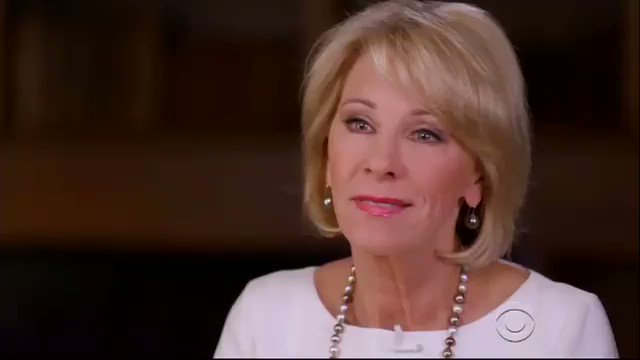
In this post, he writes about what he saw and offers advice to Education Secretary Betsy DeVos, who recently said on “60 Minutes” that she had never “intentionally” visited an underperforming school.
By Ted Dintersmith
In her recent “60 Minutes” interview, Secretary of Education Betsy DeVos indicated that perhaps she should visit more schools. Yes.  She needs to get out of her bubble and visit schools across America.  I did, and there’s much to be learned.
For context, I spent the entire 2015-2016 school year immersed in education across America.  In a trip that rivaled de Toqueville’s, I traveled to all 50 states, visited 200 schools of all types Venture capitalist visits 200 schools in 50 states and says DeVos is wrong: ‘If choice and competition improve schools, I found no sign of it.’ - The Washington Post:

Thursday, March 15, 2018

School Segregation is Not a Myth - The Atlantic

School Segregation is Not a Myth - The Atlantic:
School Segregation Is Not a Myth
Skeptics claim that concerns over racially divided schools are false alarms—but they’re missing the full picture.


Is school segregation getting worse?

Plenty of people say yes, including scholarsjournalists, and civil-rights advocates. For the first time in years, there’s something approximating a consensus: Racially divided schools are a major and intensifying problem for American education—maybe even a crisis.

There’s seemingly compelling numerical evidence, too. According to my analysis of data from the National Center on Education Statistics, the number of segregated schools (defined in this analysis as those schools where less than 40 percent of students are white), has approximately doubled between 1996 and 2016. In that same span, the percentage of children of color attending such a school rose from 59 to 66 percent. For black students, the percentage in segregated schools rose even faster, from 59 to 71 percent.


But not everyone is on board. In the eyes of some writers, the warning signs of segregation are all a false alarm—little more than a statistical mirage. The National Review writer Robert VerBruggen recently made this case, attacking what he called the “resegregation myth.” VerBruggen and other skeptics contend that methods meant to identify school segregation are instead detecting something much more benign: The growing diversity of the American population.


This is possible because many measures of school segregation are narrow, focusing only on a single symptom. For instance, one common research technique is to count the number of schools above a certain demographic cutoff (for instance, more than 90 percent nonwhite). Another is to focus on “exposure,” or how common it is for white and nonwhite students to encounter each other in the education system.

Doubters like VerBruggen argue that people using these metrics have been fooled by demographic change. The past several decades have seen a precipitousSchool Segregation is Not a Myth - The Atlantic:


 Big Education Ape: The History of Institutional Racism in U.S. Public Schools - Garn Press - 


Wednesday, March 14, 2018

Must Watch Video: Student speaks in front of the U.S. Capitol on #NationalWalkoutDay


Student speaks in front of the U.S. Capitol on #NationalWalkoutDay
Image result for #NationalWalkoutDay

 Image result for #NationalWalkoutDay
Image result for #NationalWalkoutDay
Related image


Image result for #NationalWalkoutDay

Image result for #NationalWalkoutDay

Image result for #NationalWalkoutDay

Image result for #NationalWalkoutDay
Image result for march for our lives on march 24
https://marchforourlives.com/walkouts

Monday, March 12, 2018

Betsy DeVos’s stumbling ‘60 Minutes’ interview, annotated - WAPO

Betsy DeVos’s stumbling ‘60 Minutes’ interview, annotated - YouTube:

Why it was so easy for ‘60 Minutes’ to rebut Betsy DeVos’s charter-school arguments

Betsy DeVos was picked to run the Education Department largely to continue the work she had embraced through her philanthropic work: advocating an expansion of charter schools. Hers was the most controversial Cabinet nomination by President Trump, requiring Vice President Pence to cast a tie-breaking vote confirming her for the position. That controversy had many causes, but a significant one was that many in the education community were concerned about turning over the department to someone who advocated transferring scarce public funding to what amounted to educational experiments.
Which is to say that DeVos should, by now, be very aware that her advocacy of charter schools is contentious, to understate it a bit. Meaning, by extension, that when being interviewed by one of the most established television news programs in the country, she should be able to defend her position.
Yet when interviewed by “60 Minutes” for a program that aired on Sunday — she wasn’t.


Betsy DeVos struggles to provide answers to '60 Minutes' when asked for evidence to support school choice policies. http://bit.ly/2tJjstd 
“In places where there is a lot of choice that’s been introduced,” DeVos told CBS’s Lesley Stahl, “Florida, for example, studies show that when there’s a large number of students that opt to go to a different school or different schools, the traditional public schools actually, the results get better as well.” Continue Reading: Why it was so easy for ‘60 Minutes’ to rebut Betsy DeVos’s charter-school arguments - The Washington Post

Sunday, March 11, 2018

The hidden threat of teacher stress - Salon.com

The hidden threat of teacher stress - Salon.com:

The hidden threat of teacher stress

Nearly half of all teachers report experiencing a lot of daily stress

Image result for teacher stress


This article was originally published on The Conversation.


When a traumatic event such as the Florida school shooting takes place, often the focus afterward is on finding ways to make sure students and teachers are safe from violence and physical harm.


But there’s another danger that threatens teacher well-being that is often overlooked. The threat is stress — and it is something that nearly half of all teachers say they experience at a high level every day.
Teachers are actually tied with nurses, with 46 percent of both groups reporting high daily stress. Such reports are comparable with other notoriously demanding occupations, such as physicians and business managers. It’s not hard to understand the reasons why.
Teachers do much more than teach academic lessons. They must also manage classroom behavior and keep an eye on helping students grow and develop socially in a healthy way. On top of that, they must coordinate with other adults and keep records of just about everything they do.
Teachers are expected to perform these tasks effectively, even when their students face difficulties outside the classroom, from unmet needs to mental health issues. The more needs students have, the more teachers are expected to do.
If teachers already face high levels of occupational stress, it’s not hard to see how the recent spate of deadly school shootings – coupled with the idea that teachers should arm themselves to protect themselves and their students — can elevate their stress levels even higher.
We make these observations as researchers affiliated with the Center for Research on School Safety, School Climate, and Classroom Management at Georgia State University. Among other things, our research focuses on fostering better school and workplace relationships and cultivating safe learning environments.
The consequences of teacher stress are far-reaching and adversely impact not just the teacher, but everyone around them, most notably their students.
Threats to teacher wellness
For starters, chronic stress triggers a range of physical and mental health symptoms. Physically, stress weakens the immune system and increases susceptibility to illness. Stress also exacerbates pain and reduces physical stamina.
Prolonged stress may increase risk of chronic fatigue, heart disease and other Continue reading: The hidden threat of teacher stress - Salon.com:
 Image result for teacher stress

'School Choice' Is A Lie That Harms Us All | HuffPost

'School Choice' Is A Lie That Harms Us All | HuffPost:

‘School Choice’ Is A Lie That Harms Us All


t’s March, which means it’s “choice” season for a lot families living in urban areas. Like many households, mine is on pins and needles waiting to learn where our teenage daughter has been accepted to high school.
She has taken three different standardized tests to be considered for admission at various public, Catholic and independent schools. She tried to convince us to hire a tutor, as some of her peers’ parents have, to give her advantage on these tests. We refused, because it seemed a bit much for eighth grade. Her father and I have spent hours crafting essays and filling out applications. We played in the local lottery to attend schools across town. We have taken off work to take her to visit school after school, where she has arrived, nervous in starched shirts, legs carefully crossed, to implore administrators to accept her. She is 14.
We have done all of this so we can avoid our struggling neighborhood school.
This system of school choice has powerful backers. The most influential is Education Secretary Betsy DeVos, the billionaire heiress whose proposed budget would pump hundreds of millions of dollars into the various privatizations schemes such as vouchers and charters that power this system of “choice.”
Washington, D.C., where I live, recently lost yet another city schools chancellor when it was revealed he had jumped the line to choose a school for his own daughter. Antwan Wilson resigned for violating a policy that he had authored, a policy that was supposed to stop well-connected parents and officials from gaming the system to win their kids spots at top schools. Wilson apologized, explaining that he got “tunnel vision” in trying to make the best choice he could for his own child.
He’s wrong about this. The tunnel is the feature, not the bug, of school choice. It is the'School Choice' Is A Lie That Harms Us All | HuffPost:

Saturday, March 10, 2018

AP finds the NRA gave $7 million to hundreds of schools #NeverAgain #Parkland

AP finds the NRA gave $7 million to hundreds of schools:

AP finds the NRA gave $7 million to hundreds of schools


The National Rifle Association has dramatically increased its funding to schools in recent years amid a national debate over guns and school violence, an Associated Press analysis of tax records has found. But few say they plan to give up the money in the aftermath of the latest mass shooting.
The AP analysis of the NRA Foundation’s public tax records finds that about 500 schools received more than $7.3 million from 2010 through 2016, mostly through competitive grants meant to promote shooting sports. The grants have gone to an array of school programs, including the Junior Reserve Officer Training Corps, rifle teams, hunting safety courses and agriculture clubs.

In some ways, the grant distribution reflects the nation’s deep political divide over guns. Nearly three-quarters of the schools that received grants are in counties that voted for President Donald Trump in the 2016 election, while a quarter are in counties that voted for Democrat Hillary Clinton, according to the AP analysis. Most are in medium-sized counties or rural areas, with few near major cities.
California received the most in school grants, more than $1 million, while Florida was a close second.
Florida’s Broward County school district is believed to be the first to stop accepting NRA money after a gunman killed 17 people at one of its schools Feb. 14. The teen charged in the shooting had been on a school rifle team that received NRA funding. School officials announced the change Tuesday but declined to comment further.
Denver Public Schools followed on Thursday, saying it won’t pursue NRA grants in the future and will turn down several that were to be awarded this year. But officials in many other districts say they have no plans to back away.
“Whatever I think of the NRA, they’re providing legitimate educational services,” said Billy Townsend, a school board member in Florida’s Polk County district, whose JROTC programs received $33,000, primarily to buy air rifles. “If the NRA wanted to provide air rifles for our ROTC folks in the future, I wouldn’t have a problem with that.”
The grants awarded to schools are just a small share of the $61 million the NRA Foundation has given to a variety of local groups since 2010. But it has grown rapidly, increasing nearly fourfold from 2010 to 2014 in what some opponents say is a thinly veiled attempt to recruit the next generation of NRA members.
The NRA Foundation did not return calls seeking comment.
Annual reports from the pro-gun group say its grant program was started in 1992 and raises money through local Friends of NRA chapters. It says half the proceeds from local fundraisers go to local grants and half goes to the national organization. Tax records show roughly $19 million in grants going to the group’s Virginia headquarters in 2015 and in 2016.
Besides schools, other typical recipients include 4-H groups, which have received $12.2 million since 2010, Boy Scout troops and councils, which received $4 million, and private gun clubs. Overall, about half the grants go to programs directed at youth.
Grant funding to schools rose sharply in the years after the 2012 shooting at Connecticut’s Sandy Hook Elementary School, fueled in part by a new grant program the NRA unrolled to help schools make safety improvements. Three districts received safety grants totaling $189,000 in 2014, tax records show, but none appears to have been awarded since then.
Nearly half of the 773 overall school grants have gone to JROTC programs, which put students through a basic military curriculum and offer an array of small competitive clubs, like the rifle team at Broward’s Marjory Stoneman Douglas High School. But JROTC leaders say few students ultimately enlist in the military, and the primary goal is to teach students skills like discipline and leadership.
“The safety that we’re teaching, the good citizenship that we’re teaching here, those are the things you don’t hear about,” said AP finds the NRA gave $7 million to hundreds of schools:


Sacramento-area schools have received $1.1 million from the NRA | The Sacramento Bee - http://www.sacbee.com/news/local/education/article204340309.html 


The History of Institutional Racism in U.S. Public Schools - Garn Press

The History of Institutional Racism in U.S. Public Schools - Garn Press:

The History of Institutional Racism in U.S. Public Schools
The History of Institutional Racism in U.S. Public Schools by Susan DuFresne will be available April 2018.

The History of Institutional Racism in U.S. Public Schools is a book intended to challenge the authority of the policymakers and misanthropic funders who are wreaking havoc in public schools, closing schools in Black and Brown neighborhoods, and pushing segregated charter schools on communities that have every right to exceptional learning environments in fully funded public schools.
The book is in three parts. In Part One Susan DuFresne writes about the remarkable journey she took that resulted in the creation of the three 15 foot graphic panels that depict historically accurate pictures of racism in U.S. public schools. In Part Two the panels depicting racism and discrimination are transformed into a graphic novel in which the paintings Susan created tell the story of three hundred years of racial injustice that is still endemic today. In Part Three the information that Susan painted in the margins of the paintings is presented together with notes from Susan on suggested questions that could be asked and actions that could be taken.
At Garn Press we applaud Susan’s activism and commitment to racial justice, and we are convinced that this book is transformational and destined to be a lightning rod for justice in U.S. society. Susan, who is a teacher and activist as well as an artist of exceptional talent, writes of the three fifteen foot panels she produced:
“I felt on my brush the weight of historical injustice as I depicted the findings of my research. But I also felt the tugging of my brush to depict the fight for justice, which was also there throughout history. There have always been activists, many of them teachers, ready to fight for justice in U.S. public schools. Teachers especially have always been courageous in their resistance to racism and oppression, and I wanted to share this history to inspire others through the images I was painting to take up that truth and join the resistance movement to end institutional racism in public schools.”
The paintings Susan produced are truly works of art, which have already inspired strong reactions that could quite possibly result in policy makers recognizing the negative impact they are having on the lives of students and teachers in U.S. public schools.
But make no mistake this is a book of hope as well as condemnation, which is destined to be studied by teachers and parents who want a re-Visioning of the role of public education in their children’s lives, for the emphasis is also on restorative justice and reconciliation. The graphic depictions of the history of racism and discrimination unite the struggles of resistance movements – including Black Lives Matter and Continue reading The History of Institutional Racism in U.S. Public Schools - Garn Press:
Susan DuFresne

Susan DuFresne

Teacher, Author and Illustrator

GARN PRESS AUTHOR & ILLUSTRATOR

SUSAN DUFRESNE

Susan DuFresne is an artist and educator who advocates across all intersectional groups, organizing for social justice. She works alongside colleagues and friends who are leaders in the Black Lives Matter Movement and the Badass Teachers Association. She is a vocal supporter of Indigenous peoples, the Women’s Movement, and LGBTQIA activists, and cares deeply about environmental issues. She visualizes a future where these diverse groups join together to successfully return power to the people.
Susan is currently teaching children in an integrated kindergarten classroom as both a general education and special education teacher. She is active on social media and can often be found participating in marches and rallies for social justice locally and at the state and national levels. One of the important battles she fights is for democratically run schools, as well as a child’s right to play. She pushes against the use of high stakes testing, agreeing with many students, parents, and educators who denounce these tests as racially biased, advocating for their right to opt out.
Susan and her husband live in Washington State. They have one son, three daughters and three grandchildren.