Latest News and Comment from Education

Monday, June 19, 2017

Seattle educators demand justice for Charleena Lyles; pledge to rally and wear “Black Lives Matter” shirts to school on Tuesday | I AM AN EDUCATOR

Seattle educators demand justice for Charleena Lyles; pledge to rally and wear “Black Lives Matter” shirts to school on Tuesday | I AM AN EDUCATOR:

Seattle educators demand justice for Charleena Lyles; pledge to rally and wear “Black Lives Matter” shirts to school on Tuesday

Image may contain: 1 person, smiling, standing, text and outdoor

Seattle educators demand justice for Charleena Lyles; pledge to wear “Black Lives Matter” shirts to school on Tuesday, join 5pm rally

  • Charleena, a pregnant mother of four, was shot and killed by Seattle police in front of her kids
  • Educators say a Seattle Public Schools parent was killed & they will stand by her family
  • Some 3,000 teachers wore Black Lives Matter shirts on Oct. 19th—now they will wear them to school for Charleena.
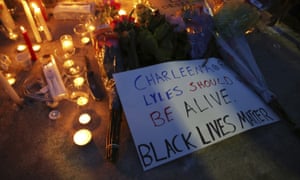
What/Where: Seattle teachers and educators will wear Black Lives Matter shirts to A vigil for Charleena Lyles, who was shot and killed Sunday.school, hold lunchtime speak-outs, and rally at 5pm at Magnuson Park.  Then Educators will march to a 6pm press conference at the Brettler Family Place apartments where Charleena lived: 6850 62nd Ave NE, Seattle, WA 98115.
When: Tuesday June 20th, 5:00pm educator rally, march to 6pm press conference with Charleena’s family.
Who: All Seattle teachers, educators, and families are being encouraged to wear the Black Lives Matter shirts on Tuesday in solidarity with Charleena’s children and family.
RSVP on the Facebook event page now!
Related imageSeattle, WAOn Sunday, June 18th, Charleena Lyles, a pregnant mother of four, was killed by Seattle police after she called them to her home for help.  Police alleged she had a knife.  She was killed in front of her kids, who had to be carried over her body to leave the apartment.  Chrleena had children who attended two different Seattle Public Elementary Schools.  Educators from those schools have been contacted
“As a Seattle Public Schools parent, Charleena Lyles was part of our education family,” said Garfield High School teacher Jesse Hagopian.  “We are wearing Black Lives Matter shirts to school on Tuesday to show her children and her family that we grieve with them, we support them, and we will stand with them in Solidarity.”
Earlier this school year on October 19th, some 3,000 educators wore shirts to school that said, “Black Lives Matter: We Stand Together.” Hundreds is families and students did too. Many of the shirts also included the message “#SayHerName,” a campaign to raise awareness about the often invisible state violence and assault of  women in our country.
On Tuesday, June 20th we are calling on all educators throughout Seattle to put those Black Lives Matter t-shirts back on, have a lunch time photo and speak out in every school, and then join an after school rally.   Hamilton Middle School teacher Sarah Arvey, one of the organizers of the October Black Lives Matter At School event, said, “Charleena’s death impacts the entire Seattle Public Schools community. We wore the Black Lives Matter shirts in October that read, ‘We Stand together.’ Well, now it’s time to stand to stand together for a Black family that has been torn apart.”
The educator rally for justice for Image result for black lives matter at schoolCharleena Lyles will start at 5pm in Magnuson park and then march to the 6pm press conference being held by Charleena’s family.

American Teachers Slam Israel’s Classroom Ban On Political Opinions – The Forward

American Teachers Slam Israel’s Classroom Ban On Political Opinions – The Forward:

American Teachers Slam Israel’s Classroom Ban On Political Opinions

Image result for Randi Weingarten


NEW YORK (JTA) — The heads of the American Federation of Teachers and the American Association of University Professors jointly condemned a law proposed by Israel’s education minister that would bar the expression of political views in classrooms.
“The ‘code of ethics’ that the government of Israel is considering for the country’s academic institutions is a threat not only to academic freedom in Israel, but to Israel’s standing as a democracy,” said AFT President Randi Weingarten and AAUP President Rudy Fichtenbaum in a joint statement Monday. Both Weingarten and Fichtenbaum are Jewish.
The proposed code of ethics for institutes of higher education, spearheaded by Israel’s education minister, Naftali Bennett, has spurred a fierce debate in Israel about the role of politics in the classroom. An organization of Israel’s university chiefs has rejected the code as governmental overreach.
Weingarten and Fichtenbaum’s statement noted that they oppose the Boycott, Divestment and Sanctions movement against Israel but believe any group has the right to free speech.
“While we have opposed efforts to boycott Israeli universities, we also oppose stifling discussion of boycott proposals,” they wrote. “No one convinces anyone of the merits of their position by preventing free speech.”
 American Teachers Slam Israel’s Classroom Ban On Political Opinions – The Forward:

CURMUDGUCATION: PA: Islamophobes, Real Estate, and Scam Artists

CURMUDGUCATION: PA: Islamophobes, Real Estate, and Scam Artists:

PA: Islamophobes, Real Estate, and Scam Artists


I'll tell you right up front that this story raises more questions than it answers, but many of them are questions about just what comes through the door when you invite privatization in, and others are questions about how people react when they discover what an open door actually means.

The New Castle Youth Development Center was set up in about 1967 as a facility for dealing with "felonious youth." It was on almost 150 acres in rural Shenango Township, and it didn't attract a lot of attention (except for that time, back in the 1987-1988 season when its high school won the Western PA basketball championship). 


In 2013, the state announced that the facility was closing. There were reasons given, but the math was pretty obvious. 210 employees. 100 beds. $19.4 million annual budget. 31 youths being held there. The end came quickly and local folks kicked, but the state-- which owned the facility-- was unmoved.

The state's intent was to sell the facility, but like many starry-eyed investment-minded homeowners, the state didn't read the market for fifty-year-old juvenile justice facilities in the middle of nowhere very well. They set an asking price of four million. Absolutely nobody bid. The property sat there, presumably getting no more attractive, the state's aspirations decreasing. A local coalition looked at buying the place with an eye to some sort of private-public partnership develop thing. That didn't happen, either. 

Finally, this year, three bids came in. The top bid was $400,000, and the state said, "Sold!!"

And then local folks found out who the buyers were.

The top bid came from Hira Educational Services of North America, a New Jersey educational consulting group. That specializes in consulting work with Islamic schools. They look like a typical 
CURMUDGUCATION: PA: Islamophobes, Real Estate, and Scam Artists:


The Best Way to Thank Your Child's Teacher - Teacher Habits

The Best Way to Thank Your Child's Teacher - Teacher Habits:

The Best Way to Thank Your Child’s Teacher

best thank teacher


School is out for the year in most places. Teachers are sleeping in. Parents have arranged for child care. Students are spinning fidgets or playing video games or getting in my way at the zoo (I don’t really know what students do with their free time anymore. I used to watch Matlock in the summer). Many teachers received gifts from the parents of their students during that last week of school. I saw them on Facebook, and I don’t know a single teacher who doesn’t greatly appreciate them. In a world where genuine appreciation is as rare as political bipartisanship, even a token thank you stands out.
Gift cards, coffee mugs, thematic baskets, chocolate, and thank you cards are all great, but there is one way parents can thank their children’s teachers that beats them all. Few teachers receive this gift, even though it costs nothing, takes only a few minutes to put together, has lasting positive effects, and you can do it at any point of the school year, even now, when it’s over.
What is this wonderful, simple gift?
An email to the teacher’s principal.

Teachers Get Evaluated

Many parents may not be aware that teachers are evaluated yearly now. This is a relatively new thing, at least in practice. While there have always been teacher evaluation systems, the old ones were mostly formalities. The principal would let the teacher know he was coming, the teacher would teach, the principal would fill out a quick form that usually lacked teeth, and they’d all go on their merry ways.
Then, for lots of mostly bad reasons, politicians decided teachers were the main cause of society’s failures. They decided to weed out the bad ones. To do that, they needed some kind of system to identify the bad The Best Way to Thank Your Child's Teacher - Teacher Habits:

NYC Public School Parents: Arne Duncan still arguing for mayoral control -- when the trend is in the opposite direction

NYC Public School Parents: Arne Duncan still arguing for mayoral control -- when the trend is in the opposite direction:

Arne Duncan still arguing for mayoral control -- when the trend is in the opposite direction


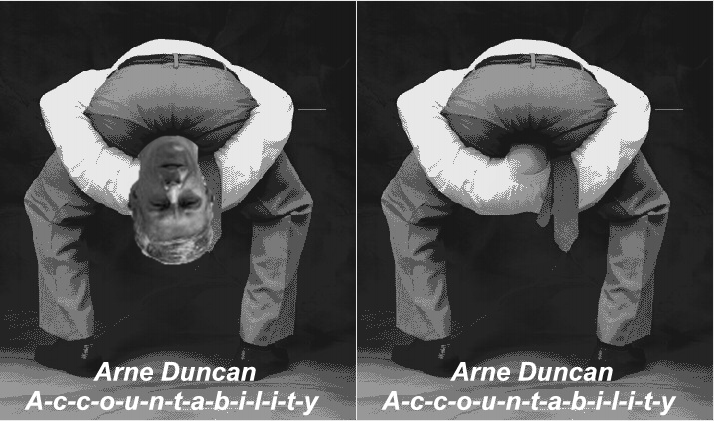
In the Sunday Daily News , former Secretary of Education Arne Duncan argued for the extension of Mayoral control.  The official legislative session is supposed to end Wednesday and Mayoral control expires at the end of the month.  Yet considering Arne's unpopular and controversial policies this probably is not the most effective endorsement.  He wrote:
"Mayors who are in control of their schools are directly accountable for the success of those schools. Education becomes a key to the Mayors' success. To put it another way, parents are hard to fool and parents vote."
Really? This certainly is a change of tone from Duncan’s earlier condescending remarks that parents only opposed the Common Core standards after finding out that “their child isn’t as brilliant as they thought they were, and their school isn’t quite as good as they thought they were.”
If NYC parents are so hard to fool, one wonders why can't they have the right to elect a school board as voters do in most of the country? 
Mayor de Blasio and Chancellor Farina have offered their own unconvincing arguments.  The Mayor has said an era of “corruption and chaos” would return if mayoral control is not renewed: 

Unfortunately a lot of chaos went with that. A lot of corruption went with that. A lot of patronage ... a lot of people went to jail, we’ve got to make sure we never go back to those days.”

Chancellor Farina’s hand-wringing is  even more extreme:

Managers, appointed by the local school boards, inflated the price of contracts to generate lucrative kickbacks that took money directly away from NYC Public School Parents: Arne Duncan still arguing for mayoral control -- when the trend is in the opposite direction:


 Image result for big education ape  duncan

Mom shaming or constructive criticism? Perspectives of mothers | National Poll on Children’s Health

Mom shaming or constructive criticism? Perspectives of mothers | National Poll on Children’s Health:

Mom shaming or constructive criticism? Perspectives of mothers

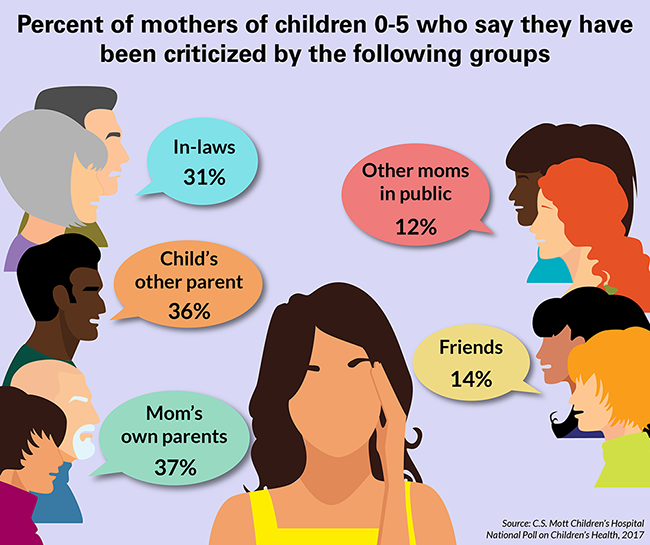
Percent of mothers of children 0-5 who say they have been criticized by the following people


Mothers of young children face numerous parenting decisions, starting with choices about infant feeding methods and sleep position, to daily decisions about toddler diet, discipline and health/safety. Some mothers have a support system that offers encouragement during the challenges of parenting a young child; other mothers face negativity and second-guessing of their parenting choices. The C.S. Mott Children’s Hospital National Poll on Children’s Health asked a national sample of mothers of children 0-5 years old about their perceptions of being criticized about their parenting.
Most mothers (61%) say they have been criticized about their parenting choices, most frequently by family – their spouse/child’s other parent (36%), their in-laws (31%), or their own mother or father (37%). Mothers report less criticism from peers – friends (14%), other mothers they encounter in public (12%), commenters on social media (7%) – or from their child’s health care provider (8%) or childcare provider (6%). About 1 in 4 mothers (23%) have been criticized by three or more groups. Overall, 62% believe that mothers get a lot of unhelpful advice from other people, while 56% believe that mothers get too much blame and not enough credit for their children’s behavior. These beliefs are more common among mothers reporting criticism from multiple groups.
Discipline is the most frequent topic of criticism, reported by 70% of criticized mothers. Other common topics of criticism are diet/nutrition (52%), sleep (46%), breast- vs bottle-feeding (39%), safety (20%), and childcare (16%).
Mothers describe different – and sometimes conflicting – responses to criticism about their parenting. Many seek additional information about a specific topic, either searching for Mom shaming or constructive criticism? Perspectives of mothers | National Poll on Children’s Health:


How to Go the Resistance Distance: Pop-Up Schools for Novice Activists

How to Go the Resistance Distance: Pop-Up Schools for Novice Activists:

How to Go the Resistance Distance: Pop-Up Schools for Novice Activists

Modeled after the civil rights era’s citizenship and freedom schools, the new Sojourner Truth School for Social Change Leadership teaches skills for the Trump era.


This post originally appeared at Yes! Magazine.
More than 200 people crammed into a meeting room at Smith College to listen to Dr. Beverly Daniel Tatum speak at the May 4 opening ceremony of the Sojourner Truth School for Social Change Leadership. The new school provides in-person training opportunities in activism in five cities throughout western Massachusetts.
“We need the Sojourner Truth School to lift us out of the deep funk that many of us have felt since the election of 2016,” said Tatum, president emerita of Spelman College and author of several best-selling books on the psychology of racism. “Ordinary people can get this started and make an impact.”
Since the Trump election, there has been an outpouring of interest in engaging with politics and social movements—and a hunger to learn new skills. The Truth School is one of a number of schools cropping up recently to train people to become activists in social change movements.
The Rev. Andrea Ayvazian co-founded the school and said the idea was to create a “school that teaches movement building skills — a ‘pop-up’ school that teaches useful skills to those seeking to resist Trump’s authoritarianism.” She said she hopes the school will “help us cling to democracy during the Trump years.”
The notion for the school emerged after Ayvazian attended a pop-up artist’s event in an empty store space. “I imagined an impermanent school, popping up around the valley.”
Ayvazian said that the initial response to her idea was overwhelmingly positive. People have offered free spaces for the school, she said, and now the Truth School is popping up in artist studios, library halls and community meeting rooms at religious congregations.
 
History of Activism Schools
The post-election activist surge has included thousands who have thrown themselves into electoral politics. These activists are working to elect insurgent candidates such as Rob Quist in Montana and Jon Ossoff in Georgia and around the country. And organizations that train people to enter political races for the first time have seen a spike in interest. More than 7,000 women have signed up for VoteRunLead’s “Run as You Are” course that teaches women how to run for office. According to The Cut, the She Should Run online incubator program for women candidates reported a huge increase in women registering for the program: from dozens to hundreds of women signing up in a normal month before the election to more than 8,100 in the three months since the election.
One new school that formed in the wake of the Trump inauguration — called the Resistance School — drew more than 175,000 participants during its initial four-part training series in How to Go the Resistance Distance: Pop-Up Schools for Novice Activists: 

Genius | Teach for America Tricks Young People into Being Scabs | Benjamin Studebaker

Genius | Teach for America Tricks Young People into Being Scabs | Benjamin Studebaker:

Teach for America Tricks Young People into Being Scabs

Image result for big education ape Teach for America

Last month, we talked about how Mike Pence ran down the schools in Indiana while he was governor, slashing state educating spending by about 11.5% (relative to GDP) and creating a massive teacher shortage as good teachers defected to neighboring states and fewer Hoosiers elected to go into education. Today I want to talk about the pivotal role programs likes Teach for America play in aiding and abetting these efforts to annihilate the public schools.
When a governor like Pence decides to starve the public schools, many districts respond by early retiring their most experienced teachers and replacing them with young, inexperienced cheap hires. When there is a teacher shortage, they may not even be able to find many of these, so they instead turn to long-term substitutes and student teachers.These substitutes and student teachers can be paid at a rate that is cheaper than the union rate for a real teacher, even one who is fresh out of school. When an employer hires a nonunion laborer to avoid paying the wages negotiated with the union, that employer is hiring a scab, and that nonunion laborer is a scab.
Scab teachers are a problem for two reasons:
  1. They undermine the negotiating power of the teachers’ unions, making it more difficult for teachers to earn a decent living.
  2. Because they make it more difficult for teachers to earn a decent living, they discourage people–especially talented people with other options–from entering the education profession, lowering both the quantity and quality of professional teachers, exacerbating shortages and lowering standards. This hurts kids.
Now, what does Teach for America do? Teach for America offers recent college graduates the opportunity to teach for a two year period, usually in a school in a low income area. The students get to feel like they’re making a difference–they think they’re helping underprivileged youth. Meanwhile, the school districts get to avoid paying union rates, and the governors and state legislators get to avoid paying the political price of a prolonged teacher shortage. This helps the districts and the state governments engage in a race to the bottom to deprofessionalize and deunionize the teaching profession, and that means that it helps them reduce both the quantity and quality of professional teachers. By stepping in to fill a void, the students are making the void bigger.
Of course, the students don’t realize that they’re being scabs. Nobody tells them thatGenius | Teach for America Tricks Young People into Being Scabs | Benjamin Studebaker:
Image result for big education ape Teach for America
Image result for big education ape tfa

Randi Weingarten: A Free-Market Failure In The Heartland | HuffPost

A Free-Market Failure In The Heartland | HuffPost:

A Free-Market Failure In The Heartland

Trickle down economics didn’t work in Kansas. It never has. Not anywhere.


It was every supply-side economist’s dream: the promise of achieving economic nirvana by slashing taxes for the wealthy and corporations, and shrinking government. Except it became a nightmare for the people of Kansas, and now the Kansas Legislature has taken a big step toward waking up from it.
Kansas Gov. Sam Brownback turned his state into a laboratory for the most extreme form of trickle-down economics, promising that it would usher in an economic boom. It didn’t. It never has. Brownback’s five-year experiment caused state revenue to plummet, the deficit to explode, and painful spending cuts to be made—including cuts decimating public schools. Last week, a once-unlikely alliance stopped Brownback’s attempt to double down on his plan: Democratic and Republican lawmakers, urged on by parents, business people, civic activists and unions of working people.
You would think that this revolt by Kansas’ citizens and legislators of both parties would send chills up supply-siders’ spines nationwide. But the essential tenets of Brownback’s plan remain at the center of the tax proposals championed by President Donald Trump and House Speaker Paul Ryan. Granted, these free-market tenets are well-established conservative orthodoxy. But, as the Kansas experiment demonstrates, they offer a false promise and lead not to prosperity but to deep austerity.
The Kansas economic plan was intended to serve as a model for other anti-government forces. Instead, it presents lots of inconvenient facts. State revenues plunged $700 million in the first year alone, resulting in deep cuts to everything from road repair to state psychiatric hospitals. The state budget deficit climbed to nearly $900 million. And, while economic growth nationally has remained steady at just above 2 percent annually, A Free-Market Failure In The Heartland | HuffPost:
 Image result for big education ape Kansas randi

Confederate monuments, real heroes and Fathers Day. | Fred Klonsky

Confederate monuments, real heroes and Fathers Day. | Fred Klonsky:

Confederate monuments, real heroes and Fathers Day

19225729_10156252538252067_3664359814517573316_n
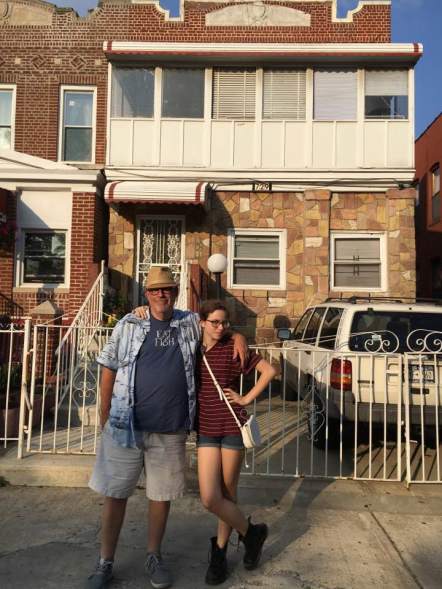
My Dad’s house on Howard Avenue in Brooklyn with Lucy.


Fathers Day was a day with our kids, grandkids and friends at Belmont Race Track in New York. I was sure that Cosi Bellawas the horse to put my hopes on in the 7th.
My hopes were dashed. Cosi Bella finished out of the money. It was not the only bad pick yesterday.
We ended the day at Belmont after the 8th race.
My horse in the 8th may yet spin out of the final turn. We didn’t wait to see.
Driving back, my kids had a surprise for me.
At the spot on Eastern Parkway where Brownsville meets East New York we turned on to Howard Avenue and pulled up in front of a brick house with a wrought iron gate painted white and a car parked in the front yard. The facade looked like it had seen several remodeling jobs over the past hundred years, most recently with faux stone over the original red brick and a tin awning over a second floor porch.
This was probably the house to which my Dad arrived from the hospital when he was born in 1918 and the house he left to go fight in the Spanish Civil War in 1937. Hundreds of women and men from Brooklyn did the same thing. In 1937 it was mainly a neighborhood of working class Jews who recognized the Civil War in Spain as the first battle in a world-wide fight against fascism and were eager to get into it. Three thousand American would go to Spain. A little less than half would come home alive.
They were genuine heroes.
There is no historic marker on the house on Howard Avenue. There are no monuments Confederate monuments, real heroes and Fathers Day. | Fred Klonsky:

Mike Klonsky's SmallTalk Blog: WEEKEND QUOTABLES

Mike Klonsky's SmallTalk Blog: WEEKEND QUOTABLES:

WEEKEND QUOTABLES


‘Taking action is the best cure for despair.’  
Rebecca Solnit
A crisis, says one dictionary, is “the point in the progress of a disease when a change takes place which is decisive of recovery or death; also, any marked or sudden change of symptoms, etc.” This crisis could be the death or the recovery of a more democratic, more inclusive, more generous America. Where we go from here is up to us. -- Guardian
Profs  Christopher & Sarah Theule Lubienski
There is a disturbing disconnect between the predictable, negative effects that vouchers are having on students, and the continued enthusiasm policymakers show for these programs despite the growing consensus that they are causing harm. -- EdWeek
Exiled free agent quarterback Colin Kaepernick

“My heart aches for Philando’s family... A system that perpetually condones the killing of people, without consequence, doesn’t need to be revised, it needs to be dismantled!” -- The Nation
Richard Pfeiffer, Chicago's Pride Parade coordinator

"There are so many issues on the front burner right now, and I think you'll see that reflected. Since the change in Washington in November, LGBT people and others have been marginalized verbally and in other ways. There's anger over that." -- Tribune
Eddie Bolden, a father wrongly imprisoned for 22 years

"When I stepped outside … there's a difference between stepping out on a prison yard and seeing daylight and stepping outside outside. I still can't explain it. It was like I stepped into a whole new world for real." -- Tribune
 Mike Klonsky's SmallTalk Blog: WEEKEND QUOTABLES:

 An Evidence-Based Indictment of Inaction | LucidWitness.com

 An Evidence-Based Indictment of Inaction | LucidWitness.com:

An Evidence-Based Indictment of Inaction

  …Children’s lives hang in the balance

Childhood Pain public domain


 As edited at WHYY / NewsWorks here:

Powerful and surprisingly prevalent horrors are blocking access to education and ravaging children’s lives.  Sadly, they remain “the elephant in the classroom”: Adverse Childhood Experiences (ACEs).
ACEs include physical, sexual, and emotional abuse [including bullying], physical and emotional neglect, a missing parent (due to separation, divorce, incarceration, or death), witnessing household substance abuse, violence, or mental illness. Environmental violence and more.
Developmental (or ‘Childhood’) trauma after ACEs is unidentified or misunderstood and often worsened within school systems, including the School District of Philadelphia (SDP).  Experts call it a “crisis”.
Trauma during development is especially heinous.
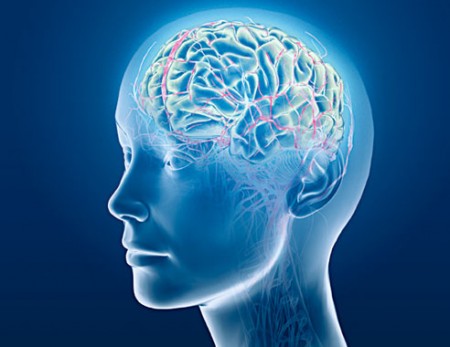
Some adults normalize the pain and fear of the injured child, thinking “they’ll get over it.”  Actually, it’s the opposite.  Young children have fewer coping mechanisms and their immature brains are still developing.  The impacts of trauma are greater on the still-developing brain.
4097561067_cc2a4984bf_o
School children deciding to take their own lives  are a ‘silent’, but persistent indictment. 
Trauma impacts children, learning and schools, via its laser-like effects on the physical structure of the brain.  It damages cognition.  The specific changes to brain architecture damage  An Evidence-Based Indictment of Inaction | LucidWitness.com:

Intersections and Disjunctures: Scholars, Teachers, and Writers | radical eyes for equity

Intersections and Disjunctures: Scholars, Teachers, and Writers | radical eyes for equity:

Intersections and Disjunctures: Scholars, Teachers, and Writers

Image result for Intersections and Disjunctures


Discussing scholars as writers, Michael C. Munger explains, “We train people in methods, and theory, but we don’t tell them that writing is something you have to practice.”
And that practice, Munger argues, must be “like you exercise: at least a little bit, most days….Furthermore, writing makes you a more focused and attentive reader of other works. When you are writing, you read to interrogate that author about a particular point.”
This interview about the intersection of scholars (academics, professors) and writing wades into a fascinating and troubling phenomenon that I expose first-year writing students to in their seminar midterm. I ask them to choose a professor on campus in a discipline they are considering for their major, and then to interview that professor about writing as a necessary aspect of being a scholar.
My students discover, and are surprised to discover, that most of the professors openly share that they dislike writing, struggle with writing, and/or simply tolerate having to write in order to have their research published.
A parallel reality exists in K-12 education. During my current graduate course in literacy, I asked how many of the eleven students had ever been participants in a writing workshop; none of them raised a hand.
Taken together, we are faced with a important hurdle in the teaching writing: at all levels of formal education, writing is taught by scholars/academics and teachers who themselves are not writers, who have had no or very little direct instruction in being writers (as noted by Munger above).
Some of the questions we must investigate, then, include the following:
  • Must anyone who teaches writing be a writer?
  • What are the most effective ways to foster the teaching of writing among those who are not writers, who struggle as writers, and who see writing as a necessary evil?
  • How can and should we support those who write by necessity but never feel compelled as writers (a reality that comprises most students and many scholars and teachers)?
Having been a writer and a teacher for about the same amount of time—37 years writing and 33 years teaching—and since my primary focus as a Intersections and Disjunctures: Scholars, Teachers, and Writers | radical eyes for equity:

Teacher shortage restricts training of new instructors :: SI&A Cabinet Report

Teacher shortage restricts training of new instructors :: SI&A Cabinet Report :: The Essential 

Teacher shortage restricts training of new instructors 

Image result for Linda Darling-Hammond

(Calif.) With districts forced to rely on higher numbers of non-fully credentialed teachers to staff classrooms, educator preparation programs are finding fewer placements for student teachers who require the mentorship of fully credentialed instructors.
The lack of openings for new teachers to train worries some state officials as an emerging cycle that will only exacerbate California’s teacher shortage.
 “It’s getting harder and harder to find schools and districts that are willing, or in many cases even able, to accept teachers that we want to put in classrooms through fieldwork and clinical practice,” Shane Martin, member of the Commission on Teacher Credentialing, said at a meeting last week. “The incentives aren’t there as they once were and schools themselves are stretched more than ever.”
In order to earn their credential, teaching candidates must complete a stint as a student teacher, but they can only do so in a classroom headed up by an already fully credentialed teacher.
Nearly every state has reported a shortage of teachers since the recession–especially in subjects including special or bilingual education, math, and science. Education officials attribute the decline to a combination of high turnover rates among new educators paired with fewer potential candidates enrolling in education colleges, as many opt to pursue degrees that lead to higher paying, more stable careers instead.
Between 2004 and 2014, the number of teaching credentials issued in California decreased by 45 percent, according to state data. Prior to 2008 when the recession took hold, as many as 50,000 college students were working toward getting a teaching degree and certification. Since then, the numbers have fallen to less than half that number.
In an effort to address the issue, lawmakers have passed bills that allow for those who are changing careers to receive an emergency credential and teach in a classroom while they work toward earning a full credential. According to a study authored by Linda Darling-Hammond, chair of the Commission on Teacher Credentialing, the number of teachers hired on substandard permits and credentials nearly doubled between about 2014 and 2016 to more than 7,700, and comprising a third of all the new credentials issued in 2014-15.
All of those efforts would be wasted, however, if upcoming college graduates interested in the Teacher shortage restricts training of new instructors :: SI&A Cabinet Report :: The Essential 

DeVos breaks ranks with GOP, wants changes in ESSA plan :: SI&A Cabinet Report

DeVos breaks ranks with GOP, wants changes in ESSA plan :: SI&A Cabinet Report :: The Essential Resource for Superintendents and the Cabinet:

DeVos breaks ranks with GOP, wants changes in ESSA plan


(District of Columbia) In a muddled if not contrarian response to a state plan for implementing the Every Student Succeeds Act, the U.S. Department of Education has suggested, among other things, that student performance can only be measured by math and reading scores.
The surprise pronouncement, included as part of the department’s review of Delaware’s plan for meeting ESSA requirements, stands in stark contrast to what architects of the law said were two key goals—giving states the freedom and the responsibility for designing their own accountability systems; and removing the federal government as arbiter over school performance.
If upheld, the directive will send shockwaves across the nation as many other states have constructed similar accountability systems that include multiple academic measures for evaluating how well schools are teaching students. Some insiders, however, are watching the developments carefully to see if Delaware officials push back against the department.
“It is very much within the authority of Delaware to come back and say, ‘No, that’s not how we interpret this,’” said David DeSchryver, senior vice president and co-director of Whiteboard Advisors, a D.C.-based education consulting firm.
“This is a peer review letter (from the Education Department), so it’s not binding legal document and there’s still a lot of room for Delaware to respond, and we’ll see where it goes,” DeSchryver said.
After decades of complaints about the No Child Left Behind Act, especially related to the prescriptive federal oversight of schools, a bipartisan Congress joined with President Barack Obama in adopting ESSA in 2015.
Among the many changes that came with the law was the understanding that the federal government would have a far less active role in overseeing the nation’s schools. Instead of the U.S. Secretary of Education, state officials were now given authority to define student success and how to DeVos breaks ranks with GOP, wants changes in ESSA plan :: SI&A Cabinet Report :: The Essential Resource for Superintendents and the Cabinet:

Education department still weighing fate of 11 poorly rated charter sponsors

Education department still weighing fate of 11 poorly rated charter sponsors:

Education department still weighing fate of 11 poorly rated charter sponsors

Image result for big education ape charter school authorizers

When the state rated 21 Ohio charter-school sponsors as “poor” in October, those sponsors were to permanently lose their authority to oversee charter schools.
Eight months later, with this year’s evaluations about to begin again, the Ohio Department of Education is still working on what will happen with 11 “poor” sponsors, including Hamilton Local, London, Newark, Pickerington and Reynoldsburg schools.
According to the department, 10 of the 21 cases are resolved:
‒ Five sponsors, including Groveport Madison schools, appealed their “poor” ratings and reached settlements.
‒ Lima City Schools, Rittman Exempted Village Schools and the Summit County Educational Service Center didn’t appeal and the department’s Office of School Sponsorship became the overseer of their schools.
‒ Southwest Licking and Lakewood Local schools, both in Licking County, closed their digital academies before the ratings were issued.
On Wednesday night, the school board for Groveport Madison approved a settlement with the state that will convert Cruiser Academy, a dropout-prevention charter, into a regular school with the same mission of helping at-risk students recover credits. Students from other districts can attend, but only if their superintendents make an agreement with Groveport Madison. The school will have its own state report card because it occupies a building separate from the district’s other schools.
Under the agreement, if Groveport Madison eventually decides that it wants to sponsor again, it could apply.
Likewise, the Pickerington Board of Education voted in May to convert its dropout-prevention charter school, the Pickerington Community School, into the district-run Pickerington Alternative School for next fall. It will offer the Education department still weighing fate of 11 poorly rated charter sponsors:
Image result for big education ape charter school authorizers