Latest News and Comment from Education

Thursday, June 15, 2017

The Kevin Johnson Pie Saga Rolls On, At Taxpayer Expense 

The Kevin Johnson Pie Saga Rolls On, At Taxpayer Expense :

The Kevin Johnson Pie Saga Rolls On, At Taxpayer Expense 

Related image
Sacramento’s not done with the Kevin Johnson soap opera after all: Sean Thompson, who hit the ex-NBA superstar in the face with a coconut cream pie at a September charity event and immediately took what the public now knows was a heinous physical beating from the disgraced now-former mayor, is going back to court.
The Sacramento District Attorney’s Office has already had one whack at Thompson, having tried him last month on a felony count of assaulting a public official. But that case ended in a mistrial after a two-week trial in Sacramento Superior Court, when jurors told the judge they were hopelessly hung on the fifth day of deliberations. After declaring a mistrial, Judge Robert Twiss made it clear he didn’t like Thompson’s act. “I do not think he has the potential for rehabilitation,” Twiss said, according to a report in the Mercury NewsWell, the DA’s office announcedit would bring the unrehab-able pie thrower back to court, this time to face a reduced charge of misdemeanor assault.
The news that the city was putting Thompson on trial again reminded all Johnson watchers that his gifts as a polarizer remain as blatant as his hoops skills once were.
Commenters on the Sacramento Bee’s website were overwhelmingly against the decision. Some of the naysayers accentuated the time and tax money already spent prosecuting an offense that Thompson, an activist for the city’s homeless, claimed was political theater. Some asserted the legal authorities should have spent the same amount of effort investigating corruption and sexual abuse charges leveled through the The Kevin Johnson Pie Saga Rolls On, At Taxpayer Expense :
Image result for Kevin Johnson Pie

California Attorney General Responds to U.S. Department of Education Decision to Delay Student Protections

California Attorney General Responds to U.S. Department of Education Decision to Delay Student Protections:

California Attorney General Responds to U.S. Department of Education Decision to Delay Student Protections

Image result for fox is guarding the hen house


Attorney General Becerra: “Look out, the fox is guarding the hen house”

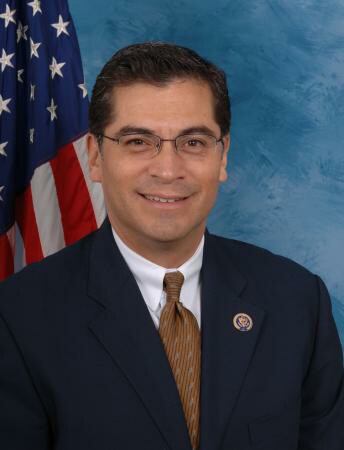
June 15, 2017 - SACRAMENTO – Following the U.S. Department of Education’s decision on Wednesday to block two important rules that protect students defrauded by for-profit colleges and universities, California Attorney General Xavier Becerra xavier becerra california attorney generalissued the following statement:

“I cannot say I am surprised that President Trump’s Administration has decided not to protect students from predatory for-profit colleges. It was Trump University that had to pay $25 million for offering sham courses, hiring unqualified instructors, and lying to students about learning secrets to real estate success. The message the Trump Administration is sending our students is coming into focus: look out, the fox is guarding the henhouse.”


Attorney General Becerra: If Trump Won’t Protect Students from Unscrupulous For-Profit "Colleges", Then I Will

New rules to protect students, set to take effect July 1, in jeopardy

June 15, 2017 - SACRAMENTO – California Attorney General Xavier Becerra is taking action to protect students defrauded by for-profit colleges and universities and to prevent other students from facing similar circumstances. Attorney General Becerra and eight attorneys general filed a motion to intervene in a lawsuit to defend key new rules aimed at protecting students from deceptive practices and fraud.

The U.S. Department of Education’s (ED) Borrower Defense Regulations are set to take effect on July 1. The California Association of Private Postsecondary Schools (CAPPS), a trade group that represents for-profit colleges and universities, sued ED in an attempt to California Attorney General Responds to U.S. Department of Education Decision to Delay Student Protections:


Seattle Schools Community Forum: Seattle School Board Elections 2017 - District V

Seattle Schools Community Forum: Seattle School Board Elections 2017 - District V:

Seattle School Board Elections 2017 - District V

Image result for Seattle School Board Elections 2017

Editor's Note: please see this thread for my process for vetting candidates.

District V 

The candidates who filed for this position are/were:


  • Omar Vasquez
  • Andre Helmstetter
  • Candace Vaivadas
  • Zachary Pullin DeWolf
  • Alec Cooper
  • Michelle Sarju Withdrawn
For District V, I recommend (in no particular order) Andre Helmstetter and Alec Cooper.  I do think Zachary DeWolf has an excellent background in public service but probably doesn't know the district well enough.  Cooper and Helmstetter do.  Again, my concern is the learning curve it takes to be a director.  

I confess I find it hard to pick as all three each have different strengths.  I look forward to hearing them speak at forums between now and the primary.  

Cooper is a straight-ahead, blunt candidate who wants to get things done.  Personally, I find that very appealing.  He would an analytical skill set to the Board.  He is an SPS parent.

Helmstetter has an inviting demeanor and warmth and is a good listener.  His skill set includes being a trained facilitator as well as his job working with groups/companies to sharpen/clean-up their operations and policies.  He is an SPS parent.

Zachary DeWolf is the most soft-spoken but with a drive to serve and help better communities as he has done for  years.  His work at the Seattle Housing Authority means that he knows issues around housing problems for low-income families.  This is knowledge and understanding that would be worthwhile to bring to the Board.  


Helmstetter, DeWolf, Cooper and Vasquez have filed with the PDC; only DeWolf has contributions.  

I interviewed all the candidates in person for this race except Vaivadas, who I do not believe is qualified for the position based on her 36th Dems interview, and Vasquez, who despite claiming he did want to interview with me, has suddenly gone silent and not answered queries.  More on him below but upfront I will say he is the last person I would want to see come out of the primary. 


District V

Alec Cooper
Facebook 
Website 


He did know the answers to my two questions about SPS.  He has two 
Seattle Schools Community Forum: Seattle School Board Elections 2017 - District V:

Image result for Seattle School Board Elections 2017

Florida governor is signing K-12 public education bill that critics call a ‘scam’ — at a Catholic school - The Washington Post

Florida governor is signing K-12 public education bill that critics call a ‘scam’ — at a Catholic school - The Washington Post:

Florida governor is signing K-12 public education bill that critics call a ‘scam’ — at a Catholic school
President Trump listens to Florida Gov. Rick Scott (R) during a meeting with mayors and governors for an infrastructure summit. (Pablo Martinez Monsivais/Associated Press)


Florida’s Republican governor, Rick Scott, on Thursday plans to sign a $419 million K-12 public education bill that has been labeled by critics as “scam” legislation — and he is holding the event at a private Catholic school.
The measure, popular among many but not all Republicans and pro-school choice forces, sparked a tsunami of opposition from parents, school boards, district superintendents and unions. They have argued that it will harm traditional public school districts, threaten services for students who live in poverty and curb local control of education while promoting charter schools and a state-funded voucher program.
When the legislation becomes law, more than 100 traditional public schools given low grades by the state will be converted into charters — even though the charter sector in Florida is deeply troubled; more than 300 have closed as a result of poor performance. Charter-friendly provisions are scattered throughout the bill, such as one that requires traditional public elementary schools to provide recess to students (without resources to expand the school day) but exempts charters from the same mandate.
Scott’s move is in line with the pro-school choice agenda of President Trump and Education Secretary Betsy DeVos, who has frequently cited Florida as a model choice state. DeVos, who has a home in Florida and is a longtime ally of former governor Jeb Bush, has visited a number of schools in the state since becoming education secretary. Trump made his first trip as president, with DeVos accompanying him, to a Catholic school in Orlando, St. Andrew.
Scott, who joined Trump and DeVos on that school visit, had endorsed Trump in March 2016 Florida governor is signing K-12 public education bill that critics call a ‘scam’ — at a Catholic school - The Washington Post:

The Push for Gender-Inclusive Curricula Marches On - The Atlantic

The Push for Gender-Inclusive Curricula Marches On - The Atlantic:

Is This the End of the Crusade for Gender-Equal Curricula?

For decades, the push to acknowledge women’s contributions gained traction, but progress may have flatlined.

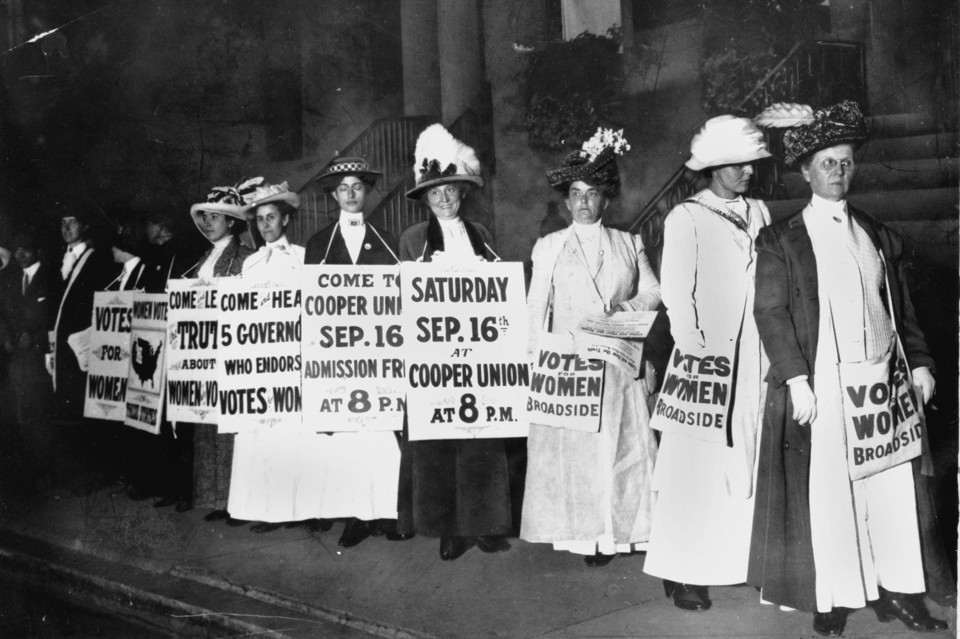
A black and white photo of women in dresses and feathered hats. They hold signs advertising an upcoming rally for women's right to vote.

The book came in the mail without a jacket, its yellowed, crackling pages enveloped in stiff brown paper.
For Patricia Bell-Scott, it told a story that both eased her loneliness and changed the course of her life. This was the late 1960s, and Bell-Scott was among a handful of African American women undergraduate science majors on the recently desegregated University of Tennessee campus.
When she walked into her science classes, professors would swivel around to tell remind her of the course being taught in that room—“this is organic chemistry, this is microbiology.” None of the mostly white, male students  wanted to be her lab partner—until they discovered that she could, in fact, do the work as well as or better than they could.
She spent most of her time learning about the ideas and contributions of people who didn’t look like her. Books about black women were hard to come by, but Bell-Scott, a student assistant in the library, knew where she might be able to find them. She began scouring catalogues of rare and out-of-print books and ordered Proud Shoes by the African American lawyer, priest, activist, and author Pauli Murray.
Which brings us back to those yellowing pages. Bell-Scott devoured Murray’s words, relishing the connections between them: They both came from working class, African American families. They were both bookworms who had at one point lived with grandparents. Suddenly, Bell-Scott saw her place not as a solitary woman on a college campus, but as next in a long line of historic black, female intellectuals. “I saw Pauli as a role model, and her work as an example of the kind of work I thought I could do,” says Bell-Scott, now an award-winning author and professor emerita of women’s studies and human development and family science at the University of Georgia. “I felt my whole sense of myself and my purpose took shape as a result of that experience.”  
Part of that purpose: devoting her career to fighting for educational curricula that The Push for Gender-Inclusive Curricula Marches On - The Atlantic:

Betsy DeVos Can Expand Education Choice Without Harming Private Schools | Knowledge Bank | US News

Betsy DeVos Can Expand Education Choice Without Harming Private Schools | Knowledge Bank | US News:

Betsy DeVos Can Expand Education Choice Without Harming Private Schools

Image result for big education ape devos Private Schools

Last week, Secretary of Education Betsy DeVos faced questions from the Senate Appropriations subcommittee regarding the Trump administration's education budget. It was not an easy day for her, as senators from both parties took issue with some of the suggested cuts. Republican Chairman Roy Blunt, R-Miss., bluntly called it "a difficult budget request to defend."
Perhaps the most controversial proposal in the budget was the $250 million increase in Department of Education funding to support private school choice. This is a departure from current practices: To date, private school choice programs have all been state-run, with the exception of Washington, D.C.'s Opportunity Scholarship program. By all appearances, these funds would involve the Department of Education directing a federal school choice program that would extend private options to families that are unsatisfied with their public options but unable to afford private school tuition. But, with no specifics about how the department would run the program, lawmakers focused on whether the secretary would require participating private schools to prevent discrimination against LGBTQ students or follow the Individuals with Disabilities Education Act, the primary federal education law governing students with disabilities.
DeVos was not particularly forthcoming, repeatedly responding to both lines of questioning by saying, "Schools that receive federal funds must follow federal law." Attempts to get her to elaborate on what that would require were unsuccessful.
As I see it, DeVos is walking a fine line here in wanting to expand parent's access to private school choice, properly enforce federal law and avoid undue regulation of private Betsy DeVos Can Expand Education Choice Without Harming Private Schools | Knowledge Bank | US News:
Image result for big education ape devos Private Schools
 

How To Avoid School Choice Accountability | HuffPost

How To Avoid School Choice Accountability | HuffPost:

How To Avoid School Choice Accountability

Image result for big education ape devos alternative facts

After Betsy DeVos’s last round of Congressional obfuscation testimony, many folks are asking the same question as EdWeek ― “When Do Voucher Programs Allow Private Schools To Discriminate Against Students?” DeVos answered variations on the question with repetitions of one answer:
Schools that receive federal funds must follow federal law, period.
I don’t have a direct line to DeVos’s brain, so I can’t discern for certain what she’s thinking, but I do know a way to keep funneling tax dollars to voucher programs and let those voucher schools discriminate in any and all ways they wish to, all without violating the above quote.
In Pennsylvania, we call them Educational Improvement Tax Credits, and they work like this (beware: oversimplification in the service of clarity dead ahead). My corporation has a tax bill of $1,000 in taxes that would ordinarily go to public education. But instead of sending the taxes to the state capital, I send $900 to Nifty Educational Privatey Organization. I get credit for paying $900 of my taxes, and those dollars go straight to NEPO, a group that distributes “scholarships” (aka “vouchers”) to students who want to attend private schools. Meanwhile, the local public school system receives $900 fewer taxpayer dollars.
But notice― the $900 from GreeneCorps never touched the government’s hands, so technically, those are not “government” funds.
In Arizona this dodge is called a “tax credit voucher” program, and it has provided new How To Avoid School Choice Accountability | HuffPost:
Image result for big education ape devos accountability
 Image result for big education ape devos accountability

Money for Nothin’ – Live Long and Prosper

Money for Nothin’ – Live Long and Prosper:

Money for Nothin’


For the past two decades Bill Gates and the Gates Foundation have been dropping millions of dollars into education schemes the billionaire was sure would transform America’s schools. Gates tried small schools, teacher incentives, and the Common Core to try to influence the achievement of public schools – all to no avail. (Further reading: Anthony Cody’s, The Educator and the Oligarch: A Teacher Challenges the Gates Foundation)
The Eli and Edythe Broad Foundation has invested millions of dollars into training managers to run school systems like businesses. They’ve put money into large scale teacher merit-pay experiments in school districts. They’ve supported legislation, including the so-called “Parent Trigger” which would allow a majority of a schools current parents to transfer a community owned public school to a for-profit charter company.
The Walton Family Foundation, run by America’s wealthiest family, has invested millions of dollars in the privatization of public education. They have supported the creation and expansion of voucher programs in Indiana and other states.
The attempts to improve America’s education by billionaires, none of whom have any training in education, have several things in common.
First, none of the schemes have been successful enough, or been replicable on a large enough scale to improve the country’s public education system.
Second, the money used to fund the projects hasn’t been sustainable. Some programs have Money for Nothin’ – Live Long and Prosper:
 Image result for big education ape Gates and the Gates Foundation

Seattle Schools Community Forum: Seattle School Board Elections 2017: District VII

Seattle Schools Community Forum: Seattle School Board Elections 2017: District VII:

Seattle School Board Elections 2017: District VII

Image result for Seattle School Board Elections 2017


 Please note this thread where I outline my guidelines for the interviews.


District VII
Currently Director Betty Patu represents this region.  She is running to retain her seat and has two challengers.

- Tony Hemphill.  He is a chiropractor who also has an MBA and graduated from Garfield in 1991.
   
Chelsea Byers.  From her work bio:
She spent several years as a Teach For America math teacher in Oakland, CA. After that, she went to England to earn a masters in quantitative analysis from the London School of Economics, where she also helped to train teachers and develop curriculum for a flagship outreach program at University College London. She then followed this line of work to Hong Kong and Italy. Now at General Assembly, Chelsea manages training and development for instructors and leads a team of instructional coaches.

She currently works for a local company, Galvanize, which provides tech training services.


Only Patu and Byers are registered at the PDC; neither has any contributions to date.  I only interviewed Patu and Byers.  I did have a phone interview set up with Hemphill but he was not available and did not contact me back as to why he was not available.

This is the Board race with the fewest candidates and so I believe it is Patu and Byers who are the favorites to move forward out of the primary (unless Hemphill decides to have more of a presence in the race and soon).

I am endorsing Betty Patu to keep her seat in District VII.

Patu is the blunt sage we need.  She continues to show energy and zest for the work despite eight long years on the Board (which should be enough to wear anyone down but not her).  Her dedication to the region is legend. 

Not only has she shown dedication to the work, she has the institutional memory that is so important in a district that has frequent JSCEE staff movement. (And her memory is great - I cannot believe the things she can readily date and then bring out in discussions).  The district will already have 
Seattle Schools Community Forum: Seattle School Board Elections 2017: District VII:
Image result for Seattle School Board Elections 2017

NEPC Review: Hidden Money: The Outsized Role of Parent Contributions in School Finance | National Education Policy Center

NEPC Review: Hidden Money: The Outsized Role of Parent Contributions in School Finance | National Education Policy Center:

NEPC Review: Hidden Money: The Outsized Role of Parent Contributions in School Finance

Image result for big education ape parents can


While inequalities in school funding resulting from state and local policies have long been a source of concern to education researchers and policymakers, a report from the Center for American Progress examines a source of educational inequality that receives less attention: private fundraising by parents. It focuses on the 50 Parent-Teacher Associations (PTAs) that raised the most money in 2013-2014, with two main findings. First, the PTAs raising large amounts were located in schools and districts with low rates of student poverty. Second, while a PTA in a high-poverty community may raise only a few hundred dollars, PTAs in this sample raised hundreds of thousands of dollars each year. Using case studies, the report considers district regulation of private fundraising. This review concludes that the report’s findings about the scope and beneficiaries of private fundraising are credible and important—showing the impact successful PTAs can have. However, the focus on a small number of schools and districts, a lack of attention to school and community context, and problems with the case study design limit the report’s overall relevance. In addition, it is important to note that most funding inequalities arise at the state level; funds raised by parents represent only a minute portion of overall school spending. Nevertheless, the report’s recommendations, especially in support of equity grants, will be useful to district-level policymakers.
Share

NEPC Review: Hidden Money: The Outsized Role of Parent Contributions in School Finance | National Education Policy Center:

Gov. Scott to sign controversial education bill today in Orlando - Orlando Sentinel

Gov. Scott to sign controversial education bill today in Orlando - Orlando Sentinel:

Gov. Scott to sign controversial education bill today in Orlando

Gov. Rick Scott today will sign a fiercely controversial education bill at a ceremony at an Orlando Catholic school, his office announced this morning.
The bill (HB 7069) is a nearly 300-page document that tackles multiple education issues, from recess to teachers bonuses to testing. The bill’s backers call it a game changer for public education while its critics say it is manipulative and detrimental.
Its provisions related to charter schools — privately run public institutions — have prompted some of the most controversy, with many educators and school advocates urging Scott to veto the bill because they believe it will reduce funding for traditional public schools.
Image result for big education ape Gov. Rick Scott
A group of Orange County teachers and parents planned a rally this afternoon outside the school district’s headquarters to urge Scott to veto the measure. That rally is scheduled for 12:30.p.m.


Scott is to sign the bill at 3:45 p.m. at Morning Star Catholic School in Orlando. Morning Star is the Catholic Diocese’s school for children with special needs.
A section of the bill expands money for Gardiner Scholarships, which provide money to children with significant disabilities that can be used for private school tuition.
Starkly divergent views of the bill were obvious as soon as the news that Scott would sign the bill broke this morning.
“Today is very exciting day for Students and Parents all across FL!” wrote Rep. Manny Diaz Jr., R-Hialeah, on Twitter. He is a a key education leader in the House.


But the advocacy group Minimize Testing, based in the Florida Keys, tweeted, “6/15/2017 marks the beginning of the end of trad public education in Florida. We will remember today and those who voted for this #7069.”
Scott’s signing of the bill will be a victory for Florida House Speaker Richard Corcoran. The Land O’ Lakes Republican pushed the legislation, particularly its “schools of hope” provision that aims to lure high-performing charter schools to neighborhoods where students in traditional public schools are struggling.
Corcoran and Scott feuded for much of this year, mostly about funding for tourism marking and job incentive programs. But in recent weeks they worked out a deal to restore funding to those programs, as Scott wanted, so many Tallahassee observers then predicted Scott would sign HB 7069, as Corcoran desired.
Corcoran said the “schools of hope” provision will entice top-notch charter schools to open near traditional public schools with poor grades on the state’s A-to-F school report card, giving students more options.
District administrators fear other sections of the legislation, particularly those that will Gov. Scott to sign controversial education bill today in Orlando - Orlando Sentinel:
 Image result for big education ape Gov. Rick Scott

Jeff Bryant Reports: Are ‘Nonprofit’ Charter Schools A Distinction Without A Difference?

Are ‘Nonprofit’ Charter Schools A Distinction Without A Difference?:

Are ‘Nonprofit’ Charter Schools A Distinction Without A Difference?

Image result for big education ape i do it for the kids

Are ‘Nonprofit’ Charter Schools A Distinction Without A Difference?

By Jeff Bryant

“The ‘Trump-DeVos team’ has ‘split the bipartisan alliance that has helped vouchers and charters’ … What this means to the average citizen is that she should expect to hear lots more rhetoric about the ‘good kind’ of charter school versus the ‘not so good’ kind of charter school … [A] popular tactic for separating ‘good’ charters from the pack of awfulness Trump and DeVos want to unleash is to hold a preference for ‘nonprofit’ charter schools over the profit-making variety … Does it make any difference what their tax status is?”
Read more …

NEWS AND VIEWS

A Powerful Pairing: Pre-K Boosts Future Incomes And Reduces Risk Of Jail, Especially When Schools Spend More

Chalkbeat

“Students benefit from both well-funded schools and access to early childhood education … Head Start had greater long-run benefits for students whose K-12 schools were better resourced … The whole of those two policies in tandem is greater than the sum of their parts … The effect of Head Start multiplies when students later attend relatively well funded schools: in that case, adult earnings increased 5.6% and risk of incarceration dropped 2.2 percentage points.”
Read more …

Data Dive: Devices And Software Flooding Into Classrooms – More Access Hasn’t Meant Better Use

Education Week

“Students report using computers in school most often for activities that involve rote practice … The percent of teachers who say they’ve received training on how to effectively use such technology has remained flat, with a persistent divide between high- and low-poverty schools … 4th graders report using classroom computers for rote activities … far more frequently than for activities that require critical thinking … The gap between active and passive use has grown … Just 61% of 4th grade reading teachers said that they had received training on how to integrate technology into their classroom instruction.”
Read more …

DeVos Is Questioned About Campaign To Influence Climate Change Education

Frontline

“Democratic senators are sharply criticizing a conservative think tank’s efforts to bring climate change skepticism into the nation’s public schools … and demanding to know whether federal education officials have been in contact with the group … The senators asked DeVos whether any Education Department officials have had contact with individuals associated with the Heartland Institute “on climate, science, or science education issues,” and whether any informational resources put out by the department have been created in collaboration with Heartland.”
Read more …

How Teachers’ Stress Affects Students: A Research Roundup

Education Week

“New research is helping to clarify how teachers become chronically stressed, and how it can affect their students’ well-being and achievement … Teachers who reported higher levels of burnout had students with higher levels of the stress hormone cortisol each morning, suggesting classroom tensions could be ‘contagious’… [Teachers] who showed higher levels of stress at the beginning of the year displayed fewer effective teaching strategies over the rest of the school year … So what makes a classroom normal for one teacher and stressful to another? … The answer depends on whether teachers feel they have the cognitive and other resources to meet their students’ needs.”
Read more …

A Long Overdue Civil Right To Literacy

The Baltimore Sun

“A class action lawsuit filed in the U.S. District Court in Michigan claims that the state of Michigan is denying students in the Detroit public schools their constitutional right to learn to read … An allied legal attack has just been launched in Berkeley, CA … Disability rights lawyers brought suit in federal court alleging the school district’s failure to teach children with reading disorders, such as dyslexia, to learn to read violated a right guaranteed under the federal law governing students with disabilities … Future generations will look back and say, as was said about Brown v. Board of Education, ‘What took us so long?'”
Read more …
Are ‘Nonprofit’ Charter Schools A Distinction Without A Difference?:

John Thompson: Challenges ahead for funding schools with MAPS - NonDoc

Challenges ahead for funding schools with MAPS - NonDoc:

Challenges ahead for funding schools with MAPS


During Tuesday’s meeting, Ward 2 OKC Councilman Ed Shadid pushed the City Council to engage in a “desperate act for a desperate time” and devote one quarter of a temporary MAPS penny sales tax to curb the exodus of teachers from the city’s schools. Another alternative, Shadid said, would be a temporary income tax to pay teachers more so they will “hang on for one more year.”
In arguing for the tax to help save our schools, Shadid noted the Brookings Institute’s warning that we are “running out of time.” Geez, he’s right: School support staff are paid as little as $13,000 per year.

‘Please be our knights in shining armor’

Notably, a diverse array of citizens appealed to the city to, “Please be our knights in shining armor.” As numerous teachers, parents and a medical professional warned the council during the meeting, we aren’t just facing an “unbelievable exodus of teachers.” Even a realtor, who cares enough to serve on the Eugene Fields advisory board even before her child is old enough to attend the neighborhood elementary school, expressed the fear she’ll have to join the exodus of families to the exurbs.
OKCPS School Board Chair Paula Lewis told the council the state’s per-student aid is only half the national average — only $12 per child per day. Lewis said that the purpose of the temporary $25 million tax is to “stop the bleeding.” It makes no sense, she said, to pave a street alongside a school slated for closure for budgetary reasons.
Rev. Lori Walke started her comment by “respectfully” requesting consideration of a taxChallenges ahead for funding schools with MAPS - NonDoc: 

Trump Administration Quietly Rolls Back Civil Rights Efforts Across Federal Government - ProPublica

Trump Administration Quietly Rolls Back Civil Rights Efforts Across Federal Government - ProPublica:

Trump Administration Quietly Rolls Back Civil Rights Efforts Across Federal Government

Previously unannounced directives will limit the Department of Justice’s use of a storied civil rights enforcement tool, and loosen the Department of Education’s requirements on investigations.

Image result for big education ape Trump Civil Rights


For decades, the Department of Justice has used court-enforced agreements to protect civil rights, successfully desegregating school systems, reforming police departments, ensuring access for the disabled and defending the religious.
Now, under Attorney General Jeff Sessions, the DOJ appears to be turning away from this storied tool, called consent decrees. Top officials in the DOJ civil rights division have issued verbal instructions through the ranks to seek settlements without consent decrees — which would result in no continuing court oversight.
The move is just one part of a move by the Trump administration to limit federal civil rights enforcement. Other departments have scaled back the power of their internal divisions that monitor such abuses. In a previously unreported development, the Education Department last week reversed an Obama-era reform that broadened the agency’s approach to protecting rights of students. The Labor Department and the Environmental Protection Agency have also announced sweeping cuts to their enforcement.
“At best, this administration believes that civil rights enforcement is superfluous and can be easily cut. At worst, it really is part of a systematic agenda to roll back civil rights,” said Vanita Gupta, the former acting head of the DOJ’s civil rights division under President Barack Obama.
Consent decrees have not been abandoned entirely by the DOJ, a person with knowledge of the instructions said. Instead, there is a presumption against their use — attorneys should default to using settlements without court oversight unless there is an unavoidable reason for a consent decree. The instructions came from the civil rights division’s office of acting Assistant Attorney General Tom Wheeler and Deputy Assistant Attorney General John Gore. There is no written policy guidance.
Devin O’Malley, a spokesperson for the DOJ, declined to comment for this story.
Consent decrees can be a powerful tool, and spell out specific steps that must be taken to remedy the harm. These are agreed to by both parties and signed off on by a judge, whom the parties can appear before again if the terms are not being met. Though critics say the Trump Administration Quietly Rolls Back Civil Rights Efforts Across Federal Government - ProPublica:

Image result for big education ape Trump Civil Rights
Image result for big education ape sessions