Latest News and Comment from Education

Friday, October 30, 2015

Common Core and Corporate Colonization: The Big Picture | educationalchemy

Common Core and Corporate Colonization: The Big Picture | educationalchemy:

Common Core and Corporate Colonization: The Big Picture


I said it over three years ago and I’ll say it again. Common Core was, and is, an agenda crafted by the American Legislative Exchange Council (ALEC). It was never about “communism,” or “socialism.” It was the state and federal governments serving as the delivery boys for the privatization of public education at the hands of global corporate interests.
What are the outcomes?
Outsourcing K-12 education, eliminating teachers (union busting), eliminating Colleges of Education, data mining, creating for-profit alternative certification programs, and outsourcing teacher preparation to online corporations.
How: 1) Create a set of “common”standards, 2) break standards down into modules called student learning outcomes (SLO’s), 3) use SLO’s to manufacture Competency-Based Education (CBE) framework, which..4) can be provided by private/corporate entities via online education and technology-driven resources (no classroom or teacher…or school, required).
So let’s begin.

Senate Bill 740 prohibiting charter schools from receiving any funding for nonclassroom-based instruction unless the SBE determines its eligibility for funding

Nonclassroom-Based Determination of Funding - Administration & Support (CA Dept of Education):

Senate Bill 740 prohibiting charter schools from receiving any funding for nonclassroom-based instruction unless the SBE determines its eligibility for funding


Enacted by Senate Bill 740 External link opens in new window or tab. (PDF) (Chapter 892, Statutes of 2001, Education Code [EC] Section 47612.5 External link opens in new window or tab.) prohibiting charter schools from receiving any funding for nonclassroom-based instruction unless the State Board of Education (SBE) determines its eligibility for funding.

SBE Approved Funding Determinations by Fiscal Year

Forms and Instructions for Fiscal Year (FY) 2015-16

  1. Determination of Funding Requests for Nonclassroom-Based Charter Schools Letter
  2. Reasonable Basis Mitigating Circumstances Request for Nonclassroom-Based Charter Schools Letter
  3. Instructions for Nonclassroom-based Funding Determination Form
  4. Nonclassroom-Based Funding Determination Form (XLS)
  5. Mitigating Circumstances Request Summary Sheet (XLS)
  6. Funding Determination Fiscal Year 2015-16 Webinar (PDF)

Education Code Statutes

EC Sections 47612.5 External link opens in new window or tab., and 47634.2 External link opens in new window or tab.

California Code of Regulations Title 5

Regulations for nonclassroom-based instruction funding determinations may be found in the California Code of Regulations, Title 5 (5 CCR), Title 5 External link opens in new window or tab.. You may access individual codes by browsing to the code via their drop down menus system or enter search criteria (i.e., code, title) on their search page.
  • CCR 11704 Pupil - Teacher Ratio
  • CCR 11963 Definitions of Classroom Based Instruction
  • CCR 11963.1 Nonclassroom-Based Instruction in Charter Schools
  • CCR 11963.2 Average Daily Attendance for Nonclassroom-Based Instruction in Charter Schools
  • CCR 11963.3 Determination of Funding Request Forms and Calculations
  • CCR 11963.4 Evaluation of Determination of Funding Requests Regarding Nonclassroom-Based Instruction
  • CCR 11963.5 Determination of Funding Requests for Nonclassroom-based Virtual or Online Charter Schools
  • CCR 11963.6 Submission & Action on Determination of Funding Requests Regarding Nonclassroom-Based Instruction
  • CCR 11963.7 Termination of a Determination of Funding Requests Regarding Nonclassroom-Based Instruction

Nonregulatory Guidance for Nonclassroom-based Instruction

Questions: Bill Fong | bfong@cde.ca.gov | 916-327-5929 
Last Reviewed: Friday, October 30, 2015

SB740 Webinar Script - Administration & Support (C - Administration & Support (CA Dept of Education) http://bit.ly/1PauvwV

Smoke screen of outside money, complex disclosure laws obscure spending in school board races | Chalkbeat

Smoke screen of outside money, complex disclosure laws obscure spending in school board races | Chalkbeat:

Smoke screen of outside money, complex disclosure laws obscure spending in school board races

Observers predict total 2015 spending never will be known


Good luck if you’re trying to follow the money in Colorado’s increasingly expensive and contentious school board races.
Increased involvement by outside groups and inconsistencies in state law have made it harder for voters to track who’s supporting board candidates.
“We’ll probably never know” how much money was spent in 2015 school board races, said Luis Toro, director of Colorado Ethics Watch, a research and advocacy group.
Referring to Jefferson County, Colorado’s hottest board contest, journalist Sandra Fish said, “We’re never going to know how much money is being spent on this recall.”
Board campaign spending started to escalate in 2009, when total contributions to candidates for the Denver Public Schools board went well into six figures. DPS elections have continued to be high dollar since then, and candidates in Douglas County and Jefferson County have jumped on that bandwagon.
Some observers project contributions will top $1 million this year in Jeffco, where a recall campaign against three incumbents is combined with a regular election for two other board seats.
Several factors are involved in the growth of school board campaign spending and in the difficulty of tracking that money:
  • Organized groups not directly connected to individual candidates have become bigger players in board races.
  • Even as contributions and spending have soared, state campaign finance laws require less frequent public financial reporting by outside groups on board contests than is required for legislative and other state races in general elections.
  • That problem of limited disclosure is particularly acute with independent expenditure committees, which spend money on campaign ads independently of candidates but don’t have to provide as much detail in off-year elections.
  • A different set of campaign committees, known commonly as C4s, can spend money in campaigns without any public disclosure of their activities, depending on how they word their ads.
  • Finally, school board seats are among a handful of Colorado elected offices for which there are no limits on individual contributions to candidates.

The rise of outside committees

School board races traditionally were funded by individual contributions to candidates, with teachers union committees the largest but still modest contributors in some bigger districts.
Increasing polarization over school choice, district budgets, the role of teachers unions and issues like vouchers have drawn increasing outside interest in school board races.
For instance, in the 2013 Douglas County board elections, $228,378 was contributed to candidates but there was at least in $220,943 in independent expenditures by outside groups, according to data compiled by Ethics Watch.
That pattern is continuing this year in both Dougco and Jeffco.
“We are spending in the low six figures in both Jeffco and Dougco on educating residents about the positive reforms of the school boards,” said Michael Fields, Colorado head of Americans for Prosperity.
In Dougco, “low six figures” would exceed what the six candidates have raised themselves. Americans for Prosperity is connected to the billionaire Koch brothers, who are major funders of conservative causes at the national and local levels.
In Denver, a similar dynamic is playing out, albeit on the other end of the ideological spectrum.
Raising Colorado, an independent expenditure committee affiliated with Democrats for Education Reform, is a major purchaser of campaign materials supporting DPS board candidates who support the district’s reform efforts. Different kinds of committees connected to teachers unions are major direct contributors to opposition candidates.
Ethics Watch has been working to track 2015 spending in the Jeffco recall and has produced a graphic following “traceable” and “untraceable” money. See the graphic at the Smoke screen of outside money, complex disclosure laws obscure spending in school board races | Chalkbeat:
NOT FOR SALE

Why Philadelphia needs a 'Citizens Commission for Education' | Philadelphia Public School Notebook

Why Philadelphia needs a 'Citizens Commission for Education' | Philadelphia Public School Notebook:
Why Philadelphia needs a 'Citizens Commission for Education'


We need a better mechanism for authentic public participation in the governance of the state-controlled School District of Philadelphia.

Education Voters has launched a new effort calling for the creation of a “Citizens’ Commission for Education” in the City Philadelphia.

Our current structure is inadequate. “We the people” really don’t have a way to ask questions about what is going on with schools. We can go to SRC meetings and make comments or ask questions but that is all – there is no ability to be certain of a response.

A formal committee convened by Council could be a space where hearings can be held, issues can be explored, and questions can be asked with some expectation of an answer. Such an entity could play a role in providing citizens with a means to explore how public education is functioning, how it is being run, whether or not it is meeting community need and to talk about issues even if the SRC or the School District administration is not talking about those same issues.

It could look more closely at school closings, vendor contracts, and property sales. It could hold hearings on school discipline policy, the role of charter schools, the condition of buildings, or the admissions process, helping to ensure those conversations are happening in a transparent and public way. It could educate itself, and all of us, on critical issues such as how poverty and trauma affect learning, guiding decisions based on what we learn. A commission could help explore how to better align city services and create authentic community schools that meet the needs of children and families.

Council has stepped up in the past few years, responding to community desire for more financial support for the schools and greater engagement.  We are seeing leadership there, and that is good. The new intergovernmental cooperation agreement on finances and data is also a leap forward.

However, Council has many obligations, and it is being pulled in multiple directions. In fact, a singular focus on this issue could be to the detriment of other important quality-of-life issues in the city.

A Citizens’ Commission could be a tool that marries a stronger role for city government officials and an expanded role for citizens. It could advise and assist City Council (and the mayor) in exercising review and oversight over the public schools and the financial investment we provide. And it could happen quickly instead of waiting for several years.

We can't let the same people who have had the power in the past decide what to do in the future. It is time to change not just the players, but the game.

Education Voters has already suggested that it is time to look for new governance models for the School District of Philadelphia. Last fall, we suggested a new governance structure Why Philadelphia needs a 'Citizens Commission for Education' | Philadelphia Public School Notebook:


CURMUDGUCATION: The Charter Knives Come Out

CURMUDGUCATION: The Charter Knives Come Out:
The Charter Knives Come Out


This week you may have caught this report that ran in the Columbus Dispatch and the Washington Post and the Detroit Free Press, to name a few. Turns out there's a study that shows that online charter school students learn far less than their bricks-and-mortar counterparts. 

Check out this mind-boggling statistic:

Nationally, online charter students received on average 180 fewer days of learning in math and 72 fewer days in reading during a typical 180-day school year. In Ohio, with the largest e-school enrollment, students lost 144 days of math and 79 days of reading.

180 days fewer than 180 would seem to equal, well, zero. So on average, the study suggests that studying math in cyber-school is no more productive than 180 days of watching Dr. Phil. And 180 days is an average-- which means that some cyberschools actually move students backwards during the year, I guess. ("Students, in today's lesson, we'll be forcing you to forget everything you know about the quadratic equation.")

These are stunning results, even worse than some of the mean things that I have had to say about cyber charters (and I've said some mean things about the bloodsucking cyberschool vampires that 
CURMUDGUCATION: The Charter Knives Come Out:

International Test Score Comparisons and Educational Policy: A Review of the Critiques | National Education Policy Center

International Test Score Comparisons and Educational Policy: A Review of the Critiques | National Education Policy Center:

International Test Score Comparisons and Educational Policy: A Review of the Critiques


Stanford education professor Martin Carnoy examines four main critiques of how international tests results are used in policymaking. Of particular interest are critiques of the policy analyses published by the Program for International Student Assessment (PISA).
Using average PISA scores as a comparative measure of student achievement is misleading for a number of reasons, Carnoy maintains:
  • Students in different countries have different levels of family academic resources;
  • The larger gains reported on the TIMSS, which is adjusted for different levels of family academic resources, raise questions about the validity of the PISA results when used for international comparisons.
  • PISA test score error terms are “considerably larger” than the testing agencies acknowledge, making the country rankings unstable.
  • The Shanghai educational system is held up as a model for the rest of the world on the basis of non-representative data.
Of further concern is the conflict of interest arising from the Organization for Economic Cooperation and Development (which administers the PISA) and its member governments acting as a testing agency while simultaneously serving as data analyst and interpreter of results for policy purposes.
Carnoy considers the critiques within a discussion of the underlying social meaning and education policy value of international comparisons in general.  He describes why using average national math scores as predictors of future economic growth is problematic, and points out that using scoring data in this manner has limited use for establishing education policy because causal inferences can not be meaningfully drawn.
Finally, Carnoy explores the relevance of nation-level test score comparisons among countries such as the United States with diverse and complex education systems. The differences between states in the U.S. are, for example, so large that employing U.S. state-level test results over time to examine the impact of education policies would be more useful and interesting than using combined U.S. data.
Despite valid critiques of international test result comparisons, Carnoy argues that the comparisons will neither go away nor stop being inappropriately used to shape educational policy. He concludes with five policy recommendations to reduce the misuse of testing data.
Find International Test Score Comparisons and Educational Policy: A Review of the Critiques by Martin Carnoy on the web at: 
http://nepc.colorado.edu/publication/international-test-scores.
Policy BriefDOWNLOAD/PRINT

Do I hear $170 a vote? Going Once, Going Twice, Sold to the man from Greenwich - Wait What?

Do I hear $170 a vote? Going Once, Going Twice, Sold to the man from Greenwich - Wait What?:

Do I hear $170 a vote? Going Once, Going Twice, Sold to the man from Greenwich


Hartford Courant columnist and fellow blogger Kevin Rennie has reviewed candidate Luke Bronin’s campaign finance reports and has discovered another disturbing fact.
Not only is Greenwich native and political newcomer run the most expensive mayoral campaign in Connecticut history, but Bronin ended up paying a truly shocking amount of money for each vote he received in his successful effort to be crowned the Democratic Party’s nominee for Mayor of Hartford..
Democrat Luke Bronin spent more $872,625 to garner 5,110 votes in his September 16th primary victory over incumbent Pedro Segarra in their race for mayor of one of the state’s poorest communities, according to campaign finance reports. That’s $170.76 a vote, a figure that will evoke howls of protest from the traditional voices of campaign spending restraint. Those voices were curiously muted as Bronin rolled over Segarra in their showdown.
Bronin’s last campaign finance report before the primary showed the Greenwich plutocrat spent $673,821.75. That reporting period included expenses from July 1st through September 7th. Bronin’s post-primary report shows an additional $198,804 in payments made up to and including primary day.  It includes more than 100 payments of $125 for primary day field work. The largest expense was a $53,224.77 payment for commercial broadcast time.
Rennie article, strengthened be a great complementary video, can be found on his blog at: http://www.dailyructions.com/democrats-will-be-outraged-bronin-spent-170-a-vote-in-primary-win-over-segarra/
Readers may remember that it was Kevin Rennie who broke the story about Luke Bronin’s wife, Sara Bronin, having used her state employee account in support of Bronin’s campaigDo I hear $170 a vote? Going Once, Going Twice, Sold to the man from Greenwich - Wait What?:

Obama regrets “taking the joy out of teaching and learning” with too much testing | I AM AN EDUCATOR

Obama regrets “taking the joy out of teaching and learning” with too much testing | I AM AN EDUCATOR:

Obama regrets “taking the joy out of teaching and learning” with too much testing


In a stunning turn of events, President Obamaannounced last weekend that “unnecessary testing” is “consuming too much instructional time” and creating “undue stress for educators and students.” Rarely has a president so thoroughly repudiated such a defining aspect of his own public education policy.  In a three-minute video announcing this reversal, Obama cracks jokes about how silly it is to over-test students, and recalls that the teachers who had the most influence on his life were not the ones who prepared him best for his standardized tests. Perhaps Obama hopes we will forget it was his own Education Secretary, Arne Duncan, who radically reorganized America’s education system around the almighty test score.
Obama’s statement comes in the wake of yet another study revealing the overwhelming number of standardized tests children are forced to take: The average student today is subjected to 112 standardized tests between preschool and high school graduation. Because it’s what we have rewarded and required, America’s education system has become completely fixated on how well students perform on tests. Further, the highest concentration of these tests are in schools serving Obama regrets “taking the joy out of teaching and learning” with too much testing | I AM AN EDUCATOR:

Blame the Victim – America’s Favorite Pastime | gadflyonthewallblog

Blame the Victim – America’s Favorite Pastime | gadflyonthewallblog:

Blame the Victim – America’s Favorite Pastime

officer-ben-fields


I watched a little girl at school refuse to get out of her seat and get pounded by the police.
I watched a teenager in his car try to zoom away from a cop and get shot deadthrough the driver’s side window.
I watched all of these things and more from the safety of my cell phone. I wasn’t there in person, but I felt like I was.
And I am not alone.
It seems these two events were on everyone’s lips yesterday.
This is one of the fruits of self surveillance – the selfie, the dashcam, the youtube video. Events that would have been shrouded in the haze of he-said-she said are now public domain. The shadowy corners and back alleys are now just as flooded with spotlights as the most crowded theater on Broadway.
In some ways, that’s a really good thing. So many events that only a decade ago would have been hidden forever are now open to public view.
You’d think that would solve a lot of our society’s problems. No more secrets. No more lies. Just objective facts. THIS is what happened. No denying it. We’ll need Blame the Victim – America’s Favorite Pastime | gadflyonthewallblog:

This Yale Psychiatrist Knows How to Shut Down the School to Prison Pipeline: So Why is He Ignored? | Creative by Nature

This Yale Psychiatrist Knows How to Shut Down the School to Prison Pipeline: So Why is He Ignored? | Creative by Nature:

This Yale Psychiatrist Knows How to Shut Down the School to Prison Pipeline: So Why is He Ignored?

“You know the purpose of the school is not just to raise test scores, or to give children academic learning. The purpose of the school is to give children an experience that will help them grow and develop in ways that they can be successful, in school and as successful adults..” ~Dr. James P. Comer

Comer-James-P.-NH-independent


For children of color living in poverty in the United States, public schools nowadays have become something that sometimes feels like prison, with authoritarian rules, punishments and obsessive concern with obedience. Such an environment does not motivate children to succeed in school, and too often sets them up for future failure.
It’s probably one of the best kept secrets of modern education reform, that innovative whole school interventions designed to help poor and minority children thrive (both socially and academically) were successfully developed decades ago, but have not been widely implemented (or publicized).
One of America’s leading educational pioneers is psychiatrist Dr. James P. Comer. His Child Development Program, started at Yale University in 1968, was one of the first school reform projects to successfully transform the culture and social dynamics of poor inner city public schools, dramatically raising test scores in the process.
For over 40 years, Dr. Comer’s program has shown that in order to help children from disadvantaged backgrounds to succeed academically, teachers first have to help students thrive socially and developmentally. High standards are also important, but the process must begin with developing trust and building strong human relationships.
What Dr. Comer has demonstrated, is that the academic success of children (especially This Yale Psychiatrist Knows How to Shut Down the School to Prison Pipeline: So Why is He Ignored? | Creative by Nature:

60 minutes on Bat of Minerva | Cloaking Inequity

60 minutes on Bat of Minerva | Cloaking Inequity:

60 minutes on Bat of Minerva


Aristotle once said “For as the eyes of bats are to the blaze of day, so is the reason in our soul to the things which are by nature most evident of all.”
Today, I’d like to share 60 minutes on the Bat of Minerva
While I was in Minneapolis to give a keynote at the University of Minnesota (See “Lead Bravely.” How To Change the Story About Community-Based Education), I had the opportunity to sit down with Peter Shea for his show Bat of Minerva.
The Bat of Minerva is a regional cable interview show produced and directed by Peter Shea, who received his Ph.D. in Philosophy from the University of Minnesota and has worked as an instructor at Gustavus Adolphus College and Minnesota State University in Mankato.
For about 20 years, the Bat of Minerva has featured thoughtful people–scholars, activists, artists, farmers–talking about their life journeys, trajectories, stumblings. From these conversations, hints emerge about the landscape of the academy and the world outside, the varieties of scholarly and thoughtful lives.  The interviews also communicate a strong sense of the energy or passion or even annoyance which keeps creative people thinking and working, year after year.
The Bat airs at midnight between Saturday and Sunday on Minneapolis/Saint Paul regional channel 6, serving the Twin Cities metro area. Over the years, many IAS collaborators, fellows and guests have been interviewed and their conversations with Peter Shea can be viewed 60 minutes on Bat of Minerva | Cloaking Inequity:

What Sort of Assessment DOES Enhance Learning? - Living in Dialogue

What Sort of Assessment DOES Enhance Learning? - Living in Dialogue:

What Sort of Assessment DOES Enhance Learning?


By Anthony Cody.
In recent weeks we have heard President Obama talk about the value of tests – even as he acknowledges that they have become too pervasive. President Obama suggested we should have tests that “enhance instruction,” and “enhance teaching and learning.” Unfortunately, the standardized tests his administration has promoted and continues to require do none of these things.
There are, however, ways to assess learning that DO enhance learning, rather than stifle it. This assessment is done by the classroom teacher, and is directly connected to the work they have students do on a daily basis. This is called “formative” assessment, and it informs the teacher and the student about what the student is able to do. It helps the teacher shape their instruction to their students’ needs, and also provides feedback to students so they can stretch and grow.
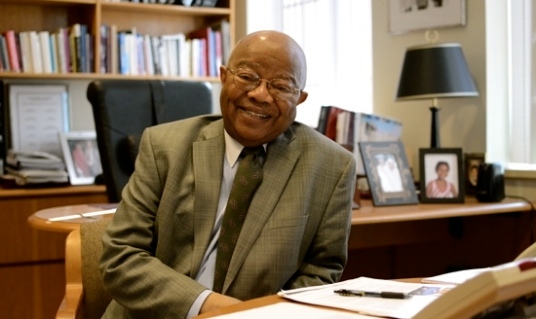
About fifteen years ago, I was involved in a research project focused on this sort of assessment with Dr. Myron Atkin of Stanford University, and I learned how to engage my students in doing peer assessment of their work, and guide them towards higher quality.
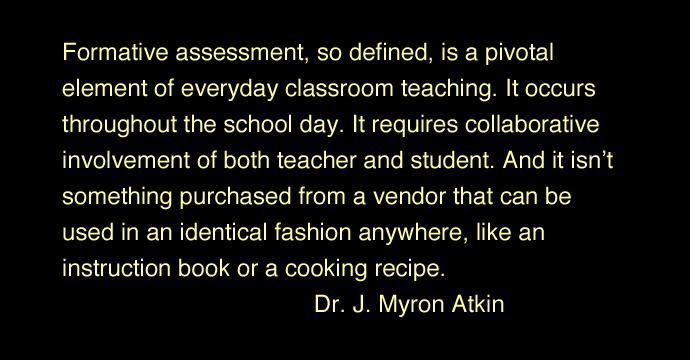
We have become so obsessed with measuring student performance through tests of one sort or another, that this genuine teacher-driven assessment has been largely left behind. Even so-called formative assessments are now often packaged and sold with textbooks, or built into predetermined timelines. Back in 2009, I asked Dr. Atkin to explain how formative assessment works best, and here is his advice:
Dr. Atkin writes:
The impressive attention that formative assessment is receiving in today’s schools stems from seminal work by Paul Black and Dylan Wiliam in the late 1990s. They systematically reviewed the research literature and found 580 reports or chapters 
What Sort of Assessment DOES Enhance Learning? - Living in Dialogue:

LAUSD: When did education become political? The Board of Education - Change The LAUSD

LAUSD: When did education become political? The Board of Education - Change The LAUSD:

LAUSD: When did education become political? The Board of Education


The seven members of the school board are elected. Do they care about education or is it politics they care about? Are they educators, parents with school age children or are they aspiring politicians?
Warren Furutani and Jackie Goldberg, former school board members, got elected to serve in Sacramento. Rita Walters and Jose Huizar got elected to the City Council. Bobbie Fielder went to Congress.
It is name recognition. Once they are serving on the School Board, they find an elected seat that is to be vacated, they run, and since their name is known they win. Look at all the politicians who have switched between Sacramento and the Los Angeles City Council. They have become career politicians enjoying the perks, the attention, the limelight, and the fame. What else can they do?
When they see another elected office opening up do they remain on The Board of Education or are they bored of education?
Since so many members of the Board are not educators, how to they get their information?
The well entrenched bureaucrats.  
Those administrators and others in their section or department who have been there for years. Those same administrators who keep themselves in power by supplying information to the Board members and the Superintendent.  Those same administrators who never go to schools or talk to teachers. Those same administrators who set up programs, and create paperwork to keep themselves in office, and who are out of touch with the realities of education today.
These top administrators and their assistants, the Superintendent and his assistants, and the Local District Superintendent and assistants scratch each others backs, keep each other in authority, and maintain the bureaucratic excess and waste.  
A commenter to one of my columns wrote the following:
“At Beaudry, there is whole army of people who every day, all day long, go to meetings talking about things they know nothing about."
It is like the case of the chicken and the egg.  What comes first a new Board members seeking information from the well entrenched bureaucrats or the District downtown bureaucrats seeking to gain favor and maintain position and bureaucracy by offering information to the new members of the Board?
If the district were run as a business there would be someone LAUSD: When did education become political? The Board of Education - Change The LAUSD:

"The Beast Side" and "Chasin' the Gram" | John Thompson - Linkis.com

"The Beast Side" and "Chasin' the Gram" | John Thompson - Linkis.com:

"The Beast Side" and "Chasin' the Gram"


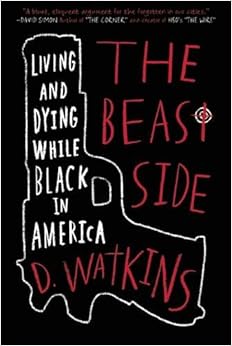
Being an inner city teacher, my favorite part in D. Watkins's great book, The Beast Side, is the chapter with the ironic title of "Chasin' the Gram." Watkins is a former drug dealer, so it would be easy to assume he is writing about cocaine. Instead, Watkins is sounding the alarm about another addictive threat - Instagram.
Although Watkins now teaches English 101 at Coppin State University, he had attended a school similar to the one where his nephew, Butta, was stuck in an in-house suspension class of some sort where:
School seemed like a jail, and level two - Butta's floor - was the psych ward. Students bolting up and down the hallways, desks taking flight, a trail of graded and ungraded papers scattered everywhere, fight videos being recorded on cell phones, Rich Homie Queen blasting at highest decibel, crap games and card games going down with children named Bitch and Fuckyou ...
Watkins and his sister had sought to get Butta out of a class covered by a sub who texted through the class and back to his "real teacher." But, "she was gone that day anyway - stomped down and beat up, we later learned, by eight-grade girls mad she had confiscated their cell phones."
Back when he was in school, Watkins couldn't appreciate the required reading, such as Mark Twain's Tom Sawyer and Huck Finn. Now, he knows differently but "my perspective was different when I was a kid. I came from a neighborhood with shootouts, dirt bikes, police raids, junkie fights, block parties, and hoop tournaments. Adventures happened every day and Twain seemed corny to kids like us; fences "The Beast Side" and "Chasin' the Gram" | John Thompson - Linkis.com:

New State Programs Place the Emphasis on Training High-Quality Teachers - The Atlantic

New State Programs Place the Emphasis on Training High-Quality Teachers - The Atlantic:

A Renewed Focus on Training Teachers

Several state programs take a pointed approach to ensuring all students have access to high-quality educators.


Many states are ramping up their efforts to ensure student access to quality teachers, regardless of the students’ race, ethnicity, household income, or any of the other factors that have too often come to determine the quality of education provided to children across the country.

“All parents understand that strong teaching is fundamental to strong opportunities for their children. We as a country should treat that opportunity as a right that every family has—regardless of race, ethnicity or national origin, zip code, wealth, or first language,” said U.S. Secretary of Education Arne Duncan in a statement.

According to a Department of Education release last week, 33 states and the District of Columbia have department-approved plans to “ensure equitable access to excellent educators.”

In Alabama, the efforts are manifesting themselves in the new “Professional Pathways for Alabama Teachers” program, a pilot tiered-certification system that seeks to offer career-development opportunities for Alabama teachers that will help attract and support new teachers while improving retention and increasing recognition of the efforts of those who have been effective.
In Michigan, the “Michigan Teacher Corps” looks to attract and retain skilled teachers in the state’s lowest-performing schools that disproportionately serve low-income families and students of color.

In Howard County, Maryland, the local school district is partnering with McDaniel College on a new initiative they’re calling “Teachers for Tomorrow,” which looks to provide country students with a four-year paid internship experience that begins the moment they graduate from high school and prepares them to teach in the schools that reared them.
Based on the idea that more students in the county (and across the country) are increasingly from lower-income families and increasingly of color, the Howard County Public School System Superintendent Renee Foose said, “Our goal was to create a diverse workforce and to have an increased number of teachers with backgrounds” that mirror those of the students they’re teaching.
The program will provide full scholarships for 12 low-income students to attend McDaniel College in exchange for three years of service as school-system employees. Students are permitted to major in the discipline of their choice, but must minor in education. In addition, they will receive “a health-insurance plan New State Programs Place the Emphasis on Training High-Quality Teachers - The Atlantic:

Foundations fund L.A. Times’ education reporting. A conflict? - The Washington Post

Foundations fund L.A. Times’ education reporting. A conflict? - The Washington Post:

Foundations fund L.A. Times’ education reporting. A conflict?


The Los Angeles Times announced what seemed like good news for its readers in August: a new reporting initiative that would expand the paper’s coverage of local education.
“Our goal is to provide an ongoing, wide-ranging report card on K-12 education in Los Angeles, California and the nation,” wrote then-Publisher Austin Beutner. He noted that the project, called “Education Matters,” would be funded by a series of charitable organizations.
Except the newspaper left out a key detail: Some of the foundations funding “Education Matters” are among the most prominent advocates of public-education reform in Los Angeles. One of them is the principal backer of a proposal to convert nearly half of Los Angeles’s public schools into charter schools.
In other words, the Times’ new education-reporting project is being funded by some of the very organizations the new education-reporting project is likely to be covering.
The Times has said the foundations will provide $800,000, enough to cover the salaries of two education journalists for at least two years.
Nevertheless, the initiative has raised suspicions, most notably among teachers’ union representatives and others who oppose the reformers’ agenda. Can a news organization, they ask, take money from vested interests and cover the issues fairly?
“It’s dead wrong,” said Alex Caputo-Pearl, president of the United Teachers Los Angeles, the city’s largest teachers’ union. The Times’ readers, he added, “are harmed when they don’t know what they can trust in the biggest paper in Los Angeles.”
Three of the Times’ benefactors — the K&F Baxter Family Foundation, theWasserman Foundation, and the Eli and Edythe Broad Foundation — have been major supporters of charter and school-privatization efforts that are strongly opposed by teachers’ unions.
More specifically, the Broad Foundation developed the Los Angeles charter proposal, which would cost $490 million to create 260 new charter schools enrolling at least 130,000 students in the sprawling district (charters are publicly funded but independently operated schools that are usually non­union and exempt from work rules that govern traditional public schools).
The Broad Foundation’s chairman, billionaire businessman and philanthropist Eli Broad, has repeatedly expressed his interest in buying the Times. The newspaper’s owner, Tribune Publishing, has rejected his offers, reportedly including one this month.
Major news organizations have long tended to fund their own news-gathering activities, on the principle that taking money from another group could compromise their independence, or prompt readers or viewers to question their reporting.
But the practice isn’t unknown; NPR, a nonprofit organization, takes “grants” Foundations fund L.A. Times’ education reporting. A conflict? - The Washington Post:

Mathematica, CRPE, and CREDO Condemn Online Charter Schools in Three-Agency Report | janresseger

Mathematica, CRPE, and CREDO Condemn Online Charter Schools in Three-Agency Report | janresseger:

Mathematica, CRPE, and CREDO Condemn Online Charter Schools in Three-Agency Report


You can learn exhaustively about cyber charter schools in the National Study of Online Charter Schools, a major, three-part report released earlier this week.  Significantly, although one of the think tanks presenting the data—the Center on Reinventing Public Education—and the funder of the three-part report—the Walton Foundation—actively endorse school choice and charter schools overall, the report’s conclusions about the giant online academies are scathing.
What are online charter schools?  Mathematica Policy Research, author of the report’s first volume, Inside Online Charter Schools, explains: “Online charter schools—also known as virtual charters or cyber charters—are publicly-funded schools of choice that eschew physical school buildings and use technology to deliver education to students in their own homes.  These schools typically provide students with computers, software, and network-based resources, while also providing access to teachers via email, telephone, web, and/or teleconference.”  Mathematica examines 200 virtual schools that together serve approximately 200,000 students.  “Student enrollment in online charter schools is highest in Ohio, Pennsylvania, and California, each of which had more than 25,000 students enrolled in 2012-2013; together those three states account for half of the online charter enrollments nationwide.  In a short summary brief, Mathematica warns: “Our analysis indicates that the greatest challenge for online charter schools, in which student-teacher interactions are more limited than in conventional schools, is maintaining student engagement… Perhaps to compensate for limited student-teacher interaction, online charter schools expect parents to provide significant instructional support.”  Mathematica’s longer report concludes that cyber schools generally provide students with less live contact with a teacher each week than students in conventional schools have each day.

Lead With Love [Spring Valley High Is Your School Too] | The Jose Vilson

Lead With Love [Spring Valley High Is Your School Too] | The Jose Vilson:

Lead With Love [Spring Valley High Is Your School Too]

Heart Blood


Today, I finally saw some of my cockamamie student groupings come to a screeching halt when some of my best students started clashing with each other over how to approach their scientific notation project. My 280 lbs frame usually settles disagreements if I’m in proximity, but this was not one of those days. As I listened to their grievances, I picked apart the major contents and helped them work out the minor details without me.
In my younger days, I might have had a conniption, shifted a few students to different groups, or rolled my eyes hard. Today, I decided to lead with love.
Visions of seeing black teenagers dragged and flung halfway across a room still lay uncomfortably under my eyelids, along with other visions of incidents I’ve seen as a student and teacher. I’m not completely desensitized to this violence, I’ve had to resensitize myself to remind of the awesome work I undertake. I do mean awesome in the truest sense of the word. At any given moment, the Lead With Love [Spring Valley High Is Your School Too] | The Jose Vilson: