Latest News and Comment from Education

Wednesday, May 13, 2015

Mistakes made with teacher evaluation scores, CPS admits | Catalyst Chicago
Mistakes made with teacher evaluation scores, CPS admits | Catalyst Chicago:

Mistakes made with teacher evaluation scores, CPS admits

The various REACH handbooks and related documents comprise dozens of pages on the complex evaluation system.


Citing a computer coding error, district officials have acknowledged that they miscalculated last year’s REACH performance task scores for one out of every five educators.
Only a tiny fraction of the 4,574 errors were significant enough to result in ratings changes, however. A total of 166 teachers were given corrected ratings earlier this year, and most moved up a category, CPS officials say. Teachers whose ratings dropped won’t be penalized.
The coding error involved matching student rosters with scores on performance tasks, the subject- and grade-specific assessments that were developed by committees of CPS teachers.
Though the problem was not extensive, the number of mistakes – and the possibility that there are still others – has renewed criticisms about the use of such a complex system to evaluate educators and put jobs on the line.
On the front end, the REACH (Recognizing Educators Advancing Chicago’s Students) evaluation system relies on teachers and principals to do classroom observations, administer tests and input data into a computer system. On the back end, REACH relies on a web of CPS departments, custom-designed software and third-party vendors to calculate student improvement on assessments, verify class rosters and tabulate final ratings.
“There needs to be an effort to reduce the complexity so teachers are getting fair, accurate, timely feedback,” says Jen Johnson, the CTU’s special coordinator for teacher evaluations. “This is serious stuff that leads to problems with potential job security.”
CPS Accountability Chief John Barker, whose office wrote the computer code that contained the error, says it’s now been corrected. He repeatedly stressed that the impact of the incorrect scores was minimal.
“Yes, that is something we are absolutely interested in as a district in getting it right. And getting it right means changing some scores,” Barker says. “What is important to know is that those are very, very minor issues. The number of changes in those scores that resulted in a teacher moving out of one category into another category is very, very small.”
It’s unclear, however, whether all of the errors have been corrected. Two teachers who spoke withCatalyst say their newly downgraded ratings no longer take all of their students’ growth on the performance task into account.
In one case, an elementary school teacher said her new score only counted half of the students who took the performance task at the beginning and end of the year. The other students -- who she says were counted the first time around -- are now missing from her data.
Similarly, an arts teacher at another school doesn't understand why her updated summative evaluation report now says that none of her students' performance task scores were counted toward her rating calculation. The "student growth" portion of her evaluation is now based entirely on her school's NWEA metrics – and not the performance task growth.
“Now we’re about to issue the second round of REACH Performance Tasks task for this school year,” she said. “And I ask myself, ‘Why am I even doing this? Who is to say it’s not going to be lost Mistakes made with teacher evaluation scores, CPS admits | Catalyst Chicago:

Mapped: The places where most public school children are poor - The Washington Post

Mapped: The places where most public school children are poor - The Washington Post:

Mapped: The places where most public school children are poor


Earlier this year, the Southern Education Foundation reported that America's public schools had reached a dispiriting milestone: A majority of children attending them are now low-income. As The Post's Lyndsey Layton noted at the time, we haven't seen such demographics in public schools at any point over the past half-century. And they mean that teachers must increasingly prioritize combating the effects of poverty — ensuring children feel safe, fed and well-clothed — before the learning even begins.
This picture of poverty in the classroom, however, varies widely across the country, between North and South, and between urban counties and nearby suburban ones. The Urban Institute on Wednesday released interactive mapsshowing that the concentration of poor children in public schools is remarkably high in some of these places relative to others — and that these geographic disparities are magnified for children of color.
The above map shows the share of children in public schools in each county who come from low-income families (low-income is defined here as households making at or below 185 percent of the federal poverty line, the cutoff for free and reduced-price lunch programs). Particularly striking is the "belt of rural poverty" across the South, as the Urban Institute puts it.
The share of low-income children is also high in several metropolitan areas: in Dallas County (73 percent), in Cook County around Chicago (66 percent), in the District of Columbia (61 percent). In several Lakota counties in South Dakota, the number of public school children who come from low-income families approaches 100 percent.
This concentration of poverty, which reflects underlying patterns in where the rich and poor live, also means that a poor child in America is much more likely than a middle-class or wealthier child to attend a high-poverty school. About 40 percent of low-income children attend public schools where 75 percent of the other students are low-income, too. The same is true of just 6 percent of non-poor kids.
"This is concentrated disadvantage," writes Urban Institute researcher Reed Jordan, "the children who need the most are concentrated in schools least likely to have the resources to meet those needs."
Across the country, black children are also about six times more likely to attend high-poverty schools than white children. In many counties in the rural South, nearly all of the black children attend high-poverty schools:
Disparities in the level of school poverty that white and black children experience often vary as well within the same region. Jordan again:
In some metropolitan areas, the racial concentration of school poverty is so severe that black and white students effectively attend two different school systems: one for middle- and upper-middle-income white students, and the other for poor students and students of color.
This happens, for example, in Cook County around Chicago. There, 75 percent of black students attend high-poverty schools. For white children, the share is less than 10 percent.
These maps reflect the importance of better integrating schools, creating environments in which poor children learn alongside upper-income peers. But that's a goal that will be hard to achieve if we don't talk as well about the housing patterns and policies that helped create these maps.
Emily Badger is a reporter for Wonkblog covering urban policy. She was previously a staff writer at The Atlantic Cities.

CURMUDGUCATION: I Should Support Charters

CURMUDGUCATION: I Should Support Charters:

I Should Support Charters


I'm a big fan of the opt-out movement when it comes to testing. I believe, in general, that it's better for people to have a choice, to be free to consider options. It would make a certain amount of sense for me to be a supporter of school choice in general and charter schools as an expression of that choice.

And yet, I am not a supporter of either-- at least not as currently proposed and practiced.

But I think any time one finds inconsistencies rattling around in one's head, intellectual honesty and a desire to live with as much integrity as one can muster demand that one considers what that inconsistency means.

So-- why am I a fan of choice, except when it comes to school.

Dishonesty about the cost

Choice and charter systems are currently constructed as a zero-sum game. In many districts, the charter system forces multiple schools to finance multiple systems with a pot of money that isn't even sufficient to finance a single system. This means that one school must be the loser, and charter policies are written so that the loser is always the public school. This system creates several problems.

There's a problem with rampant inequity-- students who most need extra support are left behind in public schools that have the least per-pupil ability to support them.Challenging application processes, targeted marketing, counseling out, and non-backfilling can all help insure that the public school becomes the holding ground for the students who most need help even as charters strip away the public school's financial ability to deal with them. And that's before we start to consider how a school climate is affected by the absence of the top-tier students.

The system is also unsustainable. Taxpayers funding multiple systems are essentially footing the bill for excess capacity spread over several schools. Schools have to cut programs so that they can have seats for students who may or may not show up on their doorstep. Furthermore, initial stages of a charter system work on a simple dynamic-- all charters drain their money from the public system. But as the market saturates, the charters begin stripping resources from each other. That adds to

System instability and impermanence

Market-driven systems pretty much demand a cycle of growing too much capacity followed by shucking off that capacity. In other words, a choice system is going to have closing schools as a regular feature. This never seems to stop surprising people, particularly when the closing is mid-year and unannounced.

A school should be a permanent feature of a community, not a temporary business venture. A school should not be a store in a strip mall, but a pillar of the community that is, in fact, paying taxes to provide exactly that. A commitment to operate a school should be "until the community decides to 
CURMUDGUCATION: I Should Support Charters:

Schooling in the Ownership Society: In L.A., Deasy gone but leaves in his wake, feds, grand juries, and litigation

Schooling in the Ownership Society: In L.A., Deasy gone but leaves in his wake, feds, grand juries, and litigation:


In L.A., Deasy gone but leaves in his wake, feds, grand juries, and litigation

This is getting to sound repetitive. Post-Deasy L.A. is sounding a lot like post-Byrd-Bennett Chicago. 

Former LAUSD Supt. John Deasy is gone. They've provided a soft landing for him at the Broad Leadership Academy. That's where school superintendents like Barbara Byrd-Bennett learned how to dole out no-bid contracts to companies like SUPESand Pearson. It's also where public education and democracy go to die. 


But look at Deasy left behind when he got out of Dodge.


Governing reports:

Today, LAUSD is exploring possible litigation against Apple and Pearson, the world’s largest education publishing company, to recoup millions of dollars; a criminal grand jury is investigating possible ethics violations by district officials; the Federal Bureau of Investigation and the Securities and Exchange Commission have launched their own inquiries into possible wrong-doing; and Deasy resigned... 
...The SEC in April also launched an inquiry into whether L.A. school officials complied with legal guidelines in the use of bond funds to finance the iPad deal. Using construction bonds to purchase Internet infrastructure is common, but the LAUSD also used money from the bonds to purchase the iPads, which break down after a few years. Some critics of the plan have said LAUSD should have set aside a sum from its operating budget to purchase the tablets...
...Meanwhile, LAUSD took action of its own in April, announcing it would seek to recoup millions of dollars from Apple because it was “dissatisfied with their product.” The district’s demands for a refund stem from materials that didn't adapt well for students who weren't proficient in English and a lack of software tools to analyze how well the curriculum functions.
How many more urban districts will be stuck with the tab of corporate reform after the Broad superintendents flee the scene?Schooling in the Ownership Society: In L.A., Deasy gone but leaves in his wake, feds, grand juries, and litigation:

Didn’t dullard Duncan say Katrina was the best thing to happen to New Orleans?

Didn’t dullard Duncan say Katrina was the best thing to happen to New Orleans?:


Didn’t dullard Duncan say Katrina was the best thing to happen to New Orleans?

“…let me be really honest. I think the best thing that happened to the education system in New Orleans was Hurricane Katrina.” — Arne Duncan
The absolute worst education President, and Secretary of Education in U.S. history: Barack Obama and Arne Duncan

The absolute worst education President, and Secretary of Education in U.S. history.

For Immediate Release: May 13, 2015
Contact: Madison Donzis, madison@fitzgibbonmedia.com, 210.488.6220
New Report Exposes Holes in Louisiana’s Charter School Program and Millions in Taxpayer Dollars Wasted on a Broken System

Coalition for Community School New Orleans and the Center for Popular Democracy (CPD) Highlight Consequences of Louisiana’s Failed Academic and Financial Oversight of Charter Schools
**See the report here: http://bit.ly/1Fc50qR** 
new report released this week finds that the drastic growth of overinvestment in charter schools and underinvestment in oversight has left Louisiana’s students, parents, teachers and taxpayers at risk of academic failures and financial fraud. The report, “System Failure: Louisiana’s Broken Charter School Law” cites billions of taxpayer dollars plunged into charter schools since Hurricane Katrina hit, including over $831 million in the 2014-15 school year alone. 
Since 2005, charter school enrollment in the state has grown 1,188 percent. The Louisiana Department of Education’s Recovery School District, originally created to facilitate state takeover of struggling schools, is now the first charter-only school district in the country. 
The report identifies five fundamental flaws with the financial and academic oversight of Louisiana’s charter schools: 
1.    Oversight depends too heavily on self-reporting by charter schools or the reports of whistleblowers. Louisiana’s oversight agencies rely almost entirely on audits paid for by the charters themselves and whistleblowers. While important to uncover fraud, neither method systematically detects or effectively prevents fraud. 
2.    The general auditing techniques used in charter school reports do not uncover fraud on their own. The audits commissioned by the charter schools use general auditing techniques designed to expose inaccuracies or inefficiencies. Without audits specifically designed to detect and uncover fraud, however, state and local agencies will rarely detect deliberate fraud without a whistleblower.
3.    Inadequate staffing prevents the thorough detection and elimination fraud. Louisiana inadequately staffs its charter-school oversight agencies. In order to carry out high-quality audits of any type, auditors need enough time. With too few qualified people on staff—and too little training for existing staff—agencies are unable to uncover clues that might lead to fuller investigations and the discovery of fraud.
4.    Underinvestment in systems that help struggling schools succeed. Lawmakers and regulators have invested in systems that set high standards and then close schools that fail to meet them, rather than helping them improve to meet the standards. This investment in a severe accountability system does not support schools achieve academic success.
5.    Heavy reliance on data that is vulnerable to manipulation. The state’s academic oversight system relies largely on sets of data that can be manipulated by regulators, authorizers, or the charters themselves. Without reliable data, schools, parents and the public have no way to accurately gauge academic quality at their schools.
Since 2005, approximately $700 million in public tax dollars has been spent on charter schools that currently have not achieved a C or better on the state’s Didn’t dullard Duncan say Katrina was the best thing to happen to New Orleans?:

Pro-Common Core group takes issue with blog post — and the author responds - The Washington Post

Pro-Common Core group takes issue with blog post — and the author responds - The Washington Post:

Pro-Common Core group takes issue with blog post — and the author responds

South Side High School Principal Carol Burris ( Thomas A. Ferrara/Newsday)


Regular readers of this blog are familiar with Carol Burris, an award-winning principal in New York who has written repeatedly over the past few years on school reform in her state. She chronicled the botched adoption and implementation of a new educator evaluation system and wrote about her conversion from a Common Core supporter to an opponent. She has also written about her support for the opt-out movement, in which many parents and educators are resisting certain high-stakes standardized tests. Last month, she wrote a post about why she is retiring early and planning to advocate for public education in different ways.
Burris is the principal  of South Side High School in the Rockville Centre School District. Before she took that position in 2000, she taught at the middle- and high-school levels and earned a doctorate from Teachers College, Columbia University. Her dissertation, which studied her district’s detracking reform in math, received the 2003 National Association of Secondary Schools’ Principals Middle Level Dissertation of the Year Award. She was named New York’s 2013 High School Principal of the Year by the School Administrators Association of New York and the National Association of Secondary School Principals, and was tapped as the 2010 New York State Outstanding Educator by the School Administrators Association of New York State.
Burris is one of the many guest writers I publish on The Answer Sheet.
Recently I received an e-mail sent to The Post by Jon Weinstein, vice president of Mercury, a lobbying firm, in its New York office, where he specializes in media strategy. Weinstein said he was writing on behalf of High Achievement New York, a coalition of business and civic leaders and educators that promotes the Common Core State Standards. Weinstein wrote, among other things, that “it is evident” to High Achievement that I have “ceded” my blog to Burris.
He also attached a letter from Steve Sigmund, executive director of High Achievement New York, who takes issue with Burris. Sigmund, according to this City and State article, was appointed executive director earlier this year to “oversee communications, public policy and government outreach efforts for the organization which represents Association for a Better New York, Business Council of New York State, New York Urban League, Educators 4 Excellence, America Achieves and StudentsFirstNY.”
Following is the letter from Sigmund, and then a response from Burris.
From Steve Sigmund:
In your May 3rd blog post on the Answer Sheet, “Why the movement to opt out of Common Core tests is a big deal,” the author, Carol Burris, promotes selective facts that don’t tell the real story.
Burris cites a number of suburban Long Island districts where opt-out numbers were high, and then spuriously uses those very small towns to conclude that African Americans and Hispanics are a major part of the opt-out movement. This is fuzzy math and categorically false.
In New York City, the largest school district in the state, fewer than 1 percent of students opted out of this year’s tests. Across all
Pro-Common Core group takes issue with blog post — and the author responds - The Washington Post:

Lack of Oversight of Charter Schools Designed as a Plus; $3.3+ Billion Spent (Part 2) | PR Watch

Lack of Oversight of Charter Schools Designed as a Plus; $3.3+ Billion Spent (Part 2) | PR Watch:

Lack of Oversight of Charter Schools Designed as a Plus; $3.3+ Billion Spent (Part 2)


“The waste of taxpayer money—none of us can feel good about,” Education Secretary Arne Duncan told the Appropriations Subcommittee on Labor, Health & Human Services and Education just last month.
Yet, he is calling for a 48% increase in the U.S. Department of Education’s (ED) quarter-billion-dollar-a-year ($253.2 million) program designed to create, expand, and replicate charter schools—an initiative repeatedly criticized by the Office of the Inspector General (OIG) for suspected waste and inadequate financial controls.

New Finding: What ED Doesn't Know About Charter School Spending is Stunning

In late 2014, CMD submitted a total of 33 Freedom of Information Act requests to ED for information about how taxpayer money was being spent and monitored since 2007, covering some of the expenditures under both Republican and Democratic presidencies and congresses.
Only a handful of those FOIA requests have been fully responded to by ED, but those responses shed new light on how widespread the problems are with how charter school money is being managed—or, more accurately, mismanaged and not adequately monitored by federal and state government oversight agencies.
Notably, ED could not provide the public with a current list of all the state authorizers of charters, and it has never published a record of which charter schools received federal tax dollars, because it does not track that information at all, apparently. Its charter school rep urged CMD to contact a private organization, the National Association of Charter School Authorizers (NACSA)—which has no obligation to provide such information—to obtain a list of the authorizers approved to redirect American taxes.
But NACSA is a private association that only oversees around “half of the nation’s 6,000 charter schools.” It has no governmental authority over charter school authorizers in the states that operate largely outside of control by State Education Agencies (SEAs). And many of those “authorizers” in the states would likely say they are not required to disclose details of how federal dollars flow.
Even if all those entities were required to provide the official names of all charter schools ever authorized (and who was legally responsible for each of them), they appear to have no legal requirement to promptly disclose to the public any charters de-authorized or privately sanctioned by them and the reason why. And, the authorizers in states are apparently not obligated to tell the American people how much money each charter school received from federal and state tax dollars or how that money was really spent.

A Recipe for Distaster

Little is known about how tax dollars are spent with the black-box funding for all charters, including:
  • how much tax money each charter received each school year;
  • how much was spent on executive compensation at each charter school;
  • how much was spent on teachers or on salaries relative to experience or credentials;
  • how much money went directly into the classroom; and
  • how much was spent on for-profit contracts (outsourcing accounting, cleaning, or food services etc.)
The bottom line is that no one actually tracks the list list of charter schools that received federal tax dollars to open, expand and/or replicate charter schools, how much they received, or how they spent the people's monies. Each link in the chain can point to someone else who may have parts of that data but who likely has no obligation to publish that information for the public to understand, although what can be gleaned varies by state. That is, there is no systematic public accounting for how the federal budget allocated to charters is actually being spent, and not even a reliable per-pupil/per capita figure. And the devil really is in the details.

What Is Known About How Some Charters Spend U.S. Tax Dollars is Deeply Troubling

What is known about the resource allocation in charter schools vis-à-vis traditional public schools paints a very troubling picture, as demonstrated most starkly by CPD’s report on criminal fraud in charter schools.
However, fraud is just one of the major problems in the lack of adequate controls over how Americans’ taxes are being spent in the charter industry. A 2012 study by the National Center for the Study of Privatization in Education at Columbia University found that charter schools spent “nearly $800 more per pupil per year on administration and $1100 less on instruction.”
Beyond “administration,” how much is being spent converting public money into private assets through purchasing real estate or using Real Estate Investment Trusts (REITs), or in other ways that benefit private parties rather than the students, is not known.
And, money that should be spent on America’s school children is being spent on other “priorities.” CMD obtained a 2014 draft audit of federal charter school money in New York State, for example, that found that “[o]ne subgrantee used funds to represent the school in lawsuit proceedings related to its sister campus.”
These are just a handful of items that go to the heart of basic accountability, beyond educational performance, that the American people should have a right to know.
The reality is that the patchwork system that has been created to allow such a massive influx of cash to be spent ostensibly on educating America’s children is riddled with black holes where Americans’ taxpayers are being unaccountable lost—even short of criminal fraud—and which leaves American school kids shortchanged in the education they need to thrive.
Many of the gaps through which millions have passed unaccountably have been intentional, resulting from ideological opposition to state oversight over charters that operate like private, not public, schools.

New Finding: Lack of Accountability a Boon rather than a Burden

CMD’s review of FOIA responses to date has identified an array of specific serious problems that would cause any responsible policymaker or concerned citizen of any political party to call for a moratorium on any new funding for expanding charters until these problems are genuinely redressed.
In fact, in 2010, following President Obama’s reauthorization of ESEA, ED published a blueprint, pledging that charter schools receiving funding under the CSP program would be held to even higher standards of accountability than traditional public schools.
But this statement is flatly at odds with one of the main criteria used when ED evaluates applications from state departments of education: "flexibility offered by state law." As CMD's review of grant documents shows, this rubric actually awards states that exempt schools and authorizers from state law. Case in point: when Indiana applied for a charter school grant in 2010, one reviewer gave it the highest score on that rubric precisely because the state does not hold charter schools accountable:
"Strengths: The applicant described the administrative relationship between the charter schools and authorizers in which schools are held accountable solely by their authorizer per Indiana state law. [Score] 30/30"
Thanks in no small part to the no-accountability bona fides, Indiana was awarded a $10,852,838 grant.
This is the second installment in a CMD special report on waste and lack of accountability in the quarter-million-a-year federal chart schools program. You can read the full report here.
- See more at: http://www.prwatch.org/news/2015/05/12831/feds-spent-33-billion-charter-schools-few-controls-part-2#sthash.f3xhtfRz.dpuf

Does High-Stakes Testing & Accountability= Social Justice & Civil Rights? | Cloaking Inequity

Does High-Stakes Testing & Accountability= Social Justice & Civil Rights? | Cloaking Inequity:

Does High-Stakes Testing & Accountability= Social Justice & Civil Rights?

Screen Shot 2015-05-13 at 11.26.05 AM
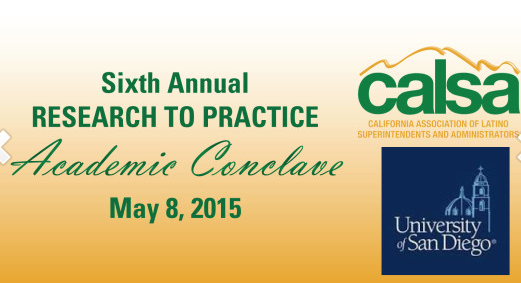
Last week I had the opportunity to give the Social Justice Keynote for The California Association of Latino Superintendents and Administrators (CALSA) at the University of San Diego for their Sixth Annual Research to Practice Academic Conclave on May 8, 2015. CALSA is:
A community of diverse educational leaders skilled in addressing the needs of Latino/a students and dedicated to increasing the number of highly effective Latino/a administrators.
Screen Shot 2015-05-13 at 11.02.29 AM
Here is the transcription of the lecture focusing on high-stakes testing and local accountability:
I have the unenviable position of being your after lunch speaker.
Looks like that gentleman in the back is already ready for his afternoon nap.
First, I want to thank each and everyone one of you for dedicating your life to our state’s children.
Second I’d like to invite you to tweet quotes and photos at me during this talk to @ProfessorJVH.
Third, this new lecture represents the advancement, evolution, and application of my thinking about high-stakes testing.
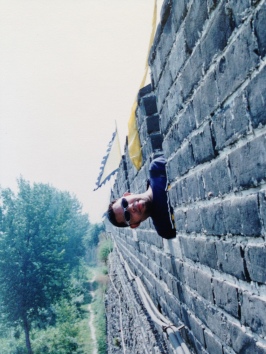
I’d like to begin thousands of miles on the other side of the planet. That place where we were always trying to dig to as a young child— China.
Julian Vasquez Heilig at Great Wall of China in 1996
I have visited China three times, once in each of the past three decades.
What really struck me during the time that I lived in China— and my subsequent visits— was the severe integration of high-stakes testing into Chinese society to sort and stratify.
I recently authored a policy brief with DongMei Li, a Chinese graduate student at the University of Texas at Austin (See After Thousand of Years, #China Changing Mind on #Testing ? #edreform). We wrote that Chinese society has been driven by testing for thousands of years, dating back to ancient times when civil servants and leaders were selected based solely on the imperial service examinations given in the Forbidden City and elsewhere.
While this old exam system was terminated after more than a thousand years in 1906, the high-stakes testing culture persisted— and has played a critical role in selecting “talent” in Chinese society.
Currently, the public school environment in China is testing-oriented because the sole mechanism enabling college access for the vast majority of high school students is the national higher education entrance examination.
Also, for many years, entrance into high schools was determined by high school entrance exams. If you scored well, you would attend an academic or vocation school— score poorly and your journey ended with only an 8th grade education.
Thus, high-stakes testing is not a new educational reform. China has used tests to sort their society for more than 1500 years!!
Closer to home, for about 100 years, high-stakes tests have been used to sort and track students in the United States.
Tests were first spurred on by the racist Eugenics movement (See Film Review: Defies Measurement weaves together problematic purposes of ed reform) and also IQ exams that were used to sort soldiers during the world wars.
High-stakes tests were created to sort, they were not created for civil rights and social justice purposes.
However, now that the federal government is requiring and monitoring high-stakes testing, they have 
Does High-Stakes Testing & Accountability= Social Justice & Civil Rights? | Cloaking Inequity:


How Testing is Driving More Oklahoma Teachers, and Other Educators Across the Nation, Out of the Classroom | John Thompson

How Testing is Driving More Oklahoma Teachers, and Other Educators Across the Nation, Out of the Classroom | John Thompson:

How Testing is Driving More Oklahoma Teachers, and Other Educators Across the Nation, Out of the Classroom


KOSU's Emily Wendler reports that Robyn Venable taught for 31 years. She is one of the wave of Oklahoma teachers who are reluctantly leaving the profession. Ms. Venable loved teaching but she is retiring because, "The testing is just ridiculous, the paper work is growing by leaps and bounds. The stuff that you're expected to do just gets added on and added on and added on..."
Wendler cites State Superintendent Joy Hofmeister who says that the state began the school year with a shortage of 1,000 teachers, and despite those efforts, it still ended with 1,000 openings. Hofmeister describes the resulting harm of using substitutes and she also says that 800 classes were canceled because teachers weren't available.
NPR reports that "school administrators have scrambled throughout the year to fill the gaps by utilizing emergency certifications. ... The State Board of Education issued 500 of them this year. Five times more than normal." Moreover, the Oklahoma City Public Schools has hired hundreds of TFA teachers, which is one reason why 36% of the district's teachers are inexperienced, with less than three years under their belts. The OKCPS has also been "recruiting around the nation, in Puerto Rico and Spain because they are having trouble finding teachers here."
Wendler then cites Sand Springs Superintendent Lloyd Snow who links the problem to the No Child Left Behind Act of 2001. NCLB "dumped too much testing on students and has irked many teachers for years." The problems grew worse with the Achieving Classroom Excellence (ACE) law which "spread on even more layers testing and a teacher evaluation system (TLE) that leaves educators feeling unappreciated." Snow concludes, "Now we sit 10-15 years later and where do we find ourselves? Very little progress. A lot of discouraged teachers. A teacher shortage of which I have never seen in my career."
Wendler's NPR report follows the release of the "Listening Tour" report by the reform group Stand for Children. As Nora Habib explained in the Tulsa World, Stand learned that "testing was the issue of greatest concern for teachers." The section of the report on testing began with representative teachers' statements such as,"So much time has been consumed with testing, over testing, to the point kids have lost all motivation for the test that really matters." It closed with the protest,"The whole focus is on testing and not learning... there's no passion for learning."
Stand's findings follow an analysis by the Oklahoma Policy Institute of the testing portion of the new teacher evaluation law (TLE), which the state adopted in order to compete for Arne Duncan's Race to the Top. The OPI's Gene Perry concluded that the test-driven portion of the TLE could be Oklahoma's next big education crisis:
As Oklahoma already struggles with a dire teacher shortage, we can't afford to reduce teachers' morale even more by evaluating their work using an arbitrary and unreliable formula. Test scores may be one piece of evidence used to evaluate educators, but over-reliance on the formula could drive even some of our best teachers away from the profession.
Oklahoma teachers echo the veteran teachers interviewed by the Teachers College Record on why they left the classroom. It reported:
The teachers in this study, who taught prior to and following the enactment of No Child Left Behind, argued that teaching had changed for the worse. The far-reaching accountability measures, which in high-poverty schools often take the form of scripted curricula, lock-step scope and sequence of units, and mandated test preparation that narrows the curriculum, squeezed out all protected institutional space.
Our state's teachers are repulsed by the same dynamics reported by 30,000 teachers polled by the American Federation of Teachers. The survey discovered, "89 percent said they were strongly enthusiastic about teaching when they began their careers but just 15 percent felt the same way today. Most said that drop in enthusiasm has How Testing is Driving More Oklahoma Teachers, and Other Educators Across the Nation, Out of the Classroom | John Thompson:

A parent’s guide to K-12 school success


A parent’s guide to K-12 school success


Stop the Blame Game Over Achievement Gap | Al Jazeera America

Stop the Blame Game Over Achievement Gap | Al Jazeera America:

Stop the blame game over achievement gap

We need to invest in programs that help students learn and succeed, not argue about who's responsible for failure


Debates about the shortcomings of K–12 education in the United States typically focus on identifying who or what is to blame for the achievement gap — the lower standardized test scores and high school graduation rates among students of color and those living in poverty. Often these discussions are not only misguided but also ignore strategies that lead to success in school, even for children who are living in poverty, discouraged by racism and inequality and stressed by family and community dysfunction. We need to learn from and replicate these initiatives instead of blame and shame schools, teachers and communities for gaps in achievement.
Students from low-income and minority backgrounds live with stress that affects individual learning and classroom behavior. For example, a study designed to identify stress in New York schoolchildren after 9/11 found that “the students’ sense of threat or insecurity stemmed not so much from terrorism as from exposure to violence, inadequate housing, sudden family loss, parents with depression or addictions and so forth.”
Similarly, researchers recently screened students at four high-poverty schools in Los Angeles and found that 8 in 10 experienced at least three traumatic stressors — such as shootings, food insecurity and fights in the family — in the previous year. About 40 percent of students reported symptoms that school counselors said required treatment.
Stress bubbles up in schools in emotional reactions ranging from explosive rage to tuned-out depression. One disruptive child can derail an entire classroom. What’s a teacher to do with a whole classroom of stressed children?
Turnaround for Children, a nonprofit that addresses students’ social, emotional and behavioral needs in high-poverty schools, offers two strategies: Connecting high-risk students to the individual help they need and changing the school climate by training educators.
Connecting students to resources is not a radically new idea. It’s key to the community school concept, which links students and families to resources ranging from counseling to in-school dental clinics to help for parents in finding jobs. Despite its successes, this concept has not been widely implemented. The vast majority of children with mental health needs do not get support and services.
Turnaround for Children works with schools in New York City; Newark, New Jersey; and Washington, D.C. In these schools, connection to mental health resources and social services happens quickly, usually within three weeks of initial screening. Getting help quickly allows students turn their attention back to learning.  
At the same time, Turnaround trains teachers and school administrators to recognize stressed and disturbed children and provides educators with the tools to respond to students’ needs. A full-time Turnaround coach helps teachers plan and learn strategies to de-escalate and redirect student misbehavior. This has made schools withTurnaround programs “calmer and more productive, with fewer problem behaviors,” according to the organization’s website.
Arguing about whether poverty and the economic system are more to blame than teachers and the school system only diverts attention from helping students learn and succeed.
Mentoring is another effective strategy. Friends of the Children, a national charity that provides early intervention, stands out among the thousands of mentoring programs because of its successes helping vulnerable kids.
Freddie’s story shows the effectiveness of mentorship. At 6 years old, she lived in a New York City housing project, fought with classmates, dissed her teachers and had trouble focusing in school. Then a mentor from Friends of the Children entered her life. For the next 12 years, mentors spent time with her every week. They supported her through the death of her mother when she was in seventh grade and through graduation, with honors, from the Manhattan Center for Science and Mathematics. She is now a successful student at Syracuse University.
Half of the kids mentored by Friends of the Children have a parent in jail. About 85 percent were born to a teen Stop the Blame Game Over Achievement Gap | Al Jazeera America: