Latest News and Comment from Education

Tuesday, March 31, 2015

Chicago Mayoral Candidate Jesus "Chuy" Garcia Talks About Schools - #OneTermRahm
Chicago Mayoral Candidate Jesus "Chuy" Garcia Talks About Schools - Living in Dialogue:

Chicago Mayoral Candidate Jesus "Chuy" Garcia Talks About Schools 


 By Anthony Cody.

The schools of Chicago are ruled by a school board appointed by the mayor (though efforts are under way to allow for a democratically elected board.) For this reason, educators, students and parents are very interested in the upcoming mayoral election. The Chicago Teachers Union has been especially active, since incumbent mayor Rahm Emanuel has not been their friend. Union members won a strike in 2012, but the following year, more than 50 neighborhood schools were closed, and many charter schools have opened. CTU president Karen Lewis was forced to withdraw from the mayor’s race for health reasons, but she and the CTU have endorsed Jesus “Chuy” Garcia. Today the Garcia campaign announced that he has received the endorsement of Diane Ravitch as well. I asked Mr. Garcia to share his views on some of the issues educators are concerned about. 
Until an elected school board can be put in place, what criteria do you have for appointing board members?
Jesus “Chuy” Garcia: An elected representative school board is one of several components of checks and balances to ensure accountable leadership in public education. As Mayor, I will advocate for an elected school board in Springfield, and if the legislature fails to act, I will ask the federal courts to intervene because I believe the people of Chicago have a constitutionally protected right to elect the leaders of any institution as important as the School Board. I would also support the need for a public elected Chairman of the CPS board, and I would insist that the election be done by district to allow every community in the City to have fair representation on the School Board. Additionally, to ensure that elections do not turn into a popularity contest or lopsided by non-education informed interests, I would support articulating criteria for candidacy to be rooted in experience with public education and community engagement. And this is the criteria I would use to appoint members until an elected school board can be put in place.
What are your views on the early childhood needs for Chicago?
Jesus “Chuy” Garcia: Early care and education is a top priority for not only preparing our children to be school-ready, but also to strengthen families. Head start programs need to be established and supported in the communities with greatest need. The standards of Head Start as administered by the City should be compared to the standards of other early care facilities throughout the City, and raised to address any material disparity.
As Mayor, I would support building an integrated early learning and care system in Chicago which provides affordable, accessible, full-day programs for children birth to age five, with wrap-around care for working parents that guarantees living wages for the workforce with parity with early educators in public schools. I would also support an oversight body made up of workers and parents to guide the administration of early learning and care programs in the city so that they respond to community needs.
Is current funding for Chicago schools adequate? 
Jesus “Chuy” Garcia: No, too many students and teachers are lacking basic education needs. As Mayor, I would commit to ensuring that every student in our system has access to good textbooks, libraries, Chicago Mayoral Candidate Jesus "Chuy" Garcia Talks About Schools - Living in Dialogue:


Study Reveals Sad Link Between Poverty And Children's Brain Development

Study Reveals Sad Link Between Poverty And Children's Brain Development:

Study Reveals Sad Link Between Poverty And Children's Brain Development


We've long known that children from affluent families get a head start that can translate into a long-lasting advantage, especially when it comes to academic achievement. Now, scientists have found what may be part of the explanation: Children who grow up in higher-income families appear to have larger brains.
Researchers from nine universities across the country, led by neuroscientists at Children's Hospital Los Angeles and Columbia University Medical Center, conducted a major new study of the effects of family income and parental education on child and adolescent brain development.
"We've known for a long time that kids from lower-income or disadvantaged families don't do as well in school and have more difficulties on standardized tests," Dr. Elizabeth Sowell, director of the Developmental Cognitive Neuroimaging Laboratory at Children's Hospital Los Angeles, told The Huffington Post. "We know that the brain is driving cognition and behavior, so there must be some difference in the brain. This is the largest study to look at things like family income and the size of the brain."
The researchers studied nearly 1,100 individuals between the ages of 3 and 20, collecting data on their socioeconomic situation and conducting MRI brain scans and cognitive tests measuring executive functions like self-control and anticipation of consequences.
The results revealed a strong positive association between family income and brain surface area, largely in those brain areas that are linked to skills instrumental in learning and academic success.
The brain of "the kid whose family makes less than $25,000 is about 6 percent smaller in surface area than the kid whose family made $150,000," Sowell said.
Higher family income was also associated with better performance on tests of executive function. The researchers hypothesize that the better performance is linked to the greater brain surface area.
They found that the relationship between family income and brain surface area was Study Reveals Sad Link Between Poverty And Children's Brain Development:

“It’s Like When Dorothy Lands in Oz and the World is Changed from Black and White to Color” | BLOGCEA

“It’s Like When Dorothy Lands in Oz and the World is Changed from Black and White to Color” | BLOGCEA:

“It’s Like When Dorothy Lands in Oz and the World is Changed from Black and White to Color”

Why do teachers need to get involved and advocate for their own profession? Cromwell fifth-grade teacher and 2013 Connecticut Teacher of the Year Blaise Messinger says that, before he was named teacher of the year, he mostly shut his classroom door and tried to be the best teacher he could be.
Being exposed to the wider education landscape after being named Teacher of the Year, Messinger says was “like when Dorothy lands in Oz and the world is changed from black and white to color.”  He now realizes, “Every teacher has to speak up and advocate for themselves, the profession, and their students.”
Watch Messinger’s inspiring two-minute take on why it’s so crucial for teachers to be involved in shaping their own profession.


Who’s right on unions?: #CesarChavez or @Campbell_Brown and @MichelleRhee | Cloaking Inequity

Who’s right on unions?: #CesarChavez or @Campbell_Brown and @MichelleRhee | Cloaking Inequity:

Who’s right on unions?: #CesarChavez or @Campbell_Brown and @MichelleRhee

Screen Shot 2015-03-31 at 1.19.10 PM
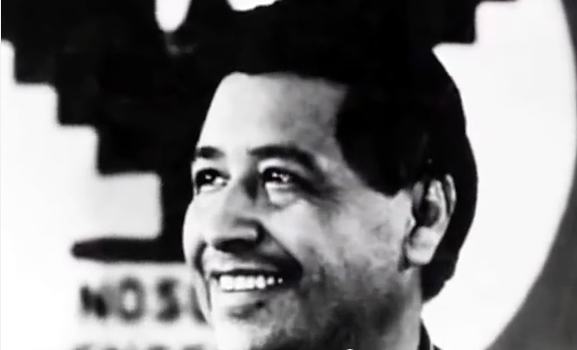
Who’s right on unions?: César Chávez or Campbell Brown and Michelle Rhee? The critics of teachers and their organizations come and go. For a while Michelle Rhee was the darling of the anti-union forces. In Michelle Rhee’s greatest hits, she was quoted as saying,
“People often say to me the teachers unions are here to stay, that they are big players, that I have to find a way to get along. I actually disagree with that.”
“People tell me the unions are an inevitable part of this [school reform]. My thing is, what has that gotten us so far? All the collaboration and holding hands and singing ‘Kumbaya’?”
Michelle_RheeAfter creating conflict in DC, Rhee went on to found Students First. Students First’s biggest publicity stunt was arguably their State Policy Report Card (SPRC). A look at the 2014 version clearly shows bias in their “methodology” against states that provide teacher input and say in education policy. For example, states were dinged in the report card if teacher evaluation was subject to collective bargaining. Her tenure at Students First was short lived when it was announced Michelle Rhee Will Leave CEO Job At StudentsFirst. My sources here in Sacramento tell me that the organization is having a fire sale on their possessions and space.
So Michelle Rhee is going, going, gone. What’s interesting is that Larry Cuban predicted her demise two years ago in the post Kiss Michelle Rhee Goodbye He wrote,
With regret, I blow a kiss goodbye to Michelle Rhee even now as she rides the cresting wave of “America’s most famous school reformer.”
Now, that is a prognosticator. Prophet points for Larry Cuban (Earlier on Cloaking Inequity, prophets points were deducted for Rod Paige Sec. Paige vs. Sen. Wellstone: Testing, Accountability, and Prophetic Pronouncements and Andrew Rotherham You be the Judge: Are the @DFER_News Wolves in Sheep’s Clothing?)
Screen Shot 2015-03-31 at 1.13.30 PMIs the new anti-teacher darling going to be Campbell Brown (or has she gone already)? The New York Observer wrote
Campbell Brown left television to do battle with powerful teachers unions.
Ms. Brown thinks she has history on her side.
“What I’d love to see is for us to reach a tipping point the way we did for marriage equality. Where there was so much focus and attention around an issue that it forced many people to wake up, to really take a moment and think about it and realize that it was a moral issue,” she said.
“And I’d love,” she adds, “to help create that same kind of moment.”
I was actually surprised to find out recently that Campbell Brown follows me on Twitter (@ProfessorJVH). I suspect I might get deleted after this post. So were/are Campbell Brown and Michelle Rhee right on unions?
Screen Shot 2015-03-31 at 1.11.37 PMSpeaking of history…Happy Birthday César Chávez! Today and everyday we honor César Chávez and his leadership in the struggle for the rights of people. I drew from the archive of his wisdom on the UFW website to contrast Chávez with Rhee and Brown. The format is commonly asked questions and arguments posed by critics of unions answered by Chávez.
Do unions stand in the way of “reform”?
When you have people together who believe in something very strongly – whether it’s religion or politics or unions – things happen.
Should we fear unions?
There is a great fear of our Union – a fear that I do not fully understand, but that I know is present…What is it that causes some men to act so hastily and so cruelly? It cannot be that we are so powerful…
Can unions lead to more social justice?
The road to social justice for the farm worker is the road of unionization. Our cause, our strike against table grapes and our international boycott are all founded upon our deep conviction that the form of collective self-help, which is unionization, holds far more hope for the farm worker than any other single approach, whether public or private. This conviction is what brings spirit, high hope and optimism to everything we do.
That is the original quote… could it also read?
The road to social justice for [students] is the road of unionization. Our cause, our strike against Rahm Emanuel school closures and our fight against high stakes testing are all founded upon our deep conviction that the form of collective self-help, which is unionization, holds far more hope for students than any other single approach, whether public or private. This conviction is what brings spirit, high hope and optimism to everything we do.
Cesar Chavez birthdayAre unions about lobbying or organizing?
…So they are trying to do something about it. They are not doing it by seeking charity. They are not begging at the welfare office. They are not, like many of their employers, lobbying the halls of Congress with their gold plated tin cups asking to be paid for not growing crops. They are trying to do it in the way that millions of other Americans have shown is the right way-organization, unionism, collective bargaining.
Should unions picket and strike?
Organizing is an educational process. The best educational process in the union is the picket line and the boycott. You learn about life.
Are unions only about money or instead organizing?
The life of the union depends upon more people getting to share the limelight, because with the 
Who’s right on unions?: #CesarChavez or @Campbell_Brown and @MichelleRhee | Cloaking Inequity:

empathyeducates – New Orleans Corporate Education Reform 101

empathyeducates – New Orleans Corporate Education Reform 101:


New Orleans Corporate Education Reform 101

What they won’t tell you about the education reforms in New Orleans?

By Raynard Sanders, Ed.D. | Originally Published at EmpathyEducates. March 30, 2015


The corporate education reforms in New Orleans have been touted has the national guide for turning around urban school districts. As a result of the devastation of Hurricane Katrina and more than willing elected officials, New Orleans quickly became the national poster child for privatizing public education. In that most of these changes happened within months after Katrina there was little or no local resistance in that more than 80% of the population was evacuated from the city. In light of that, the corporate education reforms in New Orleans has been in the raw so to be speak as charter school proponents were able to created a perfect environment for turning public schools into profit centers. This unique situation attracted billions of dollars from the Louisiana Legislature, the federal government, and foundations promoting the privatization of public education. Thanks to a supportive national media the narrative of the corporate education reforms in New Orleans immediately hit print media, television and Internet claiming unprecedented academic success predicated on school choice. Of course these media outlets were repeating the story told by state education officials and charter schools proponents labeling the reforms in New Orleans as a “miracle”. With that cities and states across the country are now looking at the reforms in New Orleans as guides to improve their failing public schools.
However the real story of chronic academic failure, fiscal mismanagement, and inequitable practices, as reported by external researchers, universities and journalists, has gotten limited coverage in the mainstream media.
The drastic changes in the public education landscape post Hurricane Katrina, despite its dismal failure, offers invaluable lessons for cities across the country. These lessons are not only important for cities and communities considering implementing the New Orleans failed corporate reform model but also it proved that the business model approach to improving public education as touted for years by noted public school privateer Milton Friedman and other doesn’t work. For the past nine years New Orleans had all the conditions that Freidman and others said was needed to improve public education; schools managed by private boards with no interference from an elected school board, no teacher union contract, young smart and intelligent teachers (as all the teachers in New Orleans were fired after Hurricane Katrina) and school choice where parents could chose a school which is best fits their child needs and not be forced to go to those failing neighborhood school. Additionally in New Orleans charter operators received unprecedented funding, which for several years has been more than three times the funding of other school districts in Louisiana post Hurricane Katrina.
Corporate school reform is spreading across the country like wild fire. It comes to communities like a sheep in wolf’s clothing, before communities realize it corporate education reformers have taken over their public schools; plummeting test scores while resurrected equity and access issues affecting mostly poor and minority students. Below are a few of the major problems with the corporate reforms that proponents will never say as they travel across the country promoting the unsuccessful schools they have created:

School ratings, which determined a school’s passing or failing status is a moving, target.

In Louisiana the definition of a failing school changes at least once every two years post Hurricane Katrina. Thus creating an environment where schools suddenly become failing schools, opening the door for a charter operator to move in a take over the school.
The take over the school in New Orleans was initiated when the Louisiana Legislature passed legislation which raised the standards for determining a failing school and removed other qualifying conditions, however this legislation was crafted only for public schools in New Orleans. This legislation immediately affected most of the schools in New Orleans; in they were suddenly being judged by new standards. With that dozens of schools that were cited for progress and given accolades for academic achievement in May of 2005 suddenly became failing schools in November 2005. Meanwhile state officials and charter proponents told that nation that all the schools were failing. In passing this discriminatory legislation the state took over 107 of 123 empathyeducates – New Orleans Corporate Education Reform 101:

Quality education requires social justice | Chicago ‪#‎Chuy2015‬ ‪#‎imwithchuy‬

Quality education requires social justice | Chicago:

Quality education requires social justice


Chicago Teachers Union President Karen Lewis and Vice President Jesse Sharkey at the annual CTU Dr. Martin Luther King Jr. celebration at the Kroc Community Center on Jan. 15, 2015.


 Institutional racism, poverty, and the systematic underfunding of education lie at the heart of problems in education. While solving these social ills lies beyond the scope of traditional collective bargaining, the Chicago Teachers Union insists that leaders of both the city and the Chicago Public Schools take practical steps to address the profound crisis that we face in the schools.

CTU is fighting for the education our students deserve and highlighting  fundamental issues often ignored by those in power.
OPINION
In addition to more traditional demands, CTU has introduced proposals for the next teachers’ contract with the Chicago Public Schools, including ones to address early childhood education, healthy schools, overuse of standardized testing, a higher minimum wage, homelessness, segregation, disproportionate incarceration, insufficient numbers of support personnel, as well as funding proposals. The recent CTU document A Just Chicago: Fighting for the City Our Students Deserve(http://www.ctunet.com/just) describes the research linking these issues to quality education.
CTU proposals include:
  • Expand pre-kindergarten to 3- and 4-year-olds whose families have incomes less than three times the poverty line.
  • Air condition all schools no later than 2019.
  • Reduce standardized testing to six hours a year with no mandated tests for pre-kindergarten to 2nd graders.
  • Pay at least $15 an hour to employees of CPS and subcontractors.
  • Hire full-time liaisons to support homeless students’ needs.
  • Establish a CPS-CTU committee to focus on greater racial and socioeconomic integration.
  • Jointly advocate for laws reducing nonviolent crimes to misdemeanors and redistributing prison funds to schools.
  • Hire at least one full-time nurse in each school and one full-time licensed librarian in every high school.
  • Pay for these proposals by seeking a financial transaction tax, a state progressive income tax, and the return of tax increment finance dollars to CPS.
  • Sue the banks to return their excess profits on “toxic swaps” and bar future business with financial institutions with predatory lending practices.
The political and business communities have continually advocated for policies that further inequality in Chicago. They spend money on sports stadiums, but not on schools. Any city is only as rich as how it treats its most vulnerable residents. Chicago’s students deserve much more than they have gotten to Quality education requires social justice | Chicago:


Click Here to go to the Network for Public Education Website

BustED Pencils Trending News: Student Success Act? Revolution?? On Demand!!! | BustED Pencils

BustED Pencils Trending News: Student Success Act? Revolution?? On Demand!!! | BustED Pencils:

BustED Pencils Trending News: Student Success Act? Revolution?? On Demand!!!


news logo


 If you thought No Child Left Behind (NCLB), oops, I mean the Student Success Act was dead, think again.  Spring = rebirth.

Heads Up! HR 5 (Student Success Act) Coming Back As Soon As April 13th
A book about United Opt Out? WHAT?!!  Come check it out
A Handbook for the Education Revolution…It’s Here 
Can you believe what Chicago Principal Troy LaRaviere and those Madison, WI activists (parents and teachers!) said???
ON-DEMAND EPISODES of BustED Pencils podcasts
If you’re interested in receiving BustED Pencils Trending News please go to http://bustedpencils.com/ and SUBSCRIBE.

Garcia rips Emanuel on 'pay-to-play' politics - Chicago Tribune‪#‎Chuy2015‬ ‪#‎imwithchuy‬

Garcia rips Emanuel on 'pay-to-play' politics - Chicago Tribune:

Garcia hits Emanuel on 'pay-to-play' politics


Jesus 'Chuy' Garcia
Mayoral candidate Jesus "Chuy" Garcia addresses the media during a press conference to release his ethics policy agenda alongside Tuesday, March 31, 2015 outside the Citadel Global Headquarters in Chicago. (Anthony Souffle / Chicago Tribune)


Challenger Jesus “Chuy” Garcia on Tuesday criticized Mayor Rahm Emanuel for “pay-to-play” politics, staging a news conference outside the Loop headquarters of a top donor to the mayor’s campaign.

Garcia said that as mayor, he would refuse to accept --- and seek to limit --- political contributions from those who have done or are looking to do business with the city, and that he also would spurn contributions from those who manage the city’s pension funds.


“I will work with the people of Chicago, not for my friends, not for myself,” Garcia said. “I will bring professionalism and openness to city government.”


The Tribune this year detailed that more than $14 million of Emanuel’s campaign contributions have come from an elite group of 103 contributors, 60 of which received some benefit from him or his administration. The circle of donors, made up of investment firms, developers, law firms and restaurateurs, received contracts, permits, appointments or personal mayoral endorsements.

Though he has declined to discuss his campaign fundraising in detail, Emanuel has defended the practice by saying, “We follow the law specifically.”Garcia rips Emanuel on 'pay-to-play' politics - Chicago Tribune:


Why (market-based) U.S. education reform is doomed: David Ellison (Opinion) | cleveland.com

Why (market-based) U.S. education reform is doomed: David Ellison (Opinion) | cleveland.com:

Why (market-based) U.S. education reform is doomed: David Ellison (Opinion)


Bill Gates and his lieutenant, Secretary of Education Arne Duncan, insist that America's schools must be run like a business. If educators faced both the accountability (standards, high-stakes testing, merit pay) and competition (vouchers/choice, charter schools) of an open, capitalistic market, then teachers would finally have to get off their duffs and get to work.
Trouble is, after nearly two decades of this, American education is no better. That's because, Gates and Duncan maintain (completely unfazed by overwhelming evidence to the contrary), we haven't implemented market-based reforms enough. So now, let'sswitch to the new Common Core Standards, and use them to evaluate not just schools, but individual teachers.
Sorry. Even the Common Core are doomed because they cannot cure what truly ails American education today.
A correct diagnosis, however, would involve acknowledging the Voldemorts: vexing, embarrassing issues that, frankly, we'd much prefer not to name:
America recruits most of its educators from the bottom percentiles of college graduates. (And now, thanks to "reform," my state, California, has seen a 66 percent decline in enrollment at teacher-education programs.)
Fifty percent of our students writhe in poverty, the highest rate in the industrialized world, and the single most powerful impediment to academic success.
Our communities and, therefore, our schools are now more segregated by race and class than ever before in our nation's history. (Vouchers and charters, by the way, only exacerbate this.)
Heaping insult upon injury, we usually send our least qualified teachers to staff those decrepit, segregated schools -- perhaps the most heinous moral outrage of our time. 
Our families and our culture are in crisis. In fact, the United Nations ranks the United States 34th out of 35 industrialized nations in terms of childhood well-being.
Finally, our entire system of education is based upon a century-old assembly-line industrial model. We sort children according to their ages, insist they all learn identical things at precisely the same time ....
Why don't Gates and Duncan focus on any of the above dire, longstanding educational crises? Perhaps they are blinded by their ideology. Competition and other market-based strategies enabled Gates to amass his fortune. Therefore, they can't help but raise the "fortunes" of public education as well, right?
Besides, market-based educational reforms are so apparently simple, so relatively cheap. Everyone can conveniently ignore the real and shameful problems hobbling America and its public schools today. After all, to address them, we'd need to transform not just our schools, but our communities, even our very culture.
In the 1960s, Finnish schools were by all measures mediocre. They are now universally Why (market-based) U.S. education reform is doomed: David Ellison (Opinion) | cleveland.com: