Latest News and Comment from Education

Tuesday, February 24, 2015

Three Days and Nights in Newark: Tanaisa Brown Tells of the Newark Student Union’s Three Day Occupation - Living in Dialogue

Three Days and Nights in Newark: Tanaisa Brown Tells of the Newark Student Union’s Three Day Occupation - Living in Dialogue:


Three Days and Nights in Newark: Tanaisa Brown Tells of the Newark Student Union’s Three Day Occupation 


 By Tanaisa Brown, Secretary, Newark Students Union.

We went to Cami Anderson’s office on Feb. 17 as an escalation from last Spring’s 17 hour occupation of the conference room where the Business Board Meeting was. This time, after the public participation portion of the meeting, we went to the elevator and went down two floors to the Superintendent’s office.
In the beginning, we posted up our banners and waited patiently. We were demanding that she have a meeting with us students who were occupying her office. We simply wanted her to come into work the next day, make this simple and address us. At that meeting, we intended to introduce to her what the whole community wanted and that was for her to come to the next School Advisory Board Meeting (which is today), since she has not been coming for over 9 months.
The community was amazing through the whole occupation; they provided moral support through social media and were present outside in the cold while we were inside occupying. The community gave us food and when it was not allowed up the second day, the clergy demanded that they be allowed upstairs. The clergy said that if they wanted to stop them, they would have to physically be restrained by security guards. It was amazing to hear of the clergy having our backs and risking arrests to see us and provide our bodies with nourishment.
In the beginning, Cami’s administration was completely ignoring us. But in the 65th hour, she decided to meet our demand and have a meeting with us. We talked to her about the One Newark Plan’s roll-out, the misallocation of funds in public schools and the accommodations that will be made by the district for the PARCC exam coming up in less than 2 weeks.
She responded with much rhetoric and used many literary skills to try and skew the conversation from truth and facts. She said that she wants to restore trust with the community. Therefore, we asked her to attend the next board meeting. She stated that she was not here to fulfill any demands and she has to think about coming to the meeting.
The media coverage has been great. Locally, we have been updating many news channels (4,12,7, etc.) while we were still sitting in, we got calls from Spanish-language channels, we were able to do an interview with Three Days and Nights in Newark: Tanaisa Brown Tells of the Newark Student Union’s Three Day Occupation - Living in Dialogue:
Big Education Ape: The Amazing Students of the Newark Student Union - These Kids Rock! #OccupyNPS #OurNewark http://bit.ly/1JwIXij

The more people say they know about the Common Core, the less they actually do - Vox

The more people say they know about the Common Core, the less they actually do - Vox:


The more people say they know about the Common Core, the less they actually do


The Common Core standards have been around for more than five years. Students in dozens of states are taking new tests to see whether they're able to live up to those standards. And even still, lots of Americans know almost nothing about it.
new poll from PublicMind at Fairleigh Dickinson University found that just 17 percent of Americans approve of Common Core and 40 percent disapprove — and 42 percent still haven't made up their minds. Paradoxically, the more people have heard about Common Core, the more likely they are to misunderstand what the standards are actually about.
The poll found 77 percent of people who said they have heard "a lot" about Common Core didn't know basic facts about the standards, saying they included at least one of four concepts: the American Revolution, evolution, global warming, and sex education. In fact, the Common Core standards are limited to math and language arts.
People who had heard "nothing at all" about the Common Core — and were presumably just guessing in response to the pollster's questions — were actually more likely to say, correctly, that the Common Core doesn't include any of those topics.
What people thought was in Common Core, even it was wrong, affected whether they thought the standards were a good idea. Democrats who wrongly think the Common Core includes sex ed, revolutionary history, evolution, and global warming are more likely to approve the standards than Democrats who know it doesn't. That suggests that some people were basing their approval of the standards on wrong information — and that they like the standards because they thought they supported their worldview.
The poll found that more Americans approve of a federal attempt to create education standards (40 percent) than approve of Common Core (17 percent). In a summary of the poll, The more people say they know about the Common Core, the less they actually do - Vox:
CHECK OUT the #commoncore Project
Big Education Ape: #commoncore Project - How social media is changing the politics of education http://bit.ly/18hHH23

Public backs NY teachers in fight with Gov. Cuomo, poll finds | syracuse.com

Public backs NY teachers in fight with Gov. Cuomo, poll finds | syracuse.com:

Public backs NY teachers in fight with Gov. Cuomo, poll finds


SYRACUSE, N.Y. -- In the ongoing war betweenGov. Andrew Cuomo and New York's teachers, the teachers are winning, according to a new poll out today from Siena College Research Institute.
Consider what voters said when asked about what hinders education in New York: Little parental involvement (37 percent), not enough money in schools (18 percent), the effects of poverty (17 percent), ineffective state oversight (12 percent), poor quality teachers (10 percent).
That's according to 810 registered voters across the state surveyed by Siena from Feb. 15 to Feb. 18. It has a margin of error of plus-or-minus 3.7 percentage points.
Cuomo has proposed an extra $1 billion in school aid, but only if lawmakers agree to revamp the state's new teacher evaluation system and require more experience for teachers to qualify for tenure. The proposals, and Cuomo's failure to release district-by-district state money lists, have prompted a backlash from teacher unions and some school administrators.
In Siena's poll, 48 percent say they side with the teachers' unions, and 36 percent with the governor.
Still, voters do approve of at least one of Cuomo's proposals: 62 percent support Cuomo's proposal to make teachers eligible for tenure in five years, rather than three years as it is now.
Contact Teri Weaver anytime: Email | Twitter | 315-470-2274

#commoncore Project - How social media is changing the politics of education

#commoncore Project:


#COMMONCORE

How social media is changing the politics of education


Easy Reading PDF Version of  #COMMONCORE How social media is changing the politics of education Website (H/T Alexander Russo)

PROLOGUE
The Common Core has become a flashpoint at the nexus of education politics and policy, fueled by ardent social media activists. To explore this phenomenon, this innovative and interactive website examines the Common Core debate through the lens of the influential social media site Twitter. Using a social network perspective that examines the relationships among actors, we focus on the most highly used Twitter hashtag about the Common Core: #commoncore. The central question of our investigation is: How are social media-enabled social networks changing the discourse in American politics that produces and sustains social policy? To see how the site is organized, click HOW TO USE THIS SITE. To join a conversation about this research in an open forum, tweet using #htagcommoncore .


Parents, educators nationwide object to new Common Core assessments (links) | OregonLive com

Parents, educators nationwide object to new Common Core assessments (links) | OregonLive.com:


Parents, educators nationwide object to new Common Core assessments (links)


Tests linked to new Common Core State Standards made headlines across the nation last week. 
Starting this spring students will take new and more rigorous exams aligned with Common Core State Standards, adopted by Oregon in 2010. The exams have sparked a debate about standardized testing and parent's right to opt their student out. 
Here are a few headlines we found: 
Principal: 'There comes a time when rules must be broken.... That time is now.'- The Washington Post published a submission by an award-winning high school principal that called for parents to opt their children out of taking standardized tests. 
About 100,000 Ohio kids have tried the new Common Core exams this week, with mixed reviews- Last week Ohio became the first state to give students a Common Core test. Ohio administers the Partnership for Assessment of Readiness for College and Careers or PARCC exam, and districts reported some technical issues. Some students took the tests with pencil and paper. 
Portland teachers union resolution objects to new Smarter Balanced test- The Portland Association of Teachers approved a resolution opposing plans to conduct the Smarter Balanced exam in Oregon schools this spring. The resolution followed a demonstration at a school board meeting that encouraged parents to opt out. 
NJEA launches ad campaign against PARCC, Common Core- The New Jersey Education Association released four videos criticizing standardized tests. The campaign will run on network television in New York and Philadelphia and on cable networks in New Jersey. 
States start responding to backlash against standardized testing in public schools- The Associated Press has coverage of objections in multiple states, including Maryland and Pennsylvania. 
If you'd like to check out the Smarter Balanced assessment yourself, try our sample test. 
--Laura Frazier

Parents Can Opt Out - United Opt Out National

Click Here to go to United Opt Out National: 


Click Here to go to the WebsiteUnited Opt Out Team

SO YOU SAY: No Child Left Behind and testing help hold schools accountable - LA Times

No Child Left Behind and testing help hold schools accountable - LA Times:


Op-Ed No Child Left Behind and testing help hold schools accountable


Tell Congress: Vote NO on H.R. 5 – The Student Success Act


The controversial education law known as No Child Left Behind is up for reauthorization, and amid the nuances under debate one question stands out: Will pressures from the left and right force the federal government to abandon its annual, statewide testing requirements?

When enacted into law in 2002, NCLB had widespread, bipartisan backing including support from President George W. Bush and Sen. Edward "Ted" Kennedy . Nonetheless, it had numerous creaky provisions, not least of which were the testing provisions that held schools accountable for student achievement.

Its measure of whether a school was failing was too bizarre for most people to understand and placed schools with the most challenged students at a disadvantage. Other mandates were equally meaningless. Giving students at failing schools a choice among other schools in their district simply shuffled children around the city. Requiring after-school programs did nothing to improve the school day itself.

All such provisions were potentially up for revision in 2007, but Congress couldn't agree on how to bring the law up to date. As a fix, Obama's education secretary, Arne Duncan, waived for most states the law's most onerous provisions. Still, the administration continues to support testing every student in math and reading in grades three through eight and again in high school.

Now, the new Republican Congress is making another effort to revise NCLB,and tests are in the crosshairs. Unions, including United Teachers Los Angeles, oppose them for fear the data will be used to evaluate teachers. Conservatives fear tests will be used to impose "progressive" Common Core standards, which are backed by the White House and 


Tell Congress: Vote NO on H.R. 5 – The Student Success Act

Bronx Principal Jamaal Bowman Debunks Common Charter School Myths- With A Brooklyn Accent

With A Brooklyn Accent: Bronx Principal Jamaal Bowman Debunks Common Charter School Myths:

Bronx Principal Jamaal Bowman Debunks Common Charter School Myths


Please allow me to indulge for a moment. First, good schools are good schools. I don't care what we call them. The most important thing in a child's life after a parent is a good teacher, coach, or mentor. When I say good schools, I don't mean schools that simply have good test scores. I'm speaking of schools that get good scores, as well as develop the character and passions of their students toward self actualization.

Allow me to debunk a few charter school myths. I don't know if this applies to all charter schools but definitely the ones I have some experience with. First let me say that studies show if a parent is savvy and passionate about education, regardless of race, class, or educational background, their child is more likely to graduate high school and college. Charters (at least the ones I have experience with), make sure that parents prove how serious they are before even giving their child a chance of getting in. For example, one charter that I know, mandates (not using this word lightly), that parents attend 5-6 meetings before even entertaining the possibility of the child making it to the lottery. These are obviously parents that value education in the home. If parents miss one meeting, no lottery. On the other hand, district schools have to take everyone. The savvy parent AND the struggling parent without meeting mandates. A parent can go through an entire school year without attending a meeting and the child is guaranteed a spot in a district school.
Further, in case you didn't know, parents also sign contracts in many charters to ensure homework is done, meetings are attended, and certain behavioral execrations are met. If the parent or child breaks the contract, the child can be kicked out of school. I know. I've seen it done while "interning" at a charter school.


Lastly, charters can fire teachers and have extremely high turnover rates. From my conversations and observations of charter schools, I've heard many of the policies and procedures be called "inhumane." This could be why so many teachers can't last anymore than two or three years in many charters. Ironically, these charters serve as a perfect pipeline for TFA --mocking two year commitment.


Based on what I know, as they are currently constituted, charters, TFA, and yearly standardized testing are wrong for our high need communities. We should stop funding them all unless they agree to make major adjustments to how they do business. Why? Because that money can be spent on giving all students a quality holistic education. Charters, TFA, and yearly testing infuse anxiety, disunity, and even worst, standardization into the psyche of society. They are trying to recreate a 21st century idea of "empire." Keep the masses, and "lower class" under control while the elite continue to rule. A standardized mindset will always be controlled. Whereas in schools like Riverdale Country School, there are not state standardized assessment, no TFA 
With A Brooklyn Accent: Bronx Principal Jamaal Bowman Debunks Common Charter School Myths:

Anti-democratic Emergency Manager? Check! State takeover of schools? Check! New Jersey adopts the Michigan GOP model. | Eclectablog

Anti-democratic Emergency Manager? Check! State takeover of schools? Check! New Jersey adopts the Michigan GOP model. | Eclectablog:


Anti-democratic Emergency Manager? Check! State takeover of schools? Check! New Jersey adopts the Michigan GOP model.


In the spring of 2011 when I first began sounding the alarm bells at Eclectablog about the undemocratic Emergency Manager legislation that was quickly passed by the newly-elected, Republican-controlled state legislature, I warned that this was not a “Michigan only” problem. I have said repeatedly that Michigan is only the beta testing ground for an agenda and a way of governing that will be spread to other states if it is not stopped.
In Michigan, despite plurality of voters rejecting emergency management at the ballot box in 2012, we failed to stop it. And now, as predicted, the show is going on the road. It first got started in Indiana where in 2012, their legislature passed House Bill 1192 – an Emergency Management bill – which was signed into law by their Republican governor.
Then, last month, New Jersey governorChris Christie appointed an Emergency Manager for Atlantic City saying, “I can’t wait any longer. We need more aggressive action, and that’s the action I’m taking today.” He even brought in former Detroit Emergency Manager Kevyn Orr as a paid consultant.
Atlantic City has seen its tax base implode with the closing of several large casinos. As in Detroit, the resulting financial catastrophe has been used as an excuse for the state to take over the city, bypassing the locally elected officials.
This past week, Gov. Christie went a step farther down the anti-democratic pathway by assigning a “fiscal monitor” to the cash-strapped Atlantic City school system. Rather than finding new ways to fund education in Atlantic City, like in Michigan the answer is to simply cut spending:
The Christie administration yesterday announced it would send Gary McCartney, a retired superintendent from South Brunswick, to lead a team of financial experts to start scouring the district’s budget for savings in the face of a drastic drop in local tax revenues, largely due to the collapse of casinos in the city.
Commissioner of Education David C. Hespe said in a statement, “It became clear that the best way for Atlantic City and the state to collaboratively address the school’s fiscal woes would be for the state to establish an ongoing presence in the district itself. It’s a commitment that we’re proud to make.”
This is a classic application of what author Naomi Klein calls “The Shock Doctrine” where calamities are exploited for political gain by those in power:Anti-democratic Emergency Manager? Check! State takeover of schools? Check! New Jersey adopts the Michigan GOP model. | Eclectablog:

Sample Size And Volatility In School Accountability Systems | Shanker Institute

Sample Size And Volatility In School Accountability Systems | Shanker Institute:

Sample Size And Volatility In School Accountability Systems


It is generally well-known that sample size has an important effect on measurement and, therefore, incentives in test-based school accountability systems.
Within a given class or school, for example, there may be students who are sick on testing day, or get distracted by a noisy peer, or just have a bad day. Larger samples attenuate the degree to which unusual results among individual students (or classes) can influence results overall. In addition, schools draw their students from a population (e.g., a neighborhood). Even if the characteristics of the neighborhood from which the students come stay relatively stable, the pool of students entering the school (or tested sample) can vary substantially from one year to the next, particularly when that pool is small.
Classes and schools tend to be quite small, and test scores vary far more between- than within-student (i.e., over time). As a result, testing results often exhibit a great deal of nonpersistent variation (Kane and Staiger 2002). In other words, much of the differences in test scores between schools, and over time, is fleeting, and this problem is particularly pronounced in smaller schools. One very simple, though not original, way to illustrate this relationship is to compare the results for smaller and larger schools.
Schools vary widely in size. Some are large, with hundreds or thousands of tested students, while others serve just a few dozen students or less. As a rule, test results for smaller schools will be more volatile over time. That is, smaller schools will exhibit larger increases or decreases, positive or negative.
In the scatterplot below, each dot is a New York City school. The vertical axis is schools’ change in their overall proficiency rates (positive or negative) between 2013 and 2014. The horizontal axis is the number of tested students (i.e., sample size) at each school (averaged across both years).
The “sideways cone” shape of the dots indicates that the changes among larger schools – i.e., the dots further to the right of the plot – are considerably more modest than those of smaller schools. Just to give a better idea of these differences, consider that roughly one in four schools in this sample have sample sizes of fewer than 200 students, while almost one in five (17 percent) of schools have samples of 500 or more students. The mean absolute change (positive or negative) for the former schools (fewer than 200 tested students) is  6.7 percentage points, which is almost 50 percent larger than the average absolute change (4.5 percentage points) among the latter schools ( samples of 500 or more students).*
In other words, again, smaller schools exhibit much larger year-to-year changes, whether positive or Sample Size And Volatility In School Accountability Systems | Shanker Institute:

Monday, February 23, 2015

School spending per student drops for the second year in a row - The Hechinger Report

School spending per student drops for the second year in a row - The Hechinger Report:

School spending per student drops for the second year in a row

Big Education Ape: #STOPHR5 US Representatives on Twitter
 Find your Member Hit them with a Vote No on HR5 Tweet
http://bit.ly/17s6O1b

Despite occasional taxpayer revolts, the United States has a history of spending more and more each year on public education. From 1996 to 2008, spending per student, on average, steadily climbed at least 1 percent a year, after adjusting for inflation, according to the National Center for Education Statistics (NCES). But newer data is showing that this seemingly inexorable upward climb hit a plateau with the 2008 recession, and then began declining in 2010.
The most recent data, from the 2011-12 school year, released by NCES on Jan. 29, 2015, show that average per-pupil spending fell 2.8 percent, to $10,667, from the previous school year. That’s the second year in a row that per-student spending fell. In the previous year, 2010-11, per-pupil spending fell 1.6 percent from a year earlier — the first time that spending growth reversed and began declining. (These annual spending figures don’t include capital expenditures on buildings and renovations, which can spike from year to year.)

Per-pupil school spending fell by 1 percent or more in 37 states in the 2011-12 school year from 2010-11

(Use arrows to navigate and click on any state to see student spending data. Interactive map created by Jill Barshay of The Hechinger Report. Source data: Revenues and Expenditures for Public Elementary and Secondary Education: School Year 2011-12, NCES)
This $10,667 is an average figure that includes all public elementary, middle and high schools across the country. Some places, such as Washington, D.C., New York City and Boston, spent more than $19,000 per student in 2011-12. By contrast, average per-student spending in the state of Utah was just $6,441. The figures aren’t adjusted for cost-of-living differences. So you’d expect higher costs in pricier cities.
Not all states saw a decline in spending. Vermont boosted its education spending per student by 10 percent in 2011-12 from 2010-11. Both Delaware and New Jersey raised their spending per student, too. Among the 37 states that saw at least a 1 percent decline in School spending per student drops for the second year in a row - The Hechinger Report:

Virtual Preschool: Yes, That's Now a Real Option - Digital Education - Education Week

Virtual Preschool: Yes, That's Now a Real Option - Digital Education - Education Week:


Virtual Preschool: Yes, That's Now a Real Option

Governors Rick Scott and Bruce Rauner: Sociopaths | Reclaim Reform

Governors Rick Scott and Bruce Rauner: Sociopaths | Reclaim Reform:


Governors Rick Scott and Bruce Rauner: Sociopaths

“They are not my problem. …(programs) exist to save those few who can be saved, not to serve all kinds of kids.” (Read both Diane Ravitch and today’s Daily Kos.)
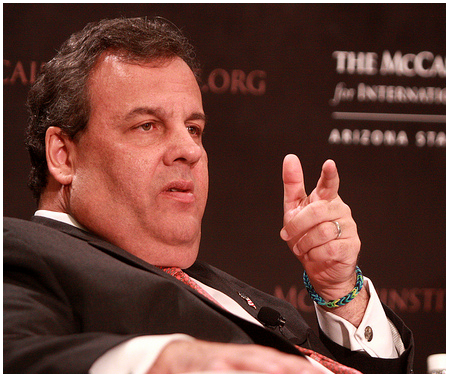
Scott and Christie
Gov, Rick Scott of Florida said the same thing as Gov. Bruce Rauner of Illinois. With ALEC writing legislation financed by some of the wealthiest people and corporations in America, this doesn’t at first seem surprising, but…
10304636_245379215586188_8483977973171857632_n

Both men were condemning young children as being undeserving and unworthy of receiving either a decent education or basic healthcare. By definition, these men aresociopaths.

Dear Governor Cuomo - Badass Teachers Association

Badass Teachers Association:


Dear Governor Cuomo
By:  Veronica Gaboury


While this might be too long of a letter to actually send, not sure he reads what he receives anyway, I think it is something that needs to be said. Or at least I need to say it.  

To Governor Cuomo,   


What can I say that others more eloquent and knowledgeable haven't already said?

My story.

I am the mother of 4 children. Chris is 27. He graduated from NY public schools and attended Bennington College in Vermont. He now works in Washington DC at a job he loves. Nick is 25, almost 26. He graduated from NY public schools. He attended the University of Rochester. Alexandra is 10 years-old, she is in 5th grade and she has gone to Miller Hill Elementary School her entire education career except that year in our local pre-school. Katharina is 8 and she has spent more time in educational programs than any of my other children had at this point in their lives. Her path has been different.

My first 3 children have always been full of curiosity, they loved to learn and had wonderful educators who helped bring them along to their next level of education. Many times that level was ahead of their peers and ahead of grade level, but these teachers were not concerned with keeping students "on the same page" or on "test prep," nor were they concerned with a formal formula curriculum, so these educators helped to feed my children's curiosity and allowed them to keep growing at their own paces, which further encouraged them to have curiosity and love of learning. It's a great natural cycle.

And these educators did it for all of their students. They met the students where they were and brought them as far they could. Not everyone reached the same end points...but they learned as much as they each were capable of. They had individualized instruction 
Badass Teachers Association: