Latest News and Comment from Education

Wednesday, April 10, 2013

2014 Education Budget: What’s the Bottom Line? | ED.gov Blog

2014 Education Budget: What’s the Bottom Line? | ED.gov Blog:


2014 Education Budget: What’s the Bottom Line?

Budget LogoAs Education Secretary Arne Duncan often says, budgets aren’t just numbers in a ledger – they are a reflection of our values. President Obama’s 2014 budget proposal, released today, demonstrates his belief in education as the engine that will keep America competitive in a global innovation economy and grow a thriving middle class.
The proposal builds on momentum for reform and protects the most vulnerable.  Nowhere is this more true than in the president’s historic proposal to make high-quality preschool available to all four-year-olds.
The administration’s request for $71 billion in discretionary appropriations for education represents an increase of more than 4 percent over the previous year. Nearly three-quarters of that funding goes to financial aid for students in collegespecial education, and aid to schools with high numbers of children in poverty (Title I).
The remaining 28 percent of the budget invests in specific areas that can move major change – particularly through making preschool accessible for all students; funding a set of strategic reforms at the K-12 level; ensuring that college is affordable; and coordinating services that help students living in poverty.
What’s the bottom line?:
Early learning: Making quality preschool available for all 4-year-olds
President Obama has committed to a historic new investment in preschool education that supports universal access to high-quality preschool for all 4-year olds from low- and moderate-income families and creates an incentive for states to serve additional middle-class children.
The President’s budget request includes $1.3 billion in 2014 and $75 billion over 10 years in mandatory funding, along with $750 million for competitively awarded Preschool Development Grants and other funds.
Learn more about Preschool for All.
K-12: Deepening reform in key strategic areas
President Obama’s fiscal year 2014 budget proposes significant new investments in areas where states and school districts face key implementation challenges from earlier investments such as Race to the Top and the Race to the Top-District competition, as well as continuing substantial investments in critical formula programs that support state and local reform efforts.
Learn more about the K-12 reforms.
The 2014 budget proposal also includes:
High School Redesign and Career Readiness
President Obama has called on all Americans to commit to at least one year of postsecondary education. Yet, for too many American students, high school is a time of disengagement that fails to put them on a path to college and career success. That’s why the Obama administration has laid out plans to redesign high schools and career and technical education (CTE).
Learn more about high school redesign and career readiness.
Strengthening Science, Technology, Engineering and Math (STEM) Education
Economists project strong growth in careers related to science, technology, engineering and math (STEM), but far too few American students are proficient in mathematics and interested in a STEM career. The Obama administration proposes an aggressive STEM push that will improve the delivery and impact of STEM education.
Learn more about STEM.
Teachers and Leaders
The Obama administration has laid out a plan to strengthen teaching and school leadership, building on significant investments in the first term.
Learn more about the teachers and leaders plan.
School Safety
The President’s plan to increase school safety and to decrease gun violence includes investments not only to prepare schools for emergencies, but also to create nurturing school climates and help children recover from the effects of living in communities plagued by persistent violence.
Learn more about school safety.
Making College Affordability
The Obama administration has taken major steps to help students afford college, and proposes to build on that momentum with programs that will drive major reforms to reduce the escalating costs of higher education.
Learn more about making college affordable.
Ladders of Opportunity
Through “Ladders of Opportunity,” the Obama administration will establish comprehensive, coordinated approaches to improving support for America’s most vulnerable students.
Learn more about ladders of opportunity.
Additional Budget Resources:

Obama Administration Budget Makes Major Investment in Early Learning

Early Learning Spending GraphicStudies prove that children who have rich early learning experiences are better prepared to thrive in school. Yet the United States ranks 28th in the world for the enrollment of 4-year-olds in early learning, and 25th in public investment in preschool. Only 3 in 10 children attend a quality preschool program. Doing better is more than just a moral and educational imperative; it’s smart government: a public dollar spent on high-quality preschool returns $7 through increased productivity and savings on public assistance and criminal justice. From a growing number of voices, including from the recently concluded work of the Equity and Excellence Commission, the call has been clear to expand quality early learning in the United States.
To help all children begin school on a level playing field, the President has put forward in his 2014 budget request an historic new investment in early learning that would make preschool available to all 4-year olds from low-income families. The core elements of this proposal are:
  • Preschool for All ($75 billion over 10 years). This investment would support grants to States for the implementation of high-quality preschool programs that are aligned with elementary and secondary education systems. The Department would share costs with States to provide universal access to high-quality preschool for children from low- and moderate-income families and provide incentives for States to serve additional middle-class families.
  • Preschool Development Grants ($750 million). This program would provide grants to States to carry out activities that would build state capacity for implementing high-quality preschool programs, and expand model programs at the local level. The Department would provide competitive grants to States with preschool systems at various stages of development that are planning to provide universal access to high-quality preschool for four-year-old children from low-and moderate-income families to carry out the activities needed to successfully serve four-year-old children in high-quality programs.
The administration also requests funding to increase or maintain key investments in a number of programs that seek to improve outcomes for young children, especially for those with high needs:
  • Early Intervention Programs for Infants and Toddlers with Disabilities ($463 million, $20 million more than the fiscal year 2013 amount). These formula grants help States implement statewide systems of early intervention services for all eligible children with disabilities and developmental delays from birth through age two and their families.
  • Preschool Grants for Children with Disabilities ($373 million). These formula grants help States make a free appropriate public education in the least restrictive environment available to all children with disabilities ages three through five to help ensure that young children with disabilities succeed in school.
The Department of Health and Human Services is also investing in young children by requesting significant increases in funding for programs that include Head Start, Early Head Start and the Child Care and Development fund.
Secretary Duncan talks with teacher and Teaching Ambassador Fellow Dan Brown about the importance of high quality preschool for all children. Watch:
To read more details on the Obama Administration’s budget request for investing in early learning, visit www.ed.gov/early-learning.

BOR: DoJ Issues Temporary Restraining Order in BISD Trustee Election Based On Section 5 Of VRA

BOR: DoJ Issues Temporary Restraining Order in BISD Trustee Election Based On Section 5 Of VRA:

DoJ Issues Temporary Restraining Order in BISD Trustee Election Based On Section 5 Of VRA


by: Joe Deshotel

Wed Apr 10, 2013 at 05:35 PM CDT

On Wednesday, a District Court in D. C., at the behest of the Department of Justice, issued a temporary restraining order postponing the May 11th election of Beaumont Independent School District Trustees. The DoJ will have 60 days to review the plans that could disenfranchise a majority of minority voters in 3 of the 7 single member districts. The Department of Justice had stepped in based on the fact that the new plan has not been precleared under Section 5 of the Voting Rights Act (VRA). This situation is a perfect example of why Section 5 still has relevance today -- it reeks of an intentional effort to subvert voters, and in effect, reduces minority representation.Among the noted objections defined in the DOJ letter to BISD were:
-The shortening ("truncating") of the terms of three incumbent minority trustees without informing the public.
-The elimination of staggered terms for members of the Board of Trustees.
-The failure of the state court's order to reopen the candidate filing period after its decision--such would have allowed incumbent participation and/or the public to engage in the electoral process.
For a complete timeline of events with citations you can look here. The 3 challengers whose name would appear "unopposed", on the ballot (should the May 11 election be held) lost by huge margins to the current incumbents with the closest election being a victory with 62% of the vote. Those incumbents were unaware that after redistricting they must file for reelection even though they were only in the 2nd year of a 4 year term. This was a fact known to the challengers' attorneys but only shared with the one white board member who was elected in 2011. That member failed to share this information with his colleagues. The one white 

Chicagoland Researchers and Advocates for Transformative Education (CReATE): CReATE Researchers on Impact of Proposed School Closing

Chicagoland Researchers and Advocates for Transformative Education (CReATE): CReATE Researchers on Impact of Proposed School Closing:


CReATE Researchers on Impact of Proposed School Closing

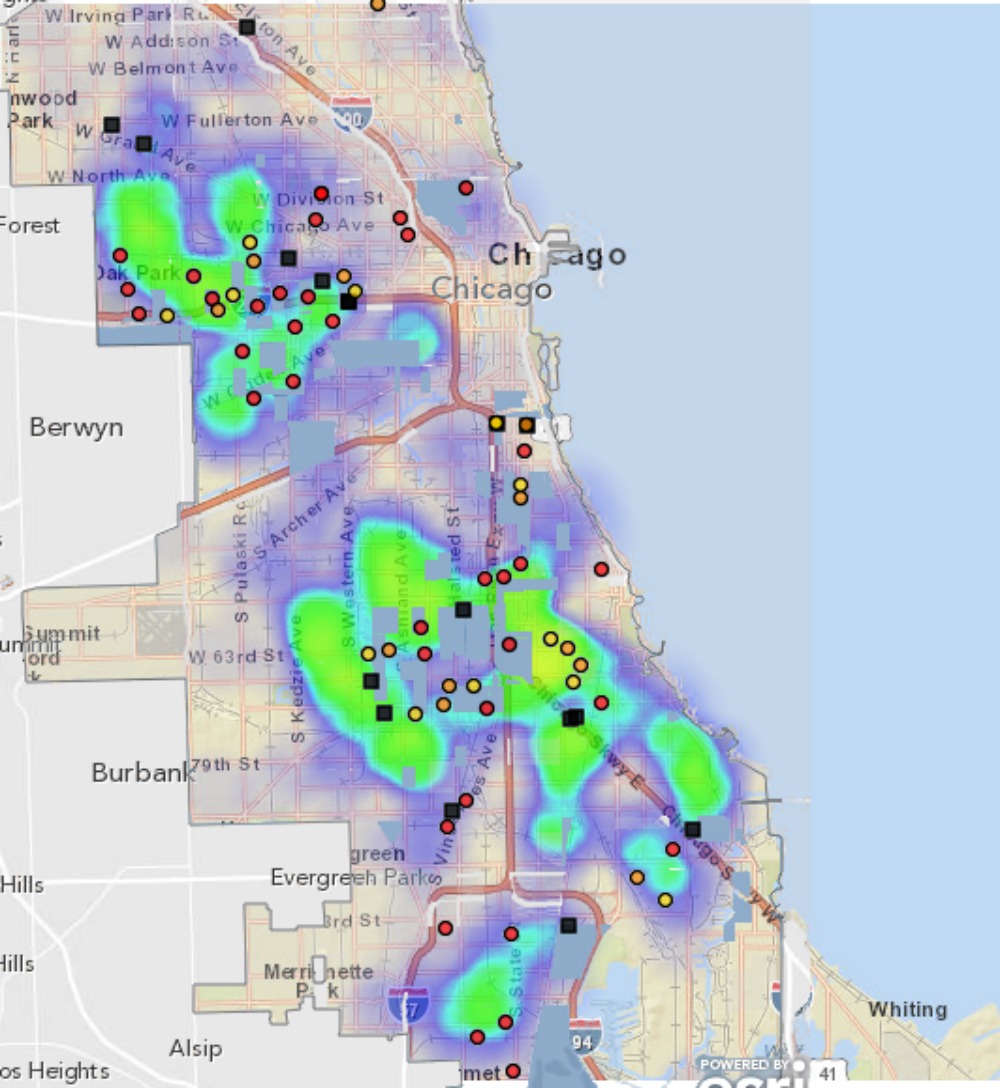
CReATE researchers Josh Radinsky and Federico Waitoller (University of Illinois-Chicago) have prepared a report that details the impacts of the proposed school closings in Chicago in terms of student relocation and faculty dismissal.  These researchers find that CPS statements on this matter greatly underestimate the scale of the impact.  One of the stunning facts this report reveals is that the number of African American elementary students to be impacted by these actions (34,946, elementary only, not counting the 8 high schools) represents over 27% of all African American children between the ages of 5 and 14 living in the City of Chicago.

The report on the Impact of Proposed School Closings is available at http://tinyurl.com/d86lzdx.

## MEDIA CONTACT ##
Dr. Josh Radinsky josh.radinsky@gmail.com
Dr. Federico Waitoller fwaitoll@uic.edu

Ethnic Cleansing: Chicago Style? | Reclaim Reform

Ethnic Cleansing: Chicago Style? | Reclaim Reform:


Ethnic Cleansing: Chicago Style?

Ethnic cleansing is considered by some to be too harsh a term to use for the school closings in Chicago being performed by Mayor Rahm Emanuel and his financial supporters. Ethnic cleansing goes well beyond bigotry and prejudice. It reeks of racial and ethnic undertones, murder, vast wealth accumulation, enforced poverty, inflicted suffering, mass territorial shifts, erasure of cultural history and other vile behavior. But, this is precisely what appears to be happening.
murder school closings Murdered youth and school closing areas. Expensive, high stakes testing, scores and underutilized schools are smoke-screen terms used too cover a much larger, much more complex situation.

Why would anyone do this to human beings? The answers are simply power and money.
Lots of power and lots of money.


Imagine a city where public mental health clinics, libraries, youth services, schools and other essential services are simply closed and neighborhoods made uninhabitable while the publicly elected officials grant hundreds of millions of tax dollars to the wealthy financiers of their campaign funds. “Starve the Beast” is the book definition for this form of legalized graft and corruption. Now, don’t imagine. In fact, this is Chicago, today.
The vast majority of schools scheduled or already closed are in poor black and brown neighborhoods that sit on land that is marked for gentrification and/or new railroad yards. The same people who are pressing for public school closings are heavily invested in real estate 

Weekly Leg Fax: Charter school waiting lists | Parents Across America

Weekly Leg Fax: Charter school waiting lists | Parents Across America:


Weekly Leg Fax: Charter school waiting lists

SCUSD Action Alert: Update concerning the challenge of protecting neighborhood schools targeted for closure


SCUSD Action Alert:  Update concerning the challenge of protecting neighborhood schools targeted for closure


I would like to thank the DAC for giving me time on their agenda yesterday for an update concerning the challenge of protecting neighborhood schools targeted for closure - this year and in the coming years. It is my understanding that a motion of support for the following resolution will be an action item at the next meeting: 


NOW, THEREFORE, BE IT RESOLVED that the Sacramento City Unified School District Board of Education hereby finds and determines as follows:


1. Adopts the recitals that Governor Brown and Proposition 30 have significantly improved funding for public education and that disproportionate effects on Hispanic and African-American plurality schools can now be avoided.
2. Approves the neighborhood school recommendations, as presented to the Board, to keep Clayton B. WireCollis P. HuntingtonFruit RidgeJoseph BonnheimMapleMark Hopkins and Washington open for the 2013-14 school year.
3. Finds that the recommendations are “categorically exempt” from the provisions of CEQA pursuant to Public Resources Code section 21080.18 and section 15310041 of the Guidelines.
4. Directs the Superintendent to create design teams for all district schools.
5. Further directs the Superintendent to take such further action as necessary to carry out this Resolution.


Please consider joining us each Thursday at Serna Center from 4:30 to 6 p.m. as we build support for this resolution.
Contrary to Board policy the Executive Committee has so far refused to place options to school closures on the Board's agenda. I have asked the Board's Executive Committee to schedule an appointment to discuss this refusal with a small representative group. There has been no response. I will be proposing Thursday that we consider holding a community forum at a targeted school and invite the Executive Committee.

There is no fiscal reason to close seven schools. SCUSD has increasing income and reserves above the required minimum. It has had only three deficit years in the last decade. This is not a structural fiscal deficit problem. (pg 10)

There is no enrollment reason to close seven schools. SCUSD has an increasing enrollment trend in K-3. It has lost about 9% K-12 enrollment and has closed 8% of its K-6 schools in the last decade.
The Facilities Master Plan (1.2 M cost) estimates that we will regain most of the lost enrollment in the coming decade. 

This is not a declining enrollment problem. (pg 7, 14 & 15)
There is no capacity reason to close seven schools. Most of the identified "excess" capacity is in portable, not permanent, classrooms. By design this is flexible capacity meant to be moved if needed. Students do not need to be moved to address capacity concerns. This is not an "under-enrollment" problem. (pg 11)
SCUSD is committed to the triple bottom line. Thus fiscal, equity and environmental criteria are all crucial to "Putting Children First" in SCUSD. (pg 5)

There are fiscal reasons to keep seven schools open. The process needs to be adjusted to include the cost side of closures. Past experience indicates that the targeted closures will result in a million dollar net loss to the funds available for direct services to students. Why is administration laying off counselors, social workers and other student support staff while spending funds on closure consultants and unnecessary portable moves? (pg 11)

There are social equity reasons to keep seven schools open. The process needs to be adjusted so that any needed closures are fairly distributed rather than only affecting Hispanic and African-American plurality schools. Why are administration identified "protected programs" mostly housed at mostly white plurality schools? (pg 2, 3 & 33)

There are environmental reasons to keep seven schools open. The process needs to be adjusted so that any needed closures create sustainable schools rather than requiring busing and crossing guards. Why is administration proposing closing larger facilities with more green space while crowding with additional portables smaller facilities with minimal green space? (pg 28-31)
In solidarity,
Leo Bennett-Cauchon

House sticks it to the 99% of public school students who attend public district schools by confirming charter school executive to the State Board of Education - Wait, What?

House sticks it to the 99% of public school students who attend public district schools by confirming charter school executive to the State Board of Education - Wait, What?:


House sticks it to the 99% of public school students who attend public district schools by confirming charter school executive to the State Board of Education


Earlier today, the Connecticut House of Representatives confirmed Governor Malloy’s nomination of Andrea Comer to serve a four-year term on the State Board of Education.
Comer, who works as the Chief Operations Officer for the FUSE/Jumoke Academy charter school management company, and previously worked for Commissioner Stefan Pryor’s Achievement First, Inc, one of the nation’s largest charter school management companies, will be filling the State Board of Education seat that was most recently held by an official from the Connecticut Association of Boards of Education.
Late word from some Democratic legislators was that the Malloy administration promised that the next two State Board of Education nominations would be of pro-public education supporters if Democratic legislators looked the other way and voted for the appointment of the charter school executive.
As a member of the State Board of Education, Comer will be in a unique position to directly and indirectly help her employer and the charter school industry continue their 

MUIR RANCH EARTH DAY FUNDRAISER Muir Ranch Long Table Dinner - Eventbrite

Muir Ranch Long Table Dinner - Eventbrite:


MUIR RANCH
EARTH DAY FUNDRAISER
*
Sunday, April 14, 2013
3-6 pm
Come Support the Food Lab
at Pasadena's John Muir High School
A farm-to-table dinner in farm benefiting the students of Muir Ranch
*
FEATURING GUEST OF HONOR 
CLICK HERE to watch his TED talk!

*
Family Style Dinner Served from Heirloom LA Food Truck
Service provided by Muir Ranch student servers

Salad
Black Kale and Purple Kohlrabi Salad with Cilantro Passion Fruit Vinaigrette, Sage Blossoms, Spicy Pumpkin Seeds and Asian Pears
 

Entrees
Garganelli Pasta with Snow Peas, Lemon Buerre Blanc, Asaka Red Mustard Saute & Sprouting Broccolinni Blossoms
 
Whole Roasted Domestic Lamb Leg, Shoulder & Loins with Swiss Chard Marmalade, Braised Collard Greens with Chives and Garlic and Oven Roasted Potatoes with John Muir Ranch Marjoram and Rosemary
 

Dessert
Maple Brown Butter and Sage Doughnuts with Sea Salt, Fried Rosemary & Ricotta

***
Seeking donations of kitchen items!!!
CLICK HERE to check out our gift registry!!
First name: Muir
Last name: Ranch
*
PARKING:
Park in the student lot off of Canada Ave.
To get to the dinner, follow the blue and yellow balloons!

HEELS NOT RECOMMENDED FOR MULCH PATHWAYS

Diane in the Evening 4-10-13 Diane Ravitch's blog | A site to discuss better education for all

Diane Ravitch's blog | A site to discuss better education for all:


Should Computers Grade Student Essays?

The New York Times recently reported on the introduction of software that is able to grade student essays and give instant feedback. It is currently being used in a number of universities; many others are likely to follow suit.
The student submits an essay and instantly receives a graded response from a computer. The student can then revise in hopes of improving the grade.
The software inevitably will be adopted for use in schools as well as colleges and universities.
Actually the Educational Testing Service already has an essay grader that can grade 16,000 essays in 20 seconds. Michael Winerip wrote about this in another article in the New York Times, back when he had a regular 


Jersey Jazzman: Is NY Commissioner John King a Hypocrite?

Jersey Jazzman is really steamed about NY State Commissioner John King.
Is it because he wants to share the personal, confidential data of ll the state’s public school students with a marketing consortium?
Is it because he is pushing the Common Core standards without first determining how they will affect real 

Connecticut OKs Charter Executive to State Board

Jonathan Pelto reports that the Connecticut House approved the nomination of a charter school executive to the State Board of Education.
According to his account, Governor Dannell Malloy promised that if she was confirmed, the next two appointments to the state board would be individuals who support public schools, where the vast majority of the state’s students are enrolled.

LISTEN TO DIANE RAVITCH 4-10-13 Diane Ravitch's blog | A site to discuss better education for all

coopmike48 at Big Education Ape - 2 hours ago
Diane Ravitch's blog | A site to discuss better education for all: [image: Click on picture to Listen to Diane Ravitch] Petrilli on Testing and Accountability: Mend It, Don’t End It by dianerav Most of the readers of this blog are educators. Most don’t like high-stakes testing and the idea of punishments and rewards based on test scores. Many are ready to throw them both out as an assault on teacher professionalism. Many admire Finland, for example, where standardized testing is a non-issue and American-style accountability is unknown. I thought it was important for everyone to re... more »