Latest News and Comment from Education

Tuesday, October 2, 2012

School Tech Connect: Put This In A Time Capsule

School Tech Connect: Put This In A Time Capsule:


Put This In A Time Capsule

Unfortunately Tim you are probably right but
 I bet he doesn't have to wait for
 one of these babies!
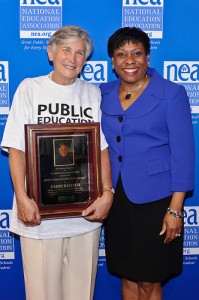
With all due respect to the great scholar and activist and utterly fearless woman receiving the award, I'm just going to predict that the presenter will someday present a similar award to Arne Duncan.

DIARY OF A PUBLIC SCHOOL TEACHER!: Top 5 Popular Posts from September 2012!

DIARY OF A PUBLIC SCHOOL TEACHER!: Top 5 Popular Posts from September 2012!:


Top 5 Popular Posts from September 2012!


Here are the Top 5 posts from September all in one place! Enjoy!

Standardized Testing Stole Our Day!

I planned in advance and completely forgot that we were having the standardized Math test today! Bummer!
Wonderful plans put on hold....

This is what my students and I lost today because Standardized testing took a day from us...


#Why I Don't Use Technology: Anti-Tech Teachers Lament Has No Standing!


The conversation went something like this:
Teacher: Do you know he

Gov. Brown signs, vetoes, student discipline bills - The Education Report - Katy Murphy's blog on Oakland schools

Gov. Brown signs, vetoes, student discipline bills - The Education Report - Katy Murphy's blog on Oakland schools:


Gov. Brown signs, vetoes, student discipline bills


By Katy Murphy
Tuesday, October 2nd, 2012 at 10:21 am in Uncategorized.
Public Counsel, a non-profit law firm that has promoted an overhaul of school discipline policy, released this summary of bills signed and vetoed by Gov. Jerry Brown.
Note: The descriptions of each bill are theirs, not mine.
Bills Brown has signed:
  • AB 1729 by Assemblymember Tom Ammiano (D-San Francisco) changes existing law to strengthen the alternatives to suspension or expulsion and clarify that school removals should only happen after other means of correction fail to bring about proper conduct.
  • AB 1909 by Assemblymember Tom Ammiano (D-San Francisco) ensures that school districts provide notification to foster parents or other county child welfare designees and the court-appointed attorney for the foster youth when a foster youth is pending expulsion.
  • AB 2537 by Assemblymember V. Manuel Perez (D-Coachella) provides additional discretion to school administrators to use alternative means of correction in lieu of expulsion and further clarifies that possessing an imitation firearm, over-the-counter medicine or student’s prescription medicines are not “zero tolerance” offenses that automatically require expulsion. It also eliminates an existing $500 fine imposed on a principal who fail to notify law enforcement of certain crimes allegedly committed by students.
  • AB 2616 by Assemblymember Wilmer Carter (D-Rialto) will focus truancy reduction efforts on solutions with schools, students and parents that are shown to work, so that law enforcement and courts are used only as a last resort.
  • SB 1088 by Senator Curren Price (D-Los Angeles) helps ensure that children who have had contact with the juvenile justice system are not barred from re-enrollment and are immediately reenrolled in school.
He vetoed:
AB 2242, which would have limited the use of “willful defiance,” the education law category that accounts for more than 40 percent of California school children suspended.
SB 1235, which would have given an optional hand up to schools that suspend more than 25 percent of their student population through free regional trainings for school leaders.

UPDATE: Diane in the Afternoon10-2-12 Diane Ravitch's blog

Diane Ravitch's blog:


Good News in Indiana

A county judge in Indiana has ruled that the autocratic State Superintendent of Education Tony Bennett could not impose a standard contract on every district in the state that would have violated all existing contracts.
From the story:
“A county judge has ruled that a state-pushed standard teacher contract form that would have allowed Indiana school districts to change or increase their hours without paying them more is illegal.
Marion County Judge Patrick McCarty permanently barred the Indiana Department of Education and state 


A Refreshing View of the Importance of the Chicago Teachers’ Strike

Here is an excellent article that explains clearly why the strike was necessary. The article appears in the newsmagazine called F, published by the Art Institute of Chicago, a venerable institution.
Mayor Rahm said it was a “strike of choice.”
In this sense, he was right. The teachers could have just kept on teaching under dismal conditions for students, or they could strike and demand better conditions in the classrooms and schools for the students and teachers.
He chose to defend the status quo. The teachers said “no” to the status quo. They said the status quo was intolerable. And that is why they went on strike.


Millions of Federal $$$ Wasted in Louisiana

When reformers say that New Orleans is a success, bear in mind that it is a low-performing district in a low-performing state, ranked 69th out of 70 districts in Louisiana. In addition, New Orleans got many millions in federal grants and private philanthropy to “prove” that privatization works.
A reader from Louisiana writes:

http://www2.ed.gov/programs/teacherincentive/2012awards.html

I was just studying the Louisiana grants awarded this round and back in 2010. Astounded at the amounts of money coming from Feds to subversively promote their agenda. In 2010 New Schools For New Orleans received millions. Now, understand that NSNO is basically an arm of TFA. A major purpose of this grant is to develop effective CAREER teachers. I am going to file a public information Request to both the Feds and LDOE for the


The Bammy Awards

This was the first year of the Bammy awards, an effort to acknowledge educators who have achieved distinction in many different sectors of education. The Bammies are supposed to be the new equivalent of the Oscars for educators, presented by the Academy of Educational Arts and Sciences.
Emmy award-winning producer, broadcaster and journalist Errol St. Clair Smith organized this event, with red carpet, black tie and a sense of grandeur.
I was one of three who received awards for lifetime achievement. The others were


New York City’s Absurd School Grades

I live in a wonderful neighborhood in Brooklyn, New York. For years, the local public school struggled. It had a poor reputation. Then a new principal arrived, attracted a stable and experienced staff, and the school flourished. Neighborhood families that once sought private school alternatives enrolled in the public school. It became the pride of the community.
A few years ago, when the city’s Department of Education started giving out letter grades to every public school, our neighborhood school got an A. Everyone was very proud. The mayor and the chancellor attended a ceremony 


After a Decade, Bloomberg Reforms Still Failing

Mayor Bloomberg prides himself on being data-driven. And he has certainly turned the public schools into data-obsessed institutions. Test scores rule all decisions. Accountability matters more than anything else.
One of the proudest achievements of Mayor Bloomberg and former Chancellor Joel Klein was the adoption of report cards for schools, with a single letter grade for each school. Unfortunately, the latest report cards show that the Mayor’s reforms have failed. The Mayor decreed that any school that received an F or a D or three 


Will the White House Listen?

A reader suggests we try these routes to get the attention of the White House. As you know, they take teachers and principals for granted and they don’t hear our voices. They assume our votes are already counted. Let’s help President Obama by contacting him and sending him a message.
https://petitions.whitehouse.gov/petitions
https://petitions.whitehouse.gov/how-why/frequently-asked-questions
Who will review petitions that cross the signature threshold?
The White House will convene a regular meeting with representatives from all of the major policy offices (like the National Economic Council, Domestic Policy Council and others) that will review petitions that have crossed the signature threshold for a response. This group will help determine which policy office in the White House or federal agency should review and respond to petitions and ensure that petition responses are posted as quickly as possible.


A Line in the Sand

The billionaires want charter schools in Washington State.
It is very distressing to them that the voters have already turned down charter schools three times. So they have put up a few millions to try again. This time the charter referendum closely tracks the rightwing ALEC model. It allows either a majority of parents or teachers to give away the public school to a private charter corporation, even if the school is a good school. It also creates a super-commission to create more charters over the opposition of local school boards.
These are mechanisms found in ALEC’s privatization model laws.
Here are the facts from Melissa Westbrook of “Say No on 1240,” the parent group that is fighting to protect 


Local School Wellness Policy - Healthy Eating & Nutrition Education (CA Dept of Education)

Local School Wellness Policy - Healthy Eating & Nutrition Education (CA Dept of Education):


Local School Wellness Policy

Information and resources on the Local School Wellness Policy, Section 204 of the Child Nutrition and Women, Infants, and Children (WIC) Reauthorization Act of 2004 and the Healthy, Hunger-Free Kids Act of 2010.


Child Nutrition and Women, Infants and Children’s Reauthorization Act of 2004

The Child Nutrition and WIC Reauthorization Act of 2004 mandated that all local educational agencies participating in a federal meal reimbursement program establish a Local School Wellness Policy.


The Healthy, Hunger-Free Kids Act of 2010

On December 13, 2010, President Obama signed the Healthy, Hunger-Free Kids Act of 2010 (HHFKA) External link opens in new window or tab. (PDF) reauthorizing the Child Nutrition Programs. Section 204 added Section 9A to the Richard B. Russell National School Lunch Act (Title 42, U.S. Code 1758b), Local School Wellness Policy Implementation. The provisions enhanced the previous Local School Wellness Policy requirements, strengthening requirements for ongoing implementation, assessment, and public reporting of wellness policies and expanding the team of collaborators participating in the wellness policy development to include more members from the community. The HHFKA now requires that the local school wellness policy, at a minimum, include:
  • Goals for nutrition promotion* and education, physical activity, and other school based-activities that promote student wellness.
  • Nutrition guidelines for all foods and beverages available on school campus during the school day.
  • Requirements that Stakeholders be provided opportunities to participate in the development, implementation*, and periodic review and update* of the wellness policy.
  • A plan for measuring effectiveness, that is measured periodically and that the assessment is made available to the public.*
  • Public notification informing and updating the public (parents, students, and others in the community) periodically about the content and implementation of the local school wellness policy.*
  • Local designation must include one or more local education agency officials or school officials to ensure that each school complies* with the local school wellness policies.
*These are new requirements.


Recommendations to Meet the Healthy, Hunger-Free Kids Act of 2010 Requirements

In Management Bulletin USDA-SNP-16-2011, Child Nutrition Reauthorization 2010: Local School Wellness Policies, the California Department of Education (CDE) recommended that districts become aware of the changes and have initiated review their Local School Wellness Policies during School Year 2012–13, and to the extent possible, have begun moving forward on implementing the new requirements. For example, districts needed to have been working toward developing a reasonable method to inform and update the public about their implementation of local wellness policies. Some suggestions included disseminating printed or electronic materials to their community and posting information on their district Web site.
The U.S. Department of Agriculture (USDA), Food and Nutrition Service (FNS), Policy Memorandum SP 42-2011 External link opens in new window or tab. (PDF) provides more detailed information about the requirements and recommended actions for the School Year 2011–12. Districts may also find it helpful to consult the local school wellness policy reference materials and sample policies on the USDA FNSLocal School Wellness Policy External link opens in new window or tab. Web page.


Resources for Local School Wellness Policies


Guidance on Local School Wellness Policies
Model Policy Language
The California School Boards Association (CSBA) has developed the CSBA Sample Student Wellness Policy 5030 (Revised 7/11) External link opens in new window or tab. model policy language to meet the HHFKA requirements available on the CSBA Policy Development Web External link opens in new window or tab.page.
Local School Wellness Policy Directory
California districts can locate their wellness policy and other district wellness policies at the Dairy Council of California School Wellness Policies External link opens in new window or tab. Web page. Also included is a scoring and evaluation tool for nutrition education developed by the CDE as well as model nutrition education local school wellness policies.
National School Health Policy Database
The National Association of School Boards of Education External link opens in new window or tab. Web site provides the State School Healthy Policy database that includes laws and policies from 50 states.
Guidance for Local School Wellness Policy in After School Program
Afterschool Alliance developed this toolkit to highlight opportunities for afterschool leaders and advocates to become involved in and help shape the process of local school wellness policy along each step of the way. It is available on their Policy and Action Cente External link opens in new window or tab. Web page.
Local School Wellness Policy Enforcement
Change Lab Solutions (formerly N-Plan) Fact Sheet: How to Enforce a Wellness Policy: A Guide for Parents and Community Advocates, available on the Change Lab Solution’s How to Enforce a Wellness Policy External link opens in new window or tab. Web page, is designed to help parents and community advocates ensure that their district’s local school wellness policy is enforced.

Webinars on the Healthy, Hunger-Free Kids Act of 2010 -Changes to Local School Wellness Policy
The Food Research and Action Center (FRAC) Webinars on Child Nutrition Reauthorization External link opens in new window or tab. Web page offers the Webinar series Child Nutrition Reauthorization: Putting the Act Into Action, which examines the provisions of the Child Nutrition Reauthorization Act and provides steps to make the provisions of the Act a success.
This FRAC Webinar features an overview of HHFKA (Child Nutrition Reauthorization); an outline of improvements to the child nutrition programs; highlights of the wellness policy parts that are immediately in effect or need immediate work by stakeholders; information on moving implementation forward in the best possible way and moving it quickly in states and communities; and a checklist of things to do. Select the following Webinar title to view:
This FRAC Webinar focuses on the improvements to the school nutrition environment through the HHFKA. These include: the additional six cents reimbursement for meals that meet the USDA’s new school meals nutrition standards, and implementation requirements for stronger competitive foods rules and wellness policies. Presenters from USDA’s FNS, Action for Healthy Kids, and FRAC provide details on the key provisions, next steps, and suggested implementation plans.

Wellness Policy Implementation
Tool kits for implementation
A number of tool kits for implementing local school wellness policies are provided at the Alliance for a Healthier Generation External link opens in new window or tab.Web site, including a School Wellness Council Toolkit that includes sample invitation letters and agenda. Join them to get access to their tools.

Wellness Policy Evaluation Tools (based on 2004 Requirements)
The Wellness School Assessment Tool (Well-SAT) External link opens in new window or tab. Web site provides[http://wellsat.org/] a free, online self-assessment tool to evaluate Local School Wellness Policies.
The UC Davis Center for Nutrition in Schools Web site offers a self-assessment tool called the University of California at Davis Rubric Tool on their District Wellness Policy Assessment External link opens in new window or tab. Web pageThe tool is formatted in a rubric format with a scoring system for districts to assess their local school wellness policies and programs related to nutrition.


General Resources

The resources provided below offer further information and guidance regarding local school wellness policies.

Federal Requirements of the Healthy, Hunger-Free Kids Act
Information on the requirements related to the HHFKA is provided at Child Nutrition Reauthorization 2010 (Healthy, Hunger-Free Kids Act) : Local School Wellness Policies External link opens in new window or tab. .

California Information
The CDE Local Wellness Policy—CalEdFacts Web page provides part of the information and media guide about education in the State of California. For similar information on other topics, visit the full CDE CalEdFacts Web page.
The CDE State Board of Education Policy Statements Web page provides descriptions of all of the policies issued by the State Board of Education related to local school wellness policies in California.
The California Department of Education Content Standards and Nutrition Education Resource Guide Web pages list all of the California education content standards, frameworks, and competencies.
The California Healthy Kids Resource Center External link opens in new window or tab. Web site provides an extensive categorized list of Local School Wellness Policy resources.

General Local School Wellness Policy Resources
The California PTA offers resources for parents on local school wellness policies and wellness councils, listed on theirCurrent Issues External link opens in new window or tab. Web page.
The Center for Disease Control provides many resources on local school wellness policies on their Local School Wellness Policy External link opens in new window or tab. Web page.
California Project LEAN External link opens in new window or tab. provides resources and toolkits on local school wellness policy implementation and monitoring on their Local School Wellness Policy External link opens in new window or tab. Web page.
The Healthy School Environment features many local school wellness policy resources on their Wellness Policy Resources External link opens in new window or tab.Web page, with a focus on fresh fruits and vegetables and farm to school.
The Action for Healthy Kids External link opens in new window or tab. Web site offers a searchable database on local wellness policy resources.
Related Content

NYC Public School Parents: Why no one in his right mind should believe the school grades OR the teacher growth scores

NYC Public School Parents: Why no one in his right mind should believe the school grades OR the teacher growth scores:


Why no one in his right mind should believe the school grades OR the teacher growth scores


The new DOE school grades for elementary and middle schools, euphemistically called “Progress reports,” came out with much fanfare, with 217 schools potentially put on the closing list because they either received failing grades or three “Cs” in a row, more than ever before.  As parent leader Shino Tanikawa pointed out in theNew York Post, DOE is using unreliable grades to implement terribly misguided policies. (If you'd like to see your school's grade anyway, you can find it here.)
Last year’s headlines ran like this:School report cards stabilize after years of unpredictability. This year again, reporters cited the the claims of DOE officials, who “highlighted the stability of this year’s reports.”
It wasn’t true last year and it isn’t this year either. Here is a figure from Gary Rubinstein’s blog from last year, showing no correlation between the rank order of schools in 2010 and 2011. I suspect the Gary’s illustration will be similar for this year, once he gets 

Jersey Jazzman: They Do Not Think Teachers Are Professionals

Jersey Jazzman: They Do Not Think Teachers Are Professionals:


They Do Not Think Teachers Are Professionals

I have to wonder: would we treat plumbers this way?

The director of Louisiana’s controversial new system to evaluate public school teachers had her own teaching certificate lapse.
“My teaching certificate is not active right now,” said Molly Horstman, who oversees the new review setup that state officials call Compass, Thursday.
Horstman, who spent two years in a New Orleans classroom, said the lack of a teaching certificate has nothing to do with her current post, which pays $77,000 per 

Congressman announces $100,000 grant for charter school that fails Latinos and children with special needs - Wait, What?

Congressman announces $100,000 grant for charter school that fails Latinos and children with special needs - Wait, What?:


Congressman announces $100,000 grant for charter school that fails Latinos and children with special needs


Charter Schools - Dividing Communities since 1991


 This afternoon, Congressman John Larson announced that the Jumoke Academy will be getting  a $100,000 grant to support the charter school’s efforts to take over the Milner School, one of Hartford’s public schools.
Along with the press release, Congressman Larson said, “I know this funding will go towards helping our younger generations receive the education they deserve.”
Really Congressman?
Thanks to the Malloy Administration and the leadership of the City of Hartford, the public school that was once known to the neighborhood as the Milner School, is now called the Jumoke Academy at Milner.
After financially starving the Milner School for years, the City of Hartford and the State of Connecticut have suddenly “come up” with $2 million for renovations and up to $1.5 million 

Q and A. Pension cost shift. « Fred Klonsky

Q and A. Pension cost shift. « Fred Klonsky:


Q and A. Pension cost shift.

Question:
So if the pension costs are shifted to the local districts, what mechanism or law will prevent them from also not funding the system? Why can’t they do like the state and ignore their obligations?
- Edie Wade
Answer:
Dear Edie,
Disclaimer: This is from an English teacher’s perspective and not from a lawyer’s analysis:
“The State shall provide for an efficient system of high quality public educational institutions and services… The State has the primary responsibility for financing the system of public education” (Article X, Section 1 of the Illinois Constitution).
If we interpret “financing the ‘system of public education’” to also mean financing the teachers’ 

Hybrids of History Teaching | Larry Cuban on School Reform and Classroom Practice

Hybrids of History Teaching | Larry Cuban on School Reform and Classroom Practice:


Hybrids of History Teaching

Why do most history teachers (past and present) use teacher-directed ways of teaching with a small minority diverging from their colleagues?

One answer looks at how external testing, state academic standards, federal accountability regulations, teacher certification, and the unofficial national curriculum of Advanced Placement influence what teachers present. These largely unnoticed structures in the policy landscape set the boundaries within which teachers teach. To answer the above question on why teachers tilt toward “traditional” teaching, then, I also want to identify other factors that often go unmentioned by those eager to improve the teaching of history in K-12 schools.

Schooling in the Ownership Society: Kaiser's "F" bomb on Latino leaders reveals his ties to DeVos family

Schooling in the Ownership Society: Kaiser's "F" bomb on Latino leaders reveals his ties to DeVos family:


Kaiser's "F" bomb on Latino leaders reveals his ties to DeVos family

Michael Kaiser
Michael Kaiser, president of the Kennedy Center,responded to criticism of the Center's anti-Latino biasby telling National Hispanic Foundation for the Arts Chairman Felix Sanchez to "go fuck yourself." While Kaiser, who fancies himself a Kennedy liberal, was forced to apologize, he remains atop the prestigious, heavily endowed, cultural awards group.

But a closer look at the Center's patrons reveals Kaiser's close ties to extreme right-wing billionaires like the Dick and Betsy DeVos who donated $22.5 million to the Center in 2010. It was this gift which allowed Kaiser to remain part of the center's leadership structure through 2017, directing what will be named the 

School Funding Inequity Forces Poor Cities Like Reading, Pa., To Take Huge Cuts

School Funding Inequity Forces Poor Cities Like Reading, Pa., To Take Huge Cuts:


School Funding Inequity Forces Poor Cities Like Reading, Pa., To Take Huge Cuts

READING, Pa. -- The day before school starts, 8-year-old Tianna wakes up worried. She's worried about the cafeteria food that she receives for free, because usually "it's nasty." She's worried about making friends, since she'll be in a new school. But most of all, she's worried about where all the fired teachers will go.

"When we were at assembly, I learned that people didn't have enough money to let all the teachers come back next year, so they were kicking teachers out," explains Tianna, in a quiet, earnest voice as she bounces up and down on her chair. "There was this one teacher that I really liked, and she's getting kicked out."

Tianna's mother, Tashima, tries to ease her fears, but it doesn't help much. "Tianna's like an old lady -- she's really nosy," Tashima says, laughing. "She just gets upset."

Tianna does seem world-weary for a third-grader, maybe in part because she lives in Reading, Pa., until September the country's poorest city, according to U.S. Census figures. And her school is feeling the city's 

Mother Crusader: I Made The Honor Roll

Mother Crusader: I Made The Honor Roll:


I Made The Honor Roll

On school mornings my alarm goes off about 7:15 and my girls climb into bed with me for a quick snuggle before we get up and get going.  I usually check my email as we lie in bed.  

I follow Diane Ravitch's blog, as I am sure many of you do, and get email notifications whenever she posts.  I am often amazed at how late and/or how early she has posted, and wonder when this amazing woman sleeps!

When I read the title of an email from 7:04 this morning my heart stopped.

A New Jersey Mom: Another Hero of Public Education

When I read that it was about me, I cried.  
Darcie Cimarusti is a hero of public education. As a parent of young children in the fine public schools of New Jersey, she became alarmed when a charter planned to open in her community. She knew that the charter would divide the community and undercut the public schools.

Can We Exorcize "Evil" From the Education Reform Debate? - Living in Dialogue - Education Week Teacher

Can We Exorcize "Evil" From the Education Reform Debate? - Living in Dialogue - Education Week Teacher:


Can We Exorcize "Evil" From the Education Reform Debate?

Follow me on Twitter at @AnthonyCody
Advocates of education "reform" are reeling a bit from the backlash that has greeted the release of "Won't Back Down." All of a sudden mainstream critics were seen pointing out connections between the movie's financial backers and the political agenda it advanced. Amidst this shift we are hearing calls that critics of "reform" cool our tone.
Daniel Willingham writes here:
I think it's fair to say that, in education policy, some of us have gone too far. People who disagree with us are depicted as not merely wrong, but evil.
This characterization is most noticeable in what is broadly called the reform movement.

Overview | Keep America Beautiful :: Recycle-Bowl :: School Recycling Competition

Overview | Keep America Beautiful :: Recycle-Bowl :: School Recycling Competition:

Keep America Beautiful Presents Recycle-bowl Competition Sponsored by Nestle Waters


WHY RECYCLE-BOWL?

Recycling is the easiest and most effective thing that ANYONE can do to protect natural resources, conserve energy and reduce carbon emissions. Recycling also creates jobs and stimulates our economy. And, friendly competition is a proven way to motivate young people toward adopting sustainable behaviors.
Many schools have been slow to embrace recycling. Through Recycle-Bowl, we hope to galvanize recycling in elementary, middle and high schools across America.

Our Mission

Invigorate student participation through a national K-12 recycling competition.

Objectives

  • Establish new recycling programs within schools
  • Increase recycling rates in schools that currently recycle
  • Provide teacher/student educational opportunities about recycling and waste reduction

HOW CAN MY SCHOOL COMPETE?

Competition Categories

Recycle-Bowl is separated into two divisions, the Competition Division and the Open Division. Schools may choose to register for either, based on eligibility requirements and the school’s ability to meet division standards.

Flexible Game Plan

From experienced “veterans” to recycling “rookies,” every school can use Recycle-Bowl to support and improve its recycling efforts.
  • Got game? If your school has a good, solid recycling program (or the potential to build one), set your strategy toward winning the state competitions or the national grand prize.
  • Still working on your skills? Schools with modest or new recycling programs can opt to focus on improvement over the course of the competition. Organize a mini-competition between classes or with another school in which they have a long-standing sports rivalry. For more ideas on strategizing participation, visit the Playbook section.

KEEP YOUR EYES ON THE PRIZES!

Sure, bragging rights are important. But, schools also have an opportunity to take home serious awards in the Recycle-Bowl Competition Division.
  • State Champions: A winner from each U.S. state and the District of Columbia will receive $1,000 based on the most recycled material per person per school.
  • The National Title: America’s Top Recycling School! An additional grand prize valued at $2,500 will go to the top performer among the State Champions!
  • Involve your community. To keep things fair, if your school collects recyclable material from around the community or parents homes, this will be treated as a separate competition category. The Community Recycling Category offers a $1,000 first prize, a $750 second prize and $500 third prize. Schools will track the amount of material recovered per person and will compete with other schools on a national level.