Latest News and Comment from Education

Friday, July 11, 2025

Yesterday’s Gems, Today’s Insights A Roundup of the Web’s Finest Blog Posts! 7-11-25


Yesterday’s Gems, Today’s Insights
A Roundup of the Web’s Finest Blog Posts!
7-11-25

Stephen Miller: A Life and Career Driven by Hate and Ruthless Ambition https://dianeravitch.net/2025/07/10/stephen-miller-a-life-and-career-driven-by-hate-and-ruthless-ambition/ via @dianeravitch 

Stephen Miller, a key aide to Donald Trump, has emerged as one of the most influential figures in Trump’s administration, particularly in shaping immigration policy. Miller's hardline stance on immigration has led to controversial actions, including ICE raids, militarized responses to protests, and proposals to suspend habeas corpus for suspected undocumented immigrants. His influence extends beyond immigration to domestic policy, higher education, and foreign policy. While Trump occasionally moderates his positions, Miller’s ideology remains consistent and extreme. The article also highlights the broader societal decay that enables figures like Miller to thrive and critiques Trump’s politicization of civil service roles.

### Key Points

- Stephen Miller is a central figure in Trump's administration, driving immigration policy and other domestic policies. 

- Miller's actions, such as ICE raids and militarized responses, have sparked significant backlash and protests. 

- Trump occasionally moderates his immigration stance but often returns to Miller’s hardline views under pressure. 

- Miller’s influence extends to areas like higher education, transgender rights, discrimination law, and foreign policy. 

- Critics argue that Miller’s ideology reflects broader societal issues and systemic decay. 

- Trump has politicized civil service roles, replacing experts with loyalists who align with his policies. 

The Texas Flood Deaths Could Have Been Prevented https://dianeravitch.net/2025/07/10/the-texas-flood-could-have-been-prevented/ via @dianeravitch 

A catastrophic flash flood in Texas Hill Country claimed over 100 lives, including 27 campers and counselors at Camp Mystic. Despite warnings from the National Weather Service and Texas Division of Emergency Management, local and state officials failed to implement adequate emergency response systems. Texas lawmakers prioritized other expenditures, such as school vouchers and film industry incentives, over funding a flood warning system. Kerr County lacked sirens and emergency text alerts due to cost concerns and rejected grant applications. Camp Mystic's restrictions on cell phone use further hindered evacuation efforts. The tragedy highlights systemic failures in disaster preparedness and raises questions about financial and legislative priorities in Texas.

### Key Points

- Texas officials neglected to fund an early flood warning system despite warnings and a history of deadly floods. 

- Emergency alerts were issued, but Kerr County failed to utilize its Integrated Public Alert Warning System, leaving residents unprepared. 

- Local officials cited cost concerns for not installing sirens, despite the area's vulnerability to floods. 

- Camp Mystic's cell phone restrictions and lack of evacuation contributed to fatalities. 

- State lawmakers rejected a disaster preparedness bill due to its $500M cost, prioritizing other expenditures. 

- Officials acknowledged the failure to act and suggested future reforms, but lives were lost due to inaction. 

Michael Cohen: Texas Sat on a $30 Billion Surplus and Refused to Build a Flood Warning System https://dianeravitch.net/2025/07/10/michael-cohen-texas-sat-on-a-30-billion-surplus-and-refused-to-build-a-flood-warning-system/ via @dianeravitch


Michael Cohen's article on Diane Ravitch's blog critiques Texas leadership for prioritizing austerity and ideology over public safety, particularly in the context of a deadly flood in Flash Flood Alley. Despite warnings and a $30 billion surplus, Texas failed to implement adequate flood warning systems, leading to preventable deaths. Cohen also highlights the role of the Department of Government Efficiency (DOGE), created under Trump's second administration, in dismantling emergency response infrastructure nationwide. The piece condemns the philosophy of lean governance that sacrifices lives for fiscal conservatism.

### Key Points

- Texas leadership ignored warnings and failed to use a $30 billion surplus to implement flood warning systems, leading to preventable deaths. 

- The state's response to the disaster reflects a broader pattern of austerity-driven governance prioritizing tax cuts over infrastructure and public safety. 

- DOGE, a federal agency created under Trump's administration, undermined emergency response capabilities by slashing funding and personnel. 

- Cohen argues that the government's failure to protect citizens reflects a broken ideology and calls for a reevaluation of the role of government in safeguarding lives. 

Ted Cruz Slashed NOAA Funding for Weather Forecasting in Trump Budget https://dianeravitch.net/2025/07/10/ted-cruz-slashed-noaa-budget-for-weather-forecasting-in-trump-budget/ via @dianeravitch

### Key Points

- Senator Ted Cruz criticized politicizing Texas flood deaths but previously reduced NOAA's budget for weather forecasting by $150 million, affecting disaster preparedness. 

- NOAA faced scrutiny for underestimating rainfall in Texas, contributing to flash floods and significant economic damage. Late-night alerts were issued but lacked effective coordination with local emergency services. 

- Cruz’s actions in cutting NOAA funding were part of a larger Republican bill during Trump’s administration, undermining research and forecasting capabilities for extreme weather. 

- Cruz has a history of leaving Texas during crises, such as vacationing in Greece during the flood and traveling to Cancun during a power grid failure. Critics question his commitment to serving Texans. 

- Flash floods are challenging to predict due to their localized nature, but NOAA’s reduced funding exacerbates these challenges. 


Big Education Ape: THE GREAT UNSCHOOLING OF AMERICA: BIG EDUCATION APE'S CRYSTAL BALL PREDICTS A PUBLIC EDUCATION APOCALYPSE https://bigeducationape.blogspot.com/2025/07/the-great-unschooling-of-america-big.html 


Big Education Ape THE GREAT UNSCHOOLING OF AMERICA: BIG EDUCATION APE'S CRYSTAL BALL PREDICTS A PUBLIC EDUCATION APOCALYPSE

### Key Points

- The Trump administration's education agenda focuses on dismantling public education through privatization, deregulation, and budget cuts. 

- Executive orders and legislation aim to dissolve the Department of Education, cut federal funding, and shift responsibilities to states, risking inequitable resource distribution. 

- Budget freezes and cuts target key programs like Title I, IDEA, and teacher training, disproportionately affecting low-income, rural, and urban schools. 

- The push for school choice, including vouchers and Education Savings Accounts, risks creating a two-tiered system favoring wealthier families while underfunding public schools. 

- Higher education reforms propose limiting federal loans and grants, reducing access for low-income students, and prioritizing trade programs over traditional college pathways. 

- Policies targeting DEI initiatives, Title IX protections, and data transparency threaten equity and accountability in education. 

- Cuts to Medicaid and SNAP impact school-based services like nurses, counselors, and free meals, further straining the public education system. 

- The overall shift redefines education as a market commodity, prioritizing profit and choice over equity and public good. 


Courage Should Be in the Job Description – Cloaking Inequity https://cloakinginequity.com/2025/07/10/courage-should-be-in-the-job-description/ 

### Key Points

- The article emphasizes the need for courageous leadership in higher education, arguing that presidents and chancellors must go beyond mere management to become advocates, fighters, and defenders of truth and equity. 

- It critiques the tendency of leaders to "play it safe" and calls for bold leadership to ensure the survival of higher education amidst challenges. 

- The platform "Cloaking Inequity" publishes reflections, analysis, and commentary on education, democracy, culture, and politics, encouraging readers to subscribe for updates. 


With Little Public Notice, the Omnibus Tax and Reconciliation Bill Established Federal Private School Tuition Vouchers https://janresseger.wordpress.com/2025/07/10/with-little-public-notice-the-omnibus-tax-and-reconciliation-bill-established-federal-private-school-tuition-vouchers/ via @janresseger

### Key Points

- The "one big, beautiful" omnibus tax and reconciliation bill passed by Congress includes the first federal private school tuition voucher program, which was inserted without public notice and transparency. 

- The Senate version of the voucher program, which replaced the House proposal, allows students from families earning up to 300% of their area's median income to qualify, making both poor and wealthy students eligible. 

- The voucher program lacks civil rights protections, enabling private schools to select students without oversight. 

- Tuition-tax-credit vouchers rely on donations to "Scholarship Granting Organizations," with donors receiving tax credits, though the Senate version caps tax credits at $1,700 per donor. 

- The Senate removed the House's lucrative tax shelter provisions for wealthy investors, such as avoiding capital gains tax, but did not cap the overall number of participants, leading to potentially high costs for the federal government. 

- Unlike the House plan, the Senate version makes the voucher program permanent and allows states to opt in, potentially igniting state-level debates over private school choice. 

- Concerns remain about states' ability to regulate and oversee the program effectively, given past neglect in managing large voucher and charter school schemes. 


Teacher Tom: Really Crappy Vocational Training https://teachertomsblog.blogspot.com/2025/07/really-crappy-vocational-training.html 

Really Crappy Vocational Training

### Key Points

- The article critiques the prevailing idea of education as vocational training, noting that after tens of thousands of hours of schooling, students are only qualified for low-level jobs or management training programs, with actual work experience being more valuable. 

- It highlights the societal perception that children today are lazy and unmotivated, suggesting that education fails to foster citizenship, responsibility, and curiosity effectively. 

- The author proposes a shift in education to focus on nurturing children's individual passions and interests to help them discover what makes them come alive, rather than forcing them through standardized curricula. 

- The author advocates for play-based learning as a transformative approach to education and shares resources for further exploration of this method. 


The Zohran Endorsement, and ABC https://open.substack.com/pub/arthurgoldstein/p/the-zohran-endorsement-and-abc?r=kja7f&utm_campaign=post&utm_medium=web&showWelcomeOnShare=false 

The Zohran Endorsement, and ABC Here's what we'd do differently. The article discusses the controversy surrounding the endorsement of Zohran Mamdani by union leadership, particularly the actions of Unity and RA (Retiree Advocate). It critiques the lack of democratic processes, the imposition of personal agendas, and the failure to consult membership on important decisions. The author emphasizes that leadership should reflect the will of its members and outlines the shortcomings of Unity, RA, and ARISE in their approach to governance and endorsements.

### Key Points

- Zohran Mamdani's nomination is divisive, with polls showing mixed support and questions about the timing of the endorsement by union leadership. 

- Unity leadership is criticized for pushing decisions without consulting membership, including failed surveys and a lack of follow-up actions. 

- RA and ARISE are accused of prioritizing personal agendas over representing membership, leading to dissatisfaction among retirees and union members. 

- The author argues that leadership should focus on protecting retiree health care and enacting policies democratically, rather than imposing views. 

- The lack of transparency and communication in decision-making processes has caused frustration and disengagement among members. 


The ADL is not what it appears. (Reposted from the Guardian), by @fklonsky https://open.substack.com/pub/fredklonsky/p/the-adl-is-not-what-it-appears-reposted?r=kja7f&utm_campaign=post&utm_medium=web&showWelcomeOnShare=false 

The article discusses the controversies surrounding the Anti-Defamation League (ADL), a self-proclaimed civil rights organization. It highlights allegations of the ADL surveilling left-wing activists, targeting racial justice groups, and promoting policies that critics argue suppress progressive movements. Specific examples include the ADL's profiling of activist Tatjana Rebelle, its historical support for apartheid South Africa, and accusations of undermining civil rights while advancing pro-Israel agendas. The article also notes the National Education Association severing ties with the ADL due to its practices.

### Key Points

- The ADL has been accused of surveilling left-wing activists and tracking individuals it perceives as problematic. 

- Activist Tatjana Rebelle was profiled by the ADL, leading to fear and a chilling effect on her activism. 

- The ADL has faced criticism for targeting racial justice groups, Palestinian rights movements, and progressive Jewish organizations. 

- Historical controversies include ADL's alleged collaboration with apartheid-era South Africa and its surveillance of various organizations. 

- Critics argue the ADL prioritizes advancing Israeli policies over protecting civil rights. 


Education Research Report: Does grading students at earlier ages increase the risk of mental disorders in adolescents? https://educationresearchreport.blogspot.com/2025/07/does-grading-students-at-earlier-ages.html 

### Key Points

- Introducing school grades at earlier ages may negatively impact children's mental health, particularly increasing risks of internalizing disorders like depression and anxiety in girls with low to moderate academic achievement. 

- Earlier grading reforms in Sweden also correlate with a higher risk of alcohol-related disorders in both boys and girls. 

- Researchers emphasize that while grades are not inherently harmful, their design should account for children's developmental readiness to process feedback constructively. 

Education Research Report: Short teaching interventions on disinformation have no long-term effect https://educationresearchreport.blogspot.com/2025/07/short-teaching-interventions-on.html

### Key Points

- A study from Uppsala University found that short teaching interventions on disinformation have no long-term effect on upper secondary school students' ability to distinguish credible news from misleading information. 

- The study compared three types of interventions: the "Bad News" online game, the "News Evaluator" digital self-test, and subject-specific lesson segments integrating source criticism into different subjects. 

- Despite initial improvements, students showed little progress in source criticism skills three months after the interventions, with low use of digital tools like reverse image search and difficulty identifying misleading information. 

- Students who valued credible information and democratic ideals were better at distinguishing true and false information. 

- Professor Thomas Nygren emphasized the need for long-term, integrated teaching strategies across multiple subjects to strengthen resilience against disinformation. 

- Teachers expressed the need for tried and tested materials to teach complex issues like disinformation, leading to the development of the News Evaluator platform with ready-made lesson plans and guides. 

- All teaching materials from the study are freely available to educators to support digital source criticism in classrooms. 


Do Vouchers Help Make Private Schools More Diverse? Complete Publications List | National Education Policy Center https://nepc.colorado.edu/publications/all 

The article provides an overview of the National Education Policy Center (NEPC), its mission, publications, initiatives, and research efforts. NEPC is a university-based research center focused on producing high-quality, evidence-based information to inform education policy discussions. It emphasizes equity, democratic governance, and inclusivity in public education.

### Key Points

- NEPC publishes policy briefs, legislative briefs, research memos, and reviews to address various education policy issues. 

- It provides resources on topics like school choice, discipline policy, privatization, and school funding to support policymakers and educators. 

- NEPC initiatives aim to close opportunity gaps, including projects like Schools of Opportunity and Price of Opportunity. 

- The Research Hub for Youth Organizing and the International Partnership for the Study of Educational Privatization highlight NEPC’s collaborative efforts. 

- NEPC’s mission is rooted in promoting evidence-based policies that support a multiracial, inclusive, and just society. 

Critical Studies of Education & Technology: Teachers’ Perceptions of GenAI – Some Recurring Observations | National Education Policy Center https://nepc.colorado.edu/blog/teachers-perceptions 

Critical Studies of Education & Technology: Teachers’ Perceptions of GenAI explores the integration of generative AI (GenAI) in teaching practices across Swedish secondary schools. The study highlights varied usage patterns, challenges, and perspectives among educators, with many expressing mixed feelings about its utility and transformative potential.

### Key Points

- Only a minority of teachers are frequent users of GenAI, often citing time constraints and marginal benefits. 

- Frequent users mostly delegate unimportant tasks or ones they find unenjoyable, while a few are AI enthusiasts experimenting with the technology. 

- Many teachers feel obligated to perform teaching-related tasks themselves, believing their pedagogical expertise is essential for quality outcomes. 

- GenAI is primarily used to initiate or finalize tasks, such as generating ideas or polishing text, while teachers handle the core work. 

- Teachers face challenges with GenAI outputs, including lack of contextual fit and alignment with curricula or pedagogical styles, requiring significant effort to adapt. 

- Most teachers do not find GenAI particularly exciting or transformative, with its integration often deprioritized amid other professional demands. 


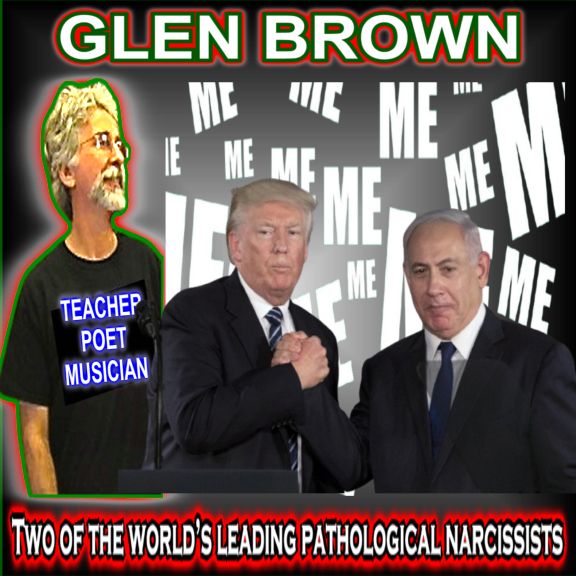
glen brown: "Two of the world’s leading pathological narcissists" https://teacherpoetmusicianglenbrown.blogspot.com/2025/07/two-of-worlds-leading-pathological.html 
### Key Points

- The article critiques Donald Trump and Benjamin Netanyahu as pathological narcissists, highlighting their inflated self-worth, lack of empathy, and destructive political actions. 

- Trump’s compromises to U.S. democratic institutions and Netanyahu’s genocidal policies in Palestine are discussed, emphasizing their damaging global impacts. 

- Netanyahu manipulates U.S. foreign policy, leveraging his relationship with Trump to achieve military goals while deepening the humanitarian crisis in Gaza and the West Bank. 

- Trump’s grandiosity and inability to focus on long-term international strategies are evident in his failed initiatives, such as Ukraine-Russia ceasefire negotiations and trade deals. 

- Both leaders share an insatiable quest for power, using their positions to further personal agendas rather than addressing global issues responsibly. 

- The article condemns the United States' complicity in Israel's military actions and humanitarian blockades, noting the lack of credible media coverage. 

- Melvin A. Goodman, the author, provides insights into these issues based on his experience as a former CIA analyst and national security expert. 


Updates to School Nutrition Program Standards This MB provides Child Nutrition Programs (CNPs) Operators information and policy guidance regarding updates to federal CNP meal pattern requirements released on April 24, 2024. https://www.cde.ca.gov/ls/nu/updatestosnpstandards.asp 

### Main Ideas

- Updates to federal Child Nutrition Program (CNP) meal pattern requirements were released on April 24, 2024, aligning with the 2020–2025 Dietary Guidelines for Americans. 

- California Code of Regulations updates related to CNP standards will take effect on April 1, 2025. 

- Contact information for inquiries on SNP meal patterns, SFSP, competitive foods, professional standards, procurement processes, and geographic preferences is provided. 

- Related resources include guidelines on competitive foods, food allergy modifications, staff education, milk requirements, and meal patterns for the National School Lunch Program (NSLP) and School Breakfast Program (SBP). 

- Recent updates include new Management Bulletins (MBs) for competitive foods, SUN Bucks resources, and recalls of turkey bacon due to possible Listeria contamination. 

- The California Department of Education offers various resources on nutrition, education standards, and program areas such as child development, disaster management, and special education. 


Schumer meets with war criminal, Netanyahu. Resistance grows among younger Dems. , by @mikeklonsky https://open.substack.com/pub/michaelklonsky/p/schumer-meets-with-war-criminal-netanyahu?r=kja7f&utm_campaign=post&utm_medium=web&showWelcomeOnShare=false 

### Key Points

- Senate Minority Leader Chuck Schumer's meeting with Israeli Prime Minister Benjamin Netanyahu, an indicted war criminal, highlights bipartisan support for U.S.-Israel policies despite growing grassroots opposition. 

- Progressive Democrats, including figures like Zohran Mamdani, AOC, and Cori Bush, are challenging traditional foreign policy alliances, especially regarding U.S. military aid to Israel. 

- Mamdani’s victory in the New York mayoral primary, supported by many Jewish voters, reflects a shift in attitudes among progressive Jews who prioritize Palestinian rights and affordable living over divisive politics. 

- Schumer's favorability among Democrats has drastically declined, making him a liability for the party in upcoming elections. 


Success, Failure, and "Mediocrity" in U.S. Schools (Part 1) https://larrycuban.wordpress.com/2025/07/10/success-failure-and-mediocrity-in-u-s-schools-part-1-2/ via @CubanLarry 

Success, Failure, and Mediocrity in U.S. Schools

### Key Points

- School reform in the U.S. has followed cyclical patterns over the past 150 years, with changing definitions of "good" schools based on societal needs. 

- Late-19th century Progressives addressed overcrowded classrooms and unprepared students by introducing new curricula, medical services, and varied instruction to educate the "whole child." 

- Post-WWII reformers emphasized academic rigor during the Cold War, aiming to produce engineers and scientists to compete globally. 

- The Civil Rights movement in the 1960s sought equality in education by increasing funding and standardizing curricula, though disparities persisted due to wealth differences across regions. 

- Economic fears in the 1980s led to reforms focused on stricter standards, testing, and accountability, linking education to economic productivity. 

- Reform cycles often involve exaggerated critiques of schools, ambitious proposals, and eventual disappointment when changes fail to meet expectations. 

- Concepts of "success," "failure," and "mediocrity" in schools reflect societal values, with the "middle ground" often stigmatized despite being the reality for most students. 


Schools Matter: Public Assistance for the Privileged http://www.schoolsmatter.info/2025/07/public-assistance-for-privileged.html 

### Key Points

- The blog emphasizes that a child's learning is influenced more by peer characteristics than by teacher quality, referencing James Coleman's 1972 statement. 

- The article critiques public assistance programs that benefit privileged groups, highlighting issues like school vouchers and systemic inequalities in education. 

- Discussions about poverty being a greater factor in educational outcomes than teacher quality are featured prominently. 

- The blog archives extensive content on education reform, testing, and critiques of corporate influence in public education. 

- It includes reviews of books and essays on topics such as hope in urban education, testing policies, and the impact of legislative actions on literacy and public schools. 


Yesterday’s Gems, Today’s Insights
A Roundup of the Web’s Finest Blog Posts!
7-10-25 

The article discusses various political, educational, and social issues, including controversies surrounding federal funding freezes, Trump administration policies, education reforms, and advocacy efforts for equity and justice. It highlights alarming developments in public health, immigration enforcement, education funding, and systemic inequities.

### Key Points  

- Indiana's voucher program spends $500 million to subsidize private school discounts for wealthy families, raising concerns about equity in public education.   

- Trump's administration quadrupled ICE's budget to $30 billion, funding detention camps and raising fears of martial law and labor camps.   

- Robert F. Kennedy Jr., appointed Secretary of Health and Human Services, implemented harmful health policies, including halting vaccine funding and endorsing ultraprocessed meals.   

- The Trump administration froze $7 billion in federal education funding, disproportionately affecting high-poverty districts and vulnerable students.   

- Researchers found a decline in children's health in the U.S., with increasing chronic conditions and systemic disparities.   

- Protagonists in young adult literature are increasingly older, alienating younger readers and reducing age-appropriate representation.   

- Father Daniel Berrigan, a Jesuit priest and activist, left a lasting legacy on Block Island through poetry and peace efforts.   

- Billionaire-backed voucher schemes and education cuts prioritize wealthy interests over public school funding.   

- The Detroit Tigers are praised for their ethical ownership and focus on resilience, contrasting with controversies surrounding the Los Angeles Dodgers.   

- Seattle's Memorial Stadium renovation faces scrutiny due to ethical concerns with Oak View Group's CEO.   

- The DOE's draft Class Size Reduction Plan fails to address overcrowding and relies heavily on exemptions, sparking advocacy for genuine reforms.   

- Louisiana proposed permanent teacher pay raises through reallocated education trust funds, pending a constitutional amendment vote. 


One Million Rising: Strategic Non-Cooperation to Fight Authoritarianism · No Kings 

https://www.mobilize.us/nokings/event/803953/

Across the country, authoritarian forces are getting bolder and more dangerous. Trump and his allies are not hiding their agenda: mass deportations, rollbacks of civil rights, weaponized courts, and full-scale attacks on our democracy. We don’t have to wait until it’s too late. We can stop this. But it’ll take all of us—not just on single days of mass action, but through sustained organizing in our communities.

That’s why this summer, we’re launching One Million Rising—a national effort to train one million people in the strategic logic and practice of non-cooperation, as well as the basics of community organizing and campaign design. This is how we build people power that can’t be ignored. You’re invited to join us—and lead.

Let’s build a force bigger than fear and louder than hate. Let’s get ready. Let’s get organized. Let’s stop Trump. https://www.mobilize.us/nokings/event/803953/

Image

Take action with AFT

Check out our Highest Priority Events and filter our feed using the tag #aftvotes to find ways to get involved with AFT! 

https://www.mobilize.us/aft/?org_ids=7229 


Thursday, July 10, 2025

THE GREAT UNSCHOOLING OF AMERICA: BIG EDUCATION APE'S CRYSTAL BALL PREDICTS A PUBLIC EDUCATION APOCALYPSE


THE GREAT UNSCHOOLING OF AMERICA

BIG EDUCATION APE'S CRYSTAL BALL PREDICTS A PUBLIC EDUCATION APOCALYPSE

Greetings, fellow knowledge-seekers, from your ol’ pal Big Education Ape, peering into my slightly cracked crystal ball to forecast the future of America’s public schools. Spoiler alert: it’s not looking like a sunny field trip to the zoo. The Trump administration’s education agenda is less a reform and more a demolition derby, aiming to bulldoze a century of public education progress in favor of a privatized, deregulated free-for-all. Grab a banana, settle in, and let’s swing through the jungle of policy changes, budget cuts, and privatization schemes threatening to unschool America. It’s time to advocate for our public schools and expose the chaos before it’s too late!

Public Education: The Banana Republic of Opportunity Under Siege

For over a hundred years, public education has been the great American equalizer, the jungle gym where kids from all walks—whether penthouse or trailer park—climb toward opportunity. It’s the system that gave us rocket scientists, civil rights leaders, and the genius who invented the Slurpee. Public schools have been the backbone of democracy, teaching kids to read, think, and occasionally dodge a dodgeball. But now, the Trump administration is treating this institution like a piñata at a budget-cutting fiesta, swinging hard with executive orders, slashed funding, and a love for privatization that’s as subtle as a gorilla in a china shop.

The plan? Dismantle the Department of Education (ED), funnel public funds to private schools, and turn education into a “choose your own adventure” where the options favor those with deep pockets. My crystal ball is foggy, but the signs are clear: we’re on a collision course with “The Great Unschooling,” where public education as we know it could become a relic, like chalkboards or No. 2 pencils. Let’s break down the administration’s playbook and what it means for students, families, and the system that’s held us together for a century.

The Trump Playbook: A Wrecking Ball Wrapped in “Choice”

1. The Department of Education’s Great Vanishing Act  

Picture the Department of Education as the zookeeper keeping the public school ecosystem in balance. Now imagine that zookeeper being sent packing. On January 29 and March 20, 2025, Trump signed executive orders directing Education Secretary Linda McMahon to shutter the ED and scatter its functions to states or other agencies, like tossing bananas to a horde of hungry monkeys. The FY 2026 budget proposes slashing the ED’s $80 billion budget by 15%—that’s $12 billion less for schools serving 50 million students. 

Legislation, like Rep. Thomas Massie’s one-sentence bill to dissolve the ED by 2026, is gaining traction, though it faces a Senate hurdle with only 53 Republican votes. If passed, programs like Title I ($15 billion for low-income schools) and IDEA ($15 billion for special education) could be handed to states or agencies like Health and Human Services, with no guarantee of equitable distribution. My crystal ball whispers of a future where federal oversight vanishes, leaving states to fend for themselves. It’s like telling a kid to run a lemonade stand without a recipe or lemons.

2. The Funding Freeze: Starving Schools One Dollar at a Time  

Speaking of budget cuts, let’s talk about the $6.2-$6.8 billion K-12 funding freeze that dropped like a rotten banana on June 30, 2025, just before schools expected their July 1 disbursements. This freeze hits programs like Title II-A (teacher training, $2 billion), Title III-A (English learners, $890 million), Title I-C (migrant students, $400 million), and 21st Century Community Learning Centers (after-school programs, $1.3 billion). California alone is losing $811 million, with districts like LAUSD ($110 million shortfall) dipping into reserves to survive.

This isn’t a one-off. The FY 2026 budget aims to make these cuts permanent, consolidating programs into block grants—big, vague buckets of cash with fewer federal strings. Sounds flexible, right? Except states like California, already stretched thin, can’t fill the gaps. Rural districts like Oxnard face losing translators, while urban schools like Berkeley Unified brace for larger classes and fewer counselors. My crystal ball sees a future where schools are forced to choose between textbooks or heat, and low-income students bear the brunt.

3. School Choice: A Fancy Name for Public School Starvation 

The administration’s love for school choice is like a monkey obsessed with shiny objects—distracting but dangerous. Executive orders, like the January 29, 2025, “Expanding Educational Freedom” directive, push for Education Savings Accounts (ESAs) and vouchers, letting parents take a child’s share of federal funds (e.g., $2,500 per IDEA student) to private or faith-based schools. Proposed bills, like the School Choice Now Act, aim to expand this nationwide, redirecting $15 billion in Title I funds to vouchers.

On X, supporters cheer this as “parental empowerment,” but here’s the rub: private schools don’t have to accept everyone, and they often lack special education or English learner programs. In Arizona, 80% of ESA funds went to families already in private schools, not struggling public school kids. My crystal ball predicts a two-tiered system: wealthier families get gourmet education, while public schools, serving 90% of students, become underfunded husks, like a jungle stripped of its canopy.

4. Higher Education: Locking the Ivory Tower  

College-bound students, brace yourselves. The administration plans to phase out Grad PLUS loans and cap Parent PLUS loans, making higher education a tougher climb for low-income families. The Public Service Loan Forgiveness program is being retooled, potentially denying benefits to teachers or social workers at “undesirable” organizations (think immigrant or LGBTQ+ advocacy). Pell Grants ($100 billion annually) may shift to trade programs, which is great for welders but leaves aspiring scholars out in the cold.

Accreditation reform, via an April 23, 2025, EO, aims to break the “accreditation monopoly,” prioritizing outcomes like graduation rates over DEI. Universities could lose federal aid if they don’t comply, forcing a choice between equity and survival. My crystal ball sees a future where college becomes a luxury, not a ladder, widening the gap between haves and have-nots.

5. DEI and Data: Banishing Equity and Evidence  

The administration’s war on “woke” policies is in full swing. An April 23, 2025, EO bans DEI programs, threatening $75 billion in federal funds for schools that don’t comply. Another reverses Biden-era Title IX protections, banning transgender bathroom access or pronoun use. The National Assessment of Educational Progress (NAEP), our “nation’s report card,” faces cuts, leaving us blind to student performance gaps. Without data, how do we fix inequities? It’s like navigating a jungle with a broken compass.

Discipline policies are also shifting, with an EO reinstating “common sense” rules that critics say could disproportionately suspend students of color. My crystal ball foresees a chilling effect: schools scared to support marginalized students, and a rise in the school-to-prison pipeline.

6. Beyond the Classroom: Medicaid and SNAP Cuts  

The administration’s “big, beautiful bill” doesn’t stop at education. Cuts to Medicaid and stricter SNAP eligibility will slash school nurses, counselors, and free meals for 30 million kids. Hungry or sick students can’t learn, yet these cuts are framed as “fiscal responsibility.” My crystal ball sees classrooms struggling to support kids’ basic needs, let alone teach algebra.

The Fallout: Who Gets Crushed in the Unschooling?

Families: Low-income families are the hardest hit. Losing after-school programs, free meals, and college prep (TRIO, GEAR UP) means less support for kids and more stress for parents. In California, districts like Oxnard lose translator services, leaving non-English-speaking families stranded. Wealthier families with private school access win; everyone else scrambles for scraps.

Students: Kids in high-poverty schools (80% of LAUSD’s 500,000 students) face larger classes, fewer resources, and no safety net. English learners and migrant students risk falling behind without Title III-A or I-C funds. Students with disabilities could lose IDEA protections if block grants let states skimp on services. Transgender and LGBTQ+ students face hostility as Title IX protections vanish. My crystal ball sees dropout rates climbing and mental health crises spiking, especially with Title IV-A’s $1.3 billion in mental health funds at risk.

Education System: Public schools, serving 50 million kids, face a death spiral. Teachers (already 55,000 short nationwide) will burn out or leave as professional development (Title II-A) dries up. Rural schools like Umatilla, OR, risk closure, while urban districts see inequities widen. Privatization shifts funds to for-profit charters, which often cherry-pick students and dodge accountability. Higher education becomes a walled garden, with universities pressured to drop DEI or lose accreditation.

The Philosophy: From Public Good to Private Profit

This isn’t just policy—it’s a paradigm shift. Public education, once a shared commitment to every child’s potential, is being recast as a marketplace where “choice” trumps equity. The administration’s vision, echoed in Project 2025, sees education as a commodity, not a right. It’s like turning a community garden into a pay-to-pick orchard—great for those who can afford it, terrible for the rest. My crystal ball warns of a fractured system where zip code, not talent, determines opportunity.

The Fightback: Saving Public Education

This “Great Unschooling” isn’t destiny—it’s a choice, and we can choose differently. Here’s how Big Education Ape says we fight:

- Advocate Loudly: Join groups like Californians Together or the NEA, suing over the funding freeze for violating the Impoundment Control Act. Contact lawmakers to protect Title I and IDEA.

- Vote Smart: Support candidates who prioritize public education over vouchers. Check their records, not their rhetoric.

- Amplify Voices: Share stories like Ana DeGenna’s in Oxnard or Missy Testerman’s in Tennessee, showing how cuts hurt real kids.

- Stay Informed: Demand NAEP and data transparency to track inequities. Knowledge is power, and they’re trying to dim the lights.

A Final Roar from Big Education Ape

Public education isn’t just about math or reading—it’s about building citizens, dreamers, and a society that values everyone. For a century, it’s been our jungle gym, our launchpad, our shared promise. If we let the Trump administration’s budget cuts, privatization push, and deregulation frenzy tear it down, we’re not just unschooling kids—we’re unmaking America’s future. My crystal ball says it’s not too late, but the clock’s ticking. So, grab your megaphone, rally your tribe, and let’s save our schools before they’re privatized into oblivion. Because if we lose this fight, we’ll all be swinging from the vines of regret. 🦍📚

Keep swinging, and let’s keep public education roaring!


One Million Rising: Strategic Non-Cooperation to Fight Authoritarianism · No Kings 

https://www.mobilize.us/nokings/event/803953/

Across the country, authoritarian forces are getting bolder and more dangerous. Trump and his allies are not hiding their agenda: mass deportations, rollbacks of civil rights, weaponized courts, and full-scale attacks on our democracy. We don’t have to wait until it’s too late. We can stop this. But it’ll take all of us—not just on single days of mass action, but through sustained organizing in our communities.

That’s why this summer, we’re launching One Million Rising—a national effort to train one million people in the strategic logic and practice of non-cooperation, as well as the basics of community organizing and campaign design. This is how we build people power that can’t be ignored. You’re invited to join us—and lead.

Let’s build a force bigger than fear and louder than hate. Let’s get ready. Let’s get organized. Let’s stop Trump. https://www.mobilize.us/nokings/event/803953/

Image

Take action with AFT

Check out our Highest Priority Events and filter our feed using the tag #aftvotes to find ways to get involved with AFT! 

https://www.mobilize.us/aft/?org_ids=7229 


Yesterday’s Gems, Today’s Insights A Roundup of the Web’s Finest Blog Posts! 7-10-25


Yesterday’s Gems, Today’s Insights
A Roundup of the Web’s Finest Blog Posts!
7-10-25


Michael Tomasky: What Will ICE Do with Its Enormous New Budget ? https://dianeravitch.net/2025/07/09/michael-tomasky-what-will-ice-do-with-its-enormous-new-budget/ via @dianeravitch 

Michael Tomasky highlights the alarming implications of Trump's administration's new immigration enforcement policies under the recently passed "One Big Ugly Bill." The legislation significantly increases ICE's budget, quadrupling its funding to $30 billion and allocating $45 billion for detention camps. Critics, including Alexandria Ocasio-Cortez and historian Timothy Snyder, warn of the potential creation of labor camps and mass detentions, likening the situation to historical atrocities. The bill's provisions, including the construction of detention centers like "Alligator Alcatraz," have sparked outrage, with fears of a militarized ICE force loyal to Trump and the suspension of democratic processes, such as elections, under martial law.

### Key Points

- Trump's administration adopts a strategy to overwhelm public attention with rapid policy changes, leveraging the Project 2025 blueprint. 

- The "One Big Ugly Bill" reverses numerous Biden and Obama-era policies and allocates massive funding for immigration enforcement, raising concerns about labor camps and expanded detentions. 

- ICE's budget grows to $30 billion, making it larger than other federal law enforcement agencies combined, with a goal to detain thousands daily. 

- Critics warn of the establishment of detention camps, such as "Alligator Alcatraz," and the possibility of martial law under Trump's leadership. 

- Public opinion strongly favors a path to citizenship for undocumented immigrants, countering the administration's policies. 

Dan Rather: Robert Kennedy Jr. Is a Public Menace https://dianeravitch.net/2025/07/09/dan-rather-robert-kennedy-jr-is-a-public-menace/ via @dianeravitch 

Dan Rather critiques Robert F. Kennedy Jr.'s appointment as Secretary of Health and Human Services under the Trump administration, highlighting his lack of medical expertise, promotion of conspiracy theories, and harmful health policies. Kennedy's actions, including halting vaccine funding, firing experts, and disseminating misinformation, have led to worsening public health outcomes in the U.S., including declining vaccination rates, surging measles outbreaks, and the lowest life expectancy among Western nations. His MAHA agenda, based on misleading data and misplaced priorities, exacerbates health disparities and undermines global health initiatives.

### Key Points

- Robert F. Kennedy Jr., a lawyer with no medical background, was appointed Secretary of Health and Human Services, leading to harmful public health outcomes. 

- Kennedy has undermined vaccination efforts, downplayed measles outbreaks, and fired experts from the Advisory Committee on Immunization Practices. 

- His "Make America Healthy Again" agenda misrepresents health issues and offers misguided solutions, focusing on minor food safety concerns instead of systemic issues like healthcare access and income inequality. 

- Kennedy halted U.S. funding for GAVI, a major global vaccine alliance, citing unsubstantiated concerns about vaccine safety. 

- He has spread misinformation, including false claims about vaccines causing autism and exaggerated statistics about health conditions. 

RFK Jr. Endorses a Packaged Meal Loaded with Additives https://dianeravitch.net/2025/07/09/rfk-jr-endorses-a-packaged-meal-loaded-with-additives/ via @dianeravitch 

### Key Points

- Robert F. Kennedy Jr., Secretary of Health and Human Services, endorsed Mom’s Meals, a company providing packaged meals to Medicaid and Medicare enrollees, claiming they align with his “Make America Healthy Again” campaign. 

- Despite Kennedy’s praise, an Associated Press review revealed that the meals are ultraprocessed and contain chemical additives, high sodium, sugar, and saturated fats, contradicting Kennedy’s usual stance against such foods. 

- Experts criticized the endorsement, highlighting that processed foods are unhealthy and often banned in Europe due to stricter regulations. 

- Concerns were raised about corporate influence on America’s food supply, leading to low standards and widespread health issues like obesity. 

- Diane Ravitch recommended the documentary FOOD, INC. to understand corporate farming’s impact and GASLAND for insights into environmental destruction caused by fracking. 


Big Education Ape: TRUMP'S $7 BILLION EDUCATION FREEZE: A MASTERCLASS IN MALICE http://bigeducationape.blogspot.com/2025/07/trumps-7-billion-education-freeze.html 

The Trump administration has withheld $7 billion in federal education funding, affecting programs for English learners, migrant students, teacher training, and after-school initiatives. This freeze disproportionately impacts high-poverty districts and schools serving vulnerable populations. Critics argue the move is unethical and possibly illegal, citing the Impoundment Control Act. Advocacy groups and lawmakers are challenging the decision, but the damage to schools is already evident.

### Key Points

- The Trump administration withheld $7 billion in federal education funding, impacting programs for disadvantaged students, teacher training, and more. 

- High-poverty districts and schools serving students of color are disproportionately affected, with severe budget cuts causing larger class sizes and canceled programs. 

- Critics claim the funding freeze violates the Impoundment Control Act and is based on unfounded allegations of misuse for "left-wing agendas." 

- Advocacy groups and legal actions aim to reverse the freeze, but schools have already faced significant disruptions. 


Teacher Tom: A Real Fairy https://teachertomsblog.blogspot.com/2025/07/a-real-fairy.html 

Teacher Tom reflects on the imaginative world of preschoolers, emphasizing the importance of dramatic play as a learning tool. He discusses how children embody aspirational roles like fairies, firefighters, or gorillas to explore and understand their world. Adults are encouraged to embrace these imaginative declarations as valid and real, recognizing that the stories we tell ourselves shape our reality. Teacher Tom also shares insights from his years of blogging about play-based learning and offers resources for readers interested in supporting his work or learning more.

### Key Points

- Preschoolers engage in dramatic play to understand their world, embodying roles like fairies or superheroes. 

- Adults should respect and believe in children's imaginative declarations, as these stories are part of their present reality. 

- Teacher Tom has been writing extensively about play-based learning and offers free resources and insights from his blog. 

- Information on how to connect with Teacher Tom for events, updates, or supporting his work is provided. 


glen brown: Bobby Jenks https://teacherpoetmusicianglenbrown.blogspot.com/2025/07/bobby-jenks.html 

### Key Points

- The article reflects on the life and career of Bobby Jenks, a former MLB pitcher, highlighting his achievements with the Chicago White Sox, including his role in ending their 88-year championship drought during the 2005 World Series. 

- Jenks was remembered by teammates and coaches for his powerful pitching, calm demeanor, and positive influence on younger players. He earned All-Star nods and set records during his career. 

- After retiring, Jenks managed the Windy City Thunder Bolts and continued to contribute to the baseball community. He passed away on July 4, 2025, due to stomach cancer. 

- Tributes from the White Sox organization, fans, and former teammates emphasized his lasting impact both on and off the field. A reunion to commemorate the 2005 World Series team is planned. 


Education Research Report: Researchers find children’s health broadly declining in the United States https://educationresearchreport.blogspot.com/2025/07/researchers-find-childrens-health.html 

### Key Points

- Researchers at Children’s Hospital of Philadelphia (CHOP) found a broad decline in children's health in the U.S., including increased chronic illnesses, physical and mental health conditions, mortality rates, and systemic issues requiring new approaches. 

- The study analyzed data from five national surveys, mortality statistics, and pediatric electronic health records from 2007 to 2023, covering 170 health indicators. 

- Infant mortality rates in the U.S. were nearly twice as high as in comparable OECD countries, with disparities driven by prematurity, sudden infant death, firearm-related incidents, and motor vehicle crashes. 

- Chronic conditions among children aged 3-17 increased significantly, along with rising rates of obesity, sleep issues, depressive symptoms, loneliness, and other physical/emotional impairments. 

- Researchers advocate for systemic changes, including improving developmental ecosystems through better early childhood education, family support, safer neighborhoods, and culturally attuned care, especially for marginalized communities. 

Education Research Report: Older characters in young adult literature may be pushing out younger readers https://educationresearchreport.blogspot.com/2025/07/older-characters-in-young-adult.html 

### Key Points

- A University of Mississippi study reveals that protagonists in young adult (YA) literature are increasingly older, often 17 or above, which may alienate younger readers. 

- Ally Watkins emphasizes the importance of younger readers seeing themselves in books, as relatable characters can prevent disengagement. 

- Watkins' research shows a decline in YA books featuring protagonists aged 13-15, a concern librarians have noted for years. 

- Librarians report a growing demand for books that bridge middle-grade and YA genres, as mature themes in YA novels may not suit younger teens. 

- Representation in books, including age, validates young readers’ experiences and fosters empathy. 

- Earlier YA bestsellers, such as "Harry Potter" and "The Giver," featured younger protagonists, whereas recent hits often center on older teens or adults. 

- Publishing trends show YA titles with older protagonists sell better, partly due to adult readers comprising over a quarter of the YA audience. 

- Watkins notes that adult readers influencing YA markets could hinder availability of age-appropriate books for younger teens. 

- Librarians and educators must be mindful of these trends to recommend suitable books for young teens. 


The birdwatchers of Block Island and Daniel Berrigan. , by @fklonsky https://open.substack.com/pub/fredklonsky/p/the-birdwatchers-of-block-island?r=kja7f&utm_campaign=post&utm_medium=web&showWelcomeOnShare=false 

The article recounts the life and legacy of Father Daniel Berrigan, a Jesuit priest, poet, and peace activist deeply connected to Block Island. It highlights his friendships, activism, arrest by disguised FBI agents, and the profound impact he had on the lives of those around him. Berrigan sought solace on Block Island, wrote poetry inspired by its landscape, and influenced others to join the peace movement. His memory remains cherished by friends and community members.

### Key Points

- Father Daniel Berrigan, a Jesuit priest and peace activist, spent significant time on Block Island, forming deep friendships and seeking solitude. 

- Berrigan was arrested on Block Island in 1970 by FBI agents disguised as birdwatchers due to his involvement in the Catonsville Nine draft record protest. 

- Berrigan’s poetry, including the book "Block Island," reflects his appreciation for the island’s people and landscape. 

- His influence led others, like Jim Reale, to join the peace movement and engage in activism. 

- A documentary about Berrigan’s life on Block Island is being produced, including stories of his arrest and interactions with locals. 

- Berrigan’s presence on the island was seen as a retreat for peace and quiet, and he contributed to local causes like the Mary D. Fund through poetry readings. 

- Friends and admirers remember Berrigan as a humble, impactful figure who left a lasting legacy. 


Josh Cowen's Newsletter: Billionaires Budgeting on the Backs of Kids and Families | National Education Policy Center https://nepc.colorado.edu/blog/billionaires-budgeting 

### Key Points

- The newsletter highlights recent developments in education policy, including court rulings against voucher schemes in Utah, Kansas, and North Dakota, showing that opposition to such programs can succeed. 

- Texas Governor Greg Abbott signed a significant school voucher scheme into law, backed by billionaires, while public school funding remains uncertain in the state. 

- The U.S. Supreme Court is deliberating on whether religious charter schools can operate publicly, which could have widespread implications for education policy across states. 

- The federal budget proposal from MAGA Republicans includes the Educational Choice for Children Act (ECCA), a voucher program tied to tax benefits for wealthy Americans, alongside cuts to public services and education funding. 

- The blog criticizes policies that prioritize tax cuts for the wealthy over investments in public education, health care, and community support programs. 


Trash Talkin’: A Tigers Fan’s Rant on History, Redemption, and LA Ownership Rot – Cloaking Inequity https://cloakinginequity.com/2025/07/09/trash-talkin-a-tigers-fans-rant-on-history-redemption-and-la-ownership-rot/ 

Trash Talkin’: A Tigers Fan’s Rant on History, Redemption, and LA Ownership Rot

### Key Points

- The Detroit Tigers are dominating the MLB season with grit, depth, and heart, while the Los Angeles Dodgers are struggling with losses, injuries, and inconsistent performance. 

- The article criticizes the Dodgers for cultural insensitivity, highlighting backlash against a Spanish national anthem performance in a bilingual city. 

- Dodgers ownership is tied to GEO Group, a private prison company associated with ICE detention centers, sparking ethical concerns. Their response to criticism has been inadequate. 

- The Dodgers’ history includes erasure, such as the displacement of Mexican American families at Chávez Ravine for stadium construction. 

- Detroit Tigers ownership is praised for compassionate actions, like Mike Ilitch paying Rosa Parks’ rent quietly for years, showcasing values of justice and solidarity. 

- The Tigers focus on building their team with homegrown talent and resilience, contrasting with the Dodgers’ reliance on celebrity signings and inflated payrolls. 

- The article emphasizes Detroit’s commitment to honoring its past and fighting for a reckoning in the MLB, aiming for a World Series victory against the Dodgers. 


Our detailed critique of DOE draft class size plan for 2025-2026 school year | Class Size Matters | A clearinghouse for information on class size & the proven benefits of smaller classes https://classsizematters.org/our-detailed-critique-of-doe-draft-class-size-plan-for-2025-2026-school-year/ 

The article critiques the New York City Department of Education's (DOE) draft Class Size Reduction Plan for the 2025-2026 school year, highlighting its inadequacies and failure to comply with a law passed in June 2022 mandating smaller class sizes. It discusses the DOE's reliance on exemptions, delays in creating a multi-year plan, and lack of meaningful incorporation of public comments. The article also promotes events, initiatives, and resources advocating for class size reduction and educational equity.

### Key Points

- The DOE's draft Class Size Reduction Plan for 2025-2026 is inadequate, failing to meet legal requirements for a multi-year strategy and address overcrowding in nearly 500 schools. 

- The DOE has increasingly relied on exemptions, with the latest plan mentioning them 40 times, signaling a lack of commitment to fully comply with the law. 

- By July 22, 2025, the DOE is expected to submit a final class size plan alongside public comments, though historically, they have made few significant changes. 

- Events such as the Skinny Award Dinner on June 18th and the Annual Parent Action Conference on June 7th aim to gather support for class size reduction and honor education leaders. 

- Advocacy efforts include petitions, newsletters, and radio shows to push for a genuine multi-year class size reduction strategy without excessive exemptions. 

- The article emphasizes the importance of smaller class sizes and provides resources explaining the 2022 class size law and its benefits. 


CURMUDGUCATION: PA: How Badly Are Districts Hurt By Feds Holding Back Funds https://curmudgucation.blogspot.com/2025/07/pa-how-badly-are-districts-hurt-by-feds.html 

Federal education grants totaling $6.8 billion were withheld by the U.S. Department of Education, despite being authorized by Congress. Programs affected include funding for migrant education, professional development, English-learner services, academic enrichment, and before- and after-school programs. The article highlights the impact on Pennsylvania districts and urges readers to contact their representatives to address this issue.

### Key Points

- Federal education grants, authorized by Congress, were withheld by the Department of Education, impacting six key programs. 

- Pennsylvania districts face significant financial losses, with specific amounts listed by Congressional district. 

- Readers are encouraged to contact their representatives to demand accountability for the withheld funds. 


La. Teachers: State Raise Funding Is on the 2026 Ballot | deutsch29: Mercedes Schneider's Blog https://deutsch29.wordpress.com/2025/07/09/la-teachers-state-raise-funding-is-on-the-2026-ballot/ 

Louisiana has proposed legislation to provide permanent salary increases for teachers and school personnel. HB 473 (Act 222) reallocates funds from three education trust funds to pay down debt held by the Teachers Retirement System of Louisiana (TRSL) and redirect savings to fund the raises. HB 466 (Act 266) outlines how excess funds can be used for school improvements. These bills depend on a constitutional amendment, which failed previously due to vague language but will be reintroduced with clearer terms for public voting in April 2026.

### Key Points

- Louisiana aims to provide permanent teacher pay raises via HB 473 and HB 466, funded by liquidating education trust funds. 

- HB 466 specifies additional uses for leftover funds, such as enhancing school security and funding early childhood education. 

- A constitutional amendment is required to implement these changes, with a vote scheduled for April 2026 after a failed attempt in March 2025. 


Seattle Schools Community Forum: Oak View Venue Development CEO - part of the Memorial Stadium Remodel - Name in Fed Lawsuit https://saveseattleschools.blogspot.com/2025/07/oak-view-venue-development-ceo-part-of.html?spref=tw 

Seattle Public Schools is collaborating with One Roof Stadium Partnership and the City of Seattle to renovate Memorial Stadium, backed by significant donations. However, Oak View Group, a key partner, faces scrutiny after its CEO Timothy Leiweke was indicted for rigging a bidding process in Texas. Despite Leiweke stepping down and Oak View paying $15 million in a nonprosecution agreement, concerns linger about the integrity of public bidding processes for projects like Memorial Stadium. Seattle officials assert the process was fair, but transparency remains crucial given taxpayer funding involvement. The article also touches on broader issues like nepotism within Seattle Schools and past controversies.

### Key Points

- Seattle Public Schools, One Roof Stadium Partnership, and the City of Seattle are funding a Memorial Stadium renovation, supported by donations from entities like Oak View Group and WaFd Bank. 

- Oak View Group's CEO Timothy Leiweke was indicted for rigging a bidding process in Texas, raising concerns about ethical practices. 

- Oak View paid $15 million to avoid prosecution, claiming no wrongdoing, but skepticism persists. 

- Seattle officials defend the bidding process for Memorial Stadium as fair and transparent, though public accountability is demanded due to taxpayer funding. 

- Broader issues of nepotism and questionable personnel practices within Seattle Schools are highlighted, reflecting systemic concerns. 


Yesterday’s Gems, Today’s Insights
A Roundup of the Web’s Finest Blog Posts!
7-9-25 

The article covers a wide range of political, educational, and social issues, including federal funding freezes, climate change impacts, systemic inequities, legislative decisions, and activism efforts. It highlights controversial policies under the Trump administration, critiques on education reforms, and advocacy for equity and justice.

### Key Points  

- Federal education grants were delayed due to an unsigned email from the Department of Education, raising concerns about funding impacts on districts.   

- Critics condemned the Trump administration’s $7 billion education freeze, describing it as malicious and harmful to families and children.   

- "Alligator Alcatraz," an immigrant detention camp in Florida, faces criticism for inhumane conditions and political exploitation.   

- Climate change denial campaigns indirectly contributed to the death of Janie Hunt, reflecting moral responsibility and environmental impacts.   

- Diane Ravitch critiques the U.S. for aligning with authoritarian regimes and condemns Trump’s policies on education, health, and immigration.   

- Trump’s Energy Department hired climate change skeptics, undermining scientific consensus and green energy initiatives.   

- The IRS allows churches to endorse political candidates, sparking concerns about the erosion of church-state separation.   

- H.R. 1 cuts billions from SNAP, increasing child hunger, poverty, and health risks while benefiting wealthy households.   

- Ohio’s budget underfunds public schools, prioritizing private school vouchers and exacerbating educational inequities.   

- Teacher Tom offers parenting advice and promotes play-based learning, reflecting on the transformative journey of parenthood.   

- NEA severs ties with the ADL over accusations of suppressing antiracist organizing and silencing critics of Israel.   

- The Education Choice for Children Act favors wealthy donors and undermines public education through tax credit scholarships.   

- Advocacy campaigns like "One Million Rising" aim to resist authoritarianism through community organizing and strategic non-cooperation.   

- Seattle school board elections highlight governance issues, nepotism, and debates on advanced learning services.   

- A socialism conference in Chicago gathers activists to discuss strategies for defeating fascism and building equitable communities.   

- The California Department of Education releases resources for the SUN Bucks program, focusing on nutrition and compliance.   

- The poem "Summer Tomatoes" reflects on life’s fleeting moments and nostalgia, blending cultural and educational themes.